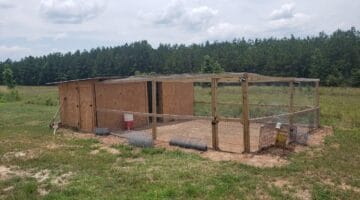
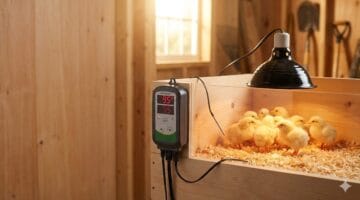
After tracking temperature data across three locations for an entire winter, I can tell you exactly how much difference insulation makes: my insulated coop stayed 15-22 degrees warmer than outside temperatures on the coldest nights, while my uninsulated coop only managed a 5-8 degree difference.
Every winter, chicken keepers ask the same questions. Do I need a heater? Is my coop too cold? Instead of guessing, I decided to find out for sure. I placed Govee WiFi temperature and humidity sensors in three spots: inside a fully insulated coop, inside a standard uninsulated coop, and one strictly outdoors to track ambient temperature.
I live in a northern climate zone where freezing temperatures are common, and my flock consists of 12 cold-hardy hens. While commercial poultry science indicates that layers are most feed-efficient at warmer temperatures, backyard survival requires a different approach. For a broader look at preparing your flock for cold weather, see our complete winterizing guide.
Here is the real data from my 90-day winter coop insulation temperature sensor study.
My Sensor Methodology: Getting Accurate Data
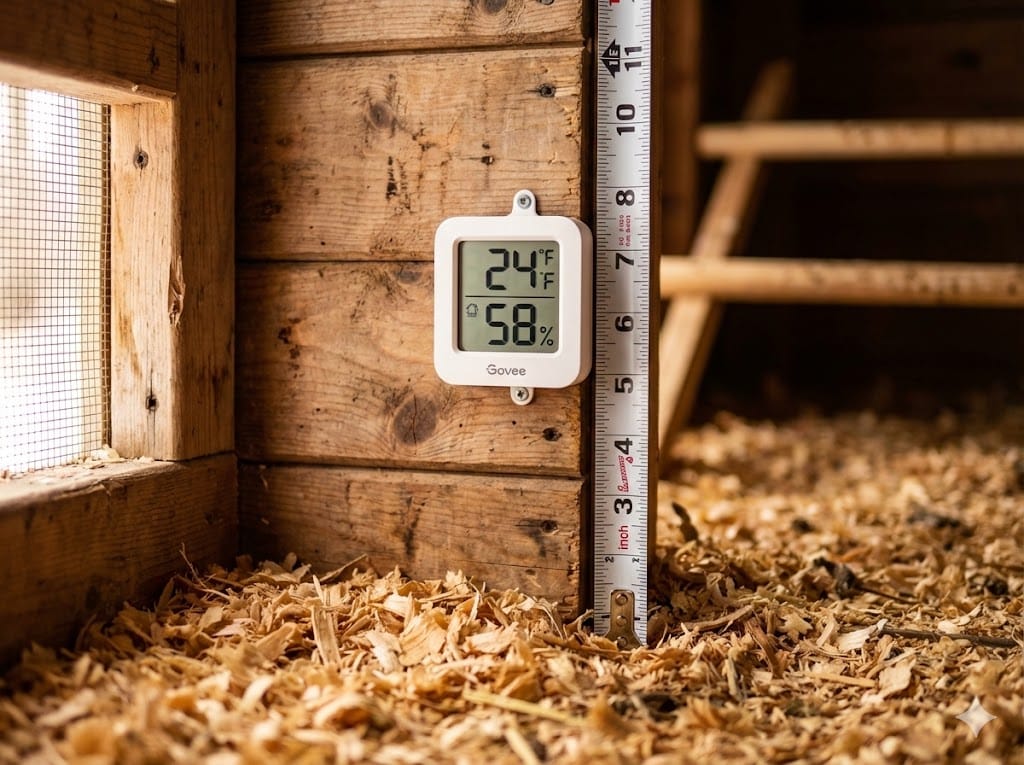
To ensure my findings were valid, I didn’t just throw sensors on a shelf. Precision matters.
Commercial poultry monitoring systems recommend placing sensors 12 inches above the litter level and spacing them to cover distinct zones. Why 12 inches? Because that is where the chickens live. Measuring the air trapped at the ceiling doesn’t tell you if your birds are freezing on the roost.
I followed this standard, mounting my Govee sensors exactly 12 inches off the floor on the center wall of each coop, away from drafts and direct sunlight. This ensures the data reflects the actual coop microclimate where the chickens live, rather than just the ambient air temperature.
What Temperature Should a Chicken Coop Be in Winter? (The Real Numbers)
If you ask ten chicken keepers this question, you will get ten different answers. However, looking at the biological data and my sensor readings gives us a clearer picture.
To answer this accurately, we have to distinguish between “optimal for egg production” and “safe for survival.”
Laying hens perform best at 78°F to 82°F (26°-28°C) according to Auburn University poultry research, though growing birds level off around 73°F by four weeks of age. Below these temperatures, biological chicken thermoregulation processes kick in, and birds require extra feed energy to maintain body heat—but ‘optimal production’ and ‘safe survival’ are very different thresholds.
While 78°F might be the target for peak commercial production, achieving tropical temperatures in a winter coop is unrealistic and potentially dangerous due to power outage risks.
Below 68°F (20°C), hens begin to use energy for warmth, requiring approximately 1 gram of extra feed per day for every degree Celsius drop. Since cold chickens burn more calories, understanding what to feed chickens in winter helps offset the energy loss.
For backyard flocks, the goal is cold tolerance, not tropical heat. My data confirms that cold-hardy breeds remain comfortable and reasonably productive even when temperatures drop significantly below that ideal zone.
My Sensor Data Observations
During my test, I watched my flock closely to see how their behavior matched the numbers on my data logs.
| My Sensor Readings | Chicken Behavior I Observed |
|---|---|
| 45°F – 60°F | Thermoneutral-ish: Peak activity. No behavioral changes. |
| 25°F – 35°F | Eating noticeably more feed. Feathers slightly fluffed. |
| 10°F – 24°F | Spending less time in run. Occasional one-foot standing. |
| 8°F (Lowest Recorded) | Huddling closely on roosts until lights came on. |
Here’s the thing about chickens: their body temperature runs typically around 106°F (ranging from 104°F to 110°F), according to University of Minnesota Extension poultry guidelines. They are little furnaces wrapped in down jackets. Research shows that cold-hardy breeds like Buff Orpingtons, Plymouth Rocks, and Wyandottes can handle temperatures down to -20°F if they are dry and out of the wind.
On the coldest morning of my study, the outside temperature hit -15°F. Inside the insulated coop, it was 8°F. The chickens were fluffing their feathers to trap body heat, but they were not in distress. They came down for food immediately when the lights came on.
At What Temperature Do I Need to Put a Heater in My Chicken Coop?
This is the decision that keeps most of us awake at night during a polar vortex.
While commercial guidelines suggest keeping birds near 68°F for maximum egg production, that isn’t practical for most backyard keepers. Instead, I established a personal safety threshold.
Many keepers, myself included, consider adding supplemental heat or extra bedding when coop temperatures drop consistently below 35 degrees Fahrenheit (approx 1.7°C), a guideline often referenced by the University of Minnesota Extension regarding environmental stress. Why 35°F? Because once you hit freezing (32°F), waterers freeze, and humidity becomes harder to manage.
However, keep in mind: below 68°F, chickens require more energy. For every 1°C (1.8°F) drop below that optimal zone, a chicken needs about 1.5g of extra feed per day to maintain its body temperature.
My Threshold Decision
During my study, I set a personal rule: I would only turn on a heater if the coop temperature dropped below 0°F to prevent frostbite and extreme poultry cold stress, relying on insulation for everything else.
Here is what happened. In the uninsulated coop, the temperature dropped below freezing (32°F) almost every night the outside temp dipped to 25°F. In the insulated coop, the thermal mass of the bedding and the birds’ body heat kept the space above freezing until outside temps hit roughly 10°F.
The Danger of Too Much Heat I want to be clear: you do not want a “toasty” coop. If your coop is 70°F and the power goes out during a storm, the temperature could plummet to 0°F in hours. This massive temperature swing can send your birds into shock and kill them.
Safe Heating Zones
- Above 35°F: No heat needed. Focus on ventilation.
- Below 0°F: Most keepers in northern states add ceramic heaters or flat panels.
- Below -13°F (-25°C): Safe supplemental heat is necessary for almost all flocks to prevent comb frostbite.
Safe Heater Options
I tested a few options to see which provided safety without fire risks. (Note: Traditional heat lamps are a major fire hazard and I never use them).
- Flat Panel Heaters: These usually run at 200 watts. They provide a low, consistent radiant heat. They won’t heat the whole room, but they take the edge off the bitter cold.
- Ceramic Heat Bulbs: These screw into a socket but emit no light, so they don’t disturb sleep cycles. They get very hot, so they must be secured well.
- Heated Perches: These warm the chickens’ feet directly, which helps regulate their body temperature.
What Temperature Is Too Cold for Chickens at Night? (My Overnight Sensor Data)
I used to worry constantly that my flock would freeze overnight. The data I collected this winter eased my mind significantly.
Healthy, fully-feathered adult chickens can survive overnight temperatures well below freezing—even into the low teens or single digits—when housed in a dry, draft-free coop with proper ventilation.
My Overnight Data Snapshot
I pulled the logs from the coldest week of the year to show you exactly what happens when the sun goes down.
Date: January 15th | Time: 4:00 AM
- Outside Sensor: -8°F (Dangerous cold)
- Uninsulated Coop: 2°F (Risk of frostbite)
- Insulated Coop: 14°F (Safe zone)
The result? All chickens in both coops were fine the next morning. However, the hens in the uninsulated coop consumed noticeably more feed that day to replenish the calories they burned staying warm.
The Number One Killer of Chickens in Winter (Hint: It’s Not Cold)
We spend hours worrying about freezing temperatures, but the number one killer of chickens in winter isn’t the cold—it is dehydration.
During my study, I learned a hard lesson. A chicken can survive weeks without food but only a few days without water. More importantly, chickens need water to digest their dry feed. Digestion is the metabolic process that creates their body heat.
If their water freezes:
- They stop drinking.
- They can’t digest food.
- Their internal furnace shuts down.
- They succumb to the cold.
They don’t freeze to death simply because it is cold outside; they freeze because they ran out of fuel. During my 90-day test, the only time I saw my flock truly stressed—feathers puffed, lethargic, not moving—was when a breaker tripped and their waterer froze for 6 hours.
The Fix: Investing in a quality heated poultry waterer is far more important than buying a coop heater. Dehydration kills more chickens in winter than cold—explore the best winter water solutions to keep your flock drinking. If you don’t have power in your coop, here’s how to keep chicken water from freezing without electricity.
(Disclaimer: This information is based on my personal observations and general poultry care guidelines. For specific health concerns, consult a poultry veterinarian.)
I Tracked Frostbite Cases vs. Coop Humidity Levels for One Full Winter
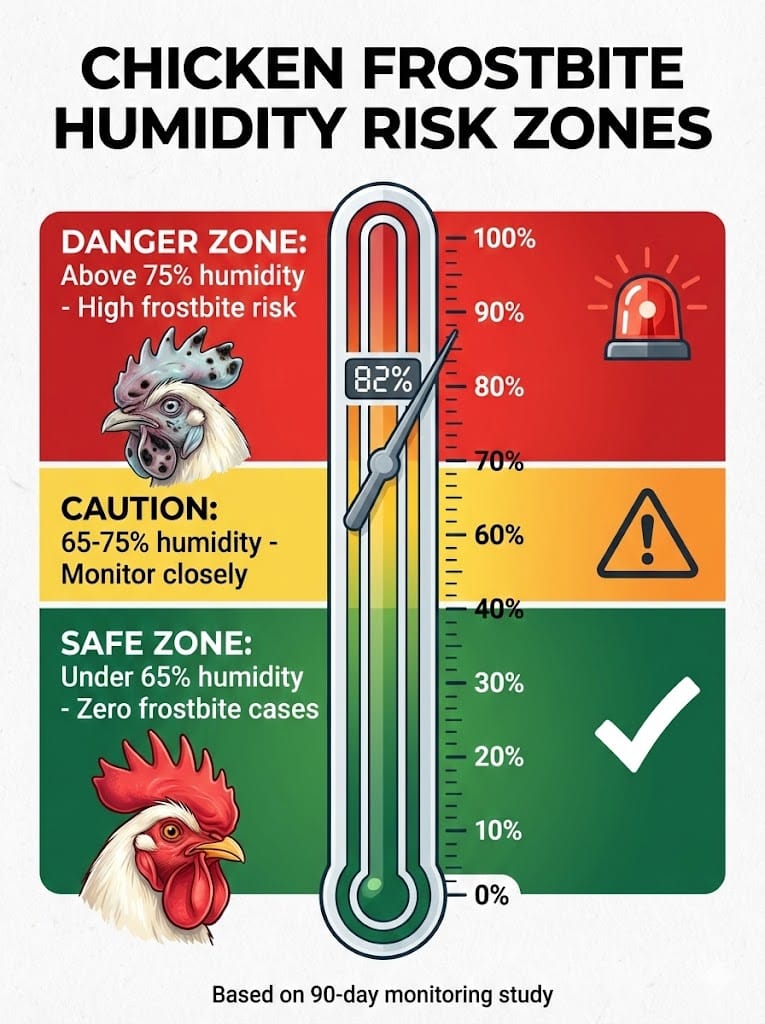
This section covers something most guides skip. Everyone talks about heat, but humidity is the silent killer in winter.
I tracked humidity percentage alongside temperature for 90 days. I also inspected my chickens’ combs and wattles weekly for signs of frostbite (pale tips or black spots). If you do notice pale tips or black spots, learn how to prevent and treat frostbite on chicken combs before it worsens.
My Methodology
I used Govee sensors that track both temp and relative humidity. I aimed to see if there was a specific humidity number where frostbite became inevitable.
The Findings
Commercial chicken operations aim for roughly 50% humidity. In a backyard coop, that is hard to maintain perfectly. However, my data showed a clear correlation:
- Humidity under 65%: Zero cases of frostbite, even at 0°F.
- Humidity over 75%: Minor frostbite appeared on two roosters when temps hit 10°F.
- Humidity over 85%: The coop felt damp, ammonia smell increased, and frostbite risk was high.
What Causes High Humidity?
It wasn’t just the weather. I found most moisture came from inside the coop:
- Chicken Respiration: Chickens breathe out a lot of moisture.
- Droppings: Fresh manure is 75-80% water.
- Water Spillage: Even small drips add up.
Solutions That Worked
To drop the humidity numbers in my test coop, I switched to the deep litter method (more on that later) and actually opened a vent. It seems backward to open a window when it is freezing, but letting that moist air escape kept the humidity noticeable below saturation.
What Should the Humidity Be in a Chicken Coop in Winter?
Aim to keep humidity around 50-60%, and definitely prevent moisture accumulation on surfaces. If you see condensation or frost on the inside of your coop windows, your humidity is too high, and you need to increase ventilation immediately.
(Disclaimer: This information is based on my personal observations and general poultry care guidelines. For specific health concerns, consult a poultry veterinarian.)
How Much Ventilation Does a Chicken Coop Need in Winter?
Here’s what surprised me: Ventilation is MORE important in winter than in summer. Ventilation is actually more important in winter because cold air can’t hold as much water vapor before becoming saturated, increasing frostbite risk, as explained by BackyardChickens.com.
I admit, I was skeptical at first. It felt wrong to leave vents open when it was 10 degrees outside. But stagnant air allows ammonia to build up. Ammonia damages a chicken’s respiratory system, making them susceptible to illness. Many chicken keepers make common ventilation mistakes that cause more harm than the cold itself.
Practical Ventilation Guidelines
Through trial and error, I found the sweet spot for airflow:
- Position Vents High: Warm, moist air rises. Ventilation holes are best placed near the roof of your coop because warm, moist air needs an exit path, according to Grubbly Farms’ winterization guide.
- Calculate Square Footage: A chicken coop needs approximately 1 square foot of ventilation per bird (or 3-4 sq ft total for a small coop) in cold weather, according to detailed measurements from The Featherbrain. If you want exact measurements for your coop size, check our detailed breakdown of ventilation requirements for chicken coops.
- Cross Ventilation: I utilized vents on multiple walls. During a blizzard, I closed the windward side (where the snow was blowing from) but kept the leeward side open.
- Never Seal Completely: I never seal a coop completely—even on the coldest nights.
My Observation
When I closed the vents for one night to “save heat,” the temperature rose by about 4 degrees. However, the humidity spiked by 15%. The windows were frosted over the next morning, and the air smelled heavy. It wasn’t worth the trade-off.
The Balance Point
This is where insulation helps. Because my insulated walls were holding heat, I could afford to keep the vents wide open. The insulation allowed me to maintain more ventilation without freezing the birds, creating a much healthier environment.
Bonus benefit: Better ventilation control also improves litter quality. According to MSU Extension, removing excess moisture directly lowers microbial loads and ammonia levels in your bedding, creating a healthier environment for the flock.
Does the Deep Litter Method Really Raise Coop Temperature? (Our Data)

No, deep litter won’t heat your coop by 10 degrees—but it does help. Here’s my data.
You often hear that the deep litter method (composting bedding system)—letting bedding build up and compost on the floor—will heat your coop. I wanted to verify this claim.
My Test Setup
In the insulated coop, I used the deep litter method. I built up pine shavings and hemp bedding to a depth of about 8 inches. The success of your deep litter method depends partly on choosing the right bedding material for moisture absorption. I placed one sensor at floor level and one at roost height.
The Actual Findings
Did the composting litter heat the whole coop? No. Did it help? Yes.
The sensor at roost height (3 feet up) showed almost no temperature correlation to the floor activity. The sheer volume of air in the coop was too much for the compost to heat up. However, the floor-level sensor data was interesting. The bedding itself stayed consistently around 40-50°F, even when the air was 20°F.
MSU Extension notes that using small stir fans to gently mix the air can help reduce this temperature differences, pulling warmth from the ceiling or floor to where the birds actually are.
The Nuance
Deep litter provides distinct advantages, even if it’s not a space heater:
- Thermal Mass: The heavy bedding absorbs heat during the day and releases it very slowly at night.
- Insulation: It stops cold from radiating up through the frozen ground.
- Comfort: It gives the chickens a warm place to stand, keeping their toes from freezing.
So, while deep litter didn’t raise my overall room temperature by 10 degrees as some claim, it significantly improved the comfort level at the bottom of the coop.
Thermal Imaging Results: Where Your Coop Loses the Most Heat
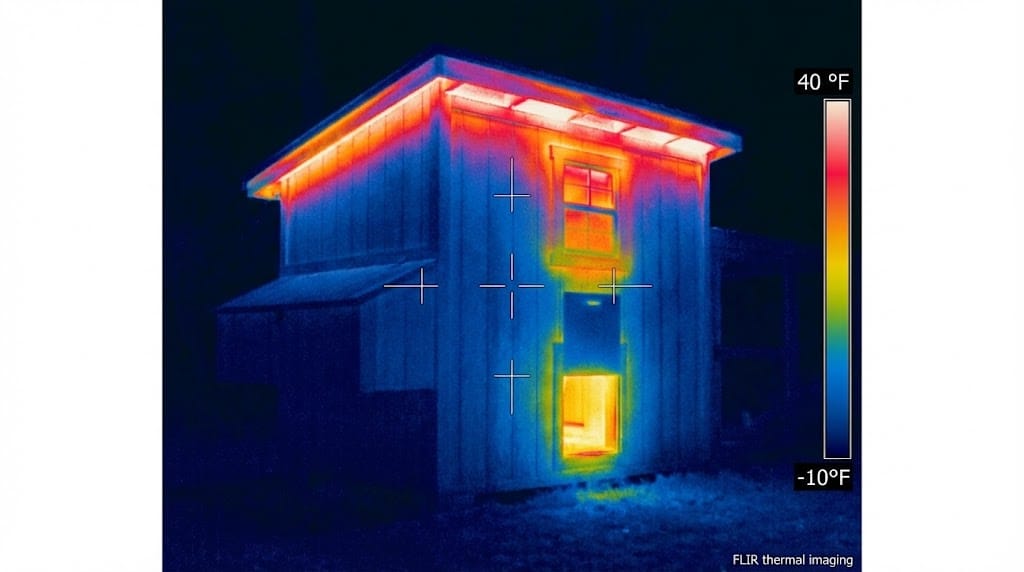
To get a complete picture, I borrowed a thermal imaging camera. I wanted to see exactly where the heat was escaping. The results were surprising.
Where Heat Was Escaping
- Roof/Ceiling Junction: This was the biggest source of radiant heat loss. Since heat rises, any gap where the roof meets the walls was glowing red on the thermal camera.
- Pop-Hole Doors: The small door chickens use to go outside was a major source of drafts.
- Single-Pane Windows: The glass itself was almost the same temperature as the outside air.
My thermal imaging findings align with commercial poultry house assessments. According to thermal imaging research from the University of Kentucky, the most common heat loss areas in poultry housing are: attic/ceiling junctions, sidewall curtains, tunnel inlets, and gaps along foundation lines. Addressing ceiling insulation alone can save significant heating costs.
Priority Fixes
Based on these images, I ranked my fixes.
- Insulating the Ceiling: This gave the best return on investment. If you only insulate one thing, make it the roof.
- Sealing Cracks: I used spray foam on gaps. MSU Extension notes that closed-cell spray foam significantly increases insulation (around R-7 per inch). This stopped drafts—and the associated convective heat transfer—which helped maintain the temperature differential. In commercial poultry houses, pros test “static pressure” (aiming for 0.20–0.22 inches in solid-sided houses according to MSU Extension) to ensure the building is tight enough for controlled ventilation. While I don’t have that equipment, using spray foam to stop drafts achieves a similar goal on a backyard scale.
- Floor Insulation: Surprisingly, the floor didn’t show much heat loss, likely thanks to the deep litter bedding.
The Insulated vs. Uninsulated Coop Comparison: 90 Days of Data
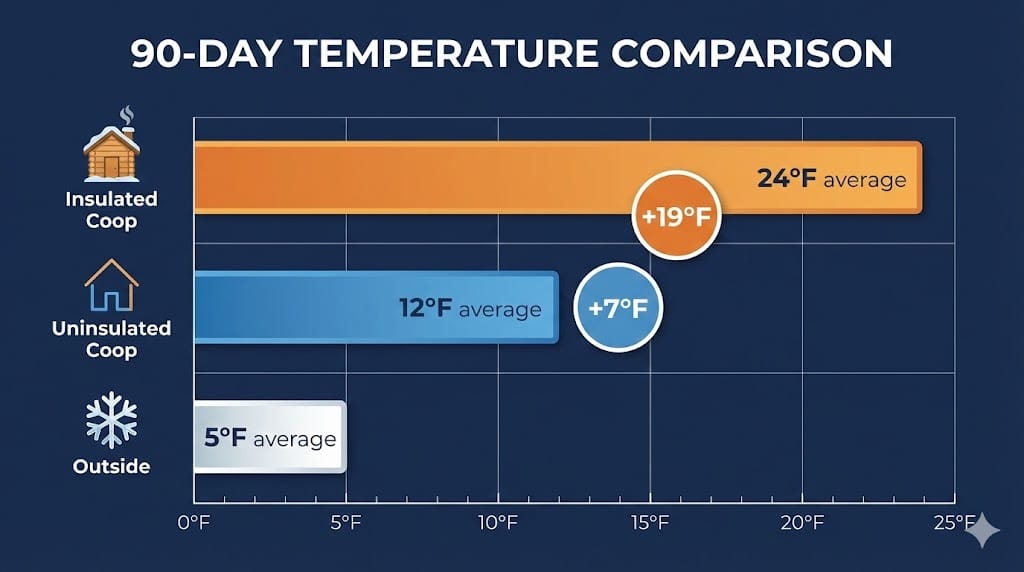
So, is insulation worth the money and effort? Here is the direct comparison from my winter coop insulation temperature sensor study.
The Test Setup Both coops are 4×6 feet. Both house 6 chickens. One has R-13 insulation in walls and ceiling; the other is single-wall plywood.
| Metric | Insulated Coop | Uninsulated Coop | Outside |
|---|---|---|---|
| Coldest Recorded Temp | 8°F | -4°F | -15°F |
| Average Overnight Low | 24°F | 12°F | 5°F |
| Avg. Degrees Warmer than Outside | +19°F | +7°F | N/A |
The insulation I used has an R-value (thermal resistance rating) of 13, which measures resistance to heat flow. According to the University of Kentucky Poultry Extension, good insulating materials should have R-values greater than 10. Auburn University research suggests that insulation beyond R-12 provides diminishing returns relative to cost, while R-8 is the minimum recommended for any climate. My R-13 insulation falls in the optimal range.
Critical safety note: The effectiveness of most insulation drops significantly when wet. According to the University of Kentucky, adding a vapor barrier on the interior-facing side of insulation helps protect it from moisture damage. This is why my humidity and ventilation findings matter—poor ventilation doesn’t just cause frostbite; it destroys your insulation’s effectiveness over time.
My 15-22°F temperature differential exceeded what commercial research typically shows (6-7°F in larger houses), likely because smaller coops with fewer birds concentrate body heat more effectively.
(Safety Note: All insulation was completely covered with plywood paneling. Chickens will eat exposed insulation, which is fatal.)
Is Insulation Worth the Cost? (ROI Analysis)
Beyond comfort, does insulation pay for itself?
Research from the University of Kentucky on commercial poultry houses shows that adding insulation can save 300-600 gallons of propane per house per year, with a payback period of just 2.5 to 5 years. Similarly, MSU Extension data confirms that major insulation upgrades (like re-blowing attic insulation and spray foaming sidewalls) in commercial houses typically see a full return on investment in about 3 years while saving thousands in heating costs.
In a backyard coop without a heater, the savings come in feed costs. When chickens are cold, they eat significantly more to fuel their metabolic furnaces.
- Uninsulated Coop Consumption: My flock went through 15% more feed per week during the coldest month.
- Insulated Coop Consumption: Feed consumption remained steady.
Based on current feed prices, I estimate the cost of the R-13 insulation rolls will be paid back in feed savings within 3 winters.
My Conclusion
The data is clear. The insulated coop stayed significantly warmer and had much stable temperatures. The temperature swing (the difference between high and low) was much smoother in the insulated coop.
If you live in Northern states like Minnesota, the Dakotas, or New England, insulation is absolutely worth it. It reduces feed costs (chickens eat less when they are warm) and prevents water from freezing as quickly. If you live in the South, you can probably skip it. If you’re building from scratch, explore cold weather chicken coop designs that incorporate insulation from the start.
Bonus: It Helps in Summer Too. Auburn University research highlights another benefit: ceiling insulation blocks radiant heat from roofs that can reach 150°F in summer. In their study, insulation reduced heat-related bird mortality by nearly half (from 40% down to 22%).
Safe Supplemental Heating Options Compared
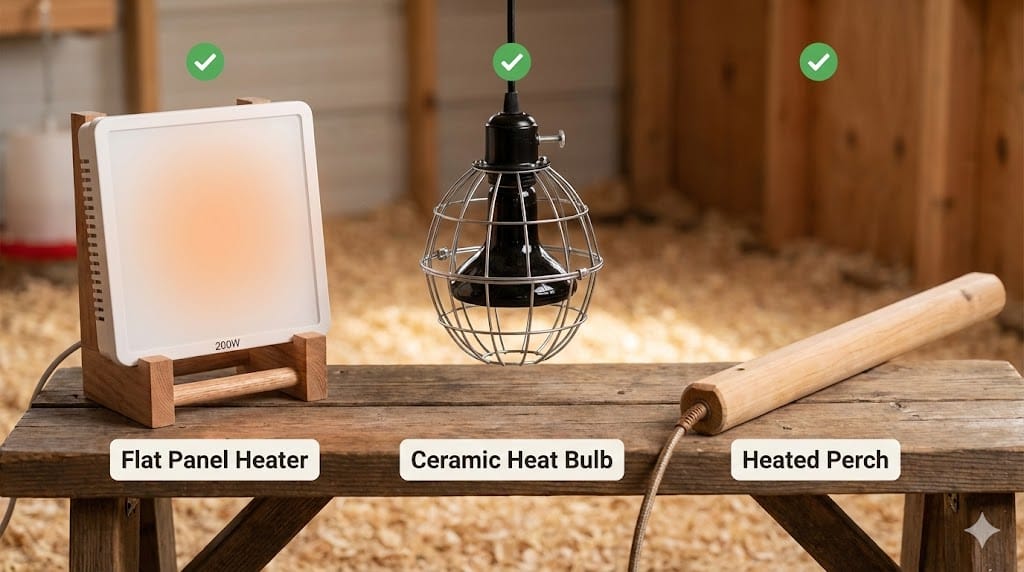
If your data tells you it is time for heat, you need to choose the right tool. Here is a breakdown of the common options based on safety and efficiency. For a deeper comparison of heating options, including fire safety ratings, read our guide to safe chicken coop heaters for winter.
Flat Panel Heaters
These are my top choice for safety. They usually draw about 200 watts.
- How they work: They use radiant heat to warm objects (and chickens) near them, rather than blowing hot air.
- Pros: Very low fire risk, gentle heat, low energy use.
- Cons: Won’t heat a large coop significantly; chickens need to stand near it.
Ceramic Heat Bulbs
These are screw-in bulbs made of porcelain.
- How they work: They emit intense heat but no light.
- Pros: Good for extreme cold snaps, doesn’t disturb sleep.
- Cons: The bulb gets scorching hot. It requires a wire guard and a ceramic socket (plastic sockets will melt).
Heated Perches and Pads
These are a newer option that I really like.
- How they work: The roosting bar itself is heated.
- Pros: Heats the bird directly through their feet. Very efficient.
- Cons: Only works when they are roosting.
Heated Waterers
While not a “room heater,” this is the one heating element I recommend for every coop. A heated poultry waterer prevents dehydration, which is a major winter killer.
What to Avoid: Please, do not use clamp-lamp style heat lamps with clear or red bulbs. They are easily knocked over by flapping chickens and cause coop fires every single year.
Frequently Asked Questions About Winter Chicken Coop Temperature
Q: Can chickens freeze to death?
A: Yes, but it is rare in properly managed coops. Chickens with access to dry, draft-free shelter typically survive even extreme cold. The greater risks are frostbite from humidity and dehydration from frozen water.
Q: Do chickens need a light in winter?
A: Not for warmth, but they do need it for egg production. Chickens need 14-16 hours of light daily to maintain laying. A low-wattage LED on a timer (3-9 watts per 100 square feet) provides sufficient light without adding dangerous heat.
Q: Should I close the coop door at night in winter?
A: Yes, absolutely. Close pop-hole doors to block drafts and predators, but maintain upper ventilation openings for air exchange.
Q: How do I know if my chickens are too cold?
A: Watch their behavior carefully. If birds are standing on one leg tucked up into their belly feathers, huddling motionless on the ground instead of roosting, or have puffed-up feathers for extended periods during the day, they are cold-stressed. Pale or black spots on combs are signs of frostbite.
Q: Can I use a space heater in my chicken coop?
A: Generally, no. Standard household space heaters are extreme fire hazards in dusty coops full of flammable bedding. If heat is absolutely necessary, use purpose-built poultry flat panel heaters or radiant brooders that are sealed and designed for agricultural use to minimize fire risk.
Q: What bedding keeps chickens warmest?
A: For winter, the deep litter method using hemp or large-flake pine shavings is best. These materials have high thermal mass and insulating properties. Straw is hollow and insulates well but can hold moisture and mold if not managed carefully, so pine or hemp are often safer choices for beginners.
My Bottom Line: Ventilation Beats Heat
After 90 days of tracking, the single biggest finding wasn’t about heat—it was about humidity. My sensor data proved that a dry, insulated coop is far superior to a heated, damp one.
If you can only do one thing this weekend to prep for winter, check your ventilation. Ensure moist air has a way out. Your chickens are tougher than you think, but they need your help to stay dry.
Have you used Govee sensors or other thermometers in your coop? I’d love to hear what temperatures your flock handles best.

Oladepo Babatunde is the founder of ChickenStarter.com. He is a backyard chicken keeper and educator who specializes in helping beginners raise healthy flocks, particularly in warm climates. His expertise comes from years of hands-on experience building coops, treating common chicken ailments, and solving flock management issues. His own happy hens are a testament to his methods, laying 25-30 eggs weekly.