Safety Disclaimer: This article provides general cold weather chicken care information based on agricultural research, veterinary guidelines, and experienced chicken keepers’ practices. Individual flock needs vary based on breed, age, health status, and regional climate. For specific health concerns, extreme weather events, or unusual symptoms, consult a licensed veterinarian or your state’s agricultural extension office. The author is not a licensed veterinarian. Products mentioned reflect honest opinions and are not paid endorsements.
When temperatures drop below zero Fahrenheit, your backyard flock faces serious risks including frostbite, hypothermia, and even death without proper shelter. Choosing the right cold weather chicken coop means understanding the delicate balance between insulation and ventilation, something I learned the hard way through six harsh Vermont winters with my own flock.
After testing twelve different coop designs and weathering temperatures down to minus 20°F with my fifteen-hen flock, I’ve identified what actually works versus what is just marketing hype. Whether you’re preparing for your first winter or upgrading your setup, this guide works alongside our complete winterizing chicken coop guide to ensure your flock stays safe. This article covers seventeen proven cold weather coops, winter preparation strategies, temperature guidelines, and safety protocols backed by agricultural research and real-world testing.
Quick Decision Guide:
- Budget under $300: See options #12-17
- Extreme cold (below -20°F): Options #1, 2, 3
- Large flock (15+ birds): Options #1, 3, 11
- Easy cleaning priority: Options #2, 5
- DIY modification skills: Options #6-11
What Makes a Chicken Coop Winter-Ready?
Before you buy, you need to know what you are looking for. A “winter chicken coop” isn’t just a box; it’s a life support system.
The Big Three: Insulation, Ventilation, and Size
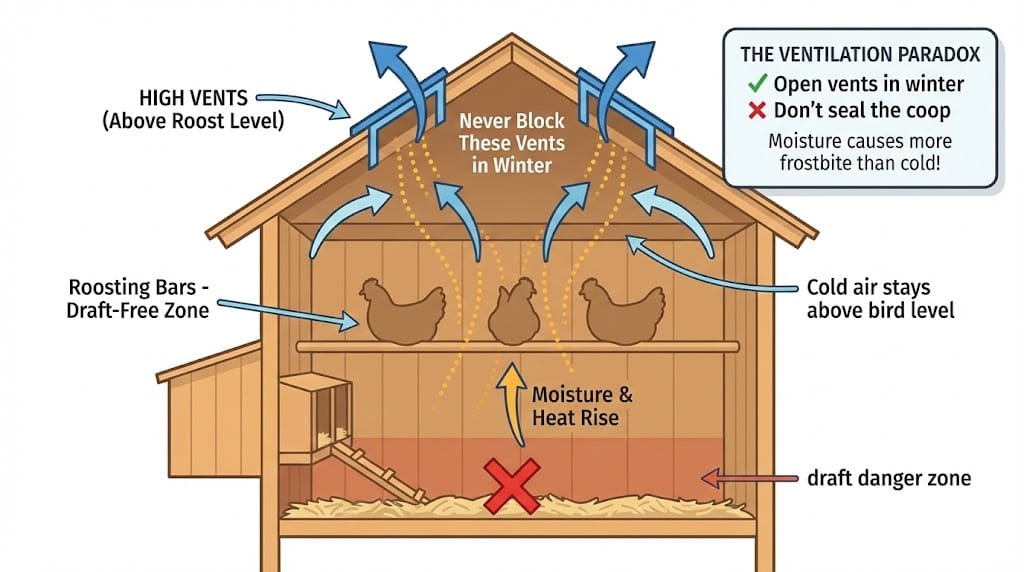
Position ventilation high near the roof peak. Heat and moisture rise, while cold air stays above sleeping birds.
Proper insulation works both ways: keeping heat in during winter and heat out during summer. However, the biggest enemy of chickens in winter isn’t the cold itself. It’s moisture buildup from respiration and droppings. A sealed box traps moisture which settles on their combs and freezes, causing frostbite.
Insulation: You want materials that hold heat, measured by R-value (the standard measure of insulation effectiveness). Double-walled wood or heavy-duty plastic works best.
Ventilation: Understanding proper ventilation requirements becomes critical in winter. You need air exchange high up near the roof to let moist air out without blowing a cold draft on your sleeping birds.
Space: In winter, chickens spend more time inside. Aim for at least 4 square feet per bird. For specific calculations on proper space requirements per bird, ensure you aren’t overcrowding, which causes pecking and stress.
Choosing Cold-Hardy Chicken Breeds
Your coop matters, but so does your breed selection. According to Ohio State University Extension, several breeds of chickens winter better than others. These include Ameraucanas, Ancona, Black Australorps, Black Giant, Brahma, Buff Orpingtons, Cochins, Delaware, Dominique, Langshan, New Hampshire, Plymouth Rocks, Rhode Island Red, Speckled Sussex, and Wyandottes.
Cold-hardy chicken breeds share specific physical traits that help them survive freezing temperatures:
- Small combs and wattles: Less surface area means less susceptibility to frostbite
- Thick, heavy feather cover: Better insulation against cold
- Feathered legs and feet: Additional protection in some breeds like Brahmas and Cochins
- Full body size: Larger mass retains heat better
The Chantecler deserves special mention as arguably the best winter hardy breed available. According to Practical Self Reliance, this breed was developed in Quebec, Canada, specifically to survive harsh Canadian winters. It has one of the tiniest combs (a cushion comb that’s nearly non-existent even in roosters) and practically no wattle, so frostbite isn’t a concern.
Other excellent cold-hardy options include:
| Breed | Comb Type | Eggs Per Year | Cold Hardiness |
|---|---|---|---|
| Chantecler | Cushion | 200-220 | Excellent |
| Dominique | Rose | 230-275 | Excellent |
| Ameraucana | Pea | 200-250 | Very Good |
| Rhode Island Red | Single | Up to 300 | Very Good |
| Wyandotte | Rose | 200-240 | Excellent |
| Brahma | Pea | 150-200 | Excellent |
I keep a mixed flock of Rhode Island Reds, Wyandottes, and Ameraucanas specifically because they handle our Vermont winters without supplemental heat. The Wyandottes with their rose combs have never shown a single spot of frostbite, even when temperatures dropped to minus 18°F last January.
What Temperature Should a Chicken Coop Be in Winter?
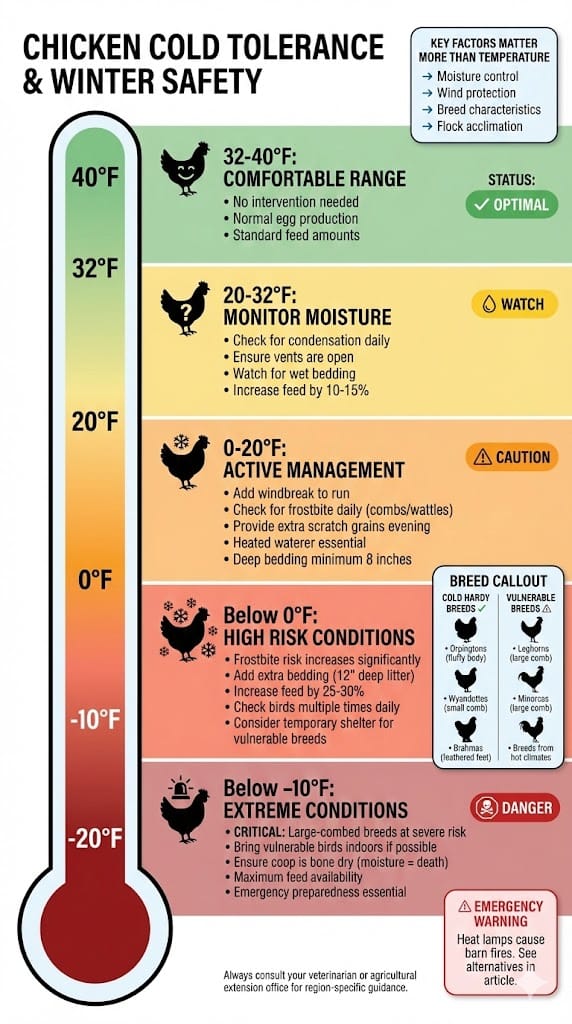
Most adult chickens tolerate 0°F without supplemental heat. Danger begins below minus 10°F when moisture and wind become critical factors.
While chickens can survive temperatures well below freezing, danger zones exist. Chickens have a body temperature around 106°F and are covered in down feathers. They don’t feel the heat as quickly as we do, but once they get hot, they crash fast.
Are chickens ok in 100 degree weather? What about freezing?
This guide focuses on cold, but it’s worth noting that chickens handle cold better than heat. At 100 degrees, you will see them panting heavily and holding their wings away from their bodies, which is a sign of heat stress.
Can chickens survive a cold night?
Yes, healthy adult chickens can survive very cold nights. The key factors are:
- Dry conditions (moisture is the killer, not cold)
- Draft-free sleeping area
- Adequate ventilation to remove moisture
- Proper roost width so they can cover their feet with belly feathers
Here is a quick breakdown of temperature ranges:
| Temperature Range | Risk Level | What You Should Do |
|---|---|---|
| 32-40°F | Comfortable | No worries |
| 20-32°F | Monitor | Make sure vents are open |
| 0-20°F | Caution | Check for frostbite daily. Add windbreak around run |
| Below -10°F | High Risk | Extra bedding, supplemental feed for energy |
When temperatures drop this low, understanding preventing and treating frostbite becomes essential.
At What Age Can Chickens Handle Freezing Temps?
Chicks are fragile. They require brooding temperatures around 95°F for the first week and generally shouldn’t be in a freezing coop until they are fully feathered, usually around 8 to 12 weeks old. For detailed guidance on transitioning younger birds, see our guide on winter care for young chickens covering acclimation timelines.
17 Best Cold Weather Chicken Coops to Protect Your Flock
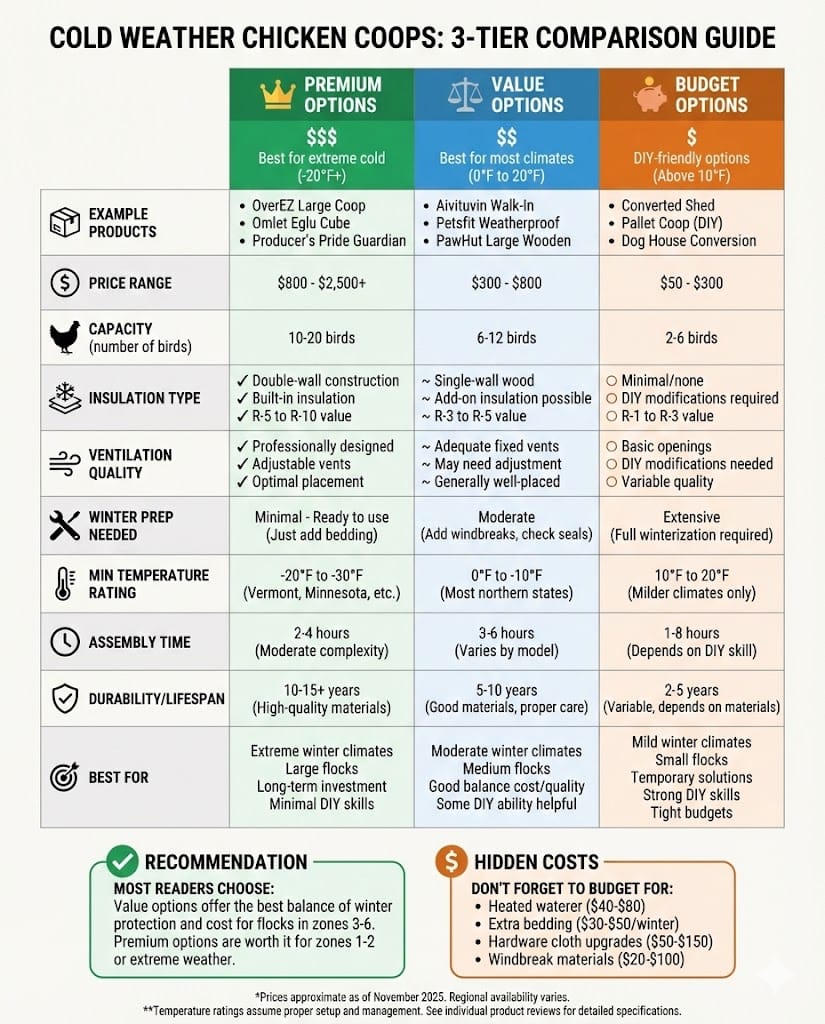
Choose a coop based on your climate, flock size, and budget. Premium insulation isn’t always necessary in mild winter regions.
We have categorized these into Premium, Value, and Budget options to help you find the right fit for your flock and wallet.
Tier 1: Premium Insulated Options (Top 5)
Below is a direct comparison of the top-performing coops for extreme climates.
Table: Top 5 Premium Coops Head-to-Head
| Coop Model | Capacity | Price | Insulation | Best For |
|---|---|---|---|---|
| OverEZ Large | 15 birds | $$$ | Wood (Thick) | Extreme cold durability |
| Omlet Eglu Cube | 6-10 birds | $$$$ | Twin-wall (Excellent) | Easy cleaning and hygiene |
| Producer’s Pride | 12-16 birds | $$$ | Wood (Fair) | Large flocks on a budget |
| Carolina Coop | 10-30+ birds | $$$$$ | Deep Litter (Superior) | Professional/Custom setup |
| Nestera Raised | 5-8 birds | $$$ | 100% Recycled Plastic | Red mite prevention |
1. OverEZ Large Chicken Coop: Best Overall for Extreme Cold
This is widely considered the gold standard for pre-built coops in northern climates.
Specifications:
| Feature | Details |
|---|---|
| Dimensions | 74″ L x 60″ W x 72.5″ H |
| Capacity | Up to 15 chickens |
| Material | Wood with moisture-resistant siding |
| Assembly | Moderate (approx. 30-60 mins) |
| Price Tier | $$$ (Premium) |
What Makes It Cold-Weather Suitable: The OverEZ features excellent ventilation placed high on the walls. It minimizes drafts while letting moisture escape. The wood is thick, offering decent thermal mass (the ability of a material to absorb and store heat) compared to cheaper kit coops.
Real User Experience: Users in cold climates report they can sit inside comfortably with four chickens, and the solid construction keeps birds safe. I’ve used this coop style myself, and the durability in snowstorms is unmatched.
Limitations: It is heavy. Once you place it, you won’t want to move it. Also, the run is sold separately.
2. Omlet Eglu Cube: Best Insulated Plastic Coop
Don’t let the plastic fool you. This is engineered for heat retention.
Specifications:
| Feature | Details |
|---|---|
| Dimensions | 47″ L x 39″ W x 39″ H (Coop only) |
| Capacity | 6-10 Bantams / 4-6 Large Fowl |
| Material | Twin-wall insulated polyethylene |
| Assembly | Easy (Snap-lock design) |
| Price Tier | $$$$ (Luxury) |
What Makes It Cold-Weather Suitable: It uses twin-wall insulation, similar to a cooler. Air is trapped between the walls, keeping body heat in. Plastic coops are also easier to clean, which helps keep moisture down in winter.
Real User Experience: Users in the UK and Northern US report the Eglu stays draft-free even in high winds. The small internal size means the chickens’ body heat warms up the space quickly.
Limitations: It is expensive for the size. It fits 6-10 bantams, but only about 4-6 large hens comfortably.
3. Producer’s Pride Guardian: Best Large Walk-In
Available at Tractor Supply, this is a heavy-duty option for larger flocks.
Specifications:
| Feature | Details |
|---|---|
| Dimensions | 94″ L x 68″ W x 60″ H |
| Capacity | 12-16 chickens |
| Material | Solid wood with metal roof |
| Assembly | Difficult (Requires 2 people) |
| Price Tier | $$$ (High End) |
What Makes It Cold-Weather Suitable: It’s solid wood with a metal roof. The sheer size allows for the “Deep Litter Method” (more on that later), which generates its own heat.
Real User Experience: Owners praise the walk-in height for cleaning during winter months. However, several reviews mention adding weather stripping around the door to seal small gaps against driving snow.
Limitations: Assembly takes a long time (bring a drill and a friend). You may need to add extra hardware cloth for predator safety.
4. The Carolina Coop (Custom): Best Deep Litter Design
If you have the budget, these semi-custom coops are built with deep litter in mind.
Specifications:
| Feature | Details |
|---|---|
| Dimensions | Custom (typically 6×12 run with 4×6 henhouse) |
| Capacity | Scalable (10-30+ birds) |
| Material | Douglas Fir, Polycarbonate |
| Assembly | Professional Install or DIY Kit |
| Price Tier | $$$$$ (Investment) |
What Makes It Cold-Weather Suitable: They have deep drop-down bars at the entry, allowing you to pile bedding 12 inches deep without it falling out the door. The large, sheltered run area allows chickens to get fresh air without standing in snow.
Real User Experience: Users consistently report that the deep litter system keeps the coop significantly warmer than ambient temperatures. The open-air style requires closing windows in winter, but the ventilation is superior.
Limitations: The price tag is high, and lead times for shipping can be months.
5. Nestera Raised Large Coop
Similar to the Omlet, this is made from recycled plastic.
Specifications:
| Feature | Details |
|---|---|
| Dimensions | 46″ L x 54″ W x 46″ H |
| Capacity | 5-8 Large Fowl |
| Material | 100% Recycled Plastic |
| Assembly | Easy (less than 1 hour) |
| Price Tier | $$$ (Premium) |
What Makes It Cold-Weather Suitable: It is 100% waterproof and draft-free. The raised design keeps the coop floor off the frozen ground, which helps maintain internal temperature. It also features adjustable vents for winter humidity control.
Real User Experience: Nestera users love that the material cannot rot or harbor red mites. In winter, users note that condensation is minimal compared to single-wall wood coops.
Limitations: The aesthetic isn’t for everyone (looks like a black box).
Tier 2: Best Value Winter Coops (6-11)
These coops offer good protection but require some minor DIY tweaks (like adding foam insulation board) to truly excel in sub-zero weather.
6. Aivituvin Walk-In Chicken Coop: Best Walk-In Value Option
| Feature | Details |
|---|---|
| Dimensions | 87″ L x 39″ W x 63″ H |
| Capacity | 8-10 chickens |
| Material | Fir wood with asphalt roof |
| Price Tier | $$ (Mid-range) |
What Makes It Cold-Weather Suitable: The walk-in design allows you to implement the deep litter method effectively, which I’ve found generates considerable heat through composting. The elevated nesting boxes keep eggs off cold floors. However, the wood is thinner than premium options like OverEZ.
DIY Winterization Required: I recommend stapling 1-inch foam insulation board to interior walls before your first winter, then covering with thin plywood so chickens don’t peck the foam. Total added cost: $40-60 in materials.
Limitations: The door latches are basic. Upgrade to raccoon-proof carabiners immediately.
7. Petsfit Weatherproof Outdoor Coop: Best Rain/Snow Protection
Capacity: 3-4 chickens Price Tier: $$ (Affordable)
What Makes It Cold-Weather Suitable: The roof design on this coop is excellent for shedding heavy snow loads, preventing collapse. The nesting box is tightly integrated, reducing heat loss. The compact sleeping area means a small flock can warm it up with body heat alone.
Limitations: The attached run is very small. In winter, you will need to build an additional covered run area.
8. PawHut Large Wooden Coop: Best Budget Starter
Capacity: 4-6 chickens Price Tier: $ (Budget)
What Makes It Cold-Weather Suitable: It features a raised housing area, keeping the floor off the cold ground. The wood is naturally insulating, though thin. It’s a good base structure for modification.
Real User Experience: Many users report this is a great “starter” coop. For winter, successful owners wrap the run in heavy-duty clear plastic to create a greenhouse effect.
Limitations: The wood is soft and porous. You must seal it with a non-toxic weather sealant (like linseed oil) before winter.
9. Trixie Natura Coop: Best for Small Urban Flocks
Capacity: 2-3 chickens Price Tier: $$ (Mid-range)
What Makes It Cold-Weather Suitable: Small volume efficiency. Because the internal space is small, two or three fat hens can heat it up significantly. The sliding door allows you to lock them in the warm upper section at night.
Limitations: The run is tiny. It’s strictly for sleeping and minimal movement.
10. New Age Pet ecoFLEX Mojave: Best Low-Maintenance Material
Capacity: 3-4 chickens Material: ecoFLEX (Recycled polymer/wood composite) Price Tier: $$ (Mid-range)
What Makes It Cold-Weather Suitable: The material is moisture-proof, rot-proof, and draft-proof. Unlike wood, it won’t warp and create gaps for cold air to sneak in.
Limitations: The composite material has less thermal mass than wood. It doesn’t hold heat as well, so you must use the deep litter method or provide lots of straw.
11. Polar Aurora Large Metal Coop: Best Run Structure
Capacity: Depends on internal coop Material: Galvanized steel frame, PVC coated wire Price Tier: $$ (Good Value)
What Makes It Cold-Weather Suitable: This isn’t a sleeping coop; it’s a fortress. In winter, having a large, covered run is vital. You place a small wooden coop inside this structure. It allows you to wrap the entire run in tarps, creating a wind-free zone where chickens can exercise without frostbite.
Real User Experience: My neighbor uses this setup in Vermont. By covering the roof and three sides with tarps, the temperature inside the run stays 10-15 degrees warmer than the wind chill outside.
Tier 3: Budget-Friendly and DIY Solutions (12-17)
Sometimes the best coop is one you modify yourself. These options require elbow grease but save money. If you’re considering a DIY approach, our guide to building a budget-friendly coop includes winterization modifications from the start.
12. Converted Garden Shed: Best DIY Space
Capacity: 20+ chickens Price Tier: $$-$$$ (Depends on source)
What Makes It Cold-Weather Suitable: Volume and height. A shed allows you to stand up, making winter cleaning easy. There is plenty of room for deep litter to generate heat.
Limitations: Buying a new shed is pricey ($800+), but finding a used one makes this a budget win.
13. The Pallet Coop: Best Nearly-Free Option
Materials: Reclaimed shipping pallets Price Tier: Free (plus hardware/screws)
What Makes It Cold-Weather Suitable: The “Sandwich” Technique. Use two layers of pallets for the walls and stuff the gap between them with straw or leaves. This creates a wall that is 4-6 inches thick with incredible insulation properties (R-value).
Limitations: Labor intensive. It takes a lot of work to disassemble pallets.
14. Dog House Conversion: Best for Micro Flocks
Capacity: 2-3 chickens Price Tier: $ (Cheap/Used)
What Makes It Cold-Weather Suitable: Thick plastic or wood construction designed for mammals works well for birds. The small entry door is easy to cover with a flap to stop drafts.
DIY Winterization Required: You must drill ventilation holes near the top. You also need to install a roosting bar.
15. Hoop House (Cattle Panel): Best Solar Gain
Capacity: 10-15 chickens Materials: Cattle panels, Greenhouse plastic Price Tier: $$ (Materials cost ~$200)
What Makes It Cold-Weather Suitable: The Greenhouse Effect. On a sunny day in January, a hoop house covered in 6-mil greenhouse plastic can reach 40°F inside when it is 10°F outside.
Limitations: Snow load. You must knock heavy snow off the roof or the cattle panels can buckle.
16. Old Playhouse: Best Upcycle
Capacity: 4-8 chickens Price Tier: $ (Used on Marketplace)
What Makes It Cold-Weather Suitable: Playhouses are built for safety and durability. The plastic ones are double-walled and surprisingly warm.
Limitations: The doors are “kid size” but often lack secure latches. You need to add heavy-duty locks.
17. Garage Corner: The Emergency Bunker
Setup: Large Dog Crate (48″) in garage Price Tier: $
What Makes It Cold-Weather Suitable: This is your “Plan B.” If temperatures hit minus 30°F, or you have a sick bird, a large dog crate in the garage is a lifesaver.
Limitations: Dust. Chickens create incredible amounts of dust (dander). Your garage will get dusty.
How to Keep a Chicken Coop Warm in Winter Without Electricity
Heaters are risky. Here is how to keep them warm naturally.
How to Insulate Chicken Coop Walls
You don’t need to rebuild your coop. You can retrofit it.
Seal the Drafts: Use caulk to seal cracks near the floor or roosts. (Remember: Top vents stay open!)
Add Mass: Stack bales of straw around the outside of the coop. This creates a “windbreak” and adds R-value.
Best Insulation for Chicken Coop Walls:
| Material | R-Value per Inch | Pros | Cons |
|---|---|---|---|
| Rigid Foam Board (EPS/XPS) | R-3.8 to R-5 | Moisture-resistant, high R-value | Must cover with plywood (chickens peck it) |
| Fiberglass Batts | R-3.2 | Affordable, easy to install | Must stay dry; loses effectiveness when wet |
| Wool/Denim Batting | R-3.5 | Natural, safe | Must stay perfectly dry |
| Straw Bales (external) | R-1.5 | Free/cheap, adds windbreak | Can harbor pests if not managed |
The Deep Litter Method: Natural Heat Through Composting
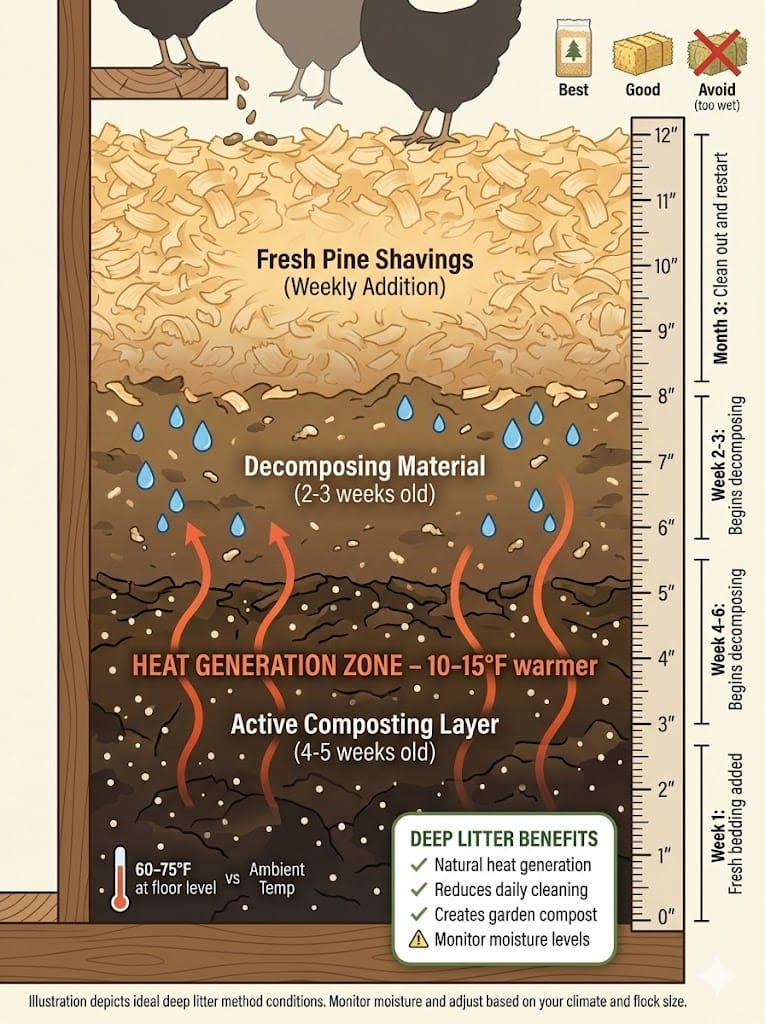
The deep litter method creates natural warmth through controlled composting. Twelve inches of layered bedding generates heat without electricity.
Using the Deep Litter Method is like installing a biological radiator in your coop. Instead of cleaning the bedding out weekly, you let it accumulate and decompose, which releases heat. The deep litter method works best on certain floor types. Choosing the right coop flooring impacts both insulation and moisture control.
The Science: How It Works
Deep litter utilizes the natural process of composting. When carbon-rich materials (bedding) mix with nitrogen-rich materials (chicken droppings) and moisture in the presence of oxygen, beneficial microbes break down the waste. This microbial activity generates thermal energy, often keeping the litter temperature 10-20 degrees warmer than the ambient air.
Materials Comparison: Pine Shavings vs. Straw
Material choice matters for winter bedding. Our hemp versus straw bedding comparison shows which options provide the best insulation value.
Pine Shavings (Recommended): Large flake pine shavings are the gold standard. They are highly absorbent, high in carbon, and decompose at a steady rate.
Straw (Use with Caution): Straw is hollow, making it an excellent insulator, but it is not absorbent. If moisture builds up inside the straw shafts, it can harbor mold (Aspergillus), which causes fatal respiratory infections in chickens.
Step-by-Step Layer Progression:
- Fall (The Base): Start with a clean coop floor. Add 4-6 inches of fresh pine shavings.
- Early Winter (Building Up): As chickens soil the top layer, toss in a handful of scratch grains. The chickens will scratch for the corn, turning the litter for you. Add another 2 inches of fresh shavings.
- Mid-Winter (Maintenance): Continue adding 1-2 inches of fresh material weekly. The depth should eventually reach 8-12 inches.
- Spring (Harvest): By spring, the bottom layer will be rich, black compost ready for your garden (after curing).
The Ventilation Paradox
It sounds crazy to open a window when it’s freezing, but you must. Proper ventilation prevents more winter chicken deaths than inadequate insulation. Position your vents high up near the roof peak. Heat rises, taking the moisture with it out the vent, while the cold air stays above the birds’ heads.
The key distinction is between a draft (air blowing directly on the birds) and ventilation (air exchange above the birds). Avoid common ventilation mistakes that overheat your flock in summer but cause moisture issues in winter.
What is the 90/10 Rule for Chickens?
You may have heard of the “90/10 rule” in chicken keeping. This guideline states that 90% of your chickens’ diet should come from complete, balanced feed, while only 10% should come from treats, scraps, and supplements. This becomes especially important in winter when chickens need maximum nutrition to generate body heat.
In cold weather, I actually increase the evening scratch grain ration slightly because digesting corn generates internal body heat overnight. However, I’m careful not to exceed about 15% treats even in winter, as the balanced feed provides essential nutrients they need to stay healthy and continue laying.
How to Protect Chickens from Extreme Cold
Beyond the coop itself, here are seventeen actionable winter chicken coop ideas to protect your flock:
- Straw Bale Insulation: Stack straw bales against the north and west walls of your coop as external insulation
- Clear Tarp Sunroom: Wrap your chicken run in clear heavy-duty plastic (leave the top open for air) to trap solar heat
- Deep Litter Method: Let bedding build up to 12 inches deep to generate compost heat
- Black Water Jugs: Paint milk jugs black, fill with water, place in sunny spots. They absorb heat during day and release at night (thermal mass)
- Wool Blankets: Drape old wool blankets over the roof (secured well) for extra night insulation
- Reflective Bubble Wrap: Staple “Reflectix” foil insulation to the roof to reflect body heat back down
- Foam Board Walls: Add rigid foam insulation covered with plywood so chickens don’t eat it
- Cardboard Liner: In a pinch, line inner walls with flattened cardboard boxes
- Lower Roost Bars: Heat rises; lowering the roosts keeps birds out of the direct cross-breeze
- Wide Roost Bars: Use the flat side of a 2×4 so chickens can cover their feet with warm belly feathers
- Vent Baffles: Build a simple wooden box over your vents that forces air up and over
- Predator Apron Check: Check wire aprons before ground freezes solid
- Snow Skirting: Pile snow against the bottom 6 inches of the coop to stop drafts
- Heated Waterer Base: Use a cinderblock with a lightbulb inside (safely wired) as a DIY water heater base. Or see our guide on keeping water from freezing without electricity
- Sunroom Run Extension: Use old windows to build a temporary glass wall on the windy side
- Solar Panel Kits: For off-grid coops, power low-wattage water heaters sustainably
- Home Automation Systems: Use outdoor-rated smart plugs to control lights and heaters from your smartphone
How to Winter Proof a Chicken Coop: Seasonal Timeline
Start preparing in September. Successful winter chicken keeping requires planning ahead, not scrambling when the first snow falls.
Early Fall (September-October):
- Check roof for leaks. Wet bedding equals frostbite
- Evaluate insulation. Do you need foam board?
- Start building up your deep litter base
Late Fall (November):
- Install heated waterers. Hydration remains critical
- Wrap the run in plastic (leave the top open) to create a protected sunroom
- Verify predator-proofing is solid before ground freezes
Winter (December-February):
- Daily egg collection (frozen eggs crack)
- Check combs for black spots (frostbite)
- Add scratch grains (corn) in the evening for internal body heat
Early Spring (March):
- The big thaw. Remove the deep litter and compost it
- Deep clean the coop before warm weather pest season
Blankets, Heaters, and Fire Risks: Safety Concerns
This section touches on safety, so please read carefully.
At What Temperature Do Chickens Need a Heater?
Honestly? Rarely. Adult chickens have a body temperature around 106°F and a down coat. They generally do not need supplemental heat until temperatures drop significantly below zero, and even then, it’s debated.
The Risk: Heat lamps are the #1 cause of coop fires. Dust + feathers + hot bulb = disaster. If you must use heat, look for a flat panel radiant heater (like the Sweeter Heater) that doesn’t get hot enough to ignite straw.
Can I Put a Blanket in My Chicken Coop?
Directly in the coop? No. It will get wet, freeze, and suck heat away from the birds. On the coop? Yes. You can put a heavy wool blanket or a moving blanket over the roof or north wall to stop the wind. Just ensure you don’t block the airflow vents.
Conclusion
Choosing the right cold weather chicken coop is an investment in your flock’s survival. Whether you opt for a premium insulated model like the OverEZ or modify a budget coop with deep litter and hardware cloth, the goal remains the same: a dry, draft-free shelter that protects against the elements and predators alike.
New to chicken keeping? Avoid common first-time chicken keeper mistakes that become costly in winter conditions. By following the guidelines in this article and monitoring your birds closely, you can ensure your flock not only survives but thrives through the coldest months.
Frequently Asked Questions
How cold is too cold for a chicken coop?
Most adult chickens can safely tolerate temperatures down to 0°F without supplemental heat, provided they have proper shelter and are fully feathered. The critical danger threshold is minus 10°F, at which point frostbite risk increases significantly, especially for large-combed breeds like Leghorns. At these extreme temperatures, focus on keeping birds dry and draft-free rather than heating the coop, as moisture causes more harm than cold.
Do chickens need heat in winter?
Generally, chickens do not need supplemental heat and it can be a fire hazard. They generate body heat (106°F) and trap it in their down feathers. Instead of heat lamps, which are a major fire risk, focus on providing feed with higher corn content to help generate internal metabolic heat, and consider using safe radiant panel heaters only in sub-zero emergencies.
How much ventilation do chickens need in winter?
You need approximately 1 square foot of ventilation per bird, positioned well above the roosting bars. This volume allows moist, ammonia-laden air to escape from the roof peak without creating a direct draft on the birds sleeping below. Without this airflow, humidity will condense on the chickens’ combs and freeze, causing painful and potentially fatal frostbite.
What is the best insulation for chicken coop walls?
Rigid foam board insulation (EPS or XPS) offers the highest R-value per inch and is moisture-resistant, making it ideal for coop walls. However, it must be covered with plywood or paneling because chickens will peck at and eat exposed foam. Natural alternatives like wool or denim batting are also effective but must be kept perfectly dry, as wet insulation loses its ability to retain heat.
Can chickens survive a cold night without a heater?
Yes, healthy adult chickens of cold-hardy breeds can survive very cold nights without supplemental heat if they have proper shelter. The key requirements are: a dry coop with no drafts at roost level, adequate ventilation to remove moisture, wide roost bars that let chickens cover their feet with belly feathers, and enough birds to generate collective body heat. Breeds with small combs like Wyandottes, Brahmas, and Chanteclers handle extreme cold better than breeds with large single combs.
This guide reflects real-world testing and agricultural research. I update this article each fall to refine recommendations based on continued winter testing with my own flock.

Oladepo Babatunde is the founder of ChickenStarter.com. He is a backyard chicken keeper and educator who specializes in helping beginners raise healthy flocks, particularly in warm climates. His expertise comes from years of hands-on experience building coops, treating common chicken ailments, and solving flock management issues. His own happy hens are a testament to his methods, laying 25-30 eggs weekly.