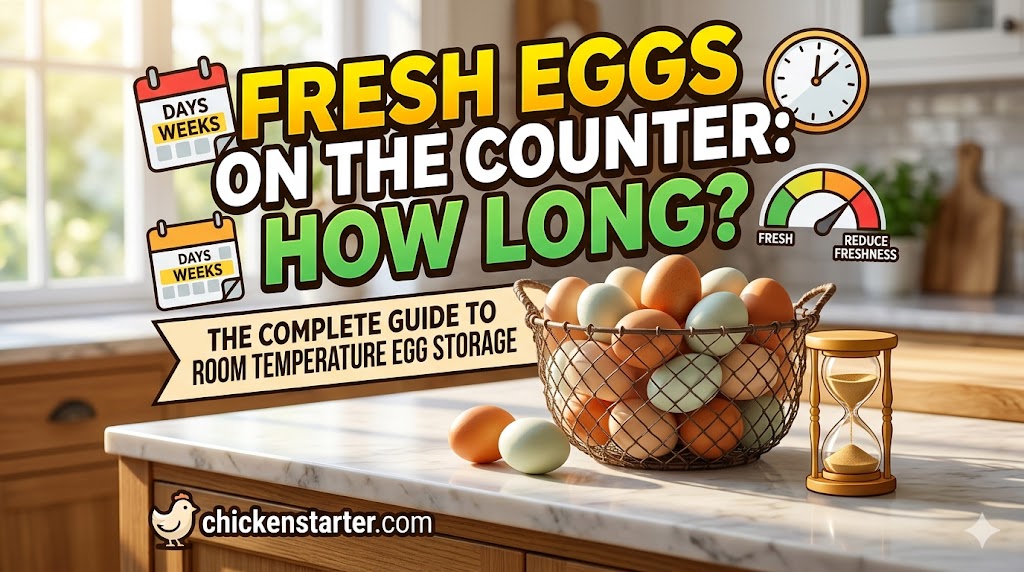
How Long Do Fresh Eggs Last on the Counter? The Complete Guide to Room Temperature Egg Storage
You just walked out to the coop, reached under your favorite hen, and pulled out a warm, freshly...
Guides for Raising Healthy Chickens Anywhere
I help U.S. beginners raise healthy chickens at home — from 2026 feed costs to egg production, winter care, and local city chicken laws.
Starting a backyard poultry journey in the United States requires more than just a coop. With 2026 inflation adjusting feed prices and urban ordinances evolving, owners need data-backed tools to ensure their hens thrive. Our Chicken Starter Pro Manager provides specific U.S. benchmarks—from predator-proofing with hardware cloth to navigating city zoning.
By Oladepo Babatunde, US Poultry Expert since 2018 (USDA-Trained).
In 2026, most U.S. cities allow hens but strictly ban roosters. Select your region to see 2026 ordinance summaries and setback requirements.
You just walked out to the coop, reached under your favorite hen, and pulled out a warm, freshly...
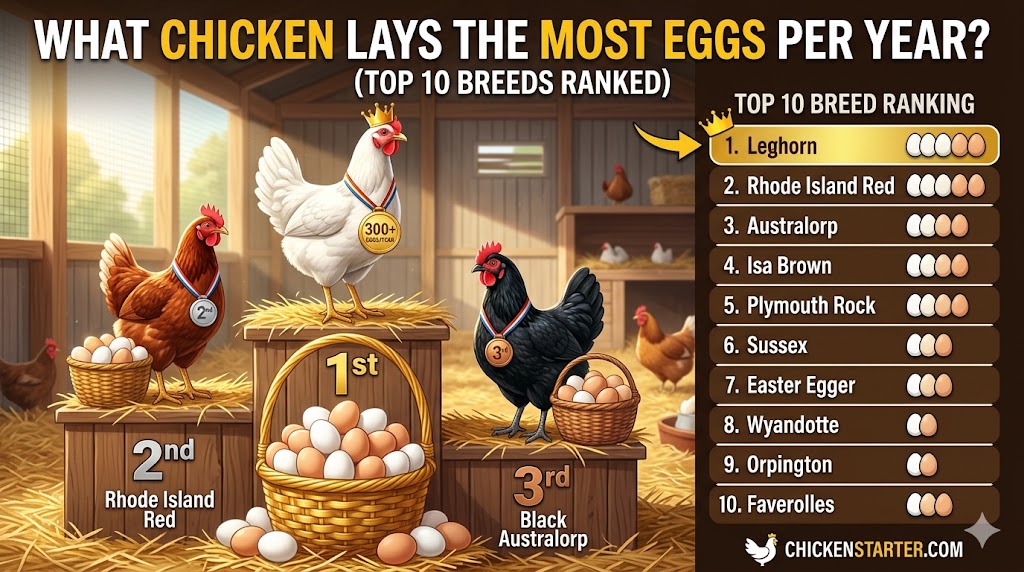
If you are choosing chickens specifically for egg production, the breed you pick matters more than almost any other...
If you have ever cracked open a carton of farm-fresh eggs and spotted a beautiful green egg nestled among the...
If you keep chickens in the garden, you already have one of the most effective, affordable, and chemical-free tools for building...
The average American household throws away roughly 30 to 40 percent of its food supply every year. That is hundreds of pounds...
Building a pallet chicken coop is one of the most budget-friendly ways to house a backyard flock. Wooden pallets are free or...
A flock of six chickens is the sweet spot for most backyard keepers. It is large enough to produce a...
Building a chicken coop for 4 chickens does not have to be complicated, expensive, or stressful. A small flock of four hens...
Choosing the right chicken coop style is one of the most important decisions you will make as a backyard chicken keeper. The...
Comprehensive template to start your farm.
Editable planning tool for poultry businesses.
Printable checklist for coop maintenance.
Essential health timeline for your flock.
I recommend 3 to 6 hens. Most U.S. cities limit flock size, and chickens are social animals that require a minimum of 3 to feel secure.
Backyard chicken laws vary by city. Most U.S. cities allow hens but ban roosters. Always check your local zoning or animal control website before building.
For most backyard keepers, chickens reduce grocery bills rather than generate full income. A healthy hen can lay 4–6 eggs per week.
Rhode Island Reds, Plymouth Rocks, Australorps, and Buff Orpingtons are popular because they tolerate cold winters and lay consistently.
A good rule is 4 square feet per chicken inside the coop and 10 square feet per bird outdoors in the run.
Most do best on a commercial layer feed that meets USDA nutritional guidelines. Supplement with kitchen scraps and garden greens.
On average, U.S. owners spend $20–$40 per month on feed and bedding for a small flock of six birds.
In cold states, insulate coops and block drafts. In hot states, provide shade, ventilation, and cool ice water.
Check your state’s Cottage Food Laws. Most allow small backyard sales directly to neighbors with ungraded labeling.
Ignoring local laws, overcrowding, buying roosters unintentionally, and failing to plan for predators like raccoons and hawks.