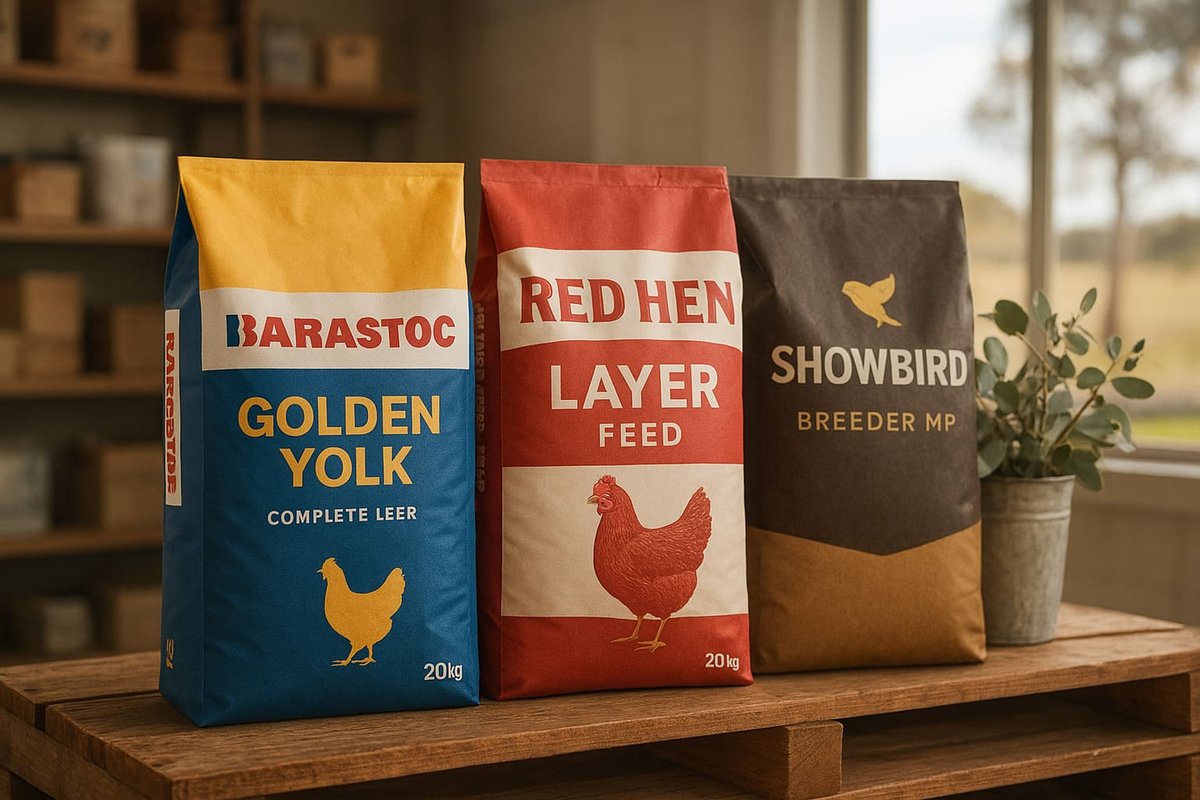
Keeping a flock of backyard chickens in Australia is a truly rewarding experience. You get fresh eggs, fantastic garden helpers, and plenty of feathered personalities. But when you walk into the feed store, the choice can be overwhelming. You’re faced with different brands, colourful bags, and terms like “pellet,” “crumble,” and “mash.” You just want the best for your chooks, but it’s hard to know where to start.
You’ve probably seen the big names: Barastoc, Laucke Mills, and Red Hen. Which one is right for your flock?
I’ve been keeping chickens in regional Victoria for over eight years now, and I’ve tried just about every feed brand available at my local produce store. When I started out, I made the classic beginner mistake of buying whatever was cheapest. My ISA Browns went from laying six eggs a day between them to maybe three, and one hen developed soft-shelled eggs that would crack in the nesting box. That expensive lesson taught me that feed quality isn’t where you cut corners.
With Australians consuming around 50kg of chicken per person annually, making it the country’s most popular meat, the demand for quality poultry feed continues to grow. Australia’s poultry feed market reached approximately USD 4.36 billion in 2024, reflecting strong investment in research and nutritional science. This means backyard chicken keepers benefit from the same feed technology developed for commercial operations.
This guide is here to help you avoid my mistakes. We’ll compare the top Australian poultry feed brands and break down exactly what’s in their products, looking closely at Barastoc, Laucke Mills, and the ever-popular Red Hen range to help you find the best feed for your Australian backyard flock.
Understanding Australian Poultry Feed Requirements
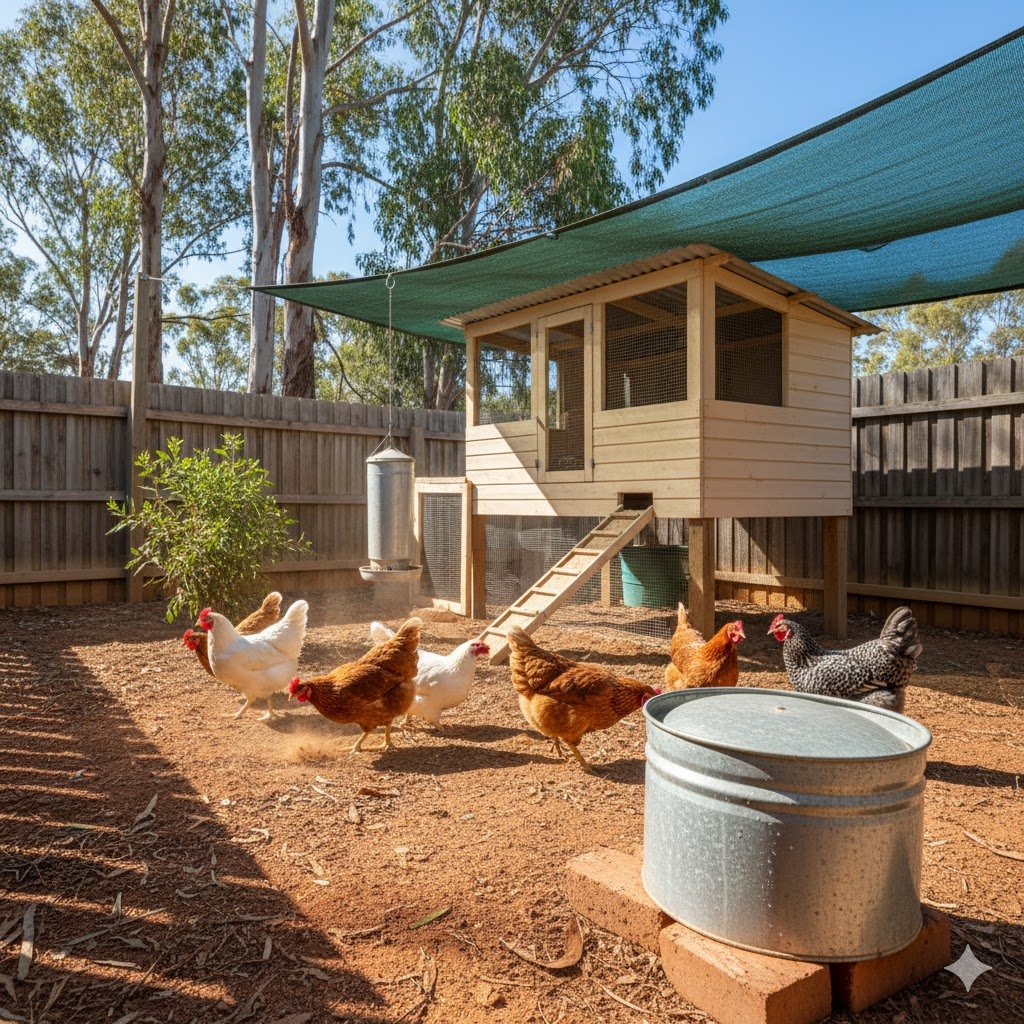
Before we compare brands, it’s important to know why your chickens need a special diet. It’s not as simple as throwing out some old bread and kitchen scraps (though they love those as a treat!). Modern chickens are bred for high performance, and they need a nutritionally balanced diet to stay healthy.
Why Australian Chickens Need Specific Feed Formulations
Australian conditions present unique challenges. Our long, hot summers can cause severe heat stress. You’ll see this as panting (called gular fluttering), holding their wings away from their bodies, and looking pale and lethargic. If you’re dealing with extreme temperatures, our guide on keeping chickens cool in summer covers essential cooling strategies.
During heat stress, a chicken’s appetite plummets. When they eat less, they get fewer nutrients. Because of this, many feeds are formulated for Australian conditions with a high density of vitamins and minerals. This means your chooks get all the goodness they need, even if they’re eating a bit less in the summer heat.
I noticed this clearly during my first summer with chickens. My girls would barely touch their feed during 38°C days, but because I was using a nutrient-dense complete feed, their egg production only dropped slightly rather than crashing completely.
Minimum Nutritional Requirements for Laying Hens
So, what should you look for on the feed bag? For a healthy laying hen, the numbers are key. According to poultry nutrition guidelines from Poultry Hub Australia, laying hens need about 16 to 18 percent protein and high calcium levels for optimal egg production.
| Nutrient | Requirement for Laying Hens | Requirement for Growing Birds (8-18 weeks) | Why It’s Important |
|---|---|---|---|
| Protein | 15-18% | 16-18% | For body maintenance, feather growth, and egg white |
| Calcium | 3.5-4.0% | 1.0-1.5% | Absolutely vital for strong eggshells |
| Fat | 3-6% | 3-6% | A good source of energy |
| Fibre | 4-10% | 4-10% | Important for good gut health |
| Vitamins and Minerals | Varies | Varies | Essential for all-around health and egg yolk colour |
What Is the Best Feed for Egg Laying Hens?
The best feed for egg laying hens is a complete layer feed with a protein content of 16 to 18 percent and a high calcium content of 3.5 to 4.0 percent to support strong eggshell production. A feed in pellet, crumble, or hybrid form is superior to a grain-only mix, as it prevents selective feeding and ensures a balanced diet.
In short, Australian feeds are built to deliver concentrated nutrition, especially for laying hens who need high protein and a substantial amount of calcium. For a deeper understanding of why calcium matters so much, our complete guide to chicken calcium needs explains the science behind eggshell formation.
What Is the Best Chicken Feed in Australia? A Top Brand Comparison
The “best” chicken feed in Australia depends on your flock’s life stage, but for most backyard laying hens, the best feed is a complete, pelleted or hybrid-pellet feed with 15 to 18 percent protein and 3.5 to 4.0 percent calcium, such as Laucke Mills Red Hen Layer or Barastoc Golden Yolk.
According to industry data, pellets captured over 57 percent of the Australian compound feed market, reflecting their popularity among both commercial and backyard poultry keepers due to their consistency and reduced waste.
Now for the main event. Let’s look at the major players you’ll find in Australian feed stores.
Barastoc: Complete Nutrition for Backyard Flocks
Who are they? Barastoc is one of Australia’s most well-known feed brands. It’s owned by Ridley Corporation, one of Australia’s largest animal nutrition companies with revenue exceeding AUD 1.28 billion. Their scale means they invest heavily in nutritional research and quality control.
Product Range: Barastoc has a huge range, including Barastoc Layer, Golden Yolk, and various feeds for chicks, pullets, and meat birds.
Key Benefits: Barastoc is known for its convenience and reliability. Their feeds are compound feeds, meaning every pellet or crumble is nutritionally identical. This stops picky chickens from only eating their favourite bits. As their product information states, they ensure flocks get all the nutrients they need consistently.
Barastoc Golden Yolk Nutritional Analysis
| Nutrient | Level |
|---|---|
| Protein | 15.0% minimum |
| Fat | 2.5% minimum |
| Fibre | 10.0% maximum |
| Calcium | 3.8-4.0% minimum |
| Added Selenium | 0.1mg/kg |
| Vitamin E | 10mg/kg |
Best For: Hobby chicken keepers who want a simple, reliable, and complete feed that’s easy to find at most produce stores.
In my experience, Barastoc is the “set and forget” option. I used their Golden Yolk for my first three years and had consistently good results. The pellets are uniform, there’s minimal waste, and my local Elders always has it in stock.
Laucke Mills: Premium Quality from the Barossa Valley
Who are they? Laucke Mills is a proud, family-owned Australian company. They’ve been manufacturing feed in the Barossa Valley, South Australia, for generations. They have a strong reputation for quality among serious poultry keepers.
Product Range: Their poultry range is extensive and includes Chick Starter, Pullet Grower MP, Home-Lay, and the very popular Red Hen range.
Key Products:
Red Hen Se17enteen and Red Hen Free Range Layer: These are the brand’s star products with distinct formulations, one with 17 percent protein and one with 15 percent.
Showbird Breeder MP: This is a higher-spec feed with 17 percent protein, designed for breeding poultry and show birds. Many veterinarians recommend Showbird Breeder MP for breeding flocks because it provides higher specification nutrition with 17 percent protein and 4 percent calcium in a micro-pellet format that’s ideal for small breeds.
Home-Lay: A budget-friendly option for backyard layers that still provides complete nutrition.
Best For: Keepers who want a premium grain-blend or a high-spec breeder feed, and those who prefer supporting Australian family businesses.
Other Major Players
While Barastoc and Laucke are giants, you’ll see other names depending on your location.
Ridley Corporation: As mentioned, Ridley owns Barastoc but also operates other stockfeed brands. They are one of the largest feed manufacturers in Australia.
Regional Brands: Depending on your state, you may find regional manufacturers offering quality layer feeds at competitive prices. Ask your local produce store what they recommend for your area.
Deep Dive: Red Hen Layer Feed Analysis
Because it’s one of the most popular and asked-about feeds, let’s take a closer look at Laucke Mills’ Red Hen Layer.
What Are the Ingredients in Red Hen Chicken Feed?
Red Hen chicken feed contains a balanced mix of cereal grains (like wheat, barley, and corn), protein sources (like soybean and meat meal), fats, and a comprehensive vitamin and mineral supplement, including calcium (limestone) and essential amino acids.
Here is a more detailed breakdown of the ingredients you’ll find on the label:
Grain Base: Wheat, triticale, barley, oats, rice, peas, lupins, lentils, beans, and corn.
Protein Sources: Soybean, canola, sunflower products, meat meal, and blood meal.
Fats and Binders: Fat, molasses, limestone, di-calcium phosphate, sodium bicarbonate, and salt.
Amino Acids: Lysine, methionine, threonine, tryptophan, isoleucine, and valine (the building blocks of protein).
Vitamins: A, D3, E, K, B1, B2, B6, B12, niacin, folic acid, biotin, and choline.
Minerals: Calcium, phosphorus, sodium, chloride, cobalt, copper, iodine, iron, manganese, molybdenum, selenium, and zinc.
This long list is actually a good thing. It shows the feed formulation is complex and designed to cover all your hen’s needs.
Red Hen Layer vs Red Hen 17: Understanding the Difference
This is a common point of confusion that I hear from fellow chicken keepers regularly.
Red Hen Free Range Layer typically guarantees 15 percent minimum protein, while Red Hen Se17enteen (also called Red Hen 17) guarantees 17 percent minimum protein. Both formulations contain 4.0 to 4.3 percent calcium minimum for strong eggshells. The Red Hen Free Range Layer variant contains 3.8 percent minimum calcium.
When should you choose the higher protein option? I switch my flock to Red Hen 17 during their annual moult. The extra protein helps them regrow feathers faster, and I’ve noticed they bounce back to laying sooner than when I used the standard 15 percent feed during moult. The rest of the year, the standard Red Hen Layer is perfect.
Does Red Hen Chicken Feed Come With a Wormer?
This is a critical point for flock health: No, the standard Laucke Mills Red Hen Layer feed is a medication-free diet and does not contain a wormer.
This is actually a positive feature, not a drawback. It means the feed is suitable for all times, and it gives you complete control over your flock’s medication schedule. To worm your chickens, you must purchase a separate, dedicated worming product (often a liquid or powder) that is added to their water or feed for a specific, limited period, usually twice a year.
Where to Buy Red Hen Feed
Laucke Mills products, including the Red Hen range, are widely distributed across Australia. You can find Red Hen chicken feed at Petstock, as they are a major national retailer.
It is also stocked at many independent rural produce stores, agricultural suppliers, and feed specialists. Availability of specific bags (like the 15 percent vs 17 percent protein) may vary by store, so it’s always good to call your local supplier ahead of time.
Comprehensive Feed Comparison Table
Here is a quick-glance table comparing some of the most popular feeds available in Australia.
| Feed Brand and Product | Protein | Calcium | Fat | Fibre | Form | Best For | Price Category |
|---|---|---|---|---|---|---|---|
| Red Hen Free Range Layer | 15.0% min | 3.8% min | 3.0% min | 9.0% max | Grain + Pellets | Layers, Free-range | Mid-Premium |
| Red Hen Se17enteen | 17.0% min | 4.3% min | 3.0% min | 8.0% max | Grain + Pellets | Layers, Breeders | Mid-Premium |
| Showbird Breeder MP | 17.0% min | 4.0% min | 5.5% min | 10.0% max | Micro Pellets | Show birds, Breeders | Premium |
| Barastoc Golden Yolk | 15.0% min | 3.8% min | 2.5% min | 10.0% max | Pellets | General Layers | Mid-Range |
| Laucke Mills Home-Lay | 15.0% min | 3.8% min | 3.0% min | 10.0% max | Pellets | Budget Layers | Budget |
When reading this table, focus on the protein and calcium levels for your laying hens. As you can see, most quality layer feeds sit in a very similar range, so the differences often come down to form (pellet vs grain blend) and availability in your area.
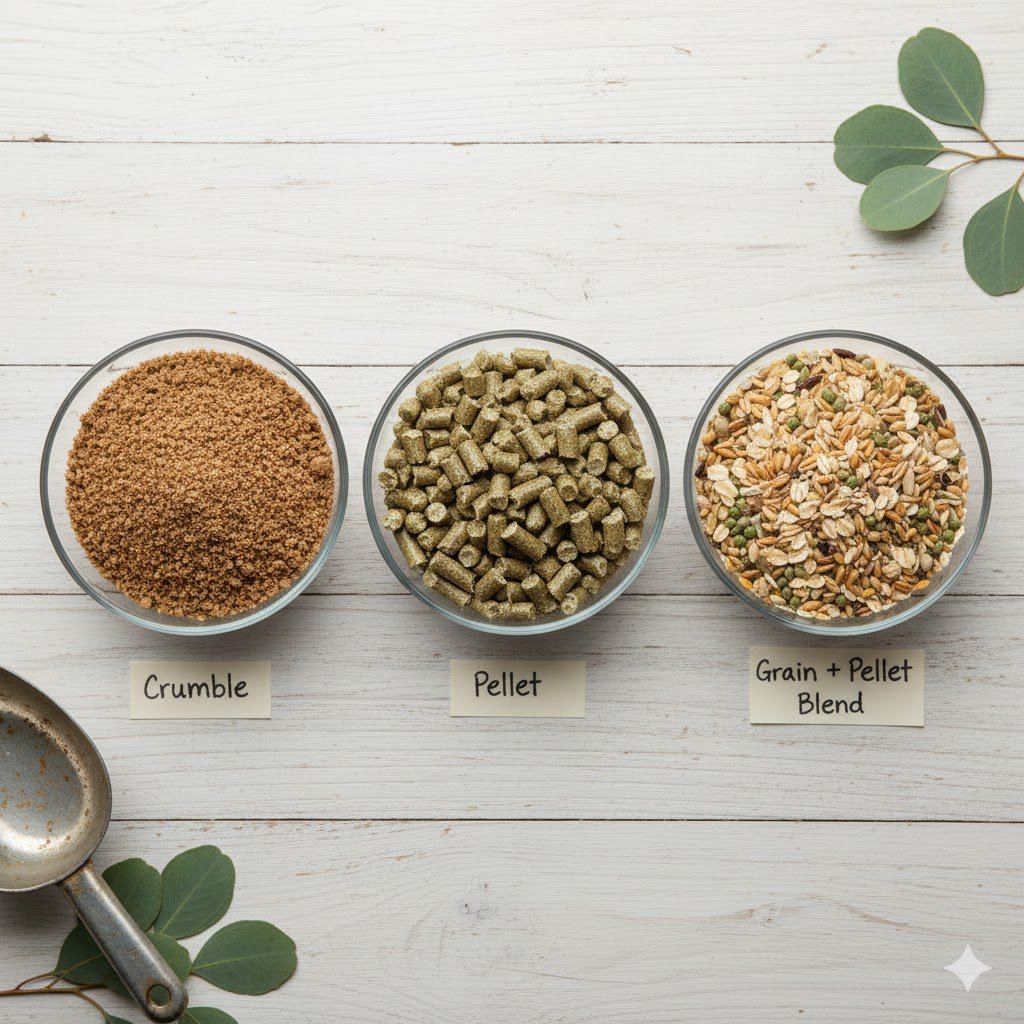
Pellets vs Grain Blends: Which Form Is Better?
This is one of the most common questions I get asked by new chicken keepers, and honestly, the answer isn’t as simple as “one is better.”
The Case for Pellets
Pros:
- Every bite is nutritionally identical
- No selective feeding (chickens can’t pick out favourites)
- Less waste on the ground
- Easier to measure portions accurately
Cons:
- Some chickens find them boring
- Less natural foraging behaviour
- Can be dusty at the bottom of the bag
Pure pellet feeds like Barastoc Golden Yolk are what I call “nutritional insurance.” You know exactly what your chickens are getting with every mouthful. This is particularly important if you have picky eaters.
The Case for Grain and Pellet Blends
Pros:
- Chickens enjoy the variety
- Encourages natural foraging behaviour
- Often more palatable
- Can see the quality of ingredients
Cons:
- Selective feeding is possible
- Slightly more waste
- May need to monitor that chickens eat the pellets too
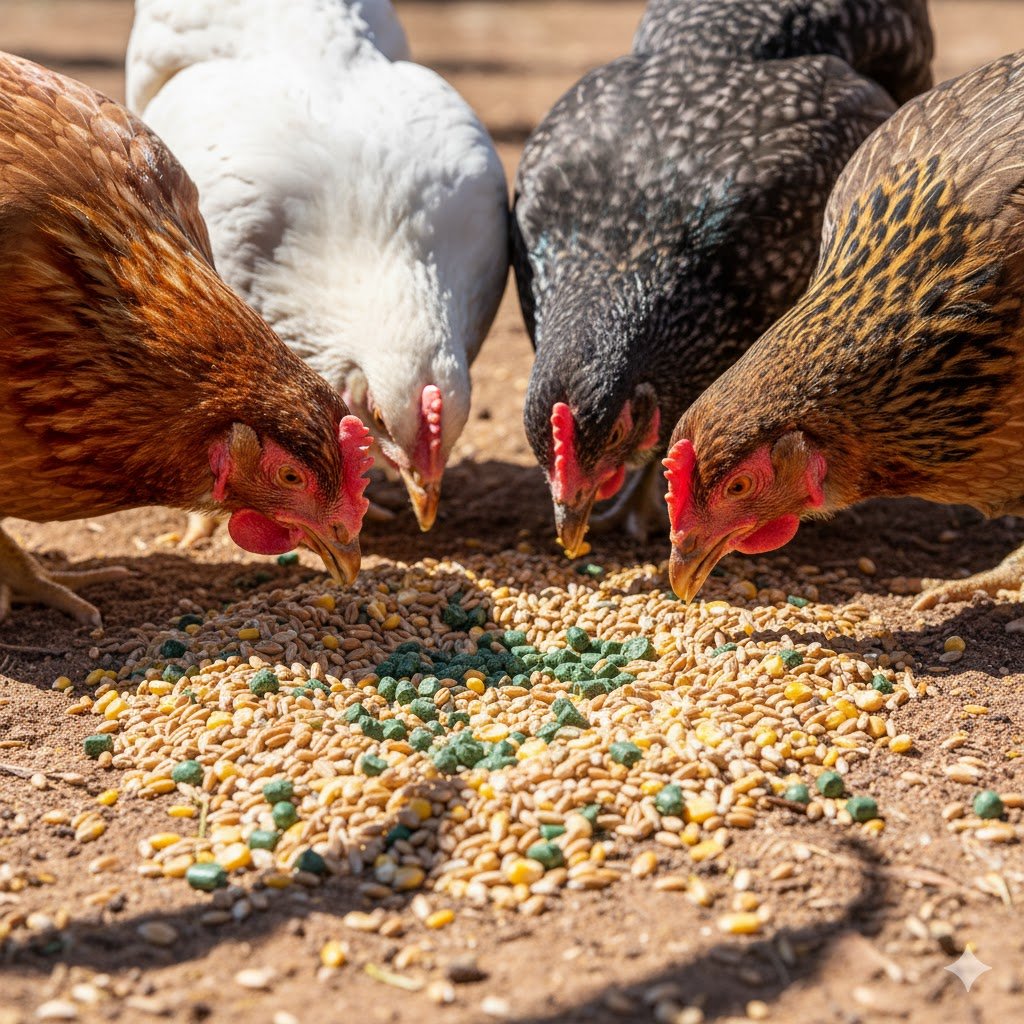
Red Hen’s grain and pellet blend is what I’ve settled on for my flock. My chickens seem genuinely excited at feeding time, and the variety keeps them interested. The micro-pellets mixed through ensure they’re still getting balanced nutrition even if they’re picking through for favourite grains.
My Recommendation
For most backyard keepers, either option works well. If you notice your chickens leaving the pellet portion of a blend uneaten, switch to a pure pellet feed. If your birds seem bored with pellets and are picking at each other, the stimulation of a grain blend might help.
Feeding Guidelines and Best Practices
Buying the right feed is step one. Using it correctly is step two. Understanding the best feeding schedule for backyard chickens is just as important as the feed itself.
How to Safely Switch Your Chickens to a New Feed
Never switch your chickens’ feed overnight. Their digestive systems are sensitive, and a sudden change can cause stress, diarrhoea, and stop them from laying.
Follow this 7 to 10 day transition plan:
Days 1-3: Mix 75 percent old feed with 25 percent new feed.
Days 4-6: Mix 50 percent old feed with 50 percent new feed.
Days 7-9: Mix 25 percent old feed with 75 percent new feed.
Day 10: Feed 100 percent new feed.
Watch them closely during this time. If you notice any issues, slow the transition down.
Is 20 Percent Protein Too High for Chickens?
No, 20 percent protein is not too high for growing chickens (0 to 18 weeks) and meat birds, but mature laying hens only require 16 to 18 percent protein. Feeding layers 20 percent protein unnecessarily increases costs and can be hard on their kidneys over time.
The only time you might consider a higher protein feed (like 17 percent) for layers is during their annual moult to help with feather regrowth, or if you’re breeding and want stronger, healthier chicks.
The 90/10 Rule for Feeding Chickens
This is the golden rule I follow:
90 percent of your chicken’s diet should come from their complete layer feed.
10 percent of their diet can be treats like kitchen scraps, scratch grains, and garden greens.
Following this rule ensures they get their essential nutrients first. Giving too many treats is like letting a child fill up on lollies before dinner. They won’t eat the healthy food they need. For ideas on healthy additions, see our guide on what chickens can eat from your kitchen.
The Grit vs Oyster Shell Debate: Why They Need Both
This is one of the most important things new chicken keepers must learn. Grit and oyster shell are NOT the same thing. We cover this extensively in our guide on why chickens need both grit and oyster shell, but here’s the quick version:
Grit (Insoluble): This is small, hard stone (like granite chips). Chickens don’t have teeth, so they swallow grit and it stays in their gizzard (a muscular organ). The gizzard uses the grit to grind up whole grains and feed. Grit is for DIGESTION.
Oyster Shell (Soluble): This is a pure calcium supplement. It dissolves in the chicken’s digestive system and provides the massive amount of calcium needed to form a strong eggshell. Oyster shell is for EGGSHELLS.
Your free-range birds might find their own grit, but cooped birds must be given it. All laying hens should have oyster shell in a separate dish (not mixed in the feed) so they can eat it when they need it.
I keep two small hanging dishes in my coop: one with grit, one with oyster shell. My girls self-regulate brilliantly. I notice they hit the oyster shell heavily in the days before laying and barely touch it during moult.
What Chicken Feed Should You Avoid?
Pure grain mixes: As a main food source, they are not balanced for laying hens and will lead to nutritional deficiencies.
Feeds without proper calcium: Any feed with less than 3.5 percent calcium is not suitable for laying hens.
Medicated feeds: Do not give medicated chick starter to laying hens.
Expired or mouldy feed: Never feed your chickens anything that smells off, is damp, or has mould. This can be toxic.
Ruminant feed: Many feed labels, including Red Hen’s, state “DO NOT FEED TO CATTLE, SHEEP, GOATS, DEER OR OTHER RUMINANTS.” This is a legal requirement to prevent the spread of diseases.
Health, Nutrition and Common Problems
A good diet is your first line of defence, but it’s still smart to know the warning signs. Let’s look at what happens when nutrition goes wrong.
What Is the Healthiest Thing to Feed Chickens?
The healthiest thing to feed chickens is a high-quality, complete commercial layer feed with 16 to 18 percent protein and 3.5 to 4.0 percent calcium. This should make up 90 percent of their diet, supplemented by clean water, insoluble grit, free-choice oyster shell, and limited (10 percent) healthy scraps and greens.
For a comprehensive overview, our complete guide to chicken feeding covers everything from treats to toxic foods.
Signs of Nutritional Problems in Your Flock
Your chickens’ bodies will tell you if their feed isn’t right.
Protein Problems (Feather Pecking)
Are your chickens pecking each other’s feathers? This is often a sign of a protein deficiency or boredom. Poor feather condition after a moult also points to low protein.
I had this happen in my second year of chicken keeping. Two of my Australorps developed bare patches on their backs. After ruling out mites, I realised I’d been too generous with scratch grains (which are low in protein). Switching back to strict 90/10 feeding and upping to a 17 percent protein feed during moult solved the problem within six weeks.
Calcium and Vitamin D Problems (Weak Eggs and Legs)
This is the most common nutritional issue. You’ll see:
- Thin-shelled, “rubbery,” or shell-less eggs
- A hen that becomes egg-bound
- In serious cases, a hen with wobbly legs or unable to stand (her body has pulled calcium from her bones to make eggshells)
Vitamin A Deficiency
This can look like a respiratory illness. You may see cheesy, white discharge in the eyes and nostrils, and watery eyes.
Vitamin E Deficiency
This is less common but very concerning. It’s called “wry neck.” The chicken’s head will be twisted, and it will have no coordination.
Disclaimer: This information is for educational purposes. If you have serious health concerns about your flock, please consult a licensed veterinarian.
Superfood Additions for Chickens
If you want to give your flock a boost (as part of the 10 percent rule), these are excellent options:
Leafy Greens: Kale, spinach, and silverbeet provide vitamins and keep chickens entertained.
Pumpkin Seeds: Especially raw, these are thought to have natural deworming properties.
Garlic: Crushed in their water, it’s considered a great immune system booster by many keepers.
Sunflower Seeds: In moderation, these are a fatty treat they love, especially in winter when they need extra energy.
Remember, these are supplements, not replacements for their complete feed. For more ideas, see our guide on the best chicken treats that boost egg laying.
Australian-Specific Considerations
Keeping chooks down under has its own set of rules, from managing heat to storing feed in our variable climate.
Feeding in Australian Climate Conditions
Managing Heat Stress
As mentioned, chickens eat less in the heat. Choosing heat-tolerant breeds for Australian conditions is a great first step. To help your current flock during hot weather:
- Provide extra shade over their feeder and waterer
- Add a second, wide water source (like a shallow pan) they can stand in to cool their feet
- Add ice cubes to their waterer in the middle of the day
- Consider adding a poultry-specific electrolyte to their water on days above 35°C
According to the RSPCA Australia knowledge base, chickens are particularly vulnerable to heat stress and may require dietary adjustments during extreme temperatures.
Cold Weather Considerations
In colder southern states, your chickens will burn more energy to stay warm. You can supplement their diet with a little extra scratch grain or corn in the afternoon (not morning) to fuel their “internal furnace” overnight.
Seasonal Egg Production
It’s completely normal for hens to slow or stop laying in winter (less daylight) and during their annual moult (when they lose and regrow feathers). This isn’t a feed problem; it’s just chicken biology.
How to Store Your Chicken Feed Properly
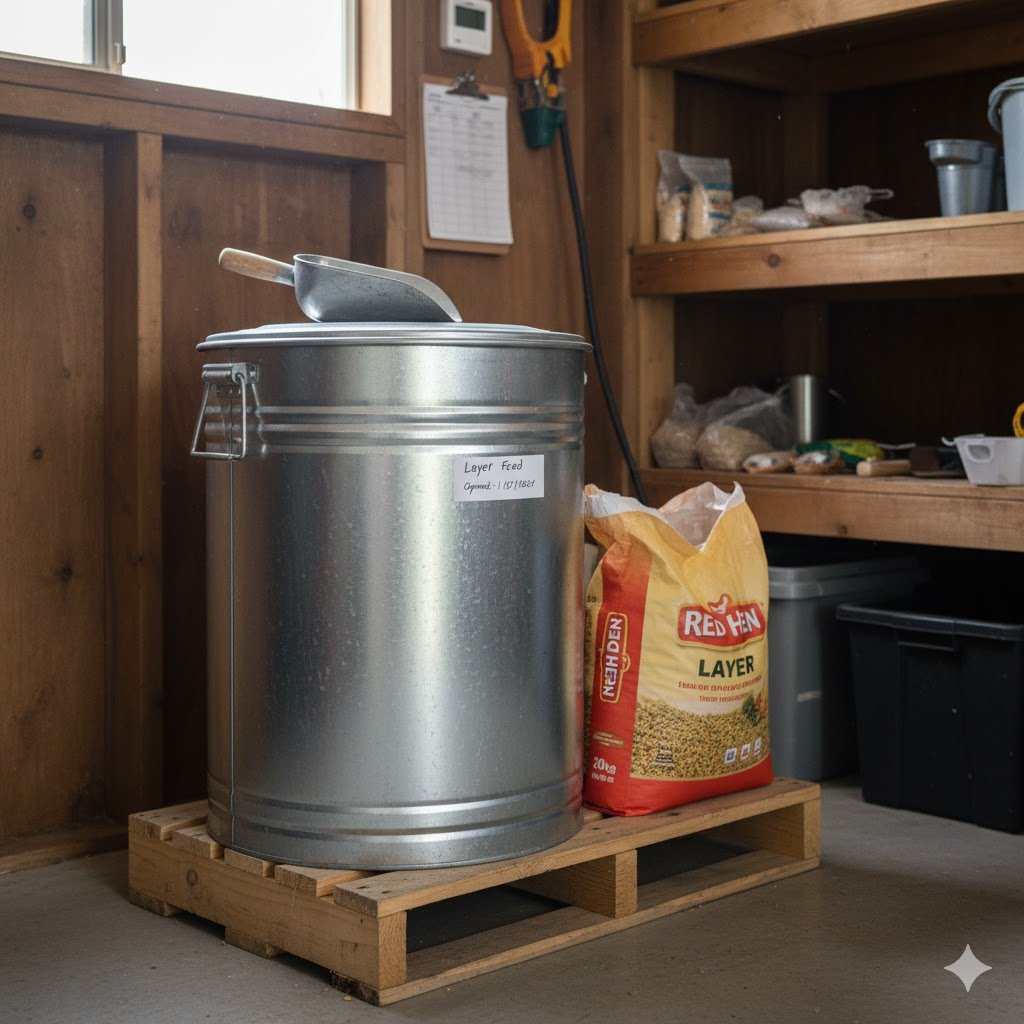
You just spent good money on a 20kg bag of feed. Don’t let it spoil.
Get it off the ground: Store bags on a pallet or shelf, not the concrete floor, which can draw moisture.
Make it airtight: The best storage is a metal, airtight rubbish bin or feed drum. This keeps feed fresh and, most importantly, keeps out rodents and insects.
Keep it cool and dry: Store it in a shed or garage, out of direct sunlight. Heat can degrade the vitamins in the feed, reducing its nutritional value over time. A sealed metal bin in a shaded area maintains feed quality longest.
Never use feed that has been contaminated by rodents or has any sign of mould. This is non-negotiable. Mouldy feed can contain toxins that will make your chickens seriously ill.
I learned the hard way about rodents. My first summer, I left a bag partially open in the garage. By the time I realised mice had been in it, I’d been feeding potentially contaminated feed for a week. Thankfully my girls were fine, but I immediately invested in a proper metal bin with a tight lid.
Cost Analysis and Value
Chicken feed is your biggest ongoing expense. When budgeting for your backyard flock, understanding the full cost of keeping chickens in Australia helps you plan appropriately.
Comparing Feed Costs: Is Expensive Feed Worth It?
It’s tempting to buy the cheapest feed, but this is often a false economy.
Price per Kilo: Compare the price per 20kg bag. You’ll find brands like Red Hen and Barastoc are mid-range, while specialist or organic feeds are more expensive.
Cost per Egg: A cheap, low-nutrient feed (like a basic grain mix) might seem like a saving, but if your hens lay fewer eggs or have health problems, you’re not saving money. A $35 bag that gives you 30 eggs a week is better value than a $25 bag that gives you 15 eggs.
Feed Efficiency: Premium feeds are more feed-efficient, meaning the chicken’s body can use more of the nutrients, leading to less waste.
In my experience, paying a little more for a high-quality feed like Red Hen 17 or Barastoc Golden Yolk pays for itself in better egg production and healthier birds.
How Feed Quality Affects Egg Production and Health Costs
More Eggs: A nutritionally balanced diet is the number one factor for consistent egg laying.
Fewer Health Problems: Good feed prevents issues like egg-binding and calcium deficiency, saving you stress and potential vet bills.
Better Egg Quality: The vitamins in the feed (like marigold extract for Vitamin A) are what give you those beautiful, bright golden yolks that make backyard eggs so superior to supermarket eggs.
How to Save Money on Chicken Feed
Proper Storage: Stop wasting money on feed that’s spoiled or eaten by rats. A good metal bin pays for itself within months.
Reduce Waste: Use a treadle or no-waste feeder. If you use an open-top feeder, don’t fill it to the brim. Chickens will rake the feed with their beaks, spilling it all over the ground.
The 90/10 Rule: Supplementing with safe kitchen scraps and garden greens (up to 10 percent of their diet) is a great way to stretch your feed bag.
Bulk Buying: If you have the storage, ask your local produce store if they offer a discount for buying multiple bags.
Understanding Feed Labels and Life Stage Feeding
This section is for those who want to understand the science behind their feed bag.
Reading the Guaranteed Analysis
A “Guaranteed Analysis” is the legal promise from the manufacturer of the minimum or maximum amount of a nutrient in the bag. Let’s use Red Hen Free Range Layer as an example:
- Protein (min): 15.0% (It must contain at least this much)
- Fat (min): 3.0% (At least this much)
- Fibre (max): 10.0% (It cannot contain more than this)
- Calcium (min): 4.0% (At least this much)
You’ll also see a list of ingredients, usually in order from most to least. This helps you see what the main ingredients are (wheat and corn vs lower-cost fillers).
Resource for Advanced Keepers: Australian Feed Ingredient Database
For nutritionists and serious keepers wanting detailed formulation data, the Australian Feed Ingredient Database (supported by AgriFutures Chicken Meat) provides comprehensive specifications for 42 common Australian feed ingredients. This free resource, available through Poultry Hub Australia, compiles data from 12 companies and databases, reporting mean values, sample numbers, and standard deviations for 102 nutrient specifications per ingredient.
While most backyard keepers won’t need this level of detail, it’s invaluable for those interested in understanding feed formulation science or comparing the nutritional density of different commercial products.
When to Switch Feed Types (Life Stage Feeding)
Using the right feed at the right time is critical.
Chick Starter (0-8 weeks): High protein (18 to 20 percent). Medicated or unmedicated.
Grower/Pullet Feed (8-18 weeks): Medium protein (16 to 18 percent). Lower calcium.
Layer Feed (18+ weeks): Medium protein (16 to 18 percent), high calcium (3.5 to 4.0 percent).
You must switch to layer feed when your hens start laying. Do not feed high-calcium layer feed to young, non-laying birds, as it can damage their kidneys.
Should You Formulate Your Own Feed?
“Feed formulation” is the complex science of combining raw ingredients (like corn, soy, limestone, and vitamin pre-mixes) to create a nutritionally complete diet. This is done by animal nutritionists using specialised software to meet exact requirements for dozens of nutrients.
While you might see recipes online, it is not recommended for backyard keepers to formulate their own feed. It is almost impossible to get the balance of amino acids, vitamins, and minerals correct without professional equipment and knowledge. Using a complete commercial feed is safer, easier, and ultimately healthier for your flock.
Calculating Your Flock’s Feed Requirements
An average laying hen eats about 120 to 150 grams of feed per day. Let’s use 140g as an average.
Simple Formula: (Number of chickens) × (140g) × (30 days) = Monthly Feed Requirement (in grams)
Example for a flock of 6: 6 chickens × 140g = 840g of feed per day. 840g × 30 days = 25,200g (or 25.2 kg) per month.
This tells you that a flock of 6 will eat just over one 20kg bag of feed per month.
Common Chicken Feed Myths Debunked
Myth 1: Chickens Can Live on Kitchen Scraps Alone
Fact: They can’t. They will become malnourished very quickly. Scraps are a treat, not a meal. The 90/10 rule exists for a reason.
Myth 2: Grit and Oyster Shell Are the Same Thing
Fact: This is a dangerous myth. Grit is for digestion; oyster shell is for calcium. They need both, provided separately.
Myth 3: All Grain Mixes Are Bad
Fact: Pure grain mixes are problematic as a complete feed because they are unbalanced. But hybrid feeds like Red Hen (grain + pellet) are a great balanced option that provides nutrition while encouraging natural behaviour.
Myth 4: More Protein Is Always Better
Fact: Excess protein is hard on chicken kidneys and wasteful. Match protein levels to your birds’ life stage and needs.
Myth 5: Free-Range Chickens Don’t Need Commercial Feed
Fact: Even free-range chickens cannot get all the nutrients they need from foraging alone, especially the calcium required for eggshell production. Commercial feed ensures balanced nutrition.
Frequently Asked Questions
What is the best chicken feed brand in Australia?
The best brand depends on your needs, but Laucke Mills (Red Hen range) and Barastoc are consistently the most recommended by Australian chicken keepers. Both offer nutritionally complete feeds with appropriate protein and calcium levels for laying hens.
Is Red Hen better than Barastoc?
Neither is definitively “better.” Red Hen offers a grain and pellet blend that encourages natural foraging behaviour, while Barastoc pellets ensure every bite is nutritionally identical. Some chickens prefer one over the other. Both provide excellent nutrition.
How much feed does a chicken eat per day?
A laying hen typically eats 120 to 150 grams of feed per day, though this varies with breed size, weather, and production level. Larger breeds eat more; smaller bantams eat less.
Can I mix different brands of chicken feed?
Yes, you can mix brands if needed, but transition gradually over 7 to 10 days. Mixing feeds with similar nutritional profiles is fine.
Why are my chickens not eating their pellets?
Some chickens dislike pellets initially, especially if they were raised on grain mixes. Try moistening pellets with water, switching to a grain and pellet blend, or reducing treats so they’re hungrier at meal times.
How long does chicken feed last once opened?
Feed should be used within 4 to 6 weeks of opening for optimal freshness. Store in an airtight container away from heat and moisture. Discard any feed that smells off or shows signs of mould.
Do I need to supplement layer feed with anything?
A complete layer feed provides most nutrients, but you should always offer oyster shell separately for additional calcium and insoluble grit for digestion. Fresh water is essential.
Where can I find detailed nutritional data for Australian feed ingredients?
The Australian Feed Ingredient Database, available through Poultry Hub Australia, provides comprehensive nutritional specifications for 42 common Australian feed ingredients with data compiled from 12 industry sources.
Choosing the Best Australian Poultry Feed for Your Flock
Choosing the best feed from all the Australian poultry feed brands comes down to your flock’s needs.
For convenience, reliability, and great value, Barastoc (like the Golden Yolk) is a fantastic, trusted choice that’s widely available.
For a premium, Australian-family-owned option that chickens love, Laucke Mills’ Red Hen Free Range Layer (or Red Hen Se17enteen for a protein boost) is one of the best and most popular products on the market.
The bottom line is to choose a complete layer feed from a reputable Australian chicken feed manufacturer, check the label for 16 to 18 percent protein and at least 3.5 percent calcium, and follow the 90/10 rule.
Most importantly, remember to provide clean water, insoluble grit, and oyster shell as separate must-haves. Your chickens will thank you with delicious eggs for years to come.
Disclaimer: This article provides educational information about poultry feed options. It is based on publicly available information and personal experience. Always consult qualified professionals or a veterinarian for specific health concerns regarding your poultry.

Oladepo Babatunde is the founder of ChickenStarter.com. He is a backyard chicken keeper and educator who specializes in helping beginners raise healthy flocks, particularly in warm climates. His expertise comes from years of hands-on experience building coops, treating common chicken ailments, and solving flock management issues. His own happy hens are a testament to his methods, laying 25-30 eggs weekly.