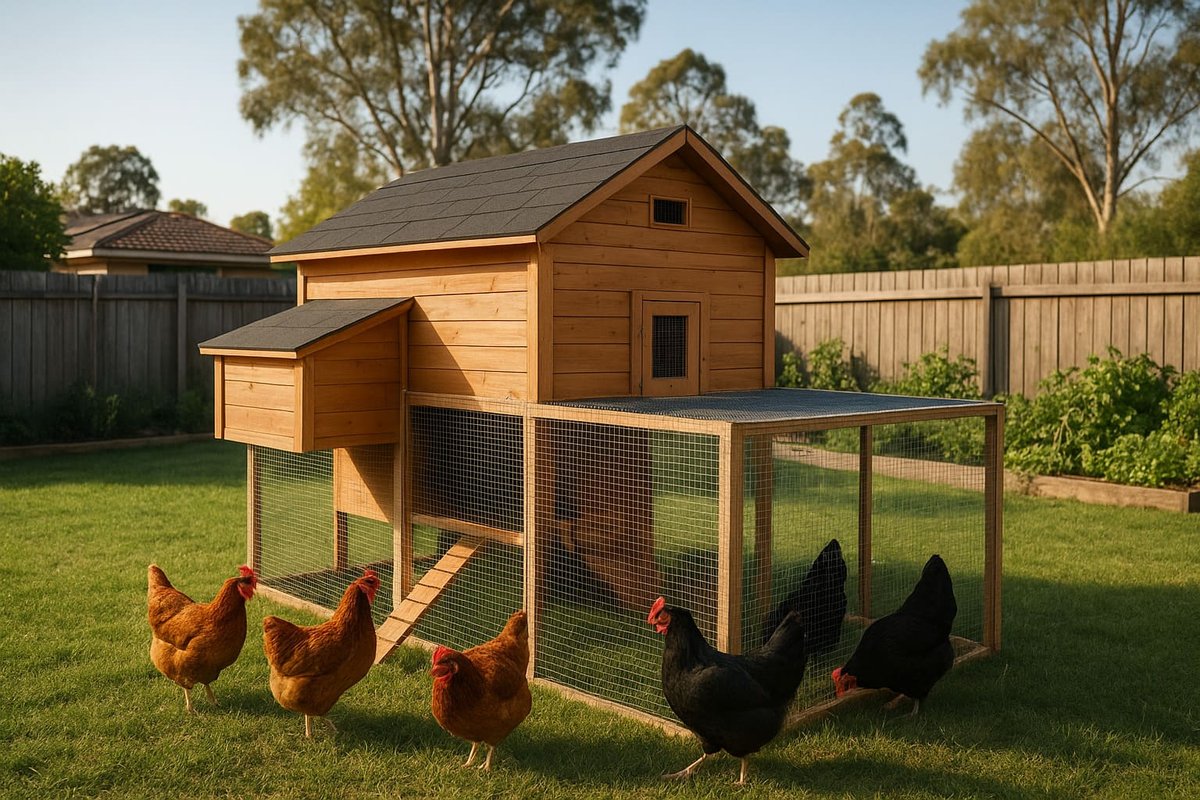
Yes, you can legally keep backyard chickens (or “chooks,” as we call them) across all Australian states and territories, but the specific rules vary dramatically depending on where you live. Most metropolitan councils allow between 4 and 10 chickens without a permit, while rural properties typically permit 20 or more birds. However, navigating the maze of state legislation, council by-laws, and national animal welfare standards can feel overwhelming for new chicken keepers.
Whether you’re in Queensland considering your first flock, wondering about NSW egg-selling regulations, or trying to understand Victoria’s new mandatory welfare requirements now taking effect, this comprehensive guide breaks down exactly what’s legal in your area. We’ll cover everything from how many chickens you can keep in each state to coop placement rules, rooster restrictions, and the national welfare standards that apply to all Australian chicken keepers.
I’ve been keeping chickens in suburban Melbourne for over six years, and I’ve helped dozens of friends and neighbours navigate their local council regulations. When I started out, I spent three frustrating weeks trying to understand my council’s rules before finally calling them directly. This guide is everything I wish I’d known from the beginning.
Can I Keep Chickens in My Backyard in Australia?
Absolutely. Keeping backyard chickens in Australia is a popular and fast-growing hobby. But the simple “yes” comes with an important qualification: it all depends on your local council’s rules.
While all states permit chickens, there’s no single set of “Australian” rules. Instead, each state sets broad animal welfare laws, and then your local council (such as City of Yarra, Brisbane City Council, or Hobart City Council) creates specific by-laws on top of that. This is why your neighbour in a different council area might be able to keep 10 chickens while you’re limited to 5.
The General Framework
Metropolitan Areas: Most suburban blocks in cities like Sydney, Melbourne, and Brisbane are allowed to keep a small flock, usually 5 to 10 hens.
Rural and Acreage Areas: If you’re on a larger block, your allowance will be much higher, often 20 or more, but you might need a Property Identification Code (PIC).
Roosters: Almost every single metropolitan council bans roosters in residential areas due to noise.
National Welfare Standards: The Australian Animal Welfare Standards and Guidelines for Poultry now apply to everyone, not just commercial farms. These set minimum requirements for perches, nests, and scratch areas in your coop.
Why Are So Many Aussies Getting Chickens?
This “chook-boom” isn’t just your imagination. The trend was supercharged by the 2024 egg shortages, which saw supermarket shelves empty due to factors like bird flu outbreaks and the industry’s shift away from caged eggs. With rising egg prices, a desire for sustainable living, and a great way to teach kids where food comes from, backyard chickens have become the perfect addition to the Aussie backyard.
They’re a pet with benefits: fresh eggs, amazing garden fertiliser, and fantastic pest control. My own flock of six hens produces more eggs than my family of four can eat, and my vegetable garden has never been healthier thanks to the composted manure.
After researching all the state regulations, the key takeaway is this: your local council’s website is the ultimate source of truth. But I’ve done the heavy lifting to give you a clear starting point.
Regulations Are Actively Changing
It’s important to understand that council regulations are not set in stone. Councils regularly review and update their poultry keeping rules based on community feedback, complaints, and changing welfare standards. As an example of how quickly rules can shift, the City of Cockburn in Perth recently proposed new limits that would reduce the maximum poultry on residential lots to 4 birds on lots up to 600m² and 6 birds on lots between 601 and 800m².
This demonstrates why checking your council’s current rules, not just general guidelines, is essential before purchasing chickens. What was legal last year may have changed.
Quick Reference Guide: Chickens Allowed by State
This table gives you a quick overview of typical rules in residential areas. Always double-check these figures with your local council, as they can and do change.
Important: These are typical ranges based on common council regulations. Your specific council may have different rules. Always verify with your local council before purchasing chickens.
| State | Typical Residential Limit | Rural Limit | Roosters Allowed (Residential) | Permit Usually Required |
|---|---|---|---|---|
| Queensland | 6 chickens (blocks under 800m²) | 20 chickens (blocks 900m² or more) | No | Yes (e.g., Brisbane City) |
| New South Wales | 5-10 chickens (varies) | Varies by council | No | Varies by council |
| Victoria | 5-12 chickens (varies) | Varies by council | Generally no | Not for under 50 birds |
| South Australia | 4-5 chickens (or nuisance-based) | Varies | Not recommended | Varies by council |
| Western Australia | Up to 12 birds | Varies | Prohibited | Varies (e.g., Perth City needs plans) |
| Northern Territory | No specific limits | No specific limits | No restrictions (nuisance rules apply) | PIC required regardless of flock size |
| Tasmania | No specific limits (nuisance-based) | Varies | Permission from neighbours required | No (but must follow setbacks) |
| ACT | No specific limits (welfare-based) | N/A | Discouraged (nuisance rules apply) | No (but must follow Code of Practice) |
These numbers give you a great starting point, but the real details like coop placement and setbacks are in the state-by-state breakdown below.
Detailed State-by-State Breakdown
Let’s dig into the specifics for every state and territory. I’ll use major council areas as examples to give you a practical idea of what to expect.
Queensland: Can I Have Chickens in My Backyard in QLD?
If you’re asking “Can I have chickens in my backyard in QLD?”, the answer is a firm “yes,” but rules can differ even between neighbouring councils.
Brisbane City Council Example
According to Brisbane City Council’s poultry keeping requirements, property size matters significantly.
Under 800m²: You can keep a maximum of 6 chickens.
900m² or more: You can keep up to 20 chickens.
Permits: Yes, you need one. Brisbane City Council requires all domestic chicken keepers to apply for a free permit.
Roosters: Not permitted. Roosters are banned in residential areas.
Coop Placement: Must be at least 1 metre from any dividing fence.
Maintenance: The coop must be kept clean, and feed stored in pest-proof containers.
Gold Coast City Council Example
The Gold Coast is similar but has its own specific setback rules for how far a coop must be from a residence. This setback rule is a significant factor in planning, so check the GCCC website for the exact distance.
Roosters: Only allowed on properties over 4,000m² (one acre).
New South Wales: Rules and Egg-Selling Regulations
NSW is generally quite generous, but coop placement is the key consideration.
North Sydney Council Example (Typical Metro)
Maximum Flock: 10 chickens.
Roosters: Absolutely no roosters in residential zones.
Coop Specifications: This is where NSW gets detailed. Councils often have very specific rules for coop size (such as maximum 15m²), height, and materials (like requiring concrete floors for easy cleaning). Always check your specific council’s Development Control Plan (DCP) for these exact requirements.
Lithgow City Council Example (Exempt Development)
This shows how rules can change based on your property’s zoning. Rural-zoned properties (like R5) typically allow more birds than standard residential zones. Check your council’s zoning map and local laws to confirm.
Can I Sell Eggs From My Backyard Chickens in NSW?
Yes, but you must follow specific rules. Unlike the vague guidelines in other states, NSW has a clear system for small-scale producers.
Notification is Mandatory: If you produce fewer than 20 dozen (240) eggs per week, you are not required to get a license, but you must notify the NSW Food Authority of your operation.
Egg Stamping: All eggs sold in NSW must be individually stamped with a unique identifier.
The Stamp: Once you notify the NSW Food Authority, they will supply you with a free one-off hand stamp with your pre-assigned code.
The Exemption: You are exempt from stamping only if you sell direct from the farm gate (your house) or if the eggs are for a fundraising event where they will be cooked.
Beyond council compliance, understanding the legal requirements for selling backyard eggs including food safety standards is essential if you plan to sell your surplus.
Victoria: New Mandatory Welfare Requirements Now in Effect
Victoria has a fascinating mix of council rules, from very restrictive to quite permissive. But the biggest news for Victorian chicken keepers is the new mandatory welfare regulations.
Critical Update: New Mandatory Regulations
Starting in the first half of 2026, Victoria has implemented new mandatory regulations based on the Australian Animal Welfare Standards and Guidelines for Poultry. According to Agriculture Victoria, these requirements apply to all poultry owners including backyard keepers, not just commercial operations.
This is extremely important to understand: many practices that were previously just recommendations are now legally mandatory. Victorian backyard keepers must ensure their coop setup meets these requirements.
Key Mandatory Requirements:
Perch Space: Minimum 15cm of perch or platform space per chicken. This means if you have 6 chickens, you need at least 90cm of perch length.
Nest Areas: 1 nest area for every 7 chickens, or 1m² nesting area for every 120 chickens. For most backyard keepers with 6 hens, one or two nest boxes will meet this requirement.
Lighting: Minimum 6 hours of darkness in any 24-hour period, with at least 4 hours of that darkness being uninterrupted. This means if you have lights in your coop, they must be off for at least 6 hours.
Space Allowance: Minimum 1,000cm² (about 31cm x 31cm) for a single chicken, or 750cm² per chicken when keeping 2 or more birds.
Banned Practices: Induced moulting is banned except under specified circumstances. Hot blade beak trimming is banned except under veterinary advice.
Written Contingency Plan: You must have a written plan for emergencies including extreme weather, disease outbreaks, and other adverse events.
City of Yarra (Melbourne) Example
Maximum Flock: Often around 5 chickens, but this varies.
Housing Restrictions: Flats and units are generally not permitted to keep chickens.
Coop Placement: Councils specify minimum distances from property fences, so check their local law.
City of Wyndham Example
Maximum Flock: Up to 6 hens without a permit.
Roosters: Not permitted in residential areas.
City of Greater Geelong Example
Maximum Flock: Some councils, like Geelong, may be more permissive and allow a higher number of poultry based on your land size.
Housing Restrictions: No poultry allowed in flats and units.
Roosters: Not permitted on land under 4,000m².
South Australia: Nuisance vs Numbers
SA councils often focus more on nuisance (smell, noise, pests) than a hard-and-fast number. For example, some councils may not set a specific limit but will investigate any formal complaint. Others may recommend a small number (like 4 to 5) for residential blocks and have strict setback rules for coops.
Always check your local council’s specific by-laws before purchasing chickens.
Western Australia: Generous Numbers, Strict Placement
WA is often generous with flock size, sometimes allowing up to 12 birds. However, councils in Perth can have some of the strictest placement rules, requiring significant setbacks from dwellings or even a written application with plans.
City of South Perth Example
Maximum Flock: Owners can keep up to 12 poultry birds.
Coop Requirements: Specific setback distances from boundaries and dwellings apply.
The Animal Welfare (Poultry) Regulations apply statewide. Check with your specific council for local requirements.
Northern Territory: The PIC is Key
The NT has the simplest rules but one very important requirement.
Property Identification Code (PIC): The NT requires a Property Identification Code for all poultry keepers, regardless of the size of your property or flock. You must verify this requirement and obtain your PIC from the NT government before purchasing birds.
Numbers: No specific limits, but you must follow national welfare standards and not cause a nuisance.
Tasmania: The Neighbour-Permission Model
Tasmania puts a heavy emphasis on not bothering your neighbours.
Hobart City Council
Numbers: No specific limit.
Setbacks: Councils like Hobart have specific rules for how far a coop must be from dwellings and boundaries.
Roosters: The rules for roosters can be extremely strict, with some councils requiring written permission from all neighbours within a large radius. This is a very high bar to clear.
Launceston City Council
Focuses on nuisance. Roaming, smell, and noise are the main issues that will trigger enforcement action.
Australian Capital Territory: The Welfare Model
The ACT doesn’t set numbers. Instead, it requires you to follow the law, which is the Animal Welfare (Welfare of Poultry: Non-Commercial) Code of Practice.
The Rules: This code states you must provide:
- Adequate food, water, and shelter
- Freedom to move and express normal behaviours
- Social contact (don’t keep one chicken on its own)
Roosters: Are strongly discouraged, as they will almost certainly cause a noise nuisance, which is a breach of the rules.
Understanding the National Welfare Standards
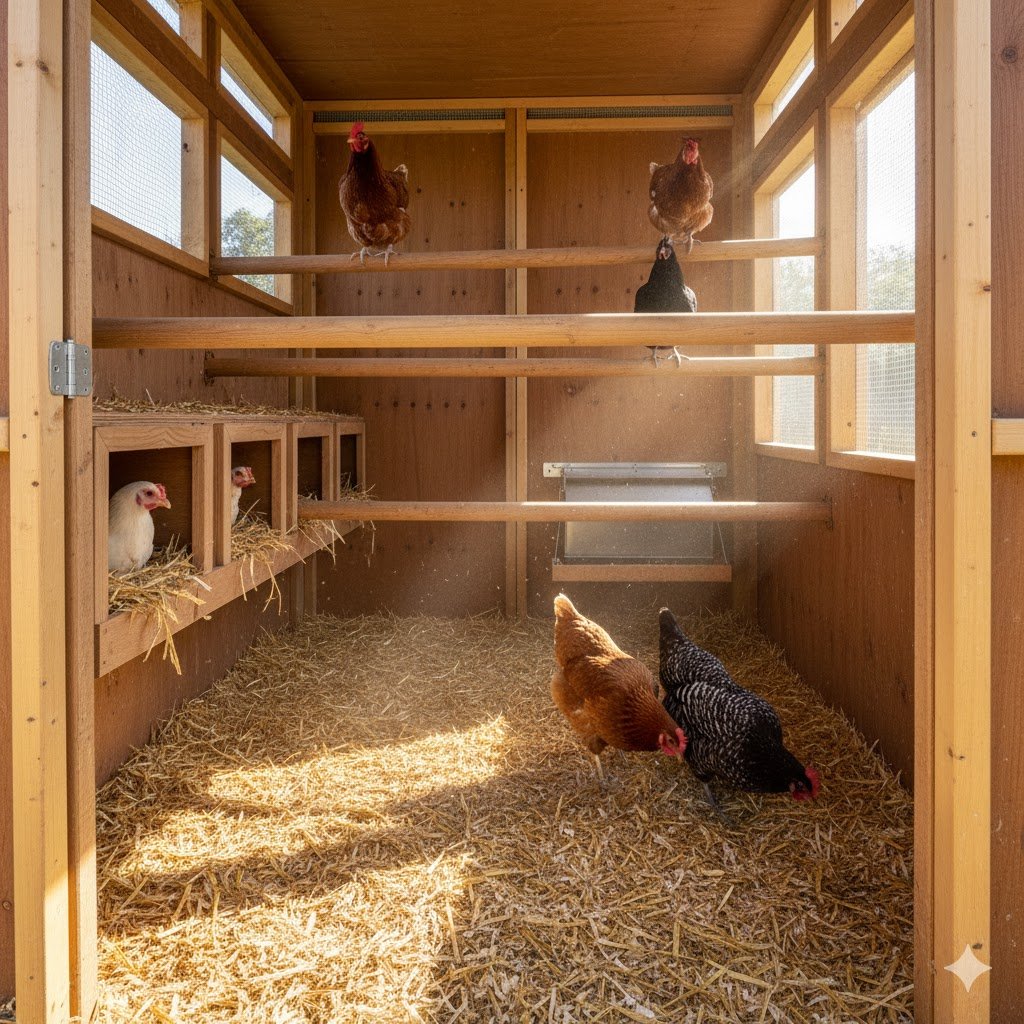
This is the new rulebook for all of Australia, and it’s significant. The Australian Animal Welfare Standards and Guidelines for Poultry are now in effect across states. These standards apply to both commercial farms and backyard owners.
Here are the key requirements and what they mean for your coop.
A Practical Checklist: What Do I Need to Provide?
The rules are all about letting chickens be chickens. Your compliant coop must have:
Perches: All chickens must have access to perches to roost on at night (not just a flat floor). These should be round or oval, at least 3 to 4cm wide, and not made of sharp-edged metal. Victorian keepers must provide at least 15cm of perch space per bird.
Nest Boxes: You must provide clean, private, and dark nest boxes for hens to lay their eggs. The standard is 1 nest area for every 7 chickens. For most backyard flocks of 4 to 6 hens, one or two nest boxes will suffice.
Substrate Area: Your chickens must have access to a scratch area with loose material (litter) like straw, sawdust, or soil for them to peck, scratch, and dust bathe in.
Adequate Darkness: Chickens need at least 6 hours of darkness in every 24-hour period, with 4 hours of that being uninterrupted. This is essential for their rest and natural rhythms.
Standards for Outdoor and Free-Range Setups
If you plan to let your chickens roam in a run or free-range in your yard, the standards set clear rules to ensure their welfare:
Feathering: Birds must be adequately feathered before they are allowed outdoor access (this mainly applies to young chicks, protecting them from the elements).
Shelter: Your flock must have ready access to housing and shaded areas to protect them from sun, rain, and predators.
Access Points: You must provide a reasonable number and size of access points to the coop, ensuring birds don’t get trapped outside or crowded trying to get in.
Humane Practice Standards
The standards also formalise humane practices, which are more relevant to commercial farms but good to know. Hot blade beak trimming must not be used, except in very specific circumstances under veterinary advice. For backyard keepers, this reinforces that such modifications are not a standard or humane practice.
What Substrate Means and Why Your Chooks Need It
Substrate is just a fancy word for the bedding on the floor of your coop and run. Chickens have a natural, powerful instinct to scratch in the dirt. It’s how they find food, clean themselves through dust bathing, and keep their minds busy.
Providing this isn’t hard. It’s what’s known as the Deep Litter Method, and it’s actually easier than cleaning your coop every week. The substrate requirements are easily satisfied by setting up a proper dust bath that meets welfare standards.
How it works: Start with a 15cm or deeper layer of carbon material like wood shavings, straw, or hemp bedding.
Maintenance: Once a week, just turn the litter over with a pitchfork (like you’re fluffing a pillow) and add a fresh thin layer on top.
The magic: Good microbes in the litter compost the manure in place, leaving you with no smell, happy chooks, and you only need to clean it out fully once or twice a year, leaving you with amazing compost.
Your Contingency Plan: What to Write Down for Emergencies
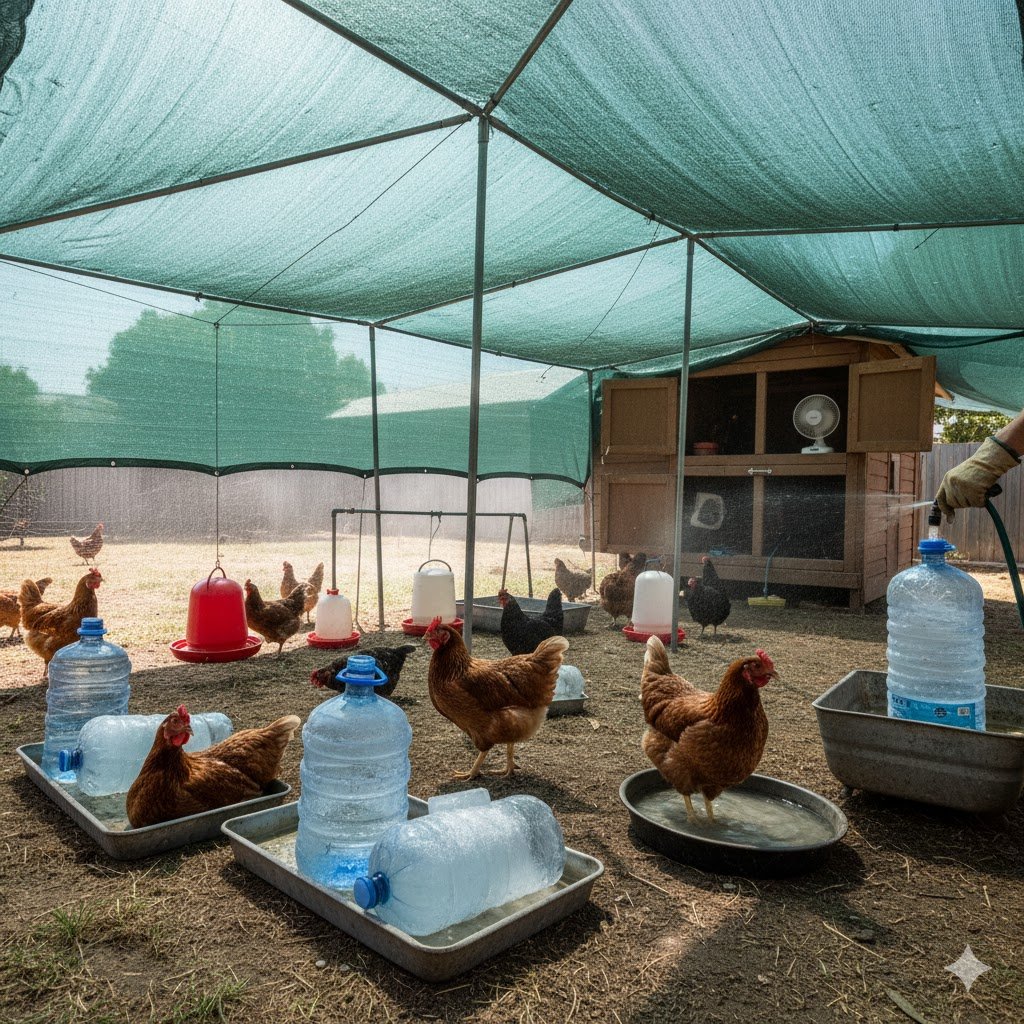
The standards require you to have a written plan for what to do in an emergency. This sounds scarier than it is. Just grab a piece of paper, write “Chicken Emergency Plan” on it, and stick it to your fridge.
It should include:
Heatwave Plan (40°C and above):
- Freeze 2L water bottles and place them in the coop
- Set up extra shade (a cheap tarp is perfect)
- Implement these proven cooling strategies for Australian summers
- Check and refill their water 3 to 4 times a day
Disease or Sickness Plan:
- Phone number for an avian vet (find one before you need one)
- Have a spare cage or dog crate to use as a quarantine hospital pen
Fire Plan:
- Your written contingency plan should include bushfire preparedness protocols for properties in fire-prone areas
Holiday Plan:
- Name and phone number of the friend or neighbour who will be chook-sitting
- Simple list of “feed, water, collect eggs, lock up at dusk”
Coop, Predators, and Pests: The Practical Essentials
Your chickens have two main jobs: lay eggs and try not to get eaten. Your job is to build a coop that helps with both.
Building a Predator-Proof Coop
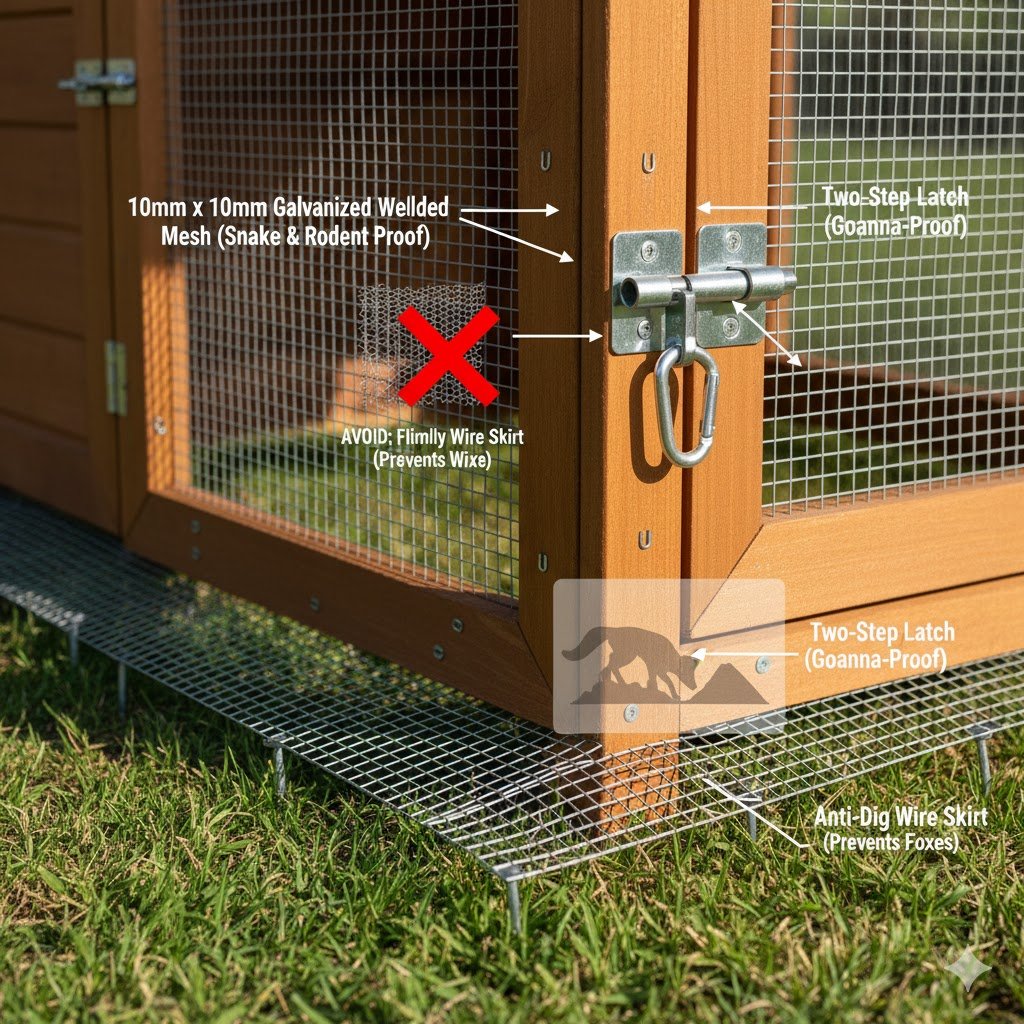
A “predator-proof” coop in Australia means something very different than it does overseas. Our predators are smart, strong, and persistent. Australia’s unique wildlife threats (foxes, goannas, snakes, quolls) demand specialised strategies.
When I lost my first hen to a fox in 2021, it was devastating. The fox had ripped straight through the chicken wire I’d naively thought was adequate. That expensive lesson taught me to never underestimate Australian predators.
Australia’s Top Predators and How to Beat Them
Foxes: The number one killer. They can rip chicken wire, dig, and even climb.
Goannas and Quolls: Can climb, squeeze through small gaps, and are very strong.
Snakes (Pythons): Will take chicks, hens, and eggs. They can get through a 2cm gap.
Hawks and Eagles: Will swoop an unwary chook in an open yard.
Rats and Mice: Won’t usually kill a hen, but they will eat eggs, chicks, and tonnes of feed, attracting snakes in the process.
The Fort Knox Coop Checklist
Your coop is only as strong as its weakest point. Use this checklist.
Wire (The Most Important Part):
- Do NOT use chicken wire (the flimsy hexagon stuff). A fox can rip it with its teeth.
- DO use 10mm x 10mm (or 1/2 inch) galvanised welded mesh or snake and rodent proof wire. This is the only thing that stops snakes and rats.
- Our comprehensive Australian predator protection guide covers prevention methods for all major threats.
The Floor:
- Best: A solid concrete slab or paver floor. Nothing can dig through it.
- Good: Build a wire skirt. This means laying the 10x10mm mesh flat on the ground, extending 50cm outwards from the base of the coop, and pegging it down. When a fox tries to dig, it hits wire and gives up.
Locks:
- Do NOT use simple twist latches. A fox or goanna can flip these.
- DO use two-step locks: A sliding bolt with a carabiner or padlock is perfect.
The Roof:
- Your coop and run must have a solid or mesh roof to stop climbing predators and hawks.
Managing Manure and Pests
A clean coop is a healthy coop.
The Deep Litter Method: Less Cleaning, Better Coop
As mentioned in the welfare section, this is the best way to manage manure and keep your chooks happy. By keeping a 15cm or deeper layer of dry carbon material (wood shavings, straw) and turning it weekly, you create a self-composting floor that is odour-free and full of healthy microbes.
Composting Chicken Manure
When you do your big clean-out, you’ll have a pile of the world’s best fertiliser. But you can’t put it straight on your garden because it’s too hot (high in nitrogen) and will burn your plants.
The Ratio: You need a 2:1 mix. Two parts browns (dried leaves, shredded paper, wood shavings) to one part greens (the chicken manure and litter).
The Process: Layer it in a compost bin, add a little water, and turn it every couple of weeks.
The Science: You want the pile to heat up to 60 to 70°C. This kills any bad bacteria.
The Result: After 3 to 6 months, you’ll have rich, dark, beautiful compost that your veggie patch will love.
Flock Health, Breeds, and Biosecurity
Keeping your flock healthy starts before you even buy them.
Which Chicken Breed is Right for My Backyard?
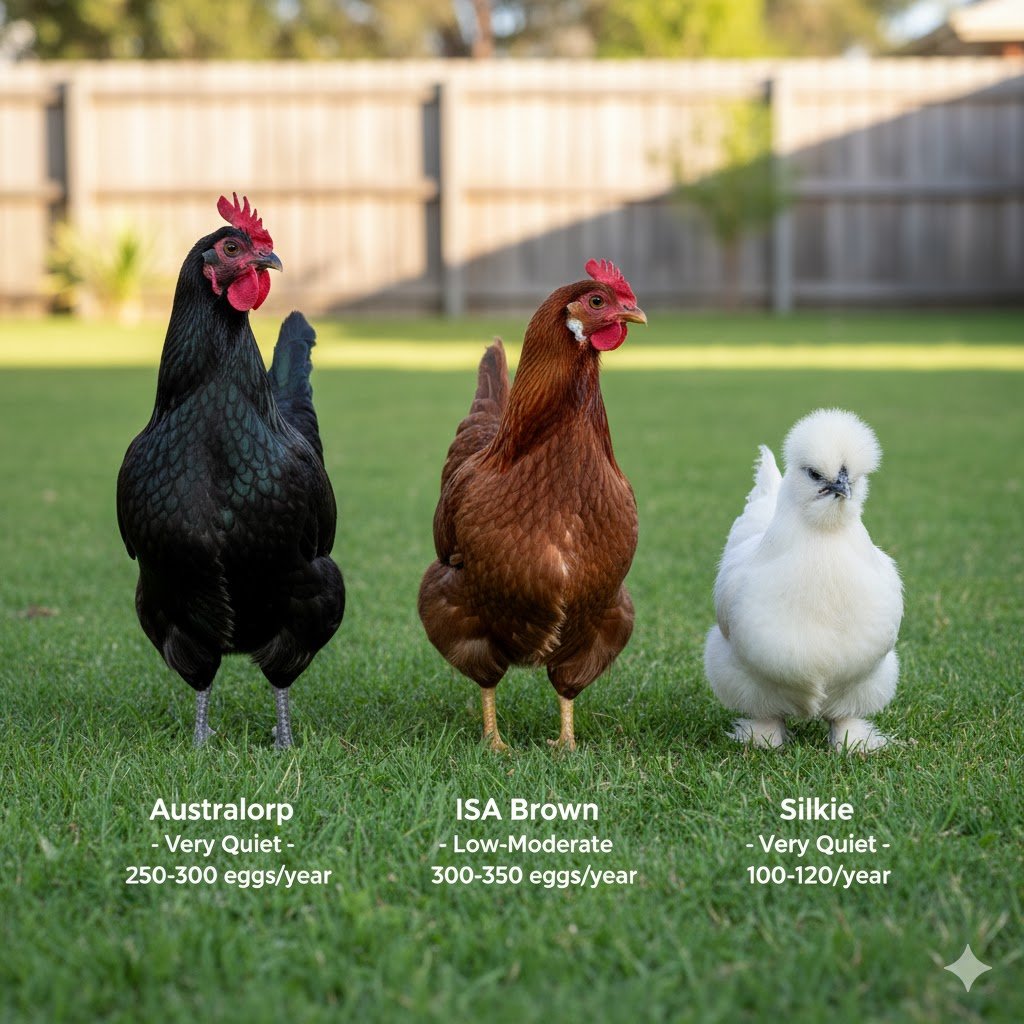
Not all chooks are created equal. Some are egg-laying machines, while others are quiet, cuddly pets.
| Breed | Eggs Per Year | Noise Level | Good with Kids | Aussie Climate |
|---|---|---|---|---|
| ISA Brown | 300-350+ | Low-Moderate | Generally | Good, but shorter lifespan |
| Australorp | 250-300 | Very Quiet | Excellent | Excellent (Aussie breed!) |
| Orpington | 170-200 | Very Quiet | Excellent | Good, but fluff can get hot |
| Wyandotte | 200-240 | Moderate | Good | Very hardy |
| Silkie | 100-120 | Very Quiet | Excellent | Good, but feathers aren’t waterproof |
| Leghorn | 280-320+ | Loud | No (Flighty) | Very hardy |
| Araucana | 180-200 | Moderate | Varies | Good (Lays blue eggs!) |
For Maximum Eggs: Get ISA Browns.
For a Quiet, Family Pet: Get Australorps or Orpingtons.
For Coloured Eggs: Get an Araucana (blue eggs) or Marans (dark brown eggs).
New to chickens? Start with beginner-friendly chicken breeds that handle Australian conditions well. For hot northern areas, consider choosing heat-tolerant breeds suited to your Australian climate.
Biosecurity: Protecting Your Flock and Australia’s
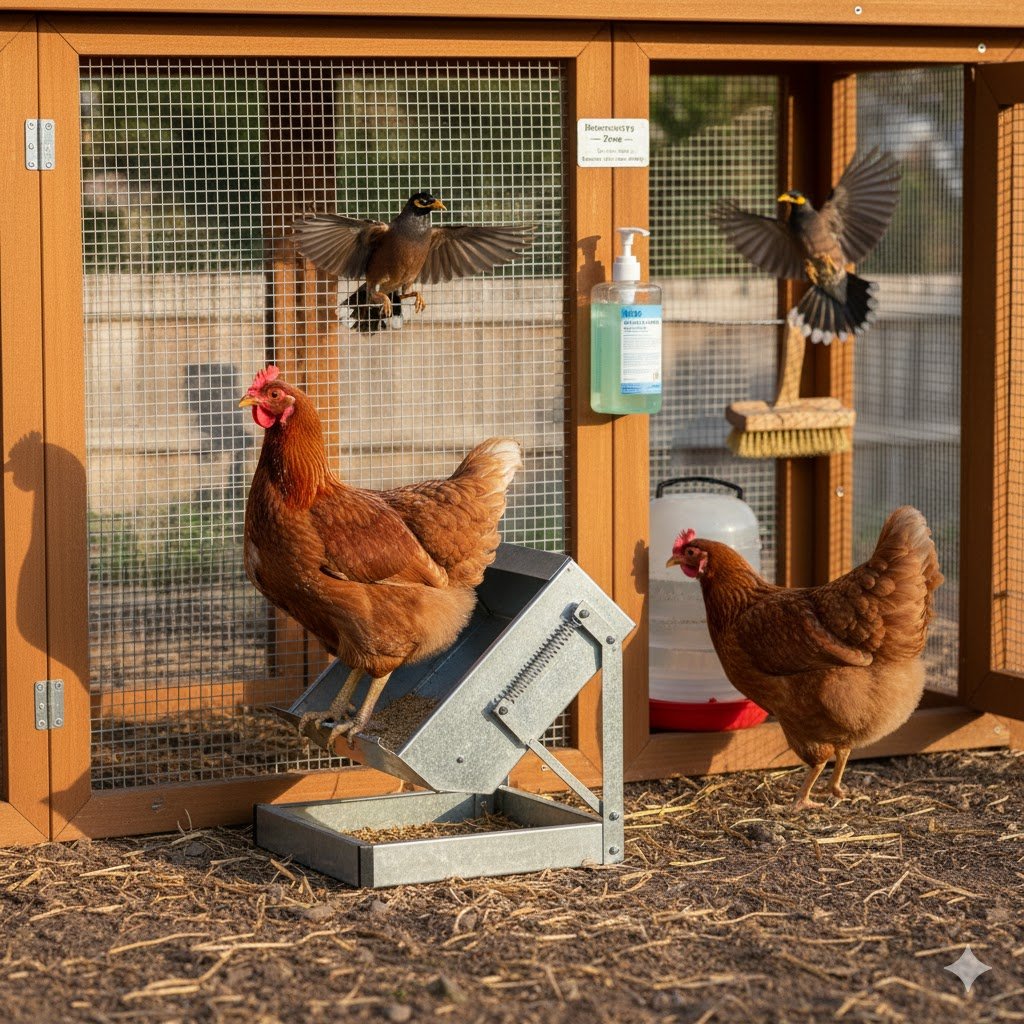
Biosecurity is a simple idea: stopping disease from getting in or out. For a backyarder, it means three things:
Quarantine: When you get new chickens, you must keep them in a separate cage, far away from your old flock, for at least 30 days. This is to see if they get sick.
Cleanliness and Wild Bird Prevention: This is now a critical legal requirement. You must take reasonable actions to minimise access to poultry feed and drinking water by wild birds. This is the number one way to prevent Avian Influenza (Bird Flu). After the 2024 outbreaks, this is a non-negotiable part of chicken keeping. Don’t leave feed out in the open. Use a treadle feeder or place it under cover where pigeons, mynas, and sparrows can’t get to it. Also, clean your boots if you’ve been to a friend’s chicken coop.
Source: Buy your birds from a reputable hatchery. They will be vaccinated for key diseases like Marek’s.
Common Chicken Health Problems in Australia
Don’t panic! Most problems are caused by parasites and are easy to prevent.
External Parasites (Mites and Lice):
- Signs: Scratching, feather loss, not wanting to go into the coop at night (red mites)
- Prevention: A good dust bathing area with dirt and a sprinkle of Diatomaceous Earth
Internal Parasites (Worms):
- Signs: Weight loss, diarrhoea
- Prevention: A wormer from a pet store or vet, used every 6 months
Respiratory Issues:
- Signs: Sneezing, coughing, bubbly eyes (this is a bad sign)
- Action: Separate the sick bird immediately and call an avian vet
Marek’s Disease: A deadly virus with no cure.
- Prevention: This is why you must buy chicks vaccinated at the hatchery
According to the RSPCA Australia knowledge base, regular health checks and prompt veterinary attention are essential for maintaining flock welfare.
Special Considerations
This is the stuff people often forget to tell you.
The Realities: 10 Things to Consider Before You Buy
The Daily Commitment: Chickens need care 365 days a year. Rain, hail, or shine, they need to be let out, fed, watered, and locked up safely at dusk.
Unexpected Vet Costs: Avian vets are specialised and can be expensive. A sick chicken can easily lead to a significant vet bill.
Predator Stress: The first time you see a fox or goanna near your run is terrifying. It requires constant vigilance.
Holidays: You can’t just go away for a weekend. You need a reliable chook-sitter who knows what to do.
Garden Damage: A free-ranging chicken will destroy your veggie patch and mulch in seconds. Fences are essential.
The Pecking Order: Chickens aren’t always nice to each other. Introducing new birds can be a brutal process.
Biosecurity: As we covered, you have a legal responsibility to help prevent the spread of poultry diseases.
The End-of-Life: You will eventually have to deal with a sick or old bird. You must have a plan for humane euthanasia (which usually means a vet).
The “Oops, it’s a Rooster”: Even from a hatchery, you’ll sometimes get a male chick by accident. You must have a plan for re-homing it, as you can’t keep it.
Are Chickens Noisy for Neighbours?
This is one of the most common concerns for new chicken keepers. The honest answer: hens are relatively quiet, but they’re not silent.
Hens make a variety of sounds throughout the day. The most notable is the “egg song,” a proud announcement that can last several minutes after laying. Some breeds are louder than others. Leghorns are notoriously vocal, while Australorps and Orpingtons are much quieter.
In my experience, the noise level of four hens is comparable to neighbourhood birds like magpies or kookaburras. Most neighbours won’t notice or mind, especially if you share some eggs with them. Roosters, however, are a completely different story. Their crowing (which happens multiple times a day, not just at dawn) is why they’re banned in almost every residential area.
Can You Have Just One Backyard Chicken?
While it might be legally possible (no council specifies a minimum), it’s a bad welfare outcome. Chickens are highly social flock animals. A single, lonely chicken will be stressed, depressed, and more likely to get sick. The ACT Code of Practice specifically mentions social contact as a requirement.
Minimum recommended: At least 3 chickens. This way, they have a social structure, and if one sadly passes away, you’re not left with a single, lonely bird.
How to Handle Neighbour Complaints About Chickens
If your neighbour complains about your chickens, don’t panic. Most issues can be resolved with good communication.
Listen first: Understand what the actual problem is. Is it noise, smell, or chickens escaping into their yard?
Take action: If it’s a legitimate concern (smell from a dirty coop, for instance), fix it immediately.
Document compliance: Keep records showing you’re following council rules and maintaining good hygiene.
Communicate: Let them know what steps you’ve taken. A dozen free eggs doesn’t hurt either.
Know your rights: If you’re fully compliant with council regulations and welfare standards, you have every right to keep your chickens. However, genuine nuisance issues (persistent smell, roaming birds) can result in council enforcement action regardless of whether you have a permit.
Special Question: Can Landlords Deny Pets in QLD?
This is a tricky one. QLD has newer tenancy laws that make it harder for landlords to refuse pets. However, chickens are often classed as livestock, not pets.
Reality check: You need explicit written permission from your landlord. You must prove the property is suitable and that you won’t be violating any body corporate rules. Don’t even think about it without getting it in writing first.
Getting Started: Your Practical 8-Step Roadmap
Ready to go? Here’s your checklist. Before starting your flock, it’s wise to review the common mistakes Australian beginners make to avoid regulatory oversights and simple errors.
Step 1: Your Council Deep Dive (The Most Important Step)
This is Step 1, 2, and 3. Go to your council’s website. Don’t just read the webpage; download the Local Law PDF or Fact Sheet. Find the exact rules for:
- Maximum number of birds
- If roosters are banned (they are)
- Setback distances (such as X metres from boundary, Y metres from dwelling)
- Coop size or permit requirements
Step 2: Budgeting for Your Flock
This is not a free hobby to start, but the ongoing costs are low. Prices vary significantly based on your state, breeder, and feed shop.
Upfront Costs (Estimated $500 to $1,500+):
- The Coop: Costs can range from cheap flat-packs (which often need predator-proofing) to more expensive, custom-built, or large pre-fab coops
- The Birds: Budget for the cost of several point-of-lay hens. Prices vary by breeder and breed
- The Gear: You’ll need a good quality feeder and waterer
- First Setup: A bag of feed and a bale of bedding
Ongoing Costs: This includes regular bags of feed (check your local produce store for current prices), replacing bedding, and occasional worm or mite treatments.
The Emergency Fund: Have an emergency fund set aside. A single vet visit can be costly, so it’s wise to be prepared.
For a comprehensive breakdown, see our guide to startup costs for Australian chicken keepers.
Step 3: Notify Your Neighbours
Go over, knock on the door, and tell them your plan. “Hi, we’re thinking of getting 4 quiet hens, no roosters. Their coop will be over here, and we’ll keep it clean. Hope that’s okay! We’ll bring you some eggs.” This 5-minute chat can prevent 5 years of complaints.
Step 4: Build or Buy Your Compliant Coop
Now that you have your budget and your council rules, build or buy your coop. Make sure it meets:
- Your council’s setback rules
- The Fort Knox predator-proofing checklist
- The welfare standards (perches with 15cm per bird, nests, substrate area, proper lighting/darkness)
Step 5: Set Up Your Biosecurity
Get your feeder and waterer, and make sure it’s placed where wild birds can’t easily access it. Have your quarantine cage ready, even if you’re getting all your birds at once (it’s good for a sick hen).
Step 6: Prepare for Arrival
Get the feed, waterer, and bedding before the chickens arrive. Set up the bedding (15cm deep or more) in the coop. Have your emergency plan written down. Find your nearest avian vet’s phone number.
Step 7: Bringing Your Chickens Home
Transport them in a cat carrier or a cardboard box with holes. Put them straight into their secure coop and run with food and water. Don’t let them out to free-range for the first week because they need to learn that the coop is home. If you’re adding to an existing flock, you must do the 30-day quarantine.
Step 8: Implement Ongoing Compliance
Keep the coop clean (or just turn the deep litter), provide fresh food and water daily, and lock them up securely every single night at dusk. Enjoy the eggs!
Frequently Asked Questions
How many chickens can I raise in my backyard?
The number depends entirely on your local council. Most metropolitan councils allow 5 to 10 hens, while rural areas typically permit 20 or more. Check your specific council’s local laws for the exact limit.
Can you have chickens in a residential area?
Yes, chickens are allowed in residential areas across all Australian states and territories. However, you must follow your local council’s rules regarding numbers, coop placement, and (almost always) no roosters.
Are chickens noisy for neighbours?
Hens are relatively quiet compared to roosters. The main noise is the “egg song” after laying, which lasts a few minutes. Some breeds (Australorps, Orpingtons) are quieter than others (Leghorns). Most neighbours won’t be bothered if you maintain good relations and share eggs occasionally.
Can I keep a chicken in my yard without a permit?
It depends on your council. Some councils (like Brisbane) require a free permit. Others don’t require permits for small flocks (usually under 10 to 12 birds). Always check your local council’s requirements.
What happens if my neighbour complains about my chickens?
First, try to resolve it directly by understanding their concern and taking action if it’s legitimate (smell, escaping birds). If you’re compliant with all council regulations and welfare standards, document this. Persistent genuine nuisance issues can result in council investigation regardless of permits.
Can I have a rooster in my backyard?
Almost certainly not in residential areas. Every major metropolitan council bans roosters due to noise. Some rural councils allow them on large blocks (usually 4,000m² or one acre minimum). Check your specific council.
Do I need to register my chickens in Australia?
Registration requirements vary. Some councils require free permits (Brisbane). The Northern Territory requires a Property Identification Code for all poultry keepers regardless of flock size. Victoria requires a PIC for flocks over a certain size. Always verify with your local council and state agriculture department.
Can I sell eggs from my backyard chickens?
Yes, but rules vary by state. In NSW, you must notify the NSW Food Authority and stamp your eggs with a unique identifier. Other states have different requirements. Check your state’s food authority for specific regulations.
What are the new welfare standards I need to follow?
The Australian Animal Welfare Standards and Guidelines for Poultry require you to provide perches (minimum 15cm per bird in Victoria), nest areas (1 per 7 chickens), substrate for scratching and dust bathing, at least 6 hours of darkness per day, and a written emergency contingency plan. These apply to all backyard keepers.
What space do my chickens need?
Under the new standards, you must provide a minimum of 1,000cm² (about 31cm x 31cm) for a single chicken, or 750cm² per chicken when keeping 2 or more birds. This is the minimum indoor space; outdoor run space is additional.
Conclusion
Keeping backyard chickens in Australia is not only legal across all states but is an incredibly rewarding hobby. Whether you’re in Queensland navigating Brisbane’s permit system, New South Wales balancing the 10-chicken limit, or Victoria complying with the new mandatory welfare requirements, understanding your local regulations is the essential first step.
The national animal welfare standards are a positive change, improving bird welfare and setting clear expectations for all of us. This isn’t just red tape. It’s a clear roadmap for how to keep your flock happy and healthy, which in turn means more and better eggs for you.
By following your council’s rules, being a good neighbour, building a predator-proof coop, and keeping your chooks safe and healthy, you’ll enjoy years of fresh eggs and the simple joy of watching them potter around your yard. Start small, stay compliant, and welcome to Australia’s thriving community of backyard chicken keepers.

Oladepo Babatunde is the founder of ChickenStarter.com. He is a backyard chicken keeper and educator who specializes in helping beginners raise healthy flocks, particularly in warm climates. His expertise comes from years of hands-on experience building coops, treating common chicken ailments, and solving flock management issues. His own happy hens are a testament to his methods, laying 25-30 eggs weekly.