Starting a poultry farm in Nigeria is a smart business idea that can become a profitable poultry business. People will always need chicken and eggs. Nigeria needs more poultry than local farms can produce, creating a massive opportunity for you. But the startup costs for poultry farming are high. You need money for land, building a poultry house, buying day old chicks, and the constantly rising cost of feed. This is where most people get stuck.
What if you could get free money to start or grow your farm? That is what a grant is. You do not have to pay it back. Getting a grant for poultry farming in Nigeria can help you start your dream business without the weight of debt.
According to the Federal Ministry of Agriculture and Food Security, the federal agricultural grants in Nigeria for 2026 add up to over 300 billion naira. These programs are designed to fill a massive 2.5 trillion naira funding gap for farmers every year. Based on insights from successful grant recipients and agricultural officers I have spoken with, the application process is a marathon, not a sprint. Many farmers feel overwhelmed because they do not know where to look, what documents matter most, or how to make their application stand out.
This guide will change that. You will learn what grants are available, who can apply, what documents you need, how to write a winning business plan, and what to do after you receive funding.
Quick Answers About Poultry Farming Grants in Nigeria
What is the best grant for poultry farming in Nigeria in 2026?
The Tony Elumelu Foundation offering 5,000 dollars with deadline in March 2026 and the Farmers for the Future Grant offering up to 3 million naira are the most accessible for new poultry farmers. For established farms, the National Agricultural Development Fund offers up to 50 million naira.
How much grant money can I get for poultry farming?
Grant amounts range from 50,000 naira for micro enterprises to 50 million naira for established agribusinesses. Most first time applicants realistically secure 300,000 to 3 million naira.
Do I need collateral to get a farming grant?
No. True grants like TEF, YEIDEP, and F4F require no collateral. Even the AGSMEIS loan program does not require collateral for loans up to 10 million naira.
Can I get funding if I already have a poultry farm?
Yes. Many programs support farm expansion, not just startups. NADF, AGSMEIS, and the National Smallholder Farmers Fund specifically target existing farmers looking to scale from 100 to 1000 broilers.
Now let us look at the preparation steps that will put you ahead of 90 percent of other applicants.
Before You Apply: 30 Day Preparation Checklist
The winners of 2026 grants are the people who started preparing months ago. Do not wait until a grant is announced with a two week deadline to start gathering your documents.
Week 1: Register your business with the Corporate Affairs Commission (CAC). This can take 7 to 14 days, so start now.
Week 2: Use your CAC document to open a business bank account and get your Tax Identification Number (TIN) from FIRS.
Week 3: Draft your poultry farming business plan. Look for free templates from SMEDAN or ask your bank.
Week 4: Gather all your documents including ID, BVN, business plan, and land agreement. Scan them into PDF files and save them in a Grant Application folder on your computer.
Ongoing: Subscribe to grant notification websites like smedan.gov.ng, fmard.gov.ng, and tefconnect.com so you hear about new opportunities first.
Important: This guide provides information, not a guarantee. Grants are competitive. Always check official websites for final deadlines and rules. Official grants will never ask you to pay an application fee in a personal bank account. If anyone asks for money to help you apply, they are a scammer. Report them immediately.
With your documents ready, you need to understand what funding options are available and which one fits your situation.
Understanding Agricultural Funding in Nigeria
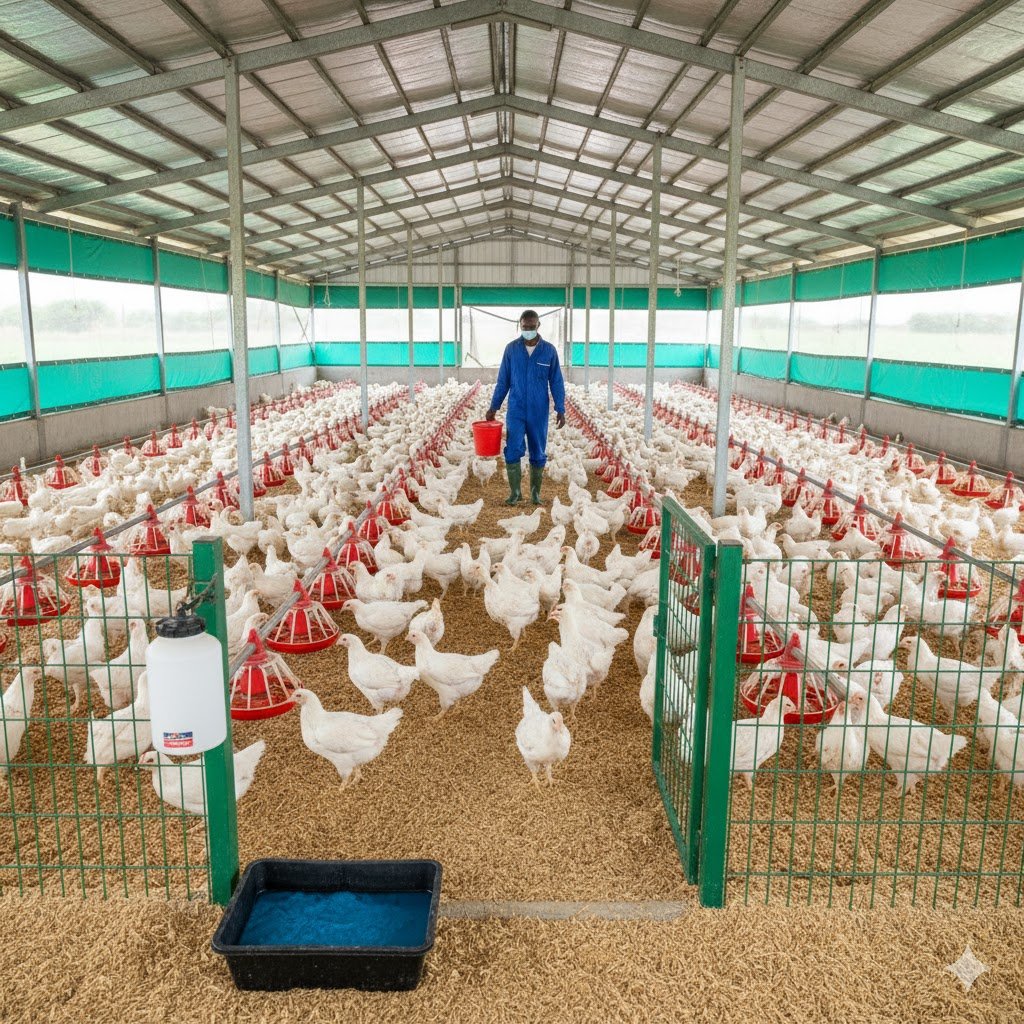
Many people use the word grant to mean any kind of government money. This is a mistake that can cost you time and money.
What Are Agricultural Grants?
An agricultural grant is a gift of money or items given to a farmer to help achieve a specific goal. This could be starting a new poultry farm, buying equipment like drinkers, feeders, or incubators, or expanding to include a hatchery. The best part is that you do not pay it back. This is why grants are so competitive.
Cash Grants vs In Kind Grants
Cash Grants send money directly to your business bank account. You then use that money to do what your proposal said. The Tony Elumelu Foundation grant is a good example.
In Kind Grants give you items instead of money. For example, a grant from NALDA might give you 1,000 day old chicks, 50 bags of feed, and 20 drinkers. You do not get cash, but you get what you need.
Both are valuable, but you must know what you are applying for.
Grants vs Loans: The Critical Difference
| Feature | Grants | Loans |
|---|---|---|
| Repayment | Free money, no repayment | You must pay it back |
| Interest | None | You pay back more than you borrowed |
| Collateral | Usually not required | Most bank loans require collateral |
| How to get it | Win it with a great application | Qualify by showing ability to repay |
For a new poultry farmer, a grant is the gold standard because it lets you start without debt. However, soft loans with low interest rates can be almost as good as grants. For more details on loan options, read our guide on how to get loans for poultry farming.
Now that you understand the difference between funding types, let us look at the specific programs available in 2026.
Urgent Deadlines: January-February 2026
Before we go further, note these approaching deadlines that require immediate action.
Kellogg Morgan Stanley Sustainable Investing Challenge
- Deadline: January 25, 2026 (8 days away)
- Funding: Up to 10,000 dollars
- For: Graduate students with sustainable agriculture projects
This competition rewards innovative ideas in sustainable agriculture and food systems. If you are a graduate student with a poultry business idea focused on sustainability, apply immediately.
SHEAF Fellowship for Women in Agrifood
- Deadline: January 31, 2026 (14 days away)
- For: Women working in agricultural food systems including poultry farming
This fellowship provides leadership training, networking, and funding support for women in the agrifood sector.
FAO Award for Innovation 2026
- Deadline: February 15, 2026
- Prize: Up to 10,000 dollars
- For: Individuals, institutions, research entities, civil society organizations, or private sector entities with ground-breaking agrifood innovations
This global award from the Food and Agriculture Organization of the United Nations recognizes innovations that contribute to food security, nutrition, economic development, and environmental sustainability. If you have developed an innovative solution for poultry production, processing, or distribution, this is a prestigious opportunity.
AgriTech4Tunisia Innovation Challenge 2026
- Deadline: February 12, 2026 (23:59 GMT+1)
- For: Early-stage agri-tech teams with a Minimum Viable Product (MVP)
- What you get: Fully funded 4-day bootcamp in Tunisia plus 3-month sponsored acceleration program plus mentorship and investor connections
This challenge targets innovators working on precision agriculture, climate-smart tools, post-harvest solutions, and agri-finance. If you have a technology solution for poultry farming challenges, apply before the deadline.
If you qualify for any program, stop reading and apply today. You can return to this guide afterward.
Active Grant and Loan Programs January 2026
Here is a comprehensive overview of all major funding programs for poultry farmers in Nigeria. Programs are organized by type to help you choose the right one.
Pure Grants (Free Money, No Repayment)
These programs give you money that you never have to pay back.
Tony Elumelu Foundation Entrepreneurship Programme
This is the most famous grant in Africa. Many poultry farmers win it every year.
| Detail | Information |
|---|---|
| Funding | 5,000 dollars seed capital |
| What you get | Cash grant plus 12 week business training plus mentorship |
| Eligibility | African entrepreneurs with business idea or existing business |
| Status | Open |
| Deadline | March 2026 |
| Apply | tefconnect.com |
When I helped Chidi Okonkwo of Sunrise Poultry Farm in Enugu apply for the TEF 2024 cycle, the biggest mistake in his first application was submitting financials that did not match his CAC business activity description. The selection committee flagged this inconsistency. After we corrected this and aligned his business plan numbers with his registration documents, his second application succeeded. He received his 5,000 dollars in August 2024 and now runs 2,000 layers.
Youth and Enterprise in Agriculture Development Programme (YEIDEP)
This program comes from the youth ministry to fight unemployment among young Nigerians.
| Detail | Information |
|---|---|
| Funding | 300,000 to 400,000 naira grants |
| Eligibility | Youth aged 18 to 35 with viable agri plans |
| Status | Ongoing phases |
| Apply | yeidep.org |
| Bonus | Training and mentorship included |
This grant is ideal for starting a profitable broiler farm.
Farmers for the Future (F4F) Grant
According to the official F4F portal, this program is developed and sponsored by the British American Tobacco Nigeria Foundation in partnership with NYSC and implemented by Fate Foundation.
| Detail | Information |
|---|---|
| First Prize | 3 million naira |
| Second Prize | 2 million naira |
| Third Prize | 1 million naira |
| Eligibility | Currently serving NYSC members with viable agribusiness ideas |
| Includes | Bootcamp training, mentorship, business registration support |
| Status | Rolling |
WASSMAS Agriculture Grant
The West Africa Support for Small and Mid scale Agro Startup provides funding for agricultural entrepreneurs in West Africa with strong emphasis on Nigeria.
| Detail | Information |
|---|---|
| Funding | Up to 10,000 dollars |
| Includes | Training, mentorship, equipment support, market access |
| Eligibility | Ages 18 and above, active in poultry, livestock, crop cultivation, fish farming, or agro processing |
| Location | ECOWAS member countries with Nigeria prioritized |
| Status | Active |
FAO Award for Innovation 2026
The Food and Agriculture Organization of the United Nations established this award to recognize ground-breaking innovations in agrifood systems.
| Detail | Information |
|---|---|
| Prize | 10,000 dollars cash plus recognition scroll |
| Eligibility | Individuals, institutions, research entities, civil society organizations, private sector entities |
| Focus | Innovations impacting food security, nutrition, resilience, environmental sustainability |
| Deadline | February 15, 2026 |
| Ceremony | December 2026 at FAO Council |
| Apply | Through FAO Representatives or directly to fao.org/fao-awards |
Evaluation Criteria:
- Impact on more than one level of the supply chain from farmers to consumers
- Quality and merit of the innovation
- Potential benefit, scalability, and sustainability
- Role of youth under 35, women, or marginalized groups
How Poultry Farmers Can Apply:
If you have developed an innovative approach to poultry production, processing, marketing, or waste management, you can apply. Innovations can be technological like digital solutions, or social, financial, and institutional innovations including new business models. Submissions go through FAO Representatives in your country or directly to the Awards Secretariat.
AgriTech4Tunisia Innovation Challenge 2026
This challenge from CGIAR supports early-stage agri-tech innovators to refine, validate, and scale technology solutions that strengthen food security and agricultural resilience.
| Detail | Information |
|---|---|
| What you get | Fully funded 4-day bootcamp in Tunisia plus 3-month acceleration program |
| Includes | Mentorship from CGIAR scientists, investor connections, pitch coaching, business development support |
| Eligibility | Early-stage teams with MVP, pre-seed or seed stage, addressing smallholder farmer needs |
| Deadline | February 12, 2026 (23:59 GMT+1) |
| Apply | CGIAR Venturespace AgriTechChallenge portal |
Priority Innovation Areas:
- Sustainable water management and smart irrigation
- Precision agriculture and input optimization
- Climate-smart tools and services
- Post-harvest solutions and market access
- Agri-finance tools for financial inclusion
- Digital extension services and capacity building
Why This Matters for Nigerian Poultry Innovators:
If you are building technology solutions for poultry farming challenges such as automated feeding systems, disease detection apps, cold chain solutions, or farm management software, this program provides mentorship, technical support, and investor access that can help you scale across African and Mediterranean markets.
Loan and Grant Hybrids
These programs offer a mix of grants and low interest loans.
National Agricultural Development Fund (NADF)
This 100 billion naira fund replaced CBN previous agricultural financing programs. According to official sources, it supports 10,000 farmers annually.
| Detail | Information |
|---|---|
| Funding | Up to 50 million naira |
| Interest Rate | 0%-5% variable |
| Eligibility | Registered agribusinesses in processing and export |
| Apply | nadf.gov.ng with quarterly proposal submissions |
| Status | Rolling |
National Smallholder Farmers Fund
Announced in September 2025, this landmark 1 billion dollar fund (approximately 1.5 trillion naira) is designed to close the financial gap for Nigeria smallholder farmers.
| Detail | Information |
|---|---|
| Total Pool | Up to 1 billion dollars |
| Structure | Revolving matching fund with State Governments |
| Eligibility | Smallholder poultry farmers, individual farmers, cooperatives |
| Access | Through Bank of Agriculture and state government partners |
| Status | Rolling out Q1 2026 |
Contact your State Ministry of Agriculture for implementation details in your area.
Soft Loans (Low Interest, Favorable Terms)
These programs offer loans at interest rates far below commercial banks, making them almost as good as grants for serious farmers. For more details on loan options if grants don’t work out, read our complete guide on how to get loans for poultry farming.
AGSMEIS Loan Programme
According to the official CBN information, this is a Bankers Committee initiative managed by NIRSAL Microfinance Bank. This is a loan programme, not a grant, but offers very favorable terms.
| Detail | Information |
|---|---|
| Maximum Loan | 10 million naira |
| Interest Rate | 9 percent per year |
| Collateral | Not required |
| Loan Tenor | Up to 7 years |
| Grace Period | Up to 18 months before principal repayment begins |
| Apply | nmfb.com.ng |
How to Apply for AGSMEIS:
- Visit the NIRSAL MFB website at nmfb.com.ng
- Create an account and select an Entrepreneurship Development Institute for training
- Complete the mandatory one week training and obtain your certificate
- Submit your loan application online through the portal
- Attend interview with NIRSAL if shortlisted
- If approved, funds are disbursed to your NIRSAL MFB account
Agricultural Credit Guarantee Scheme Fund (ACGSF)
According to the official CBN ACGSF portal, this scheme was established by Decree No. 20 of 1977 and has distributed over 1 trillion naira since then.
The ACGSF does not give you money directly. Instead, it guarantees 75 percent of your loan from a bank. This makes banks more willing to lend to farmers because CBN will cover most of their losses if you cannot repay.
| Loan Type | Maximum Amount | Collateral Required |
|---|---|---|
| Non collateralized | 100,000 naira | None |
| Collateralized | ₦20,000-₦10 million range | Land, movable property, life insurance, stocks, warehouse receipts |
Bonus: Interest Drawback Programme
If you repay your ACGSF backed loan on time (both principal and interest within the agreed period), you qualify for a 40 percent rebate on the interest you paid. This means if you paid 100,000 naira in interest, you get 40,000 naira back. Your lending bank files the claim on your behalf.
Nigeria Youth Investment Fund (NYIF)
This Federal Government initiative specifically targets young Nigerians with business ideas including agriculture.
| Detail | Information |
|---|---|
| Funding | 250,000 to 3 million naira |
| Interest Rate | 5 percent |
| Eligibility | Nigerian youth aged 18 to 35 with viable business plans |
| Status | Check for 2026 cycle |
Anchor Borrowers Programme (ABP)
This CBN programme creates linkages between smallholder farmers and large scale processors to boost local production.
| Detail | Information |
|---|---|
| Funding | 250,000 to 10 million naira |
| Interest Rate | 5 percent |
| Eligibility | Smallholder farmers who agree to supply produce to designated anchor companies |
How ABP Works for Poultry Farmers: If you grow maize, soybeans, or other feed ingredients, you can access ABP funding to produce these crops and sell to poultry feed mills.
Commercial Scale Funding
These programs are for established farms looking to expand significantly.
Commercial Agriculture Credit Scheme (CACS)
This initiative provides medium and large scale farmers with long term credit at single digit interest rates.
| Detail | Information |
|---|---|
| Funding | 10 million to 2 billion naira |
| Interest Rate | 9 percent |
| Eligibility | Large scale farmers and agro processors with proven track record |
| Apply | Through participating commercial banks |
Fund for Agricultural Finance in Nigeria (FAFIN)
According to NSIA official portfolio, FAFIN is an agriculture focused private equity fund for established, commercially viable farms.
| Detail | Information |
|---|---|
| Funding | 500 million to 5 billion naira |
| Structure | Quasi equity, equity, and structured debt instruments |
| Eligibility | High growth, commercially attractive agricultural SMEs |
| Status | Q1 2026 calls expected |
Programs Currently Closed
The Green Money Project: According to official sources, registration is currently closed. Watch thegreenmoneyproject.ng for the next cycle announcement.
NG CARES Programme: This World Bank assisted program has been in phased completion since late 2025. Contact your State Ministry of Agriculture about current availability.
Now that you know what programs exist, let us help you choose the right one.
Which Funding Option Should You Choose?
Use this decision guide to find the best program for your situation.
If You Are Just Starting with Less Than 500 Birds
- Best options: YEIDEP grants of 300,000 to 400,000 naira, Tony Elumelu Foundation at 5,000 dollars, F4F Grant up to 3 million naira for NYSC members
- Why: These are true grants with no repayment required. Perfect for beginners who need seed capital without debt.
If You Have an Existing Farm and Want to Expand to 1,000 to 5,000 Birds
- Best options: AGSMEIS Loan up to 10 million naira, ACGSF backed loan up to 50 million naira with collateral, NYIF up to 3 million naira for youth
- Why: These loan programs offer low interest rates and flexible repayment terms. You can access larger amounts than most grants offer.
If You Are a Large Scale Commercial Farmer with Over 10,000 Birds
- Best options: CACS up to 2 billion naira, FAFIN up to 5 billion naira, NADF up to 50 million naira
- Why: These programs are designed for established commercial operations that need significant capital for expansion.
If You Are a Woman in Poultry Farming
- Best options: SHEAF Fellowship with deadline January 31, 2026, World Poultry Foundation Programs, Mastercard Foundation Fund
- Why: These programs specifically prioritize women led agricultural businesses.
If You Are a Graduate Student with an Innovative Idea
- Best options: Kellogg Morgan Stanley Challenge with deadline January 25, 2026, Tony Elumelu Foundation
- Why: These programs reward innovation and can fund research based poultry projects.
Now that you know which program to target, let us look at who can apply.
If You Have Developed an Innovative Agri-Tech Solution
- Best options: FAO Award for Innovation with 10,000 dollars prize and deadline February 15, 2026, AgriTech4Tunisia with bootcamp and acceleration and deadline February 12, 2026, Tony Elumelu Foundation
- Why: These programs specifically reward innovation in agrifood systems. If you have built technology or developed new approaches for poultry production, processing, or marketing, these are your best opportunities.
Eligibility Requirements for Poultry Farming Grants
You cannot just raise your hand and get a grant. You must prove you are ready, serious, and a good investment for their funds.
Age Requirements
Many popular grants are for youth, which in Nigeria usually means 18 to 35 years old. YEIDEP and NYIF use this range. The Green Money Project accepts ages 18 to 40. Always check the specific program requirements.
Business Registration Requirements
You cannot get a serious business grant with your personal name or a personal bank account. Applying with a personal account is the fastest way to get your application rejected.
You must register your business name with the Corporate Affairs Commission (CAC). This is the first step to proving you are a serious entrepreneur.
You will also need a Tax Identification Number (TIN) for your business, which is free from FIRS.
You must have a business bank account in your registered business name, not your personal name.
The Three Essential Documents
CAC Certificate: Your business birth certificate. Non negotiable.
TIN: Your tax identification number. Free to obtain.
Business Bank Account: In your registered business name.
Think of these three as your passport to funding. Without them, you cannot travel. Get them sorted today, long before you find a grant to apply for.
Farm Location and Scale Requirements
You must be a Nigerian citizen living in Nigeria with a farm located in Nigeria. Some grants are specific to certain states or regions. You must have proof of your right to use the land through a Certificate of Occupancy, lease agreement, or letter from traditional authority.
Your business plan must be clear about whether you are raising broilers for meat, layers for eggs, or running a hatchery. Learn about choosing between broilers, layers, or noilers to make your plan specific. Grantors fund focused plans, not vague ideas.
Common Disqualifiers
According to federal government sources, more than 55 percent of applications that are rejected result from missing documents. Other common reasons include:
Incomplete applications with missing questions or documents. Applying with personal name instead of registered business. Business plans where numbers do not add up. Missing deadlines by applying late. Applying for wrong grants such as a 40 year old applying for a youth grant.
Meeting these requirements puts you in the top 20 percent of applicants. Now let us prepare your documents.
Essential Documents for Grant Applications
Put all these in a safe folder as both paper copies and scanned PDF files. When a grant opens, you will be ready to apply in hours, not weeks.
| Document | Why You Need It | Tip |
|---|---|---|
| CAC Certificate | Proves your business is registered | Start registration today if you have not |
| Business Bank Account Statement | Shows your business name and account number | Must be in business name, not personal |
| Tax Identification Number | Required for compliance | Free from FIRS |
| Business Plan | Your roadmap to success | 10 to 15 pages following FMAFS template |
| Proof of Land Use | Shows legal right to farm location | C of O, lease agreement, or traditional authority letter |
| Valid ID Card | Personal identification | NIN slip, driver license, or passport |
| BVN | Identity verification | Must match name on other documents exactly |
| Farm Photos | Shows current operations | Include GPS location if possible |
| Professional Bio | Establishes your credibility | 100 to 200 words about your experience |
With documents ready, you need a winning business plan.
How to Write a Winning Grant Proposal
Your business plan is what separates you from 10,000 other applicants. According to Mygotovet, a standard livestock business plan should be between 10 and 20 pages, long enough to cover every important detail but short enough to remain engaging.
What Grant Committees Look For
They are not just giving away money. They are investing in Nigeria future. They want to see:
A Clear Plan: Do you know exactly what you are doing?
Profitability: Will this farm make money or will you need more funding in 6 months?
Impact: How many jobs will you create? How much food will you produce?
A Trustworthy Team: Can they trust you to make this happen?
The Seven Steps to a Bankable Business Plan
According to agricultural financing experts, these steps will make your plan stand out.
Step 1: Define Your Project and Business Structure
Clearly define your livestock project. Outline the type of birds you raise and describe your legal business structure. Specify whether you operate as a registered company, cooperative, or enterprise.
Step 2: Conduct Market Analysis
Market research is the backbone of every successful plan. Identify who your customers are. Are you selling directly to local markets or supplying larger processors? Understanding your target market helps you align production with actual demand.
Step 3: Outline Your Operational Plan
Describe how your farm operates daily. Include your management structure, feeding practices, veterinary care, and equipment usage. Show you understand poultry farm biosecurity and how to identify poor quality chicks.
Step 4: Create Financial Projections
This is where many people fail. You must be detailed and realistic.
To be precise in your budget, check current poultry equipment prices and feed prices.
As of January 2026, typical startup costs for a 500 bird broiler operation range from 2.5 to 6 million naira:
| Cost Category | Estimated Range |
|---|---|
| Land Preparation | 500,000 to 2,000,000 naira |
| Housing Construction | 800,000 to 1,800,000 naira |
| Initial Stock of 500 chicks | 850,000 to 1,400,000 naira |
| Initial Feed and Vaccines | 600,000 naira and above |
Step 5: Establish Performance Indicators
Define measurable Key Performance Indicators such as growth rates, feed conversion ratios, and return on assets. Monitoring these indicators enables you to improve efficiency.
Step 6: Create a Risk Mitigation Plan
Lenders want to see that you can handle risks. Outline how you will protect your farm from diseases, theft, and price changes. Include plans for managing your flock during harmattan and other challenges.
Step 7: Prepare Legal and Financial Documentation
Compile essential documents before applying. Missing documents can delay approvals, so stay organized.
Budget Justification: The Make or Break Section
Never just list a number. Justify every line item.
Weak Budget Example:
| Item | Cost |
|---|---|
| Pens | 800,000 naira |
| Chicks | 500,000 naira |
| Feed | 1,000,000 naira |
| Total | 2,300,000 naira |
Strong Budget Example:
Item 1: Poultry House Construction (1,200,000 naira)
Justification: To build one 10m by 15m deep litter pen based on current building costs. Quote attached from XYZ Construction dated January 2026.
Item 2: Day Old Chicks (1,400,000 naira)
Justification: To purchase 1,000 Arbor Acres broiler chicks at 1,400 naira per chick from certified hatchery.
Item 3: Poultry Feed (1,400,000 naira)
Justification: To purchase 200 bags of starter and grower mash at 7,000 naira per bag to feed 1,000 broilers for 8 weeks. Alternatively, show cost savings by formulating your own feed.
Total: 4,000,000 naira
The strong budget proves you have done your research. Now let us look at why applications fail.
Why Applications Get Rejected and How to Fix It
More than half of all applications fail due to preventable mistakes.
Mistake 1: Missing the Deadline
The Problem: You waited until the last day, the portal crashed, and your application was never submitted.
The Fix: Submit at least 24 to 48 hours before the deadline.
Mistake 2: Budget Does Not Match Grant Rules
The Problem: The grant says maximum is 1 million naira. Your proposal asks for 1,000,100 naira.
The Fix: Read the rules. If the maximum is 1 million naira, ask for 1 million naira or less.
Mistake 3: Vague Business Plan
The Problem: Your plan says I want to do poultry farming without specifying broilers, layers, or location.
The Fix: Be specific. A 1,500 bird broiler farm in Ota, Ogun State, selling to local hotels is a clear, fundable plan.
Mistake 4: Wrong Grant Application
The Problem: You applied for Lagos State LEAP but your farm is in Ibadan.
The Fix: Read eligibility rules before applying. Do not waste time on grants you do not qualify for.
Mistake 5: Document Errors
The Problem: Your name on the application does not match your BVN, or your CAC certificate scan is blurry.
The Fix: Double check and triple check. Have someone else review your application before you submit.
If your application is rejected, ask for feedback, fix your mistakes, and be ready for the next opportunity. Now let us discuss how cooperatives can improve your chances.
How to Form a Poultry Farming Cooperative for Grant Access
Many federal grants now require or strongly prefer cooperative applications. According to CBN ACGSF guidelines, cooperatives are more likely to receive funding approval because they represent multiple farmers with shared risk.
Why Cooperatives Have an Advantage
- Larger funding pools: Cooperatives can access bigger grants than individuals.
- Shared costs: Equipment, bulk feed purchases, and marketing costs are distributed among members.
- Credibility: Grant committees view cooperatives as more sustainable.
- CBN requirement: Many CBN backed initiatives specifically require cooperative registration.
Steps to Register a Cooperative
Step 1: Gather founding members. You need a minimum of 10 members for most states.
Step 2: Draft bylaws with rules for membership, leadership, and profit sharing.
Step 3: Register with your State Ministry of Commerce.
Step 4: Open a cooperative bank account in the cooperative name.
Step 5: Obtain Tax Identification Number for the cooperative entity.
Organizations to Join
Poultry Association of Nigeria (PAN): The national industry body providing training, networking, and advocacy.
State level poultry farmers associations: Local networking and support.
Local agricultural cooperatives: Community based groups that can help you access funding.
Cooperative membership also gives you access to bulk purchasing for feed and equipment, training programs, and market connections that individual farmers cannot easily access.
Now let us walk through the application process.
Step by Step Application Process
Most 2026 grant applications are completed online through official government and foundation portals.
Step 1: Identify the Right Grant
Visit official websites of government and foundations. Use the program tables above to select the appropriate grant for your needs.
Step 2: Review Eligibility
Read all requirements thoroughly. Verify if your age, business type, and project align with program guidelines.
Step 3: Register Your Business
If not registered, complete your Corporate Affairs Commission registration. This is required for federal grants.
Step 4: Prepare Your Business Plan
Write a 10 to 15 page business plan following the FMAFS template. Include project goals, market target, financial projections, and sustainability objectives.
Step 5: Gather Documents
Collect NIN or BVN, CAC certificate, land papers, bank statement, and tax clearance. Scan everything into PDF format.
Step 6: Apply Online
Submit your application via the official portal. Upload all required documents and verify your BVN.
Portal Tips:
- Use a laptop or desktop computer, not your phone. Phone browsers cause errors.
- Save your progress every 15 minutes using the Save Draft button.
- Type long answers in Microsoft Word first, then copy and paste into the portal. This prevents losing work if the page crashes.
- Check file sizes. If the portal says maximum 5MB and your PDF is 10MB, use an online tool to compress it.
Step 7: Wait for Verification
Expect field visits or telephone interviews within 4 to 8 weeks. Some programs require an online course.
Step 8: Receive Approval and Disbursement
If approved, funds are released to your verified bank account. Keep track of every expenditure.
Step 9: Submit Reports
Most grants require reports twice a year regarding farm progress and income.
Let us look at real success stories.
Real Farmers, Real Grants: Success Stories
These programs are changing lives across Nigeria.
Amina Yusuf, Oyo State
Amina, 32, applied for the YEIDEP grant in late 2024 after learning about it through her local agricultural extension officer. She submitted a 12 page business plan focused on cassava processing with detailed financial projections showing break even within 18 months. She received a 350,000 naira grant, used it to purchase processing equipment, and now employs 20 women. Her key advice: Start your CAC registration before you hear about any grant.
Ibrahim Musa, Kaduna
Ibrahim scaled his rice farm through NADF funding after three previous rejections. His fourth application succeeded because he included detailed soil analysis reports, a five year growth projection, and letters of intent from three buyers. He doubled production to 50 tons annually using modern irrigation. He shared that the grant turned his plot into a powerhouse.
Fatima Bello, FCT
Fatima was among 12,422 farmers in FCT who each received 200,000 naira under the NG CARES program. She used her grant to purchase 300 layers and rebuild her pen after a rainstorm destroyed her previous structure. Within eight months, she was earning steady income from egg sales. This demonstrates that even small grants of 200,000 naira can restart a poultry business.
Chidi Okonkwo, Enugu
Chidi received the Tony Elumelu Foundation grant in 2024 after his second application. His first application was rejected because his financial projections did not match his CAC business activity description. After correcting this error and aligning all documents, his second application succeeded. He received 5,000 dollars and now operates 2,000 layers with plans to expand to 5,000 by end of 2026.
Now let us discuss what happens after you win.
You Won the Grant: Now What?
Getting the grant is not the end. How you manage the money is more important than how you got it.
Step 1: Read the Grant Agreement
Before you receive money, you will get a legal document. Read it carefully. It tells you what you can spend money on, when reports are due, and what happens if you fail to comply.
Step 2: Open a Separate Bank Account
Open a new bank account just for the grant money. Call it Your Farm Name Grant Account. This makes tracking every kobo simple.
Step 3: Keep Perfect Records
Keep receipts for everything you buy with grant money. Create a simple tracking system with Date, Item, and Amount columns. Save all receipts in a dedicated file.
Step 4: Submit Reports on Time
Grantors require financial reports listing what you spent and progress reports with photos of your farm developments. Be on time with reports. This builds trust and positions you for future opportunities.
Step 5: Build the Relationship
Send a thank you email. Tag the foundation on social media with photos of your farm progress. Show how you are building sustainability, such as earning additional revenue from chicken manure. People who manage their grants well are often the first to learn about new opportunities.
If grants do not work out, there are other options.
Alternative Funding Sources
Agricultural Cooperatives
Join a local poultry farmers cooperative. They often do ajo group savings, buy feed in bulk at lower prices, and can access loans or grants as a group.
ACGSF Backed Bank Loans
If you repay on time, you get 40 percent of your interest back through the Interest Drawback Programme. This makes commercial bank loans much more affordable.
Agri Tech Platforms
Companies like ThriveAgric and Farmcrowdy sponsor farmers by providing chicks, feed, and medicine. You share profit when birds are sold. This is a great way to start with zero capital.
Partnerships
Find someone with money while you bring the skill. Write a legal agreement to share profits.
Your Action Plan for Q1 2026
This Week
- Register your business with CAC if you have not already.
- Apply for Kellogg Morgan Stanley Challenge if you are a graduate student. Deadline is January 25.
- Apply for SHEAF Fellowship if you are a woman in agrifood. Deadline is January 31.
- Start your TEF application at tefconnect.com.
This Month
- Complete your 10 to 15 page business plan.
- Gather your Go Bag documents.
- Join a poultry cooperative or the Poultry Association of Nigeria.
- Contact your State Ministry of Agriculture about the National Smallholder Farmers Fund.
February 2026
- Submit your TEF application before the March deadline
- Apply to NADF for the Q1 quarterly submission window
- Visit your bank to inquire about ACGSF backed agricultural loans
- Apply for AgriTech4Tunisia before February 12 if you have agri-tech innovation
- Submit FAO Award for Innovation nomination before February 15 if you have ground-breaking poultry innovation
Ongoing
- Check grant websites weekly for new opportunities.
- Build relationships with your State Ministry of Agriculture.
- Follow grant notification pages on social media.
Frequently Asked Questions
What documents do I need to apply for agricultural grants?
The essential documents are CAC certificate, business plan of 10 to 15 pages, NIN, BVN, proof of land use, and tax clearance for larger grants.
What happens if my application is rejected?
Do not give up. Ask for feedback if possible. As agricultural financing experts note, a rejection today does not mean failure. It is a setup for your next breakthrough. Stay consistent, apply wisely, and keep improving.
Can I pay myself a salary from the grant?
Read the grant agreement carefully. Some grants allow a management fee, but most do not. The money is for the business, not personal expenses.
What is the difference between AGSMEIS and a grant?
AGSMEIS is a loan program, not a grant. You must repay the money at 9 percent interest over up to 7 years. However, it requires no collateral and offers an 18 month grace period before principal repayment begins.
How does the ACGSF Interest Drawback Programme work?
If you repay your ACGSF backed loan on time including principal and interest, your bank files a claim on your behalf. You receive a 40 percent rebate on interest paid directly to your account.
What about Noilers for grant funded farms?
Noilers are good dual purpose birds. Read our broilers versus noilers comparison to decide which suits your operation.
Resources and Official Links
| Resource | Website | Purpose |
|---|---|---|
| Tony Elumelu Foundation | tefconnect.com | 5,000 dollar grant applications |
| CBN ACGSF Portal | cbn.gov.ng/DFD/agriculture/acgsf.html | Loan guarantee information |
| Bank of Industry | boi.ng/sector/agriculture | Agricultural financing |
| F4F Grant | f4f.wealthishere.org | NYSC agribusiness grants |
| Federal Ministry of Agriculture | fmard.gov.ng | Federal programs |
| Resource | Website | Purpose |
|---|---|---|
| FAO Awards | fao.org/fao-awards | 10,000 dollar innovation award |
| AgriTech4Tunisia | CGIAR Venturespace portal | Bootcamp and acceleration for agri-tech |
Final Words
Getting a grant for your poultry farm is 100 percent possible. It is not a lottery. It is a competition. The person with the most prepared, most professional, and most honest application wins.
Your journey starts now. Register your business with CAC this week. Open a business bank account. Start writing your business plan using the strong budget example above. Organize your Go Bag of documents. Apply to the Tony Elumelu Foundation before March 2026.
By following this guide, you are putting yourself ahead of 90 percent of other applicants. The government and private foundations are looking for serious agricultural entrepreneurs to fund. They are not just funding a farm. They are funding a solution to Nigeria food security challenge.
They are looking for you. Get ready to meet them.

Oladepo Babatunde is the founder of ChickenStarter.com. He is a backyard chicken keeper and educator who specializes in helping beginners raise healthy flocks, particularly in warm climates. His expertise comes from years of hands-on experience building coops, treating common chicken ailments, and solving flock management issues. His own happy hens are a testament to his methods, laying 25-30 eggs weekly.