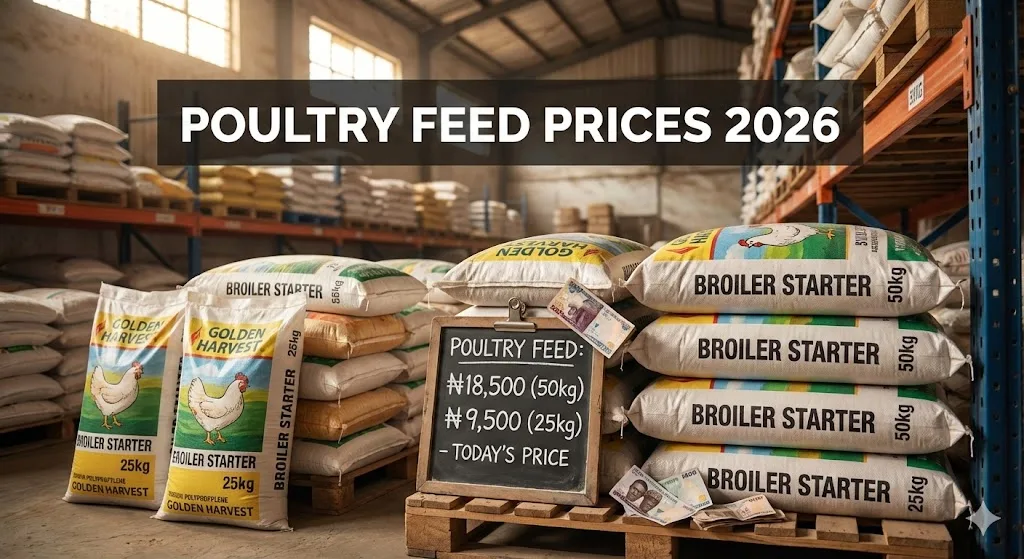
A bag of poultry feed in Nigeria costs between ₦13,000 and ₦29,700 for a standard 25kg bag as of January 2026. This wide price gap depends entirely on whether you are buying Standard/Budget feed or Premium/Super Starter formulations.
According to market data from Best Sales Nigeria (Jan 5, 2026), standard broiler starter feed ranges from ₦13,000 – ₦19,000, offering relief for budget-conscious farmers. However, premium “Super Starter” lines from major distributors like Afrimash and Farmers Centre continue to trade higher (₦23,000 – ₦29,700), targeting commercial farms focused on rapid 5-week turnover.
Whether you’re running a small backyard flock in Ibadan or managing a commercial operation in Kano, accurate budgeting is survival. Prices remain elevated compared to 2022 levels, though the 33% corn price drop in mid-2025 has provided some relief. Recent data shows the inflation crisis is easing faster than expected.
According to the National Bureau of Statistics, Nigeria’s food inflation dropped to 11.08% in November 2025—the eighth consecutive monthly decline. The Central Bank of Nigeria projects headline inflation to further ease to 12.94% in 2026, supported by lower food and fuel prices and improved foreign exchange stability. Despite this optimism, feed still constitutes 70% of the production cost—a figure supported by the U.S. International Trade Administration.
Before finalizing your budget, ensure you have also accounted for poultry equipment prices in Nigeria and know where to buy high-quality day-old chicks in Nigeria. Below, you’ll find verified prices for major brands, realistic feeding calculations for different flock sizes, and strategies to start a profitable broiler farming business in Nigeria despite this high-cost era.
Now that we have established the harsh financial reality of the 2026 market, let’s look at the raw numbers so you can adjust your capital requirements immediately.
Poultry Feed Price List in Nigeria (January 2026)
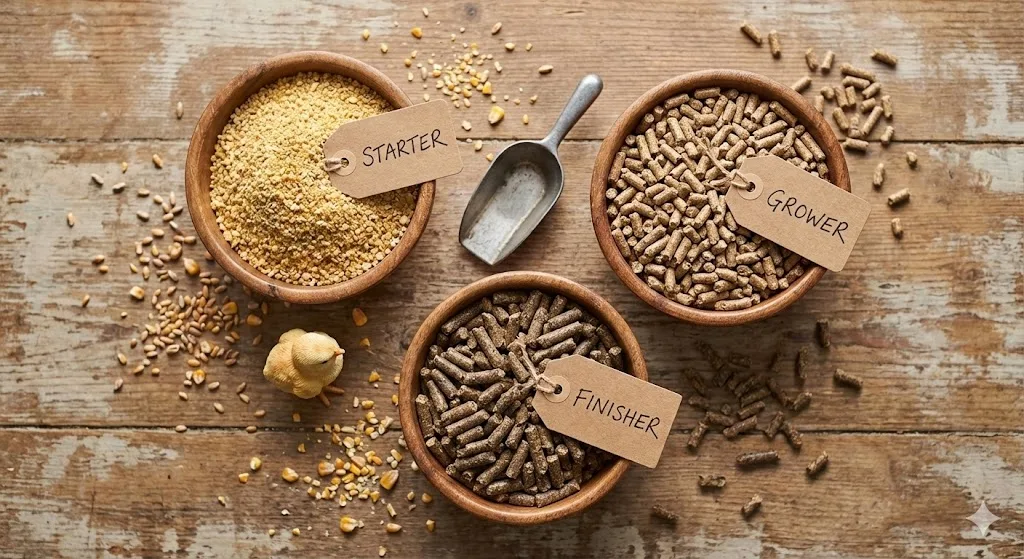
To give you a quick answer before we dive deep, here is the updated average price list reflecting both the Standard (Budget) and Premium (Super) market tiers.
| Feed Type | Tier | 25kg Bag Price (₦) |
|---|---|---|
| Broiler Starter | Standard / Economy | 13,000 – 19,000 |
| Broiler Starter | Premium / Super | 23,000 – 29,700 |
| Broiler Finisher | Standard | 13,000 – 16,000 |
| Broiler Finisher | Premium | 21,500 – 27,500 |
| Layer Feed (Mash) | Standard | 11,000 – 13,000 |
| Layer Feed (Mash) | Premium | 19,500 – 22,000 |
Source: Aggregated from Best Sales Nigeria (Jan 5, 2026) for Standard pricing and major distributor listings (Afrimash, Farmers Centre) for Premium/Super lines. Prices vary by region, with Lagos and Ogun often slightly lower than Northern states due to transport costs from Southern mills.
Why the Price Gap? (Standard vs. Super Starter)
Farmers often ask why one bag of starter is ₦13,000 and another is ₦29,000. The price difference reflects enhanced nutrition profiles designed for aggressive early growth.
- Standard Starter (₦13k-19k): Typically contains 20-21% Crude Protein. Good for backyard farming where speed to market isn’t the #1 priority. Birds may take 8-9 weeks to reach market weight.
- Super Starter (₦23k+): Contains 23-24% Crude Protein and higher metabolizable energy. Engineered for commercial farms aiming to slaughter at 5-6 weeks. You are paying for speed and efficiency.
Seeing these numbers might be a shock if you haven’t bought feed in six months. This brings us to a common question about bag sizes and whether bigger is actually cheaper in this economy.
What Is the Price of 50kg Poultry Feed in Nigeria?
Many farmers ask about the price of 50kg poultry feed, hoping for a bulk discount. As of January 2026, a 50kg bag typically costs between ₦38,000 and ₦58,000, depending heavily on the brand and feed type.
It is important to know that a 50kg bag is essentially a “2-in-1” package. Not all brands offer this size; many, like Ultima and Top Feeds, prioritize the 25kg bags for easier handling. However, if you are buying concentrates or specific layer mash brands from local mills, you are more likely to find 50kg options.
In markets across Lagos and Oyo, I’ve observed that while 50kg bags are heavier to move, they often offer slightly better value per kilogram—sometimes saving you ₦1,000 to ₦1,500 compared to buying two separate 25kg bags. However, always check the manufacturing date. If you have a small flock (under 50 birds), a 50kg bag might stay open too long. I once lost half a bag to mold because the humidity in the store was too high and the birds couldn’t finish it fast enough.
Prices are not uniform across the country. Your location can add a significant “logistics tax” to every bag you buy.
Poultry Feed Price in Lagos vs. Kano (Regional Variations)
Farmers often ask why feed prices differ between Kano and Lagos. The answer lies in the “Factory Gate” vs. “Farm Gate” dynamic.
- South-West Advantage (Lagos, Ogun, Oyo): Most major branded feed mills (like Olam, New Hope, and Top Feeds factories) are concentrated here. Farmers in these states typically pay the “base price” listed in this guide because transport costs are minimal.
- Northern Surcharge (Kano, Kaduna, Abuja): Finished feed must be trucked North. Due to the removal of the fuel subsidy, the cost of moving a truckload of feed has skyrocketed.
- The Surcharge: Expect to pay an additional ₦800 – ₦1,500 per 25kg bag in Northern states compared to Lagos prices.
- The “Maize Inversion” Benefit: While Northern farmers pay more for branded feed, they have a massive advantage in Self-Milling. Maize and Soya are sourced from the North (e.g., Dawanau Market). Northern farmers who mill their own feed can save significantly by cutting out the transport cost of shipping maize South to be milled and then shipping feed back North.
| Region | Est. Price Surcharge (vs. Lagos) | Primary Advantage |
|---|---|---|
| South-West | ₦0 (Base Price) | Cheaper Branded Feed |
| North-West/East | +₦800 – ₦1,500 | Cheaper Raw Materials (Maize/Soya) |
| South-South/East | +₦500 – ₦1,000 | Port Access (for imported additives) |
While bulk buying is one strategy to manage costs, the specific type of bird you are raising dictates your biggest expenses. Let’s start with the egg producers.
How Much Is 25kg of Layers Feed in Nigeria?
For egg production, cost control is everything. A 25kg bag of layers feed currently sells for ₦11,000 – ₦22,000, depending on the quality tier.
Layer feed is generally cheaper than broiler feed. Why? Because layers don’t need the massive protein boost required for rapid meat growth. Instead, this feed is fortified with calcium (often from bone meal or limestone) to ensure your birds lay eggs with strong shells.
If you are evaluating the layer farming business in Nigeria, understanding feed costs is step one. For a specific budget breakdown, see our guide on the cost of starting a 200-layer farm in Nigeria.
You should typically transition your birds to this feed around 18 to 20 weeks of age (Point of Lay). I have seen farmers try to rush this transition at Week 16 to save money (since layer feed is cheaper than grower mash), but this often leads to kidney issues or “blowouts” (prolapse) because the bird’s body isn’t ready for that much calcium. Patience here actually saves you money in mortality costs later.
Egg production is a marathon that requires steady inputs, but raising meat birds is a sprint. Let’s break down the costs for the high-speed world of broilers.
Current Broiler Feed Prices in Nigeria: Starter, Grower, & Finisher
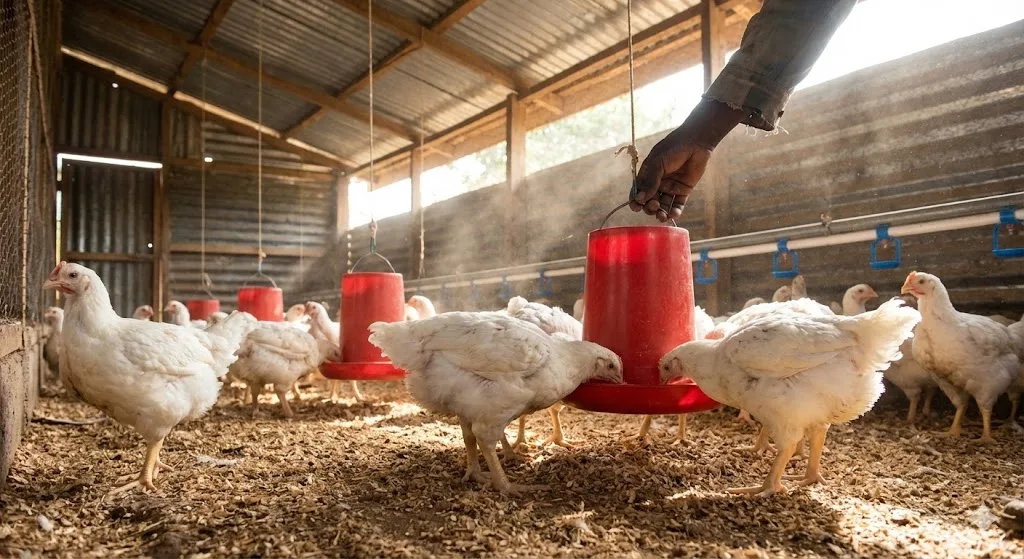
Broilers are a race against time. You need them to hit market weight (approx 3kg) in 6–8 weeks, and that requires specific nutrition at specific times.
How Much Is a Bag of Broiler Starter Feed in Nigeria?
- Standard Starter: ₦13,000 – ₦19,000 per 25kg bag.
- Super Starter (Premium): ₦23,500 – ₦29,700 per 25kg bag.
This is usually the most expensive feed on your list. It is packed with high crude protein (22-24%) and essential amino acids to jumpstart the chick’s organ development. You feed this from Day 1 to Week 4. Skimping here leads to stunted growth that you can’t fix later. Brands like New Hope Super Starter are currently at the top of the price range, while brands like Happy Chicken offer competitive standard options.
Broiler Grower Feed Price
Expect to pay ₦12,000 – ₦20,500 per 25kg bag (Standard vs Premium). Fed roughly from Week 4 to Week 6, this acts as a bridge. Knowing exactly when to switch from starter to grower feed is crucial for maximizing growth without wasting money. Interestingly, many commercial farmers in Nigeria skip this stage entirely, mixing Starter and Finisher for a week instead, but using a dedicated Grower feed helps manage the bird’s skeletal growth to support heavy weight later.
How Much Is a Bag of Broiler Finisher Feed in Nigeria?
The price ranges from ₦13,000 – ₦27,500 per 25kg bag. This feed is formulated for rapid weight gain (“bulking up”) as you approach the sale date. You use this from Week 6 until market. It has higher energy (metabolizable energy) and lower protein than starter feed. Be sure to observe the withdrawal period if the feed contains medication, though most finishers in Nigeria are now antibiotic-free.
Understanding the stages is crucial, but the brand you choose determines if those nutrients actually turn into meat. Here is how the top market players stack up based on real field performance.
Top 10 Best Poultry Feed in Nigeria (2026 Brand Prices)
Choosing the right brand is just as important as the price. A “cheap” bag that results in poor growth is actually expensive in the long run. Here is a detailed breakdown of the top brands with actionable insights to help you choose the right partner for your farm.
1. New Hope Feed (Premium Choice)
- Super Starter Price: ₦26,700 – ₦29,700
- Finisher Price: ₦24,800 – ₦27,500
- Ideal For: Commercial Broiler Farming (6-week target).
- Buyer’s Insight: New Hope’s “Super Starter” is famous for its Day 1–10 performance. It contains highly digestible proteins that rapidly develop the chick’s gut and immune system. While the price per bag is high, the Feed Conversion Ratio (FCR) is among the best in the market, often requiring less feed to reach 3kg than budget brands.
- Pro Strategy: If you are short on capital, use New Hope only for the Starter phase (Day 1–28) to guarantee a strong frame, then switch to a more affordable Grower/Finisher brand like Top Feeds to manage costs.
2. Ultima Feed (Olam)
- Standard Price: ₦14,000 – ₦15,000 (via Best Sales Nigeria data)
- Super/Premium Price: ~₦26,900 (Commercial Distribution)
- Strategic Fit: Dry Season Farming / Water Management.
- Buyer’s Insight: Ultima pellets are notably dense and hard. This reduces dust and wastage in the feeders but increases the birds’ water intake requirement. This high water consumption aids digestion and can lead to excellent weight gain in dry seasons.
- Critical Requirement: Check your water lines. If your nipple drinkers are clogged or water supply is inconsistent, do not use Ultima. The birds will struggle to digest the dense pellets without ample water, leading to “pasting up” (blocked vents).
3. Top Feeds (Standard Choice)
- Starter Price: ₦23,600 – ₦24,600
- Finisher Price: ~₦21,800
- Recommended For: General Purpose / New Farmers.
- Buyer’s Insight: Top Feeds is the “Toyota” of Nigerian feeds—not the fastest sports car, but incredibly reliable and difficult to break. It has a forgiving formulation that doesn’t put too much metabolic stress on birds, resulting in lower sudden death rates (flip-overs) compared to “hot” high-energy feeds.
- Beginner Advice: If you are a beginner farmer, start here. The risk of metabolic diseases (like ascites) is lower with Top Feeds than with super-high-energy premium brands.
4. Happy Chicken Feed (Budget Friendly)
- Price Range: ₦15,000 – ₦17,000
- Perfect For: Extended Growth Cycles (8+ weeks) / Festive Sales.
- Buyer’s Insight: A rising star in the South-West, Happy Chicken offers a “middle ground.” It’s significantly cheaper than New Hope but offers better consistency than non-branded mill feeds. Growth is steady but slower.
- Smart Move: This is the perfect feed for Christmas/Easter targeting where you have time to grow birds slowly over 8-10 weeks. You save money on the bag price, and the birds still reach market weight, just a week or two later.
5. Chikun Feed
- Starter Price: ~₦20,000 – ₦21,800
- Finisher Price: ~₦23,800
- Top Application: Heavy Weight Birds (>3.5kg).
- Buyer’s Insight: Farmers consistently report that Chikun builds excellent skeletal strength (“strong legs”). This is critical if you aim to sell giant broilers. Some fast-growth feeds cause birds to get heavy too fast, leading to leg paralysis; Chikun’s mineral balance helps prevent this.
- Health Hack: If you notice your birds are getting heavy but have weak legs (sitting down often), switch to Chikun Finisher for the final 2 weeks to fortify their bones before sale.
6. Vital Feed
- Price Range: ₦22,000 – ₦24,000 (Starter)
- Best For: Rainy Season / Disease-Prone Areas.
- Buyer’s Insight: Backed by Grand Cereals, Vital Feed is engineered for gut health. Users report significantly drier droppings (litter) compared to other brands. Drier litter means less ammonia smell and a lower risk of Coccidiosis, which thrives in wet bedding.
- Seasonal Strategy: Switch to Vital Feed during the rainy season (June–September) to reduce the labor and cost of constantly changing wet litter.
7. Hybrid Feeds
- Starter Price: ~₦21,500 – ₦23,000
- Target Audience: Self-Millers & Layer Farms.
- Buyer’s Insight: Hybrid is famous for its Concentrates and Pre-Lay Mash. Their Pre-Lay formulation contains specific calcium levels (2–2.5%) to transition pullets safely into egg production without shocking their kidneys—a common issue when jumping straight from Grower to Layer mash.
- Cost-Saver: If you have access to cheap maize (e.g., in the North), buy Hybrid Concentrate (30-40% inclusion) and mix it with your maize. You can slash your feed cost by 20-30% compared to buying full bags.
8. Animal Care Feed
- Price Range: ~₦22,000 – ₦24,000
- Optimal Use: Flocks Recovering from Illness.
- Buyer’s Insight: Known as the “Veterinary Choice,” these feeds often include functional additives like “Superliv” (herbal liver tonic) and “N-Biotic” (natural antibiotic replacer). This supports liver function and general immunity.
- Recovery Tip: Use Animal Care feed if your flock has just recovered from a Gumboro or Newcastle outbreak. The added liver tonics help the birds recover their appetite and growth rate faster than standard feeds.
9. Breedwell Feed
- Price Range: ~₦19,500 – ₦21,000
- Good For: Budget-Conscious Commercial Farming.
- Buyer’s Insight: Breedwell offers two distinct lines: “Professional” (higher protein/energy for fast growth) and “Commercial” (standard growth). Be careful—retailers sometimes sell the “Commercial” bag as the “Professional” one.
- Buying Advice: Check the tag. Ensure you are buying the “Professional” line if you want rapid results. If you buy the “Commercial” line expecting “Professional” performance, you will be disappointed with the growth rate.
10. Hendrix Feed
- Price Range: ~₦24,000+
- Designed For: Breeder Farms & High-Value Flocks.
- Buyer’s Insight: Hendrix is a premium, niche feed often used by breeder farms for parent stock. The quality control is exceptionally high, with almost zero batch-to-batch variation.
- Troubleshooting Trick: Use Hendrix as a benchmark/troubleshooter. If your birds aren’t growing on your usual cheap feed, buy 5 bags of Hendrix. If they start growing, you know your cheap feed was the problem. If they still don’t grow, the problem is likely disease or the chick quality.
Now that you know the brands, you need to know where to actually get them.
Where to Buy Poultry Feed in Nigeria (Purchasing Channels)
Finding the right price often depends on where you buy, not just what you buy.
- Factory Direct (Cheapest):
- Best For: Cooperatives or Large Farms (1,000+ birds).
- Requirement: Minimum Order Quantity (MOQ) is usually a full truckload (600 bags).
- Pros: Lowest price (factory gate).
- Cons: You must handle your own logistics/transport.
- Authorized Distributors:
- Best For: Medium Farms (200-1,000 birds).
- Where: Major regional depots.
- South-West: Amo Byng Hubs (Oyo/Ogun), Animal Care Depots.
- North: Grand Cereals Depots (Jos/Kano), Premier Feed Mills (Abuja).
- Pros: Authentic products (no adulteration), moderate pricing.
- Local Retailers:
- Best For: Backyard flocks (<100 birds).
- Pros: Convenience; you can buy 1-2 bags at a time.
- Cons: Highest markup (convenience fee + transport surcharge).
- Online Platforms (Afrimash, Jiji):
- Best For: Price transparency and remote areas.
- Pros: You can compare prices instantly. Afrimash is noted for verified sellers.
- Cons: Delivery fees can be high for heavy items like feed.
Prices tell one story, but experience tells another. Here is what actual farmers are discussing in the community right now.
Voices from the Farm: Real Farmer Reviews (2025-2026)
To give you a clearer picture beyond the price tag, we analyzed recent discussions from Nigerian poultry forums and farmer groups. Here is what your colleagues are saying:
- “Volume Matters”: A common observation in the Poultry Farmers Nigeria community is the difference between New Hope and Ultima. Farmers note that while New Hope is more expensive, the feed is “lighter” and fills more volume, meaning a bag often lasts slightly longer than the denser Ultima. One farmer noted, “New Hope sack quality is better—water doesn’t penetrate easily if rain falls, unlike others.”
- “The Rainy Season Saver”: Multiple farmers recommend switching to Vital Feed during the rainy season. The consensus is that it produces drier droppings, which reduces the smell and risk of Coccidiosis when humidity is high.
- “Consistency is Key”: A farmer who switched to Top Feeds after a rocky start reported: “The difference was clear within two weeks. The birds were more active, and weight gain was more uniform.” This reinforces its reputation for reliability.
- “Community Hack – Natural Boosters”: With feed additives becoming expensive, a growing trend in 2025 is the use of Neem and Pumpkin seed powder as natural growth boosters. Community members are sharing recipes for these organic alternatives to keep birds healthy without breaking the bank on synthetic drugs.
Picking a brand is only half the battle. To avoid running out of cash halfway through the cycle, you need to run the math on exactly how much your birds will eat.
Poultry Feed Consumption Chart & Calculations for Farmers
Don’t just buy feed blindly. Use these calculations to forecast your spending. If you need a quick way to estimate costs, check out our chicken feed calculator and cost guide.
Quick Cost Estimate for 100 Broilers (8-Week Cycle)
Here is a “Cheat Sheet” calculation using average prices for 2026. This assumes a standard 100-bird flock raised to market weight.
| Stage | Bags Needed | Avg Price/Bag | Total Cost |
|---|---|---|---|
| Starter | 5 Bags | ₦24,000 | ₦120,000 |
| Grower | 6 Bags | ₦20,000 | ₦120,000 |
| Finisher | 7 Bags | ₦23,000 | ₦161,000 |
| TOTAL | 18 Bags | ₦401,000 |
How Many Kilos Will Feed 100 Chickens Per Day?
- Broilers (4 weeks old): At this stage, 100 broilers will eat approximately 10–12kg of feed per day. Cost: ~₦12,000 per day.
- Layers (Adult): 100 laying hens consume about 11.5kg – 12kg per day. Cost: ~₦10,000 per day.
For a detailed look at feeding schedules, read our guide on how many times should layers and broiler be fed.
Simple Formula: Number of Birds × Average Intake (kg) = Daily Feed Requirement
How Much Feed for 1,000 Chickens?
If you are raising 1,000 broilers for a full 8-week cycle, you will need a lot of storage space.
- Total Requirement: Approximately 4,000kg to 4,500kg of feed (160–180 bags of 25kg).
- Estimated Cost Calculation (Jan 2026):
- Starter (48 bags @ ₦26,500): ₦1,272,000
- Grower (60 bags @ ₦20,000): ₦1,200,000
- Finisher (72 bags @ ₦24,500): ₦1,764,000
- TOTAL: ~₦4,236,000
At current prices, feeding 1,000 birds to maturity is a ₦4+ million Naira investment. If you are planning to expand, our guide on scaling from 100 to 1,000 broilers covers the feed logistics in detail. You’ll also need to calculate how many feeders and drinkers for 100 broilers to minimize wastage.
Feed is your biggest expense, but the upfront cost of the birds themselves has also reached record highs. You must include these figures in your startup capital.
Comprehensive Cost Planning: Total Production Estimates (2026)
To give you a realistic budget, we must look beyond just feed. The Poultry Association of Nigeria (FCT Chapter) released critical data in October 2025 highlighting the surge in chick and production costs. You’ll also need to factor in processing; see the cost of dressing 100 chickens in Nigeria for more details.
- Day-Old Chick Prices: As of late 2025/early 2026, a single day-old chick (DOC) costs between ₦1,600 and ₦1,900. This varies by breed, with premium broilers like Ross 308 or Arbor Acres Plus commanding the higher end of that spectrum.
- Cost to Point of Lay (POL): For those raising layers, the financial commitment is even steeper. It now costs approximately ₦9,000 to raise a single bird from day-old to the point of lay (18-20 weeks).
- Implication: If you plan to start a modest layer farm of 500 birds, you need roughly ₦4.5 Million in working capital just to get the birds to the egg-laying stage. This includes feed, vaccines, and the chicks themselves, but excludes housing construction.
Calculating your needs prevents under-buying, but poor storage can destroy what you’ve already bought. Here is how to protect your investment from the Nigerian climate.
How to Store 50kg of Poultry Feed (Prevent Waste and Contamination)
In Nigeria’s humid climate, bad storage can ruin a bag of feed in days. This is especially true if you are learning how to manage poultry during harmattan, as the dry dust can also contaminate open feed.
- Elevate It: Never place bags directly on a concrete floor. Use wooden pallets. This prevents moisture from seeping up into the bag (“sweating”).
- Ventilation: Store in a cool, dry room. Heat destroys vitamins in the feed.
- Spacing: Don’t stack bags right against the wall. Leave a gap of about 30cm (1 foot) between the stack and the wall to allow airflow and prevent dampness transfer.
- Pest Control: Rats love poultry feed. Keep the area clean and consider using plastic drums for open feed.
- Duration: Try not to store feed for more than 3-4 weeks. The potency of the premix (vitamins) degrades over time. If you open a bag and it smells sour or musty, don’t guess—toss it. The vet bill for treating food poisoning costs far more than the bag of feed.
Protecting your feed is vital because replacing it has become incredibly costly. Let’s look at the economic forces driving these prices up so you can anticipate future changes.
Why Is Poultry Feed So Expensive in Nigeria? (2025-2026 Market Analysis)
If you’ve been farming for a few years, you remember when a bag was ₦4,000. Why the jump? Also, the best season to raise broilers in Nigeria often depends on these price fluctuations.
- Maize Price Volatility: Maize constitutes roughly 65% of poultry feed—a critical data point confirmed by the USDA Foreign Agricultural Service. Because it makes up the bulk of the feed, any shift in maize prices dictates the market.
- Historical Context: The pressure has been building for years. Reports from Premium Times highlight a staggering 164% surge in feed prices over a three-year period, creating the baseline for today’s high costs.
- Supply Chain Hurdles: The World Economic Forum notes that supply chain inefficiencies and currency impact are major structural hurdles, exacerbating shortages in the North (influenced by the massive Dawanau Market in Kano).
- Government Imports & Election Economics: The USDA also reports that the government has authorized corn imports and allocated them to aggregators to help lower retail prices. With the 2026 federal election season approaching, this intervention is expected to intensify. Politicians know that affordable food wins votes, so we may see more “political corn” entering the market to stabilize supplies.
- Foreign Exchange Stabilization Impact: While currency fluctuation has historically been a major pain point, reports indicate that improved forex stability in late 2025 has started to reduce costs for importing essential poultry supplies, including vaccines and feed supplements. This stability is offering a rare window of relief for farmers who rely on imported additives.
- Fuel Subsidy Removal: Transporting maize from the North to the South costs significantly more since the 2023 subsidy removal. These logistics costs are passed directly to you, the farmer.
- Middlemen: The Poultry Association of Nigeria (PAN) has frequently pointed out that intermediaries inflate costs between the feed mill and the retailer.
But markets don’t move in a straight line. There was a moment of relief recently, and understanding why can help you predict the next move.
2025 Market Shift: The 2025 Corn Price Correction
After two years of steep increases, feed costs experienced relief in 2025. According to the USDA Foreign Agricultural Service, corn prices in Nigeria dropped by approximately 33% between February and June 2025. This reduction stemmed from government corn imports under a duty waiver policy, improved forex stability, and lower global grain prices.
Locally, media outlets like Legit.ng reported on how this dip in input costs led to a temporary decline in egg prices, offering respite to consumers.
2026 Outlook: Cautious Optimism
The Central Bank of Nigeria’s 2026 Macroeconomic Outlook projects inflation to decelerate significantly, with headline inflation forecast at 12.94% for 2026—down from an estimated 21.26% in 2025. This is anchored primarily on easing food inflation as supply conditions improve.
For poultry farmers, this suggests feed prices may stabilize or even soften slightly through the year, though seasonal fluctuations will persist.
Seasonal Price Calendar: When to Buy Feed
Feed millers and the Poultry Association of Nigeria caution that prices fluctuate seasonally. Use this calendar to time your bulk purchases:
- Jan – Mar (High Prices): Dry season scarcity kicks in. Maize stocks from the previous harvest deplete. Expect high prices.
- Apr – Aug (Moderate/Fluctuating): Prices vary as the planting season begins.
- Sep – Oct (Harvest Relief): Early harvest of maize often brings a temporary price dip.
- Nov – Dec (Ember Months Peak): Prices typically firm up due to off-season demand and increased logistics costs (fuel/transport) during the festive rush.
We can’t control the national economy or maize prices, but we can control what happens on our farm. Here are practical ways to shield your profit margins.
How to Reduce Poultry Feed Costs Without Harming Bird Health
- Buy from Distributors: If you can buy 20+ bags at a time, skip the retailer and go to a major distributor. You can save ₦800-₦1,000 per bag, which adds up quickly over a cycle.
- Monitor FCR (Feed Conversion Ratio): Don’t just buy the cheapest bag. If Brand A costs ₦21,000 but birds take 10 weeks to grow, and Brand B costs ₦26,000 but birds grow in 8 weeks, Brand B is actually cheaper.
- Formulate Your Own: Some farmers reduce costs by making their own chicken feed or learning how to formulate layer mash in Nigeria. You can also try fermenting chicken feed for better health and digestion, which lowers consumption.
- Financing Options: If capital is the main barrier to buying bulk feed, explore how to get a loan for poultry farming in Nigeria or look into grants for poultry farming.
- Avoid Wastage: Fill feeders only halfway. Chickens are messy eaters and will scratch feed onto the floor if the trough is full. I once tracked a flock where we simply raised the feeders by an inch as the birds grew, and wastage dropped by nearly 10%.
- Join a Cooperative: Many local farmer groups pool money to buy a truckload of feed directly from the factory, securing the lowest possible price.
- Leverage Government Subsidies (Lagos Specific): Lagos State has launched the second phase of its food subsidy program, Ounje Eko Phase II, which supports farmers with subsidized feed to stabilize production costs. Lagos-based farmers should investigate eligibility requirements through the state Ministry of Agriculture immediately, as these allocations often fill up fast.
Alternative Feed Ingredients: Rice Bran as a Corn Substitute
Some Nigerian feed millers have begun substituting rice bran for corn in poultry formulations, a trend noted in the USDA report. Rice bran offers high energy content and nutritional value at potentially lower cost when corn prices spike. If you’re self-milling, this substitution is worth exploring with a qualified nutritionist, though the ratio must be carefully calculated to avoid digestive issues—too much fiber can hurt the birds’ gut health.
Essential Equipment for Feed Management
Proper feed management also requires the right equipment to minimize wastage and ensure every bird gets its share. Investing in durable feeders prevents the birds from scratching feed onto the litter, which is a major source of financial loss.
See our detailed guides on poultry equipment prices in Nigeria and how many feeders and drinkers for 100 broilers to equip your farm correctly.
With these savings strategies in hand, let’s address some final specific questions that often come up in poultry communities.
Frequently Asked Questions About Poultry Feed Prices in Nigeria
Q: How much is a bag of poultry feed in Nigeria today?
A: As of January 2026, a standard 25kg bag costs between ₦13,000 and ₦19,000 for standard budget brands, while premium “Super Starter” brands range from ₦23,000 to ₦29,700.
Q: Which poultry feed is best for fast growth in Nigeria?
A: For broilers, premium brands with high crude protein (22%+) like New Hope Super Starter and Ultima are widely reported by farmers to produce the fastest weight gain, though they cost slightly more per bag.
Q: What is the cheapest poultry feed brand in Nigeria?
A: Brands like HI PRO and Breedwell are typically the most affordable. Based on late 2024 distributor pricing, HI PRO offered some of the lowest prices (starting around ₦16,000 for starter, though prices have risen since). While budget brands save cash upfront, always evaluate the Feed Conversion Ratio (FCR)—if the birds don’t grow, the “cheap” feed becomes expensive.
Q: How many bags of feed for 100 broilers in Nigeria?
A: A full 8-week cycle for 100 broilers requires approximately 16–18 bags of 25kg feed (400-450kg total). For a complete guide, see how many bags of feed for broilers.
Q: Can I use local alternatives to replace commercial poultry feed?
A: You can use materials like PKC (Palm Kernel Cake), Cassava peel, and Brewery Dry Grain to replace some of the commercial feed, but you must be careful. You need to balance the nutrition with a good concentrate or premix, otherwise, the birds will stop growing or stop laying.
Q: Why did poultry feed prices increase in 2025-2026?
A: The primary reasons are the high cost of maize (due to seasonality and insecurity in farming belts), high diesel costs for transportation, and the exchange rate affecting imported additives like lysine and methionine.
Q: What is the difference between Mash, Pellets, and Crumble?
A: Mash is loose, powder-like feed, often cheaper but prone to wastage. Pellets are compressed cylinders that reduce wastage and ensure birds eat a balanced mix in every bite. Crumble is essentially broken pellets, ideal for chicks (Starter phase) because it’s easier to swallow than large pellets but less dusty than mash.
Q: Is it cheaper to formulate my own poultry feed in 2026?
A: Yes, but only if you have access to cheap raw materials. With the “Maize Inversion,” Northern farmers often save 20-30% by self-milling. However, for small farmers in the South, buying additives and maize at retail prices often costs more than buying finished bags from major brands like Top Feeds.
Q: How do I know if the feed I bought is expired or spoiled?
A: Check for a sour or musty smell immediately upon opening. Look for clumping (lumps), which indicates moisture damage, or webbing, which indicates weevils or moths. Never feed moldy feed to birds; the cost of treating the resulting poisoning is far higher than the cost of a new bag.
Before you go, if you are still weighing your options between meat and egg production, check out our comparison on broilers vs layers profit in Nigeria to decide which path fits your budget best.

Oladepo Babatunde is the founder of ChickenStarter.com. He is a backyard chicken keeper and educator who specializes in helping beginners raise healthy flocks, particularly in warm climates. His expertise comes from years of hands-on experience building coops, treating common chicken ailments, and solving flock management issues. His own happy hens are a testament to his methods, laying 25-30 eggs weekly.