Safety Disclaimer: This guide is for informational purposes only. Consult a veterinarian for flock health concerns and a licensed pest control professional for severe infestations. Product prices are approximate and may vary by retailer and region.
Discovering a rat or mouse infestation in your chicken coop is a common and serious issue for backyard flock owners. These pests are more than just a nuisance; they steal valuable feed, contaminate the henhouse with their droppings, and pose a significant threat to the health and safety of your birds. With a single female rat capable of producing a dozen babies in a single litter, a small problem can quickly become an overwhelming one.
With feed prices continuing to climb (a 50lb bag of layer pellets now averages $18 to $22 at most farm supply stores), losing feed to rodents is a real financial hit on top of the health risks. For anyone budgeting their backyard chicken costs, rodent-proofing is one of the smartest investments you can make.
However, with the right knowledge and a proactive strategy, you can create a secure fortress for your flock. This guide is built on the principles of Integrated Pest Management (IPM), a holistic approach that focuses on long-term prevention and control with minimal risk. I learned these lessons the hard way, like many new flock owners, but you don’t have to make the same mistakes every first-time chicken keeper makes.
Integrated Pest Management (IPM): A science-based approach combining prevention, monitoring, and targeted control methods to manage pests with minimal environmental impact.
Understanding the Threat: Why Rodents in the Coop Are Dangerous
When I first started raising chickens, I had a close call that taught me a valuable lesson: rats aren’t just gross, they are a genuine danger. A few years ago, I noticed my favourite hen, a Rhode Island Red I’d named ‘Peanut,’ was acting strange. She was lethargic, her comb was pale, and she had severe, persistent diarrhoea. My heart sank.
I immediately took her to our local poultry vet, who ran a series of tests. The diagnosis was a shock: Salmonella. The vet explained that while Salmonella can come from many sources, given my meticulous coop cleaning routine, the most likely culprit was a rat infestation. This incident was a stark reminder of when to call the vet for a backyard chicken.
According to Dine-A-Chook Australia, it is vital for your chickens’ health to ensure rodents are not in your chicken coop. The diseases they carry can also be potentially dangerous to humans with compromised immune systems, including pregnant women, the elderly, young children, or people undergoing chemotherapy.
The specific risks include:
Salmonella: Causes diarrhoea, fever, and abdominal cramps in chickens and can spread to humans through contaminated surfaces.
Mites and Parasites: Rodents carry poultry red mites and other parasites that cause skin irritation, anaemia in severe infestations, and general distress.
Fleas and Lice: Rats introduce flea infestations that bring diseases such as Fowl Pox, Mycoplasmosis, and Pasteurellosis.
Chick Predation: Rats will consume eggs, chicks, and feed. Silkies and other small, docile breeds with limited vision are particularly vulnerable to rodent attacks on their chicks.
The psychological stress on my hens from the constant presence of these pests led to a measurable drop in egg production, a clear sign that their stress levels were elevated. If you notice signs of illness, it’s a good idea to perform a regular chicken health check.
Spotting a Rodent Infestation: Warning Signs
Before you can solve the problem, you need to recognise the signs:
Droppings: Small, dark, pellet-like droppings. Rat droppings are typically 12-18mm long, while mouse droppings are smaller, around 3-6mm.
Gnaw Marks: Distinct chew marks on wooden coop frames, plastic feeders, or electrical wiring.
Rapid Feed Disappearance: If your 50lb bag of feed is vanishing faster than usual, investigate immediately.
Nighttime Sounds: Squeaking, rustling, or scurrying sounds after dark.
Burrows: Round 2-3 inch holes and tunnels in the ground around your henhouse foundation.
Missing Eggs or Chicks: Rats prey on eggs and baby chicks. If eggs are disappearing or being moved from nesting boxes, rodents may be the culprit.
Pro Tip: Install a Coop Camera. One of the best investments I made was a simple trail camera pointed at my feeder. Within one night, I had clear footage of rats visiting my coop that I never would have spotted during daylight. A basic wildlife camera costs $30-50 and takes the guesswork out of confirming an infestation. It also helps you monitor whether your control methods are actually working.
Understanding Rodent Behaviour
While rats can be a problem year-round, they are especially active in cooler seasons. As the weather turns cold, they’re looking for a warm, sheltered place with a reliable food source, which makes a chicken coop a five-star resort for them. They tend to be most active in the hour or two after sunset and again just before dawn.
Rats are creatures of habit and often follow the same paths. They also exhibit neophobia, a fear of new objects, which is why a new trap or bait station may be ignored for several days. According to Talking Hens Australia, persistence is key to overcoming this natural caution.
How Quickly Do Rats Multiply?
Rats can breed year-round, but their breeding cycles intensify during cooler months. A female rat can have as many as 5-10 litters per year, with each litter containing 6-12 pups. According to Talking Hens, with stats like these, it’s easy to see how a couple of outdoor rats sneaking into your coop can rapidly explode into a full-scale infestation in just a matter of months. This is why proactive prevention is so much more effective than trying to manage a full-blown colony.
What Attracts Rats to Chicken Coops?
Contrary to popular belief, rats are attracted to sweet, fatty, and protein-rich scents. They particularly love the smell of peanut butter, chocolate, and dried fruit. According to Talking Hens, the reason chickens have become synonymous with rodents is because of scraps. Historically, scraps have been dumped into the chicken run and left, but chickens don’t eat all of them and are very efficient in spreading them around.
How do rats see humans? Rats have very poor eyesight and are often considered colour-blind. They navigate primarily through smell, hearing, and touch. Their whiskers are incredibly sensitive and help them detect changes in air currents, allowing them to map their environment in the dark.
What Can’t Rats Chew Through? Building Your Defence
The most effective way to protect your poultry housing is to build a physical defence that rats and mice cannot breach. This is a core part of rodent exclusion. Rats can chew through wood, most plastics, and even plywood. Aluminium foil and duct tape are temporary at best.
The only materials that are truly rat-proof are concrete and thick metal. A fact sheet from Oklahoma State University Extension notes that rats can “gnaw through a wide variety of materials including lead sheeting, sun-dried adobe brick, cinder block, and aluminium sheeting.” While rats cannot chew through concrete, they can burrow underneath it if you’re not careful. This concept is a core tenet of predator-proofing 101.
Hardware Cloth vs Chicken Wire: The Critical Difference
Don’t confuse hardware cloth with chicken wire! I can personally attest to the difference after testing five different hardware cloth brands over two years for chew-proof durability.
According to Meyer Hatchery, “Hardware cloth with a 1/4 inch opening is the best product for keeping mice and rats from entering the coop.” This galvanised wire mesh has a much smaller, tighter weave, typically with 1/4-inch to 1/2-inch openings. Chicken wire is a very poor choice because its one-inch openings are easy for rats to get through.
As seasoned backyard chicken keeper Kathy Shea Mormino of The Chicken Chick puts it, “Never rely on chicken wire for safety.”
| Feature | Hardware Cloth (1/4″) | Chicken Wire |
|---|---|---|
| Material | Galvanised Steel | Thin Wire |
| Mesh Size | 1/4-inch to 1/2-inch | 1-inch to 2-inch |
| Rodent-Proof | Yes | No |
| Strength | Very strong, chew-proof | Weak, easily chewed |
| Approximate Cost | $45-70 per 50ft roll | $20-35 per 50ft roll |
Look for quality 1/4-inch hardware cloth at your local farm supply store. A 3-foot by 50-foot roll typically runs $45-70, depending on your region. It’s worth comparing prices between retailers to find the best value.
Concrete Slab Flooring: The Ultimate Ground Defence
If you’re building a new coop or planning a major renovation, seriously consider pouring a concrete slab foundation. In my experience, this is the single most effective ground-level defence against burrowing rodents.
A 4-inch thick concrete slab eliminates all burrowing attempts underneath the henhouse. Rats cannot chew through cured concrete, and they cannot dig under it if the slab extends at least 6 inches beyond the coop walls in every direction. The slab also makes cleaning much easier, as you can hose it down completely.
The downsides are cost (roughly $3-5 per square foot for a DIY pour) and permanence. You can’t move a coop on a concrete slab. But for a permanent coop location, it’s the gold standard. This is one of several important factors when choosing the best flooring for a chicken coop.
My Personal Case Study: Project “Fort Knox Coop”
When I first started out with my flock, I faced the exact same problem many of you are dealing with. My initial, cute-but-flawed henhouse design was a total rat magnet.
Phase 1: The First Signs of Trouble
My original henhouse was a simple wooden structure with a dirt floor (a common mistake) and a standard plastic feeder. My 12 hens were a daily joy until I noticed I was going through an abnormal amount of feed, a 50 lb bag in just over a week.
At first, I thought my hens were just hungrier, but then I started seeing small droppings and chew marks around the feeder. I set up a trail camera, and my suspicions were confirmed: a family of rats was having a feast every night. My egg production, which had been a consistent 10-11 eggs per day, dropped to an average of 7.
Phase 2: The Retrofit and Cost Analysis
I decided to retrofit my existing structure with a combination of methods. Here’s a breakdown of my costs:
| Item | Cost | Purpose |
|---|---|---|
| 1/4-inch Hardware Cloth (3ft x 50ft roll) | ~$70 | Underground barrier and floor lining |
| Treadle Feeder (20 lb capacity) | ~$120 | Rat-proof feeding solution |
| Concrete Mix (2 bags) | ~$50 | Foundation anchor for barrier |
| Wood Screws and Washers | ~$15 | Secure attachment |
| Peppermint Oil | ~$10 | Weekly perimeter spray |
| Total | ~$265 | Complete rodent-proofing retrofit |
Note: Prices reflect my actual costs. Current prices may vary by retailer and region.
The First Underground Barrier Failure
My first attempt at an underground barrier was a total failure. I laid the hardware cloth flat on the ground underneath the henhouse based on online advice. The next morning, I walked outside, hopeful. Instead of a secure structure, I saw fresh burrows just outside the perimeter. The rats had simply dug around the edges of my flat, two-dimensional sheet of wire.
What I learned is that you have to create a vertical barrier that forces them to dig down first, not just an obstacle on the ground. According to Talking Hens, you should either bury mesh vertically around the perimeter to a depth of 200mm (about 8 inches) or peg down a continuous 200 to 400mm horizontal strip of mesh out from the perimeter.
Before and After: Data-Driven Results
| Metric | Before | After | Improvement |
|---|---|---|---|
| Feed Loss | 50lb bag in 1 week | 50lb bag lasts 1 month | 85% reduction |
| Rodent Sightings | Daily activity on camera | None | 100% elimination |
| Egg Production | 7 eggs/day average | 10-11 eggs/day | 43% increase |
| Time to Results | – | 3 weeks | – |
Winter Season Observations
Rodent-proofing is a year-round job. During particularly cold winters, I’ve noticed new burrowing attempts appearing a few feet outside the hardware cloth apron, where rats tried to find deeper underground routes around the barrier. My solution was extending the trench into a deeper, more L-shaped configuration.
I also adjusted my schedule to empty and clean my treadle feeder weekly instead of monthly. This small change led to a noticeable drop in scouting mice spotted on the trail camera each morning.
How to Stop Rats Getting into Your Henhouse
Beyond materials, the henhouse’s design plays a huge role in preventing entry. Good design also helps prevent other pests like mites and lice on chickens.
Rat-Proof Feeder Options
The chicken feeder is the main attraction for rodents. Standard feeders are an open invitation for a rat buffet. According to Dine-A-Chook, a rat-proof chicken feeder like a treadle feeder will reduce waste and keep rodents away.
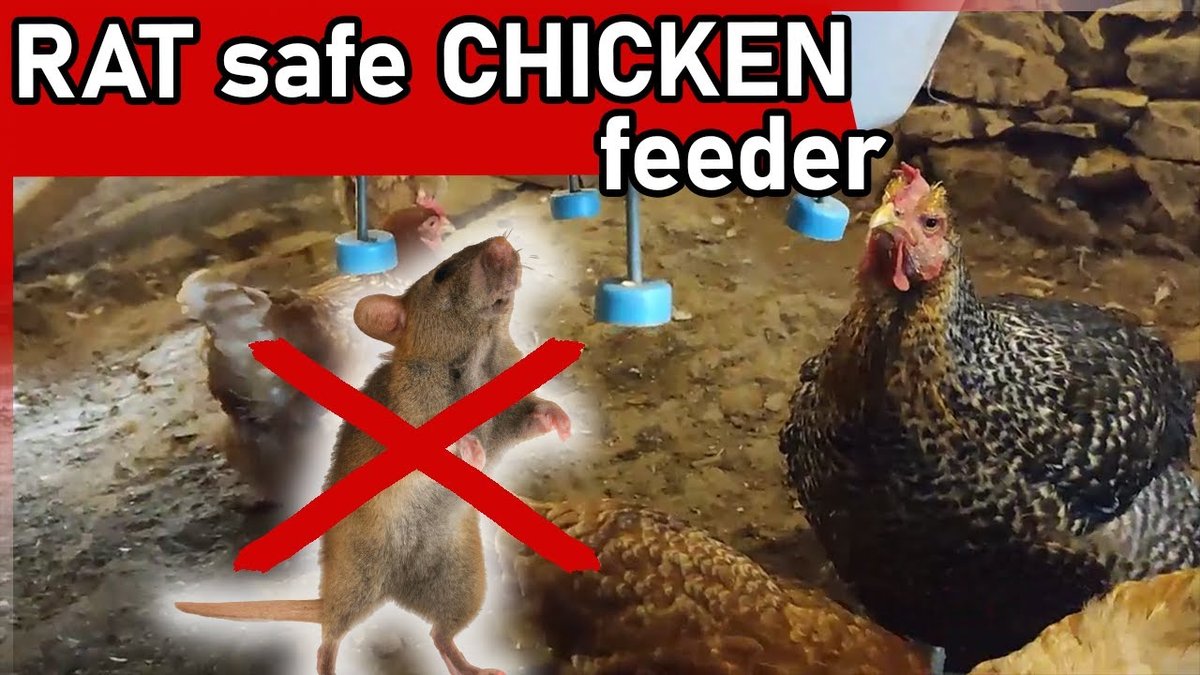
Treadle Feeders: These keep the feed sealed until a chicken steps on a platform, which opens the lid. Popular options include Grandpa’s Feeders and Dine-A-Chook. Learn more about treadle feeder options in our feeding schedule guide.
Elevated Feeders: If a treadle feeder isn’t in your budget, hanging a standard feeder from the ceiling keeps it off the ground.
The Golden Rule: Remove all feed and water from the henhouse every evening. This eliminates the rats’ primary reason for visiting and is the single most impactful habit change you can make.
Underground Barrier Installation Guide
- Dig a trench 12 inches deep around the entire perimeter
- Cut 1/4-inch hardware cloth to fit with extra width
- Install vertically, then bend the bottom into an outward-facing L-shape (6-12 inches horizontal)
- Backfill with soil or, for maximum security, concrete
- Secure the top edge to the coop frame with screws and washers
According to Talking Hens, an even better option is to use mesh on the entire floor area of the coop and run so that it doesn’t matter where a rodent digs, they can never surface inside.
Elevated Coop Design
Raising your coop off the ground by at least 12-18 inches makes it much harder for rats to find entry points and removes potential nesting sites. This is one of many reasons why the best place to put your chicken coop is a key consideration.
The Deep Litter Method for Odour Control
One often-overlooked factor in rodent attraction is coop odour. The ammonia and decomposing matter in a poorly managed coop sends a scent signal to rodents for miles. The deep litter method, where you layer carbon-rich bedding material (wood shavings, straw) at least 15cm deep and turn it weekly, creates a composting environment that dramatically reduces odour.
This method also generates heat during composting, which can deter rodents who prefer cooler, undisturbed nesting areas. The microbial activity in well-managed deep litter actually breaks down droppings faster than they can attract pests. For more on keeping your henhouse fresh, see our guide on how to keep a chicken coop from smelling.
How to Get Rid of Mice and Rats in a Poultry Housing Fast
When you discover an active infestation, you need a quick, aggressive strategy.
Step 1: Cut Off the Food Supply
Use a secure, galvanised metal storage bin for feed. Plastic bins are not safe; rats chew through them in hours. Remove feeders and waterers from the coop area after dark every evening without exception.
Step 2: Set Traps Aggressively
You need a high-volume trapping strategy. Place a dozen or more traps around the perimeter and in areas where you’ve seen droppings or activity.
Recommended trap types:
Snap Traps: Classic and effective. The Victor Electronic Rat Trap and Tomcat Rat Snap Trap are widely available and well-reviewed by poultry keepers. Place them inside covered bait stations that chickens can’t access.
Electronic Traps: Deliver a quick, humane shock. More expensive upfront but reliable for long-term use.
Live Traps: Effective for capture without harm. Meyer Hatchery notes that “it may be illegal to trap and relocate. So have a plan if you intend to use live traps.”
Best bait options according to Fresh Eggs Daily: Peanut butter, cheese, wet cat food, Nutella, seeds and nuts, marshmallows, or dried mealworms.
Overcoming Bait Shyness: Rats are cautious around new objects. According to Talking Hens, leave the trap baited and unset for the first couple of weeks to get rats accustomed to it as a food source before you set the mechanism. Pre-feeding traps this way dramatically improves catch rates.
Step 3: Seal Entry Points
Rodents can squeeze through incredibly small spaces. Mice need only a 1/4-inch gap, and rats a 1/2-inch gap. According to Talking Hens, commonly exploited areas are the junctions between the coop’s roof sheets and walls. Mice can squeeze through amazingly tiny spaces, so pay attention to small details.
Use steel wool stuffed into gaps and covered with hardware cloth, or a caulking gun with durable sealant. Check ventilation openings too, as you want to avoid common coop ventilation mistakes.
What Is the Best Rat Repellent?
While no single repellent is a magic bullet, some natural solutions are effective when combined with physical barriers.
Best Scents for Repelling Rats
Rats despise certain strong odours, making natural oils a good supplementary defence. According to Fresh Eggs Daily, “Scents that are especially effective in repelling mice are balsam or pine, citrus, rosemary, lavender and mint.”
Peppermint Oil: My top recommendation. Mix a few drops with water in a spray bottle and apply to the exterior of the henhouse and on cotton balls placed in areas rats frequent. Don’t spray directly on your chickens. Reapply every few days.
Predator Urine: Wolf or fox urine around the perimeter signals danger to rodents. Fresh Eggs Daily recommends this approach for persistent problems.
Cayenne Pepper: According to Fresh Eggs Daily, adding dried mint leaves and cayenne pepper to chicken feed helps keep mice out of the feed. Chickens don’t have taste receptors for “heat,” so they won’t be bothered.
For more natural pest control strategies, check out our guide on natural ways to keep parasites out of your coop.
What Kills Rats but Is Safe for Chickens?
This is a critical question, and the honest answer is: no poison is truly safe.
The University of California’s Statewide Integrated Pest Management Program warns that rodent poison is extremely dangerous around chickens. If a chicken eats bait or preys on a poisoned rodent, they can become sick and die. There is no such thing as a “chicken-safe” rodent poison.
According to Talking Hens, “Avoid using rodenticides or poisons if at all possible as these put your chickens, owls, kookaburras and other wildlife at risk if they consume the poisoned rodent.”
Fresh Eggs Daily adds, “Poisons are especially bad because often hawks, eagles or owls will eat a mouse that has been poisoned and lose its life in the process.”
If an infestation is severe and trapping isn’t working: Contact a licensed pest management professional who has experience with agricultural settings. They can safely implement targeted methods not available to the general public.
The Role of Natural Predators
A healthy ecosystem around your henhouse can help keep the rodent population in check. Owls, hawks, and barn cats are excellent natural rodent controllers.
Barn Cats: According to Fresh Eggs Daily, even older cats still catch their share of mice and know all the favourite hiding spots. Consider adopting a barn cat from your local shelter as a supplementary pest control measure.
Owls: Installing a barn owl nesting box on your property encourages these incredibly efficient hunters. A single barn owl family can consume thousands of rodents per year.
A word of caution: Hawks and owls can also threaten free-ranging chickens. A sturdy, completely enclosed run protects against both aerial predators and rodents. Use natural predators as a supplementary tool, not a primary defence.
Complete Rodent-Proofing Checklist
Structural Defences:
- 1/4-inch hardware cloth on all openings
- Underground barrier (12+ inches deep, L-shaped)
- Elevated coop design (12-18 inches off ground)
- All gaps sealed with steel wool and hardware cloth
- Metal storage bins for feed
- Trail camera installed for monitoring
Feeding Management:
- Rat-proof treadle feeder installed
- Feed and water removed every evening
- Nipple drinkers for water to prevent spills
- No scraps left in coop area
- Spills cleaned immediately
Ongoing Maintenance:
- Weekly coop inspection
- Grass kept short around perimeter
- Deep litter turned and maintained weekly
- Traps checked daily when active
- Peppermint spray applied weekly
- Trail camera footage reviewed weekly
Frequently Asked Questions
What is the number one way to get rid of rats?
A multi-pronged IPM approach works best: combine physical barriers like hardware cloth with removing all food sources at night, then use aggressive trapping. No single method works alone.
Will rats leave if one dies?
I wish! This is a common myth. The death of one rat won’t cause others to abandon a reliable food source. The colony simply adjusts.
Does leaving lights on keep rats away?
No. Rats are adaptable and will quickly ignore a static light source if food is available. Removing the food itself is far more effective.
How quickly do rats multiply?
Alarmingly fast. A single pair can produce hundreds of offspring in a year. One female can have 5-10 litters annually with 6-12 pups each, which is why early action is critical.
Can I put Vicks on my chickens?
No. Vicks contains petroleum jelly and ingredients that can harm a chicken’s skin, feathers, and respiratory system. If your birds show signs of illness, contact a veterinarian.
What colour do mice hate?
This is a myth. Mice are colour-blind and have poor vision. They rely on smell, hearing, and touch to navigate.
Conclusion
Getting rid of rats and mice in your chicken coop might seem daunting, but with an integrated pest management approach, it’s absolutely achievable. By combining smart structural modifications, diligent henhouse maintenance, and responsible elimination methods, you can protect both your flock and your feed investment.
The key principles are simple: seal them out with hardware cloth, starve them by removing food at night, and trap aggressively when needed. Your poultry housing will go from being a rodent paradise to a secure, healthy environment for your flock.

Oladepo Babatunde is the founder of ChickenStarter.com. He is a backyard chicken keeper and educator who specializes in helping beginners raise healthy flocks, particularly in warm climates. His expertise comes from years of hands-on experience building coops, treating common chicken ailments, and solving flock management issues. His own happy hens are a testament to his methods, laying 25-30 eggs weekly.


Most aren’t chicken farmers, never was or will become. The City I live in started a pilot program.
https://www.palmcoast.gov/newsroom/home/details/backyard-chicken-pilot-program
Permitting every 2 years, renters can’t apply for the program. That’s the neighbor from hell that I got the Chicken Woman as I call her. Anyway, she circumvented the permitting, the plan to actually manage a chicken farm for human health safety and any education requirements the program requires. She moved out 07/02/2026. Damage was done though, she left the 4 chickens in the duplex rental next door as her mom is still renting the other half. I found a dead rat on my front porch a few weeks before Chicken Woman moved out. I disposed of that corpse/carcass immediately. Maybe one of Chicken Woman’s dogs got to it & somehow the rat escaped, wandered onto my property & expired from internal injuries ? Then again, they not only had a coop, but also a shed that they may have poisoned inside it. End of the day, code enforcement was contacted 02/03/2026 and that case is still open July 2026. She moved in at the end of January 2026. I do get cottontail bunnies, I have no problem with those hopping around the lot. Anyway, the warning was the dead rat on my front porch, Confirmed where the rats were when Chicken Woman moved out & a week later Dave’s Pest Control Services were on the property setting up rat traps on 07/09/2026 & 07/10/2026. Chicken Woman visits her elderly mom every few days since self relocating herself. She’s running from the rat infestations & the City of Palm Coast Code Enforcement people. As the man was leaving I asked him what the cost of rat removal is $ 450 for a 1 time trapping visit. And Chicken Woman isn’t around to pay for that.
When she moved out, she was driving her truck on my property, just as she had when she brought her chickens. I had to get the local Sheriff to come out & deal with that. She tried playing the victim card for I was scaring her while being on my property & telling her to leave. Funny part of that was she threatened to pull a firearm on me while I was standing in my yard, with her truck parked on my property. Turns out she had no gun, she was trying to flex her SYG (FL) law knowledge. That’s when I called FCSO. When she drove on my property, she rolled down the driver window, gave me both hands for birdie fingers, called me names & told me to go f*ck myself. That’s when I went inside got my smartphone & called the police. End of the day, I can’t stand renters, they act like they own the duplex they rent. They don’t realize that a lease does not an owner make them. The ordinances still apply, and they are unable to contract with contractors to perform work on the property, that includes rat removal for pest control & elimination services. I don’t think the landlord knows the ordinances of the chicken pilot program, even aware Chicken Woman’s mom still has them on the property. I’ll get this mess handled one way or another, that’s my holy war in the moment.