Why do chickens stop laying eggs? It is the single most stressful question for any backyard chicken keeper. You go out to the coop expecting breakfast, but find empty nesting boxes day after day. The immediate panic sets in—are they sick? Is a predator stealing them? Did I feed them something wrong?
The truth is usually less scary. Chickens stop laying eggs for specific biological or environmental reasons. You might wonder why do chickens stop laying eggs sometimes for just a few days, while other times it lasts for weeks. Often it is just seasonal light changes, the annual molting cycle, or a simple nutritional deficiency.
When my flock of Rhode Island Reds suddenly stopped producing last October, I assumed the worst. I spent days checking for snakes and worrying about illness, only to discover they were simply going through a natural molt.
I’ve been there, and I know how worrying the silence in the coop can be. This guide is designed to walk you through the diagnosis process step-by-step. We will explore the common triggers like winter darkness and stress, uncover hidden health issues, and provide actionable solutions to get your flock healthy and laying again.
The 5 Most Common Reasons Chickens Stop Laying Eggs
If you need a quick answer, it is usually one of these five culprits. Here is a snapshot of why production pauses:
- Molting — feather replacement diverts protein away from egg production
- Insufficient daylight — hens need 14-16 hours of light daily
- Age — production naturally declines after 2-3 years
- Stress — predators, coop changes, or new flock members
- Nutritional deficiency — low calcium or protein impacts shell formation
Why Do Chickens Stop Laying Eggs in Winter?
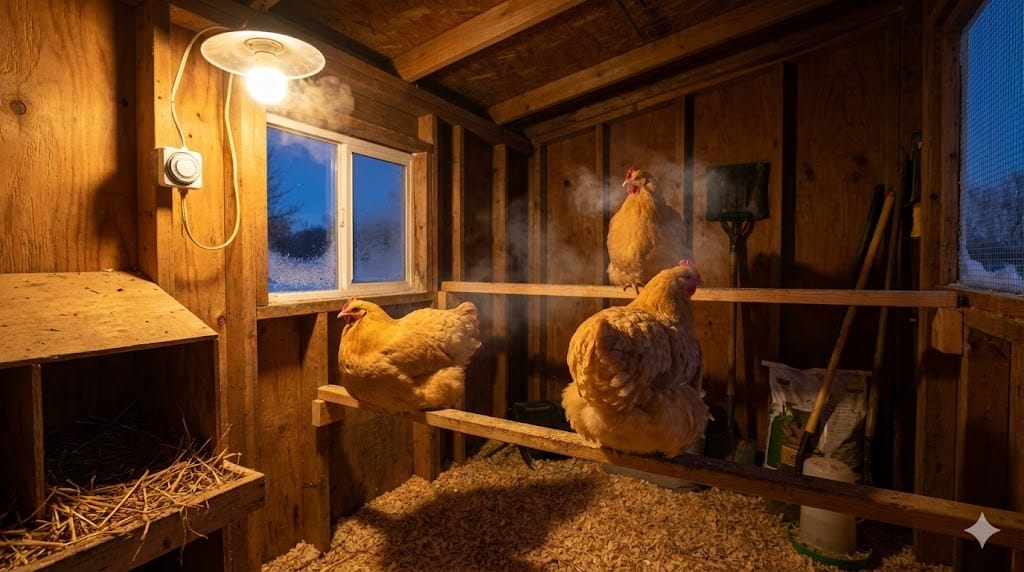
One of the most frequent questions I get is, “Why do chickens stop laying eggs in winter?” It usually isn’t the cold that stops them; it’s the darkness.
This process is biology at work, specifically photoperiodism—the physiological reaction of organisms to the length of day or night. A small gland near the chicken’s eye controls her reproductive cycle. This gland detects light. When days get shorter in the winter, the gland signals the body to rest.
According to poultry research from the University of Georgia College of Agricultural and Environmental Sciences, chickens need approximately 14 hours of light daily to maintain consistent egg production. If you’re preparing for cold months, our winterizing chicken coop guide covers lighting setup in detail.
Should you use artificial lighting? This is a hot debate among backyard chicken keepers.
- The Natural Way: Some owners let hens rest all winter. It’s natural, but you won’t get eggs.
- The Production Way: As noted in many chicken care guides, “Chickens need about fourteen hours of light a day to lay eggs. Days get shorter in the winter, and if you want eggs you have to add light to the coop.”
If you do add light, intensity matters. Virginia Tech specifies using “one 4-5 Watt LED bulb (40 Watt equivalent) for each 100 square feet of coop.” If using standard bulbs, Penn State Extension recommends 25-40 watts. Crucially, increase light gradually and never exceed 16 hours a day to prevent stress.
I remember my first winter with chickens vividly. By Thanksgiving, I was getting zero eggs. I actually had to go to the grocery store to buy a carton, and I felt so defeated standing in that aisle while owning 12 birds. I installed a timer set for 4:00 AM the next day. It wasn’t instant magic—it took about three weeks for their bodies to adjust—but by Christmas, I was back to a steady four eggs a day.
A Note on Winter Comfort: While light is the main factor, air quality matters too. Research from the University of New Hampshire Extension confirms that chicken coops must balance protection from wind and precipitation while allowing interior moisture and ammonia gas to escape.
Why Do Chickens Stop Laying Eggs in Summer?
On the flip side, you might wonder, “Why have my chickens stopped laying eggs in summer?”
While chickens love sunbathing, extreme heat is hard on them. When temperatures soar above 85°F, hens experience heat stress. Instead of using energy to produce an egg, their bodies use energy to cool down. You will see them panting with their wings spread out.
Do chickens lay less eggs in hot weather? Yes, absolutely. One July, during a 98°F heatwave, my favorite Buff Orpington, Bessie, stopped laying entirely. She was lethargic and her comb was pale. I was terrified I was going to lose her to heatstroke, not just lose the eggs. I started putting frozen gallon jugs of water in the run and feeding them chilled watermelon. For more cooling strategies, see our guide on what to feed chickens during a heatwave. It took five days of cooler temps and hydration before she laid again, but seeing that egg was a huge relief that she had recovered.
Why Did My Chickens Stop Laying Eggs Suddenly?
It can be scary when you go out one morning and find zero eggs. If you are asking, “Why do chickens stop laying eggs suddenly?” consider these hidden factors:
- The Hidden Nest: Free-range hens are notorious for this. I once found a clutch of 20 eggs behind a bush three weeks after I thought my hens had “stopped” laying. The Solution: Don’t let them free-range for a few days; keeping them closed up often retrains them to use the boxes. Also, put fake ceramic eggs in the nesting box—chickens like to lay where other chickens lay. Positioning nesting boxes slightly above ground level (but accessible) discourages both egg eating and encourages proper laying location.
- Predator Stress: Even if a fox doesn’t get in, just seeing one stalking the run can scare the flock enough to stop production for days. A neighbor of mine, Sarah, had a stray dog bark at her coop for just 20 minutes one afternoon. The hens were terrified. Sarah called me a week later, worried sick because not a single hen had laid since that day. I told her to give it time. Sure enough, on day 10, production trickled back. That fear response is incredibly powerful.
- Egg Eating: Sometimes they are laying, but they are eating the evidence. Look for sticky yellow yolk on the nesting material. To prevent this, ensure boxes have plenty of soft nesting material so eggs don’t break on impact. Putting up curtains across the front of the boxes can also help prevent egg eating by shielding the eggs from prying eyes. If the habit persists, consider installing “roll-away” nesting boxes that safely roll the egg out of the hen’s reach immediately.
- Nesting Area Changes & Deep Cleaning: Switching bedding types, adding curtains to boxes, or rearranging the coop layout can disrupt laying for days. Even a thorough deep clean that removes all familiar scents can stress them out. Any change to their “safe zone” causes stress. If you must make changes, do them all at once rather than gradually to get the stress over with quickly.
- Unnecessary Handling: Virginia Tech advises that once a flock is laying, you should limit unnecessary moving or handling. While we love our pets, excessive holding or chasing can disrupt production.
Why Have My Chickens Stopped Laying Eggs in Fall?
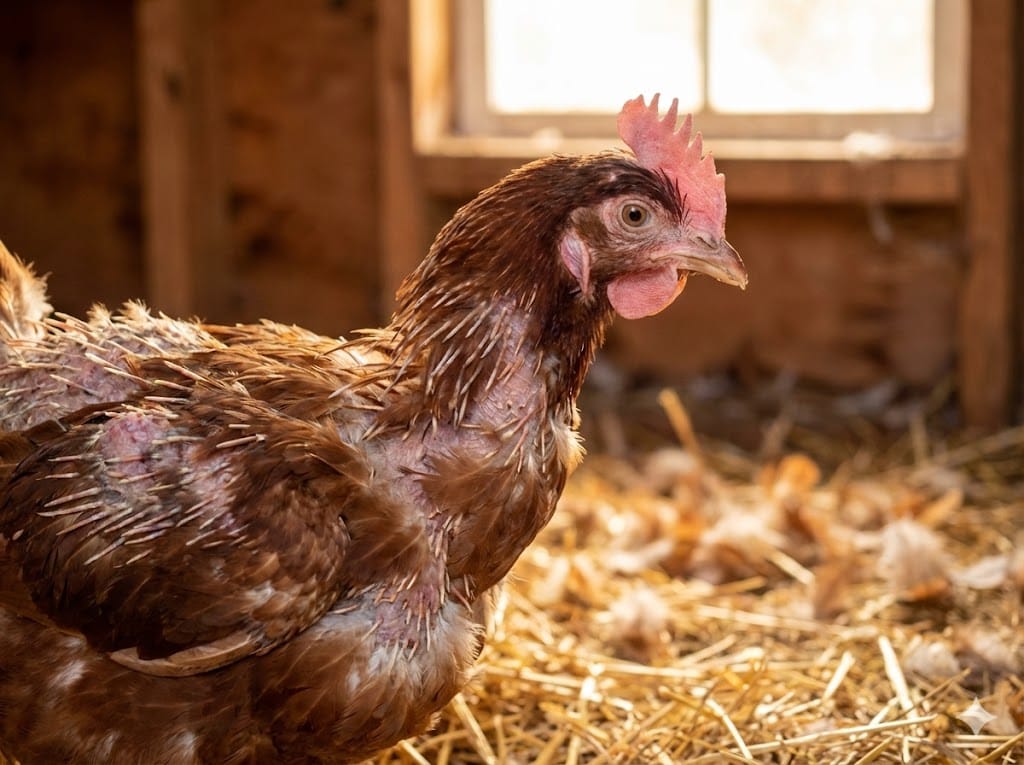
If it is autumn and feathers are everywhere, you are dealing with a molt.
Why do chickens stop laying eggs in the fall? Chickens lose and regrow their feathers annually, usually starting around 18 months old. Feathers are made of keratin, which is almost entirely protein. Eggs also need lots of protein. A chicken’s body can only do one job at a time—grow feathers or make eggs.
The molting cycle typically lasts 8 to 16 weeks. During this time, the comb will look pale and the hen might seem moody. This is normal.
My 25 Week Old Chickens Are Not Laying Eggs—Is This Normal?
New owners often worry about their 25 week old chickens not laying eggs.
Don’t panic. While production hybrids (like Golden Comets) start early at 18 weeks, heritage breeds take longer. My Wyandottes didn’t lay their first egg until they were almost 28 weeks old.
If they have red combs and are squatting when you pet them, that first egg is coming soon.
Will Chickens Stop Laying If the Coop Is Dirty?
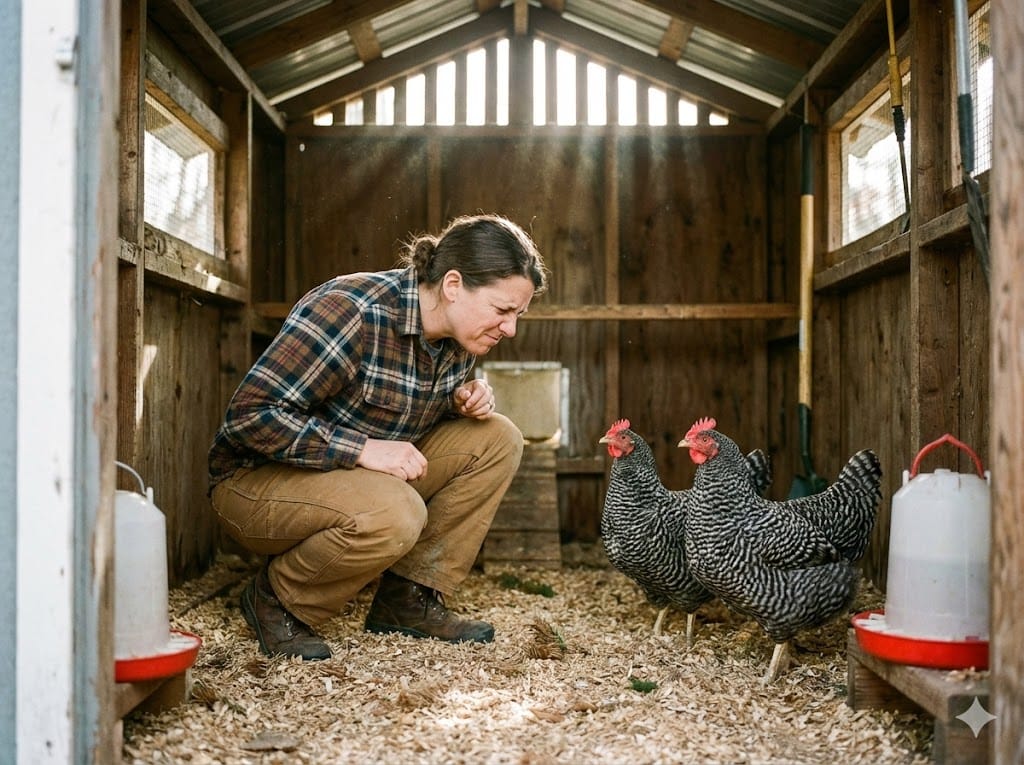
Yes, they will. If you are wondering, “Will chickens stop laying if the coop is dirty?” the answer is a definitive yes.
Ammonia causes respiratory stress. Many owners unknowingly make coop ventilation mistakes that trap harmful fumes inside. If a hen is struggling to breathe, she won’t ovulate. Mississippi State University Extension notes that ammonia levels above 20 parts per million can cause respiratory issues and decreased production.
According to the University of Arkansas Division of Agriculture, “coops need to be well-ventilated even in frigid temperatures. This air exchange helps to remove moisture from inside the coop as well as prevent a buildup of ammonia in the air.”
Ventilation Rule of Thumb: Aim for 1 square foot of ventilation per 10 square feet of coop floor space. In cold weather, you still need about 3-4 square feet of total airflow (including the pop door) to remove moisture without creating drafts directly on the birds.
How to test ammonia levels: Squat down until your head is about one foot above the litter—chicken head height. Breathe normally. If your eyes, nose, or throat burn, ammonia is dangerously high for your birds.
The Wet Feet Connection: It’s not just the inside that matters. According to experienced chicken keepers, wet, muddy conditions around the coop significantly affect laying frequency. “Keep the ground dry where you have your birds… for whatever reason, that really affects how often and effectively they lay.” If their run is a mud pit, add straw or wood chips to get them up on dry ground.
The Solution: I use the deep litter method. This involves adding fresh pine shavings over the old manure, which composts it down and keeps the smell away. For more odor control tips, read our guide on how to keep a chicken coop from smelling. However, a full clean-out is necessary if you smell ammonia.
The good news: if you fix ventilation promptly, damaged respiratory cells typically repair within two weeks.
Does Overcrowding Stop Chickens from Laying?
Stress from overcrowding is a silent production killer. If hens feel cramped, they release cortisol, which halts egg production. You need to ensure they have enough personal space.
Minimum space requirements:
- Inside coop: 3-5 square feet per hen
- Outside run: 10 square feet per hen minimum
I once added four new hens to a coop built for six, pushing the total to ten. The bickering started immediately, and egg counts dropped by half. Once I expanded their run, the peace returned—and so did the eggs.
What Are the Signs of an Unhealthy Laying Hen?
Sometimes, a halt in production is a symptom of illness. Here is a checklist to determine what are signs of an unhealthy laying hen:
- Comb: Is it pale or purple? (It should be bright red).
- Energy: Is she standing alone in a corner, puffed up?
- Appetite: Is her crop empty at night?
- Droppings: Are they bloody or bright yellow?
If you see these signs, isolate the bird immediately to protect the rest of the flock. For a more thorough examination, use our complete chicken health check checklist.
Immune Booster: Try giving sick hens “magic water” to help boost their immune system. This mixture combines apple cider vinegar, honey, crushed garlic, and warm water.
Will Chickens Stop Laying Eggs If They Have Mites?
Parasites are a major production killer. Will chickens stop laying eggs if they have mites? Yes.
Mites and lice suck the blood from the chicken, causing anemia. The bird becomes too weak to lay.
How to check: At night, take a flashlight and look around the hen’s vent area and under the roosts. Mites are tiny red or grey specks that move. If you find them, you need to treat the coop and the birds. Our guide on mites and lice on chickens walks through treatment step-by-step. Many keepers use diatomaceous earth for chickens as a natural preventative.
Application tip: Put diatomaceous earth in the toe of a pantyhose and tie it off to create a duster. At night, gently flip sleeping hens and dust their vent area and under their wings.
I once helped a friend who was ready to cull his flock because they hadn’t laid in two months and looked “ragged.” He thought it was old age or a mystery virus. We went out at night with a headlamp and checked the roosts. Thousands of tiny mites were crawling on the wood; it made my skin crawl. We treated the coop and birds that weekend. It took about 14 days for their red comb color to return, and eggs started appearing again three weeks post-treatment.
What Are the Signs of an Egg Bound Chicken?
This is a medical emergency. You need to know the signs of an egg bound chicken. This happens when an egg gets stuck in the oviduct and cannot pass through the vent. Severe straining can sometimes lead to vent prolapse, where the inner tissue pushes out.
Symptoms include:
- A penguin-like walking stance.
- Straining repeatedly without result.
- Extreme lethargy.
If you catch this early, a warm bath with Epsom salts and gentle massage can help. If she doesn’t pass the egg, she may need a veterinarian.
Related condition: Salpingitis (oviduct inflammation) can also halt laying. Signs include the penguin stance and gradual production decline. If you find strange rubbery masses in the nest (called “lash eggs”), consult a veterinarian immediately.
What Can I Feed My Chickens to Make them Lay Eggs?
Nutrition is fuel. If you put low-quality gas in a car, it won’t run well.
What can I feed my chickens to make them lay eggs?
- High Protein Feed: Use a layer pellet with at least 16% protein. During a molt, bump that up to 18-20%.
- Calcium Carbonate: Provide crushed oyster shell (calcium carbonate) in a separate dish. Our calcium for chickens guide explains exactly how much they need. The oviduct needs this mineral to form hard shells. I realized I had been feeding them too many table scraps. I cut out the scraps and offered free-choice oyster shells. Within four days, the shells were rock hard again. If you’ve ever found an egg without a shell, calcium deficiency is usually the cause.
Vitamin D Note: Calcium alone isn’t enough—your hens need vitamin D to absorb it. Chickens kept primarily indoors may become deficient. Ensure they get outdoor time in natural sunlight, or choose feeds fortified with vitamin D3.
- Treats: Mealworms are great for protein. See our list of best chicken treats that boost egg laying for more ideas.
- The Critical Water Rule: Never underestimate water. According to Fresh Eggs Daily, “If a chicken goes without access to fresh, clean, cool water for even a few hours, that can lead to an immediate reduction in egg production.” Some sources note that just 24 hours without water can stop laying for up to 24 days. Scrub those waterers daily. Watch for bullying: Dominant hens may guard the waterer, physically preventing subordinate hens from drinking. Also ensure water isn’t frozen, too warm, or medicated (which can taste bad), as unpalatable water causes dehydration.
Caution: Be careful with kitchen scraps. Treat rule: Limit extras to no more than two tablespoons per hen per day—and skip treats entirely some days. Anything beyond layer feed dilutes their nutritional intake. Also, check a “poisonous to chickens” treat chart online—avocados and dried beans are big no-nos.
Best Layer Feed Brands (Unbiased Overview)
When choosing layer pellets, look for 16% protein minimum with added calcium. Popular options include Purina Layena, Nutrena NatureWise, and Manna Pro. During molt, switch to higher protein feeds (18-20%) like Feather Fixer formulas. I’ve used all three and noticed consistent production with each—the key is consistency, not brand loyalty.
How Do I Get My Chickens to Lay Eggs Again?
If you are trying to figure out how do I get my chickens to lay eggs again, try this troubleshooting flow:
- Check the Calendar: Is it winter? Is it molting season? If yes, wait it out or add light.
- Check the Feed: Are they getting too many treats? Switch to layer pellets only for a week.
- Check for Stress: Are there predators? Is the coop too crowded?
- Check Health: Look for mites or signs of illness.
What If My Chickens Haven’t Laid Eggs for Months?
If you have chickens not laying eggs for months, simple stress is likely not the cause. Long-term pauses typically indicate deeper issues:
- Obesity: Fatty liver disease stops laying. Check if their keel bone is hard to feel. Feed rationing: A laying hen needs only about 1/3 pound (roughly 1/2 cup) of feed daily. Free-feeding can lead to obesity, fatty liver disease, and egg binding. Consider measured feeding if your hens look heavy.
- Internal Parasites: A heavy worm load drains nutrients long-term.
- Winter Dormancy: Without artificial light, a 3-4 month break is completely natural.
What Month Do Chickens Stop Laying Eggs?
There isn’t one specific date, but if you ask what month do chickens stop laying eggs, the answer for most of the Northern Hemisphere is late October or November.
This coincides with the daylight dropping below 10 hours. They will typically start up again in late February or March as the days lengthen, unless you use artificial lights to trick their pineal gland.
What Are the End of Life Signs of Chickens?
Finally, we have to talk about age. What are the end of life signs of chickens?
Chickens can live 5-10 years, but they are only productive layers for the first 2 or 3 years. After that, they may lay occasionally, but eventually, they stop forever. This is “henopause.”
If your hen is older, eating well, and acting happy but not laying, she has likely just retired. She can still be a great garden companion and bug eater for years to come.
Frequently Asked Questions (FAQ)
Why did my chickens stop laying eggs in the spring?
Spring stops are usually due to “broodiness.” If a hen sits in the nesting box all day and puffs up at you, she is trying to hatch eggs. Broody hens stop laying until they hatch chicks or you break a broody hen safely to get her laying again.
How to break a broody hen:
Remove eggs from under her multiple times daily.
Block her preferred nesting box with cardboard.
The “Broody Jail”: Place her in a wire-bottom crate with food and water but no bedding for 2-3 days. The airflow underneath cools her belly, which breaks the hormonal cycle.
Some keepers place a frozen water bottle under her to lower her body temperature.
Why are my chickens not laying eggs every day?
An egg takes about 26 hours to form, so hens naturally skip days. If you are asking “why are my chickens not laying eggs every day,” rest assured this is normal. High-production breeds lay 5-6 eggs a week, while heritage breeds might only lay 3-4.
Can stress stop a chicken from laying?
Yes. Chickens are prey animals and very sensitive. A barking dog, a storm, or even moving the coop to a new spot can cause them to stop laying for a week or two.

Oladepo Babatunde is the founder of ChickenStarter.com. He is a backyard chicken keeper and educator who specializes in helping beginners raise healthy flocks, particularly in warm climates. His expertise comes from years of hands-on experience building coops, treating common chicken ailments, and solving flock management issues. His own happy hens are a testament to his methods, laying 25-30 eggs weekly.


![The Real Cost of 6 Chickens: My Complete 1-Year Expense Report [2025 Data]](https://chickenstarter.com/wp-content/uploads/2025/12/The-Real-Cost-of-6-Chickens-My-Complete-1-Year-Expense-Report-2025-Data-360x200.jpg)