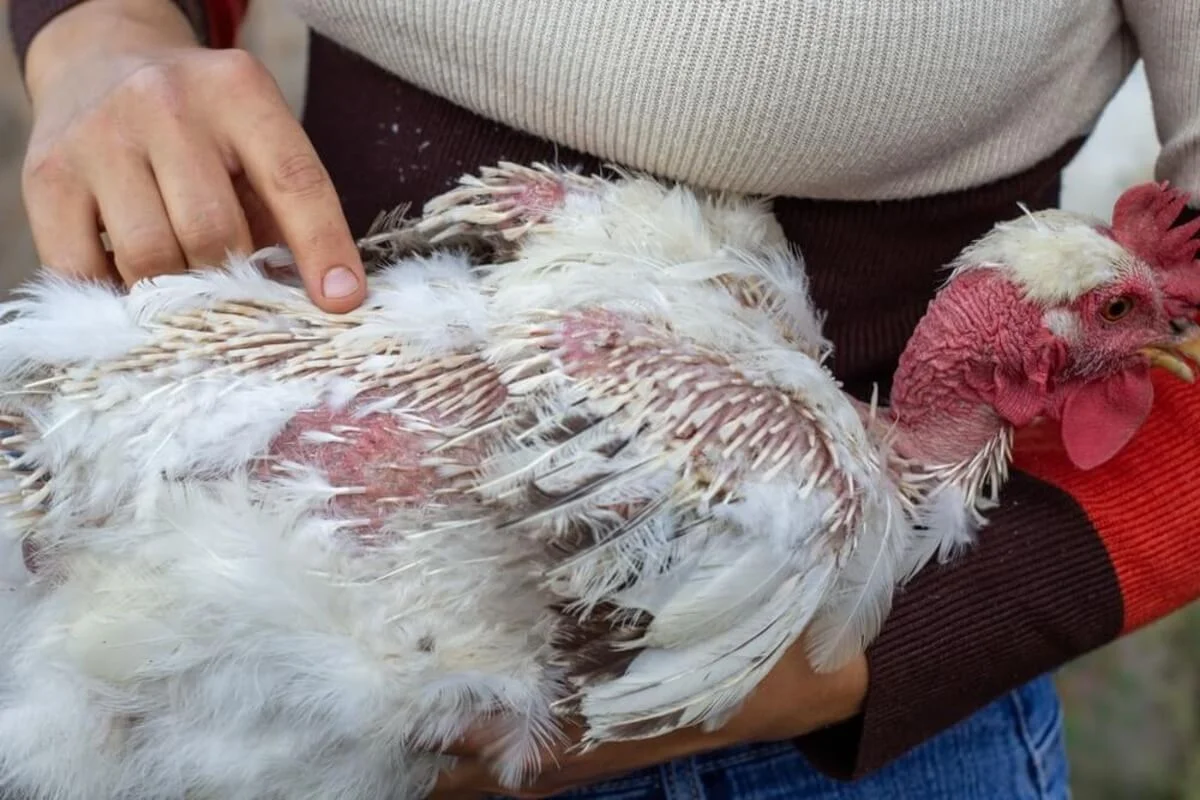
The first time you see a chicken molt, it is easy to panic. Your once beautiful hen might look like a half plucked, grumpy porcupine, or as experienced keepers sometimes say, almost “oven ready.” The coop is suddenly covered in feathers, and her egg production has come to a screeching halt. Do not worry. This shocking transformation is a normal, healthy, and necessary annual process. It is simply your chicken’s way of getting a fresh start.
Molting is the natural shedding of old, damaged feathers to grow a new, healthy set for the upcoming season. According to poultry experts at Backyard Poultry magazine, the process is supposed to happen either in spring or at the end of summer as we slip into fall weather and shorter days. This guide will walk you through everything you need to know, from identifying molting chickens symptoms and understanding the timeline to a deep dive into the best high protein feed for molting chickens and crucial stress reduction tips.
By the end, you will be able to help your flock get through this awkward phase quickly and safely.
What is Molting in Chickens? The Science Behind the Feathers
Molting is a vital biological process that serves a single, crucial purpose: to replace old, worn out feathers with a brand new set that provides superior insulation and protection. Research from Carolina Coops confirms that the decreased daylight in late summer and fall triggers the annual moult, signaling to the chicken that it is time to prepare for winter.
What Triggers the Molting Process?
The process is controlled by a chicken’s hormones, specifically a decrease in estrogen, which is what stops egg production, and an increase in thyroid hormone. When daylight hours drop below a critical threshold, typically around 10 to 12 hours, the hormonal shift begins. This is why molting is so predictable and happens around the same time each year.
According to The Poultry Site, there are three main factors that bring about moulting:
- Physical exhaustion and fatigue from a long laying cycle
- Completion of the laying cycle, as birds only lay eggs for a certain period
- Reduction of day length, resulting in reduced feeding time and consequent loss of bodyweight
Additional triggers include:
- Stress factors such as lack of food and water, heat stress, malnutrition, overcrowding, predators, or illness
- Broodiness, which according to Stoney Creek Farm is a sort of nature imposed withholding of food that triggers molting afterward
The Biology of Feather Regrowth
Feathers are made of about 85% keratin, a protein. This means growing a new set of feathers is like running a marathon for your chicken’s body, requiring a massive amount of protein and energy. The feather follicles contain germinal cells that produce new feather growth once old feathers are shed. Understanding this single biological fact is the key to providing the right kind of support with proper feed for molting chickens.
According to Cackle Hatchery, pin feathers are also called blood feathers because they contain a supply of protein rich blood to nourish the growing feather. Once a feather is fully formed, the blood supply recedes and no further feather growth occurs.
What is the Difference Between Shedding and Molting?
Many new chicken keepers confuse these terms. Shedding refers to the gradual, ongoing loss of individual feathers throughout the year, which is normal wear and tear. Molting, however, is a complete, systematic replacement of the entire plumage following a specific sequence. All chickens shed feathers occasionally, but molting is a distinct event triggered by hormonal changes and daylight reduction.
Do Chickens Molt More Than Once a Year?
Yes, chickens can molt more than once annually. According to Tractor Supply research, adult chickens will molt twice each year, in the spring and the fall, depending on the amount of available light. The fall molt is typically more dramatic, while spring molts are often lighter and less noticeable.
Additionally, chickens can experience stress induced molts at any time of year. Backyard Boost confirms that chickens can definitely molt more than once, especially during times of stress such as drastic changes in feed, extreme weather, illness, or disruptions in their environment.
The 4 Stages of Molting in Chickens
Understanding the stages helps you know what to expect and when your hen might return to normal. Research from Chicken Coop Company describes these phases clearly.
Stage 1: Pre-Molt (Preparation Phase)
Before visible feather loss begins, your chicken’s body starts redirecting resources. According to PBS Animal Health, just before the process begins, a chicken’s feathers look dull. You may notice:
- Gradual decrease in egg production
- Slight dullness to existing feathers
- Increased appetite as the body prepares
Stage 2: Active Feather Loss (Catastrophic Molt Phase)
This is the phase that alarms most chicken keepers. During what experts call the “catastrophic molt,” chickens lose a significant number of feathers quickly, often resulting in a patchy appearance. According to Chicken Coop Company, this stage can be quite alarming for chicken owners, but it is perfectly normal.
The molting sequence always occurs in a specific order, as documented by Cackle Hatchery:
- Head feathers fall first
- Neck feathers follow
- Back and breast feathers next
- Thighs and stern area
- Wing feathers shed in a specific pattern: primary flight feathers first, from the axial feather outward to the wing tip, then secondary feathers
- Tail feathers are last to drop
According to The Poultry Site, when the wing moults, primary feathers are shed first from the axial outwards to the end of the wing, and then the secondaries. The axial feather is dropped at the same time as the secondary next to it. The new quill starts to grow as soon as the old feather is out and takes approximately six to seven weeks to grow.
Stage 3: Pin Feather Growth (Regrowth Phase)
Following the initial feather loss, chickens enter the regrowth phase where new feathers, known as pin feathers, emerge. Pin feathers are also called blood feathers because they contain a supply of protein rich blood to nourish the growing feather, according to Cackle Hatchery.
These pin feathers are sensitive and contain a rich blood supply, so handling chickens during this phase is not advisable as it could lead to injury or bleeding.
Stage 4: Feather Maturation (Completion Phase)
Once a feather is fully formed, the blood supply recedes and no further feather growth occurs. The new feathers harden and provide full insulation. Your chicken’s comb and wattles, which may have lost some of their bright red color during molting, will return to normal once laying resumes.
According to Carolina Coops, once their new, shiny, warm feathers grow in, they will be back to being the perky, sassy chickens that you know and love.
Important note about comb color: According to Cackle Hatchery, during the molt a hen’s comb appears paler than usual, and it will remain pale if the hen stops laying for the winter. This is normal and not a cause for concern.
What Do Molting Chickens Look Like? Visual Signs to Recognize
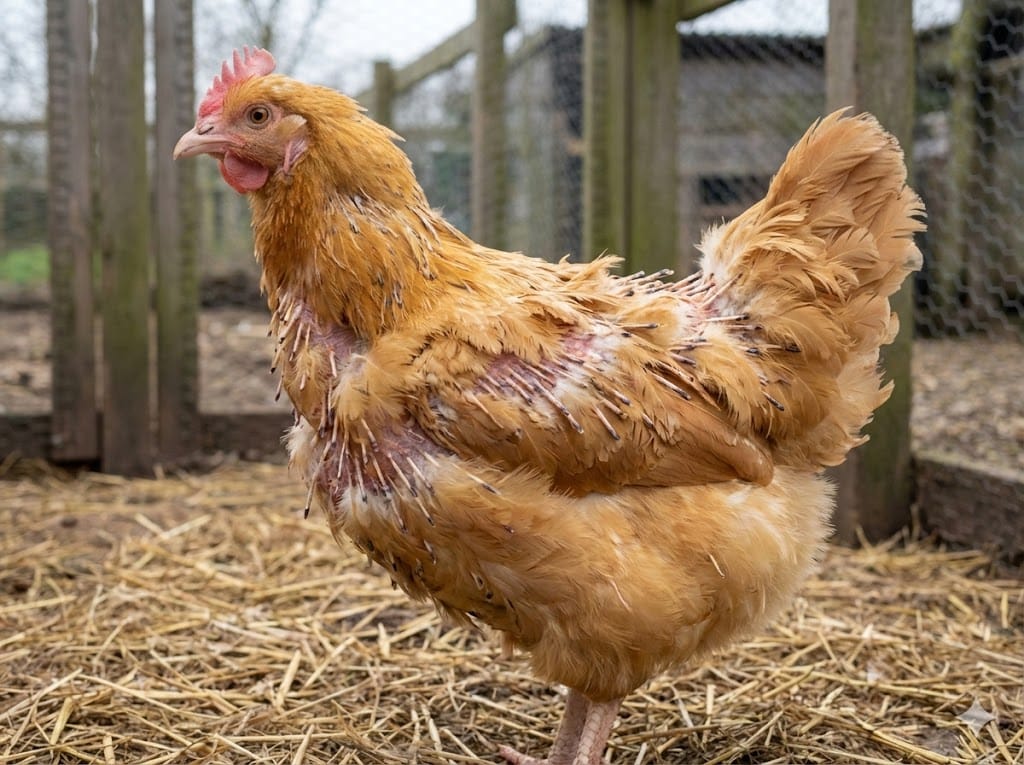
If you are wondering what molting chickens look like, here are the visual signs to watch for:
Key Molting Chickens Symptoms
Symmetrical feather loss: A normal molt typically starts at the head and neck and moves down the body in a predictable pattern. You will see feathers falling out evenly from both sides.
The appearance of pin feathers: These look like little plastic quills and are the new feathers growing in. They are a definitive sign of a healthy molt.
Dandruff-like substance in the coop: According to Tractor Supply, one common early indicator of molting is a dandruff-like substance covering the coop from the feather sheaths breaking down.
Feathers everywhere: You will notice lots of loose feathers around the coop or run, as confirmed by Stoney Creek Farm.
Pale combs and wattles: According to Carolina Coops, during a molt the combs and wattles will lose some of their bright red color. This is completely normal and will return after molting completes, though combs may remain pale through winter if the hen stops laying.
A significant drop or complete stop in egg laying: A chicken’s body cannot produce both feathers and eggs at the same time, so egg production will almost always stop.
Possible weight loss: OverEZ Chicken Coop notes that weight loss can occur during molting as energy is redirected to feather production.
Mood changes: Your chickens might be a little listless and grumpy during their molt, which is also to be expected.
The Two Types of Molt
Soft Molt: This is a gradual process where a chicken loses feathers over a longer period, sometimes so slowly that you barely notice it. According to Masserants Feed and Grain, a soft molt means feathers are lost over a longer period of time. Egg production may slow down but not stop completely. This is common in backyard flocks with good genetics and low stress.
Hard Molt: A hard molt means all feathers are lost at nearly the same time, as Masserants explains. A hen can go from fully feathered to looking almost bald, or as some keepers describe it, almost “oven ready,” in a matter of days. This type of molt is more stressful for the chicken but is over more quickly.
Partial, Vacation, and Neck Molts
The Poultry Site describes additional molt variations:
Neck or partial molt: Sometimes experienced by a bird without any loss of production, but if the moulting extends beyond the neck moult stage the hen ceases production.
Vacation molt: If a hen ceases production during spring or summer, she may molt one or two primary feathers, then stop moulting and come into lay again. When she starts her full molt later in the autumn, she will drop the next feather in sequence.
Molting vs. Mites: How to Tell the Difference
This is the most important distinction for a worried owner. Knowing the difference between a normal molt and signs of illness or parasites can prevent a lot of unnecessary panic.
| Symptom | Molting | Mites or Lice |
|---|---|---|
| Feather Loss Pattern | Symmetrical, predictable sequence starting at head | Patchy, random, often concentrated around vent, neck, or tail |
| Skin Condition | Healthy, normal skin underneath | Irritated, red, scaly skin; small black specks or white eggs on feathers |
| New Feather Growth | Visible pin feathers emerging | No new feather growth, or stunted and damaged |
| Chicken’s Behavior | Grumpy but otherwise active, eating, drinking, alert | Excessive scratching, pecking, restlessness, lethargy |
| Timing | Predictable annual occurrence in fall or spring | Can happen any time of year |
According to Stoney Creek Farm, the key signs that your chickens are probably just molting include: lots of loose feathers around the coop, bare patches especially on necks, backs, and wings but hens seem alert and are eating and drinking, and egg production has dropped.
For detailed guidance on identifying and treating parasites, see our complete guide on mites and lice on chickens and learn about using diatomaceous earth for chickens.
When to Be Concerned: Signs That Are NOT Normal Molting
According to Stoney Creek Farm, you should investigate further if you see:
- Hens seem weak, lethargic, or off their feed or water
- Visible wounds, mites or lice, and abnormal droppings
- Combs or wattles that are pale or swollen
- Feather loss that is extreme or includes scabbing, streaky bald patches, or feather shafts sticking out unnaturally
- Inability to stand or walk
If you notice any of these signs, isolate the affected birds and check for infections or parasites. It might also be nutrition related.
For more on recognizing illness, see our guide on why your chicken might be lethargic.
The Molting Timeline: How Long Does Chicken Molting Last?
When Do Chickens Molt?
Chickens go through several molts in their lifetime. Understanding the full timeline helps you know what to expect at each age.
Juvenile Molts (Chicks to Pullets):
According to The Poultry Site and multiple sources, young chickens experience multiple molts before adulthood. Note that exact timing can vary by source, so these ranges represent the most commonly reported schedules:
| Age Range | Molt Type | What Happens |
|---|---|---|
| 1 to 6 weeks | First complete molt | Chick loses downy covering for actual feathers |
| 7 to 12 weeks | Second partial molt | First feathers replaced with second set; roosters develop ornamental feathers |
| 12 to 16 weeks | Third partial molt | Continued feather development |
| 20 to 22 weeks | Final juvenile molt | Stiff tail feathers grow in; adult plumage nearly complete |
Note on timeline variance: Exact timing of juvenile molts varies by source and individual bird. Some sources report the first molt beginning at 6 to 8 days old, while others indicate 1 to 6 weeks. The second molt is variously reported as occurring between 7 to 9 weeks or 7 to 12 weeks. These ranges reflect normal variation in chicken development. Monitor your own chicks’ feather development rather than relying on exact dates.
According to Chicken Coop Company, baby chicks will molt twice while growing into adult chicks. The first molt starts at about six to eight days old and lasts until four weeks or so when the chick’s down is replaced by its first feathers. The second juvenile molt is between 7 to 12 weeks old when the first feathers are replaced with the second set of feathers.
First Adult Molt:
Chickens typically go through their first adult molt at approximately 16 to 18 months old, according to multiple sources including Backyard Boost, Carolina Coops, and Cackle Hatchery. Young hens less than 12 months will not molt during their first year but will start the following fall.
Annual Molts:
Once the first adult molt occurs, chickens molt annually, typically in the late summer or early fall. According to Poultry Keeper, they will molt every year after this first adult molt. Spring molts also occur but are typically lighter and less noticeable than fall molts.
How Long Does Molting Usually Last?
The duration varies based on whether a chicken is a good or poor layer:
| Layer Type | Duration | Characteristics |
|---|---|---|
| Late molters (good layers) | 8 to 12 weeks (2 to 3 months) | Dramatic feather loss in groups of 2+ primaries, quick recovery, better egg production afterward |
| Early molters (poor layers) | 4 to 6 months | Gradual feather loss one primary at a time, always look sleek, less productive overall |
| Average range | 3 to 16 weeks | Varies by bird, breed, and conditions |
According to Durvet, hens will either go through a hard molt or a soft molt, and typically the molting process lasts 2 to 3 months for most birds.
The Poultry Site provides critical clarification: late molting hens, which are your good layers, will produce longer before molting and will shed feathers quicker in 2 to 3 months. Poor producing hens moult early and take a long time to complete the process, from six to seven months in some cases.
Identifying Good Layers vs. Poor Layers by Molt Pattern
According to The Poultry Site, the time at which a laying hen ceases production and goes into her moult is a reliable guide as to whether she is a good egg producer.
Signs of a good layer (late molter):
- Molts late in the season, after laying for a year or more
- Loses primary feathers in groups of two or more feathers at a time
- More dramatic, obvious feather loss with bare patches visible
- Completes molt in 8 to 12 weeks maximum
- Returns to laying quickly after molt
- Feathers may look rather rough as the next molt approaches because kept longer
Signs of a poor layer (early molter):
- Molts early, sometimes after only a few months of laying
- Loses feathers individually, one primary at a time
- Seldom shows bare patches, always looks sleek and shiny
- Molt drags on for 4 to 6 months or longer
- Hangs in the moult and is out of production for long periods
According to The Poultry Site, rapid moulting is not only seen in the wing feathers of good producers but also in the loss of body feathers generally. Because of this, it is common to see a late and rapid moulting hen practically devoid of feathers and showing many bare patches over her body.
The Axial Feather Test
For those who want to precisely track molt progress, The Poultry Site explains that molting birds lose the primary feathers in regular order, beginning with the feather nearest the axial feather and progressing to the outer wing tip feathers. The axial feather is the short feather between the primary and secondary wing feathers.
You can gauge progress by counting how many new primary feathers have grown in. Late molting hens will lose primary feathers in groups of two or more, while early molters lose feathers individually.
Why Is Only One of My Chickens Molting?
Molting is an individual process. Carolina Coops confirms that not all the members in your flock will start molting at the same time, so the process can be quite drawn out. Each chicken is on its own unique schedule based on its age, breed, and health.
Factors That Affect the Molt
Age: Younger chickens under 18 months may have a lighter molt or not molt at all their first fall.
Breed: High producing commercial egg layers tend to have a shorter, more dramatic molt. Heritage and backyard breeds may have a slower, softer molt.
Diet: A poor diet can lead to a long, drawn out molt because the chicken lacks the nutrients to regrow feathers quickly.
Stress: Heat, predators, moving, or overcrowding can trigger an untimely or more severe molt.
Artificial Lighting: According to Poultry Keeper, chickens molting fully much earlier in the summer often means they have not been on a normal daylight pattern. Battery or commercial laying hens that receive 15 hours or more of artificial daylight for extended periods will need adjustment time when returned to natural light.
Rescue Hens: If you have rehomed battery hens or commercial layers, expect them to molt soon after arrival. The Poultry Site notes that battery or free range laying hens that receive fifteen hours or more of artificial daylight for 15 to 18 months will need a break from laying when brought to a natural light environment.
Post-Molt Laying Resumption
According to The Poultry Site, for seasonal layers natural moulting usually begins sometime during March to April and should be completed by July when egg production recommences. Birds should begin laying again after the shortest day of the year if they have completed their molt.
After moulting, the second year of egg production will be between 10 and 30% less than that achieved by the birds in their first year of lay. This is because the rate of lay is lower and the birds cease to lay earlier in the following autumn.
High Protein Feed for Molting Chickens: The Essential Diet
Do Chickens Need Extra Protein When Molting?
Yes, absolutely. Because feathers are about 85% protein, their regular layer feed, usually 16% protein, is not enough to support the massive energy demands of regrowing a new set of feathers. You must adjust their molting chickens diet.
According to OverEZ Chicken Coop, it is recommended to switch your flock to a feed with at least 20 to 25% protein for the duration of the process.
The Best Feed for Molting Chickens
Temporarily switch their primary feed to a higher protein formula:
| Feed Type | Protein Content | Best For | Example Product |
|---|---|---|---|
| Regular layer feed | 16% | Normal laying periods | Various brands |
| Feather Fixer feed | 18 to 20% | Mild molts | Nutrena Feather Fixer |
| Chick starter/grower | 20 to 22% | Active molting | Various brands |
| Broiler feed | 20 to 25% | Hard molts requiring maximum protein | Various brands |
Add this note after the table:
According to Backyard Boost, Nutrena Feather Fixer is a popular choice among chicken keepers because it provides extra protein specifically formulated to help feathers grow back quickly.
According to Backyard Poultry, you should switch to a broiler blend of feed which is 20 to 25% protein instead of typical layers feed during a molt. Durvet also recommends providing them with a broiler feed and a nutrient rich supplement to provide the extra nutrients their bodies are lacking.
For guidance on quality feed options, see our reviews of best organic chicken starter feeds and our comprehensive feeding guide.
Top High Protein Treats for Molting Chickens
Add these supplements for molting chickens to give them the necessary building blocks for new feathers:
- Black Soldier Fly Larvae or Mealworms: Packed with protein and calcium
- Scrambled Eggs: A natural, high protein powerhouse that is easy to digest
- Fish Meal or Cod Liver Oil: Can be mixed into regular feed for a substantial protein boost; Backyard Poultry specifically recommends cod liver oil
- Sunflower Seeds: Especially black oil sunflower seeds, high in protein and healthy fats
- Cooked Lentils or Beans: Cost effective and nutrient dense
- Plain Yogurt: Probiotics support gut health while providing protein
- Peas and Soybeans: Backyard Poultry lists these as excellent protein sources
- Cooked Meat: Another recommendation from Backyard Poultry for protein supplementation
- Canned tuna: Look for low sodium and all natural varieties; an easy, protein rich treat
What Does Apple Cider Vinegar Do for Molting Chickens?
Apple cider vinegar is a popular supplement during molting. It helps support gut health and nutrient absorption, which is critical when your chickens need maximum nutrition for feather regrowth. Add approximately one tablespoon per gallon of water, and use only plastic or glass waterers as vinegar can corrode metal.
For more on this supplement, see our guide on how to use apple cider vinegar for chickens.
Sprouted Seeds and Grains for Molting Chickens
One of the most cost effective ways to boost protein during molting is sprouting your own seeds or grains. According to The Chicken Chick, sprouting grains makes the vitamins, minerals, and proteins more bioavailable to chickens. Think of grains as a nutrition packet wrapped in protective packaging. Sprouting removes that packaging, freeing up the good stuff.
Research from Savvy Organics Farm confirms that sprouting activates enzymes, breaking down complex nutrients and making them more accessible. After sprouting, a grain becomes 40 to 50% more digestible to the bird, which means they get more nutrition from the same amount of feed.
Best grains and seeds to sprout for molting chickens:
- Hard red wheat: Approximately 15% protein, becomes more bioavailable when sprouted
- Alfalfa seeds: Particularly beneficial according to poultry nutrition experts
- Barley: Normally difficult for chickens to absorb nutrients from, but sprouting makes it an excellent option
- Lentils: High protein once sprouted (never feed dried, uncooked beans as they contain toxins)
Important note: According to Get Strong Animals, sprouted grains should not replace a quality feed for your chickens. They are a supplement, not a complete replacement for balanced nutrition.
For a basic sprouting method, rinse grains twice daily for 3 to 7 days until small sprouts appear. The process requires commitment but provides fresh greens even during winter months when foraging is limited.
The Importance of Calcium During Molting
While calcium primarily supports eggshell production, Chicken Coop Company notes it is also important for overall bone health during molting. Chickens may temporarily stop laying eggs during molting, but maintaining calcium levels remains crucial. Offering crushed oyster shells or supplementing with calcium rich foods helps your chickens through this period.
Learn more about calcium for chickens in our complete guide.
The Importance of Water
While protein is critical for feather growth, water is non negotiable. Dehydration will stop the molting process dead in its tracks. Ensure your flock has constant access to fresh, clean water at all times.
What Happens If You Feed Chickens Too Much Protein?
This high protein diet is a temporary boost for the molting period only. Once your chicken has regrown her feathers, switch back to regular layer feed. Long term excess protein can cause kidney issues and other health problems.
How to Help Your Chickens During Molting: Beyond Food
Is Molting Stressful for Chickens?
Yes, molting is already a stressful process. According to OverEZ Chicken Coop, molting can be a stressful time for both chickens and their keepers. A stressed bird will have a harder time molting and can be more susceptible to illness.
Do Chickens Feel Unwell When Molting?
Molting is uncomfortable and itchy, especially as the new pin feathers grow in. However, Masserants Feed and Grain clarifies that molt is a normal process, so your chickens should not act differently, even though they may look very different. The discomfort comes primarily from the sensitive pin feathers, not from illness.
Minimize Stress During Molting
- Avoid adding new birds to the flock during this vulnerable time
- Do not make major changes to the coop layout
- Keep a consistent routine for feeding and care
- Ensure they have a safe, quiet space to rest
Fret Marks: Visual Evidence of Stress During Molting
If a chicken suffers from food shortage or stress while molting, fret marks can appear across their feathers. According to Poultry Keeper, these are visible lines that run across the feather where growth was disrupted.
Fret marks indicate weak points in the feather structure. Feathers with fret marks are more likely to break at these compromised points, potentially leading to ongoing feather quality issues.
Causes of fret marks include:
- Inadequate nutrition during molting
- Sudden changes in environment or routine
- Predator stress or flock disruptions
- Illness during the molt period
If you notice fret marks on your chickens’ new feathers, evaluate their diet and environment. Increasing protein and reducing stressors can help prevent fret marks on subsequent feather growth.
Avoid Handling Molting Chickens
The emerging pin feathers are connected to blood vessels and are incredibly sensitive and painful if touched or damaged. Handle your chickens only when absolutely necessary during this time. A damaged pin feather can cause significant bleeding.
According to Chicken Coop Company, handling chickens during the pin feather phase is not advisable as it could lead to injury or bleeding.
Managing Artificial Lighting During Molt
If you use supplemental lighting in your coop to extend daylight hours and maintain egg production, here is important guidance from Oregon State Extension as cited by Tractor Supply:
Leave the light off for six weeks during the fall or winter. This allows your birds to completely finish their molt and start laying again at top production. Continuing artificial lighting during molting can confuse their hormonal cycles and extend the molt unnecessarily.
Helpful Herbs and Supplements for Molting Chickens
Consider adding these supplements for molting chickens:
- Balanced poultry vitamin supplement in their water
- Oregano: Natural antibiotic and immune booster
- Parsley: Rich in vitamins and minerals
- Garlic: Natural immune booster, can be crushed and added to water or feed
Molting Chickens in Winter: Protecting Bare Birds in Cold Weather
If a chicken is molting late and the weather is getting cold, you can provide extra warmth in the coop. Ensure the coop is well ventilated but draft free. Consider hanging a ceramic heat emitter, not a heat lamp as they need to sleep in the dark, or a radiant heater to keep the temperature comfortable at night.
For winter care guidance, see our articles on winterizing your chicken coop and raising chickens in cold climates.
Coop and Biosecurity Tips During Molting
Cleanliness: The coop will be a mess with feathers and dandruff-like substance from feather sheaths. To prevent the spread of parasites and disease, clean out old bedding and replace it with fresh bedding.
Pest Control: Molting chickens are more vulnerable. Ensure your coop is secure against pests and predators.
Dust Bath Access: Maintain their dust bath area with sand, diatomaceous earth, and wood ash to help control parasites during this vulnerable period.
Wing Clipping After Molt
If you clip your chickens’ wings to prevent flying, you will need to reclip them after molting is complete. According to Azure Farm Life, feathers do not grow after being cut; instead, a chicken must grow entirely new feathers. When they molt, they will regrow their flight feathers, which you will need to clip again.
Important timing considerations:
- Wait until feathers are fully formed. According to Backyard Poultry, newly emerging feathers have blood vessels extending into the feather shafts to nourish their development. Clipping these blood feathers will cause excess bleeding.
- Check the quill color. Azure Farm Life advises that the quill should be white or clear before clipping. A dark quill means the feather is still full of blood and growing.
- Be particularly attentive after molting when many feathers may still be developing. Spread the wing and inspect the underside for soft, pinkish, immature shafts before cutting.
According to My Pet Chicken, you will normally want to clip wings about once a year, after the molt. Clipping only one wing is typically more effective because it unbalances the bird, making flight more difficult than clipping both wings evenly.
For detailed instructions, only clip the first 10 primary flight feathers at the wing tip, cutting about halfway down the feather length. Never cut shorter than one inch from the wing or to the tips of the coverts.
What Happens After the Molt?
Once molting is complete, you can expect some positive changes:
Better Egg Quality and Production
According to Cackle Hatchery, whether a hen is a lazy slow molter or a more productive fast molter, after the molt her ability to convert feed into eggs will improve. Also her eggs will be larger and their quality will be better than they were prior to the molt.
Return to Laying
Egg production typically resumes once molting is complete and chickens have fully regrown their feathers. According to Chicken Coop Company, the duration of decreased egg production varies among individual chickens, with some resuming laying sooner than others.
The Poultry Site notes that for seasonal layers, natural moulting usually begins sometime during March to April and should be completed by July when egg production recommences.
Transitioning Back to Layer Feed
According to Chicken Coop Company, once hens begin producing eggs again after molting, transitioning back to a suitable layer feed that meets their energy and nutritional requirements is essential.
Do Roosters Molt?
Yes, roosters molt just like hens do. While they will not stop laying eggs obviously, you will notice a significant change in their appearance as they shed old feathers and grow a new set, including new ornamental tail feathers and saddle feathers. They may also be more irritable and less interested in mating during this time.
A Note on Force Molting
You may hear about “force molting” in commercial operations. According to Backyard Poultry, in order to force a unified molt, commercial farms withhold any feed from the birds for 7 to 14 days to stress their bodies into molting. It is a cruel practice that is already outlawed in the United Kingdom.
We strongly advise against force molting for backyard flocks. Allow your chickens to molt naturally according to their biological rhythms.
Frequently Asked Questions
How long does chicken molting last?
Molting duration depends on whether your hen is a good or poor layer. According to The Poultry Site, late molting hens that are good producers complete the molt in 2 to 3 months (8 to 12 weeks), while poor producers who molt early can take 4 to 6 months. The average range is 3 to 16 weeks depending on individual factors.
Do chickens lay eggs when molting?
Almost never. A chicken’s body must choose where to direct its protein resources. According to OverEZ Chicken Coop, feathers are composed of around 85% protein, and during the molting process the majority of your chicken’s energy is used to replace lost feathers rather than laying eggs.
How long after molting will chickens lay in the fall?
Egg production typically resumes within 2 to 4 weeks after molting is complete and feathers are fully regrown. According to The Poultry Site, birds should begin laying again after the shortest day of the year if they have completed their molt.
Can chickens still lay while molting?
During a very soft or partial molt, some chickens may continue laying at a reduced rate. However, during a full or hard molt, egg production typically stops completely until feather regrowth is finished.
Is my chicken in pain while molting?
Molting is an uncomfortable and itchy process, especially as the new pin feathers grow in. However, it is not a painful illness. The pain comes from handling or damaging the sensitive pin feathers, which contain blood vessels.
Do chickens eat less when molting?
According to Chicken Coop Company, some chickens may eat less during this time as their bodies direct more nutrients towards feather regrowth. However, most will have an increased appetite due to the high energy and protein demands.
What vitamins do chickens need when molting?
A balanced poultry vitamin supplement is best. Key nutrients include B vitamins, amino acids like methionine, calcium for bone health, and adequate protein at 20 to 25%.
What are the 4 stages of molting?
The four stages are: pre-molt (preparation), active feather loss (catastrophic molt), pin feather growth (regrowth phase), and feather maturation (completion). Each stage has distinct characteristics and care requirements.
How often do chickens molt?
According to Tractor Supply, adult chickens will molt twice each year, in the spring and the fall, depending on the amount of available light. Spring molts are typically lighter than fall molts. Additionally, chickens can experience stress induced molts at any time of year.
Can molting happen in spring?
Yes. According to Backyard Boost, although less common, some chickens may have a minor molt in the spring. This is a rare occasion and generally less noticeable than the fall molt.
How can I tell if my chicken is a good layer based on molting?
According to The Poultry Site, good layers are late molters that molt fast and dramatically, completing the process in 8 to 12 weeks and losing primary feathers in groups of two or more. Poor layers are early molters that molt slowly over many months, losing feathers one at a time, and may take 4 to 6 months to complete.
What is the axial feather?
The axial feather is the short feather between the primary and secondary wing feathers. According to The Poultry Site, molting birds lose primary feathers in regular order beginning with the feather nearest the axial feather and progressing to the outer wing tip.
Understanding molting as a natural, healthy process helps you support your flock through this annual transition. For more seasonal care guidance, see our guides on what to feed chickens in winter and winter care for young chicks and chickens.

Oladepo Babatunde is the founder of ChickenStarter.com. He is a backyard chicken keeper and educator who specializes in helping beginners raise healthy flocks, particularly in warm climates. His expertise comes from years of hands-on experience building coops, treating common chicken ailments, and solving flock management issues. His own happy hens are a testament to his methods, laying 25-30 eggs weekly.