Raising backyard chickens is one of the most rewarding hobbies you can have. Walking out to your coop for fresh eggs never gets old. However, just like any pet or livestock, chickens need to eat. If you are new to this or looking to budget better, avoiding common beginner mistakes can save you money from day one. You are probably asking one big question: How much does a 50 lb bag of chicken feed cost?
Quick Answer: As of February 2026, you can expect to pay between $14 and $24 for a standard 50 lb bag of layer pellets. If you prefer organic or non-GMO feed, the price jumps to $22 to $42 per bag. The good news? Feed prices are trending downward this year.
But the price tag on the bag is only part of the story. To really understand your expenses, you need to know how long that bag lasts and how much your specific breed eats. In this guide, we will break down the costs, look at the best places to buy, and help you calculate your exact feed costs for your monthly bill.
2026 Feed Price Outlook: Good News for Chicken Keepers
Before diving into specific prices, here is something that will make your wallet happy. According to industry analysis from Rabobank and poultry market researchers, feed prices for poultry operations are projected to decline an additional 1 to 2 percent in 2026, following a 6 percent drop throughout 2025.
This downward trend stems from record corn harvests and stable soybean meal markets. For backyard chicken keepers like us, this translates to real savings at the register.
I have been tracking my own feed expenses since 2020, and I can tell you firsthand that 2024 was brutal on the budget. Seeing prices stabilize and even drop slightly feels like a breath of fresh air. My current flock of Rhode Island Reds and Buff Orpingtons is costing me roughly 15 percent less to feed compared to two years ago.
Seasonal Note: Keep in mind that feed prices typically fluctuate 5 to 10 percent throughout the year. Prices tend to dip slightly after fall harvests when grain supplies are highest, then creep up during late winter and spring. If you have storage capacity, buying an extra bag or two in October can save a few dollars over the year.
Current Prices for a 50 lb Bag of Chicken Feed (2026)
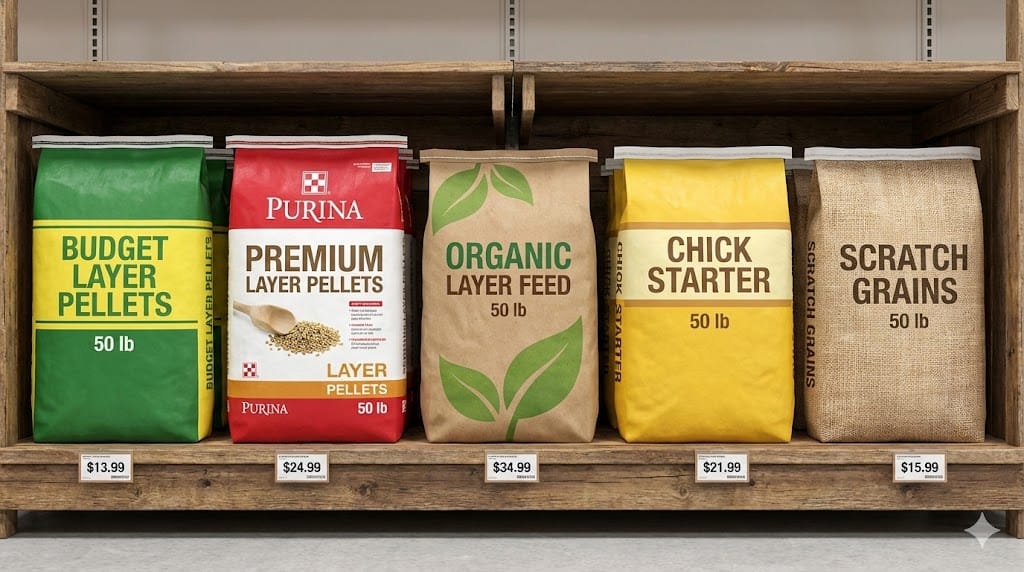
Chicken feed prices range from $14 for economy brands to $42 for certified organic options.
When you walk into a feed store, you will see rows of colorful bags. It can be confusing. The price depends heavily on what type of feed it is. A bag of basic layer crumbles is going to cost less than a specialized organic starter feed.
Chicken Layer Pellets 50 lbs: Price Breakdown
Layer feed is what your hens will eat most of their lives. It has extra calcium to help them lay strong eggshells.
Economy Brands: $14 to $19 (Regional feed mills and bulk buyers may find prices as low as $12 to $13)
Premium Brands (Purina, Nutrena): $18 to $26
Organic/Non-GMO: $17 to $42. Standard organic feed usually falls between $22 and $35, while specialty options (soy-free, corn-free, or small farm certified) can reach $34 to $42 per 50 lb bag. Non-GMO options typically start lower, around $17. See our list of the best organic and non-GMO chicken feeds for detailed comparisons.
Chick Starter Feed 50 lb Costs
Chicks need high protein to grow fast. You only buy this for the first 8 to 16 weeks. Learn when to switch from starter to grower feed to avoid overspending.
According to current retail data, chick starter runs:
Standard Starter/Grower: $23 to $26
Medicated Starter: $25 to $30 (helps prevent diseases like Coccidiosis; the extra cost covers the medication that protects young chicks from common intestinal parasites)
High Protein Options (20% to 22%): $24 to $53 depending on brand
Scratch Grains and Supplement Pricing
Think of scratch grains like candy for chickens. To understand the difference between feed and scratch, remember that scratch is a treat, not a complete meal.
Standard Scratch Grains: $15 to $17 per 50 lb bag
Here is a handy table to help you compare the current market prices.
Table 1: 50 lb Chicken Feed Price Comparison (February 2026)
| Feed Type | Price Range | Best For |
|---|---|---|
| Layer Pellets | $16 to $26 | Egg-laying hens (16+ weeks) |
| Layer Crumbles | $16 to $26 | Picky eaters, smaller breeds |
| Chick Starter | $23 to $26 | Chicks (0 to 8 weeks) |
| Grower Feed | $19 to $25 | Pullets (8 to 16 weeks) |
| Organic Layer | $28 to $42 | Organic egg production |
| Non-GMO Layer | $22 to $29 | Non-GMO egg production |
| Scratch Grains | $15 to $17 | Treats/supplements only |
Where to Buy Chicken Feed 50 Pound Bags Near You
Finding the best deal often depends on where you live. You essentially have two choices: big-box farm stores or local independent feed mills.
Tractor Supply Chicken Feed Prices (2026)
Tractor Supply Co. is one of the most common places to buy feed in the USA. They carry major brands like DuMor, Purina, and Producer’s Pride. Premium brands like Nutrena NatureWise offer excellent nutrition. See our full Nutrena NatureWise review for a complete breakdown.
Current shelf prices (February 2026):
| Brand | Product | Size | Price |
|---|---|---|---|
| Producer’s Pride | 16% Layer Pellets | 50 lb | $15.99 |
| Producer’s Pride | 16% Layer Crumbles | 50 lb | $15.99 |
| Producer’s Pride | Scratch Grains | 50 lb | $16.29 |
| Producer’s Pride | Cracked Corn | 50 lb | $11.89 |
| DuMOR | 16% Layer Pelleted | 50 lb | $18.99 |
| DuMOR | 16% Layer Crumbled | 50 lb | $18.99 |
| Nutrena NatureWise | 17% Layer Pellet | 50 lb | $23.99 |
| Nutrena NatureWise | All Flock Pellet | 40 lb | $22.49 |
| Nature’s Best | Organic Layer Pellet | 40 lb | $28.99 |
| Purina | Layena Layer Crumbles | 50 lb | $25.99 |
Pros: They often have sales (“Chick Days”) and loyalty programs.
Cons: Prices are set corporately, so there is not much wiggle room.
My observation: I often find that their house brand, Producer’s Pride, is the most budget-friendly option for a basic layer pellet. At $15.99 for 50 lbs, it works out to roughly 32 cents per pound, which is hard to beat at a retail store.
Regional Farm Store Pricing
If you live in the Midwest or South, stores like Rural King, Atwoods, or Bomgaars might be nearby. These stores often compete aggressively on price.
Based on current regional pricing, stores like Knoxville Farm and Home show:
| Product | Size | Price |
|---|---|---|
| Country Acres Layer Pellet | 50 lb | $19.99 |
| Chicken Scratch Grains | 50 lb | $15.75 |
| Layena Chick Pellets | 50 lb | $22.98 |
| Organic Layer Crumbles | 35 lb | $27.99 |
Regional Benefit: They may carry local brands that are cheaper because they did not have to be shipped across the country. I have found savings of $2 to $4 per bag simply by checking the regional mill brands.
Feed Mill and Wholesale Pricing
Buying directly from feed mills rather than retail stores can save you $3 to $5 per bag. Here is what wholesale pricing looks like in early 2026:
| Feed Type | 50 lb Price Range |
|---|---|
| 17% Layer Crumbles | $11.82 to $13.54 |
| 20% Egg Laying Pellets | $12.58 to $14.74 |
| 22% Poultry Crumbles | $13.16 to $15.32 |
| Scratch Grains | $11.79 to $14.93 |
| Organic 16% Layer Pellets | $23.14 to $25.44 |
Pro tip: Many mills require minimum purchases of 200 to 500 lbs, so consider splitting an order with neighbors or local chicken keeping groups. I coordinate bulk buys with two families in my area, and we each save about $40 every three months.
Online Options vs. Local Feed Stores
You can buy chicken feed on Amazon or Chewy, but there is a catch: shipping. A 50 lb bag is heavy.
Current online prices show premium options like Crypto Aero Top Chick Layer at $50.99 for a 50 lb bag on Chewy, though this is a specialty non-GMO whole food blend, not a standard layer feed.
Local Feed Stores: Usually have the best prices because you are doing the hauling. Plus, you can often buy in bulk.
Online: Convenient, but usually costs $5 to $10 more per bag unless you have free shipping subscriptions.
International Pricing Notes
For readers in the UK, Canada, Australia, and Nigeria, feed costs vary significantly based on local grain markets and import duties. UK keepers can check our best UK poultry feed brands guide, while Australian readers will find current pricing in our Australian poultry feed brands breakdown. Nigerian poultry farmers face different market conditions entirely. See our bag of poultry feed in Nigeria pricing guide for current Naira costs.
How Long Does a 50 lb Bag of Chicken Feed Last?
This is the most common question I get from new chicken keepers. If you are still in the planning phase, check out our guide on how many chickens your family needs to estimate your total feed requirements.
The answer depends on how many birds you have. According to feeding guidelines from Mile Four’s chicken feed calculator, adult chickens consume approximately 0.25 lbs of feed per day, which equals about 91 lbs per year. This applies to average standard-sized chickens like Rhode Island Reds or Plymouth Rocks.
Feed Duration for 4 Chickens
If you have a small backyard flock of 4 hens:
- They eat about 1 lb per day total
- Result: A 50 lb bag lasts approximately 50 days
How Long Does a 50 lb Bag Last for 6 Chickens?
This is a very common flock size.
- They eat about 1.5 lbs per day total
- Result: A 50 lb bag lasts approximately 33 days (roughly one month)
Feed Duration for 10+ Chickens
If you are getting serious with a larger flock:
- 10 chickens eat about 2.5 lbs per day
- Result: A 50 lb bag lasts approximately 20 days. You will need almost two bags a month.
Table 2: How Long 50 lbs Lasts by Flock Size
| Flock Size | Daily Consumption | 50 lb Bag Duration |
|---|---|---|
| 4 chickens | 1 lb/day | ~50 days |
| 6 chickens | 1.5 lbs/day | ~33 days |
| 10 chickens | 2.5 lbs/day | ~20 days |
| 12 chickens | 3 lbs/day | ~16 to 17 days |
Real World Observation
I should note that these numbers assume your chickens eat only commercial feed. My own flock of seven birds goes through a 50 lb bag in about 45 days because they free range for several hours daily and supplement with bugs, grass, and kitchen scraps. Your mileage will vary based on foraging opportunities and breed size. My Brahmas definitely eat more than the smaller Leghorns in the flock.
How Much to Feed Chickens Per Day
Understanding daily measurements helps you avoid waste. For a deep dive, check out our complete feeding guide.
Daily Feed Amount in Cups
A standard layer pellet weighs roughly 0.25 lbs per cup.
- One standard chicken eats about 1 cup of feed per day
- Bantam breeds eat less (roughly 0.5 to 0.75 cups)
- Large breeds like Brahmas and Jersey Giants may need 1.25 cups
Note: This varies based on breed and weather. My Buff Orpingtons eat slightly more than my Leghorns, closer to 0.3 lbs each on cold days. During winter months, I notice consumption increases by about 10 to 15 percent across the flock.
Daily Feed Amount in Pounds and Kilograms
If you prefer weighing your feed:
- Pounds: 0.25 lbs per standard bird
- Kilograms: Approximately 0.11 kg (113 grams) per bird
Chicken Feed Calculator: Monthly Costs by Flock Size
Now, let us talk about your budget. Use our chicken feed calculator to get exact numbers, or follow the estimates below.
How Much Does It Cost to Feed 6 Chickens a Month?
Let us assume you buy a standard bag for $18 to $20.
- 6 chickens need 1 bag roughly every 33 days
- Monthly Cost: Approximately $15 to $20
For a more detailed analysis including coop costs and healthcare, see the real cost of raising 6 chickens from chick to layer.
Monthly Feed Costs for 10 Chickens
- 10 chickens eat about 75 lbs of feed a month (1.5 bags)
- Monthly Cost: Approximately $28 to $38
How Much Feed Per Chicken Per Month?
A single chicken will eat about 7.5 lbs of feed in a 30-day month.
Cost per bird: Roughly $3.00 to $4.50 per month depending on feed quality.
Table 3: Monthly Feed Costs by Flock Size (2026)
| Flock Size | Bags Per Month | Monthly Cost (Estimate) |
|---|---|---|
| 4 chickens | ~0.6 bags | $10 to $16 |
| 6 chickens | ~1 bag | $15 to $20 |
| 10 chickens | ~1.5 bags | $24 to $38 |
How Many Cups and Gallons in a 50 lb Bag of Chicken Feed?
You need a place to put all this feed. Leaving it in the paper bag is a bad idea because mice will chew right through it. Learn how to keep rats out of your chicken coop to protect your feed investment.
Conversion Measurements
- Cups: There are approximately 200 cups of feed in a 50 lb bag
- Gallons: A 50 lb bag takes up about 6.5 to 7 gallons of space
Storage Container Sizing Guide
To store a full 50 lb bag, you should buy a container that holds at least 10 gallons to be safe. A standard 5-gallon bucket from the hardware store will not hold a full 50 lb bag. You will need two buckets or one large metal trash can.
I personally use a 20-gallon galvanized metal trash can with a locking lid. It keeps the feed fresh, and more importantly, keeps raccoons and rodents out. The investment of $35 for a good container has saved me far more in wasted feed over the years.
Feed Freshness: How to Tell if Feed Has Gone Bad
Proper storage matters because chicken feed loses nutritional value over time. Here is how to check if your feed is still good:
Signs of spoiled feed:
- Musty or sour smell (fresh feed smells slightly sweet or grain-like)
- Visible mold, especially in humid climates
- Clumping or caking from moisture exposure
- Insects or webs in the bag
Most commercial feeds stay fresh for 2 to 3 months when stored properly in a cool, dry location. I write the purchase date on each bag with a marker so I know exactly how old it is. If feed sits longer than 3 months, the vitamins degrade even if it looks fine, so your hens may not be getting the nutrition you are paying for.
Table 4: Measurement Conversions
| Measurement | Amount in 50 lb Bag |
|---|---|
| Cups | ~200 cups |
| Gallons | ~6.5 to 7 gallons |
| Kilograms | ~22.7 kg |
| Daily servings (6 hens) | ~33 days worth |
Factors That Affect Chicken Feed Prices in 2026
Why does the price change? Several economic factors come into play.
Feed Type and Protein Percentage
We touched on this earlier, but protein costs money. Starter feed has higher protein (18 to 22 percent) compared to layer feed (16 percent), so it costs more. The protein sources, primarily soybean meal, are the most expensive ingredients in chicken feed. That is why an 18% protein feed typically costs $2 to $4 more per bag than a 16% formula.
Organic certification requires expensive farming practices, which can nearly double the cost of the grain.
Regional Price Differences
If you live in the “Corn Belt” (like Iowa or Nebraska), feed might be cheaper because the grain is grown nearby. If you live in a city or on the coast, the feed has to be trucked in, which adds fuel costs to the price.
Living in a suburban area myself, I pay about $2 to $3 more per bag than friends who live closer to agricultural regions. That adds up to $25 to $35 annually for my flock.
Biosecurity and Disease Impact
According to the USDA’s January 2026 Livestock, Dairy, and Poultry Outlook, highly pathogenic avian influenza (HPAI) remains a concern affecting poultry production and, indirectly, feed markets. While feed prices themselves are dropping, any significant disease outbreak in your region could disrupt local supply chains temporarily.
Bulk Buying Options
Many feed mills offer discounts if you buy 500 lbs or a ton at a time. Bulk pricing can drop costs to roughly $11 to $15 per 50 lb equivalent.
However, for a backyard flock, buying too much is a risk. Feed can go moldy or lose vitamins if it sits for more than a few months, so this option is best if you can split an order with neighbors.
How to Reduce Your Chicken Feed Costs
If the numbers in the calculator looked a little high, do not worry. There are smart ways to lower the bill without starving your birds. You may also want to compare if raising backyard chickens is cheaper than buying eggs in the long run.
Fermented Feed Method
This is a game-changer. By fermenting your chicken feed, you can reduce consumption by 25 to 50 percent while improving gut health. The fermentation process expands the feed volume and makes the nutrients easier for chickens to absorb.
I started fermenting feed in 2022 after watching my feed bills climb. It took some adjustment to get the timing right (about 3 to 4 days of fermentation is the sweet spot for my setup), but my birds now eat noticeably less dry feed while maintaining excellent egg production.
Free-Ranging to Supplement Feed
When chickens free-range, they eat bugs, grass, and seeds. Learn the pros and cons of free-range vs. chicken runs to decide what works for your setup.
My free-ranging flock reduces their commercial feed consumption by roughly 20 to 30 percent during spring and summer months when insects and vegetation are abundant.
Kitchen Scraps and Garden Waste
Chickens are the ultimate composters. They love vegetable peels, watermelon rinds, and leftover pasta. See our guide on kitchen scraps chickens can safely eat to supplement their diet. Some keepers even choose to make their own chicken feed to control costs further.
Important note: Scraps should supplement, not replace, a balanced commercial feed to ensure adequate protein for laying hens.
Frequently Asked Questions About Chicken Feed Costs
What is the current price of chicken feed in 2026?
At Tractor Supply, budget options like Producer’s Pride layer pellets cost $15.99, while premium brands like Nutrena NatureWise run around $23.99 for 50 lbs. Non-GMO options from specialty retailers typically range from $22 to $29 per 50 lb bag.
How much is a 50 lb bag of chicken feed?
It depends on the brand and type. A budget brand like Producer’s Pride runs $15.99, while premium brands cost $18 to $26. Organic options range from $28 to $42 per bag.
Are feed prices going up or down in 2026?
Feed prices are expected to decline 1 to 2 percent in 2026, following a 6 percent drop in 2025. This is due to abundant grain supplies and stable protein meal markets, according to industry analysts.
How much does it cost to feed 4 chickens a month?
You will spend roughly $10 to $16 per month to feed four hens, assuming they do not waste much and you use standard layer feed.
How much does it cost to feed chickens for a year?
For a flock of 6 standard chickens eating commercial feed only, expect annual feed costs of approximately $180 to $240. Free-ranging and supplementing with scraps can reduce this by 20 to 30 percent.
Is it cheaper to buy chicken feed in bulk?
Yes, but only if you can use it before it spoils (typically within 2 to 3 months for optimal nutrition). Bulk mill pricing can save $3 to $5 per 50 lb equivalent, but smaller flocks often waste money buying more than they can use fresh.
Summary
Raising chickens is an investment, but it is one that pays you back in delicious eggs and fertilizer for your garden. To recap the 2026 numbers:
- A 50 lb bag costs roughly $16 to $26 for standard feed
- It lasts 6 chickens about a month
- One chicken costs about $3 to $4.50 per month to feed
- Feed prices are dropping 1 to 2 percent this year
By using a good feeder to prevent waste and supplementing with kitchen scraps, you can keep your backyard flock expenses low and your hens happy. Now that you know the numbers, you can budget for your flock with confidence.
Looking for more ways to reduce your chicken keeping costs? Check out our cost to raise chickens for the first year breakdown or explore beginner-friendly breeds that balance feed efficiency with egg production.
About the Author: Oladepo Babatunde is the founder of ChickenStarter.com with over 6 years of hands-on experience raising more than 50 chickens across diverse climates. He has been tracking feed costs and flock expenses since 2020 and currently maintains a mixed flock of Rhode Island Reds, Buff Orpingtons, Brahmas, and Leghorns. His practical approach combines techniques learned raising poultry in Nigeria with adaptations for US, UK, and Australian conditions.

Oladepo Babatunde is the founder of ChickenStarter.com. He is a backyard chicken keeper and educator who specializes in helping beginners raise healthy flocks, particularly in warm climates. His expertise comes from years of hands-on experience building coops, treating common chicken ailments, and solving flock management issues. His own happy hens are a testament to his methods, laying 25-30 eggs weekly.