If you live in the southern United States, Australia, Nigeria, or anywhere temperatures regularly climb past 35°C (95°F), you know that summer isn’t just “warm” for your chickens. It can be dangerous. As a chicken keeper, watching the thermometer climb past 100°F is stressful. I remember the panic I felt during my first real heat wave in Texas, running out every hour with ice water, terrified I’d lose my flock to heat stroke.
Heat is a real killer for backyard poultry, but here is the good news: genetics make a huge difference. Choosing the best heat-tolerant chicken breeds is the single most important step you can take for a healthy flock and avoid common first-time keeper mistakes. While some fluffy breeds suffer in the humidity, others, like the Leghorn, are practically built for it.
In this guide, we will cover the science of heat tolerance, the top 15 breeds that thrive in high temperatures, and exactly what to feed chickens during a heatwave to keep them safe when the heat index spikes.
What Makes a Chicken Heat Tolerant? (The Science and Genetics)
It helps to understand why some chickens handle heat better than others before jumping into specific breeds. It’s not just about big combs; it’s written in their DNA.
Physical Traits
According to poultry experts, specific physical traits help chickens cool down:
Large Combs and Wattles: These act like radiators. Blood flows into the comb, cools down in the breeze, and flows back into the body. As noted by Backyard Poultry Magazine, many heat-tolerant chicken breeds have large combs and wattles, especially the Leghorn which is known for its heat tolerance.
Body Size: Smaller birds generate less metabolic heat. Heat-hardy chickens tend to have less body mass, which reduces the amount of heat generated by metabolism.
Feathering: Heat-tolerant breeds usually have tight feathering that doesn’t trap heat, and often have no feathers on the legs and feet.
Origin: Mediterranean breeds like Leghorns, Andalusians, and Minorcas are considered the gold standard for heat tolerance due to their evolutionary history in hot climates.
The Genetics of Survival
Recent research has shed light on the biological mechanisms of heat resistance:
Heritability of Tolerance: Heat tolerance is a heritable trait. Research shows the heritability of heat tolerance is around 0.28 in synthetic heat-adapted breeds (like Thai natives) versus only 0.21 in standard commercial lines. This means breeding from survivors matters.
The “Survivor Gene” (HSP70): Scientists look for HSP70 (Heat Shock Protein 70) as a biomarker for heat tolerance. This protein protects cells from thermal damage during extreme stress. Breeds like the Egyptian Fayoumi express this gene at significantly higher levels than commercial breeds, effectively giving them a cellular shield against heat stroke.
Acclimatization and Recovery: It’s not just about surviving one hot day. Chickens have a remarkable ability to bounce back, and thermotolerance tends to increase when passed down through successive generations. This provides strong scientific backing for local adaptation: a chick hatched in a Texas August is biologically primed to handle heat better than its parent who was shipped from a cool hatchery.
How Hot Is Too Hot for Chickens? Temperature Danger Zones
A common question I get is, “How hot is too hot for live chickens?”
Chickens run hotter than us naturally. Their body temperature is around 106°F. This means they don’t feel the heat as quickly as we do, but once they get hot, they crash fast. According to Purina Mills, heat-tolerant chicken breeds like Ameraucana, Welsummer, Easter Egger, Leghorn, Minorca, Rhode Island Red, Barred Plymouth Rock or Turken are recommended for hot climates.
Are chickens ok in 100 degree weather?
Yes, but they are uncomfortable. At 100 degrees, you will see them panting heavily and holding their wings away from their bodies. This is a sign of heat stress. Most chickens are comfortable up to about 85°F, but once it hits 95°F or higher, they can get too hot.
Can chickens survive 110 degree weather?
This is the danger zone. Without shade, cool water, and help from you, 110-degree weather can be fatal. Heat stroke can happen in minutes at these temperatures. Over 100°F, chickens are at risk of heat stroke, which can make them tired, dizzy, and pant with open mouths.
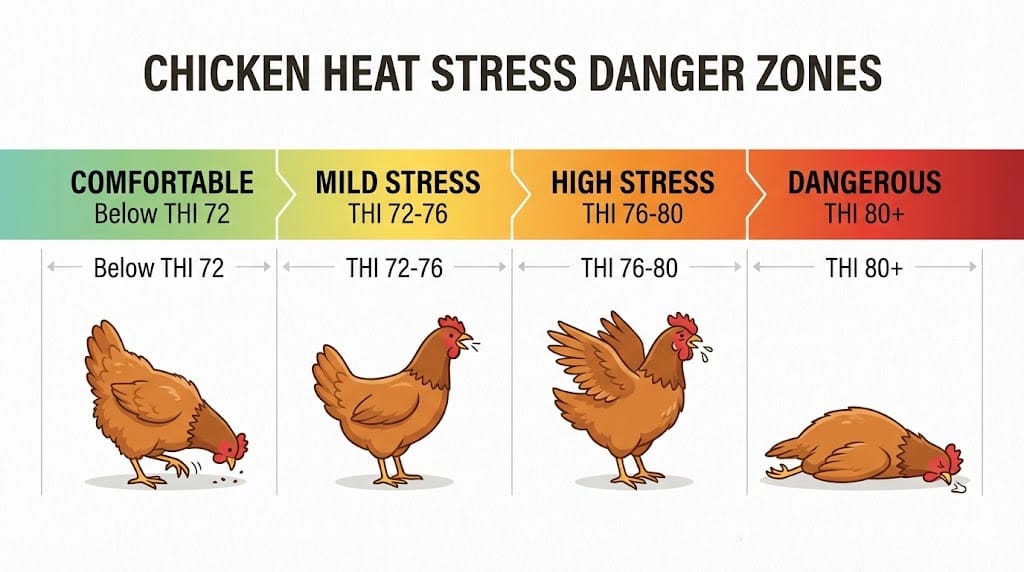
Here is a quick breakdown using the Temperature-Humidity Index (THI), which scientists use to measure real stress levels:
| THI Level | Risk Level | Real-World Behaviors (What I See) |
|---|---|---|
| Below THI 72 | Comfortable | Normal Chaos: Dust bathing, chasing bugs, loud clucking |
| THI 72-76 | Mild Stress | The Slow Down: Beaks open slightly (panting), less chasing, more standing in shade |
| THI 76+ | Moderate Stress | Airplane Wings: Hens hold wings out from bodies to let air hit their skin. Feeders stay full (loss of appetite) |
| THI 80+ | SEVERE | The Danger Zone: Lethargy. They won’t move even for treats. Combs may look pale. Learn more about why your chicken is lethargic |
The 15 Best Heat-Tolerant Chicken Breeds for Hot Summers
If you want a flock that survives and thrives, start with these breeds. I have expanded this list to include specific biological mechanisms for why each breed handles heat, along with real-world experiences and care tips.
1. Leghorn: The Heat Champion
If you ask, “What breed of chicken is most heat tolerant?”, the answer requires some nuance. Globally, wild landrace breeds win. But among the breeds you can actually find at a hatchery, the Leghorn is the undisputed champion.
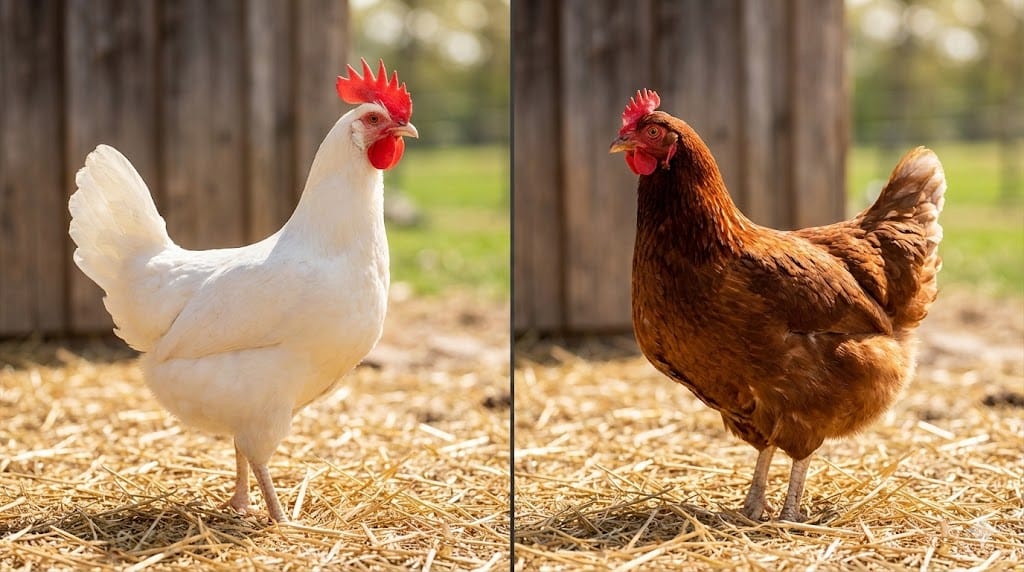
Heat Tolerance: Excellent (Best of the commercial layers) Eggs Per Year: 280-320 white eggs Temperament: Active, flighty, independent Best For: Maximum egg production in hot climates
The Science: Leghorns are the “sports cars” of the chicken world. Originating in Italy, they are incredibly streamlined with massive combs that act like radiators. Their slender build and lightweight body contribute to their heat tolerance, allowing for efficient body temperature regulation.
Personal Experience: I have a White Leghorn named “Lucy” who is practically bulletproof in the summer. During a week of 105°F days in July, while my other hens were lethargic and hiding under the deck, Lucy was still chasing grasshoppers across the yard. I spoke to a fellow keeper on a forum who runs a commercial setup in Arizona; he swore that he rarely loses a Leghorn to heat, even when the AC in his barn fails.
What to watch out for: The downside is that their huge combs can serve as a “dashboard warning light.” I’ve noticed that if a Leghorn gets dehydrated, that big, beautiful red comb will actually start to shrivel or flop over pitifully. It’s an instant visual cue that I need to refill the waterers. Also, because they are so active, they don’t stop moving to drink as often as they should. To help them specifically, place multiple water sources in their path of foraging so they stumble upon hydration naturally.
2. Rhode Island Red: Heat-Tolerant Classic
Are Rhode Island Red chickens heat tolerant? Yes, absolutely. They are one of the most adaptable breeds around. Their large single combs and light feathers allow them to maintain good egg production even when it’s toasty outside.
Heat Tolerance: Very Good Eggs Per Year: 250-300 brown eggs Temperament: Bold, assertive Best For: Beginners (see our list of easiest breeds for beginners)
These birds are tough. They don’t have the specialized “radiator” comb of the Leghorn, but they have a robust constitution. They are hardy survivors with tight feathering (not fluffy), which prevents heat from getting trapped against their skin.
My neighbor in Texas raises RIRs exclusively. She notes that while they survive the heat, they get grumpy. I’ve noticed this too. My RIR, “Red,” becomes a total bully when the temperature breaks 100°F. She will literally guard the feeder and not let the younger pullets eat, seemingly just because she’s hot and irritable.
What to watch out for: Heat stress makes their aggression significantly worse. If you see your RIRs pacing or pecking others, it’s often a sign they are overheating and don’t have enough personal space. Space is their cooling mechanism. If you crowd RIRs in a hot coop, they will peck each other raw. Give them extra run space or free-range time during the hottest hours so they can get away from each other.
3. Australorp: The Gentle Heat Handler
Heat Tolerance: Very Good (Australian origin) Eggs Per Year: 250-300 light brown eggs Temperament: Docile, quiet, friendly
As the name suggests (“Australian Orpington”), these birds were bred in Australia to withstand harsh conditions. For full details on their care, check out our Australorp complete guide.
A friend of mine who keeps chickens in a suburban HOA loves her Australorps because they are quiet. However, she noticed something critical: they are black. Touching an Australorp’s feathers in direct July sun feels exactly like touching the hood of a black car. It burns.
What to watch out for: You MUST provide deep, dark shade. Australorps will thrive in 100°F heat if they are out of direct sun. I’ve seen my Australorps physically press their bodies against the cool dirt in the darkest corner of the run. If you have a treeless backyard, do not get this breed; they will bake in the sun.
4. Easter Egger
Heat Tolerance: Very Good Eggs Per Year: 200-280 blue/green eggs Temperament: Friendly, curious
Easter Eggers are hybrids (usually Araucana crosses). This “hybrid vigor” often makes them tougher than purebreds. You can read more about them in our Easter Egger breed guide. They generally have smaller bodies, which helps shed heat.
I love my Easter Eggers, but I’ve noticed a specific issue with bearded ones. Check for beards! Some EEs have fluffy “muffs” or beards around their faces. My bearded hen, “Puff,” pants significantly more than the non-bearded ones because those facial feathers trap heat around the beak and respiratory area.
What to watch out for: I’ve actually seen Puff dunk her entire beard into the water bowl to cool off. It works, but it means her beard is constantly wet and muddy, which can attract flies. If you live in an extreme heat zone (like Phoenix), look for clean-faced Easter Eggers rather than the heavily bearded ones. Providing frozen treats (peas/corn) is a great way to help cool them internally since they struggle to cool their heads.
5. Plymouth Rock (Barred Rock)
Heat Tolerance: Good to Very Good Eggs Per Year: 200-280 brown eggs Temperament: Calm, docile
They have a single comb (good for cooling) and a calm demeanor. See our Plymouth Rock guide for more on why they are a backyard favorite.
However, Barred Rocks are heavy birds. A social media follower from Georgia shared that her Barred Rocks tend to suffer from bumblefoot more in the summer because they stand in one spot to avoid moving. Their large body mass retains heat longer into the night, so they pant louder and longer than my lighter breeds.
What to watch out for: These birds love a “spa day.” Because they are calm, they are the breed most likely to actually stand in a shallow wading pool. I fill a plastic kitty pool with just 1 inch of water; my Barred Rocks will stand in it for twenty minutes, cooling their blood through their feet. It’s a lifesaver for heavy birds.
6. Sussex (Speckled Sussex)
Heat Tolerance: Good Eggs Per Year: 240+ light brown eggs Temperament: Curious, mellow
The Speckled Sussex has looser feathering than some, but their primary advantage is their behavior. For a deeper dive, check out our Speckled Sussex breed profile. They are supreme foragers. They instinctively know how to find the coolest bugs under the deepest bushes.
I’ve never had to worry about my Sussex in the heat because I can never find her! She finds the crawlspace under the shed (the coolest spot in the yard) and stays there from noon to 4 PM. Her speckled pattern makes her invisible in the dappled shade.
What to watch out for: They rely on micro-climates. Ensure your yard has low-growing shrubs or access to “under-deck” areas. If you have a perfectly manicured lawn with no hiding spots, a Sussex will struggle. They need to disappear to stay cool.
7. Ancona
Heat Tolerance: Excellent Eggs Per Year: 220+ white eggs Temperament: Skittish, active
Think of the Ancona as a “Leghorn with style.” They are Mediterranean, have the same large combs, and the same slight body build. Their black feathers are tipped with white, which helps break up solar absorption.
These are rare gems. A breeder I spoke with in Southern California swears by them for dry heat. She noted they are very flighty, which leads to a specific challenge: they fly high to roost. In a hot coop, heat rises to the top.
What to watch out for: If your coop isn’t ventilated at the roof ridge, your Anconas will cook. Since they insist on roosting on the highest possible beam, they will be sitting in the hottest pocket of air in the coop all night long. Check your coop’s roof vents before buying this breed.
8. Andalusian
Heat Tolerance: Excellent Eggs Per Year: 150+ white eggs Temperament: Active
Another Mediterranean breed, their blue-laced plumage is lighter than black, reflecting more sun, and they have very little downy under-feathering.
While they are beautiful, they are incredibly flighty. Similar to Leghorns, they need water stations scattered around because they won’t walk back to the coop to drink if they are foraging far away in the heat.
9. Egyptian Fayoumi
Heat Tolerance: Superior / Extreme Eggs Per Year: 150 small cream eggs Temperament: Wild, feral-like
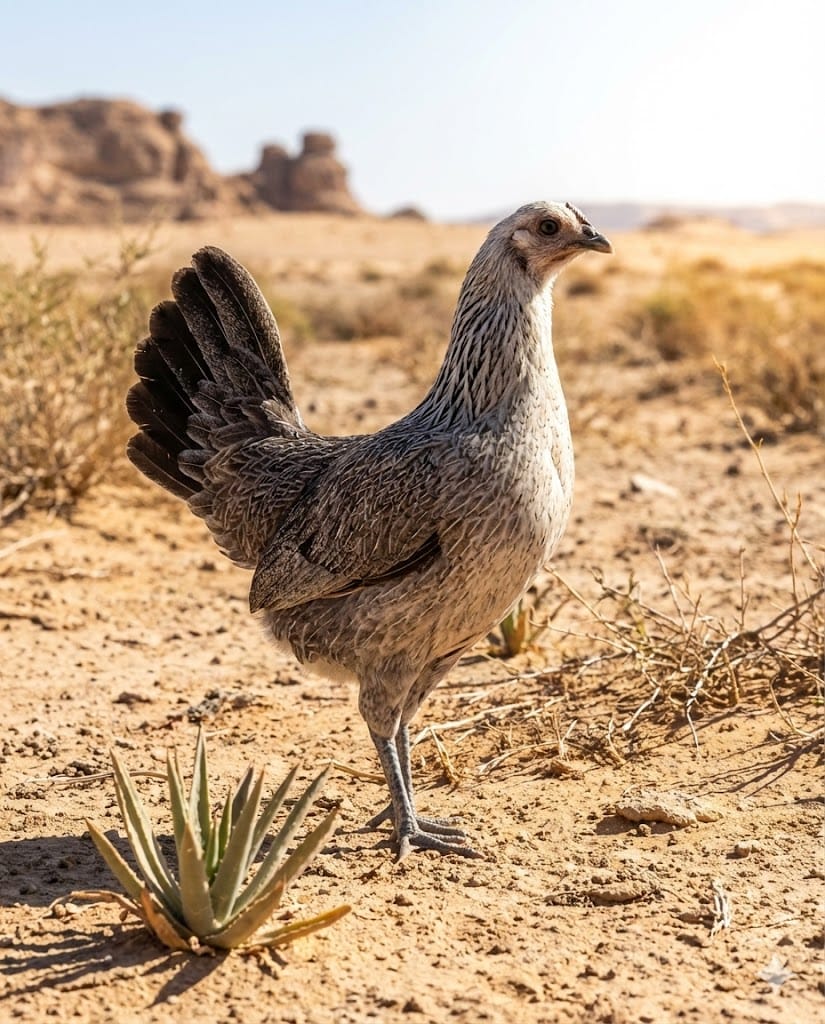
This is the “cactus” of chicken breeds. They evolved along the Nile River in Egypt. The Fayoumi is an ancient breed from Egypt. It’s a small, scrawny breed with a large single comb, and is a terrific egg layer. Fayoumi chickens are genetically wired for heat with significantly high levels of HSP70 (heat shock protein), a genetic marker that protects their cells from heat damage.
Personal Experience: As a user on a backyard chicken forum told me: “You don’t keep Fayoumis, they allow you to feed them.” That sums them up perfectly. They are almost impossible to catch. I once spent an hour trying to catch a Fayoumi pullet in 90-degree heat; I almost passed out, but she wasn’t even breathing hard.
What to watch out for: Do not lock them in a small run in the summer. They will panic and overheat from stress. They need free-range vs chicken run consideration; specifically, they need free range to survive the heat. If left to their own devices, they are practically heat-proof.
10. Catalana
Heat Tolerance: Excellent Eggs Per Year: 200+ light eggs Temperament: Active
Popular in Spain and Latin America, these birds are known as the “heat layer.” They thrive in arid, hot environments where other layers fail.
Because they are rare and expensive in the US, protect them from predators, as they are often lighter and easier for hawks to grab.
11. Naked Neck (Turken)
Heat Tolerance: Superior Eggs Per Year: 200+ brown eggs Temperament: Friendly, goofy
It looks like a turkey, but it’s a chicken. The Naked Neck originated in Transylvania-Romania as a breed with a large single comb and wattles, and no feathers growing on the neck. They have roughly 50% fewer feathers on their bodies than normal chickens. This is a massive advantage. It’s like wearing shorts while other chickens are wearing pants.
My neighbor’s kid calls them “ugly chickens,” but they are the best layers in July. While everyone else stops laying due to heat stress, the Naked Necks keep going.
What to watch out for: One unique advantage I’ve found is that because their neck is naked, you can actually see their crop. In the summer, I can glance at my Naked Neck and literally see if she has a full crop of water or food. It’s an instant health check that you can’t get with fluffy breeds. However, keep an eye on that exposed skin in direct, equatorial sun. It can burn, though it’s rare. The Naked Neck does require plenty of protective shade to prevent sunburned skin.
12. Minorca
Heat Tolerance: Excellent Eggs Per Year: 200+ large white eggs Temperament: Alert
These are the largest of the Mediterranean class. They have massive wattles and earlobes. The surface area of their headgear provides immense cooling.
What to watch out for: Be careful with their wattles, which are so long they can actually drag in water. Use watering cups or nipples rather than open bowls. If their massive wattles get wet and then they drag them in the dirt, they can get infections. Keep the water level high so they don’t have to dip too deep.
13. Welsummer
Heat Tolerance: Variable (Climate-Dependent) Eggs Per Year: 200+ dark speckled eggs Temperament: Intelligent, calm
Important Note: While some sources rate Welsummers as heat tolerant, real-world Texas keepers report they can stop laying entirely from August through January in extreme heat. In moderate heat (California coastal), they perform adequately. In extreme heat (Texas interior, Arizona), they may disappoint. Their golden neck feathers do reflect sun well, and they are incredibly smart. My Welsummer figures out where the sprinkler leaks and digs a mud bath right there.
What to watch out for: They love mud baths more than dust baths in the summer. To help them, wet down the dirt in their run. However, if you live in an area with sustained 100°F+ temperatures, consider them a “moderate heat” breed rather than an extreme heat champion.
14. Delaware
Heat Tolerance: Very Good Eggs Per Year: 200+ brown eggs Temperament: Friendly
A threatened breed that deserves more love. They are almost entirely white (good reflection) with a little black barring on the neck. Their light feathering and active nature keep them cool in summer.
What to watch out for: They are highly food motivated. In the heat, digestion creates heat. Adjust your feeding schedule to feed them their heavy grain meal in the evening when it’s cooler, rather than the morning. Let them digest during the cool night.
15. Sexlink / Star Hybrids
Heat Tolerance: Good (Variable) Eggs Per Year: 300+ brown eggs Temperament: Friendly
These are the “Red Stars” or “Golden Comets” you see at feed stores. They are bred for high efficiency. Black or Golden Sexlinks are egg-laying superstars! They’re bred specifically to be excellent layers and tend to have calm, friendly personalities.
I’ve seen how hard these poor girls work. They are like marathon runners who don’t know when to stop. Because they lay an egg almost every day, their bodies are under immense metabolic stress.
What to watch out for: They are prone to “burnout.” A purebred might take a break in a heatwave; a Sexlink will try to lay an egg anyway and might collapse. If you see a Sexlink sitting with her tail down and eyes closed on a hot afternoon, she is in trouble. You MUST supplement them with electrolytes and calcium. They deplete their reserves faster than any other breed on this list.
Breeds to AVOID in Hot Climates
Not all chickens can handle the heat. Some will suffer greatly.
Are Brahmas heat tolerant?
NO. Despite some sources claiming versatility, Brahmas are a cold-weather breed with feathered legs and feet, small pea combs, and an enormous amount of down. Their feathered feet act like insulated boots, and their small pea combs provide minimal heat dissipation. According to heat-climate specialists, Brahmas should never be raised in year-round hot climates. For more on this breed’s cold-weather strengths, see our Brahma chicken guide.
Are Buff Orpingtons heat tolerant?
This is genuinely controversial among experts. Some sources list them among heat-tolerant breeds due to their adaptability. One resource asks: “Can one of the best cold-hardy chicken breeds also be among the most heat-tolerant? In this case, absolutely!” However, heat-climate specialists strongly advise against them, with some calling them “HORRIBLE for hot climates.”
The physics is clear: they are big, heavy, and have thick, fluffy feathers. You can learn more in our Buff Orpington complete guide.
Our recommendation: In moderate heat (under 95°F regularly), they can manage with extra care. In extreme heat zones (100°F+ for weeks), choose lighter breeds. In my experience, while they are versatile, their large body mass makes them higher risk in 100°F+ temperatures. You will need to be vigilant about shade and cool water.
Are Silkies heat tolerant?
NO. Silkies have feathers that look like fur, which traps heat against their skin. They also have dark skin which absorbs heat. Keep them out of the 100-degree sun.
Are Wyandotte chickens heat tolerant?
MARGINALLY. They have Rose combs (flat against the head). This prevents frostbite in winter, but it means they can’t release heat well in summer. For more on this breed, check our Wyandotte breed guide.
Are Cochins heat tolerant?
NO. Cochins are heavily feathered with feathered feet, making them poorly suited for hot climates. Their dense plumage traps heat against their bodies.
Best Chickens for Hot and Cold Weather
Maybe you live in a place like the Midwest where it is 100°F in July and -10°F in January. You need a dual-climate warrior.
Here are the best chickens for hot and cold weather:
| Breed | Heat Tolerance | Cold Tolerance | Why it works |
|---|---|---|---|
| Rhode Island Red | Very Good | Excellent | Robust body handles cold; big comb handles heat |
| Plymouth Rock | Good | Excellent | Dense feathers for winter, but hardy enough for summer |
| Australorp | Very Good | Good | The perfect middle-ground bird |
| Easter Egger | Very Good | Very Good | Their hybrid vigor makes them tough in all seasons |
| Delaware | Very Good | Good | Light feathering and active nature, yet adaptable |
| New Hampshire Red | Good | Good | Similar to RIR with good all-around tolerance |
How to Keep Chickens Cool in 100 Degree Heat
Even with the best breeds, you need to know how to keep chickens cool in 100 degree heat. Be careful to avoid common coop ventilation mistakes that overheat your flock.
Water and Hydration
Fresh water is non-negotiable. I like to put ice blocks in their waterers during the afternoon. I also add electrolytes on really hot days to keep their mineral levels up. Don’t forget that if you are changing diet or water additives, ensure they are also getting appropriate grit and oyster shells for digestion.
Shade and Ventilation
Never close your coop windows in the summer! You need cross-ventilation. If your run doesn’t have trees, use a shade cloth. You should understand how much ventilation your coop needs.
Are Misters Good for Chickens?
This is a tricky one.
In Dry Climates (Arizona, parts of Australia): YES. Evaporative cooling works wonders.
In Humid Climates (Florida, coastal regions, Nigeria during rainy season): USE CAUTION. Adding moisture to already humid air can make it harder for chickens to breathe. If you use them, mist the ground to cool the dirt, don’t soak the bird.
Can I Put a Blanket in My Chicken Coop?
No! Absolutely not in summer. This blocks airflow and traps heat. You want the coop as airy as possible.
Emergency First Aid
It’s wise to have a chicken first aid kit ready for heat stroke emergencies. Frozen treats can also help bring body temperature down.
Frequently Asked Questions
What Breed of Chicken Is Most Heat Tolerant?
The Leghorn is widely accepted as the most heat-tolerant breed available at standard hatcheries due to its large comb, light body, and active nature. Globally, the Egyptian Fayoumi and other landrace breeds may have superior genetics, but Leghorns are the most accessible option for backyard keepers.
Which Breed Is the Most Heat Resistant?
Alongside the Leghorn, the Egyptian Fayoumi and the Naked Neck (Turken) are the most heat-resistant breeds biologically. The Fayoumi expresses high levels of HSP70 heat shock protein, giving it cellular protection against extreme temperatures.
Are Chickens OK in 100 Degree Weather?
They can survive it, but they are not “OK” without help. They need deep shade and cool water to prevent heat stroke. Make sure to do regular health checks during heatwaves.
Can Chickens Survive 110 Degree Weather?
Only with significant help. 110°F is a lethal temperature for poultry. You must provide emergency cooling like ice, fans, or bring them indoors.
What chickens are best for Florida heat?
For Florida’s humidity, avoid heavy birds entirely. Go for Leghorns (humidity doesn’t weigh them down), Naked Necks (less plumage is a lifesaver in humid air), and Bantams (smaller birds generally do better in the humidity).
What chickens are best for Arizona heat?
For Arizona-style dry heat, Mediterranean breeds (Leghorn, Ancona, Andalusian, Catalana) and the Egyptian Fayoumi are your best options. They evolved in similar climates.
Conclusion
Raising chickens in hot climates is totally possible if you choose the right birds. Don’t wait until it hits 100°F to make a plan. Go check your coop’s ventilation right now, and if you are ordering chicks for spring, put a Leghorn or Naked Neck in your cart. You will thank yourself in August when they are the only ones still laying eggs.
Stay cool out there!

Oladepo Babatunde is the founder of ChickenStarter.com. He is a backyard chicken keeper and educator who specializes in helping beginners raise healthy flocks, particularly in warm climates. His expertise comes from years of hands-on experience building coops, treating common chicken ailments, and solving flock management issues. His own happy hens are a testament to his methods, laying 25-30 eggs weekly.