After raising both Ameraucanas and Easter Eggers in my backyard flock for over 10 years, I can tell you the single biggest difference comes down to one thing: breeding standards. An Ameraucana is a purebred chicken recognized by the American Poultry Association with specific color varieties, slate-colored legs, and consistent blue eggs. An Easter Egger is a mixed-breed chicken carrying the blue egg gene, and that’s where the confusion (and marketing deception) begins.
If you’ve never raised chickens before, understanding the easiest chicken breeds for beginners will help you decide whether an Ameraucana or Easter Egger fits your experience level. If you’ve bought “Americana” chicks from a hatchery and wondered whether you got the real deal, this Ameraucana vs Easter Egger guide will give you definitive answers. I’ll show you exactly how to identify what’s in your coop using leg color, facial feathering, egg shell color, and body type.
Now that we have set the stage, let’s clear up the biggest naming headache you will face at the feed store.
Quick Answer: Is an Americana the Same as an Easter Egger?
Here is the thing: “Americana” (often spelled Americanas) is not a breed. It is a marketing term used by commercial hatcheries to sell Easter Eggers.
When I first started keeping chickens, I made the mistake of paying a premium for what were labeled “Araucanas/Americanas” at a feed store. This is one of those common first-time chicken keeper mistakes. I expected show-quality birds. What I got were lovely mixed-breed hens that laid green and pink eggs, but they were definitely not purebreds.
- Ameraucana: A purebred bird recognized by the APA since 1984. Official details can be found on the Ameraucana Breeders Club General Information page or in our detailed Ameraucana breed guide.
- Easter Egger: A bird that carries the blue egg gene but doesn’t meet specific breed standards. Historical Note: Contrary to popular belief, Easter Eggers aren’t just “mixes” of Ameraucanas. They are actually the descendants of the original landrace chickens imported from South America. The standardized Ameraucana and Araucana breeds were developed from this diverse Easter Egger stock, not the other way around.
- Americana: A misspelling used to sell Easter Eggers.
Why Do Hatcheries Trick You? (The Economics of Deception)
You might ask, “Why don’t they just sell real Ameraucanas?” The answer is simple: Mass Production Economics.
- Production Efficiency: True Ameraucanas have a moderate laying rate (3-4 eggs/week). Easter Eggers are often crossed with high-production breeds (like Leghorns or Rhode Island Reds) to lay 5-6 eggs/week. Hatcheries make money on volume; a hen that lays more eggs produces more chicks to sell.
- Strict Standards vs. Easy Breeding: To sell a true Ameraucana, a breeder must cull (remove) any bird that doesn’t meet the strict APA color and body standards. This is expensive. With Easter Eggers (“Americanas”), anything goes: yellow legs, wrong feather color, single combs. It can all be sold.
- The “Blue Egg” Markup: Hatcheries know consumers will pay extra for blue eggs. By using the look-alike name “Americana,” they capture the premium price of the purebred reputation while selling a low-cost, mass-produced hybrid.
Before you click ‘buy’ on a hatchery website, always look closely at the spelling. If they spell it ‘Americana’ or group them as ‘Ameraucana/Easter Egger,’ you are buying a mixed breed. True breeders will always list specific color varieties like ‘Blue’ or ‘Wheaten’ separately rather than a generic bin.
Feed Store Red Flags Checklist: Spotting the Imposters

If you are standing in the aisle of a farm supply store, use this checklist to instantly verify if you are looking at Easter Eggers.
- The “Americana” Label: As mentioned, this spelling is the most common red flag.
- Suspicious Bin Names: Look for labels like “Rainbow Layers,” “Colored Egg Layers,” or “Ameraucana/Araucana Mix.” These are all marketing terms for hybrids.
- The Price Tag: If the chicks are priced under $5 (often grouped with common breeds like Rhode Island Reds), they are almost certainly Easter Eggers. True Ameraucanas are premium stock and typically cost 3-4 times that amount.
- Inconsistent Down Color: If the chicks in the bin look like a motley crew (some chipmunk striped, some yellow, some gray), you are looking at a mixed hybrid flock. True Ameraucanas of a specific variety will look uniform.
Once you get those chicks home, you don’t have to wait 20 weeks for them to lay eggs to know the truth. Knowing the signs your pullet is about to lay helps, but you can just look at their legs right now.
How to Tell an Ameraucana From an Easter Egger: 5 Physical Markers
Identifying your bird prevents “Classification Anxiety.” You don’t need a DNA test; you just need to look at these five specific traits.
1. Leg Color: The Slate Gray Standard

According to the American Poultry Association breed standards, true Ameraucanas must have slate-blue (gray) shanks (the scaly part of the leg between the knee and the foot) and bottoms of feet. This is non-negotiable. Even the Self Blue Ameraucana Standard explicitly requires slate shanks.
In my experience, leg color is the easiest tell on day-old chicks. When I hatched my last batch of Lavender Ameraucanas, every single chick had dark, slate-colored legs. In contrast, my Easter Egger chicks often have green, yellow, or even willow-colored legs.
- Ameraucana: Slate blue/gray legs.
- Easter Egger: Green, yellow, white, or orange legs.
If you are picking out chicks at a feed store bin, lift the chick up and check the bottom of its feet. Yellow foot pads are a dead giveaway of an Easter Egger, even if the legs look somewhat dark due to down fluff. Conversely, true Ameraucanas should have pink or white foot pads and white/pink skin—not yellow.
2. Facial Feathering: Muffs, Beards & Ear Tufts

Show-quality Ameraucanas must have muffs and beards. This gives them their adorable “chipmunk” cheeks.
- Muffs: Feathers sticking out from the cheeks.
- Beard: Feathers sticking out from under the chin.
Nuance Check: While the standard requires these traits, it is genetically possible for a purebred Ameraucana to lack them due to recessive genes. These “clean-faced” birds are purebred but disqualified from showing. However, if you are at a feed store and see a clean-faced chick, the odds are overwhelmingly high that it is an Easter Egger rather than a rare “non-standard” Ameraucana.
Many Easter Eggers also have muffs and beards because they share parentage. But, if your bird has ear tufts (feathers growing from a fleshy skin flap near the ear) and is rumpless (no tail), it might be an Araucana, not an Ameraucana.
3. Comb Type: Pea Comb Requirements
Both breeds usually share the pea comb trait. This is a small, low-profile comb that looks like three rows of peas. It is excellent for cold climates because it resists frostbite (see how to prevent frostbite on chicken combs) compared to large, upright single combs.
- Ameraucana: Must have a pea comb.
- Easter Egger: usually has a pea comb, but can sometimes have a single comb depending on the mix.
4. Body Type & Size Differences
Ameraucanas have a distinct body shape described as a “waterfall” tail, where the tail is carried at a 45-degree angle. They are medium-sized birds. According to the official Ameraucana Standard, hens must weigh 5.5 lbs and pullets 4.5 lbs. Easter Eggers vary wildly in size because they are hybrids. I have had Easter Eggers that were massive (mixed with Jersey Giants) and tiny ones (mixed with Leghorns).
5. Recognized Color Varieties (APA Standards)
This is the ultimate deal-breaker. The Ameraucana Breeders Club officially lists eight recognized color varieties. If your bird doesn’t match one of these descriptions, it’s likely an Easter Egger.
- Black
- Blue
- Blue Wheaten
- Brown Red
- Buff
- Silver
- Wheaten
- White
Note on New Varieties: While the eight colors above are the long-standing standard found in most guides, the American Poultry Association is constantly evolving. Self Blue (Lavender) was officially accepted as the 9th variety in 2020. Splash has also been in the acceptance process. However, widespread documentation often still references the original eight. If you are buying for exhibition, always verify the most current accepted varieties directly with the American Poultry Association.
If your chicken has random splash patterns (that don’t meet the specific standard), gold leakage on a black body, or doesn’t match these specific patterns, it is an Easter Egger.
While physical traits tell half the story, the real proof shows up in the nesting box.
Ameraucana vs Easter Egger Eggs: Color, Size & What to Expect

What Makes Ameraucana Eggs Unique?
True Ameraucanas should lay blue eggs according to breed standards. However, it’s important to note that the Ameraucana Breeders Club acknowledges that occasional green tints can occur in purebred flocks. While not desired for the show ring, a slightly green egg does not necessarily indicate mixed breeding, though consistent olive or brown shades definitely do.
The blue color comes from oocyanin, a pigment deposited on the eggshell early in the formation process. This means the shell is blue on the inside, too. To maintain strong shells and vivid color, ensure you meet the calcium requirements for laying hens.
To verify if your egg is truly blue or just a deceptive light green, crack it open and peel back the inner membrane. A true Ameraucana egg will be blue on the inside of the shell. Green Easter Egger eggs will be white on the inside because the brown coating sits only on the surface.
Why Is My Easter Egger Laying Green Eggs?
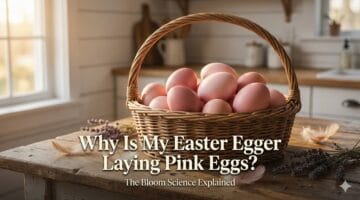
Easter Eggers are often crossed with brown egg layers (like Rhode Island Reds). When you mix a blue egg shell (oocyanin) with a brown coating (porphyrin), you get green or olive eggs.
My flock observation: My Easter Eggers are like a box of chocolates. One lays a sage green egg, another lays a rose-pink egg, and one lays a light tan egg. My Ameraucanas? Identical sky-blue eggs every single day.
Which Chicken Lays the Bluest Egg?
If you want the bluest egg possible, a true Ameraucana or a Cream Legbar is your best bet. The oocyanin factor is strongest in purebreds bred specifically for egg color.
Pretty eggs are great, but as a backyard keeper, you probably want to know how many of them you will actually get each year.
Ameraucana vs Easter Egger Egg Production: Annual Output Compared
When it comes to filling your egg carton, who wins? When analyzing Ameraucana vs Easter Egger laying rates, the hybrid often takes the lead.
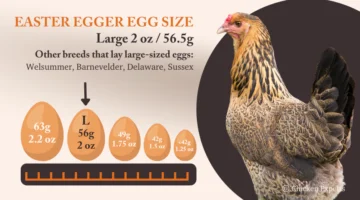
- Easter Eggers: Generally lay 200–280 eggs per year. (Note: This is a flock observation and hatchery estimate, as production varies wildly by mix. Cackle Hatchery estimates up to 280, while my own flock averages around 260).
- Ameraucanas: Generally lay 150–200 eggs per year (approx. 3–4 eggs per week). As purebreds, they are less prolific than production hybrids, which often benefit from hybrid vigor (increased health and production qualities seen in mixed-breed offspring). Meyer Hatchery notes that 3-4 eggs/week is standard for the breed. If your numbers drop suddenly, investigate why chickens stop laying.
The Broodiness Factor (Maternal Instinct)
Egg production numbers only tell you what happens when the hen is actually laying. Broodiness (the desire to sit on eggs to hatch them) stops production cold.
- Ameraucanas: Have a moderate tendency to go broody. If you want to hatch your own chicks, they make attentive mothers. If you just want breakfast, you will spend time breaking them of this habit (learn how to break a broody hen here).
- Easter Eggers: Generally have a low-to-moderate broody drive. Because hatcheries select for egg production, the strong maternal instinct has often been bred out of commercial Easter Egger lines.
If you want high production from Ameraucanas, buy from a breeder who explicitly focuses on “utility” or “laying” lines rather than just “exhibition” lines. Ask the breeder for their flock’s average annual lay rate before you put down a deposit.
Production is important, but if you want to eat the birds eventually, you need to know about the meat.
Ameraucana vs Easter Egger: Dual-Purpose Meat Quality
Are these birds just for eggs, or can they go to the freezer camp?
- Ameraucana Meat: They are decent dual-purpose birds. Hens reach about 5.5 lbs and roosters 6.5 lbs. The meat is flavorful and fine-grained, typical of heritage breeds. However, be aware that the slate-blue legs and white skin can sometimes result in a darker appearance on the carcass, which some picky eaters dislike.
- Easter Egger Meat: This is a gamble. If your Easter Egger is mixed with a heavy breed like a Marans or Orpington, it will be a good table bird. If it is mixed with a lightweight Leghorn, it will be scrawny with very little meat. You won’t know until the bird is grown.
Egg and meat counts are important, but if you have kids or close neighbors, personality and noise matter even more.
Ameraucana vs Easter Egger Temperament: Personality Comparison
Docility & Handling
I have found that Easter Eggers are often the friendliest birds in the backyard flock. They are curious, food-motivated, and great for kids.
Ameraucanas are docile but can be a bit more skittish or “flighty.” They prefer to forage and do their own thing. When introducing either breed to an existing flock, be proactive in managing pecking order issues to keep the peace.
Noise Levels for Urban Keepers
If you live in the city or suburbs, volume control is essential.
- Ameraucanas: Generally quiet. They are chatty and will “talk” to you, but they rarely shriek without cause. They are an excellent choice for stealth coop keeping.
- Easter Eggers: Highly variable. I have had some that are silent assassins and others that sing the “Egg Song” at top volume for 20 minutes every morning. It depends heavily on their genetic mix.
Foraging Behavior
Both breeds are excellent foragers. They are predator-savvy and love free-ranging. If you have a predator-heavy area, the hawk-like beak and alert nature of the Ameraucana serve them well.
Hand-feed your Ameraucanas mealworms or scrambled eggs from day one. Since they are naturally more skittish than the food-motivated Easter Eggers, early positive handling is the only way to ensure they become docile lap chickens.
We know about their personality, but can they handle the weather where you live?
Ameraucana vs Easter Egger: Climate Hardiness & Regional Suitability
Cold Weather Survivors
Both Ameraucanas and Easter Eggers are champions of the cold. Why? It’s all about the comb.
- The Pea Comb Advantage: Large single combs (like on a Leghorn) are prone to frostbite. The small, tight pea comb on both Ameraucanas and Easter Eggers sits close to the head, making it naturally resistant to freezing temperatures.
- Muffs & Beards: Those cute fluffy cheeks aren’t just for looks; they provide a bit of extra insulation against wind chill.
My flock observation: In -10°F winters, my Ameraucanas are often the last ones to show signs of cold stress compared to my large-combed Rhode Island Reds.
Heat Tolerance & Summer Care
While they thrive in winter, they handle heat reasonably well, provided they have shade.
- Heat Dissipation: Chickens release heat through their combs and wattles. Because Ameraucanas and Easter Eggers have small combs and wattles (plus beards), they can’t dissipate heat as efficiently as large-combed breeds.
- Regional Advice: If you live in a scorching climate (like Arizona or Texas), you will need to be diligent about providing deep shade, cool water, and maybe even a mister during heat waves.
Actionable Advice: In extreme cold, you rarely need to worry about frostbite on these breeds. In extreme heat, add ice blocks to their water and ensure their coop has cross-ventilation to compensate for their heavy facial feathering.
Staying healthy isn’t just about weather; you also need to know what diseases to watch for and how long they will be with you.
Health & Biosecurity: Disease Resistance & Common Issues
Both breeds are generally robust, but veterinary experts often point out specific management needs for bearded breeds.
Lifespan & Longevity
How long can you expect these birds to be part of your family?
- Ameraucana: Typically 7–8 years. As heritage birds, they aren’t “burned out” by extreme egg production as quickly as commercial hybrids.
- Easter Egger: Typically 5–8 years. While “hybrid vigor” makes them hardy, high-production Easter Eggers (those laying near 300 eggs/year) may experience reproductive issues or shorter lifespans than moderate layers.
Cross Beak (Scissor Beak) Concerns
This is the most common deformity in both Ameraucanas and Easter Eggers.
- What it is: The top and bottom beak don’t align, making eating difficult or impossible.
- The Cause: It is genetically linked to the skull structure that supports muffs and beards.
- Comparison: High-quality Ameraucana breeders actively breed against this. Hatchery Easter Eggers may see higher rates since mass production doesn’t allow for such strict culling.
- Action Step: Check chick beaks carefully at purchase. A slight misalignment at hatching often worsens significantly as they grow.
Parasite Control for Bearded Birds
Those fluffy muffs and beards are cute, but they are also perfect hiding spots for lice and mites.
- Action Step: When doing your monthly health checks, part the facial feathers to check for egg clusters near the skin. Standard dusting powder should be applied carefully around the neck and face if an infestation is found.
General Hardiness & Biosecurity Protocols
- Hybrid Vigor: Easter Eggers often benefit from heterosis (hybrid vigor), potentially offering slightly higher resistance to common flock ailments compared to tightly line-bred Ameraucanas.
- Egg Shell Quality: While genetics determine color, diet determines strength. If you see thin shells, consider oyster shell supplementation.
- Marek’s Disease: Always request Marek’s vaccination for purebred Ameraucana chicks, as some lines can be susceptible.
- Biosecurity Rule: If buying Ameraucanas from a private breeder to add to your hatchery Easter Eggers, veterinary best practices recommend quarantining the new birds for 30 days. This prevents introducing respiratory diseases like Mycoplasma to your established flock.
You want to keep your flock healthy, but first, you have to make sure you are allowed to keep them at all.
Legal Check: Zoning & Ordinances
Before you bring home that box of peeping chicks, there is one boring but critical step: checking the law.
- Municipal Codes Vary: Rules change from town to town. For example, some Connecticut towns allow hens on small lots but strictly ban roosters, while rural areas might have no restrictions.
- Rooster Restrictions: Ameraucanas and Easter Eggers need a rooster to reproduce, but many suburban zoning laws prohibit male birds due to noise ordinances. If you are in the suburbs, stick to pullets (females).
- Setback Requirements: Check how far your coop must be from property lines. You don’t want to build a beautiful coop only to be fined and forced to move it.
- Action Step: Go to Google and search “Your Town chicken ordinance” or call your local zoning office. Don’t rely on what your neighbor does; get the facts from the code.
You know the personality, the egg color, the hardiness, and the laws, but does the price tag justify the difference?
Ameraucana vs Easter Egger Price: What You’ll Actually Pay

Hatchery “Americana” Pricing vs APA-Certified Breeder Pricing
This is where the wallet takes a hit.
- Easter Egger (“Americana”): $1.50 – $5.00 per chick (2026 Hatchery Pricing). Prices vary significantly by sex. Straight-run chicks (unsexed) often start around $1.50–$2.00, while guaranteed female pullets typically range from $4.00 to $5.00.
- True Ameraucana: $15.00 – $30.00+ per chick. You typically have to order these from a private breeder or a specific heritage hatchery line.
Is the Price Difference Worth It?
If you want a guaranteed blue egg and a bird that matches the breed standard, yes. If you just want a colorful egg basket and a friendly pet, save your money and get the Easter Egger.
Don’t just look at the initial chick price; consider the resale value. You can often sell hatching eggs from purebred Ameraucanas for $3–$5 each to local keepers, whereas Easter Egger eggs are generally only sold for eating at a much lower price. Be sure to calculate your total first-year chicken keeping costs before diving in.
If you are decided on the real deal, you need to know exactly where to look.
How to Find True Ameraucanas (And Avoid Scams)
Finding a true Ameraucana takes more work than a trip to the local feed store. Here is my personal roadmap for sourcing genuine stock.
1. The Gold Standard: The Ameraucana Breeders Club (ABC)
The safest way to buy is through the Ameraucana Breeders Club (http://ameraucana.org). They maintain a breeders directory of members who are dedicated to the APA Standard of Perfection.
- Action Step: Visit the ABC website and look for their “Breeders Directory.” Search by state to find someone local to save on shipping stress.
- Tip: Good breeders often have waiting lists. Contact them in late winter (January/February) to reserve spring chicks. Deciding between chicks vs adult hens for beginners is also a key decision at this stage.
2. The Right Questions to Ask a Seller
If you find a breeder on Facebook or Craigslist, use these three questions to vet them immediately. If they hesitate, walk away.
- “Do you breed to the APA Standard of Perfection?” (Answer should be an enthusiastic “Yes.”)
- “What specific color varieties do you have?” (They should name specific recognized colors like “Blue Wheaten” or “Black.” If they say “all kinds” or “mixed,” they are selling Easter Eggers.)
- “Can I see photos of the parent flock?” (Look for the physical markers we discussed: slate legs, pea combs, and specific plumage patterns.)
Real World Benefits: Which One Fits Your Life?
Instead of generic advice, use this actionable matrix to decide which bird serves your specific flock goals.
Benefits of the Ameraucana (Why Pay More?)
- The Profit Factor: This is the biggest differentiator. You can sell hatching eggs from APA-standard Ameraucanas for $3–$5 per egg or chicks for $15+. There is almost zero resale market for Easter Egger hatching eggs beyond eating price ($0.50/egg).
- The Show Circuit: If you or your kids want to participate in 4-H or county fairs, you must have a recognized breed. Ameraucanas can compete for “Best in Show”; Easter Eggers are often relegated to “mixed barnyard” classes if allowed at all.
- Predictability: You know exactly what you are getting. If you order a Blue Ameraucana, it will be blue. If you order an Easter Egger, it could be white, brown, or spotted.
Benefits of the Easter Egger (Why Save Money?)
- The Breakfast Winner: If your only goal is food, the Easter Egger wins. Thanks to hybrid vigor, they often lay 50–80 more eggs per year than purebred Ameraucanas.
- The “Lap Chicken”: Easter Eggers are generally bred for backyard personality, not feather perfection. In my experience, they are consistently friendlier and more willing to be handled by children than the more independent Ameraucana.
- Wallet Friendly: You can buy 4 Easter Eggers for the price of 1 Ameraucana. If you live in an area with high predator pressure (foxes, hawks), losing a $5 bird is financially easier to swallow than losing a $25 prize hen.
Now that you know where to find them and which one fits your goals, let’s look at the three main birds people get confused side-by-side to ensure you never get duped.
Ameraucana vs Araucana vs Easter Egger: The Complete Breakdown

Many people confuse these three. For a deep dive, check out our Araucana chicken breed guide. Here is the simple breakdown:
| Feature | Ameraucana | Araucana | Easter Egger |
|---|---|---|---|
| Origin | USA (APA Recognized) | Chile (APA Recognized) | Hybrid/Mix |
| Tail | Full Tail | Rumpless (No Tail) | Usually Full Tail |
| Face | Muffs & Beard | Ear Tufts (Skin tags) | Muffs & Beard (Usually) |
| Egg Color | Blue | Blue | Blue, Green, Pink, Brown |
| Lethal Gene? | No | Yes (Tufted gene – see explanation below) | No |
Why True Araucanas Are So Rare (The Lethal Gene Explained)
You might wonder why you can’t just buy an Araucana at the feed store. The answer lies in their genetics.
- The Tufted Gene: The gene that causes those unique ear tufts is lethal if a chick inherits two copies (one from each parent).
- The Math: In a breeding of two tufted parents, approximately 25% of the embryos will die in the shell because they received two copies of the gene. This high mortality rate makes them incredibly difficult and expensive to breed.
- The Buyer’s Reality: Because of this “lethal gene,” major hatcheries cannot mass-produce them profitably. If you see “Araucanas” for $5, they are 100% Easter Eggers. True Araucanas are the realm of dedicated preservationist breeders.
Print this chart and tape it to your brooder or coop door. As your chicks grow, check off the traits as they appear to confirm exactly what you are raising before you invest in expensive breeding stock.
Now that you have the broad comparison, let’s tackle the specific color questions that trick even experienced keepers.
Is a Blue Wheaten Ameraucana the Same as an Easter Egger?
No. A Blue Wheaten Ameraucana is a specific, recognized color variety of the purebred Ameraucana. It has specific plumage requirements. An Easter Egger might look similar, but unless it breeds true to that color and has slate legs, it’s a mix.
If you are still staring at your flock scratching your head, use this final diagnostic checklist to settle the debate once and for all.
What Kind of Chicken Do I Have? Diagnostic Identification Section
Still not sure? Use this checklist from my personal notes.
Easter Egger Chick Identification Tips
- Legs are yellow or green.
- Down feathers (the soft, fuzzy feathers on a chick) have random patterns not matching specific varieties.
- Sold as “Americana” or “Rainbow Layer.”
Ameraucana Identification Checklist
- Legs are slate blue/gray.
- Pea comb is present.
- Muffs and beard are visible (even on chicks).
- Plumage matches one of the 8 APA recognized colors.
Common Disqualifications (What Makes It NOT an Ameraucana)
According to the American Poultry Association breed standards, the following traits disqualify a bird from being an Ameraucana:
- Absence of muffs or beard.
- Any leg color other than slate/black.
- Tufts (indicates Araucana blood).
You might be wondering if you can breed your way to a purebred flock from what you currently have.
Can an Easter Egger Be a Purebred Chicken?
Technically, no, because “Easter Egger” is not a recognized breed with a written standard. However, the term “hybrid” can be slightly misleading.
- Landrace Genetics: Many Easter Eggers act more like a “landrace” (a locally adapted variety) than a simple F1 hybrid.
- Breeding True: While many are random mixes, some hatcheries (like Meyer Hatchery) have developed specific Easter Egger strains that do breed true for the blue egg gene and general appearance. This means if you breed a Meyer Easter Egger rooster to a Meyer Easter Egger hen, you will reliably get Easter Egger offspring, not a genetic throwback.
Is an Olive Egger an Ameraucana?
No. An Olive Egger is a specific type of Easter Egger. It is created by crossing a blue egg layer (like an Ameraucana) with a dark brown egg layer (like a Black Copper Marans). The result is a bird that lays olive-green eggs.
With the science settled, it is time to make the final call for your backyard setup.
Final Verdict: Which Breed Should You Choose?
So, what does this mean for your flock?
- Choose the Ameraucana if: You care about show standards, you want guaranteed blue eggs, and you are willing to pay more for consistent genetics.
- Choose the Easter Egger if: You want a friendly pet, you enjoy the “surprise” of different egg colors, and you want a budget-friendly, hardy bird.
In my coop, I keep both. I love the regal look of my Blue Ameraucanas, but my funny, green-egg-laying Easter Eggers are the ones that jump in my lap for treats.

Oladepo Babatunde is the founder of ChickenStarter.com. He is a backyard chicken keeper and educator who specializes in helping beginners raise healthy flocks, particularly in warm climates. His expertise comes from years of hands-on experience building coops, treating common chicken ailments, and solving flock management issues. His own happy hens are a testament to his methods, laying 25-30 eggs weekly.