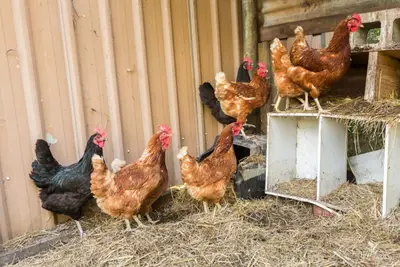
Dreaming of stepping outside to collect a basket of warm, fresh eggs? It is a rewarding experience, but the first question on everyone’s mind is: what is the real cost to get started?
For a small backyard flock of 4-6 chickens, you can expect your total first-year cost to be between $700 and $1,900 USD. Research from AZ Chickens’ startup cost calculator indicates an average first-year total of $1,115 for a typical beginner flock, with ongoing costs averaging $805 annually in years 2-8.
But here is the honest truth you will not find on most chicken blogs: raising backyard chickens will not save you money on eggs. The same research estimates a cost of $1.98 per egg when you factor in all expenses over five years. At current grocery store prices of roughly 20-40 cents per egg, the math does not work in your favor. The real value lies elsewhere, and I will explain exactly where.
Last updated: January 2026. Prices vary by region, coop choice, and feed quality.
Quick Cost Snapshot (4-6 Hens)
| Setup Type | First-Year Total | Monthly Ongoing |
|---|---|---|
| Budget/DIY | $700-900 | $35-50 |
| Pre-built coop | $900-1,200 | $45-65 |
| Premium setup | $1,500-2,000+ | $55-80 |
The 2026 Backyard Chicken Reality
The backyard chicken movement continues its explosive growth. According to All About Feed, the US backyard chicken feed market is predicted to reach approximately $400 million by 2026, with 82% of US backyard chicken keepers actively purchasing specialized feed products.
This growth is driven by more than economics. People want to know where their food comes from, they want fresh eggs with bright orange yolks, and they want the simple satisfaction of caring for their own flock. If your only motivation is saving money, I will be honest: you should probably just buy eggs. But if you value food security, sustainability, and the daily reward of collecting warm eggs from your own hens, keep reading.
For a deeper dive into the economics, see my complete analysis on whether raising backyard chickens is cheaper than buying eggs.
The First Step: Check Your Local Laws
Before you buy a single chick or piece of lumber, the most crucial step is checking your local city or county ordinances. Many municipalities limit the number of birds allowed, prohibit roosters entirely, and require specific setback distances for coops. This simple check can prevent future fines and heartbreak.
I have compiled a comprehensive guide on chicken laws by state to help you get started. Your local government website or university agricultural extension office will have the most current regulations for your specific area.
Breaking Down Your Initial Investment: One-Time Startup Costs
According to From Scratch Farmstead, you should be able to get started with backyard chickens for around $500-$1,000. Your most significant cost will be the coop, while the remainder of the supplies are relatively basic.
The Chicken Coop: Your Biggest Upfront Expense
The coop is where most of your startup budget goes, and it is also where cutting corners can cost you dearly in the long run.
According to From Scratch Farmstead, coop costs range dramatically:
| Option | Cost Range | Best For |
|---|---|---|
| DIY with pallets/reclaimed wood | $100-300 | Handy keepers with time |
| Basic pre-built kit | $500-1,000 | Beginners wanting quick setup |
| Quality pre-made coop | $1,000-2,000 | Long-term investment |
| Premium/custom build | $2,000-4,000+ | Serious homesteaders |
AZ Chickens emphasizes that build quality matters: “Premium coops with heavy-duty wood hold up in weather, reduce maintenance, and feel tailored to your yard.” Choosing cheap, flimsy materials often means buying twice.
Sizing guide: Plan about 3-4 square feet of interior coop space per standard hen (more in hot climates to improve airflow) and 8-10 square feet per hen in the run. A solid floor helps deter drafts and rodents. For detailed guidance, see my complete guide on how big a chicken coop should be.
I have a guide on how to build a chicken coop for under $200 if you want to go the ultra-budget route, but be realistic about the time and skill required.
Predator-Proofing: The Hidden Cost That Saves Your Flock
AZ Chickens lists “predator-proofing, stronger latches, fencing, hardware cloth, covered runs” among the hidden costs to plan for.
Hardware cloth instead of chicken wire is essential because predators can chew through standard chicken wire in minutes. Budget $50-150 for proper predator-proofing materials. This small investment can save your entire flock from a single nighttime raccoon visit. For more strategies, check out my guide on predator-proofing 101.
The Flock: Choosing and Buying Your Chickens
According to The Frugal Chicken, chicken prices vary significantly based on age, breed, and source:
| Type | Cost | Notes |
|---|---|---|
| Day-old chicks (common breeds) | $2-5 each | Cheapest option, requires brooder setup |
| Day-old chicks (rare breeds) | $5-30 each | Easter Eggers, specialty varieties |
| Started pullets (4-16 weeks) | $15-25 each | Skips brooder phase |
| Laying hens (point-of-lay) | $10-100 each | Immediate eggs, price depends on breed |
| Rare/specialty breeds | $100-5,000+ | Ayam Cemani, show quality birds |
The Frugal Chicken notes that “it’s typically best to buy a started pullet in your local area instead of online” to avoid shipping costs and stress on the birds.
2026 Trend Alert: According to a YouTube analysis of chicken breed trends, “backyard chicken prices are about to explode in 2026” for certain breeds. Easter Eggers, Black Copper Marans, and Lavender Orpingtons are seeing surging demand, with hatching eggs commanding $30-100 per dozen for premium bloodlines. If you want common, productive breeds, prices remain stable. If you want Instagram-worthy flocks with rainbow egg baskets, expect to pay premium prices.
How many chickens should you start with? I recommend 4-6 hens for beginners. They are social animals that need companions, and this number provides enough eggs for a typical family without being overwhelming. For help deciding, see my guide on how many chickens you need for a family of 4.
Popular Chicken Breeds and Their Purpose
| Breed | Eggs/Year | Temperament | Best For |
|---|---|---|---|
| Rhode Island Red | 200-280 | Hardy, assertive | Reliable brown eggs |
| Buff Orpington | 150-200 | Gentle, docile | Families, dual-purpose |
| Leghorn | 250-300+ | Active, flighty | Maximum white egg production |
| Australorp | 250-300 | Calm, friendly | High production, cold climates |
| Easter Egger | 200-280 | Friendly, curious | Colorful eggs |
AZ Chickens notes that “many standard breeds lay roughly 180-220 eggs per hen per year in peak seasons, with production tapering after year two.” This decline is important for your long-term budget planning.
The Nursery: Setting Up a Brooder for Chicks
This step is only necessary if you are starting with day-old chicks rather than pullets or laying hens. Understanding the difference between starting with chicks vs. adult hens will help you decide which route makes sense for your situation.
| Item | Cost | Notes |
|---|---|---|
| Heat source (lamp or plate) | $25-75 | Heat plates are safer than lamps |
| Brooder container | $0-50 | Large plastic tub, stock tank, or cardboard box |
| Bedding (pine shavings) | $5-10 | Avoid cedar; it can cause respiratory issues |
| Chick feeder and waterer | $15-30 | Small versions for tiny beaks |
| Chick starter feed | $15-25 | High-protein (18-22%) formula |
| Brooder Total | $60-190 |
For detailed care instructions, see my guide on bringing chicks home: 15 must-haves.
Your Ongoing Expenses: The Monthly and Yearly Budget
After the initial setup, your focus shifts to recurring costs. This is where the real long-term budget lives.
Chicken Feed: Your #1 Recurring Cost
Feed will be your most significant ongoing expense, accounting for approximately 70% of your maintenance costs.
According to Mile Four’s feed calculator research, chickens eat the following amounts:
| Life Stage | Daily Consumption | Weekly Consumption |
|---|---|---|
| Chicks (0-8 weeks) | ~0.25 lbs (1/2-1 cup) | 1-1.5 lbs |
| Growers (8-20 weeks) | 0.25-0.5 lbs (1 cup) | 2-3 lbs |
| Layers (20+ weeks) | 0.25-0.5 lbs (1 cup) | 2-3 lbs |
From Scratch Farmstead provides real-world pricing from their local feed stores:
| Feed Type | Cost per 40lb Bag | Notes |
|---|---|---|
| Economy conventional (16% protein) | ~$14 | Budget option |
| Standard layer feed | $18-25 | Most common choice |
| Organic layer (18% protein) | $22-40 | Premium nutrition |
The Frugal Chicken breaks it down simply: “Regular feed typically costs about $30 per month for 5 chickens, non-GMO feed about $150 per month.” That is a significant difference, so choose based on your priorities and budget.
Greg Alder provides detailed personal tracking: his mature hens consume purchased feed at approximately $0.77 per bird per week, translating to about $40 per mature bird per year in feed costs alone.
For guidance on transitioning between feed types, see my guide on when to switch from starter to grower feed.
Monthly Cost Breakdown (5-6 Hens)
| Expense | Low Estimate | High Estimate |
|---|---|---|
| Feed | $25 | $60 |
| Bedding | $10 | $20 |
| Supplements (grit, oyster shell) | $3 | $8 |
| Health/misc | $2 | $10 |
| Monthly Total | $40 | $98 |
The Hen House Collection confirms this range, stating that “the maximum cost to raise chickens in your backyard will be about $69/month, for a flock of 5 chickens, kept for 5 years.” This includes birds, feed, bedding, a brand-new high-quality coop, and miscellaneous costs like medicine, pest control, feeders, and waterers.
From Scratch Farmstead provides a helpful per-bird estimate: “expect to pay between $3-$8 per chicken each month” depending on your feed choices and management style.
Hidden Costs to Plan For
AZ Chickens lists several often-overlooked expenses:
- Predator-proofing: Stronger latches, fencing, hardware cloth, covered runs
- Vet care and health: Occasional exams, wound care, parasite control
- Seasonal additions: Electrolytes in heat, extra bedding in winter, supplemental feed during molt
- Cooling aids (hot climates): Shade structures, airflow improvements
- Replacement equipment: Waterers freeze, feeders break, bedding gets used
Learn how to set up a chicken first-aid kit so you are prepared for minor health issues without expensive emergency vet visits.
The Big Picture: Is Raising Chickens Worth the Cost?
The Honest Math on Cost-Effectiveness
Let me give you the straight numbers that most chicken blogs gloss over.
AZ Chickens provides the most comprehensive analysis I have found:
| Metric | Value |
|---|---|
| Five-year cumulative investment | $7,140 |
| Average cost per egg (research estimate) | $1.98 |
| Typical store-bought egg cost | $0.20-0.50 |
At $1.98 per backyard egg versus roughly 25 cents for store-bought, you would need to value the non-monetary benefits highly to justify the investment purely on economics.
Greg Alder offers a more optimistic real-world calculation from his own flock: “Over the course of 2.5 years, the cost of the chicken is $95 and the earnings from eggs is $256. That is $161 in the black.” However, his analysis excludes coop costs (he used existing structures) and assumes consistent egg production, which tapers after year two.
Egg Production Math (So You Can Plan Accurately)
Here is how to calculate your expected egg yield:
- Productive hen at peak (year 1-2): 4-6 eggs per week
- 5 hens at peak: 20-30 eggs per week (roughly 2 dozen)
- After year 2: Production declines 10-20% annually
- Winter months: Production drops 30-50% due to shorter daylight
- During molt: Production may stop entirely for 2-8 weeks
AZ Chickens notes that “many standard breeds lay roughly 180-220 eggs per hen per year in peak seasons, with production tapering after year two.”
If you are wondering why your chickens stopped laying, I have a troubleshooting guide that covers the most common causes.
The Real Value of Backyard Chickens
AZ Chickens frames it perfectly: “the value isn’t just dollars—like choosing a luxury suit made from quality materials, the day-to-day experience and durability are the payoff.”
The value includes:
- Knowing exactly where your food comes from
- Fresh eggs with bright orange yolks (noticeably different from store-bought)
- Natural pest control (chickens eat ticks, grubs, and garden pests)
- Fertilizer for your garden (chicken manure is excellent compost material)
- Educational experience for children
- Stress relief and daily routine
- Food security and self-sufficiency
From Scratch Farmstead adds perspective from their operation: “The health returned to us in the most nutrient-dense eggs possible has always been worth the added cost for us.”
5 Smart Ways to Keep Chickens Cheaply
1. Build a DIY Coop with Reclaimed Materials
From Scratch Farmstead notes that “if you can find pallets, you can build [a coop] for the cost of nails.” Look for free materials on Facebook Marketplace and Craigslist.
2. Buy Feed Strategically
The Frugal Chicken shows that feed costs can range from $30/month (conventional) to $150/month (non-GMO) for the same flock size. Choose based on your priorities, and buy in bulk when possible.
3. Supplement with Kitchen Scraps and Foraging
Greg Alder feeds his flock “kitchen scraps and garden scraps” and lets them “roam to forage on weeds and worms and bugs,” reducing purchased feed consumption. See my guide on what chickens can eat from your kitchen.
4. Free-Range When Possible
Mile Four notes to “adjust portions if your flock free-ranges” since foraging significantly reduces feed consumption. Understand the chicken run vs. free range trade-offs before deciding.
5. Start with Common, Productive Breeds
The Frugal Chicken shows that baby chicks of common varieties like Rhode Island Red, Plymouth Rock, and Australorp cost just $2-5 each, while rare breeds can cost $30+ per chick. Unless you specifically want specialty breeds, stick with proven layers for the best value.
Summary Table: Total First-Year Cost (2026)
| Expense Category | Budget/DIY | Mid-Range | Premium |
|---|---|---|---|
| ONE-TIME COSTS | |||
| Coop | $200 | $600 | $1,500+ |
| Run/Fencing | $100 | $200 | $400 |
| Chickens (5-6 birds) | $15 | $75 | $150 |
| Brooder (if chicks) | $60 | $100 | $150 |
| Feeders/Waterers | $25 | $50 | $100 |
| Predator-proofing | $50 | $100 | $200 |
| Subtotal One-Time | $450 | $1,125 | $2,500 |
| FIRST-YEAR ONGOING | |||
| Feed (12 months) | $300 | $420 | $720 |
| Bedding (12 months) | $60 | $120 | $180 |
| Supplements | $25 | $50 | $75 |
| Health/Contingency | $25 | $50 | $100 |
| Subtotal Ongoing | $410 | $640 | $1,075 |
| TOTAL FIRST YEAR | $860 | $1,765 | $3,575 |
AZ Chickens research indicates an average of $1,115 for a typical first-year setup, which aligns with the mid-range estimate above.
Frequently Asked Questions
Are chickens high maintenance?
They require about 10-15 minutes of daily care (feeding, watering, egg collection) plus deeper coop cleaning once weekly. The Hen House Collection factors ongoing time into their cost analysis, noting that the commitment is manageable for most families.
How many eggs will 5 chickens lay per week?
At peak production (spring/fall, hens under 2 years old), expect 20-30 eggs weekly from 5 productive hens. AZ Chickens notes that “many standard breeds lay roughly 180-220 eggs per hen per year,” which averages to 3.5-4.2 eggs per hen per week when accounting for seasonal variation and molt.
What is the yearly cost after the first year?
AZ Chickens research indicates ongoing costs average $805 annually in years 2-8, primarily covering feed and bedding once the initial equipment investment is complete.
What is the monthly cost to raise chickens?
The Hen House Collection calculates a maximum of $69/month for 5 chickens when all costs are included. From Scratch Farmstead estimates $3-8 per chicken per month depending on feed choices and management.
Do I need a rooster to get eggs?
No. Hens lay eggs regardless of whether a rooster is present. A rooster is only necessary if you want fertilized eggs for hatching. For details, see do I need a rooster to get eggs.
How much space do chickens need?
AZ Chickens recommends “3-4 sq ft of interior coop space per standard hen (more in hot climates to improve airflow) and 8-10 sq ft per hen in the run.” See my complete guide on how much space chickens really need.
How long do chickens live and produce eggs?
Backyard chickens typically live 5-8 years, but AZ Chickens notes that “production tapers after year two.” For details, see how long do chickens live.
What are common health issues to watch for?
Common concerns include mites and lice, respiratory issues, and egg-binding. Know when to call the vet for serious situations.
The Final Verdict
The numbers are clear: you will not save money raising backyard chickens. AZ Chickens calculates an average cost of $1.98 per egg over five years, compared to roughly 25 cents at the grocery store.
But as AZ Chickens puts it: “the value isn’t just dollars—like choosing a luxury suit made from quality materials, the day-to-day experience and durability are the payoff.”
If you are prepared for the commitment and understand that the payoff is measured in fresh eggs, knowing where your food comes from, and the daily satisfaction of caring for your own flock rather than dollars saved, backyard chickens can be one of the most rewarding homesteading ventures you will ever start.
Ready to take the next step? Check out my guide on mistakes every first-time chicken keeper makes so you can avoid the most common pitfalls.

Oladepo Babatunde is the founder of ChickenStarter.com. He is a backyard chicken keeper and educator who specializes in helping beginners raise healthy flocks, particularly in warm climates. His expertise comes from years of hands-on experience building coops, treating common chicken ailments, and solving flock management issues. His own happy hens are a testament to his methods, laying 25-30 eggs weekly.