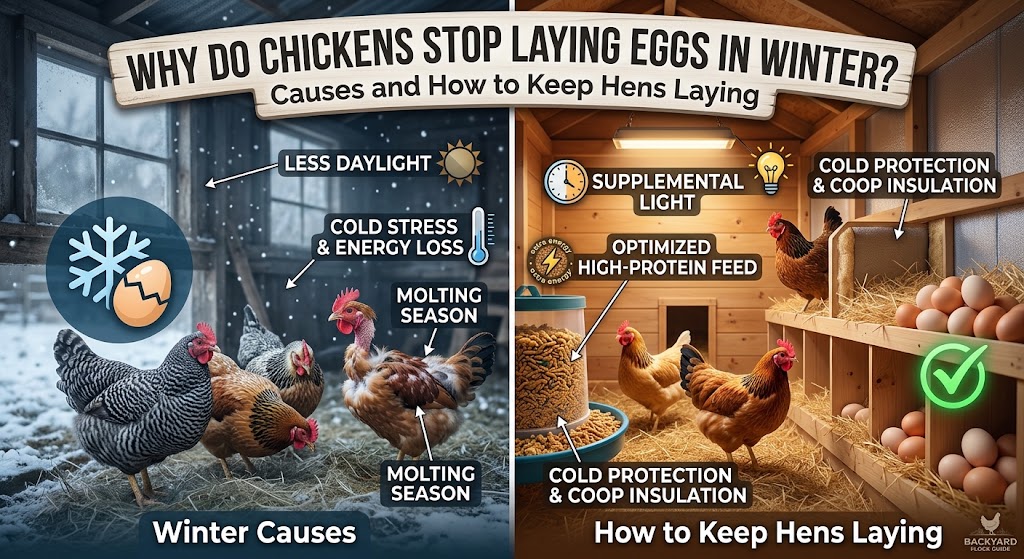
Finding fewer eggs in your nesting boxes during winter can be frustrating, especially when your backyard hens were laying consistently throughout spring and summer. If your chickens are not laying in winter, the first thing to investigate is the change in daylight rather than assuming that cold temperatures are the only problem.
Shorter days affect the reproductive cycle of laying hens and can reduce egg production or temporarily stop it. Seasonal molting, inadequate nutrition, frozen drinking water, age, stress and health problems can also contribute to a decline in winter egg production.
The good news is that there are practical ways to support healthy laying hens during colder months. Maintaining a balanced layer ration, providing uninterrupted access to clean water, managing coop conditions and considering supplemental lighting can help maintain production when the hens’ natural laying cycle allows it.
However, not every hen needs to lay eggs throughout the year. Allowing a natural seasonal decline is also a reasonable choice for backyard chicken owners.
Key Takeaways
- Shorter daylight hours are one of the main reasons hens reduce egg production during winter.
- Cold temperatures alone do not explain every seasonal decline in egg production.
- Molting can temporarily reduce or stop laying while hens replace their feathers.
- Inadequate feed intake and frozen drinking water can interfere with normal egg production.
- Supplemental lighting can support winter laying, but the programme must provide a consistent daily dark period.
- Age, breed, broodiness, stress, parasites and disease can also affect production.
- Check for hidden nests and egg losses before assuming that your hens have stopped laying.
- Healthy hens can experience a natural seasonal break without needing to be forced into continuous production.
Why Do Chickens Stop Laying Eggs in Winter?
The main seasonal reason chickens stop laying eggs in winter is reduced daylight.
The amount of light a hen receives during a 24-hour period is called the photoperiod. Changes in photoperiod influence the reproductive hormones responsible for regulating egg production.
As autumn progresses and natural daylight decreases, reproductive activity can decline. Some hens continue laying at a reduced rate, while others temporarily stop producing eggs.
Cold weather can create additional challenges. Chickens may need more energy to maintain their body temperature, drinking water can freeze, and damp or poorly ventilated housing can affect their health.
However, reduced daylight and cold temperatures should not be treated as the same thing. A healthy, well-fed hen may continue laying in cold weather if she receives sufficient daylight and her other management needs are met.
The response also varies according to breed, age, previous laying history, nutrition and individual health.
6 Reasons Your Chickens Are Not Laying Eggs in Winter
1. Shorter Daylight Hours
Reduced daylight is one of the most important factors affecting winter egg production.
A laying hen’s reproductive system responds to changes in light exposure. As daylight becomes shorter, hormonal stimulation associated with reproduction decreases, and egg production may decline.
For example, a backyard flock that produces eggs consistently during summer may experience fewer eggs as natural daylight decreases during autumn and winter.
This does not automatically mean that the hens are sick or that their feed is inadequate. It may simply be a seasonal response.
Poultry extension publications commonly discuss approximately 14–16 hours of total daily light for maintaining higher egg production in mature laying hens. The precise recommendation depends on the lighting programme and management system.
What chicken owners should do:
- Monitor natural daylight exposure.
- Decide whether to allow a natural seasonal reduction or use supplemental lighting.
- If using artificial lighting, maintain a consistent schedule.
- Avoid sudden increases or decreases in light exposure.
- Provide a daily dark period for normal rest.
The University of Arizona Cooperative Extension’s January 2026 publication, Lighting Schedules for Arizona Backyard Laying Flocks, provides additional guidance on photoperiod management for small flocks.
2. Seasonal Molting
Molting is the natural process through which chickens replace old feathers with new ones.
Adult hens commonly experience a seasonal molt, although its timing and duration vary with age, breed, nutrition, management and environmental conditions.
During this process, egg production often decreases or temporarily stops. The hen is replacing feathers, and new feather growth requires adequate nutritional support.
Common signs of molting include:
- Feathers accumulating around the coop.
- Missing or thinning feathers.
- New feather growth appearing as pin feathers.
- Reduced egg production.
- Changes in feeding behaviour.
Not every hen molts at the same time or follows the same pattern. Some experience a gradual molt, while others lose and replace more feathers over a shorter period.
How to support molting hens:
Provide a complete, balanced poultry ration appropriate for the birds’ production stage. Maintain access to clean drinking water and avoid excessive treats that dilute the nutritional value of their main feed.
Do not assume that feather loss is always molting. Parasites, feather pecking, injuries and other health problems can also cause feather damage.
If feather loss is accompanied by skin irritation, visible parasites, wounds or unusual behaviour, investigate the cause and consult a poultry veterinarian when necessary.
3. Inadequate Nutrition and Feed Intake
Nutrition plays an important role in maintaining egg production throughout the year.
During colder weather, feed consumption may change as hens adjust to their environment and energy requirements. If birds do not receive enough nutritionally balanced feed, their health and laying performance can suffer.
A complete layer ration should provide the energy, protein, essential amino acids, vitamins and minerals required by mature laying hens.
Calcium is particularly important because it is needed for eggshell formation.
One common feeding mistake is giving chickens excessive quantities of scratch grains, corn or table scraps because owners believe they need additional food to stay warm.
Although these foods can be offered as limited treats, they should not replace a complete layer ration.
Practical winter feeding recommendations:
- Maintain access to a complete layer feed suitable for actively laying hens.
- Check feeders regularly to ensure they are not empty.
- Store feed in a dry, secure container.
- Discard feed that has become wet, spoiled or moldy.
- Avoid excessive treats that dilute the balanced ration.
- Provide an appropriate separate calcium source, such as oyster shell, when needed by laying hens.
If your hens are molting, pay particular attention to maintaining adequate nutrition for normal feather replacement.
For more information about feeding different poultry production groups, see our guide to how often layers and broilers should be fed.
4. Frozen Water and Inadequate Drinking Water
Water is essential for digestion, nutrient absorption, body temperature regulation and normal egg formation.
During winter, drinking water can freeze, especially overnight and during prolonged periods of below-freezing temperatures.
When hens cannot drink normally, their feed intake and general condition can also be affected. A lack of water can contribute to reduced egg production.
The University of Florida’s guidance on factors affecting backyard egg production identifies inadequate water intake as an important management problem.
How to maintain drinking water during winter:
- Inspect drinkers regularly, particularly during freezing weather.
- Replace frozen water with fresh, clean drinking water.
- Consider a poultry-rated heated waterer where necessary.
- Follow the manufacturer’s electrical and installation safety instructions.
- Position water containers where they are accessible and less likely to become contaminated.
- Check automatic watering systems to ensure they are working properly.
Do not assume that snow is an adequate substitute for drinking water.
Your flock should have reliable access to clean water even when outdoor conditions are freezing.
5. Age and Breed Differences
Not all chickens have the same egg-producing capacity.
Genetics, age, breed and individual laying history influence how many eggs a hen produces throughout the year.
Commercial egg-producing hybrids are generally selected for high egg output, while heritage and dual-purpose breeds can have different production patterns.
Age is another important consideration. Many hens produce their highest egg numbers during their earlier laying years, with production generally declining as they get older.
For example, the University of Florida IFAS Extension explains that laying performance changes over the production cycle and that age can contribute to declining productivity.
However, individual hens vary considerably. Some older birds continue laying regularly, while others experience a more noticeable decline.
What chicken owners should consider:
- Record the age of each hen.
- Identify the breeds in your flock.
- Compare current production with the flock’s previous laying records.
- Consider whether a decline is seasonal or has continued throughout the year.
- Avoid comparing heritage breeds directly with high-production commercial hybrids.
If you are choosing chickens based on egg production, our guide to chicken breeds that lay the most eggs per year provides a useful starting point.
6. Stress, Broodiness, Parasites and Health Problems
A reduction in egg production is not always caused by winter daylight.
Stress, broodiness, external parasites, internal health problems and environmental changes can also affect laying activity.
For example, a broody hen may stop laying while she remains focused on sitting on eggs and maintaining a nesting site.
Other possible causes include:
- Overcrowding.
- Predator disturbances.
- Sudden changes in flock composition.
- Poor housing conditions.
- External parasites such as mites and lice.
- Inadequate nutrition.
- Infectious diseases.
Watch for changes in appetite, activity, weight, droppings, breathing and general behaviour.
If an individual hen stops laying and also appears unwell, do not automatically blame winter. Contact a poultry veterinarian for an appropriate assessment.
How to Tell Whether Your Hens Have Actually Stopped Laying
Before changing your feeding programme or installing artificial lighting, establish whether your hens are genuinely producing fewer eggs.
Sometimes the problem is not reduced production but missing eggs.
Hens can lay in hidden nests, eggs may be consumed by flock members, and predators can remove eggs from accessible nesting areas.
Use the following table to investigate the situation.
| What you notice | Possible explanation | What to investigate |
|---|---|---|
| Most hens lay fewer eggs as daylight decreases | Seasonal photoperiod change | Natural daylight and lighting schedule |
| Feather loss occurs alongside reduced laying | Molting | Feather condition and nutritional intake |
| One hen stops laying but behaves normally | Individual laying variation or broodiness | Nesting behaviour and laying history |
| Eggs disappear from nesting boxes | Hidden nests, egg eating or predators | Coop access and alternative nesting locations |
| Feeders are frequently empty | Inadequate feed access | Feed supply and competition |
| Drinkers freeze overnight | Interrupted water access | Water availability and equipment |
| One hen stops laying and appears weak | Possible health problem | Veterinary assessment |
These observations are clues, not definitive diagnoses.
If you suspect disease, parasites or reproductive problems, seek appropriate veterinary guidance instead of relying on egg production alone to identify the cause.
How to Keep Hens Laying in Winter
If your goal is to maintain more consistent winter egg production, focus on proper flock management.
There is no single food, supplement or piece of equipment that guarantees continuous laying. The following practices can help support healthy hens and reduce avoidable production problems.
1. Consider Supplemental Lighting
Supplemental lighting is an established management method for supporting winter egg production.
When natural daylight becomes shorter, artificial lighting can extend the total daily photoperiod.
University extension recommendations commonly discuss approximately 14–16 hours of total daily light for mature laying hens.
For example:
- University of Minnesota Extension discusses approximately 14 hours of daily light.
- Penn State Extension recommends a 16-hour photoperiod for its winter production programme.
- University of Arizona Cooperative Extension also discusses a 14–16-hour lighting target.
These recommendations reflect different management programmes rather than a universal requirement that every backyard flock must follow.
How to manage supplemental lighting:
- Use a reliable automatic timer.
- Introduce changes gradually.
- Provide additional light in the early morning where practical.
- Maintain a consistent daily schedule.
- Preserve a daily dark period.
- Avoid leaving lights on continuously.
- Position lights so that the coop is illuminated appropriately without creating excessively bright areas.
Penn State Extension recommends changing the photoperiod gradually, by no more than one hour per week in its suggested programme. The University of Arizona’s 2026 guidance describes smaller weekly adjustments of 15–30 minutes.
Follow a consistent programme rather than combining different schedules arbitrarily.
Choose suitable lighting equipment
A suitable LED or other poultry-appropriate light can be used for supplemental lighting. Penn State discusses warm-coloured bulbs and the importance of avoiding excessive brightness.
Install electrical equipment securely, protect it from moisture and dust, and keep wiring away from birds.
Do not use a heat lamp simply to provide extra light. Heat lamps introduce fire risks and are not a substitute for a properly designed lighting system.
Supplemental lighting is optional. If you prefer to allow your hens to experience a natural seasonal decline, you do not have to install artificial lighting.
2. Maintain a Balanced Layer Feed
A complete layer ration should remain the foundation of the winter diet for actively laying hens.
Ensure that feeders are accessible and regularly replenished.
Avoid excessive scratch grains, corn and table scraps because these foods can dilute the nutritional balance of the main ration.
Laying hens also require adequate calcium for eggshell formation. A separate source of calcium, such as oyster shell, can be offered where appropriate.
Monitor body condition and feed consumption rather than assuming that every hen needs the same quantity.
If a hen is molting, make sure she continues receiving appropriate nutrition for feather replacement.
3. Prevent Drinking Water From Freezing
Check drinkers regularly, particularly during freezing weather.
If ordinary water containers freeze, consider a suitable poultry waterer designed for cold conditions.
A heated waterer or heated base can help maintain access to liquid water, provided it is installed and used according to its safety instructions.
Do not allow frozen drinkers to remain unnoticed throughout the day.
Reliable access to fresh drinking water is essential whether or not your hens are laying.
4. Maintain Good Coop Ventilation
A winter chicken coop should protect birds from wind and precipitation while allowing moisture and stale air to escape.
Closing every ventilation opening to retain warmth can create excessive humidity.
Moisture from breathing and droppings can accumulate inside poorly ventilated housing. This can contribute to respiratory problems and increase the risk of frostbite in cold conditions.
Good winter coop management includes:
- Providing ventilation above roosting height.
- Keeping bedding dry.
- Removing wet or heavily soiled litter.
- Preventing direct cold drafts at roosting level.
- Protecting birds from wind and precipitation.
- Inspecting the coop regularly for damage and predator access.
An airtight coop is not a suitable solution to cold weather.
For more breed-specific cold-weather considerations, see our Wyandotte chicken winter care guide for Minnesota.
5. Keep Nesting Boxes Clean and Accessible
Hens need accessible nesting areas where they can lay eggs without unnecessary disturbance.
Inspect nesting boxes regularly for:
- Wet bedding.
- Accumulated manure.
- Damaged nesting materials.
- Pest activity.
- Broken or dirty eggs.
Replace bedding when necessary and ensure that nesting areas remain accessible.
If eggs appear to be missing, inspect alternative nesting locations and check for evidence of egg eating or predator activity.
6. Maintain a Consistent Flock Routine
Chickens benefit from a predictable environment.
Avoid unnecessary changes to feeding times, housing arrangements and flock composition.
Inspect your birds regularly and pay attention to changes in appetite, behaviour, feather condition and egg production.
A consistent routine helps you identify problems early and makes it easier to understand whether a reduction in egg production is seasonal or related to management.
How Much Daylight Do Chickens Need to Lay Eggs?
There is no single lighting schedule that every backyard flock must follow, but approximately 14–16 hours of total daily light is commonly discussed in poultry extension guidance for maintaining higher egg production.
The reason is that photoperiod influences reproductive activity.
When natural daylight decreases, supplemental lighting can extend the total amount of light hens receive.
| Lighting approach | What it means |
|---|---|
| Natural daylight only | Allows seasonal changes in egg production |
| Approximately 14 hours | Used in some extension lighting programmes |
| Approximately 16 hours | Used in other programmes to support production |
| Continuous lighting | Not recommended |
| Gradual adjustment | Helps avoid abrupt changes to the lighting schedule |
The University of Arizona’s 2026 publication and Penn State Extension provide useful practical information about timers, bulb selection and gradual changes.
Remember that more light does not mean unlimited increases in egg production. A longer photoperiod should not be treated as a way to force hens to lay continuously.
How to Monitor Winter Egg Production in Your Flock
One of the most useful things backyard chicken owners can do is maintain simple egg-production records.
Instead of relying on memory, record the number of hens and eggs collected each day.
You can calculate the flock laying rate using this formula:
Laying rate (%) = (Number of eggs collected ÷ Number of laying hens) × 100
For example, imagine a flock of 10 hens produces 8 eggs in one day.
8 ÷ 10 × 100 = 80%.
If the same flock produces 5 eggs during winter:
5 ÷ 10 × 100 = 50%.
The figures below are illustrative, not research measurements.
| Measurement | Summer example | Winter example |
|---|---|---|
| Number of laying hens | 10 | 10 |
| Eggs collected daily | 8 | 5 |
| Daily laying rate | 80% | 50% |
This comparison helps identify changes in flock productivity.
For a more reliable picture, compare weekly averages rather than relying on a single day’s collection.
Also record:
- Changes in natural daylight.
- Supplemental lighting schedules.
- Feed changes.
- Molting observations.
- Water availability.
- Health or management problems.
These records can help you distinguish seasonal changes from other problems affecting your flock.
Winter Egg Collection and Storage
Cold weather affects more than the number of eggs hens produce. It can also affect eggs after they are laid.
Eggs left in freezing conditions may freeze, expand and develop cracked shells.
The University of Minnesota Extension recommends collecting eggs promptly during cold weather and inspecting shells when collecting them.
Practical egg collection recommendations:
- Check nesting boxes regularly.
- Collect eggs promptly during freezing weather.
- Inspect shells for cracks.
- Keep nesting materials clean and dry.
- Handle eggs carefully to prevent breakage.
- Follow appropriate local egg-cleaning, refrigeration and food-safety requirements.
The USDA Food Safety and Inspection Service explains that shell eggs that freeze accidentally and crack should be discarded. If an accidentally frozen egg remains uncracked, USDA guidance says to keep it frozen until needed and thaw it in the refrigerator.
Do not assume that an egg is safe simply because it looks normal. Follow appropriate food-safety and storage guidance for your country.
Winter Egg Production in Different Countries
Winter conditions vary considerably across the world.
The United States, Canada and the United Kingdom generally experience shorter natural daylight during the Northern Hemisphere winter. However, the extent of the change depends on latitude and local conditions.
Australia experiences winter during the middle of the calendar year, generally June through August. Its daylight patterns and temperatures vary considerably between regions.
For backyard chicken owners, the important consideration is not simply the calendar month but the actual daylight exposure and environmental conditions experienced by the flock.
United States
In northern states, shorter winter days can reduce natural egg production. Frozen water, snow and cold-weather housing management may also require attention.
Canada
Many Canadian regions experience substantial seasonal changes in daylight and temperature. Maintaining drinking water, dry bedding, ventilation and suitable housing is particularly important during prolonged cold periods.
United Kingdom
Shorter winter daylight can affect laying activity. Damp conditions also make ventilation, moisture control and dry bedding important parts of poultry management.
Australia
Because winter occurs during June, July and August, Australian chicken owners should consider their local daylight patterns rather than following Northern Hemisphere winter schedules. Conditions in tropical northern Australia can differ considerably from those in southern states.
Other regions
In tropical and subtropical climates, seasonal daylight changes may be less pronounced. Heat stress, humidity, rainfall, nutrition and disease management may have greater effects on egg production.
Always adapt poultry management recommendations to your local climate, veterinary advice and agricultural regulations.
Frequently Asked Questions
1. Is it normal for chickens to stop laying eggs in winter?
Yes. It is common for backyard hens to reduce or temporarily stop laying during winter. Shorter daylight hours are a major reason, although molting, age, nutrition, stress and other management factors can also contribute.
2. How can I keep my hens laying eggs in winter?
Maintain a complete layer ration, provide continuous access to clean water, keep nesting boxes accessible and manage the coop properly. If maintaining winter production is your goal, consider a carefully managed supplemental lighting programme.
3. How many hours of light do chickens need to lay eggs in winter?
Poultry extension programmes commonly discuss approximately 14–16 hours of total daily light for mature laying hens. Recommendations vary, and hens should receive a daily dark period. Follow a consistent programme rather than increasing light exposure excessively.
4. Does cold weather stop chickens from laying eggs?
Cold temperatures alone are not usually the main seasonal trigger. Reduced daylight is generally more important. However, cold stress, inadequate nutrition, frozen drinking water and poor housing conditions can contribute to reduced production.
5. Do chickens lay eggs without artificial light in winter?
Yes. Some hens continue laying under natural daylight, although production may decrease. Others temporarily stop until natural daylight increases again.
6. Why are my chickens eating normally but not laying eggs?
Normal appetite does not guarantee egg production. Reduced daylight, molting, age, broodiness, reproductive problems, stress and illness can all affect laying. Also check for hidden nests and missing eggs.
7. Do older chickens stop laying eggs in winter?
Older hens generally produce fewer eggs than they did during their earlier laying years, although individual differences are substantial. Seasonal daylight changes can further reduce production.
8. Will my chickens start laying again in spring?
Many healthy hens increase or resume laying as daylight increases and seasonal molting ends. However, recovery depends on age, breed, health, nutrition and individual reproductive cycles.
Final Thoughts
Chickens reducing or temporarily stopping egg production during winter is often a natural seasonal response rather than an indication that something is wrong with your flock.
Shorter daylight hours are a major influence, but molting, nutrition, water availability, age, stress and health can also affect the number of eggs your hens produce.
If you want to support winter egg production, concentrate on balanced feeding, reliable drinking water, appropriate coop ventilation, clean nesting areas and a carefully considered lighting programme.
Keep daily or weekly egg-production records so you can identify changes and investigate possible problems.
Most importantly, remember that healthy hens do not have to lay eggs continuously throughout the year. Allowing a natural seasonal break is also a responsible approach to backyard chicken management.
References and Further Reading
- University of Arizona Cooperative Extension – Lighting Schedules for Arizona Backyard Laying Flocks (January 2026).
- Penn State Extension – Artificial Lighting for Winter Egg Production.
- University of Minnesota Extension – Caring for Chickens in Cold Weather.
- University of Florida IFAS Extension – Factors Affecting Egg Production in Backyard Chicken Flocks.
- USDA Food Safety and Inspection Service – If Shell Eggs Freeze Accidentally, Are They Safe?.
- Penn State Extension – How Freezing Affects Egg Quality.

Oladepo Babatunde is the founder of ChickenStarter.com. He is a backyard chicken keeper and educator who specializes in helping beginners raise healthy flocks, particularly in warm climates. His expertise comes from years of hands-on experience building coops, treating common chicken ailments, and solving flock management issues. His own happy hens are a testament to his methods, laying 25-30 eggs weekly.