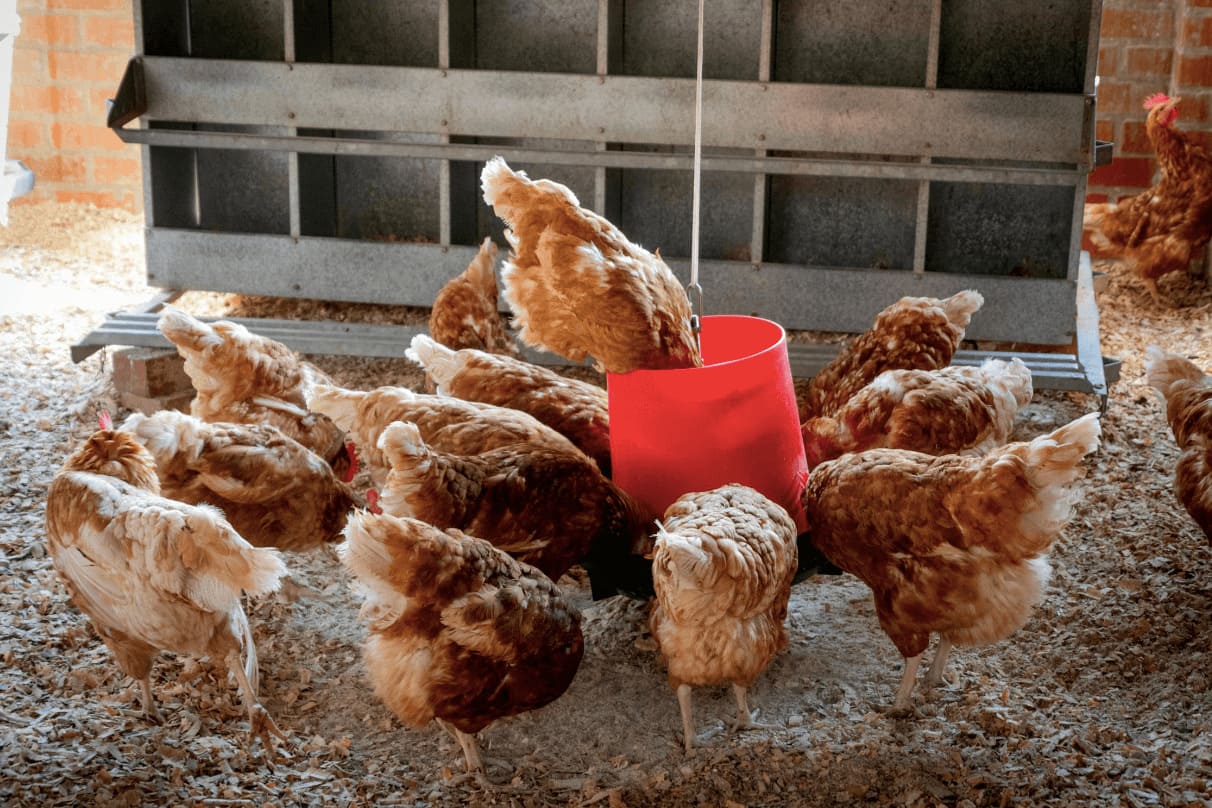
Whether you are raising heavy broilers for meat or nurturing hardy layers for eggs, one question causes more anxiety than any other: “Am I feeding them enough?”
Many new farmers treat chickens like dogs or cats, offering “breakfast” and “dinner.” However, chickens have entirely different metabolic engines. This guide is designed for backyard keepers and small-flock owners who want to make sure their chickens get the right amount of food and water at the right times.
Below, we break down the exact feeding schedules, the critical science of lighting, and the often-ignored water rules that can make or break your flock.
⚡ Quick Answers: The “Cheat Sheet”
If you are in a rush, here are the core rules of poultry nutrition:
- Broiler Feeding: Constant, free-choice access (24/7). Never let the feeder go empty.
- Layer Feeding: Constant access to complete feed. Restriction kills egg production.
- Broiler Lighting: continuous light for the first 3 days, then must have 4–8 hours of darkness daily for rest.
- Layer Lighting: Needs 14–16 hours of light, but never leave lights on all night. They need 8–10 hours of dark to reset.
- Water: The most critical nutrient. If they don’t drink, they won’t eat.
- Feed Volume: An average hen eats 0.25–0.33 lb (113–150g) per day.
📊 Interactive Tool: Estimate Your Costs
Before buying your next bag of grain, use our Chicken Feed Calculator & Cost Guide. It helps you estimate exact consumption rates based on flock size and local market prices, ensuring you never overbuy or run out of stock.
Fueling the Sprinters: How to Drive Massive Broiler Growth Without Waste
Broilers are the sprinters of the poultry world. Modern breeds like the Cobb 500 or Ross 308 are bred for massive growth in a short window. Because their metabolism is running at high speed, their fuel tank must never run dry.
Ad Libitum Feeding vs. Scheduled Meals
In modern poultry care, the “schedule” is simple: Do not have one. You should practice ad libitum feeding (free choice). This means feed is available 24 hours a day.
When you walk into your coop, the first thing you should check isn’t the birds, but the bottom of the feeder. If you can see the metal or plastic floor of the trough, you’ve waited too long. I’ve found that broilers are surprisingly sensitive to “empty feeder anxiety.” Even if they’ve only been out of food for 20 minutes, they will stampede the feeder when you refill it, leading to injuries or smaller birds being bullied away. Always top off the feeders when they are half-empty, rather than waiting for them to be finished.
Note for Chicks: While adult birds thrive on constant access, ensure day-old chicks can easily reach feed and water. Check feeders 4–6 times daily during the first week to ensure all chicks are eating and that no one is getting crowded out.
Best Automatic Chicken Feeders for Broilers
Investing in a high-quality automatic feeder can save you up to 20% on feed costs by preventing waste and rodent theft.
| Feeder Type | Top Recommendation | Best For | Key Feature |
|---|---|---|---|
| Premium Treadle | Grandpa’s Feeder | Rodent proofing | Galvanized steel; lasts 20+ years. |
| Budget Treadle | RentACoop Metallic | Large flocks | Thicker 20-gauge metal; adjustable trigger. |
| Gravity Port | Royal Rooster | Space saving | Wall-mounted; built-in rain cover. |
What Protein Percentage Do My Birds Need?
Nutrition timelines differ significantly between meat birds and egg-layers. Follow these industry-standard guides based on the Aviagen Ross 308 Management Handbook:
For Broilers (Meat Birds)
- Starter (Weeks 1–2): High Protein (~22-24%). Focus: Rapid organ and skeletal development.
- Grower (Weeks 3–5): Medium Protein (~20-22%). Focus: Muscle mass accumulation.
- Finisher (Week 6+): Lower Protein (~15-18%). Focus: Fat deposition and weight finish.
- Note for Roasters: If you are raising heavy roasters (birds kept for 12+ weeks), you must keep them on the lower-protein finisher diet for longer to prevent leg strain and heart failure caused by growing too large, too fast.
For Layers (Egg Birds)
- Starter (Weeks 1–6): High Protein (~20-22%). Focus: Consistent early growth.
- Grower/Developer (Weeks 7–16): Medium Protein (~17-19%). Focus: Building bone and internal capacity.
- Pre-Lay Transition (Weeks 17–19): Consider a specialized pre-lay diet with 2–2.5% calcium. This supports the development of medullary bone (calcium storage) before they switch to full layer feed.
- Layer Mash (Week 19+): Moderate Protein (~16-17%) + High Calcium.
Knowing when to switch from starter to grower feed is critical; doing it too early for layers can stunt their frame, while doing it too late for broilers can lead to health failures.
⚠️ Crucial Step: The 7-10 Day Transition Rule
Never switch feeds abruptly. A sudden change triggers digestive upset, diarrhea, and growth pauses. Transition gradually over 7–10 days:
- Days 1–3: 75% Old Feed + 25% New Feed
- Days 4–6: 50% Old Feed + 50% New Feed
- Days 7–9: 25% Old Feed + 75% New Feed
- Day 10: 100% New Feed
Managing the Marathon: Keeping Your Layers Productive and Healthy
If broilers are sprinters, layers are marathon runners. Breeds from Hy-Line International and ISA Brown need stamina for a production cycle that can last over 100 weeks.
Why Constant Access is Critical for Eggs
The biology of the egg is unforgiving. It takes a hen roughly 24 to 26 hours to build a single egg. If a hen wakes up hungry and finds an empty feeder, her body perceives “famine” and immediately shuts down the egg factory to conserve resources.
According to Penn State Extension research, a consistent supply of nutrients is vital because hens lack the ability to store significant amounts of protein for egg production; they rely almost entirely on what they consume each day.
If you find your egg production is “choppy”—getting five eggs one day and only two the next—check your feeder capacity. Stirring the feed or adding a fresh scoop in the late afternoon can stimulate that final “top-up” meal they need to fuel egg production overnight.
Daily Intake & The 4-Gram Calcium Rule
Expect each hen to eat 113g to 150g (0.25–0.33 lbs) per day.
- The 4-Gram Rule: A hen requires 4 grams of calcium every day for shell formation. Deficiency here is the #1 reason chickens lay eggs without shells.
- Supplements: For a deeper dive into shell health, see our Ultimate Guide to Calcium for Chickens.
Where to Buy Quality Layer Feed
Selecting the right feed impacts both your bird’s health and your operating costs.
| Feed Category | Top Brand | Best For | Highlights |
|---|---|---|---|
| Premium Organic | Scratch and Peck | Health-conscious | See our Best Organic Feeds Guide. |
| High Performance | Purina Layena | Peak production | Added Omega-3s and marigold extract. |
| Reliable Value | Nutrena NatureWise | Daily maintenance | Prebiotics/Probiotics for gut health. |
The Dark Secret: Why Your Flock Needs Sleep to Thrive
Lighting controls the hormones that trigger growth and egg-laying. For consistent results, automation is essential to maintain the correct “photoperiod.”
Top-Rated Poultry Lighting Equipment
| Product | Type | Best For | Why It Wins |
|---|---|---|---|
| AutoCoop LayLight2 | Dedicated LED+Timer | Winter egg laying | Plug-and-play; designed specifically for coops. |
| Chicken Condos Timer | Light-Sensing | Outdoor runs | Photoelectric; triggers at dusk/dawn automatically. |
| BN-LINK Digital | Programmable | Precision control | Battery backup ensures settings are saved during outages. |
Climate Mastery: Feeding for Nigeria, the UK, and Extreme Heat
Your flock’s needs vary significantly depending on your geographic location and climate.
🇳🇬 Nigeria-Specific Notes
During Harmattan season, the air is dry and dusty, increasing the risk of respiratory stress.
- Action: Increase the number of water stations and consider electrolyte supplementation.
- Resource: Read our full guide on How to Manage Poultry in Harmattan.
🇬🇧 UK-Specific Notes
British winters bring shortened daylight hours and “flockdowns” due to Avian Influenza.
- Action: Adjusted lighting programs should start in October.
- Resource: See our complete guide on Keeping Chickens in the UK.
☀️ Handling Extreme Heat
In any climate, managing nutrition during a heatwave is vital. Follow these tips on what to feed chickens during a heatwave to keep them safe.
The Money Pit: Common Feeding Blunders and How to Avoid Them
Even experienced farmers fall into these traps. Avoiding these mistakes will protect your profit margin and your birds’ health.
1. The “Treat” Trap and the 90/10 Rule
Kitchen scraps are delicious but low in nutrition. Before you toss in those leftovers, make sure you understand the difference between feed and scratch. Treats should never exceed 10% of their diet. I’ve seen flocks stop laying entirely because they were “too full” on bread and watermelon to eat their high-calcium layer pellets.
2. The “Wrist Test” for Water Temperature
Chickens have a very specific preference for cool water. If the water in their tank hits 30°C (86°F), their intake drops by half. I’ve seen broilers stop eating entirely simply because the waterer was sitting in direct sunlight. Keep your waterers in the deepest shade possible to keep the temperature down.
3. Ignoring Feeder Height and Spacing
If the lip of your feeder is too low, birds will “bill out” the feed, scratching it onto the floor where it mixes with manure. Keep the lip level with the birds’ backs. Furthermore, if you don’t have enough feeders, the “bullies” in the pecking order will keep smaller birds away. Ensure you have enough linear space so that 80% of the flock can eat at the same time.
4. High-Calcium Poisoning in Chicks
Never feed “Layer Feed” to chicks or broilers under 18 weeks. The high calcium content designed for eggshells is toxic to their developing kidneys. I have seen entire broods lost to “visceral gout” because the owner thought they were doing the chicks a favor by giving them “premium” layer feed too early.
5. Stale Feed and Mycotoxins
Feed has a shelf life. Over time, vitamins (especially A and E) oxidize and disappear. Even worse, if feed gets slightly damp in storage, it can grow invisible molds that produce mycotoxins. Always store feed in a cool, dry, rodent-proof bin and try to use it within 30 days of purchase.
People Also Ask (FAQ)
How many times a day should I feed my chickens?
While free-choice (constant access) is the gold standard, if you must feed on a schedule, you should feed them twice daily. Offer the first meal as early as possible in the morning and the second in the late afternoon. Ensure they have enough feed to last for at least 30–60 minutes of active eating.
Can chickens go overnight without food?
Yes. Chickens do not eat in the dark. Once they roost at night, their metabolism slows down, and they sleep until sunrise. As long as they have access to food immediately upon waking, going through the night without food is natural and healthy.
Can I feed broilers and layers together?
No. Broiler feed has too much protein for layers, and layer feed has too much calcium for broilers.
Why did my hens suddenly stop laying?
Aside from feed and water issues, your birds might be entering chicken molting season. During a molt, a hen redirects all her protein toward growing new feathers, which naturally pauses egg production.
What happens if chickens run out of water for a day?
Even 12 hours without water can stop egg production for two weeks. In broilers, it causes immediate dehydration, kidney damage, and a massive spike in mortality rates.
Final Thoughts
Successful poultry farming in 2025 is about efficiency. Using tools like Grandpa’s Feeders and HM Digital TDS meters removes the guesswork, ensuring your flock stays productive and your feed bill stays low.
Happy Farming!
Disclaimer: This guide provides general poultry husbandry information based on industry standards like NPIP. Always consult a veterinarian for flock health issues.

Oladepo Babatunde is the founder of ChickenStarter.com. He is a backyard chicken keeper and educator who specializes in helping beginners raise healthy flocks, particularly in warm climates. His expertise comes from years of hands-on experience building coops, treating common chicken ailments, and solving flock management issues. His own happy hens are a testament to his methods, laying 25-30 eggs weekly.