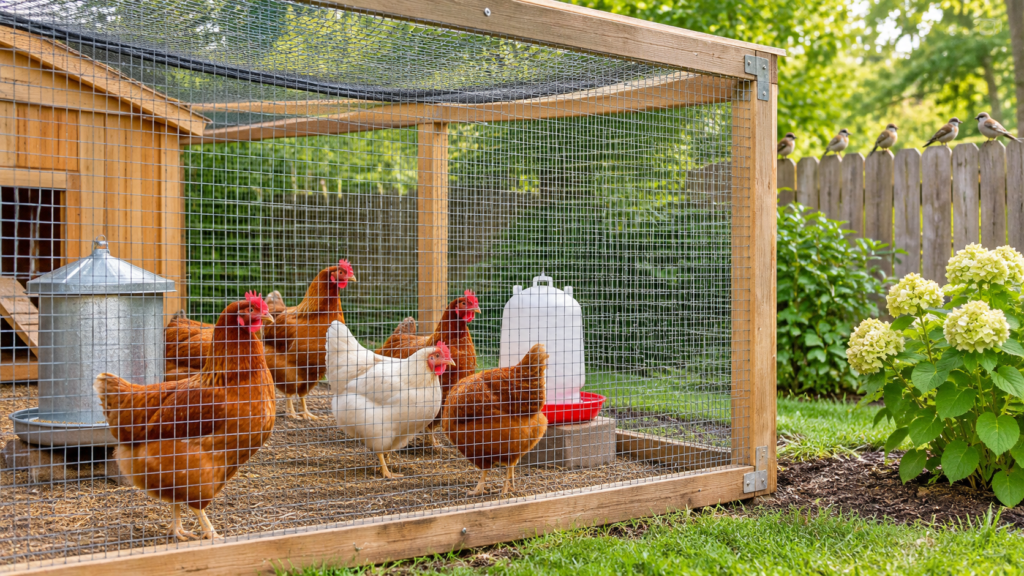
Wild birds may enter a chicken run because they can reach spilled grain, open water, sheltered perches, or nesting spots. Their presence is more than a nuisance: wild birds can carry diseases, including avian influenza, and contaminate areas where chickens eat, drink, and forage. The goal is not to remove every wild bird from your property. It is to prevent wild birds from sharing your flock’s space and resources.
The most dependable approach combines a complete physical barrier with protected feeders and waterers, prompt cleanup of attractants, and routine inspections. A few small changes can make an open run less inviting, but a barrier with gaps or an exposed feeder can undermine the whole setup.
Why keep wild birds out of your chicken run?
Wild birds can carry pathogens without appearing sick. If they enter a run, perch above a feeder, or drink from a poultry waterer, they may leave droppings or other contamination where your chickens have contact with it. Waterfowl, gulls, and other wild birds are among the species highlighted in USDA APHIS wildlife-protection guidance.
This does not mean every sparrow, robin, or other wild bird carries avian influenza, or that seeing one near your coop means your flock is infected. The risk depends on local disease activity and the opportunities for contact. The practical response is to reduce access to the run, keep wildlife away from feed and water, and follow advice from your state animal-health officials during an outbreak.
1. Enclose the run with a barrier that excludes wild birds
If wild birds can fly into an uncovered run, start with the roof. A secure overhead barrier is often the missing part of an otherwise fenced enclosure. Iowa Health and Human Services backyard-poultry guidance recommends covering runs with wire mesh or nylon netting, while University of Minnesota Extension guidance for backyard flocks recommends enclosed outdoor areas and smaller-mesh barriers to help keep wild birds out.
Choose a material according to the birds you need to exclude, the size of the openings, the strength of the frame, and your local weather. Do not assume that any product sold as chicken wire or bird netting will stop small wild birds. Check the actual mesh opening and the manufacturer’s intended use. For a more rigid barrier, suitable hardware cloth or wire mesh may be preferable; lightweight netting may suit some overhead spans when it is properly supported and maintained.
Cover the entire run, not just the middle of the roof. Inspect the roof-to-wall joints, corners, door edges, ventilation openings, the space beneath gates, and the connection between the coop and run. Close gaps that allow birds to enter, but do not block the ventilation your chickens need. Keep netting taut and supported so it cannot sag into the birds’ space, trap them, or become damaged by weather.
Check the enclosure after strong wind, heavy rain, falling branches, or other events that could loosen fasteners or tear a screen. Repair holes promptly. Our comparison of hardware cloth vs. chicken wire explains why these materials are not interchangeable for every coop job.
2. Protect feeders and stop attracting birds with spilled feed
Feed is one of the easiest reasons for wild birds to keep returning. Place chicken feeders beneath a solid cover or inside the enclosed part of the run, where wild birds cannot perch above them and reach the feed. Choose a feeder that suits your flock and check that its lid, ports, and tray are working as intended. A feeder advertised as waste-reducing is not automatically wildlife-proof, so watch how it performs in your setup.
Clean up scattered grain every day, including feed beneath and behind the feeder. Check for leaks, loose lids, and feed that has been scratched out onto the ground. Store bulk feed in a tightly closed, pest-resistant container rather than an open bag or uncovered bin. USDA wildlife-management guidance specifically recommends cleaning up spills, checking feed structures for leaks, and keeping feed areas clean so they attract less wildlife.
If feed seems to disappear faster than expected, look for spilled grain, wild-bird visits, and rodent activity before simply increasing the ration. Our guide to stopping chickens from wasting feed covers feeder setup and other causes of feed loss.
3. Keep wild birds away from chicken water
Open water can attract wild birds, especially when they can land on the rim, drink from the tray, or bathe nearby. Use a covered or enclosed poultry watering system where practical, and position it beneath the run’s protective roof. The important point is not the brand or style of drinker; it is preventing wild birds from accessing the water your chickens use.
Replace dirty water and clean drinkers regularly. Fix leaks and remove unnecessary water containers that leave puddles around the enclosure. If rainwater collects in low spots, improve drainage so the run does not become a regular wildlife watering area. USDA APHIS advises removing standing water that attracts wildlife and warns against using untreated surface water for poultry drinking or cleaning.
Do not let chickens drink from ponds, lakes, streams, or other untreated surface-water sources that wild birds may use. A covered drinker supplied with clean water is easier to protect and monitor than an open pond or basin.
4. Remove other things that attract wild birds
Look beyond the chicken feeder. Bird feeders, bird baths, fallen fruit, uncovered rubbish, accessible compost, and scraps left near the coop can draw wild birds into the same area as your flock. Move wild-bird feeding stations and baths away from the poultry enclosure, remove fallen fruit, secure waste-container lids, and avoid leaving chicken treats where wild birds can reach them.
Keep vegetation manageable immediately around the run so you can inspect the fence line and spot droppings, feathers, or signs of entry. You do not need to strip the yard bare. Focus on removing food waste, eliminating avoidable standing water, and keeping the enclosure’s edges visible and accessible for inspection.
Scare devices, reflective tape, or decoys may help discourage some birds temporarily, but they should not replace a physical barrier. Birds can become accustomed to stationary deterrents. USDA APHIS recommends moving scare devices regularly if they are used.
5. Inspect and clean areas that wild birds may have contaminated
Look for droppings, feathers, nesting material, or signs of perching on the run roof, feeder covers, waterer area, ledges, and nearby surfaces. If wild birds have entered the enclosure, first close the access point and protect feed and water so the problem does not continue.
For routine cleaning, remove ordinary dirt and organic material before applying a disinfectant suitable for the surface and poultry setting. Follow the product label for dilution, contact time, ventilation, and any precautions for animals. Never mix cleaning products. If you suspect a disease exposure or find a large accumulation of droppings, follow instructions from your veterinarian or state animal-health agency rather than improvising a chemical treatment.
Do not handle sick or dead wild birds. Keep children and pets away and contact the appropriate local or state wildlife or animal-health authority for instructions. The CDC’s guidance for backyard flock owners explains why wild-bird exposure matters and what to do if poultry show signs of illness. For routine coop hygiene, see our chicken coop cleaning checklist.
6. Make wild-bird exclusion part of daily biosecurity
A covered run is one layer of protection, not a complete biosecurity plan. Wear footwear reserved for poultry chores, wash your hands after handling birds or equipment, and clean tools that move between poultry areas. Limit unnecessary visitors and avoid sharing feeders, drinkers, or other equipment with another flock unless they have been properly cleaned and disinfected.
Check the run each day for damaged mesh, new gaps, spilled feed, dirty water, droppings, and signs that wildlife has entered. Pay particular attention after storms and during periods when wild birds are active around the property. The USDA Defend the Flock biosecurity guidance emphasizes that disease can also move through people, clothing, equipment, vehicles, feed, and water—not only through direct contact with wild birds.
What if wild birds are already getting into the run?
Work out where they enter and what is attracting them. Observe from a distance rather than trying to catch or handle the wild birds. Check the roof, corners, doors, ventilation screens, and the coop-to-run connection. Repair the opening, cover exposed feed and water, remove spilled grain, and then inspect surfaces for droppings or nesting material.
If a wild bird is trapped inside, avoid chasing or handling it in a way that could injure the bird or your chickens. Keep people and pets away and seek guidance from local wildlife authorities if it cannot leave safely. Do not attempt to capture sick or dead wild birds.
Watch your flock for changes such as eating or drinking less, unusual tiredness, diarrhea, discharge from the eyes or nose, breathing difficulty, a drop in egg production, or unexpected deaths. These signs do not prove avian influenza; other illnesses can look similar. Contact a poultry veterinarian or your state animal-health authority promptly if you notice them. USDA APHIS advises reporting sick or dying poultry to the State veterinarian or USDA at 1-866-536-7593.
Wild-bird exclusion checklist for backyard chicken keepers
- Cover the full run with a suitable roof barrier or mesh enclosure.
- Check mesh openings and close gaps around doors, corners, vents, and the coop connection.
- Keep the barrier secure, supported, and clear of the chickens’ usable space.
- Repair torn screens, loose fasteners, and damaged mesh promptly.
- Keep feeders under cover and remove spilled feed every day.
- Store poultry feed in sealed, pest-resistant containers.
- Use protected drinkers and prevent wild birds from accessing poultry water.
- Remove fallen fruit, accessible scraps, uncovered waste, and unnecessary standing water.
- Inspect for droppings, feathers, nesting material, and signs of entry.
- Use dedicated footwear and clean hands, tools, and equipment.
- Follow current state animal-health alerts and report unusual illness or deaths.
Frequently asked questions
Can wild birds spread bird flu to backyard chickens?
Yes. Wild birds can carry avian influenza viruses and expose domestic poultry through contact or contamination of the birds’ environment. The risk varies with local disease activity and the type of exposure. Keeping wild birds away from the run, feed, and water is a sensible biosecurity measure.
Will bird netting keep sparrows and other small birds out?
It can if the netting is designed for bird exclusion, has openings small enough for the birds in your area, covers the full enclosure, and is installed without gaps. Check the product specifications rather than relying on the word “netting” on the package. Inspect it regularly for tears, loose edges, and sagging.
Is chicken wire enough to keep wild birds out?
Not always. Chicken wire products vary in opening size and are commonly used to contain chickens or divide spaces. Small wild birds may still pass through some openings. Check the actual mesh dimensions and choose a barrier designed to exclude the birds you are trying to keep out. Our hardware cloth vs. chicken wire comparison explains the differences between common materials.
Should I stop feeding wild birds in my yard?
At minimum, move bird feeders and baths away from the chicken run so wild birds are not encouraged to gather beside your flock. During local avian-influenza alerts, follow current instructions from your state wildlife or animal-health authorities about bird feeders and other wildlife attractants.
What should I do if I find a dead wild bird near my coop?
Do not touch or move it, and keep children and pets away. Contact your local or state wildlife or animal-health agency for reporting and safe-handling instructions. If your chickens also appear ill, contact a poultry veterinarian or state animal-health official promptly.
The bottom line
The best way to keep wild birds out of a chicken run is to combine a complete, well-maintained barrier with protected feed and water, good housekeeping, and regular inspections. Do not rely on scare devices or a roof covering that leaves gaps around the sides. Reduce the opportunities for wild birds to enter or contaminate the areas your chickens use, and follow local animal-health guidance if disease is reported nearby.

Oladepo Babatunde is the founder of ChickenStarter, a website sharing practical, research-informed information for people raising chickens.
ChickenStarter covers poultry feeding, housing, flock care, and common chicken-keeping questions. Its guides aim to explain the available evidence clearly and help readers make informed decisions for their flocks.