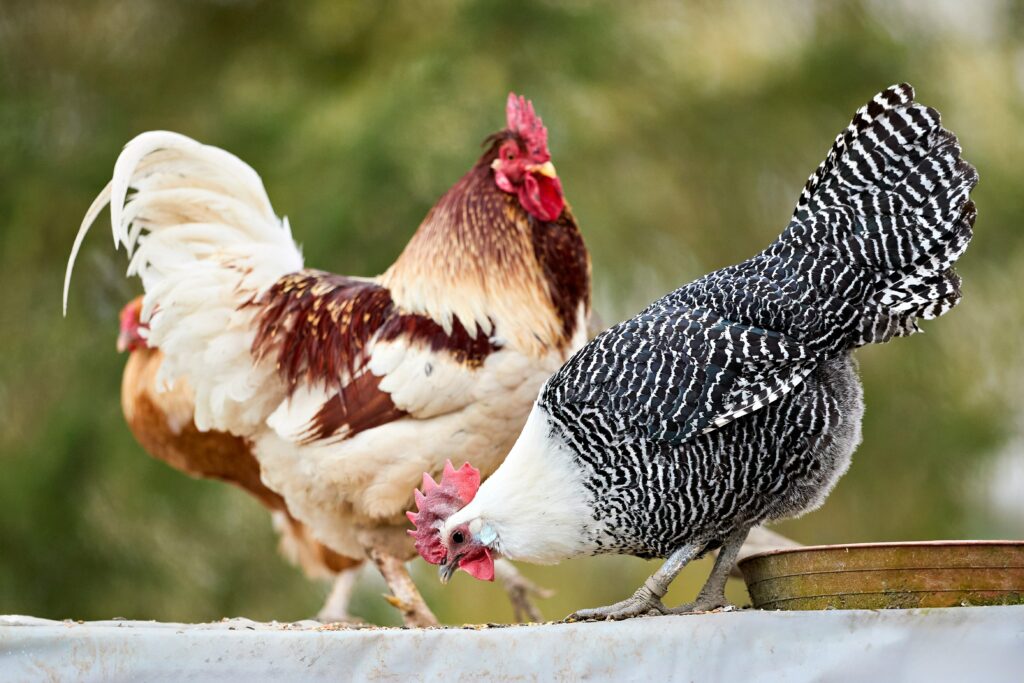
If your chickens are wasting feed, the mess is usually easy to spot: you fill the feeder in the morning, but by afternoon there is feed scattered underneath it or mixed into the bedding. The birds are eating, yet a surprising amount never reaches their crops. If this keeps happening, the problem may be the feeder setup rather than how much your flock eats.
Chickens naturally use their beaks to pick through feed, and some movement around a feeder is normal. The waste becomes a problem when birds can rake feed out, stand inside an open trough, tip a lightweight feeder, or push feed over a shallow edge. Wet or dirty feed on the ground can also attract rodents and become unsuitable for eating.
The most effective way to learn how to stop chickens wasting feed is to identify how it is escaping, then adjust the feeder height, opening, location, and access. Here is how to work through those changes without reducing the balanced feed your chickens need.
How to Stop Chickens Wasting Feed: Diagnose the Cause First
Watch the feeder for a few minutes before buying a replacement. The pattern of waste usually points to the cause.
| What you notice | Likely cause | First adjustment to try |
|---|---|---|
| Feed scattered in a ring around the feeder | Birds reaching too far down or raking feed with their beaks | Raise the feeder and check the depth of the feed tray |
| Feed kicked out with feet | Feeder is low, wide open, or easy for birds to stand in | Raise it and use a design that limits access to the feed surface |
| Feed on the floor after the feeder tips | Unstable base, light construction, or overcrowding around it | Use a stable feeder on a level surface or hang it securely |
| Feed is wet, caked, or stuck together | Rain, water spills, condensation, or a feeder that does not suit the feed texture | Move it under cover, clean it, and check that feed can flow freely |
| Feed disappears faster than expected, but little is on the floor | Wild birds, rodents, access by other animals, or an inaccurate estimate of flock intake | Check the storage area and feeding times for signs of visitors |
1. Raise the Feeder to the Right Height
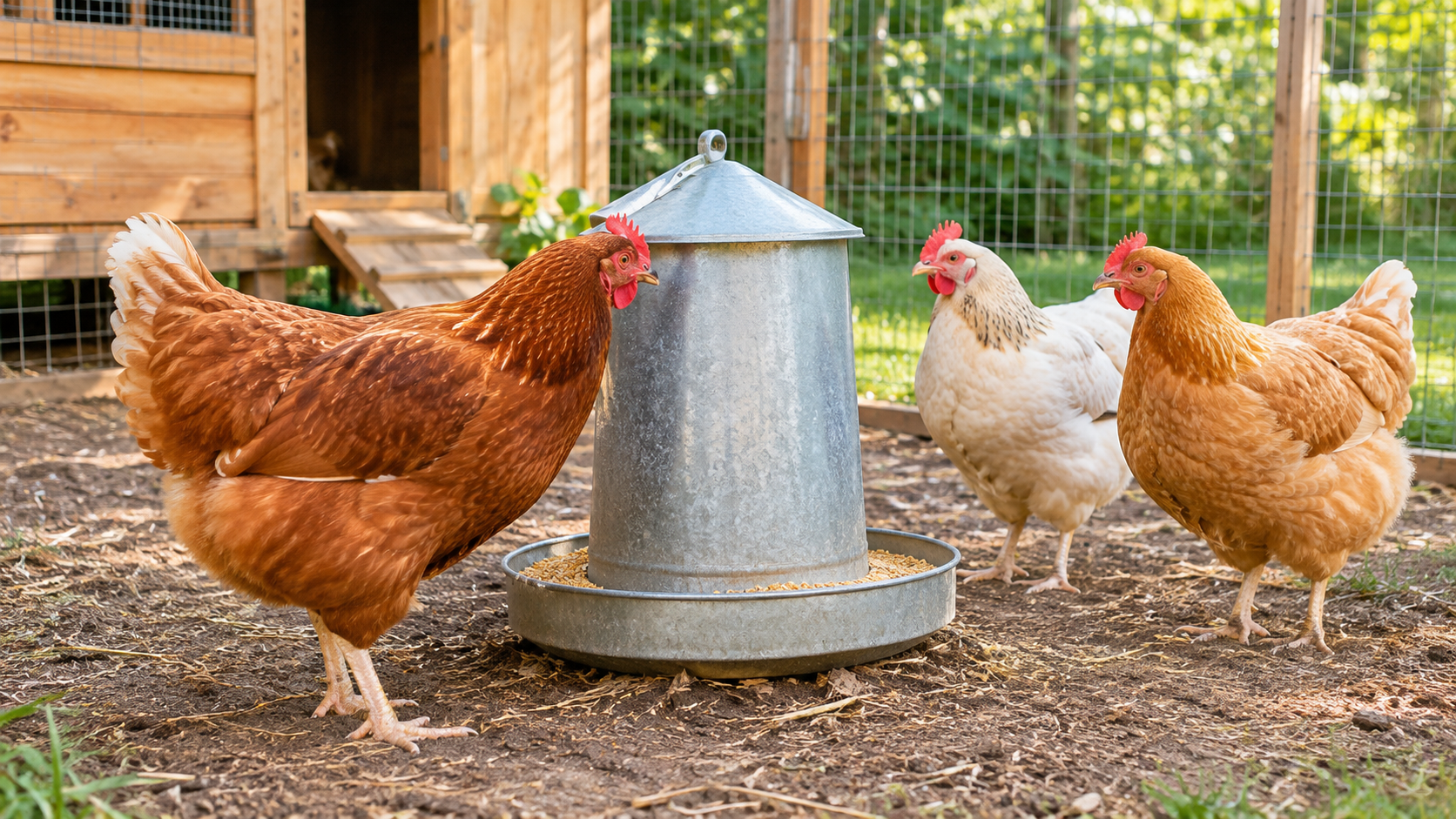
A feeder sitting directly on the ground makes it easier for chickens to step into the tray, scratch around, and kick feed out. It can also collect bedding and droppings.
For adult hens, Alabama Cooperative Extension recommends setting the bottom of the feeder at about the height of the birds’ backs. This helps reduce feed waste and keeps the feeding area more accessible. Adjust the height for the smallest birds in a mixed-age flock, not just the tallest hen.
After raising it, watch several birds eat. They should be able to reach the feed naturally without stretching awkwardly or climbing into the tray. If chicks or bantams share the area, provide a feeder they can comfortably reach rather than raising every feeder to adult-hen height.
Use a secure hanging point or a stable stand so the feeder does not swing, tilt, or fall when birds gather around it. Check the height again as young chickens grow.
2. Stop Overfilling an Open Feeder
A deep layer of feed in an open tray gives chickens more material to scoop out with their beaks. For a traditional open trough, Alabama Cooperative Extension advises keeping it no more than half full. For a covered or tubular feeder, follow the maker’s fill line and adjustment instructions because designs differ. If the feeder has an adjustable feed opening or an anti-scratch grill, set it as directed rather than removing parts that control access. Check the tray after the birds have eaten: feed should remain available without sitting so high that they can rake large amounts over the edge. Alabama Extension’s backyard flock feeding guidance also recommends keeping troughs at the birds’ back height and cleaning them regularly.
Do not solve overfilling by leaving the flock short of feed. Laying hens need continuous access to an appropriate complete layer ration under a normal ad-lib feeding system. The aim is to reduce spillage while keeping enough clean feed available for every bird.
If you are unsure how much feed your flock should consume, use the chicken feed calculator and cost guide to estimate normal requirements for your flock size. Consumption varies with age, breed, body size, weather, and access to forage, so the estimate is a planning tool rather than a reason to restrict feed.
3. Choose a Feeder That Matches the Feed
Not every feeder works equally well with every feed texture. A covered, tubular feeder can work well with pellets or crumbles because the feed moves down into the tray as birds eat. However, the University of Minnesota Extension notes that some store-bought tubular feeders can struggle with mash because it may pack together and stop flowing properly.
That creates a different problem: chickens may be unable to reach the feed even when the container looks full. Check the tray during the day to make sure feed is actually moving down and remains accessible.
Wide, open troughs are easy for several birds to use, but they also give chickens room to push feed out or climb inside. The University of Minnesota’s alternative poultry feeder guidance explains how open rain-gutter-style feeders can allow birds to bill feed out with their beaks or scratch it onto the floor.
If you are deciding how to stop chickens wasting feed, begin with a feeder that suits the ration you already use. Compare these practical options before replacing equipment:
- Covered hanging feeder: Useful where birds scatter feed from a ground-level tray. Choose a size and tray opening suitable for the flock.
- Feeder with a narrow access opening or anti-scratch grill: Can limit how much feed a chicken can rake out, provided every bird can still eat comfortably.
- Long trough feeder: Gives several chickens access at once, but needs enough usable space and a design that prevents birds from standing or scratching in the feed.
- Treadle feeder: Can help keep wild birds and rodents away from stored feed, but chickens need to learn to operate it. Confirm that every bird, including smaller hens, can open it before relying on it as the only feeder.
Changing feeder type is not automatically the answer. A feeder that reduces spillage but prevents smaller birds from eating creates a new welfare problem. Observe the whole flock before deciding whether the replacement is working.
4. Give the Flock Enough Feeder Space
When too many chickens crowd one small feeder, birds jostle for position. Some may push feed out while trying to reach it, and quieter birds may be forced away.
Alabama Cooperative Extension advises providing enough feeder space for every bird to eat at the same time, with room to stand beside one another. If you see birds waiting, squeezing into gaps, or repeatedly displacing one another, add another suitable feeding point or use a longer feeder.
Place separate feeders far enough apart that one dominant bird cannot guard both from the same position. Make sure there is a clear route to approach and leave each station.
5. Keep Feed Dry, Clean, and Protected
Move the feeder under a roof or sheltered part of the run where rain cannot blow into it. Keep it away from drinkers if splashed water regularly makes the feed wet. Damp feed can cake, spoil, or become difficult to remove from the tray.
Clean out wet, moldy, or droppings-contaminated feed rather than putting it back into the feeder. Brush away spilled feed regularly, especially overnight. Feed left on the ground can attract rodents and wild birds, which may contaminate the feeding area and increase feed losses.
Store unopened and opened feed in a dry, secure container that pests cannot reach. Keep the storage container closed between uses, and follow the feed manufacturer’s storage instructions.
6. Check Whether the Feed Itself Is Causing a Problem
Feed texture can affect how it moves through a feeder and how chickens handle it. Mash, crumbles, and pellets do not behave identically. If mash repeatedly clogs a tubular feeder, use equipment designed for that texture or ask the feed supplier which feeder type is suitable.
Do not switch to a different feed solely because you hope it will stop waste. The replacement must still be a complete ration formulated for the birds’ age and purpose. For laying hens, avoid replacing their balanced layer feed with scratch grains or kitchen scraps. The guide to chicken feed stages and when to change rations explains why feed needs to match the flock’s stage of development.
If birds consistently leave a particular part of the ration uneaten, check whether the feed has become stale, damp, or separated during storage. Persistent selective eating or a sudden change in appetite deserves closer attention rather than simply changing brands.
A Simple Three-Day Plan to Reduce Feed Waste
Changing several things at once makes it difficult to tell what actually helped. Use this short check to see whether your changes are helping you stop chickens wasting feed while keeping access to the ration consistent.
| When | What to do | What to check |
|---|---|---|
| Day 1 | Observe the feeder at morning and afternoon feeding periods. Note where spilled feed collects and how birds reach the tray. | Is feed being pushed out by beaks, kicked out by feet, tipped, or spoiled by water? |
| Day 2 | Make the most relevant adjustment: correct the height, reduce excessive fill depth, stabilize the feeder, or move it under cover. | Can small and large birds reach the feed? Is less feed landing outside the tray? |
| Day 3 | Check the same areas and compare the amount of spillage with Day 1. | Is the feeder cleaner while every chicken still has reliable access to feed? |
For a more useful comparison, use the same container or scale each day. Record the amount of feed added and the clean feed remaining in the feeder at the same time the next day. Note visible spillage separately rather than counting it as feed eaten. If you can safely collect and measure the spilled material without returning it to the feeder, record that as waste; discard feed that is wet, dirty, moldy, or mixed with bedding or droppings. The calculation is only an estimate because birds may also eat at different times or access other food, but consistent notes will show whether the adjustment is reducing obvious losses.
For example, if the feeder is cleaner after raising it but the smaller hens can no longer reach the tray, the change has not succeeded. Lower it enough for those birds or provide a second feeder at a suitable height.
Mistakes That Can Make Feed Waste Worse
- Filling an open tray to the brim: Gives birds more feed to scatter and makes spillage harder to control.
- Raising the feeder too high: Smaller hens and young birds may struggle to reach it.
- Using a feeder that clogs with the chosen feed: A full container does not help if feed cannot reach the tray.
- Removing access to feed to save money: Restricting a complete ration can compromise nutrition and does not correct the feeder design.
- Leaving spilled feed overnight: Encourages rodents and wild birds to visit the coop.
- Changing feed and feeder at the same time: Makes it difficult to identify which change helped and may introduce unnecessary dietary disruption.
Frequently Asked Questions
Why do chickens throw their feed out of the feeder?
Chickens may push feed out with their beaks, scratch it out with their feet, climb into an open trough, or scatter it when the feeder is too low or overfilled. Watch how the feed is escaping before changing the equipment.
How high should a chicken feeder be?
For adult hens, Alabama Cooperative Extension recommends positioning the bottom of the feeder at about the height of the birds’ backs. Adjust it for the smallest birds in the flock so every chicken can reach the feed comfortably.
Do pellets reduce chicken feed waste?
Pellets may flow more consistently through some tubular feeders than mash, but changing feed does not guarantee less waste. The feeder must suit the feed texture, and the ration must remain appropriate and nutritionally complete for the birds.
Should I stop filling the feeder to prevent waste?
Avoid leaving chickens without adequate feed as a waste-control method. Under a normal ad-lib feeding system, laying hens should have continuous access to a suitable complete layer ration. Correct the feeder setup and remove spillage instead.
Can chickens eat feed that has fallen on the ground?
Do not return feed that is wet, moldy, mixed with droppings, or contaminated by bedding to the feeder. Clean up spilled feed regularly because it can attract rodents and wild birds and become unsuitable for consumption.
Are treadle feeders good for reducing feed waste?
A treadle feeder can protect feed from wild birds and rodents, but it does not suit every flock automatically. Make sure all chickens can operate it, including smaller birds, and monitor feed access before using it as the only feeder.
Conclusion
If you want to know how to stop chickens wasting feed, start by watching how it leaves the feeder. A low tray, excessive fill depth, open design, poor placement, or feed that does not flow properly can all contribute to the mess.
Raise the feeder to a comfortable height, choose equipment that suits the feed, provide enough space, and keep the feeding area dry. Then check that every bird can still eat freely. The goal is not to make chickens eat less; it is to stop good feed being lost before they can eat it.

Oladepo Babatunde is the founder of ChickenStarter.com. He is a backyard chicken keeper and educator who specializes in helping beginners raise healthy flocks, particularly in warm climates. His expertise comes from years of hands-on experience building coops, treating common chicken ailments, and solving flock management issues. His own happy hens are a testament to his methods, laying 25-30 eggs weekly.