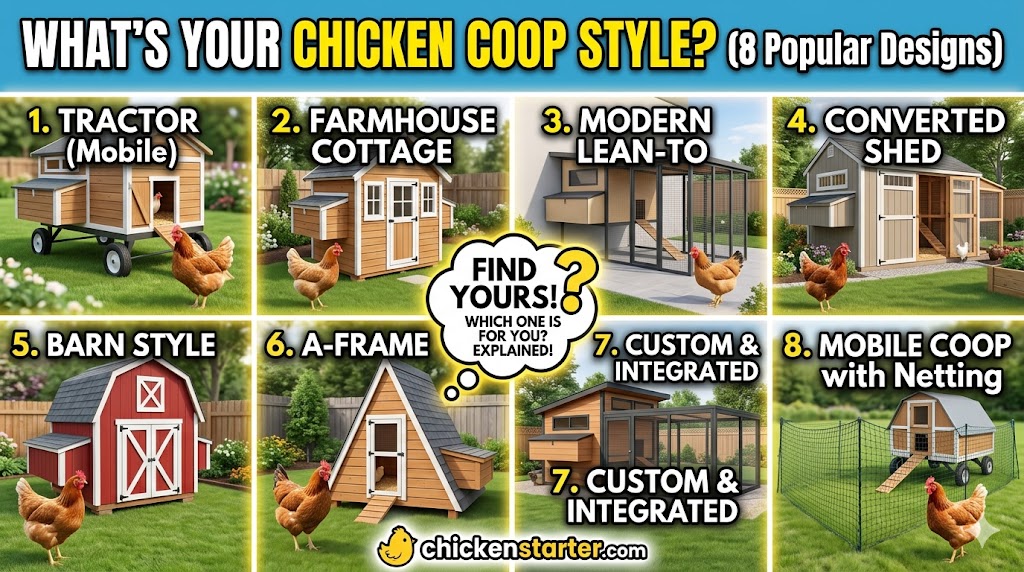
Choosing the right chicken coop style is one of the most important decisions you will make as a backyard chicken keeper. The coop you build or buy directly affects your flock’s health, egg production, safety from predators, and how much daily work you have to put in. Get it wrong and you will spend years fighting moisture problems, predator breaches, or a layout that makes cleaning and egg collection a constant headache.
I have owned three different coop styles over the years, and each one taught me something valuable about what actually works versus what just looks good on Pinterest. This guide breaks down the 8 most popular chicken coop designs, explains the real pros and cons of each based on practical experience and proven poultry keeping principles, and helps you figure out which style fits your flock size, climate, property, and budget.
How to Choose the Right Chicken Coop Design
Before jumping into specific styles, there are a few factors you need to think through honestly. The best coop is not the prettiest one or the cheapest one. It is the one that fits your specific situation.
Flock Size
Every coop style has a practical capacity limit. The standard rule is 4 square feet of indoor coop space per standard-sized chicken and 8 to 10 square feet of outdoor run space per bird. Overcrowding leads to stress, pecking order problems, disease, and reduced egg production. Always plan for slightly more space than you think you need, because most chicken keepers end up adding birds within the first year.
If you are still calculating how many birds to keep, our guide on how many chickens you need for a family of 4 will help you settle on the right number before you commit to a design.
Climate
Your local weather dictates coop design more than most people realize. According to poultry expert Kathy Shea Mormino of The Chicken Chick, hot climates call for a shaded coop location, while frigid winters require natural windbreaks and proper ventilation to prevent moisture buildup and frostbite. If your region experiences both temperature extremes, favor a shady location because it is harder for chickens to cool down in heat than to warm up in cold.
Predator Pressure
Every coop needs to be predator-proof, regardless of style. Hawks, raccoons, foxes, weasels, snakes, and neighborhood dogs are all real threats depending on your location. Hardware cloth (not chicken wire) on all openings, secure latches on every door, and a buried apron or hardware cloth skirt around the base are non-negotiable features.
For a deep dive into predator defense, our article on predator-proofing your coop covers every common threat and how to stop it.
Your Daily Routine
Some coop styles are easier to maintain than others. If you have limited time, choose a design with easy-access doors, exterior egg collection, and a layout that makes cleaning quick. If you enjoy the process and want a hands-on setup, a more elaborate design might suit you.
1. The Classic Walk-In Coop
The walk-in chicken coop is exactly what it sounds like: a structure tall enough for you to walk inside and stand upright. This is the style I currently use for my main flock, and it is by far my favorite.
Why It Works
The biggest advantage is ease of maintenance. You can step inside, stand at full height, and clean, inspect, and interact with your birds without crouching, kneeling, or reaching awkwardly through small doors. Nesting boxes, roost bars, feeders, and waterers are all within comfortable reach.
Walk-in coops also offer the most flexibility for interior layout. You can position roost bars at different heights, install multiple nesting boxes along the walls, and add storage space for feed and supplies. One clever approach I have seen, and that some builders use, is splitting the structure in half with one side serving as the actual coop and the other as a storage area with a finished floor for easy sweeping.
Ideal For
Flocks of 8 or more chickens. Keepers who want maximum interior access. Climates where you need to spend time inside the coop during winter checks.
Considerations
Walk-in coops require more materials and a larger footprint. They also need a solid foundation, either a concrete slab, pressure-treated skids, or piers. The upfront cost is higher than smaller designs, but the long-term convenience is worth every dollar in my experience.
If you are building one on a budget, our step-by-step guide on how to build a chicken coop for under $200 shows how to cut costs without sacrificing quality on the features that matter most.
2. The A-Frame Chicken Coop
The A-frame coop is a triangular structure that is wider at the base and narrows to a peak at the top. It is one of the simplest and most affordable designs to build, making it a popular choice for beginners and small flocks.
Why It Works
The steep roof angle naturally sheds rain and snow, which makes A-frame coops a solid choice for wet or snowy climates. The design uses fewer materials than a rectangular structure of similar floor area, keeping construction costs low. Most A-frame coops are lightweight enough to be moved around the yard, doubling as a basic chicken tractor.
Ideal For
Small flocks of 2 to 5 chickens. Beginners on a tight budget. Properties where a low-profile, unobtrusive coop is preferred.
Considerations
The sloped walls drastically reduce usable interior space. You cannot stand up inside an A-frame, and mounting roost bars and nesting boxes is more awkward because of the angled walls. Cleaning is harder since you have to reach in through small access doors.
I built an A-frame for my first three hens and used it for about a year before upgrading. It worked fine for a tiny starter flock, but I outgrew it quickly. If you think you might expand your flock, plan for a larger design from the start.
Our detailed article on A-frame chicken coops covers dimensions, build tips, and the specific pros and cons of this style.
3. The Chicken Tractor (Mobile Coop)
A chicken tractor is a portable coop that you move across your yard on a regular basis, giving your flock fresh grass and bugs while naturally fertilizing your lawn or garden in sections.
Why It Works
The daily or weekly relocation means your chickens always have access to fresh forage, which reduces feed costs and gives them a more varied, natural diet. The ground under the tractor gets a rest period between rotations, preventing the bare, muddy patches that happen with a stationary run.
Chicken tractors are also excellent for anyone who uses their flock to prepare garden beds. Moving the tractor over a future planting area lets the chickens scratch up weeds, eat pest insects, and deposit manure right where you need it.
According to information from Abundant Permaculture, pastured poultry pens designed for daily moves can use less square footage per chicken than a static coop because the birds are constantly getting fresh ground.
Ideal For
Flocks of 4 to 12 chickens (depending on tractor size). Properties with enough flat, open ground to rotate. Keepers who want to integrate their flock into a garden or permaculture system.
Considerations
Chicken tractors need to be lightweight enough to move but sturdy enough to resist predators and wind. This is a real engineering challenge. Too heavy and you will dread moving day. Too light and a strong wind gust can flip it or a determined raccoon can push it aside.
Most tractors do not have enough interior height for you to walk inside, so cleaning and egg collection require reaching in through access panels. They also offer less protection during extreme cold than a well-insulated stationary coop.
For a detailed comparison of mobile versus fixed setups, our article on chicken tractor vs. stationary coop breaks down the full list of trade-offs.
4. The Quaker Style Coop
The Quaker coop features a distinctive offset roof with a taller front wall and a shorter back wall, creating a single-slope (shed-style) roofline. This design is popular in prefabricated coop kits and is one of the most practical all-around styles.
Why It Works
The taller front wall gives you more headroom at the entry and along the front of the coop, making it easier to access feeders, waterers, and nesting boxes without crouching. The sloped roof sheds rain and snow efficiently toward the back, which is useful for keeping the entry area and run drier.
The asymmetric wall height also makes it straightforward to install a window or ventilation opening high on the tall front wall while keeping the lower back wall solid for wind protection. This naturally supports the airflow pattern that poultry experts recommend: low fresh air intake and high exhaust for proper ventilation without drafts at roost level.
Ideal For
Flocks of 4 to 10 chickens. Keepers who want a balance of accessibility and compact footprint. Properties where a more traditional barn-like aesthetic is preferred.
Considerations
The offset roof can create a low ceiling at the back of the coop, limiting where you can place roost bars and nesting boxes. Make sure the lowest interior point is still tall enough for your birds to move around comfortably. For standard breeds, aim for at least 24 inches of clearance at the shortest wall.
5. The Gambrel (Barn-Style) Coop
The gambrel coop mimics the classic American barn silhouette with its double-sloped roof that is steeper at the lower section and flatter at the top. It is the most visually striking backyard coop style and a favorite among keepers who want their coop to look like a proper miniature barn.
Why It Works
The gambrel roof design creates significantly more usable interior volume than a standard gable roof of the same footprint. That extra overhead space allows taller roost bar setups, overhead storage for supplies, and better air circulation near the ceiling.
Many gambrel coops include a loft area above the main floor that can be used for feed storage, hay, or even additional roosting space for flocks that like to perch high.
Ideal For
Flocks of 6 to 15+ chickens. Keepers who value aesthetics and want their coop to complement a traditional farmstead look. Properties with enough space for a larger structure.
Considerations
Gambrel coops are more complex to build than simple gable or shed-roof designs. The dual-angle roof requires more precise cuts and framing. If you are building DIY, expect a moderate to advanced skill level. Prefab gambrel kits are widely available but tend to cost more than simpler styles.
6. The Elevated Coop (Raised Coop)
An elevated chicken coop is any coop style raised 1 to 3 feet off the ground on legs, stilts, or a platform frame. The space underneath becomes usable outdoor area for the flock.
Why It Works
Elevating the coop serves multiple practical purposes. The area underneath provides shaded outdoor space during hot weather, a dry spot during rain, and a hiding place for birds lower in the pecking order. It also protects the coop floor from ground moisture and wood rot, extending the life of the structure significantly.
As noted by The Chicken Chick, elevating the coop creates additional outdoor square footage for confined chickens while also protecting the bottom of the structure from rot. Just make sure to secure the underside with hardware cloth to prevent predators from accessing birds through the floor.
Ideal For
Flocks of any size (the coop on top can be any style). Hot and humid climates where ground moisture is a concern. Properties with uneven terrain where raising the coop creates a level interior.
Considerations
Elevated coops need a ramp for chickens to access the entrance. The ramp should have cleats or horizontal strips every few inches to give birds traction, especially in wet weather. Very heavy breeds like Brahmas and Jersey Giants may struggle with steep or narrow ramps, so keep the angle gentle, roughly 30 to 40 degrees.
You also need to make sure the legs or support posts are sturdy enough to bear the full weight of the coop, bedding, and birds without wobbling.
7. The Combination Coop and Run
The combination coop and run is an all-in-one unit where the enclosed coop and the attached outdoor run are built as a single integrated structure. This is the most common design sold by commercial coop manufacturers and is the style you will find in most backyard settings.
Why It Works
Everything your flock needs is contained in one structure. The enclosed section provides roosting and nesting space, while the attached run gives birds room to scratch, dust bathe, and exercise during the day. There is no need to separately build or buy a run, which simplifies both the initial setup and ongoing management.
Most combination units include built-in nesting boxes with exterior access lids, a pop door between the coop and run, and a full-size door or panel on the run for human access.
Ideal For
Flocks of 3 to 12 chickens (depending on the unit size). Urban and suburban keepers with limited yard space. Beginners who want a ready-to-assemble solution.
Considerations
Many prefabricated combination coops sold online are smaller than they claim and are built with thin, lightweight materials that do not hold up well against weather or predators. Before buying, measure the actual interior dimensions yourself and verify the materials. Look for solid wood construction (not thin plywood or particle board), hardware cloth on all mesh panels, and secure latches on every access point.
If the advertised capacity seems generous for the coop’s size, be skeptical. A coop marketed as “suitable for 6 to 8 chickens” is often only comfortable for 3 to 4 standard-sized birds when you account for the space taken up by feeders, waterers, roost bars, and nesting boxes.
Our guide on how big should a chicken coop be provides the exact square footage requirements so you can verify any manufacturer’s capacity claims.
8. The Greenhouse Coop (Winter Hybrid)
The greenhouse chicken coop is a seasonal or year-round setup where a greenhouse structure doubles as a chicken house. This style has gained popularity in cold climates as a way to keep flocks warm during winter while also composting bedding and extending the growing season.
Why It Works
The transparent or translucent panels of a greenhouse trap solar heat during the day, creating a significantly warmer environment for your birds than a standard wooden coop. In cold climates, this passive solar heating can keep interior temperatures well above freezing even on bitter winter days, reducing the need for supplemental heat sources.
According to information shared on Abundant Permaculture, a greenhouse can be converted into a chicken coop by boarding up at least two feet of the lower sides to contain deep bedding, adding a protective fence for the plastic, and using about one foot of carbon material like wood chips to absorb manure. That deep bedding layer generates additional warmth through composting action.
Ideal For
Cold climate keepers in USDA Hardiness Zones 3 through 6. Homesteaders who want a dual-purpose structure for winter poultry keeping and season extension gardening. Keepers willing to manage seasonal transitions.
Considerations
Greenhouse coops overheat dangerously in warm weather. In most climates, you will need to transition your birds out of the greenhouse and into a shaded coop or tractor from late spring through early fall. Without adequate ventilation, the humidity from chicken manure and respiration can also damage the greenhouse panels and create unhealthy air quality.
This is not a year-round solution unless you live in a region with consistently cold temperatures.
Essential Features Every Coop Style Needs
Regardless of which design you choose, certain features are non-negotiable for a healthy, productive flock.
Ventilation
Proper airflow prevents moisture buildup, ammonia accumulation, and respiratory illness. Every coop needs ventilation openings near the roofline that stay open year-round. These are not the same as windows. Ventilation openings should be positioned above roost height so that fresh air circulates without creating a direct draft on sleeping birds.
Our article on coop ventilation mistakes that overheat your flock details the most common errors and how to fix them.
Nesting Boxes
Plan for one nesting box per 4 to 5 hens, with a minimum of two boxes. Keep them lower than the roost bars so hens do not sleep in them. Consider exterior-access lids so you can collect eggs without entering the coop.
Slanted tops on nesting boxes are a highly practical detail that prevents hens from roosting and leaving droppings on top of the boxes. This is a small design choice that saves a surprising amount of cleaning time.
For more on choosing and setting up nesting boxes, including herb blends that naturally repel pests, read our guide on the best herbs to put in chicken nesting boxes.
Roost Bars
Use 2×4 lumber or natural tree branches for roost bars. Wood is preferable to metal or plastic because it stays temperature-stable in both hot and cold weather and provides better grip. Plan for 8 to 12 inches of roosting space per bird. Position bars at least 12 inches from the nearest wall and 12 inches apart if using a stair-step arrangement.
Secure Doors and Latches
Every door, window, and access panel needs a latch that a raccoon cannot open. Raccoons can turn knobs, lift hooks, and slide simple bolts. Use two-step latches or carabiner clips on all entry points.
A Solid Roof
Metal roofing panels are more durable and longer-lasting than plastic corrugated panels or composite shingles. If your budget allows it, metal is the better long-term investment. It sheds water cleanly, resists UV degradation, and holds up against hail and heavy snow loads.
Matching Your Coop Style to Your Climate
| Climate | Best Coop Styles | Key Features to Prioritize |
|---|---|---|
| Hot and dry | Elevated coop, A-frame tractor | Maximum shade, cross-ventilation, light-colored roofing |
| Hot and humid | Elevated coop, open-air combination | Elevated floor, wide ventilation, covered run |
| Cold and snowy | Walk-in coop, greenhouse hybrid | Insulated walls, deep litter bedding, windbreaks |
| Mild and temperate | Any style works | Focus on predator-proofing and convenience features |
| Rainy and wet | Walk-in coop, Quaker style | Covered run, elevated position on sloped land, metal roof |
My Personal Recommendation
If I could only give one piece of advice to someone choosing a coop style, it would be this: build bigger than you think you need, and prioritize easy access for cleaning.
Every chicken keeper I know, myself included, has wished they had a bigger coop within the first year. Flocks grow. You add birds. You realize you need more storage space. Starting with a walk-in coop or a generously sized combination unit saves you from the cost and hassle of upgrading later.
My current walk-in coop with exterior-access nesting boxes and a covered attached run has been the best setup I have ever had. I can clean it in 15 minutes, collect eggs without entering the coop, and comfortably house my flock of 14 hens with room to spare.
Frequently Asked Questions
What is the easiest chicken coop style to build?
The A-frame is the simplest design for a beginner builder. It requires fewer materials, basic tools, and straightforward cuts. A basic A-frame for 3 to 4 chickens can be built in a single weekend with minimal woodworking experience.
What is the best coop style for cold climates?
A walk-in coop with insulated walls, proper ventilation near the roofline, and a deep litter bedding system is the best option for cold winters. Greenhouse coops are an effective seasonal supplement for extreme cold.
Can I use a chicken tractor as my only coop?
Yes, if your flock is small enough and your climate is mild. In areas with harsh winters or heavy predator pressure, a chicken tractor alone may not provide enough protection. Many keepers use a tractor during warm months and move their flock into a stationary coop for winter.
How much does it cost to build a chicken coop?
Costs range widely. A basic DIY A-frame or small coop can be built for $100 to $300 using reclaimed or budget materials. A mid-range walk-in coop typically costs $500 to $1,500 in materials. Premium prefabricated coops from companies like Carolina Coops can run $3,000 to $10,000+ depending on size and features.
Which coop style is best for egg production?
Egg production is more about flock management than coop style. Any well-ventilated, predator-proof coop with proper nesting boxes, comfortable roost bars, and adequate space will support healthy laying. The features inside the coop matter more than the shape of the structure itself.
Disclaimer: The information in this article is based on personal experience and widely accepted backyard poultry keeping practices. Coop requirements may vary depending on your local climate, predator population, and municipal regulations. Always check your local chicken laws before building or purchasing a coop, as many cities and counties have specific rules about coop size, placement, and flock limits.

Oladepo Babatunde is the founder of ChickenStarter.com. He is a backyard chicken keeper and educator who specializes in helping beginners raise healthy flocks, particularly in warm climates. His expertise comes from years of hands-on experience building coops, treating common chicken ailments, and solving flock management issues. His own happy hens are a testament to his methods, laying 25-30 eggs weekly.