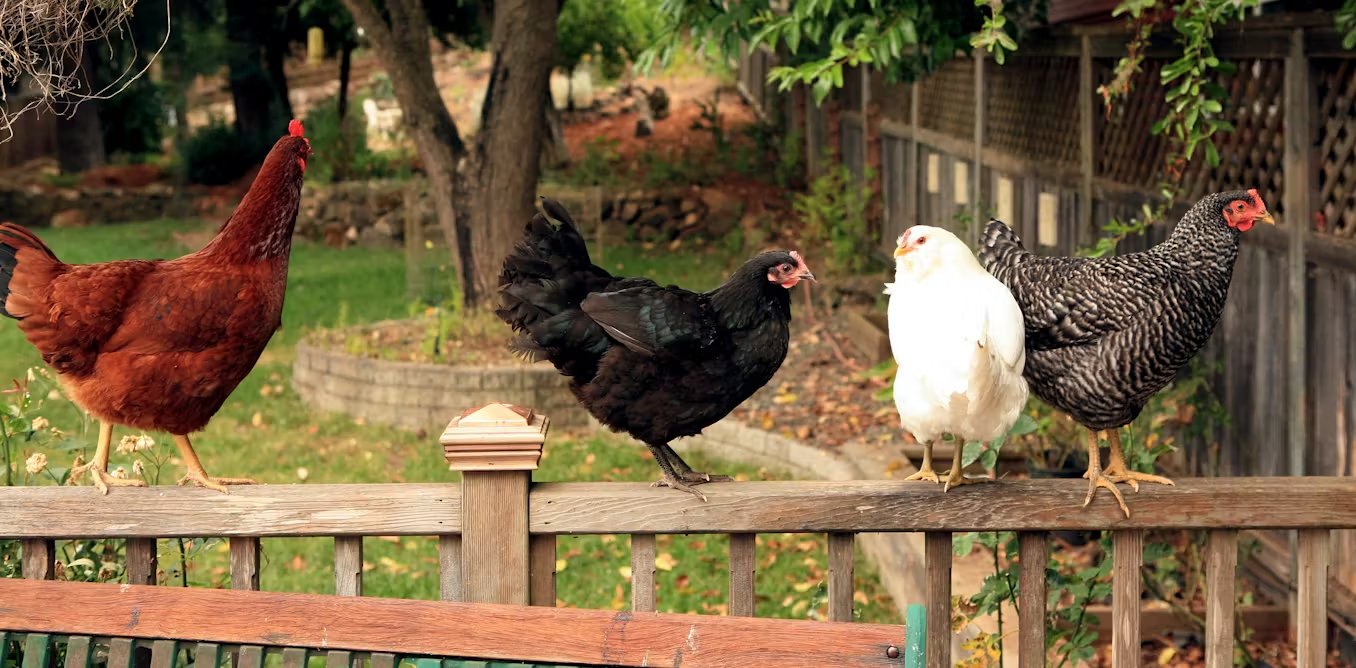
Dreaming of fresh backyard eggs and happy clucking? I completely understand. Backyard chickens have become the third most popular pet in America, right behind dogs and cats. According to research from the Pacific Legal Foundation, roughly 11 million households now keep chickens in their backyards across the United States.
But here is the reality that surprised me when I started researching chicken laws by state: chicken legality is not uniform across the country, and regulations can change dramatically, sometimes overnight. While New Yorkers might need to skip the rooster entirely, a neighbor in Austin may enjoy a free-range flock with minimal red tape. The backyard poultry regulations that truly matter are hyper-local, and finding them can feel like navigating a regulatory maze.
Before your first fluffy chick arrives, you need to answer one critical question: can you legally raise chickens where you live? Not just in your state, but specifically in your town and neighborhood.
I have been navigating chicken regulations across two countries for over six years now. When I first moved from Nigeria to the US to start ChickenStarter.com, I assumed getting chickens would be as simple as buying them. In Nigeria, chickens are a normal part of residential life in most areas. Nobody asks for a permit. But when I tried to set up my first US flock, I discovered a layered system of federal, state, city, HOA, and sometimes even neighbor-approval rules that took me weeks to untangle. That experience is exactly why I wrote this guide.
Major 2026 Legislative Updates: What Changed This Year
Before diving into the state-by-state breakdown, here are the most significant legal developments affecting backyard chicken keepers in 2026. These updates demonstrate how quickly the legal landscape shifts and why staying current matters.
Missouri Backyard Chicken Law Declared Unconstitutional
This development demonstrates how quickly chicken laws can change. In October 2025, Missouri Circuit Court Judge Brian Stumpe declared the state’s backyard chicken law unconstitutional, according to reporting from KRMS Radio and the Community Associations Institute.
The law, which had permitted up to 6 chickens on properties of 2/10 of an acre or larger, was struck down because legislators violated Article III of the Missouri Constitution by combining unrelated topics into one omnibus bill. The original House Bill 2062 focused on evictions, but lawmakers added last-minute amendments covering EV chargers, tax policy, and backyard chickens.
The Four Seasons Lakesites Homeowners Association filed the lawsuit, and the ruling immediately invalidated the entire bill. This restored HOA authority to prohibit chickens in Missouri communities.
As Trusten Polk, whose family owns six hens, told Spectrum News, they are “good pets” that “just lay good food.” However, his family now faces uncertainty about whether they can keep their flock.
What this means for Missouri residents: State officials are expected to appeal this ruling, and lawmakers may draft a cleaner, standalone bill. Until then, Missouri residents should verify current regulations with their municipality and HOA. This case perfectly illustrates why checking both local ordinances AND HOA bylaws is essential before investing in chickens.
Missouri free-range restrictions: One important detail for Missouri chicken keepers: due to nuisance complaints, chickens are not allowed to free-range in your backyard in Missouri. According to The Hen House Collection, they must be well kept and cleaned in a chicken coop. Some areas require an indoor coop with an enclosed outdoor area for chickens to roam. A combination coop that provides both indoor shelter and an enclosed outdoor run is the ideal solution. For help designing a coop that meets these requirements on a budget, see our guide on how to build a chicken coop for under $200.
Michigan Backyard Chicken Bills (HB 4049 and HB 4050)
Michigan is one of the most active states for chicken legislation in 2025 and 2026. According to the Michigan House of Representatives, House Bills 4049 and 4050 were introduced to establish a statewide framework for backyard chicken keeping. HB 4049 would prevent local governments from completely banning backyard chickens in residential areas, while HB 4050 would limit HOA authority to prohibit them.
According to the bills’ sponsor, the legislation was inspired by cases like Kathy Sarkisian’s in Douglas, Michigan, where a neighbor’s veto power forced her to give up chickens she had been legally permitted to keep. The bills are currently under committee review, and Michigan residents should monitor their progress through the state legislature’s website.
Texas HOA Chicken Battles Continue
Texas has long been considered one of the most chicken-friendly states, but the reality in 2026 is more complicated than most people realize. While Texas state law (Texas Agriculture Code Chapter 251, the “Right to Farm” act) broadly protects agricultural activities, HOAs in suburban developments continue to restrict or ban backyard chickens.
According to the Texas Farm Bureau, the Right to Farm law primarily protects existing agricultural operations from nuisance lawsuits, not necessarily residential chicken keeping in deed-restricted communities. In practice, many Texas HOAs still prohibit chickens, and enforcement varies dramatically by community.
Austin remains one of the most permissive cities in the country for backyard chickens, requiring no permit as long as coops are maintained properly. Houston, Dallas, Fort Worth, and San Antonio all allow backyard chickens with varying restrictions on flock size and coop placement.
HPAI Biosecurity Requirements Affecting Backyard Flocks in 2026
Highly Pathogenic Avian Influenza continues to affect backyard flock regulations nationwide. According to USDA APHIS, HPAI was confirmed in backyard flocks in Iowa, Wisconsin, and several other states in early 2026. During active outbreaks, states can impose emergency quarantine zones, movement restrictions, and mandatory reporting requirements that apply to backyard keepers.
Several states have strengthened their biosecurity reporting requirements in response:
- Iowa confirmed HPAI in backyard flocks in Kossuth County (January 2026) and Keokuk and Van Buren Counties (February 2026)
- Maryland confirmed its third commercial poultry case in February 2026
- Wisconsin detected HPAI in a backyard flock in Dane County in late February 2026
If you notice sudden death, respiratory distress, significant drops in egg production, or purple discoloration of combs in your flock, report it immediately to your state veterinarian or USDA at 1-866-536-7593. For more on protecting your flock, see our poultry farm biosecurity plan and our guide on how to tell if a chicken is sick.
Quick Answer: Can You Have Chickens in Your Backyard?
The short version: probably yes, but the details matter enormously. The legality of keeping backyard chickens almost entirely depends on your specific city or county ordinances and, crucially, your Homeowners Association rules. State laws offer broad guidelines but rarely dictate specifics like flock size or rooster bans for residential properties.
As the experts at Omlet’s backyard chicken guide emphasize, these laws are usually left up to individual cities or other entities such as homeowners associations to determine their stance on chickens. You must check your local municipal code and HOA bylaws first.
Why Backyard Chickens Are Growing in Popularity
Backyard chickens are soaring in popularity for compelling reasons. People seek fresh, organic food, reduced carbon footprints, or simply the joy of raising animals. Research from university extension programs confirms this represents a genuine shift toward sustainable living, offering benefits like natural pest control, garden fertilizer, and delicious eggs.
Egg Price Volatility Driving New Interest
Interest in backyard chickens has spiked twice in recent years. Tim McDermott from Ohio State University Extension explains the pattern: the first surge came during COVID when going to the store was scary and food security concerns drove people outdoors. The second spike followed egg price volatility, with grocery prices reaching $5 to $7 per dozen in some areas during 2025.
According to Bureau of Labor Statistics data, the average retail price for a dozen large Grade A eggs was $2.58 in January 2026, down from the record high of $6.23 per dozen in March 2025. But as CNBC reported in February 2026, egg markets remain sensitive to HPAI outbreaks, and prices can spike quickly. This ongoing volatility continues to drive interest in backyard flocks as a hedge against grocery price swings.
While experts note it is still typically cheaper to buy eggs than produce them at home due to coop and feed costs, many keepers value the self-sufficiency, sustainability, and connection to their food source. For a realistic cost analysis, see our guide on whether raising backyard chickens is cheaper than buying eggs and the real cost of keeping 6 chickens.
What many people do not realize is that backyard chickens have deep American roots. According to historical accounts documented by the Pacific Legal Foundation, keeping chickens was commonplace even in crowded city apartments during the 19th century. Families in big cities routinely raised chickens that roamed around in back alleys.
How Suburban Growth Changed Urban Chicken Ordinances
The backyard chicken zoning regulations we deal with today largely emerged after World War II. The GI Bill gave veterans returning from war the opportunity to purchase homes with little to no down payment. This sparked massive suburban growth and, with it, an entirely new era of zoning regulations.
Suburban dwellers wanted orderliness and conformity, distinctly different from big-city and rural life. Backyard chickens became an easy target for neighborhood complaints, and according to the Pacific Legal Foundation, by the 1970s most suburban municipalities had banned or heavily restricted the ownership of backyard chickens on residential property.
The good news? We are now experiencing what some call a “chicken renaissance.” Communities are reconsidering these outdated restrictions as more people embrace self-reliance and healthier living.
Understanding Backyard Chicken Laws: Federal, State, and Local
For a small backyard flock, city and county ordinances are almost always more important than state laws. Think of it as a legal funnel leading to specific answers for your address.
| Legal Layer | What It Typically Controls | Your Action Required |
|---|---|---|
| Federal | Large-scale commercial poultry, interstate transport, disease outbreaks | Rarely applies to backyard keepers |
| State | Broad agricultural concerns, disease reporting, egg sales regulations | Check cottage food laws if selling eggs |
| County | Zoning rules, general animal ordinances outside city limits | Contact county zoning office |
| City | Flock size limits, rooster bans, coop setbacks, permits | Primary source of rules for most keepers |
| HOA | Can override all other allowances with specific bans | Review CC&Rs and bylaws carefully |
Federal Backyard Poultry Regulations
Federal regulations primarily cover large-scale commercial poultry, interstate transport, and major disease outbreaks. For backyard hobbyists, these rarely apply unless you are selling eggs across state lines or facing a reportable disease outbreak.
However, if you plan to transport poultry across state lines, you should know that many states require health certificates. According to the California Department of Food and Agriculture, states may impose quarantine requirements during disease outbreaks like HPAI. During active outbreaks, all movements of poultry and poultry products may require permits.
The National Poultry Improvement Plan (NPIP): If you plan to sell or ship hatching eggs, chicks, or breeding stock across state lines, you may need to participate in the NPIP, a federal-state cooperative program administered by USDA APHIS. The NPIP provides testing and certification for certain poultry diseases. Backyard keepers who only keep hens for personal egg production do not need NPIP certification, but those who sell birds or hatching eggs at swap meets, online, or across state lines should investigate their state’s NPIP requirements.
State-Level Poultry Regulations
State laws address broad agricultural concerns, disease reporting protocols, and cottage food laws for egg sales. They rarely dictate hen limits on a quarter-acre residential lot.
For example, Ohio requires a poultry health certificate if you are importing birds from out of state. Minnesota maintains detailed biosecurity rules under its Board of Animal Health. New York includes chickens under its general agriculture and markets law but typically leaves residential flock specifics up to local governments.
Avian influenza reporting is one area where state regulations directly affect backyard keepers. If you notice unusual illness or death in your flock, most states require you to report it to agricultural authorities. This protects both your birds and the broader poultry community.
County and City Ordinances: Where Regulations Get Specific
This is where backyard chicken regulations get detailed and, frankly, where most keepers run into trouble. Your city or county council sets specific regulations for residential poultry, and these backyard hen ordinances vary wildly even within the same state.
According to research compiled by Poultry Extension at the University of Kentucky, whether a family can keep poultry in the backyard depends on the state, county, and city ordinances, with community regulations adding another layer of complexity.
The challenge? As the Pacific Legal Foundation points out, backyard chicken rules can be found within animal control ordinances, zoning codes, health and safety laws, nuisance laws, and permitting requirements. There is often multi-departmental overlap that makes finding definitive answers frustrating.
Some municipalities use ambiguous terms like “farm animal” or “livestock” in zoning ordinances without providing specific definitions. For example, Palos Heights, Illinois uses such vague language that residents remain unclear about whether chickens fall under these categories.
HOA Bylaws: The Most Restrictive Layer
If your home is subject to a Homeowners Association, their rules are legally binding and can override city or county allowances entirely. The Missouri case demonstrates this perfectly: after the state law was struck down, the Community Associations Institute celebrated because the ruling reaffirmed the right of community associations to self-govern.
As Emily Shoop, a poultry educator with Penn State Extension, emphasizes, it is extremely important to make sure you are legally allowed to keep them. Laws will vary in states, counties, and communities. There may be restrictions on how many chickens can be kept, where they can be kept, and whether a rooster is allowed to be part of your flock.
Here is something important to know: all HOAs are required to have written bylaws and meeting minutes available to residents. If chickens are not currently allowed by your HOA, you are entitled to attend their next meeting and make a motion to allow them. As backyard chicken keeping continues to grow in popularity, many chicken keepers have successfully won over their HOAs.
Backyard chicken coop insurance and HOAs: One increasingly important consideration for HOA communities is liability insurance. Some HOAs that have begun allowing chickens require proof of liability coverage for your flock. Our guide on best backyard chicken coop insurance covers providers and policy options. You should also check whether your existing homeowners insurance covers backyard chickens, as most standard policies do not cover livestock or agricultural structures.
Agricultural and Rural Zoning: Fewer Restrictions
If your property is zoned as agricultural, or you live outside of city limits and do not have an HOA, there will likely be fewer laws restricting your chicken keeping aspirations. Rural properties typically face minimal regulation.
However, even in rural areas, it is wise to check with your county’s zoning office. Some counties still impose limits on the total number of birds you can keep or require minimum acreage for livestock zoning residential classifications. Agricultural zoning often allows larger flocks, roosters, and additional poultry species that would be prohibited in urban areas.
Chicken Laws by State: Complete 2026 Guide
Here is the most comprehensive state-by-state breakdown available, covering all 50 states plus Washington D.C. Remember that city and county regulations within each state can be significantly more restrictive or permissive than the state-level overview suggests. Always verify rules for your specific address.
Important disclaimer: Regulations change frequently, as the Missouri case demonstrates. Laws are always subject to change, so contact the appropriate local office to get the most current information for your specific address.
Alabama
Alabama is generally permissive toward backyard chickens, particularly outside city limits. The state does not have a statewide law prohibiting or restricting residential chickens, so regulations fall to local municipalities.
- Birmingham: Allows chickens with restrictions. Hens typically permitted, roosters prohibited in most residential zones. Coop setback requirements apply.
- Huntsville: Permits backyard chickens with limits on flock size and coop placement.
- Mobile: Allows chickens in most residential areas with coop distance requirements from neighboring homes.
- Rural areas: Generally unrestricted for poultry keeping on agricultural or unincorporated land.
Alabama requires health certificates for poultry brought into the state.
Alaska
Alaska is one of the most permissive states for backyard chickens, which makes sense given the state’s strong homesteading culture and emphasis on self-sufficiency.
- Anchorage: Allows chickens in residential areas. The municipality permits a reasonable number of poultry on residential lots. Roosters may be restricted in denser neighborhoods.
- Fairbanks: Generally permissive. Long winters make proper cold weather coop design essential.
- Juneau: Allows backyard chickens with standard nuisance provisions.
- Rural areas: Minimal restrictions. Many Alaskans keep larger flocks for subsistence purposes.
Alaska’s extreme climate makes winterization critical. See our guides on raising chickens in cold climates and winterizing your chicken coop.
Arizona
Arizona is generally chicken-friendly, though HOA restrictions are extremely common in the state’s many planned communities.
- Phoenix: Allows chickens in residential areas. Hens permitted, roosters subject to noise ordinances. Coop setback requirements apply.
- Tucson: Permits backyard chickens with relatively few restrictions compared to other metro areas.
- Scottsdale: Allows with restrictions. HOAs in many Scottsdale communities prohibit chickens.
- El Mirage: Requires a 20-foot setback from neighboring properties for coop placement.
- Mesa, Tempe, Chandler: Generally permit hens with standard setback and sanitation requirements.
Arizona’s extreme heat makes breed selection critical. See our guide on best heat-tolerant chicken breeds and raising chickens in hot, humid climates.
Arkansas
Arkansas is a major poultry-producing state and is generally permissive toward backyard flocks.
- Little Rock: Allows chickens with restrictions. Hens permitted in residential zones with coop setback requirements.
- Fayetteville: Located in the heart of Arkansas’s poultry country, generally permissive.
- Rural areas: Minimal restrictions given the state’s deep agricultural roots.
Arkansas cottage food laws allow direct sales of eggs to consumers. Health certificates may be required for poultry entering or leaving the state during HPAI outbreaks.
California
California is one of the most chicken-friendly states overall, though regulations vary significantly by city.
- Los Angeles: Permits up to 10 hens on standard residential lots. No roosters. No permit required for fewer than 10 birds.
- San Francisco: Allows up to 4 chickens without a permit. Additional birds may require approval.
- San Diego: Permits chickens in most residential zones with setback requirements.
- Sacramento: Allows backyard chickens with reasonable restrictions.
- Pleasanton: The city has documented that hen squawking reaches about 63 decibels at two feet distance, significantly quieter than a dog barking.
- Oakland, San Jose, Fresno: Generally permissive with standard regulations.
California Proposition 12, which took full effect in 2024, requires minimum space per egg-laying hen in commercial operations (1 square foot of usable floor space per bird, with cage-free requirements). While this primarily affects commercial producers and has driven up commercial egg prices in the state, it does not directly regulate backyard flocks. However, it has increased interest in backyard chicken keeping as a way to control egg costs.
California’s Department of Food and Agriculture may impose quarantine zones during HPAI outbreaks that affect poultry movement statewide. Our guide on how to legally sell your backyard chicken eggs covers California’s specific requirements.
Colorado
Colorado is generally permissive, with Denver and several Front Range cities leading the way.
- Denver: Allows up to 8 hens (increased from a previous limit of 5) with a permit. No roosters. Ducks and dwarf goats also permitted under the same ordinance.
- Colorado Springs: Permits chickens with restrictions. Flock size and coop requirements vary by zone.
- Boulder: Allows backyard chickens with standard setback and sanitation rules.
- Fort Collins: Permits hens with limits. Active urban agriculture community.
- Aurora: Allows with restrictions and permit requirements.
Colorado HOAs in newer subdivisions frequently prohibit chickens. Verify your CC&Rs before purchasing any birds.
Connecticut
Connecticut permits backyard chickens but leaves most regulations to individual towns and cities.
- Hartford: Allows chickens with restrictions. Contact the city’s zoning department for current limits.
- New Haven: Permits backyard hens with standard regulations.
- Stamford, Bridgeport, Norwalk: Regulations vary. Coastal suburban communities tend to have stricter rules.
- Rural towns: Generally permissive, particularly in the state’s eastern and northwestern agricultural areas.
Connecticut requires health certificates for poultry imports and has active NPIP participation through its Department of Agriculture.
Delaware
Delaware permits backyard chickens with regulations handled at the county and municipal level.
- Wilmington: Allows chickens with restrictions on flock size and coop placement.
- Dover: Permits backyard hens with standard setback requirements.
- Sussex County: Located in Delaware’s agricultural region, generally more permissive.
Delaware’s proximity to Maryland’s major commercial poultry operations means the state takes HPAI biosecurity seriously. During outbreaks, movement restrictions may be imposed.
Florida
Florida is mixed but generally permissive, with regulations varying dramatically by city.
- Jacksonville: Relatively permissive. Allows backyard chickens with standard regulations.
- Miami-Dade County: More restrictive. Chickens may be prohibited in certain residential zones. Setback requirements are substantial.
- Orlando: Permits hens with restrictions. No roosters in most residential areas.
- Tampa, St. Petersburg: Generally allow hens with standard setback and sanitation requirements.
- Tallahassee: Permits backyard chickens with reasonable restrictions.
Florida’s heat and humidity make proper coop ventilation and heat management critical. Hurricane preparedness for chicken keepers is also important in this state. See our guide on best heat-tolerant chicken breeds.
Georgia
Georgia is generally permissive, particularly outside the Atlanta metro area.
- Atlanta: Allows backyard chickens with a permit. Hens only, no roosters in most residential zones. Standard setback requirements.
- Savannah: Permits chickens with restrictions.
- Augusta, Macon, Athens: Generally allow with standard municipal regulations.
- Rural areas: Minimal restrictions. Georgia is a major poultry-producing state.
Georgia’s cottage food laws allow direct egg sales to consumers with certain labeling requirements.
Hawaii
Hawaii is generally permissive toward backyard chickens, and feral chickens are famously common on several islands, particularly Kauai.
- Honolulu (Oahu): Allows chickens in most residential areas with restrictions. Roosters may be prohibited in certain zones due to noise.
- Maui, Big Island, Kauai: Generally more permissive. Agricultural land is common and faces minimal restrictions.
Hawaii’s tropical climate means heat management and predator concerns (particularly from mongooses) are primary considerations. The state’s isolation means import restrictions for live poultry are stricter than most mainland states.
Idaho
Idaho is one of the most permissive states for backyard chickens, consistent with its strong agricultural and homesteading traditions.
- Boise: Allows backyard chickens with a permit. Hens only in most residential zones. Standard setback requirements.
- Idaho Falls, Nampa, Meridian: Generally permissive with standard municipal regulations.
- Rural areas: Minimal restrictions. Large flocks and roosters typically permitted on agricultural land.
Illinois
Illinois is legal statewide with city-specific regulations.
- Chicago: Requires a permit for backyard chickens. Coop distance rules apply. The city’s ordinance has been updated several times and is generally permissive for hens.
- Springfield: Permits chickens with standard restrictions.
- Palos Heights: Uses ambiguous “farm animal” definitions that create uncertainty for residents.
- Naperville, Aurora, Rockford: Regulations vary. Check each city’s specific ordinance.
Illinois processing exemption: Illinois allows backyard keepers to process up to 7,500 poultry per year under a state exemption without USDA inspection, provided they sell directly to consumers. This is one of the more generous processing exemptions in the country and is relevant for keepers who raise birds for meat as well as eggs.
Indiana
Indiana is generally permissive, particularly outside of Indianapolis.
- Indianapolis/Marion County: Allows backyard chickens with restrictions. Permits may be required. Standard setback and sanitation requirements.
- Fort Wayne, South Bend, Evansville: Generally permit hens with standard municipal regulations.
- Rural areas: Minimal restrictions. Indiana is a significant poultry-producing state.
Indiana’s cottage food laws cover direct egg sales. The state requires health certificates for poultry brought across state lines.
Iowa
Iowa is generally permissive, with strong agricultural traditions supporting backyard chicken keeping.
- Des Moines: Allows up to 6 hens without a permit. No roosters. Standard setback requirements.
- Cedar Rapids, Iowa City, Davenport: Generally permit hens with varying restrictions.
- Rural areas: Minimal restrictions.
2026 HPAI note: Iowa has been significantly affected by avian influenza in early 2026, with confirmed backyard flock detections in Kossuth, Keokuk, and Van Buren Counties. Iowa chicken keepers should be especially vigilant about biosecurity practices.
Kansas
Kansas is generally permissive, particularly in smaller cities and rural areas.
- Wichita: Allows backyard chickens with restrictions. Permits may be required.
- Kansas City (Kansas side): Permits hens with standard regulations.
- Topeka, Olathe, Overland Park: Regulations vary by city. HOA restrictions common in Johnson County suburbs.
- Rural areas: Minimal restrictions.
Kentucky
Kentucky is generally permissive toward backyard chickens.
- Louisville/Jefferson County: Allows backyard chickens with restrictions. Permits and setback requirements apply.
- Lexington/Fayette County: Permits hens with standard municipal regulations. The University of Kentucky’s Poultry Extension program is a valuable resource for Kentucky keepers.
- Rural areas: Minimal restrictions. Kentucky has strong agricultural zoning protections.
Louisiana
Louisiana is generally permissive, particularly outside of New Orleans.
- New Orleans: Allows chickens in most residential areas with restrictions. Roosters prohibited in most zones.
- Baton Rouge, Shreveport, Lafayette: Generally permit hens with standard municipal regulations.
- Rural areas: Minimal restrictions.
Louisiana’s heat and humidity make proper coop design critical. See our guide on 17 coop ventilation mistakes that overheat your flock.
Maine
Maine is one of the most chicken-friendly states in the country, supported by its strong homesteading culture and a 2021 “Food Sovereignty” constitutional amendment that affirmed the right of individuals to grow, raise, and produce their own food.
- Portland: Allows backyard chickens with restrictions. Permits may be required.
- Bangor, Lewiston, Augusta: Generally permissive with standard regulations.
- Rural areas: Minimal restrictions. Maine’s Food Sovereignty amendment provides strong legal protection for small-scale food production.
Maryland
Maryland presents a unique challenge for backyard chicken keepers because of its mandatory state registration requirement.
- Baltimore: Allows chickens with a permit. Flock size limits and setback requirements apply.
- Montgomery County, Prince George’s County: Regulations vary. Some suburban areas are restrictive.
- Eastern Shore: Located in Maryland’s poultry country, generally more permissive.
- State registration: Maryland’s Department of Agriculture requires all poultry owners to register their flocks, including backyard keepers. This registration is free and helps the state respond quickly to disease outbreaks.
2026 HPAI note: Maryland confirmed its third commercial poultry case in February 2026. The state’s mandatory registration system ensures backyard keepers are notified quickly during outbreaks.
Massachusetts
Massachusetts permits backyard chickens with regulations varying by municipality.
- Boston: Allows limited hens with restrictions. Roosters prohibited in most residential zones.
- Cambridge, Somerville, Worcester: Generally permit hens with standard regulations.
- Western Massachusetts: More rural communities tend to be more permissive.
Massachusetts requires health certificates for poultry imports and has active participation in the NPIP.
Michigan
Michigan is one of the most actively contested states for backyard chicken legislation in 2026.
- Detroit: Allows limited flocks with restrictions.
- Grand Rapids: Permits hens with standard regulations.
- Ann Arbor: Generally permissive for backyard chickens.
- Douglas: The city where Kathy Sarkisian’s case demonstrated that neighbors can have complete veto power over chicken permits, even after the city has already approved them.
2026 legislative update: House Bills 4049 and 4050 are currently under review. If passed, they would prevent local governments from completely banning backyard chickens and limit HOA authority to prohibit them. Michigan keepers should monitor these bills closely.
Minnesota
Minnesota is generally permissive with strong agricultural traditions.
- Minneapolis: Allows backyard chickens with a permit. Up to 5 hens typically permitted on standard lots. No roosters.
- St. Paul: Permits hens with similar restrictions to Minneapolis.
- Duluth, Rochester: Generally permissive with standard municipal regulations.
- Rural areas: Minimal restrictions.
Minnesota’s Board of Animal Health maintains detailed biosecurity rules that apply to all poultry keepers, including backyard flocks. Cold weather management is essential here. See our guide on raising chickens in cold climates.
Mississippi
Mississippi is generally permissive toward backyard chickens, consistent with its rural character.
- Jackson: Allows chickens with restrictions. Contact the city’s animal control division for current rules.
- Rural areas: Minimal restrictions throughout most of the state.
Missouri (Post-Ruling Landscape)
Following the October 2025 constitutional ruling, Missouri’s chicken regulations now depend entirely on individual city ordinances and HOA bylaws. See the detailed Missouri city-by-city table later in this article.
Montana
Montana is one of the most permissive states for backyard chickens.
- Billings: Allows backyard chickens with standard restrictions.
- Missoula: Permits hens with reasonable regulations.
- Helena, Great Falls, Bozeman: Generally permissive.
- Rural areas: Minimal restrictions. Montana’s strong property rights traditions favor backyard livestock keeping.
Nebraska
Nebraska is generally permissive, particularly outside of Omaha and Lincoln.
- Omaha: Allows backyard chickens with restrictions. Permits may be required. Standard setback requirements.
- Lincoln: Permits hens with standard municipal regulations.
- Rural areas: Minimal restrictions.
Nevada
Nevada’s regulations vary dramatically between urban Las Vegas/Reno and the rest of the state.
- Las Vegas/Clark County: Allows chickens with restrictions. HOA restrictions are extremely common in the valley’s many planned communities.
- Reno/Washoe County: Permits hens with standard regulations.
- Henderson, North Las Vegas: Regulations vary. Check each city’s specific ordinance.
- Rural areas: Minimal restrictions in Nevada’s vast rural counties.
New Hampshire
New Hampshire is generally permissive, consistent with its “Live Free or Die” motto.
- Manchester, Nashua, Concord: Generally permit hens with standard municipal regulations.
- Rural areas: Minimal restrictions. Strong homesteading culture.
New Jersey
New Jersey is more restrictive than many states due to its dense suburban character, but chickens are legal in many areas.
- Newark, Jersey City: More restrictive. Check specific municipal ordinances.
- Suburban communities: Regulations vary widely. HOA restrictions are common.
- South Jersey (rural areas): More permissive, particularly in agricultural zones.
- Trenton: Permits chickens with restrictions.
New Jersey’s high population density means setback requirements and neighbor notification rules are common. The state’s Right to Farm Act provides some protection for agricultural activities, but its application to residential chicken keeping is limited.
New Mexico
New Mexico is generally permissive toward backyard chickens.
- Albuquerque: Allows backyard chickens with restrictions. Up to 15 hens permitted on standard lots in some zones. No roosters in most residential areas.
- Santa Fe: Permits hens with standard regulations.
- Las Cruces: Generally permissive.
- Rural areas: Minimal restrictions.
New York
New York permits chickens statewide, with specifics handled by local governments.
- New York City: Unlimited hens allowed. Roosters banned. No permit required. This makes NYC one of the most permissive major cities in the country for hen keeping.
- Buffalo: Permits required. Standard setback and sanitation requirements.
- Rochester, Syracuse, Albany: Generally permit hens with standard municipal regulations.
- Westchester, Nassau, Suffolk Counties: Regulations vary by municipality. Suburban communities tend to be more restrictive.
New York includes chickens under its general Agriculture and Markets Law but delegates residential flock specifics to local governments.
North Carolina
North Carolina is mixed, with some cities maintaining decades-old bans.
- Raleigh: Allows backyard chickens with reasonable restrictions.
- Charlotte: Permits hens with standard regulations.
- Durham, Asheville, Greensboro: Generally permissive with standard municipal rules.
- Archdale: Maintains an over 50-year ban on backyard chickens. According to WGHP TV reporting, the ordinance is so strict that violations can result in jail time. Residents have been petitioning to change this law for years.
This state illustrates perfectly why checking your specific city’s ordinance is essential. You could be in a permissive city like Raleigh or a prohibitive one like Archdale, and they are only 80 miles apart.
North Dakota
North Dakota is generally permissive.
- Fargo, Bismarck, Grand Forks: Generally permit hens with standard municipal regulations.
- Rural areas: Minimal restrictions.
Ohio
Ohio presents a wide range of regulatory approaches.
- Columbus: Allows backyard chickens with restrictions.
- Cleveland: Permits hens with standard regulations.
- Cincinnati: Allows with restrictions and permit requirements.
- Lakewood: One of the most detailed urban chicken frameworks in the country. Limits permits to 50 households at any given time, requires completion of an educational course before permit issuance, prohibits selling eggs from backyard flocks, and bans roosters entirely.
- Mansfield: Currently requires 3 acres minimum to keep chickens. Residents are actively petitioning to allow chickens on smaller residential lots.
Ohio requires a poultry health certificate for importing birds from out of state. Tim McDermott from Ohio State University Extension offers a $25 online course through OSU on backyard chicken keeping.
Oklahoma
Oklahoma is generally permissive, particularly outside of Oklahoma City and Tulsa.
- Oklahoma City: Allows backyard chickens with restrictions. Permits may be required.
- Tulsa: Permits hens with standard municipal regulations.
- Norman, Lawton: Generally permissive with standard rules.
- Rural areas: Minimal restrictions.
Oregon
Oregon is one of the most chicken-friendly states in the country.
- Portland: Offers city-sponsored chicken workshops. Very permissive regulations. Portland has been a national leader in urban chicken keeping for over a decade.
- Eugene, Salem, Bend: Generally permissive with standard municipal regulations.
- Rural areas: Minimal restrictions.
Oregon’s progressive approach to urban agriculture makes it one of the easiest states for new chicken keepers to navigate.
Pennsylvania
Pennsylvania permits backyard chickens with regulations handled locally.
- Philadelphia: Permits hens with restrictions.
- Pittsburgh: Allows backyard chickens with standard municipal regulations.
- Lancaster County: Located in Pennsylvania’s agricultural heartland, generally permissive.
- Suburban Philadelphia (Chester, Montgomery, Delaware Counties): Regulations vary significantly by municipality.
Penn State Extension’s poultry program, led by educators like Emily Shoop, provides excellent resources for Pennsylvania chicken keepers.
Rhode Island
Rhode Island permits backyard chickens with standard municipal regulations.
- Providence: Allows hens with restrictions.
- Warwick, Cranston: Generally permissive with standard rules.
Despite its small size, Rhode Island has a proud poultry heritage as the home state of the Rhode Island Red, one of America’s most popular backyard breeds.
South Carolina
South Carolina is generally permissive toward backyard chickens.
- Charleston: Allows chickens with restrictions. Standard setback and sanitation requirements.
- Columbia, Greenville: Generally permit hens with standard municipal regulations.
- Rural areas: Minimal restrictions.
South Carolina’s warm climate makes heat management and coop ventilation important considerations.
South Dakota
South Dakota is generally permissive.
- Sioux Falls, Rapid City: Generally permit hens with standard municipal regulations.
- Rural areas: Minimal restrictions.
Tennessee
Tennessee illustrates how dramatically regulations can differ within the same state.
- Nashville/Davidson County: Allows backyard chickens with restrictions. Permits and setback requirements apply.
- Memphis: Permits hens with standard regulations.
- Knoxville, Chattanooga: Generally permissive.
- Ashland City: No limit on the number of birds. Authorities only take action if chickens become a nuisance.
- Clarksville: Limits flocks to 8 birds with more proactive enforcement.
Texas
Texas is one of the most chicken-friendly states overall, though HOA restrictions remain the primary barrier.
- Austin: Requires no permit as long as coops are maintained properly. One of the most permissive major cities in the country.
- Houston: Allows backyard chickens with restrictions. The city’s lack of traditional zoning makes regulations less straightforward.
- Dallas: Permits hens with standard regulations. Roosters prohibited in most residential areas.
- San Antonio: Allows with restrictions.
- Fort Worth: Permits hens with standard municipal rules.
- El Paso: Allows with restrictions.
Texas’s Right to Farm Act (Agriculture Code Chapter 251) provides some protection for agricultural activities but does not override HOA deed restrictions in most cases. If you live in a Texas HOA community, verify your CC&Rs before purchasing chickens.
Utah
Utah is generally permissive.
- Salt Lake City: Allows backyard chickens with restrictions. Up to 6 hens typically permitted on standard lots. No roosters in most residential zones.
- Provo, Ogden, St. George: Regulations vary. Check each city’s specific ordinance.
- Rural areas: Minimal restrictions.
Vermont
Vermont is one of the most chicken-friendly states, consistent with its agricultural heritage and strong local food movement.
- Burlington: Allows backyard chickens with standard restrictions.
- Montpelier, Brattleboro: Generally permissive.
- Rural areas: Minimal restrictions. Vermont’s “Right to Farm” culture strongly supports small-scale agriculture.
Virginia
Virginia is mixed, with some areas requiring zoning hearings.
- Virginia Beach: Allows chickens with restrictions.
- Richmond: Permits hens with standard regulations.
- Fairfax County: Requires zoning board hearings with no specific approval criteria, making outcomes unpredictable.
- Arlington, Alexandria: More restrictive suburban regulations.
- Rural Virginia: Generally permissive with minimal restrictions.
The variability within Northern Virginia’s suburban jurisdictions is particularly notable. Keepers in the DC suburbs should research their specific municipality carefully.
Washington
Washington is one of the most chicken-friendly states.
- Seattle: Permits up to 8 hens on standard residential lots. No roosters. Very supportive urban agriculture culture.
- Tacoma: Allows with different limits than Seattle. Check current ordinance.
- Spokane, Olympia, Bellingham: Generally permissive with standard municipal regulations.
- Rural areas: Minimal restrictions.
Washington’s wet climate makes proper coop flooring and moisture management essential.
West Virginia
West Virginia is generally permissive, consistent with its rural character.
- Charleston, Huntington: Generally permit hens with standard municipal regulations.
- Rural areas: Minimal restrictions.
Wisconsin
Wisconsin is generally permissive.
- Milwaukee: Allows backyard chickens with restrictions. Permits may be required.
- Madison: Permits hens. Active urban agriculture community.
- Green Bay, Kenosha: Generally permissive with standard regulations.
- Rural areas: Minimal restrictions.
2026 HPAI note: Wisconsin confirmed HPAI in a backyard flock in Dane County (Madison area) in late February 2026. Wisconsin keepers should maintain strict biosecurity practices.
Wyoming
Wyoming is one of the most permissive states for backyard chickens, consistent with its strong property rights traditions.
- Cheyenne, Casper: Generally permissive with standard municipal regulations.
- Rural areas: Minimal restrictions.
Washington, D.C.
The District of Columbia allows backyard chickens. Hens are permitted, roosters are prohibited in residential zones. Standard setback and sanitation requirements apply. DC’s compact urban footprint means lot size limitations and neighbor proximity are primary considerations.
Missouri City-by-City Regulations (Post-Ruling)
Following the October 2025 constitutional ruling, Missouri’s regulations now depend entirely on individual city ordinances. Here is a detailed breakdown based on current local ordinances:
| Missouri City | Chickens Allowed | Limit | Roosters | Key Requirements |
|---|---|---|---|---|
| Kansas City | Yes | 15 | Yes (300 ft from neighbors) | Coops 100 ft from neighboring residences |
| St. Louis | Yes | 8 | No | 10 ft from structures; Small Farm Animal Permit for more than 8 |
| Springfield | Yes | 6 | No | 25 ft from residences, 3 ft from property lines |
| Columbia | Yes | 6 | No | 10 ft from property lines, 25 ft from structures |
| Independence | Yes | 6 | No | 6 ft from property line, 50 ft from other residences |
| Arnold | Yes | 6 to 15 | No | Half acre minimum; 50 ft from neighbors, 15 ft from dwelling |
| Blue Springs | Yes | 6 | No | One-time permit required; 10 ft from property lines, 40 ft from neighbors |
| Lee’s Summit | Yes | 6 | No | 10 ft from property lines, 40 ft from neighbor properties |
| Belton | Yes | 10 | No | Must not create public nuisance |
| Liberty | Yes | 6 hens | No | 1-year permit renewable for 2 additional years; 30 ft from residences |
| Wentzville | Yes | 4 to 10 | No | Zone-based: R-1A (10), R-1B (8), R-1C/D/E (6), PD-R/R-2 (4) |
| Maryland Heights | Yes | 4 or unlimited | No | 4 chickens on less than 3 acres; no limit on 3+ acres |
| St. Peters | Yes | 8 hens | No | Permit required; 10 ft from property lines, 25 ft from neighbors |
| Cape Girardeau | Yes | 6 | No | 10 ft from property lines |
| Florissant | Yes | 4+ with permit | No | Permit required for more than 4; valid for 3 years |
| Nixa | Yes | 6 | No | Permit required; coop must be 120 sq ft or larger |
| Ozark | Yes | 6 | No | 50 ft from neighbor’s residence |
| Jefferson City | Yes | Not specified | Not specified | Coop must be 100 ft from neighbor lines |
| Hazelwood | Yes | Varies | No | Maximum coop size 30 sq ft |
| Ballwin | No | N/A | N/A | Not allowed on less than 2 acres |
| Chesterfield | No | N/A | N/A | Not allowed on lots under 2 acres |
| Raymore | No | N/A | N/A | Not allowed except in agricultural districts |
Key Backyard Chicken Regulations: Permits, Zoning, and Limits
As you investigate your area’s rules, here are the specific regulations that make or break your chicken keeping plans.
How Many Chickens Can I Have: Flock Size Limits
Most urban and suburban areas limit hens, typically between 3 and 6 birds for standard residential lots. Research from Poultry Extension confirms that most ordinances allow between five and six adult birds.
These limits exist to manage potential nuisance issues like noise, odor, and waste. If you need more eggs than a small flock provides, consider that a family of four typically needs 4 to 6 hens for adequate production.
Some ordinances calculate limits differently: per household regardless of lot size, per acre of property, or per square footage of outdoor space. Check your specific ordinance for the exact formula.
Rooster Restrictions
Almost universally, roosters are prohibited in urban and suburban areas. Their loud, persistent crowing throughout the day triggers neighbor complaints and code violations.
However, some city ordinances do allow roosters because roosters are required for breeding a poultry flock. According to Poultry Extension research, some ordinances allow roosters to be kept temporarily for breeding purposes. Kansas City, Missouri provides a notable exception: roosters are allowed as long as they are kept 300 feet away from neighboring residences.
For most urban keepers, the practical solution is purchasing fertilized eggs or day-old chicks rather than keeping a rooster. Our guide explains whether you need a rooster to get eggs (you do not).
What Species of Poultry Can You Keep?
Most urban ordinances allow only chickens, but this is not universal.
| Poultry Type | Typical Urban Status | Notes |
|---|---|---|
| Chickens (hens) | Usually allowed | Most common backyard poultry |
| Roosters | Usually prohibited | Noise concerns |
| Ducks | Often restricted | Produce wet manure, odor issues |
| Turkeys | Rarely allowed in urban areas | Size and noise concerns |
| Guinea fowl | Varies widely | Can be noisier than roosters |
| Quail | Sometimes allowed | Quieter than chickens |
| Geese | Usually prohibited in urban areas | Noise and aggression concerns |
For keepers in areas with strict noise rules, see our guide on quietest chicken breeds for backyards.
Chicken Coop Building Permit and Structure Requirements
Your chicken coop is not just a home for your birds; it is a structure that must comply with local building codes. Many jurisdictions require a chicken coop building permit for new construction, separate from any animal keeping permit.
Setback regulations are very common. Most ordinances specify minimum distances your coop must be from property lines, neighboring homes, and sometimes your own dwelling. These distances range from 6 feet (Independence, MO) to 100 feet (Kansas City, MO from neighboring residences).
Minimum space per bird: Adequate space requirements typically mandate 3 to 4 square feet per bird inside the coop and 8 to 10 square feet per bird in outdoor runs. Check our guide on how much space chickens really need for detailed planning, and how big a chicken coop should be for construction guidance.
Coop size regulations can vary wildly: Hazelwood, Missouri limits maximum coop size to 30 square feet, while Nixa, Missouri requires a minimum of 120 square feet. These opposing requirements demonstrate why verifying exact specifications with your local planning department before construction is essential. For budget-friendly building guidance, see our guide on how to build a chicken coop for under $200.
Chicken Permit Cost and Application Process
Permit requirements vary enormously by location.
| Permit Aspect | Common Variations |
|---|---|
| Application fee | Free to $100+ |
| Neighbor notification | Required in some cities; neighbor veto power in others |
| Facility inspection | Pre-approval inspection or periodic compliance checks |
| Training requirement | Some cities require completing a course before permit issuance |
| Renewal frequency | Annual, biennial, or one-time permits |
| Permit caps | Some cities limit total permits (Lakewood OH: 50 maximum) |
| Violation consequences | Warnings, fines ($50 to $300+ per day), or permit revocation |
Egg Sales Restrictions and Cottage Food Laws
Even if your city allows backyard chickens, selling eggs may be prohibited or restricted. Lakewood, Ohio explicitly does not allow eggs to be sold from permitted backyard flocks.
State cottage food laws govern how and where you can sell eggs. Key considerations:
- Direct-to-consumer sales are permitted in most states with minimal regulation
- Farmers market sales often require additional licensing or inspection
- Sales to stores and restaurants typically require state licensing, egg candling, grading, and temperature-controlled storage
- Labeling requirements vary by state but commonly include size, grade, producer name, and address
- Temperature requirements are common; many states require eggs to be stored at 45 degrees Fahrenheit or below
Missouri, for example, allows home egg sales without a license but requires retail licensing for store sales. All eggs must be candled and graded, and cartons must be labeled properly.
Our detailed guide on how to legally sell your backyard chicken eggs covers state-by-state requirements.
Slaughter Regulations for Backyard Poultry
If you are raising chickens for meat as well as eggs, slaughter regulations add another layer of rules. Federal USDA inspection is required for selling poultry meat in most cases, but exemptions exist for small-scale producers.
The most relevant exemptions for backyard keepers are:
- Personal use exemption: You can slaughter your own birds for your own household consumption without any inspection or licensing in all 50 states.
- Producer exemption (1,000-bird): Under federal law, producers who raise and slaughter fewer than 1,000 birds per year can sell uninspected poultry directly to consumers, provided specific conditions are met.
- State exemptions: Some states, like Illinois (7,500 birds), offer more generous exemptions.
These regulations are separate from egg production rules and primarily affect keepers who raise dual-purpose breeds or broilers.
Property Values: Do Backyard Chickens Affect Home Prices?
This is a question that matters both for chicken keepers concerned about their own home values and for those trying to convince neighbors or HOAs to allow chickens.
The data is limited but generally positive. According to a study published in the Journal of Agriculture, Food Systems, and Community Development, well-maintained backyard chicken operations had no statistically significant negative impact on neighboring property values. Poorly maintained operations, particularly those with visible mess, odor problems, or noise issues, could have a minor negative impact.
In practice, the key variable is management quality, not the presence of chickens themselves. A clean, well-designed coop that is properly maintained is unlikely to affect your neighbors’ property values. A messy, smelly, poorly constructed setup absolutely can.
This data is useful ammunition if you are petitioning your HOA or city council to allow chickens. Emphasize responsible management standards in any proposed ordinance.
Salmonella and Public Health: CDC Guidance for Backyard Flocks
Some opponents of backyard chickens cite disease risk as a concern. It is worth addressing this directly with accurate data.
According to the Centers for Disease Control and Prevention (CDC), backyard poultry can carry Salmonella bacteria even when they appear healthy and clean. The CDC recommends washing hands thoroughly after handling birds, eggs, or coop materials, not allowing live poultry inside the house, not kissing or snuggling birds near your face, and supervising children around poultry.
However, according to studies reviewed by Poultry Extension researchers, the role of backyard flocks in disease transmission is very small. Small flock size and limited contact with commercial operations reduce the likelihood that backyard flocks pose significant disease risks. In the 2004 avian influenza outbreak in British Columbia, the odds of infection were 5.6 times greater for commercial flocks over 1,000 birds than for backyard flocks.
The practical takeaway: basic hygiene practices (hand washing, not bringing chickens inside your home) make the disease risk from backyard chickens extremely low. This is good information to have when addressing health-related objections from neighbors or local officials.
Real Case Studies: When Chicken Laws Get Complicated
Michigan: Neighbor Veto Power
According to the Pacific Legal Foundation, Kathy Sarkisian in Douglas, Michigan carefully followed every local rule when she decided to keep backyard chickens. After the city approved her permit, she thought everything was settled.
A week later, zoning officials called to tell her that after it issued the permit, one of her neighbors objected. Under city laws, neighbors have complete veto power over chicken permits, regardless of the reason. The city was supposed to check with the neighbor before issuing the permit, but even though officials failed to follow their own timeline, Kathy was told to get rid of her chickens.
She had already spent thousands of dollars retrofitting her garage as an indoor coop, building an outdoor chicken run, and replacing fencing around her property to comply with city specifications. The city then came after her for keeping chickens without a permit, a civil infraction carrying fines of up to $300 per day.
North Carolina: 50-Year Ban with Jail Penalties
In Archdale, North Carolina, residents are pleading with authorities to lift a ban that has been in place for more than 50 years. According to WGHP TV reporting, the city’s ordinance is so strict that violations can result in jail time. Locals have been working for years to change the law, but progress has been slow.
These cases illustrate why thorough research before purchasing chickens is absolutely essential. Understanding every requirement, including neighbor approval procedures, prevents heartbreak and financial loss.
How to Change Your Local Chicken Ordinance
If chickens are banned or heavily restricted in your area, you can work to change the law. Based on successful advocacy efforts documented by various sources, here is a step-by-step approach:
Step 1: Research the Current Municipal Code. Find out exactly what your city’s ordinance says and when it was adopted. Older laws may be easier to challenge as outdated.
Step 2: Survey Your Neighbors. Gauge support before going public. You will need allies. Address concerns proactively with information about noise levels (hens at 63 dB versus dogs at 100+ dB), odor control, and property values.
Step 3: Learn the Political Landscape. Talk to past and present council members to understand the dynamics. One advocate noted that if they had brought the proposal to a council where the two main naysayers were still sitting and it did not pass, it would have been many years until the council would have considered hearing the issue again. Timing matters.
Step 4: Build a Coalition. Assemble a group of supporters, sometimes called a “Coop Troop,” who will attend meetings, speak at public forums, and demonstrate community support.
Step 5: Research Surrounding Cities. Gather data on how neighboring municipalities handle backyard chickens. If nearby cities allow chickens without problems, this provides powerful evidence.
Step 6: Draft a Proposed Ordinance. Write specific language addressing common concerns: flock limits, rooster prohibitions, setback requirements, permit processes, and sanitation standards.
Step 7: Get on the Agenda. Work with sympathetic elected officials to place your proposal on the council meeting agenda.
Step 8: Be Prepared to Compromise. One group asked for 6 hens but accepted 4 to get the ordinance passed. Getting chickens legalized, even with restrictions, opens the door for future amendments.
Your Step-by-Step Guide to Confirming Local Chicken Laws
Ready for due diligence? Here is the most reliable approach to determining if chickens are permitted at your specific address.
Step 1: Research City and County Government Websites. Start your search online. Most municipal governments publish codes and ordinances on their official websites. Go to your city’s official website. If you live outside city limits, use your county’s official website instead. Look for sections labeled “Municipal Code,” “Ordinances,” “Zoning,” “Animal Control,” or “Planning Department.”
Step 2: Contact Local Departments Directly. Even after online research, call or email for clarification. Laws can be complex, vaguely worded, or recently changed. Call your City or County Planning Department and ask directly: “Are chickens permitted at my address? If so, what is the maximum number of hens allowed, are roosters prohibited, and what are coop setback requirements?” Be specific about your street address.
Step 3: Review HOA Documents Thoroughly. If you live in an HOA community, this step is absolutely non-negotiable. Obtain your HOA documents including CC&Rs, bylaws, and any amendments. Search for keywords including “livestock,” “farm animals,” “poultry,” “chickens,” “fowl,” and “animals.”
Step 4: Verify Neighbor Notification Requirements. Based on the Sarkisian case, some jurisdictions require neighbor approval before issuing chicken permits. Ask specifically whether neighbors need to be notified and whether they have approval or veto power.
Step 5: Check for Recent Changes. Laws change. Ask the planning department when the poultry ordinance was last updated. Check council meeting minutes for any pending amendments.
Responsible Backyard Chicken Keeping: Best Practices
Beyond legal compliance, responsible chicken keeping means being a good neighbor and protecting your flock’s health.
Managing Neighbor Relations
Even when chickens are completely legal, neighbor complaints can sour your experience. Be proactive about maintaining good relationships.
Talk to neighbors before chickens arrive. Address their concerns directly. Offering fresh eggs once your hens start laying builds tremendous goodwill. In my experience, a dozen eggs every few weeks transforms skeptics into supporters.
Choose quiet hen breeds. Without roosters, hens make pleasant, low clucking sounds that rarely disturb anyone. Research from the City of Pleasanton, California recorded squawking hens at 63 decibels at two feet distance. By comparison, dogs are considered a noise disturbance when barking exceeds 100 decibels. Your hens are much quieter than the neighbor’s dog.
Maintain a clean, odor-free coop. A properly managed coop does not smell bad. Regular cleaning, proper ventilation, and composting manure prevent issues. Our guide on keeping your coop from smelling covers proven techniques.
Health, Sanitation, and Biosecurity
Implement basic biosecurity measures to protect your flock from diseases. Prevent contact with wild birds using covered runs, quarantine new birds for at least 30 days before introduction, and always provide clean drinking water. See our comprehensive feeding guide for nutrition best practices.
Predator Protection
A secure coop and run are absolutely essential. Use hardware cloth (not chicken wire) for all openings, install buried apron fencing extending 12 to 18 inches underground, and use predator-proof latches on all doors. Our guide on predator-proofing your coop covers comprehensive protection strategies.
Insurance Considerations
One often-overlooked aspect of responsible chicken keeping is insurance. Most standard homeowners policies do not cover livestock or agricultural structures. If a visitor is injured by your chickens, or if your coop is damaged in a storm, you may not be covered.
Options to explore:
- Homeowner’s policy endorsements that add livestock coverage
- Farm or small-flock policies specifically designed for backyard poultry keepers
- Liability riders covering animal-related injuries to visitors
See our guides on best backyard chicken coop insurance, whether homeowners insurance covers backyard chickens, and chicken farm insurance providers for small flocks.
Common Mistakes to Avoid
Neglecting comprehensive research. This is the biggest mistake new chicken keepers make. Assuming legality or relying on outdated information leads to fines, forced flock removal, and strained neighbor relationships. Verify every detail for your specific address before purchasing a single chick.
Assuming state law protects you. The Missouri case demonstrates that state laws can be struck down, leaving you subject to more restrictive local or HOA rules.
Underestimating time and space commitments. Chickens require consistent daily attention. Daily tasks include providing fresh food and water, collecting eggs, and checking coop security.
Failing to budget for all costs. Beyond initial coop and chick purchases, factor in ongoing expenses. Our chicken feed calculator helps with budgeting. For a complete cost breakdown, see our guide on the real cost of keeping 6 chickens and first-year costs.
Ignoring HOA rules. Even when city and state law permits chickens, HOA violations can result in fines, legal action, and forced removal of your flock.
Skipping neighbor conversations. A five-minute conversation before you get chickens is worth infinitely more than a five-month dispute after. For tips on making the case, see our guide on how to convince your spouse to get chickens, which also works well for reluctant neighbors.
For more pitfalls, see our guide on mistakes every first-time chicken keeper makes.
Frequently Asked Questions
Do I need a permit to keep chickens in my backyard?
It depends entirely on your local city or county ordinances. Some municipalities require permits with annual fees or inspections, while others require nothing. Some cities like Lakewood, Ohio also require completing an educational course before permit issuance. Contact your city’s planning department to find out.
How many chickens can I have in my backyard?
Flock size limits are set by your local city or county. Common limits for residential properties range from 3 to 6 hens, though some areas allow more based on property size or agricultural zoning. Research from Poultry Extension confirms most ordinances allow between five and six adult birds.
Are roosters allowed in most residential areas?
Generally no. Most urban and suburban areas prohibit roosters due to their loud crowing. However, some ordinances allow roosters temporarily for breeding purposes, and Kansas City, Missouri allows roosters kept 300 feet from neighboring residences.
Can my HOA stop me from having chickens even if my city or state allows them?
Yes, absolutely. The Missouri case proved this definitively: even when state law permitted chickens, HOAs successfully challenged the law and restored their authority to prohibit poultry. HOA bylaws and CC&Rs can be more restrictive than government laws.
What happened to Missouri’s backyard chicken law?
In October 2025, Missouri Circuit Court Judge Brian Stumpe declared the state’s backyard chicken law unconstitutional. The law was struck down because legislators combined unrelated topics into one bill, violating Article III of the Missouri Constitution. HOAs can now restrict chickens again. The state is expected to appeal.
Can I sell eggs from my backyard chickens?
Possibly, but restrictions vary. Some cities like Lakewood, Ohio prohibit egg sales even from legal flocks. Most states allow direct-to-consumer sales with minimal regulation, but selling to stores or restaurants typically requires additional licensing. Check both your city ordinance and state cottage food laws.
What if my city bans chickens entirely?
You can petition your city council to change the ordinance, attend zoning board meetings, connect with local advocacy groups, or consider property in unincorporated areas or agricultural zones. Many cities have reversed chicken bans in recent years due to resident advocacy.
Do some cities require training courses before issuing chicken permits?
Yes. Cities like Lakewood, Ohio require completion of an educational course before permit issuance. Ohio State University Extension offers a $25 online course that satisfies such requirements. Portland, Oregon offers city-sponsored workshops on urban chicken keeping.
Can my neighbor veto my chicken permit?
In some jurisdictions like Douglas, Michigan, neighbors have approval or veto power over chicken permits. This is not universal, but verify whether neighbor notification or approval is required in your area before investing in chickens. Michigan HB 4049 and 4050 aim to address this issue statewide.
Does keeping chickens affect my property value?
Research suggests well-maintained backyard chicken operations have no statistically significant negative impact on neighboring property values. The key variable is management quality. A clean, well-designed coop is unlikely to affect values, while a messy, smelly setup can.
What are the HPAI reporting requirements for backyard flocks?
If you notice sudden death, respiratory distress, significant drops in egg production, or purple discoloration of combs in your flock, report it immediately to your state veterinarian or USDA at 1-866-536-7593. Several states detected HPAI in backyard flocks in early 2026, including Iowa, Wisconsin, and Maryland.
Is it legal to slaughter chickens in my backyard?
For personal consumption, you can slaughter your own birds in all 50 states without inspection or licensing. Selling poultry meat requires compliance with federal and state regulations, though exemptions exist for small-scale producers processing fewer than 1,000 birds annually.
Do I need insurance for my backyard chickens?
While not legally required in most areas, insurance is strongly recommended. Most homeowner’s policies do not cover livestock or agricultural structures. Backyard chicken coop insurance typically costs $50 to $150 per year and can cover storm damage, fire, theft, and liability.
This guide reflects research current as of March 2026. Chicken laws change frequently, as the Missouri case demonstrates, so always verify current regulations with your local government and HOA before starting your flock.
About the Author: Oladepo Babatunde is the founder of ChickenStarter.com with over 6 years of hands-on experience raising more than 50 chickens across diverse climates. Drawing from training with the Nigerian Agricultural Extension Services and practical work adapting tropical poultry techniques to US, UK, Australian, and Canadian conditions, Oladepo provides data-driven, experience-backed guidance for backyard chicken keepers worldwide. His work is informed by USDA, APHIS, and American Poultry Association standards. He is not a licensed veterinarian or attorney. Always consult a qualified poultry DVM for chicken health concerns and a local attorney for specific legal questions about your jurisdiction.

Oladepo Babatunde is the founder of ChickenStarter.com. He is a backyard chicken keeper and educator who specializes in helping beginners raise healthy flocks, particularly in warm climates. His expertise comes from years of hands-on experience building coops, treating common chicken ailments, and solving flock management issues. His own happy hens are a testament to his methods, laying 25-30 eggs weekly.