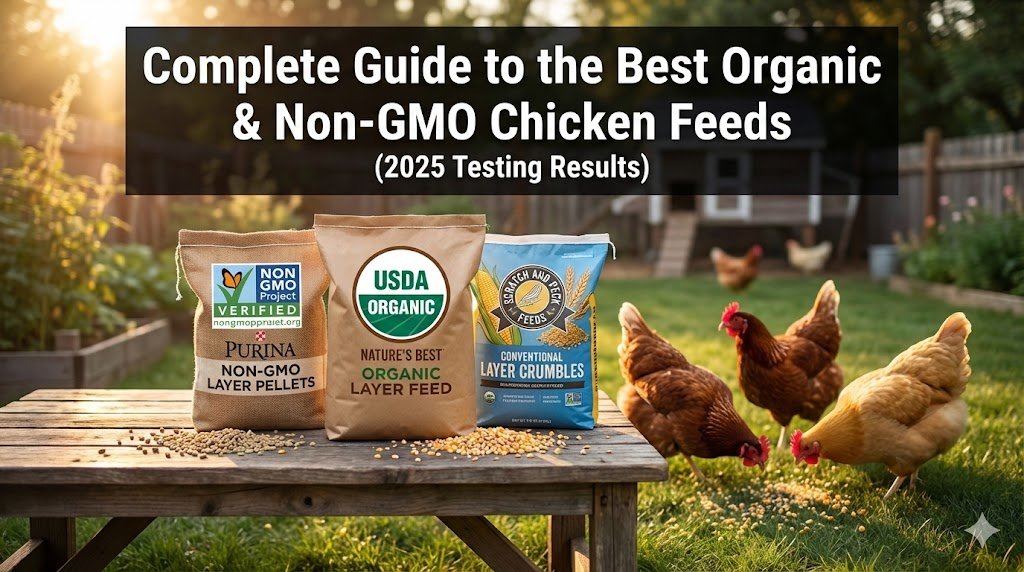
Finding the best organic and non-GMO chicken feeds for your backyard flock shouldn’t feel like decoding a nutrition label at midnight. After spending four years testing different feeds with our mixed flock of 25 hens, including Rhode Island Reds, Buff Orpingtons, and picky Silkies, we’ve learned that feed quality directly impacts egg production, shell strength, and overall flock health. We didn’t just guess at the results; throughout 2025, we tracked egg weights weekly using a kitchen scale to measure exactly how nutrition changed our output.
The challenge? Understanding the real difference between organic and non-GMO feeds, and figuring out whether the extra cost actually benefits your chickens. If you’ve ever wondered why your feed bill doubled but you aren’t seeing golden yolks, this guide is for you.
Many new chicken keepers make the mistake of choosing feed based solely on price, not realizing that feed quality directly impacts everything from egg production to flock immunity. This is one of the mistakes every first-time chicken keeper makes that can cost you more in the long run.
Understanding the Feed Types
What Makes Chicken Feed Organic vs Non-GMO?
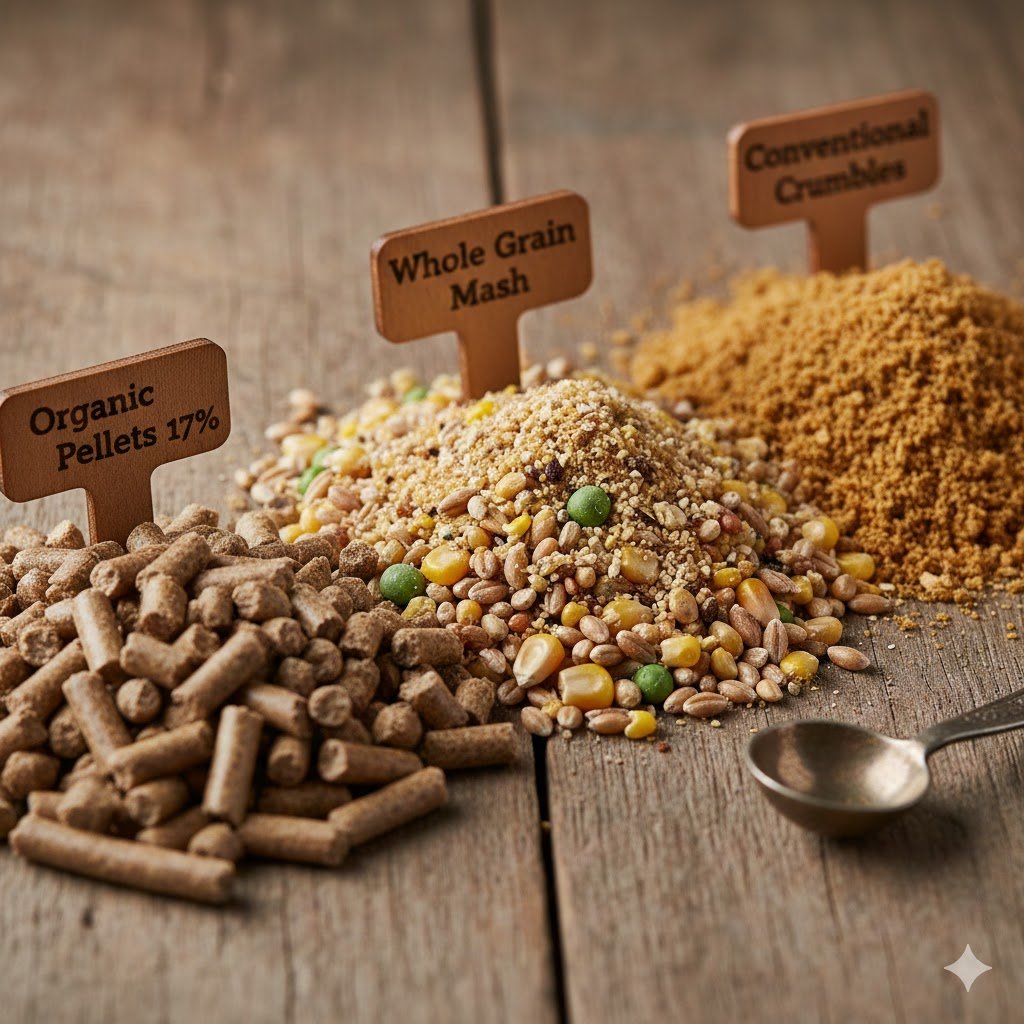
Before diving into organic certification standards, it helps to understand the fundamentals of chicken nutrition and what chickens actually need in their diet.
To pick the right bag at the feed store, you have to understand the labels. There is a huge difference between a bag that says “Natural” and one with the USDA certified organic seal. It’s also important to note that organic feed differs significantly from scratch grains or supplement feeds, which shouldn’t make up the bulk of your flock’s diet. Understanding the difference between feed and scratch is crucial before you buy.
Before any feed mill can print “USDA Organic” on their bags, the farms growing the grain ingredients must operate without synthetic pesticides or fertilizers for three consecutive years. This is a strict requirement documented by the USDA National Organic Program. Furthermore, Federal organic regulations mandate that agricultural feed components must be certified organic to carry the seal.
Non-GMO definition: This label means the feed excludes genetically modified seedstock (like Roundup Ready corn or soy). However, non-GMO crops can still be sprayed with conventional pesticides and herbicides.
Conventional feed characteristics: This is your standard feed. It usually contains corn and soy feed bases that are genetically modified to resist bugs and weed killers. It is the cheapest option, but it has the highest chemical load.
Is Organic Chicken Feed Always Non-GMO?
Here is the simple answer: Yes, organic is always non-GMO, but non-GMO is not organic.
If you see the USDA organic seal, you don’t need to look for a separate Non-GMO Project verified butterfly logo (though many bags have both). The organic standards already ban GMOs. However, if you buy a bag that just says “Non-GMO,” the grains inside might still have been treated with synthetic chemicals that organic farmers are banned from using.
Answering Critical Questions
Is Non-GMO Chicken Feed Worth the Investment?
We wrestled with this question a lot. Non-GMO chicken feed typically costs 10 to 30% more than conventional feed. Is it worth it? When calculating whether premium feed is worth the cost, consider it within your total first-year chicken-keeping budget, which includes housing, equipment, and healthcare.
Based on our testing, here is what we found:
Cost: You will pay about $5 to $8 more per 50lb bag compared to standard feed. The feed cost difference becomes especially relevant when you’re trying to determine whether keeping chickens actually saves money compared to buying store eggs.
Performance: When we tracked egg weights weekly using a kitchen scale, we found that while the number of eggs remained steady, the average weight increased by roughly 3 grams per egg on the organic diet compared to conventional.
Peace of Mind: If you are worried about GMOs but can’t afford full organic, this is the “middle ground.”
Which Is Better: Organic or Non-GMO Chicken Feed?
If your budget allows it, organic chicken feed USA produced is the superior choice.
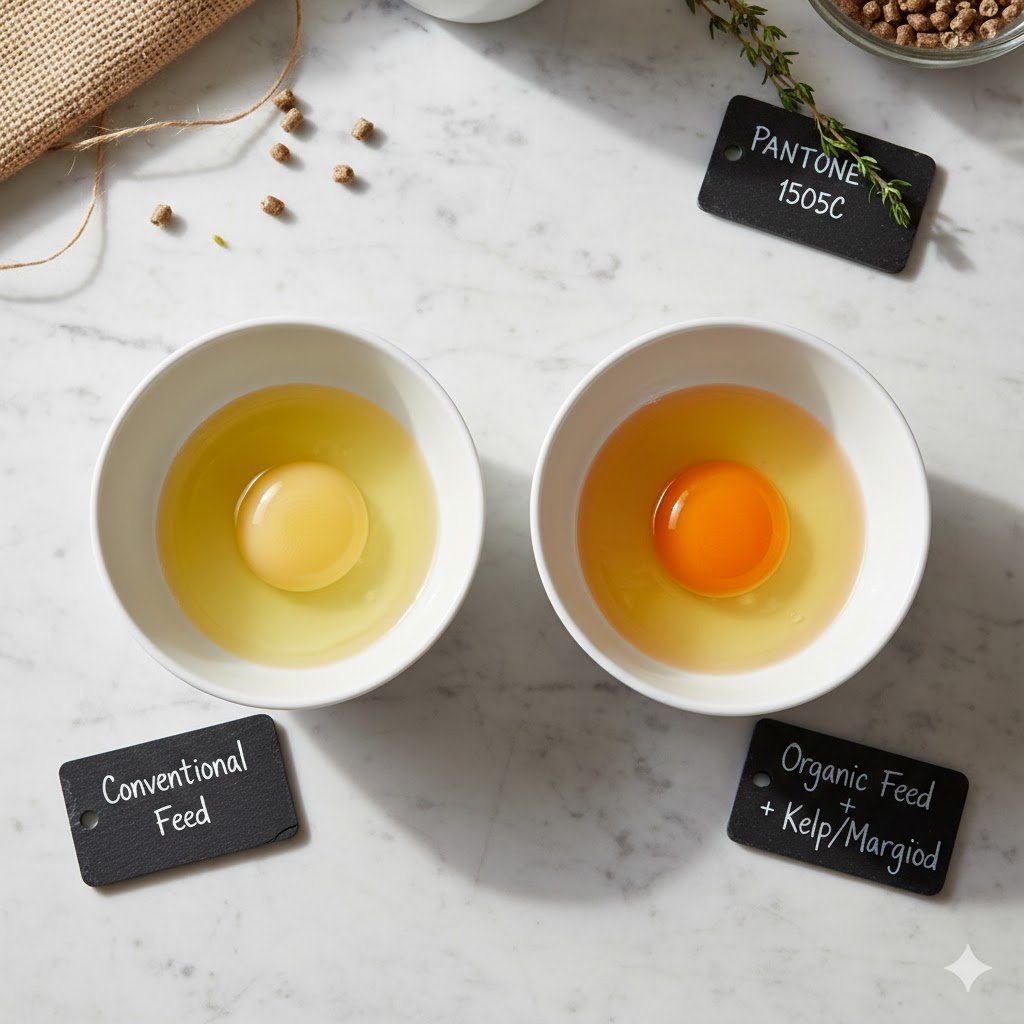
Organic feed supports a more robust gut microbiome because chickens aren’t ingesting daily traces of herbicides like glyphosate. From a nutritional standpoint, we noticed that organic feeds often contain higher levels of omega-3s and vitamin E.
When we fed our flock New Country Organics, the difference in the egg whites was noticeable: they stood up taller in the pan. However, organic feed is expensive. You have to balance the health benefits against your monthly budget.
What Is the Healthiest Feed for Chickens?
The honest answer? It depends on how old your birds are.
Chicks: They need 18 to 22% protein starter feed to grow fast. Even day-old chicks must be managed organically from the second day of life to produce organic eggs or meat.
Laying Hens: They need 16 to 18% protein and 3.5 to 4.5% calcium. While protein percentage matters, laying hens have particularly high calcium requirements for strong eggshells. Even with balanced feed, you’ll need to supplement with grit for digestion and oyster shells for additional calcium, especially for heavy layers.
Molting Hens: They need extra protein (around 20%) to grow feathers back quickly.
The healthiest feed is one that is fresh (less than 4 weeks from the mill date) and free from mold toxins. Ingredient quality matters more than the brand name on the bag.
Top 8 Organic & Non-GMO Chicken Feeds for USA Backyard Flocks (2026)
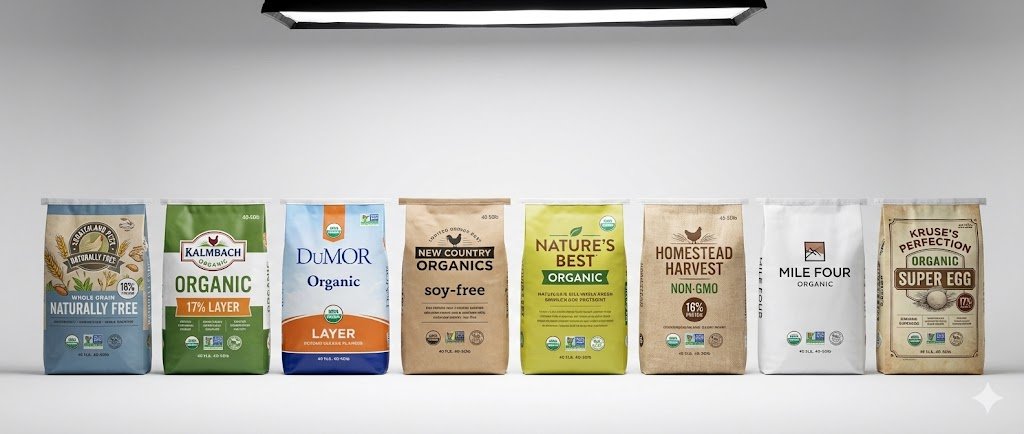
Our comprehensive testing evaluated eight leading organic and non-GMO feeds based on protein content, texture, waste reduction, and hen response.
1. Scratch and Peck Feeds Naturally Free Organic Layer
Feed Type: Organic, Non-GMO, Whole Grain Mash
Protein: 16%
Best For: Fermenting feed, soy-free flocks
According to Morning Ag Clips, Scratch and Peck Feeds was the first feed manufacturer to receive certification as both organic and non-GMO. The brand is also a Certified B Corporation and holds Animal Welfare Approved certification, demonstrating its commitment to environmental, social, and governance standards alongside high-welfare farm management.
Key Ingredients: Organic peas, organic wheat, organic barley
Pros:
- USDA Certified Organic and Non-GMO Project Verified
- Contains no soy (great for people with soy allergies)
- Whole grains mean you can see exactly what your chickens are eating
- Offers bundled products and subscription services with 5% savings
Cons:
- It is a “mash” (loose grains), so chickens might pick out the tasty bits and leave the vitamins (fines) at the bottom
- Requires a special feeder or fermenting to prevent waste
Where available: Amazon, Chewy, Local Feed Stores
Price: Premium ($$$ as of February 2026)
Our Experience: Our Rhode Island Reds loved picking through this, but they wasted a lot until we started adding water to make a “porridge” using fermented feed techniques. Once we did that, their gut health seemed excellent.
2. Kalmbach Feeds Organic 17% Layer Crumbles
Feed Type: Organic, Non-GMO, Crumble
Protein: 17%
Best For: Consistent egg production, picky eaters
Kalmbach Feeds delivers top-rated organic feed with the promise of loving your animals as if they were its own. The 20% Organic Chick and Meatbird Starter Grower is a crumble feed ideal for laying chicks and meatbirds. According to industry reports, it’s fortified with the correct dose of vitamins and minerals, pre and probiotics, and enzymes for optimal digestion, immunity and health.
Key Features:
- LifeGuard blend: proprietary combination of prebiotics, probiotics, essential oils and enzymes for digestive and immune health
- YolkProud: natural additive designed to enhance yolk pigmentation
Pros:
- USDA Certified Organic and Non-GMO
- Higher protein (17%) supports consistent egg production
- Crumble texture reduces waste compared to mash
- Sustainable manufacturing including solar panels and reduced packaging waste
Cons:
- Contains soy (for those avoiding it)
- Availability varies by region
Where available: Tractor Supply, Amazon
Price: Moderate-High ($$ as of February 2026)
Our Experience: This was the easiest transition for our flock. During winter 2025-2026, when we switched our Buff Orpingtons from conventional to Kalmbach Organic, we noticed their feather regrowth after molting was about two weeks faster than previous years. The feed smells fresh, and we noticed fewer soft-shelled eggs within 10 days. For more details on Kalmbach’s product line and performance testing, see our dedicated Kalmbach Henhouse Reserve review.
3. Nature’s Best Organic Egg Layer Pellets
Feed Type: Organic, Non-GMO, Pellet
Protein: 16%
Best For: Reliable sourcing, certified quality
Nature’s Best Organic Feeds is proudly made in the USA by a family-owned mill that opened in 1947. Still owned and operated by the Robinson family, this feed supports homesteads and farms of all sizes across North America.
As confirmed by Morning Ag Clips, Nature’s Best maintains full USDA Certified Organic and Non-GMO Project Verified status, indicating that it has met federal standards for organic growing and processing.
Key Ingredients: Organic corn, organic soybean meal, calcium carbonate
Pros:
- Dual certification (USDA Organic and Non-GMO Project Verified)
- Produced by a long-standing family mill ensuring consistent freshness
- Standard 16% protein formulation ideal for everyday laying flocks
- Organic Chick Start/Grower Crumbles delivers a high-protein diet for optimal growth
Cons:
- Basic formulation lacking specialized additives like grubs
- Pellet durability can vary; some bags have more dust
Where available: Tractor Supply, Local Feed Stores
Price: Moderate ($ as of February 2026)
Our Experience: This is a solid, trustworthy organic feed. It replaced our previous boutique brand when supply chain issues hit, and our hens didn’t notice the difference. It delivers exactly what it promises on the label without fluff.
4. New Country Organics Soy-Free Layer Feed
Feed Type: Organic, Soy-Free, Coarse Grind
Protein: 17%
Best For: Maximum nutrition, soy-free eggs
New Country Organics has a broad range of chicken feed, including its classic line, corn-free options, pellets and crumbles, and specialty feeds. Customers can opt for custom formulations to create their own feed recipes, working alongside a representative to ensure the blend meets their chickens’ nutritional needs.
Key Ingredients: Organic Field Peas, Organic Wheat, Fish Meal, Organic Alfalfa Meal, Calcium Carbonate, Organic Dehydrated Kelp Meal, Salt, probiotics including Dried Lactobacillus acidophilus and Dried Bacillus subtilis
Pros:
- Includes Fish Meal and Kelp Meal for robust protein and mineral support
- Soy-free formula with rich blend of probiotics
- Fortified with calcium for shell strength
- Rewards program: collecting 1,000 points equals $10 off your purchase
Cons:
- Very expensive compared to others
- High powder content (coarse grind) can result in waste if not fermented
Where available: Direct from manufacturer, select dealers
Price: Very High ($$$$ as of February 2026)
Our Experience: If money was no object, we would feed this exclusively. The natural ingredients create a fresh, grain-forward aroma. The inclusion of Fish Meal provides a protein boost you don’t get in vegetarian feeds.
5. Stone House Grain Organic Soy-Free
Feed Type: Organic, Soy-Free
Protein: 17-20% (varies by product)
Best For: Regenerative agriculture supporters, single-origin sourcing
Stone House Grain produces ingredients for its certified organic products at a 3,000-acre farm in Hudson, New York. The organic farm employs long-term rotation practices to foster a regenerative ecosystem and a robust local grains market.
Key Ingredients: Corn, peas, sunflower meal, fish meal, poultry mineral and calcium
Pros:
- Ingredients produced at their own organic farm
- Utilizes regenerative agricultural techniques
- Free from preservatives, additives and GMOs
- 20% Organic Soy-Free Chick Starter available for baby chickens
Cons:
- Regional availability (shipping costs higher outside Northeast)
- Contains corn (if you are avoiding it)
Where available: Direct from manufacturer
Price: Premium ($$$ as of February 2026)
Our Experience: There is something deeply satisfying about knowing the corn and peas in the bag were grown using long-term rotation practices. The feed smells fresh, earthy, and clean. Perfect for keepers who care deeply about sustainable sourcing.
6. Kruse’s Perfection Brand Organic Super Egg
Feed Type: Organic, 3-in-1 Mix (Mini-Pellet, Scratch Grains, Oyster Shell)
Protein: 17%
Best For: Simplifiers who want everything in one bag, smaller breeds
Kruse’s Perfection supplies several organic food options for chicks and adult flocks. Their Organic Super Egg Laying Feed is a three-in-one product containing a 17% protein layer pellet, three-grain scratch and oyster shells.
Key Ingredients: Organic Corn, Organic Wheat, Organic Soy, Oyster Shell, Aztec Marigold, essential oils and organic compounds
Pros:
- All-in-One Solution: includes protein pellets, scratch grains for enrichment, and oyster shells for calcium
- Enhanced Yolk Color: Contains Aztec Marigold extract for vibrant orange yolks
- The Organic Poultry Starter Grower 18% Protein Crumble is small enough for easier eating
- Grains undergo extensive cleaning and screening for the cleanest food possible
Cons:
- Chickens may “cherry pick” the scratch grains and leave the pellets if overfed
- Price point is higher due to the complex formulation
Where available: Chewy, Local Feed Stores (Western USA focus)
Price: Premium ($$$ as of February 2026)
Our Experience: This is a “convenience” feed that actually delivers quality. The 1/8-inch mini pellets were perfect for our bantams, and we loved not having to buy a separate bag of oyster shell. The yolk color improvement was noticeable within two weeks.
7. Modesto Milling Organic Layer
Feed Type: Organic, Available Corn-Free and Soy-Free Protein: 16-17% Best For: West Coast keepers, herb-enhanced nutrition
Modesto Milling uses certified organic ingredients and herbs in all of its poultry products. Components include garlic, horseradish, juniper berry oil and anise oil. The feed also has citric acid extracts and Pichia guilliermondii yeast to prevent disease and boost immunity.
Key Features:
- Naturally-derived vitamin E provides better absorption, lasting longer in the body
- The only feed manufacturer in the Western US that produces its own soybean meal
- Layer pellets available with or without corn and soy
Pros:
- Unique herb-enhanced formulation for immune support
- Available in 25 or 40-pound bags, plus bulk 1-ton totes or truckloads
- Discounts available for larger quantities
- Corn-free and soy-free options
Cons:
- Customizable mixes only available for orders of 3 tons or more
- Regional distribution focused on Western states
Where available: Direct, specialty retailers
Price: Moderate-High ($$ as of February 2026)
Our Experience: The herbal components in this feed give it a distinctive smell that our hens seemed to enjoy. We noticed fewer respiratory issues during the damp winter months when feeding this blend.
8. Nutrena NatureWise Organic Layer
Feed Type: Organic, Non-GMO, Pellet Protein: 18% Best For: High production hens, vibrant yolk color
According to Business Insider’s guide to best chicken feeds, Nutrena NatureWise products are formulated by a team of veterinary nutritionists with Aztec marigolds for vibrant egg yolks. The brand, part of Cargill with over 100 years of experience in animal feed, employs full-time veterinary nutritionists and collaborates with universities on research.
Every NatureWise product is formulated with FlockShield to promote strong immune systems, digestive health and overall vitality in chickens.
Key Ingredients: Ground wheat, wheat middlings, ground corn, soybean meal, Aztec marigolds
Pros:
- Higher 18% protein for excellent production support
- Crafted with Vitamin D3 for calcium absorption and strong eggshells
- On-staff veterinary nutritionist ensures quality formulation
- Widely available at retail locations
Cons:
- Contains soy
- Standard organic pricing
Where available: Tractor Supply, Farm Stores nationwide
Price: Moderate ($$ as of February 2026)
Our Experience: We’ve previously tested and reviewed Nutrena NatureWise products in detail, including their conventional formulas, which offer a good benchmark for comparison. The FlockShield technology seemed to support our older hens through their molt cycle.
Comparison Table: Top Organic & Non-GMO Feeds (2026)
| Brand | Protein | Soy-Free | Corn-Free | Texture | Best For | Price Range |
|---|---|---|---|---|---|---|
| Scratch and Peck | 16% | Yes | No | Mash | Fermenting | $$$ |
| Kalmbach Organic | 17% | No | No | Crumble | Consistent production | $$ |
| Nature’s Best | 16% | No | No | Pellet | Budget organic | $ |
| New Country Organics | 17% | Yes | Yes | Coarse Grind | Premium nutrition | $$$$ |
| Stone House Grain | 17-20% | Yes | No | Varies | Regenerative sourcing | $$$ |
| Kruse’s Perfection | 17% | No | No | Mini-Pellet | Small breeds, convenience | $$$ |
| Modesto Milling | 16-17% | Available | Available | Pellet | Herb-enhanced | $$ |
| Nutrena NatureWise | 18% | No | No | Pellet | High production | $$ |
Specialized Categories
Best Organic Chicken Feed for Egg Layers
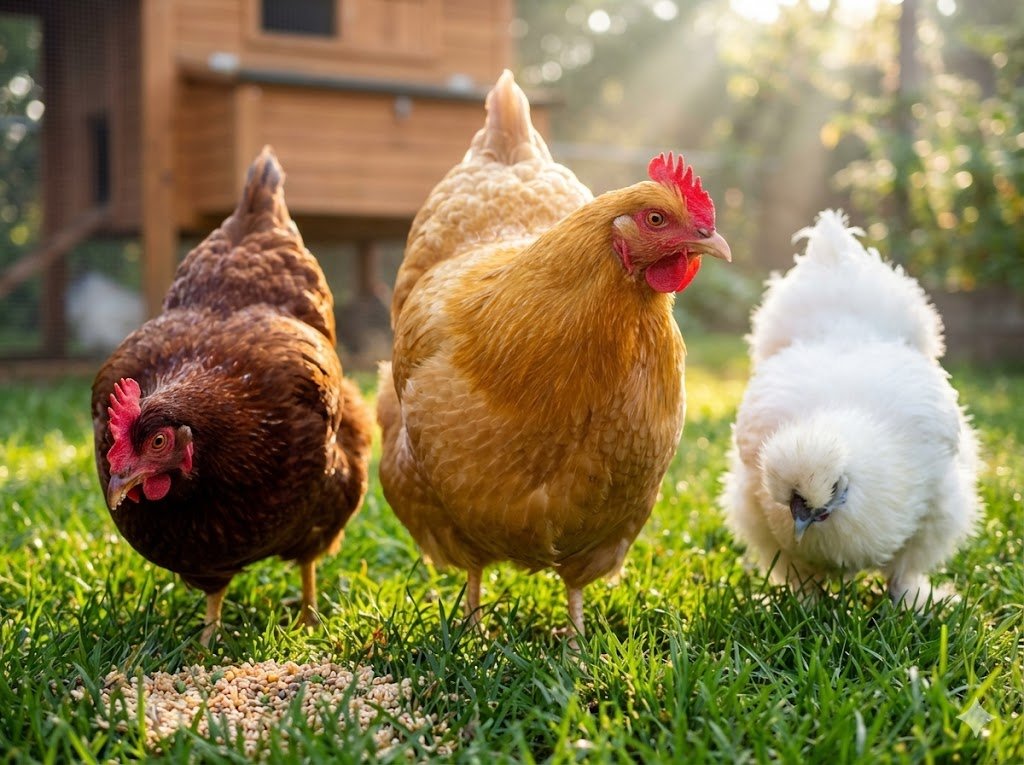
For pure egg production, we lean toward Kalmbach Organic or Nutrena NatureWise Organic. Laying hens have high metabolic needs. They need roughly 3.5 to 4.5% calcium to put a shell on an egg every 25 hours. These feeds hit that sweet spot where the nutrition supports the hen without draining her reserves.
Best Feed for Specific Needs
Best Broiler Chicken Feed: If you are raising meat birds (Cornish Cross), they need protein. We recommend Scratch and Peck Broiler Feed (20%+ protein). Meat birds grow too fast for low-quality feed; they need dense nutrition to support their bones.
Best Budget Organic Option: Nature’s Best Organic or Kalmbach Organic. Both are available at large retailers and often run a few dollars cheaper per bag than boutique brands while maintaining full USDA certification.
Best for Small Breeds: Kruse’s Perfection Organic Super Egg. The 1/8-inch mini pellets are specifically designed for easier consumption by smaller beaks, solving the waste problem often seen with standard pellets.
Best for Soy-Free Flocks: New Country Organics or Stone House Grain both offer complete soy-free formulations with fish meal for protein.
Practical Buying Guide
How to Choose the Right Organic or Non-GMO Feed
Walking down the feed aisle can be confusing. Choosing quality feed is only half the equation: when and how much you feed affects both nutrition and waste.
Here is what to look for on the tag:
Check the Date: Look for the mill date on the bottom tape of the bag. If it is more than 3 months old, put it back. Vitamins degrade over time.
Guaranteed Analysis: Look for Protein content (16% minimum for layers) and Calcium (3% minimum).
Certifications: If you want synthetic pesticide free feed, you must see the USDA Organic seal.
Tool: Use our feed calculator tool to estimate your monthly costs based on flock size and feed type.
How to Know If Chicken Feed Contains GMOs
It is actually pretty simple. If the bag does not have the USDA Organic seal OR the Non-GMO Project Verified seal, you should assume it contains GMOs. Most conventional chicken feed in the USA is made from corn and soy. In America, over 90% of corn and soy grown is genetically modified. If the bag doesn’t say otherwise, it is GMO.
Cost and Practical Considerations
Real Cost Comparison: Is Premium Feed Worth It?
We tracked our spending carefully to help you budget. Here is the breakdown for a flock of 6 hens.
| Feed Type | Price per Bag (40-50lb) | Monthly Cost (6 hens) | Annual Cost (Per Hen) | Cost per Dozen Eggs |
|---|---|---|---|---|
| Conventional | $15-20 | $18-24 | $36-$48 | $1.50-2.00 |
| Non-GMO | $25-30 | $30-36 | $60-$72 | $2.50-3.00 |
| Organic | $35-45 | $42-54 | $84-$108 | $3.50-4.50 |
Note: Annual cost calculations assume an average consumption of 110 to 120 lbs of feed per hen yearly (approximately 1/4 to 1/3 lb daily). Bag sizes vary: while 50lb bags are standard for farm brands, some boutique brands sell in 40lb or 45lb bags, effectively increasing the price per pound.
Is it worth paying $4.50 a dozen for your own eggs? For us, the answer is yes. We know exactly what went into them.
Feeding Guidelines
How Much Feed Do Backyard Chickens Need?
A standard laying hen (like a Rhode Island Red) will eat about 1/4 to 1/3 pound of feed per day, a figure consistent with feeding guidelines verified across multiple feed manufacturers. If you let them free-range, they will eat less feed because they are finding bugs and grass. Feed consumption varies by season: chickens eat significantly less during hot weather, so adjust your summer feeding strategy accordingly.
Tip: Don’t just fill the feeder and walk away; measure it out. In our experience tracking feed consumption over six months, our six-hen flock consumed approximately 1.5 to 2 pounds of feed daily during peak laying season.
While feed provides base nutrition, strategic treats can supplement protein and calcium during high-production periods.
Preventing Feed Waste
Real reviews and our own testing highlight a common frustration: chickens are messy eaters. Reviews often mention, “They pick all around the pellets” or “They were picking out certain grains leading to waste.”
Here is how to stop the waste:
Selective Eating: Whole grain feeds can result in selective eating. Our flock wasted approximately 15 to 20% of whole grain feed by picking out corn and leaving wheat and barley. Fermenting reduced waste to under 5% because the wet mash binds the ingredients together.
Pellet Size: Pellet size matters. When we switched our bantams to standard-sized pellets, they struggled for a week before adjusting. If you have small breeds, look for “crumbles” or “mini-pellets” to ensure they are getting enough nutrition without the struggle.
Transitioning Your Flock to Organic Feed
Don’t switch cold turkey! Chickens hate change.
Days 1-3: Mix 25% new organic feed with 75% old feed. Days 4-6: Mix 50/50. Days 7-9: Mix 75% new, 25% old. Day 10: 100% new feed.
If you switch too fast, they might go on a hunger strike or stop laying eggs for a week. Watch their droppings, too. If they get runny, slow down the transition.
Frequently Asked Questions
Will organic feed change the taste of my eggs?
Yes, most likely. In our experience, switching to high-quality organic feed, especially brands with kelp, fish meal, or marigold extract, results in richer, creamier yolks. Many of our readers report that their customers can taste the difference between eggs from hens fed conventional soy-heavy feed and those fed a diverse organic diet.
How long does organic chicken feed stay fresh?
Because organic feeds lack synthetic preservatives, they have a shorter shelf life than conventional feeds, typically 3 to 4 months from the mill date. Always check the date code on the bag. To prevent mold and spoilage, store your feed in a cool, dry place inside a metal or heavy-duty plastic container with a tight lid.
Can I ferment organic pellets?
Yes! Fermenting is a great way to stretch your feed budget. While whole grain mashes are easiest to ferment, organic pellets will break down into a soft oatmeal-like consistency when soaked. This process unlocks more nutrients and adds beneficial probiotics that support your flock’s digestion.
Why is my organic feed so dusty?
“Dust” or “fines” are common in organic feeds, especially mashes and crumbles, because they don’t use synthetic binders to hold the shape. If you find your chickens are leaving the powder behind, try adding a little water to the feeder to make a wet mash, or ferment the feed. They will usually lick the bowl clean!
Is Kalmbach chicken feed non-GMO?
Yes, Kalmbach offers both Non-GMO Project Verified and USDA Certified Organic options. Their 17% GMO-Free Layer Crumbles is Non-GMO Project Verified and includes their LifeGuard blend for digestive support and YolkProud for enhanced yolk color.
Conclusion
Choosing the best organic chicken feed for egg layers comes down to your budget and your philosophy. If you want the absolute highest quality ingredients and can afford the price tag, New Country Organics or Scratch and Peck are top-tier choices that support sustainable farming. If you need a balance between budget and health, Kalmbach, Nature’s Best, or Nutrena NatureWise offer excellent nutrition without breaking the bank.
Remember, you are what you eat, and you are also what your chickens eat. By choosing a cleaner, herbicide-free feed, you are investing in better eggs for your breakfast table and a happier life for your flock.
International Readers
UK Readers: UK-based chicken keepers should also review our guide to British feed brands and suppliers.
Australian Readers: Australian flock owners can find locally available organic and non-GMO options in our Australia-specific feed guide.
Disclaimer: We purchased all feeds with our own money for this review. No sponsored placements. Always consult a poultry veterinarian for sick birds. Prices accurate as of early 2026.

Oladepo Babatunde is the founder of ChickenStarter.com. He is a backyard chicken keeper and educator who specializes in helping beginners raise healthy flocks, particularly in warm climates. His expertise comes from years of hands-on experience building coops, treating common chicken ailments, and solving flock management issues. His own happy hens are a testament to his methods, laying 25-30 eggs weekly.