You are slicing a fresh pineapple in the yard and your flock is already sprinting toward you, necks stretched and eyes wide. Sound familiar? Before you toss them a chunk, it makes sense to know exactly what you are working with.
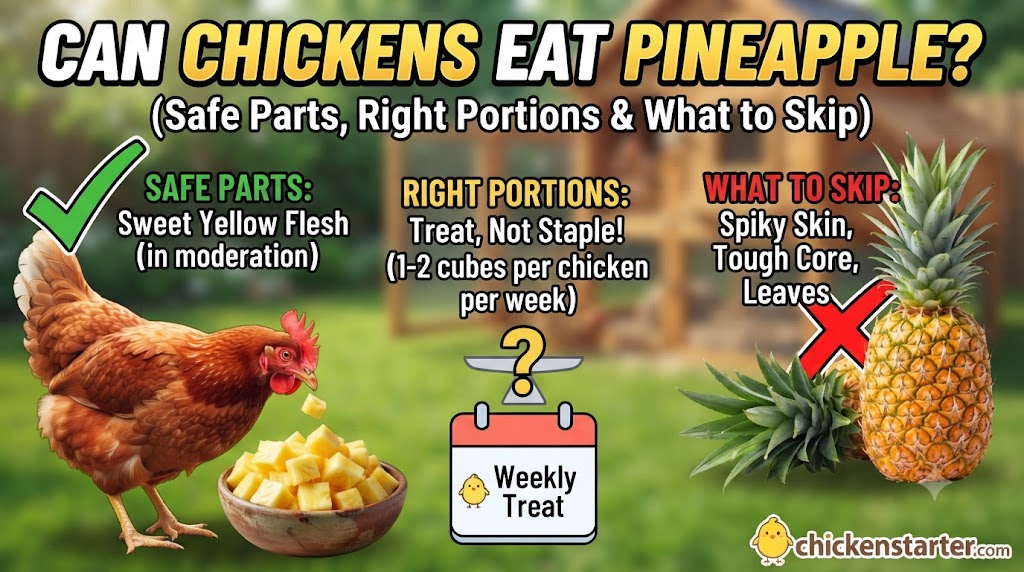
Yes, chickens can eat pineapple. Pineapple is safe to feed chickens in moderation and with a few important precautions. But not every part of the fruit earns the same green light, and how much you serve matters more than most guides actually explain.
This article covers the safe parts, the parts to skip, how much is too much, what happens if they overeat it, and how pineapple can even double as a summer enrichment tool for your coop.
Can Chickens Eat Pineapple? (Quick Answer)
Yes, chickens can eat pineapple safely. Pineapple is not toxic to chickens and is generally well tolerated. It contains natural sugars, water, and nutrients that chickens can digest without issues.
That said, the key word is moderation. Pineapple should always be treated as a supplement, not a main food. Chickens require a balanced feed as their primary diet, and fruits like pineapple should only be occasional treats.
The part of the pineapple you serve, the ripeness of the fruit, and the form it comes in (fresh, canned, frozen, dried) all change how safe it actually is. We will work through all of it below.
What Pineapple Actually Offers Your Flock
Pineapple is more than just a sweet treat. It packs a surprising nutritional punch for such a sweet little treat, and research backs up several standout nutrients that benefit backyard flocks directly.
The Key Nutrients Inside Pineapple
4 Pineapple provides vitamins C, B6, and B5, manganese, thiamine, folic acid, iron, potassium, and magnesium, along with trace amounts of vitamin A, vitamin K, calcium, phosphorus, and zinc. These various nutrients support the immune system, muscle development, healthy skin, brain development, and much more.
Here is what stands out specifically for chickens:
Vitamin C: 1Pineapple is an excellent source of vitamin C, which can help strengthen the chicken’s immune system. Healthy chickens are able to make their own vitamin C in their bodies. However, chickens may benefit from additional vitamin C especially if they are ill or otherwise under stress.
Manganese: 2Manganese promotes bone health and strong eggshell formation, which is especially useful for actively laying hens.
Vitamin B6 and Thiamine: Both support the nervous system, energy metabolism, and protein breakdown. Deficiencies in both can cause poor appetite, weight loss, and decreased egg production.
Hydration: Pineapple shines as a summer cooling treat, especially during hot weather when chickens need extra hydration. Its high water content helps keep your flock refreshed while offering a sweet, nutritious snack.
What Bromelain Does Inside a Chicken’s Gut
Bromelain is the compound that makes pineapple especially interesting for poultry. Bromelain is a proteolytic enzyme that improves how chickens digest their feed. A 2019 study on broiler chickens found that bromelain increased intestinal health, reduced harmful E. coli populations, and boosted beneficial Lactobacillus bacteria. In short, it is a gut hero. Pineapple has bromelain, an enzyme that helps break down proteins in the gut. This makes it easier for chickens to digest their food and can improve their overall digestion.
The important caveat: 1bromelain, while beneficial in moderation, can also cause issues if over-consumed. Too much bromelain may cause stomach upset and skin rashes in chickens. The dose absolutely matters here.
Which Parts of the Pineapple Are Safe — And Which to Skip
This is where a lot of owners get confused because different sources say different things. Here is a clear breakdown.
The Flesh: Always the Best Choice
The juicy yellow flesh is the only part you should be deliberately feeding your birds. The yellow, juicy flesh of the pineapple is the part that chickens can consume safely. It is a good source of vitamins, minerals, and natural sugars.
How to prep it: Chop the flesh into small cubes, around half an inch or less. Chickens cannot easily tear large chunks apart, so do them a solid and prep it properly.
Also, always use ripe pineapple. Unripe pineapples can be too acidic and tough for chickens to digest. This can lead to digestive upset and even discourage them from eating. Always offer ripe pineapple, as it is softer, sweeter, and easier for your chickens to enjoy.
The Core: Proceed With Caution
The core sits in a gray area. The tough, fibrous core of the pineapple should be removed before feeding it to chickens. It is difficult for them to digest and can cause digestive issues or blockages if ingested.
That said, yes, chickens can eat pineapple core. These are fibrous parts of the fruit that are digested and passed by chickens. For small or younger birds, removing the core is the safer choice. For healthy adult birds, a small amount is unlikely to cause harm, but there is no good reason to include it deliberately.
The Skin and Rind: Best Avoided
1 Only feed the soft flesh of the pineapple to your chickens. The rind and leaves are too tough for chickens and they usually will not eat them. 1 A small amount usually will not hurt them but too much can cause digestive troubles. To be safe, avoid giving your chickens pineapple rind.
The Leaves and Crown: Skip These
The green, spiky crown of leaves at the top of the pineapple should also be removed before feeding the fruit to your chickens. The leaves are tough and fibrous, making them difficult to digest and harmful if ingested.
There is no nutritional benefit worth the risk of a blockage. Just cut them off and compost them.
Fresh vs. Canned vs. Frozen vs. Dried Pineapple
The form of pineapple changes the safety picture significantly.
Fresh Pineapple: Always the Best Option
Fresh pineapple is absolutely the best way to go. It delivers full nutrition, natural hydration, and zero added nasties.
Canned Pineapple: Risky Unless You Choose Carefully
Chickens eating pineapple from a can is technically possible, but it comes with a big asterisk. Most canned pineapple contains added sugar, syrup, and preservatives that chickens simply do not need. Extra sugar raises the risk of obesity, spikes blood sugar, and creates the perfect environment for yeast overgrowth. Yeast overgrowth in the crop leads to Sour Crop, a fungal infection where fermentation goes sideways.
If fresh is not available: choose a variety packed in its own juice rather than syrup. Rinse the pieces well before serving, keep the portion tiny, and treat it as a last resort rather than a habit. Your flock’s digestive health will thank you for keeping the sugar load low.
Frozen Pineapple: Great for Hot Weather
Yes, chickens can eat frozen pineapple. It can be especially useful during hot weather as a cooling treat. Frozen pineapple still retains its nutrients and is safe as long as it is not fed in large quantities.
This is one of the most underused summer treat ideas for backyard flocks. Freeze small cubes and toss them out on a hot afternoon. Your birds will love it. For more ideas on keeping your flock comfortable in warm weather, check out our guide on what to feed chickens during a heatwave.
Dried Pineapple: Use Very Sparingly
Unsweetened dried pineapple is okay in moderation since the high sugar content can cause loose droppings. Drying concentrates the sugars significantly, so keep portions very small and always choose versions with no added sweeteners or sulfites.
How Much Pineapple Can Chickens Actually Eat?
This is where most guides stay vague. Here are practical numbers.
The 90/10 Rule
According to guidelines from Purina Mills, 4chickens should be fed a diet consisting of 90 percent high quality, balanced commercial feed and 10 percent healthy treats.
That 10 percent includes everything — not just pineapple. If treats are fed in excess of this ratio, the nutritional content of the diet will be altered, potentially resulting in protein, fat, or trace mineral deficiencies that will affect long-term health and egg laying. For adult chickens, aim for treats to make up less than 5% — approximately 1 tablespoon — of total food intake per day.
Exact Serving Guidance
For most healthy adult chickens, think in terms of tiny portions. A good starting point is 1–2 small bite-size pieces per bird, offered once or twice a week. For a standard backyard flock, that usually means sharing a few tablespoons total across several birds rather than giving each chicken a large chunk. For an average adult chicken, 1 to 2 tablespoons of chopped pineapple per serving is appropriate. For a flock of 4 to 6 chickens, about 1/4 to 1/2 cup of chopped pineapple total.
Always offer treats in the afternoon. Offer treats only in the afternoon to ensure chickens eat their commercial feed first. This prevents treats from replacing essential nutrients.
For a deeper look at exactly what your birds should be eating as part of a complete diet, take a look at our comprehensive chicken feeding guide.
Can Baby Chicks Eat Pineapple?
No. Keep pineapple away from baby chicks entirely. Avoid feeding fruit treats to chicks until they are at least 6–8 weeks old. Their digestive systems are still developing, and they require a balanced starter feed for proper growth.
For the safest approach, 4although adult chickens can tolerate pineapple in small amounts, owners should avoid feeding this treat to chicks. The nutritionists at Purina Mills recommend waiting until chickens reach 18 weeks of age, or until hens lay their first egg, before introducing treats. They need all the nutrients in their balanced feed, and offering pineapple or other treats may prevent them from getting all the nutrition they need.
Signs Your Chickens Ate Too Much Pineapple
Most of the time, a small accidental overfeeding will not cause a crisis. 3Generally, eating too much pineapple as a one-time treat is unlikely to cause serious harm. The bigger concerns — such as obesity and nutritional imbalances — occur when chickens are regularly overfed treats instead of their balanced diet.
Symptoms to Watch For
9 Pineapple is acidic and naturally high in sugar, so too much may lead to loose droppings, reduced interest in balanced feed, or digestive upset in some birds. 5 Pineapple contains a significant amount of fiber which can be difficult for chickens to digest in large amounts. Giving too much pineapple to chickens can cause digestive issues like diarrhea, bloating, and discomfort. The high sugar in pineapple can also disrupt the balance of the chicken’s gut microbiome if eaten too much.
In more severe cases, eating too much can lead to the development of a bezoar, a buildup of undigested material. Bezoars can result in serious medical complications.
What to Do
If you suspect your bird ate too much:
- Remove all remaining pineapple from the feeding area immediately
- 2 Remove any uneaten pieces within 15 to 20 minutes. Leftover fruit draws flies, invites mold, and can lead to the kind of coop smells that haunt your dreams.
- Watch droppings for the next 24 hours
- 9 If your chicken develops ongoing watery droppings, lethargy, poor appetite, or signs of dehydration after a new treat, contact your vet promptly.
If your flock regularly has digestive issues, it is worth reviewing the broader picture of their diet. Our article on chicken diarrhea and common health problems covers many of the root causes in detail.
Does Pineapple Affect Egg Production?
This is a question most backyard chicken guides skip entirely. Here is an honest answer.
Bromelain from pineapple has been studied in laying hens. Research published in a poultry science journal found that 11bromelain tended to promote the repair of fatty liver in aged laying hens, which is relevant because 11aging laying hens are more prone to developing fatty liver syndrome. That is an interesting indirect benefit for older hens.
Additionally, vitamin C boosts immune function and stress response in chickens. It also supports laying rates and overall fertility, which is great news for your egg basket.
However, realistic expectations matter here. Pineapple is a treat, not a supplement. Pineapple brings water, fiber, and some vitamins, but it also brings natural sugar and acidity. That matters because chickens have small digestive systems and can get into trouble when sweet treats start replacing balanced feed.
The fastest way to hurt egg production is to overfeed treats and displace high-protein layer feed. Keep pineapple in its proper place as an occasional addition, not a daily fixture. You can explore more about what actually moves the needle on laying in our article on the best chicken treats that boost egg laying.
Using Pineapple as a Flock Enrichment Tool
Here is something most backyard chicken articles skip: pineapple is not just food. It is also a great enrichment tool.
The Hanging Pineapple Method
1 Remove the top, rind, and core but otherwise leave the pineapple intact. Run a string through the hollow pineapple and hang it up for the chickens to peck at will. In summer, hanging pineapple chunks in the coop not only keeps your chickens entertained but also encourages foraging stimulation. This helps reduce boredom and promotes natural behaviors.
This is especially valuable if your flock spends time in a confined run. Boredom is a real issue in backyard flocks and leads to problems like feather pecking. If that is a concern, our article on how to encourage natural foraging in chickens has more practical strategies.
Building a Summer Fruit Treat Rotation
Pineapple works even better when rotated with other safe fruits. Your flock will appreciate the variety, and you reduce the risk of overfeeding any single fruit. Other great options to rotate in include watermelon, strawberries, blueberries, and bananas. Check out our full breakdown of what chickens can eat from your kitchen for a comprehensive reference.
Myths vs. Facts About Chickens and Pineapple
Myth: Pineapple is toxic to chickens Fact: No part of a pineapple is toxic to chickens, although some parts can cause health issues if eaten in excess.
Myth: The core is dangerous and should never be given Fact: The core is fibrous and best removed for small or young birds, but it is not toxic and will pass through the gizzard of healthy adult chickens.
Myth: Canned pineapple is just as good as fresh Fact: It is best to avoid canned pineapple because it is often packed with added sugar and preservatives, which are harmful to chickens. Juice-packed, rinsed versions are the only acceptable alternative when fresh is unavailable.
Myth: Pineapple directly boosts egg production Fact: Bromelain supports gut health and vitamin C helps with stress response, but pineapple itself does not meaningfully increase laying rates. Overfeeding it can actually reduce production by displacing balanced feed.
Myth: Any amount is fine because it is a natural fruit Fact: 9Yes, chickens can eat small amounts of fresh pineapple flesh as an occasional treat, but it should stay well under 10% of the total diet. Pineapple is acidic and naturally high in sugar, so too much may lead to loose droppings and reduced interest in balanced feed.
Other Safe Fruits to Rotate With Pineapple
Variety keeps your flock interested and prevents overexposure to any single sugar source. Here are other safe fruits to consider alongside pineapple:
- Watermelon — highly hydrating, great for hot days (can chickens eat watermelon?)
- Strawberries — rich in antioxidants and vitamin C (can chickens eat strawberries?)
- Bananas — soft, easy to eat, rich in potassium (can chickens eat bananas?)
- Blueberries — excellent antioxidant profile (can chickens eat blueberries?)
- Apples — crunchy and fiber-rich with seeds removed (can chickens eat apples?)
Always apply the same rules across all fruits: ripe, fresh, in small portions, offered after their main feed, with leftovers removed promptly.
Frequently Asked Questions
Can chickens eat pineapple skin?
Only feed the soft flesh of the pineapple to your chickens. The rind and leaves are too tough for chickens and they usually will not eat them. Small amounts will not harm them, but do not offer it deliberately.
Can chickens eat pineapple core?
The core is fibrous but not toxic. It should ideally be removed before feeding because it is difficult to digest and can cause digestive issues or blockages if ingested in larger amounts.
Can chickens eat canned pineapple?
Only if it is packed in natural juice — never syrup. Choose a variety packed in its own juice rather than syrup. Rinse the pieces well before serving and keep the portion tiny.
How often can chickens eat pineapple?
Offer pineapple once or twice per week at most. Avoid daily feeding to prevent nutritional imbalances.
Can I hang pineapple in the coop?
Yes, and it works really well. Make feeding time exciting by hanging pineapple pieces in the coop. This encourages foraging stimulation and keeps your flock entertained.
Does pineapple help egg-laying hens?
It supports immune function and digestive health in moderate amounts, but it is not a laying supplement. Overfeeding it will reduce egg production by crowding out their balanced layer feed.
What happens if my chicken eats too much pineapple?
Giving too much pineapple to chickens can cause digestive issues like diarrhea, bloating, and discomfort. Remove the fruit, monitor droppings for 24 hours, and contact a vet if symptoms persist or worsen.
Final Thoughts
Pineapple is a safe, genuinely useful treat for your flock when you use it correctly. Pineapple can be a safe and tasty addition to your chicken’s diet when fed in moderation. If you decide to offer your chickens pineapple, monitor them for any concerns or changes after eating it.
Stick to the ripe, fresh flesh. Cut it into small cubes. Offer it after your birds have already eaten their main feed. Remove any leftovers within 15–20 minutes. And use it once or twice a week at most — not every day.
If this is the first time your flock is trying pineapple, start with just a few small pieces and watch how they respond over the next day. If you are trying pineapple for the first time, start with less than you think they want and watch droppings for the next 24 hours. Most healthy adult birds will handle it without any issue at all.
The tropical fruit in your kitchen is absolutely worth sharing with your flock — just do it the right way.

Oladepo Babatunde is the founder of ChickenStarter.com. He is a backyard chicken keeper and educator who specializes in helping beginners raise healthy flocks, particularly in warm climates. His expertise comes from years of hands-on experience building coops, treating common chicken ailments, and solving flock management issues. His own happy hens are a testament to his methods, laying 25-30 eggs weekly.