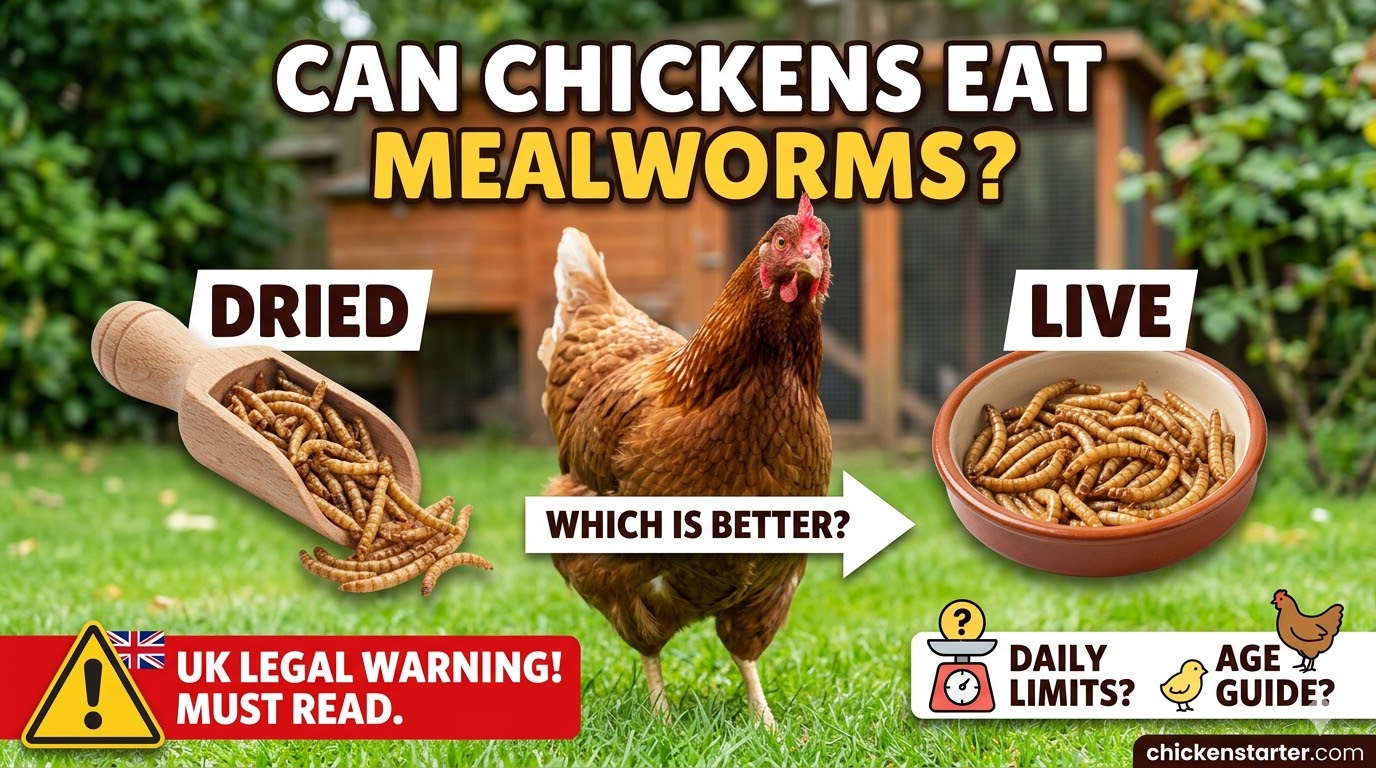
Yes, chickens can eat mealworms, both dried and live, and they are one of the highest-protein treats available, with dried mealworms containing approximately 50 to 53% crude protein by weight. My flock goes absolutely insane for mealworms. Nothing else comes close in terms of excitement.
However, there are two things most articles will not tell you. Feeding too many mealworms can cause kidney damage and avian gout due to their extreme phosphorus-to-calcium imbalance. And in the United Kingdom, feeding dried mealworms to chickens is technically illegal under animal by-products regulations. After learning about the phosphorus problem, I changed how much and how often I feed them. This guide covers the exact amount to feed, the right age to start, dried versus live comparison, the UK legal situation, and how to raise your own at home.
Quick Answer: Chickens can eat mealworms (dried or live) as a high-protein treat. Limit to 10 to 12 dried mealworms per chicken per day, no more than two to three times per week. Mealworms should never exceed 10% of total daily diet. Always provide grit. Start chicks no younger than six to eight weeks with crushed mealworms only. UK keepers: Feeding dried mealworms to poultry classified as livestock is currently restricted under animal by-products regulations. Check DEFRA guidance before feeding.
What Do Mealworms Do for Chickens? Benefits and the Hidden Risk
Mealworms (Tenebrio molitor) are the larval stage of the darkling beetle. Mealworm larvae are poor sources of calcium but rich in phosphorus. They are also packed with protein, essential amino acids, and beneficial fats. Their nutritional profile is further enhanced by dietary fibre in the form of chitin, a compound linked to potential benefits for poultry birds’ digestive health and immunity.
The benefits are genuine. Protein is essential during molt, when chickens need to regrow approximately 8,500 feathers, each roughly 85% keratin protein. Mealworms also stimulate natural foraging behavior, especially when offered live. According to research from Bug Factory, the chitin in mealworms reduced the growth of disease-spreading bacteria like E. coli while promoting good bacteria like Lactobacillus.
The Hidden Risk Nobody Talks About
The problem is the calcium-to-phosphorus ratio. The calcium content in mealworms is minimal, and the ratio of calcium to phosphorus is approximately 1:14. The ideal ratio for laying hens is approximately 2:1. When chickens consume excess phosphorus without adequate calcium to balance it, the body leaches calcium from bones and eggshells to compensate, resulting in soft-shelled eggs and weakened bones.
The second risk is avian gout. According to Backyard Poultry, too much protein can cause urates to build up in the blood, which can damage the kidneys and cause gout. As explained by information from Bitchin’ Chickens, gout is the result of either the production of too much uric acid or, more commonly, decreased kidney function enabling excess uric acid to cause damage to various internal systems. Data from dsm-firmenich confirms that protein levels in feed exceeding 30% cause uric acid production that leads to excretory loads in the kidneys.
Experienced poultry keepers on BackYard Chickens have noted that another cause of gout is excess protein in the diet, specifically asking whether birds have been spoiled with too many mealworms.
The first winter I kept chickens, I was dumping handfuls of dried mealworms into the run every morning thinking more protein equals better. Then a fellow keeper asked me how much I was feeding. When I told her, she looked alarmed and asked if I had ever heard of avian gout. That conversation changed my approach completely. For more on calcium for chickens, see our dedicated guide.
Dried vs. Live Mealworms for Chickens: Which Is Better?
This is not just a preference question. The nutritional profiles are meaningfully different because drying removes all water content, concentrating everything.
Dried mealworms contain approximately 50 to 53% protein, 25 to 28% fat, and just 5% moisture. Live mealworms contain roughly 20% protein, 13% fat, and 62% moisture. The calcium-to-phosphorus imbalance exists in both, but dried mealworms are far more concentrated per gram, making overdose significantly easier.
Are Dried Mealworms Good for Chickens?
Yes, in moderation. Dried mealworms are the most widely available and convenient form. They store easily in a sealed container at room temperature for months. But the concentration means a handful of dried mealworms contains far more protein and phosphorus than the same handful of live ones. This is why portion control with dried mealworms is critical.
Can Chickens Eat Live Mealworms?
Yes, and there are real advantages. Live mealworms provide hydration (62% moisture), behavioral enrichment (chickens love chasing them), and lower overdose risk per piece due to the water content diluting the nutrients.
I have timed it. A handful of dried mealworms lasts my flock about 90 seconds. The same number of live mealworms scattered in their run? Over 20 minutes of active foraging. The behavioral enrichment alone makes live worth considering, especially for confined birds that need stimulation. For more ways to enrich your flock’s day, see our guide on encouraging natural foraging.
Should You Soak Dried Mealworms for Chickens?
Soaking dried mealworms in warm water for 10 to 15 minutes before feeding rehydrates them, making them softer and easier to eat. This reduces choking risk, especially for younger birds. Soaking does not significantly change the nutritional profile, but the added water fills chickens up faster, reducing the risk of overeating.
I prefer to soak, drain, and scatter them in feed to avoid fouling the water. Some keepers add them directly to water dishes, but I have found that it makes the water dirty quickly.
How Many Mealworms Should You Feed a Chicken Per Day?
An average laying hen eats approximately 120 grams of complete feed per day. The 10% treat rule means all treats combined should not exceed roughly 12 grams per day. A single dried mealworm weighs approximately 0.1 to 0.15 grams. That works out to roughly 10 to 12 dried mealworms per chicken per day as the maximum. For live mealworms, which contain 62% water, 15 to 20 per chicken is reasonable.
Can Chickens Eat Mealworms Every Day?
Not recommended for long-term daily feeding. Even at 10 mealworms per day, the cumulative phosphorus load over weeks can stress the kidneys. The ideal approach: feed mealworms two to three times per week, not daily. Reserve them for molting season, training, or as a special reward.
During active molt, you can increase to four to five times per week for the six to eight week molting period, then scale back. During extreme cold, slightly more frequently for extra caloric energy is acceptable. But never more than 10% of daily feed intake regardless of frequency.
I feed mealworms three times per week, Monday, Wednesday, and Friday, and I keep a measured tablespoon scoop in the bag so I am not eyeballing it. It is the only way to stay consistent. For a complete feeding schedule, see our dedicated guide.
Why Is It Illegal to Feed Chickens Mealworms in the UK?
This section is critical for UK readers and for anyone who ships eggs internationally.
The Law Explained
According to DEFRA, as confirmed by the British Hen Welfare Trust, in 2014 Defra announced a ban on the feeding of dead mealworms to chickens. The UK government website states directly that dried terrestrial invertebrates and processed animal proteins of insect origin cannot be used in farm animal feed or in treats.
The reason traces back to the BSE crisis. After contaminated cow feed led to new-variant CJD in the late 1990s, and with similar problems involving sheep feed and scrapie, it became illegal to feed animal proteins to farm animals to prevent the problem from happening again. As the Keeping Chickens UK guide clarifies, all poultry, including those kept as pets, are considered farmed animals under the Animal By-Product Regulations and the TSE Regulations.
The Critical Distinction: Dried Is Banned, Live Is Legal
According to the British Hen Welfare Trust, this ban does not apply to live insects, insect fats, and oils. This is confirmed by ECOnourish, which has written confirmation from DEFRA that live insects are officially catalogued as live terrestrial invertebrates in all their life stages. This means they are given the go-ahead for your backyard chicken feeding.
The irony: your chickens can legally eat every live insect they find in the garden, and you can legally purchase live mealworms to feed them. But you cannot legally hand them a dried mealworm from a bag.
Legal Status by Country
United States: Legal. No federal restrictions on feeding insects to backyard poultry. Canada: Legal. CFIA allows insect-based feed ingredients. Australia: Legal. No prohibition under APVMA regulations. United Kingdom: Dried mealworms are restricted under animal by-products regulations. Live mealworms are legal. European Union: The European Commission authorized processed insect proteins for poultry feed in 2021 under Regulation 2021/1372.
What UK Keepers Can Do
If dried mealworms are off the menu, there are excellent protein-boosting alternatives. Sunflower seeds are high in protein and completely legal. Cooked eggs are one of the best protein sources available. Fermented feed increases protein bioavailability from existing feed. And letting chickens free-range where they will find live insects naturally is perfectly legal. For more on keeping chickens in the UK, see our complete guide.
This information is provided for educational purposes and does not constitute legal advice. UK readers should consult the latest DEFRA guidance at gov.uk. US, Canadian, and Australian readers should verify local regulations for commercial poultry operations.
What Age Can Chickens Eat Mealworms? A Week-by-Week Guide
Zero to three weeks: No mealworms. Starter feed only. Digestive system too immature for treats of any kind. Three to four weeks: Very cautiously. One to two small, crushed dried mealworms per chick if desired. Must have chick-sized grit available. Watch for pasty butt. Four to six weeks: Cautiously. Two to three crushed mealworms per chick, twice per week. Always with grit. Growing birds need balanced nutrition, and treats should remain minimal. Six to eight weeks: Yes, in small amounts. Three to five whole dried or live mealworms per bird, two to three times per week. Grit required if not on soil or gravel. Eight weeks and older: Standard treat portions. Eight to ten mealworms per bird, two to three times per week. Sixteen weeks and older (laying age): Full adult portions. Ten to twelve per bird, two to three times per week. Ensure oyster shell is available for calcium balance.
Do Chickens Need Grit to Eat Mealworms?
Yes. The chitinous exoskeleton of mealworms requires grinding in the gizzard. Free-ranging chickens pick up grit naturally from soil and gravel. Confined chickens on soft bedding must have grit provided in a separate dish. Chick-sized grit for young birds, standard poultry grit for adults. I keep a dish of grit permanently available in both my coop and run. It costs almost nothing and eliminates any concern about digestive issues from treats.
When my chicks were about seven weeks old, I offered their first mealworms. Crushed dried ones scattered in the brooder. The reaction was pure, joyful chaos. They figured it out in about three seconds. But I started with just two to three per chick and made sure their chick grit feeder was full. For the full chick care checklist, see our 15 must-haves for bringing chicks home.
Can Silkie Chickens Eat Mealworms?
Yes. Same rules apply to all breeds, including Silkies and other bantams. Reduce portions for bantams since they are smaller. Five to eight mealworms instead of ten to twelve. Silkies’ restricted vision from crest feathers means they may struggle to catch live mealworms. Scatter near them or offer by hand.
How to Train Chickens with Mealworms
Mealworms are the number one training tool for chickens. Nothing else comes close in terms of motivation.
Training 1: Come When Called
Choose a consistent call word or sound. Shaking a container of mealworms works brilliantly. Every time you offer mealworms, shake the container first. Start at close range, about five feet away, then gradually increase the distance. Within one to two weeks, your chickens will come running from across the yard at the sound. Use only three to five mealworms per session. This is about reinforcement, not feeding.
Training 2: Returning to the Coop at Night
Start offering mealworms only inside the coop at dusk for three to five days. Chickens will associate the coop with mealworms at that time. Within a week, they will eagerly go in on their own at your call. For more strategies, see our guide on getting chickens back in the coop at night.
Training my flock to come when called took exactly four days with mealworms. I use a specific whistle, and now I can call all eight hens from anywhere in the yard. It is also a safety tool. If I spot a hawk overhead, one whistle and they come running for the coop. Mealworms may have literally saved lives.
Mealworms vs. Black Soldier Fly Larvae vs. Sunflower Seeds: Which Protein Treat Is Best?
This comparison is the information no other article provides. According to Grubby Farms, black soldier fly grubs contain about 50 times more calcium than mealworms.
Dried mealworms offer approximately 50 to 53% protein, 25 to 28% fat, negligible calcium (about 0.1%), and a calcium-to-phosphorus ratio of roughly 1:14. High protein, but terrible calcium balance.
Dried black soldier fly larvae (BSFL) offer approximately 40 to 48% protein, 28 to 35% fat, around 3% calcium, and a calcium-to-phosphorus ratio of approximately 1.5:1. As noted by What’s That Bug, the balanced calcium-to-phosphorus ratio is a huge advantage. Hens feeding on black soldier fly larvae have stronger feathers, bones, and eggshells.
Sunflower seeds (shelled) offer approximately 20% protein, 51% fat, negligible calcium (about 0.07%), and a calcium-to-phosphorus ratio of roughly 1:9. Good protein, but very high in fat.
Cooked eggs from your own flock offer approximately 13% protein, 11% fat, roughly 5% calcium, and an excellent calcium-to-phosphorus ratio. The most balanced option and essentially free.
If I could recommend only one protein treat, it would be BSFL for the superior calcium-to-phosphorus ratio. Mealworms are a close second for protein content and palatability, but the calcium imbalance means you need to be more careful with portions. In practice, I rotate between all four. Variety is best for balanced nutrition. For our complete feeding guide, see our dedicated article.
How to Raise Mealworms for Chickens at Home
Raising mealworms at home saves significant money and gives you complete control over quality. Store-bought dried mealworms cost $8 to $15 per pound. A home colony costs pennies per pound after the initial setup.
What You Need
Three shallow plastic bins (Sterilite-type, approximately 12-quart). Wheat bran as substrate and food. A starter colony of 500 to 1,000 live mealworms, available online or at pet stores. Potato or carrot slices for moisture. According to The Happy Chicken Coop, for the feed you want to use wheat bran. If you cannot use wheat bran, then rolled oats, chicken mash, or cereal crumbs will also work.
Step-by-Step Setup
Bin 1 (Beetle Bin): Spread two to three inches of wheat bran. Place mature beetles here once they develop. They will lay eggs in the bran. A female beetle can lay up to 500 eggs in her lifetime. Bin 2 (Growing Bin): After two to three weeks, sift bran from Bin 1 into this one. Tiny larvae will be in the bran. Let them grow for eight to ten weeks, feeding them wheat bran and moisture from carrots or potatoes. Bin 3 (Harvest Bin): Once mealworms reach full size (about one inch), harvest for your chickens.
Keep temperature between 70 and 80°F for fastest growth. Below 70°F, growth slows significantly. Provide moisture through vegetable slices, never a water bowl. As noted by Backyard Poultry, while the mealworms do best with consistent moisture, many colonies fail because of excess moisture. Do not provide a water bowl. Fresh greens or vegetable scraps will provide enough moisture.
Always keep 10 to 20% of your harvest back, allowing them to pupate and become beetles for the next cycle. Maintenance takes about five to ten minutes per week. A mature colony starting from 1,000 worms can produce enough mealworms for a flock of six to eight hens year-round. Total setup cost: under $30.
Important tips: if you use chicken feed as substrate, make sure it does not contain diatomaceous earth, as this will kill the mealworms. Sterilize your wheat bran before use by spreading it on a baking tray and heating in the oven for 20 minutes at 130 to 150°F. This prevents mite introduction.
Can Ducks and Other Poultry Eat Mealworms?
Yes. Ducks, turkeys, quail, and guinea fowl can all eat mealworms safely under the same 10% treat rule. Ducks especially love mealworms and benefit from the protein during their fall molt. Ducks have higher niacin requirements than chickens, and mealworms naturally provide niacin, making them a slightly better supplemental treat for ducks. If feeding a mixed flock, scatter rather than pile to ensure all birds get some.
What Other Worms Can Chickens Eat?
Superworms (Zophobas morio) are larger, fattier versions of mealworms. Same feeding rules apply. Some keepers crush the head first as superworms can bite. Waxworms (Galleria mellonella) are very high in fat and should be a rare treat only. Earthworms and red wigglers are excellent protein and chickens find them naturally while foraging. However, they can carry gapeworm (Syngamus trachea), so be aware of parasite risks. Black soldier fly larvae have the best calcium-to-phosphorus ratio of any insect and are increasingly popular. Wild-caught insects are generally safe, but avoid insects from areas treated with pesticides. Maggots from rotting meat should never be deliberately fed due to the risk of botulism and bacterial contamination.
What Foods Should You Never Feed Chickens?
While mealworms are safe in moderation, many common foods are not. Never feed: Avocado (persin causes heart failure). Raw or dried beans (phytohemagglutinin is lethal uncooked). Chocolate (theobromine toxicity). Green potato skins and sprouts (solanine). Onions in large amounts (hemolytic anemia). Rhubarb leaves (oxalic acid). Moldy food of any kind (mycotoxins). Use caution with: Excessive mealworms (gout, kidney damage). Citrus in large amounts (may interfere with calcium absorption). Salty or highly processed foods (sodium toxicity risk).
Safe and enjoyed: Strawberries, blueberries, watermelon, cucumbers, grapes (halved), apples (no seeds), carrots, sweet potatoes (cooked), mushrooms (store-bought only), zucchini, pumpkin, cabbage, corn, rice (cooked), lettuce, bread (sparingly), celery, cheese (small amounts), and bananas. For the complete breakdown, see what chickens eat.
Frequently Asked Questions About Feeding Mealworms to Chickens
Can chickens eat mealworms every day?
Small amounts daily likely will not cause immediate harm, but daily feeding is not recommended long-term. Mealworms have an extreme calcium-to-phosphorus imbalance (approximately 1:14), and chronic daily feeding can lead to kidney stress and avian gout. Feed two to three times per week instead, limiting to 10 to 12 dried mealworms per chicken per session.
Why is it illegal to feed chickens mealworms?
In the UK, dried mealworms are classified as Processed Animal Protein (PAP), which is banned from being fed to farmed livestock under Animal By-Products Regulations designed to prevent transmissible spongiform encephalopathies. This restriction does not apply in the US, Canada, Australia, or the EU (which legalized insect proteins for poultry in 2021). Live mealworms are legal in the UK.
Are dried mealworms good for chickens?
Yes, in moderation. Dried mealworms contain approximately 50 to 53% crude protein and are rich in essential amino acids like lysine, making them excellent during molt and winter. However, they are very low in calcium and high in phosphorus, so they must be limited to 10% of diet and paired with oyster shell for calcium balance.
Can baby chickens eat mealworms?
Not until at least six to eight weeks old. Baby chicks need the precise protein ratios in starter feed (18 to 20%) for proper development. After six weeks, offer two to three crushed dried mealworms per chick, twice per week. Always provide chick-sized grit.
What age can chickens eat mealworms?
Conservatively, six to eight weeks old for small, crushed mealworms. Full adult portions (10 to 12 per bird) can begin at around eight to ten weeks. Some keepers introduce tiny amounts at three to four weeks, but this is not necessary and carries slight digestive risk.
How many mealworms should you feed a chicken per day?
10 to 12 dried mealworms per adult chicken, or 15 to 20 live mealworms. During molt, you can increase to 12 to 15 dried per bird. All treats combined should not exceed 10% of daily feed intake. A tablespoon of dried mealworms per chicken is a good visual measure.
Should I soak mealworms for chickens?
Soaking is optional but beneficial. Soaking dried mealworms in warm water for 10 to 15 minutes rehydrates them, making them softer, easier to eat, and adds a small hydration benefit. It also causes chickens to fill up slightly faster, reducing overconsumption risk.
Do chickens need grit to eat mealworms?
Yes. Mealworms have a chitinous exoskeleton that requires grinding in the gizzard. Free-ranging chickens pick up natural grit from soil and gravel, but confined chickens must have grit provided separately. Without grit, mealworms can cause crop and digestive issues.
How do you raise mealworms for chickens at home?
Set up three shallow plastic bins with two to three inches of wheat bran as substrate. Start with 500 to 1,000 live mealworms. Keep at 70 to 80°F. Provide moisture via potato or carrot slices. First harvest takes approximately three months. A mature colony costs pennies per pound and can sustain a flock of six to eight hens year-round.
Can ducks eat mealworms?
Yes, the same rules apply. Ducks love mealworms and benefit from the protein during their fall molt. Ducks have higher niacin requirements than chickens, and mealworms provide niacin. Same portion limits and frequency apply.
What is the healthiest food for chickens?
A complete, commercially formulated layer feed (16% protein) is the foundation. It provides all necessary nutrients. The healthiest supplemental treats include mealworms (in moderation), black soldier fly larvae, fermented feed, leafy greens, and herbs. No single treat replaces balanced feed. See our complete chicken feeding guide.
The Bottom Line
Mealworms are one of the most effective protein treats you can give your chickens. The 50%+ protein content, the essential amino acids, the enrichment value of live feeding, and the sheer joy your flock shows when they hear that bag rustle. There is nothing quite like it.
But they are not a free-for-all treat. The calcium-to-phosphorus ratio is genuinely problematic. The gout risk at high doses is documented. And UK keepers face a legal situation that most American chicken blogs ignore entirely.
Keep it to 10 to 12 dried mealworms per chicken, two to three times per week. Always provide grit and oyster shell alongside. Consider rotating with BSFL for a better calcium profile. And if you want to save serious money while knowing exactly what your flock is eating, start a mealworm colony at home for under $30.
Want to make sure your flock’s diet is perfectly balanced? Check out our complete feeding guide for chickens and our chicken feed calculator and cost guide.
This article is for educational purposes only and does not replace professional veterinary or legal advice. For health concerns about your flock, consult a licensed avian veterinarian. For UK regulatory questions, consult the latest DEFRA guidance.

Oladepo Babatunde is the founder of ChickenStarter.com. He is a backyard chicken keeper and educator who specializes in helping beginners raise healthy flocks, particularly in warm climates. His expertise comes from years of hands-on experience building coops, treating common chicken ailments, and solving flock management issues. His own happy hens are a testament to his methods, laying 25-30 eggs weekly.