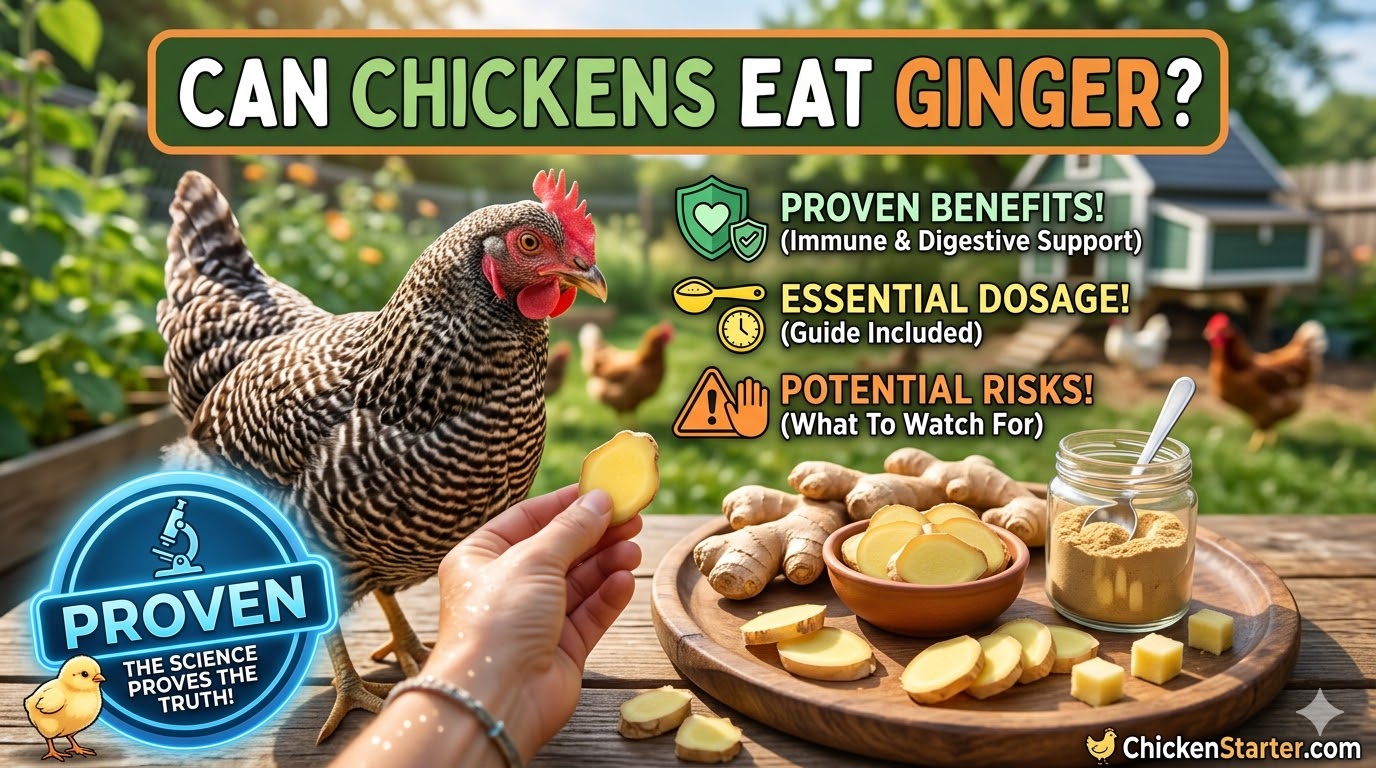
Yes, chickens can safely eat ginger, fresh, dried, or powdered, and it is one of the few natural supplements with genuine, peer-reviewed scientific evidence backing its benefits for poultry health, egg quality, and digestive function.
I started adding grated ginger to my flock’s feed during a harsh January cold snap after reading about its circulation-boosting properties. What I noticed surprised me. Not only did my hens seem more active in the cold, but within two weeks their egg yolk color deepened noticeably. But ginger is not the harmless cure-all that many chicken blogs claim. Getting the dosage wrong can cause real problems. Here is what the published research actually says.
Quick Answer: Chickens can safely eat ginger (fresh, dried, or powdered) in small amounts. Research published in Poultry Science shows that adding 10 to 15 grams of ginger powder per kilogram of feed improves egg quality, antioxidant levels, and digestive health. Fresh grated ginger: roughly a quarter teaspoon per chicken, two to three times per week. Dried powder: roughly an eighth of a teaspoon per chicken. Never exceed 2% of total diet. Always plain, with no seasoning, sugar, or salt.
Why Ginger Is One of the Most Research-Backed Supplements for Chickens
Unlike most “can chickens eat X” topics, ginger has an extensive body of peer-reviewed poultry science behind it. This is not folk wisdom or internet guesswork. Multiple controlled studies have measured specific outcomes.
The Bioactive Compounds That Actually Matter
Ginger (Zingiber officinale) is the rhizome of a plant in the Zingiberaceae family. According to a 2022 study published on PubMed Central, ginger contains several effective compounds, including gingerol and gingerdione, that exert strong antioxidant activity.
Three compounds matter most for your chickens.
Gingerol (specifically 6-gingerol) is the primary active compound in fresh ginger. It has anti-inflammatory, antioxidant, and antimicrobial properties. This is the compound responsible for ginger’s spicy, pungent flavor and most of its documented health benefits.
Shogaol is formed when ginger is dried or cooked. This is an important detail that most chicken blogs get wrong. Drying or cooking ginger does not simply destroy its active compounds. It transforms gingerol into shogaol, which actually has stronger anti-inflammatory properties than gingerol. So dried ginger powder is not “weaker.” It is different, and in some ways more potent.
Zingerone is formed specifically during cooking. It has antioxidant and anti-diarrheal properties, making cooked ginger particularly helpful for chickens with digestive upset.
What Peer-Reviewed Research Proves
The breadth of published evidence is impressive. As the 2022 PMC study states, “as a natural feed additive, ginger may have great benefit and value in poultry nutrition, especially for broilers, due to its antibacterial, anti-inflammatory, antioxidant, antiseptic, antiparasitic, and immunomodulatory properties.”
That same study found that ginger inclusion significantly improved antioxidant indices in broiler sera and liver. Total body weight gain was higher in ginger-supplemented birds. The inclusion of ginger improved dry matter digestibility, crude protein utilization, and crude fiber utilization. Blood cholesterol, triglycerides, and VLDL (bad cholesterol) decreased significantly, while HDL (good cholesterol) increased.
A separate study published in Animals found that dietary ginger extract supplementation increased egg weight, improved egg quality, and reduced the yolk cholesterol content of laying hens. Improved antioxidant status was also observed.
According to PoultryDVM, one of the most respected veterinary resources for backyard poultry, adding 10 to 15 grams of supplemental ginger root powder per kilogram of feed improved laying performance and serum egg yolk antioxidant status.
USDA Nutritional Data
Based on USDA FoodData Central data, per 100 grams of raw ginger root: 80 calories, 17.77g carbohydrate, 1.82g protein, 0.75g fat. The standout minerals are potassium at 415mg (12% of daily value), copper at 0.23mg (25% of daily value), magnesium at 43mg, and manganese at 0.23mg. It also provides vitamin B6, vitamin C, and folate. The glycemic index is just 10.
But it is the bioactive compounds, the gingerols, shogaols, and zingerone, that make ginger truly valuable for chickens. These do not appear on standard nutrition labels.
How to Give Ginger to Chickens: Root, Powder, Tea, Juice and Ginger Snaps
Fresh Raw Ginger Root: The Gold Standard
Raw ginger retains the maximum concentration of gingerol and is the preferred form for maximizing the nutritional content. However, as noted by New Life on a Homestead, ginger root is hard and dense, and only your most enthusiastic eaters will spend much time on it unless you prepare it properly.
How to prepare: Wash the root thoroughly. Peeling is optional but recommended, especially for store-bought ginger, to remove any pesticide residue. Grate finely using a box grater or microplane. Mix the grated ginger directly into your flock’s regular feed.
Dosage: Roughly a quarter teaspoon of grated fresh ginger per chicken, two to three times per week.
My preferred method: I grate fresh ginger on Sunday morning, mix it into a container of layer feed for the week, and portion it out. Total weekly prep time is under five minutes.
Ginger Skin and Peel
Yes, ginger skin is edible and non-toxic for chickens. It is fibrous and tough, so chickens likely will not choose to eat it on their own. If you grate ginger with the skin on, wash it thoroughly first. If you peel first, the peels can be steeped into ginger tea instead of going to waste.
Dried Ginger Powder: The Research-Tested Form
Dried ginger powder is the form used in nearly all peer-reviewed poultry studies, including the landmark Zhao study in Poultry Science that established the 10 to 15 grams per kilogram dosage range.
According to Chickens and You, ground dried ginger is very concentrated, so chickens only need about an eighth of a teaspoon sprinkled over feed per chicken, no more than twice a week. Use plain, organic, additive-free ground ginger. Avoid commercial spice blends that may contain anti-caking agents or other additives.
Ginger Tea: Best for Sick or Cold-Weather Chickens
According to Backyard Poultry, a powerful anti-inflammatory, ginger works to reduce swelling in the throat or sinuses, especially when taken in a liquid form, as when ginger root is steeped in boiling water.
Recipe: Steep two to three thin slices of fresh ginger in one cup of boiling water for 10 minutes. Cool completely to room temperature. Add to waterer at a 1:4 ratio (one part ginger tea, four parts plain water). Do not add honey, sugar, or lemon.
I make ginger tea for my flock on mornings below 20°F. I brew it the night before, let it cool in the fridge overnight, and add it to their waterer first thing in the morning. They drink it readily, and I have noticed fewer signs of lethargy compared to winters before I started this practice.
Ginger Juice and Pulp
Pure ginger juice is extremely concentrated and is not recommended undiluted. The pulp leftover from juicing is safer. Mix just a spoonful or two into feed for four to six chickens. Not an entire bowl. For liquid supplementation, ginger tea is a much better option.
Ginger Snaps, Gingerbread, and Ginger Cookies: Mostly No
The ginger itself is not the problem. It is everything else. Ginger snaps and gingerbread contain sugar, butter, flour, molasses, and often spices or chocolate. An occasional tiny crumb will not harm your flock, but these are not recommended as a regular treat.
Gingerbread houses are absolutely off-limits. They include icing, candy decorations, artificial dyes, and processed sugar. If you want to give your chickens the benefits of ginger, use actual ginger root, not processed human treats loaded with sugar and butter.
Cooked Ginger: Safe and Different
Chickens can eat cooked ginger. They seem to prefer it when it is softened up. As noted by New Life on a Homestead, cooking reduces some nutritional value, but there is an important nuance most articles miss.
Cooking converts gingerols into shogaols, which are more stable and more potent anti-inflammatory compounds. So cooked ginger is not “worse.” It is simply different and potentially better for anti-inflammatory purposes. A great way to offer cooked ginger is to grate it into warm oatmeal for a cold-weather treat.
Never feed chickens ginger that has been prepared with harmful ingredients. No Thai noodles, no stir-fry with soy sauce, no ginger-spiced baked goods. Salt, butter, sugar, excess oil, and sauces are all bad news for chickens.
Can Ginger Treat Sick Chickens? What Research Shows and What It Does Not
This is a YMYL section that requires careful, honest treatment. Ginger has genuine documented benefits, but it is not medicine.
Digestive Issues: Strong Evidence
According to Backyard Poultry, ingesting ginger can help with digestion and works to soothe the gastrointestinal tract, eliminate harmful bacteria, and support good bacteria. Research published on PubMed Central found that ginger root extract has been shown to reduce intestinal oxidative stress and enhance intestinal mucosal development in chicks. It helps neutralize free radicals, activates antioxidant enzymes, and mitigates inflammation.
For a hen dealing with diarrhea, ginger tea can help get her through a rough bout. This is one of ginger’s best-documented benefits.
Respiratory Issues: Moderate, Supportive Evidence
Backyard Poultry notes that ginger works to reduce swelling in the throat or sinuses, is antiviral, can help clear congestion, keeps mucus membranes healthy, and stimulates the immune system. Ginger tea is particularly useful here because the warm liquid combined with ginger’s anti-inflammatory properties can provide genuine comfort.
However, as noted by Spice.Alibaba.com, while ginger may ease mild respiratory discomfort as a supportive measure, it cannot cure infections. Bacterial or viral illnesses require veterinary antibiotics. Ginger’s anti-inflammatory properties might reduce symptom severity but should never replace professional treatment. For serious respiratory infections, see a vet.
Coccidiosis: Promising New Research
This is where this article provides information no other chicken blog covers. A 2025 study published in Frontiers in Veterinary Science investigated the effects of ginger supplementation on broiler chickens experimentally infected with coccidiosis. The researchers concluded that ginger supplements have effective therapeutic uses against intestinal coccidiosis, as shown in biochemical, immunohistochemical, and histopathological results. Utilizing ginger extracts before and during coccidial infection prevented the cellular development of oocysts through immune-stimulating and antioxidant activities.
A separate study published in the Journal of Applied Animal Research found that feed intake, body weight, and feed conversion ratio were significantly improved in ginger and garlic supplemented birds compared to infected, untreated controls. Oocyst shedding, lesion scores, and intestinal histopathology all improved.
The critical caveat you must understand: This research uses concentrated aqueous ginger extracts administered at controlled dosages (6 grams per liter of water) in laboratory settings. Sprinkling some grated ginger on your flock’s feed will not replicate these results. If you suspect coccidiosis, meaning bloody droppings, lethargy, ruffled feathers, or weight loss, contact a veterinarian immediately. Ginger may support recovery alongside proper veterinary treatment, but it is not a cure or substitute for medication like amprolium.
Circulation and Frostbite Prevention
According to Backyard Chicken Coops Australia, ginger is a miracle worker for chickens’ circulatory systems, helping to stimulate blood flow, so adding it to their diet in winter is strongly recommended.
Backyard Poultry adds that this circulation benefit not only helps chickens stay warm in winter but can also help prevent frostbite. Applied externally, ginger may also help with arthritis, or to soothe a chicken in pain from swelling of an injured leg or a sprained toe. Steep slices of the root in hot water, cool to lukewarm, and apply as a compress to the inflamed area.
Ginger is a supplement, not medicine. It cannot cure infections, replace veterinary care, or substitute for properly formulated poultry feed. If your chicken is sick, consult a licensed avian veterinarian. See our guide on when to call the vet.
Can Chickens Eat Ginger Leaves?
Online sources directly disagree on this. Some say yes, chickens can eat ginger leaves safely. Others say there is limited research and advise against it.
Ginger leaves are edible for humans and are used in certain Asian cuisines. They are non-toxic and belong to the same plant family as turmeric. However, there are no published studies specifically testing ginger leaves in poultry diets.
My recommendation: if you grow ginger and your chickens free-range near the plants, occasional nibbling is almost certainly harmless. But do not deliberately harvest and feed leaves in large quantities. The root is where all the studied benefits are. Why introduce uncertainty when the root is readily available and research-proven?
Can Chickens Eat Ginger and Garlic Together?
Yes, and the combination has been studied specifically in poultry research. A study by Ali and colleagues, published in the Journal of Applied Animal Research, designed an experiment testing ginger and garlic both individually and in combination against experimentally induced coccidiosis in broiler chickens. The findings showed that ginger and garlic produced encouraging results in comparison to amprolium, a commonly used anticoccidial drug.
How to Use Garlic and Ginger Together
Here is a practical protocol I use during fall and winter:
Grate roughly a quarter teaspoon of fresh ginger per chicken. Mince one small clove of garlic per four to five chickens (garlic is stronger, so use less). Mix both into regular dry feed. Offer two to three times per week. Cycle on and off: two weeks on, one week off to prevent gut irritation from continuous use.
Important clarification about garlic: Some sources lump garlic with onions and call it “toxic to poultry.” This is an oversimplification. Onions contain thiosulphate, which destroys red blood cells and is genuinely dangerous. Garlic in moderate, supplemental amounts is safe and beneficial according to multiple peer-reviewed studies. Excessive raw garlic in very large amounts can theoretically cause hemolytic anemia, but the quantities used in feed supplementation are well within safe ranges. The key is moderation.
For more on natural supplements, see our guide on how to use apple cider vinegar for chickens.
Can Chickens Eat Ginger and Turmeric?
Yes. Ginger and turmeric (Curcuma longa) belong to the same Zingiberaceae plant family. Turmeric contains curcumin while ginger contains gingerol. They are different compounds with complementary benefits. Both are anti-inflammatory and antioxidant.
Turmeric is particularly noted for its egg yolk color enhancement, producing a deep golden-orange color. The two can be offered together in small amounts mixed into feed, using the same dosage guidelines as ginger alone: roughly a quarter teaspoon total combined per chicken, two to three times per week.
Turmeric deserves its own dedicated guide. For now, know that it pairs beautifully with ginger and is safe for chickens in the same moderate quantities.
How Much Ginger Can Chickens Eat? The Research-Based Dosage Guide
This is the critical section that no other chicken blog provides with proper research backing. The dose makes the difference between benefit and harm.
The Research-Established Dosage Range
The landmark Zhao study in Poultry Science used 675 Hyline Brown hens divided into five control groups receiving 0, 5, 10, 15, or 20 grams of ginger powder per kilogram of feed for ten weeks. As referenced by multiple sources including BackYard Chickens forum members, Dr. Zhao concluded that the optimum supplementation rate appeared to be between 10 and 15 grams per kilogram of feed.
Practical Dosage for Backyard Keepers
Fresh grated root: Roughly a quarter teaspoon (about 1 gram) per chicken, two to three times per week, mixed into feed.
Dried powder: Roughly an eighth of a teaspoon (about 0.5 grams) per chicken, two to three times per week. This is half the fresh dose because dried ginger is more concentrated.
Ginger tea: Added to waterer at a 1:4 ratio (one part cooled tea, four parts plain water), two to three times per week during cold weather.
Ginger pulp (from juicing): One to two teaspoons per four to six chickens. Occasional treat. Not concentrated enough to cause problems.
The Danger Zone
According to The Happy Chicken Coop, the intensity of side effects is determined by the amount of ginger given and the length of time. It is when ginger is given at a high dosage for a long amount of time that side effects become more prominent.
Watch for symptoms within 12 to 24 hours of feeding: abnormally loose droppings, reduced feed intake, or lethargic behavior. If these appear, discontinue ginger and monitor for 48 hours.
The simple rule: a small amount, a few times a week, never daily long-term without breaks. I use ginger on a cycling schedule: two weeks on, one week off, especially during winter. This gives my flock the benefits without the risk of chronic overexposure.
Does Feeding Ginger to Chickens Improve Their Eggs?
Yes, and this is the best-documented benefit. According to Backyard Poultry, a 2011 study published in Poultry Science found that adding powdered ginger to laying hens’ feed in a 0.1 percent ratio resulted in increased egg productivity, specifically the laying of larger eggs containing more antioxidants. The researchers discovered that hens supplemented with ginger powder began laying eggs with a greater mass and found a higher quantity of antioxidant in the egg yolks.
The study published in Animals confirmed these findings: dietary ginger extract supplementation increased egg weight, improved albumin height and Haugh unit (measures of egg quality), decreased yolk cholesterol content, and improved antioxidant status.
One concern some keepers raise: does ginger change the taste of eggs? According to The Happy Chicken Coop, when you feed chickens food with strong flavors like curry spice, it can alter the taste of their eggs. At the recommended small dosages of a quarter teaspoon two to three times per week, I have never noticed a taste difference. However, if you are sensitive to this, taste-test an egg after two weeks of supplementation.
For more on egg quality, see our guides on eggs from backyard chickens and why chickens stop laying eggs.
How to Use Ginger for Chickens in Winter
Winter is when ginger shines brightest as a supplement. According to Backyard Chicken Coops Australia, ginger is a “miracle worker” for chickens’ circulatory systems, helping to stimulate blood flow, making it essential during cold weather.
The Ginger Winter Wellness Protocol
Feed supplement: Grate a quarter teaspoon of fresh ginger per chicken and mix into warm oatmeal or layer feed. Offer three times per week.
Ginger tea in waterer: Brew ginger tea, cool completely, and add to the waterer at a 1:4 ratio on mornings below freezing. See our guide on keeping chicken water from freezing for cold-weather waterer tips.
Frostbite support: Steep ginger slices in hot water, cool to lukewarm, and apply as a compress to combs showing early frostbite signs. This provides localized anti-inflammatory and circulation-boosting benefit.
Molting support: The Happy Chicken Coop shares that they “intend on only using ginger whilst our hens are moulting as it can help them moult faster.” The anti-inflammatory properties can support feather regrowth during this stressful period.
For Australian keepers: Your peak ginger benefit season is May through August (winter). Avoid heavy ginger supplementation during December through February heat, as ginger can increase metabolic heat generation during digestion. For more seasonal guidance, see our winter feeding guide and winterizing your coop guide.
Can Baby Chickens, Ducks, and Other Poultry Eat Ginger?
Baby Chicks
Ginger is not recommended for chicks under six weeks old. Baby chicks have developing digestive systems that are highly sensitive. Too much ginger may irritate a young chick’s gut.
Wait until chicks are fully feathered and at least six to eight weeks old before offering tiny grated amounts. No more than an eighth of a teaspoon per chick, once or twice a week at most. Their diet should remain 95%+ starter feed during this critical growth period. For everything you need for new chicks, see our 15 must-haves for bringing chicks home.
Ducks and Other Poultry
Same rules as adult chickens. Same dosage guidelines. Avoid giving ducklings, goslings, or other young poultry ginger in their first few weeks of life. Wait until they mature before introducing ginger in careful moderation. Also reduce the dose for smaller bantam breeds.
What Foods Should You Never Feed Chickens?
While ginger is safe in moderation, many common foods are not. Here is a quick reference.
Never feed: Onions (thiosulphate destroys red blood cells, causing hemolytic anemia). Avocado flesh, pit, or skin (contains persin). Raw or dried beans (contain phytohemagglutinin). Chocolate, especially dark varieties (contains theobromine). Green potato skins and sprouts (contain solanine). Rhubarb leaves (contain oxalic acid).
Use caution with: Citrus in large quantities (may interfere with calcium absorption). Garlic in very large amounts (small supplemental amounts are beneficial, excessive amounts can cause anemia).
Safe and enjoyed: Strawberries, blueberries, watermelon, cucumbers, grapes (halved), apples (no seeds), carrots, cabbage, corn, rice (cooked), sweet potatoes, mushrooms (store-bought only), zucchini, pumpkin, lettuce, bread (sparingly), celery, cheese (small amounts), and bananas.
For the complete breakdown, see our guide to what chickens can eat from your kitchen and our full guide on what chickens eat.
Frequently Asked Questions About Feeding Ginger to Chickens
Can you give raw ginger to chickens?
Yes, raw ginger root is safe and retains maximum gingerol content. Grate finely, roughly a quarter teaspoon per chicken, and mix into feed. Raw ginger is hard and dense, so most chickens will not eat large pieces. Grating is essential for them to consume it.
Can chickens eat ginger root peel or skin?
Yes, ginger skin is non-toxic. However, it is fibrous and tough. Most keepers peel ginger before grating for easier preparation. If leaving the skin on, wash thoroughly to remove any pesticide residues.
Can chickens eat ginger juice?
Pure ginger juice is very concentrated and not recommended undiluted. The pulp leftover from juicing is safer. Mix one to two teaspoons into feed for four to six chickens. Ginger tea (steeped slices in water, cooled) is a better liquid option than pure juice.
Can chickens eat ginger and garlic together?
Yes, and research shows the combination produces encouraging results in poultry, including improved growth performance, reduced coccidial oocyst shedding, and better feed conversion. Use a quarter teaspoon ginger plus one small clove of garlic per four to five chickens, mixed into feed, two to three times per week.
Can chickens eat ginger snaps or gingerbread?
Not recommended. While the ginger itself is safe, ginger snaps and gingerbread contain sugar, butter, flour, molasses, and often spices or chocolate. Use actual ginger root instead of processed human treats.
Can ginger cure coccidiosis in chickens?
A 2025 study in Frontiers in Veterinary Science showed ginger extract significantly reduced coccidial oocyst counts in infected broilers. However, this used concentrated extracts in controlled laboratory conditions. Ginger may support treatment but should never replace veterinary-prescribed anticoccidial medication. If you suspect coccidiosis, contact a vet immediately.
How should I give ginger to chickens?
The easiest methods: Grate a quarter teaspoon of fresh ginger per chicken and mix into regular feed, two to three times per week. Or sprinkle an eighth of a teaspoon of dried ginger powder over feed. Or brew ginger tea (steep slices in boiling water, cool completely) and add to waterer at a 1:4 ratio.
Can chickens eat ginger leaves?
Sources disagree. Ginger leaves are edible for humans, but there is limited research on their safety for chickens specifically. Occasional nibbling from free-ranging near ginger plants is likely safe, but do not deliberately feed leaves in quantity. The root is where all the studied benefits are.
Can ducks eat ginger?
Yes, the same rules apply. Same dosage guidelines as chickens. Avoid giving ginger to ducklings under six to eight weeks old.
The Bottom Line
Ginger is one of the most scientifically validated natural supplements you can offer your flock. The evidence for improved egg quality, better digestive health, stronger antioxidant status, enhanced circulation, and reduced cholesterol is real and published in peer-reviewed journals, not just blog posts.
But the dosage matters. A small amount, a few times a week, with periodic breaks, is the approach supported by research. More is not better. And ginger is never a replacement for proper veterinary care when your chickens are genuinely sick.
I keep it simple: grated ginger in the feed two to three times a week during winter and molting season. Ginger tea in the waterer on the coldest mornings. A compress on any hen showing early frostbite signs. And absolute restraint during the summer heat.
Want to learn more about natural supplements for your flock? Check out our guide on how to use apple cider vinegar for chickens and our best chicken treats that boost egg laying.
This article is for educational purposes only and does not replace professional veterinary advice. Ginger is a supplement, not medicine. For health concerns about your flock, consult a licensed avian veterinarian.

Oladepo Babatunde is the founder of ChickenStarter.com. He is a backyard chicken keeper and educator who specializes in helping beginners raise healthy flocks, particularly in warm climates. His expertise comes from years of hands-on experience building coops, treating common chicken ailments, and solving flock management issues. His own happy hens are a testament to his methods, laying 25-30 eggs weekly.