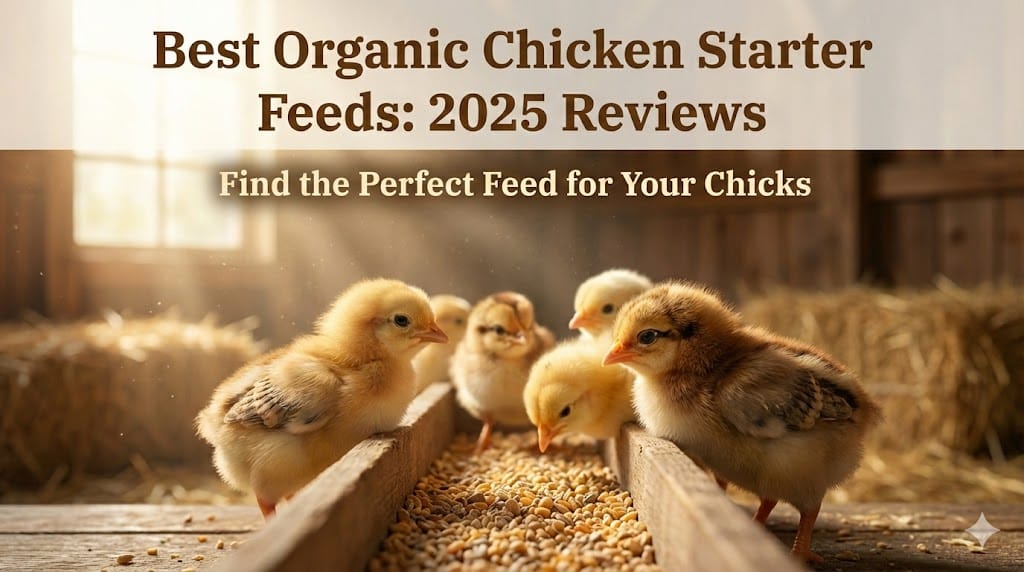
Choosing the right organic chicken starter feed can feel overwhelming when you’re staring at a wall of options at the feed store. The bags all look similar, the prices vary wildly, and every label claims to be the “best.”
When my first batch of chicks arrived, I had no idea how much the feed would matter. I grabbed whatever the feed store had on the shelf—the cheapest option I could find. Big mistake. Those chicks grew slowly, feathered out unevenly, and seemed lethargic compared to my second batch—which I started on a proper 21% protein organic feed.
I’ve been there. I’ve stood in the aisle reading labels until my eyes crossed, wondering if I was just wasting money on fancy packaging.
This guide breaks down exactly what to look for in organic chick starter feed, reviews the top brands available in 2025, and helps you pick the best option for your backyard flock’s first critical weeks. We aren’t just looking at price; we are looking at value, sustainability, and the long-term health of your birds.
Buying the wrong feed is just one of the mistakes every first-time chicken keeper makes—don’t let it happen to you. Quality feed is just one piece of the puzzle. Make sure you have all 15 must-haves when bringing chicks home before your chicks arrive.
This article focuses on starter feeds specifically, but if you’re looking for organic options across all life stages, check out our roundup of the best organic and non-GMO chicken feeds.
The Economics of Quality Feed: A Smart Investment?
Before we look at specific brands, we need to talk about money. You see a standard bag for $20 and an organic one for $40. It is tempting to grab the cheap one.
I’ve seen forum discussions where frustrated keepers say organic is “even more expensive” than human food. One guy said he was “paying more to feed my chickens than I pay to feed myself.” It’s a valid concern.
However, experienced homesteaders view feed not as a cost, but as an investment in flock health. Feed is typically your biggest ongoing expense. Our breakdown of the cost to raise chickens for the first year shows exactly where your money goes.
The “Hidden Costs” of Cheap Feed
Cheap feed often relies on fillers and lower-quality protein sources that are harder for chicks to digest. This can lead to:
- Higher Consumption: Chicks eat more of the cheap feed trying to meet their nutritional needs.
- Health Issues: Poor nutrition in the first 8 weeks can lead to developmental issues, weak immune systems, and higher mortality rates.
- Vet Bills: Treating a sick chick or dealing with failure to thrive costs far more than the $10 difference in a bag of feed.
By choosing a premium organic starter, you are front-loading your investment to ensure you have robust, healthy layers that produce for years. It is quality-focused decision making that pays off in the coop.
Decoding Labels: Why Certifications Matter
In the world of agriculture, “natural” means nothing. To ensure you are getting what you pay for, you need to understand the certifications. This is what premium advertisers want you to know:
USDA Certified Organic
This is the gold standard. For a feed to carry this seal, it must meet the rigorous standards of the USDA National Organic Program. This means:
- Ingredients must be grown without synthetic fertilizers, sewage sludge, irradiation, or genetic engineering (GMOs).
- Farming practices must protect natural resources and conserve biodiversity.
- It is strictly regulated and inspected under USDA Organic Regulations.
It is not an easy badge to earn. As Meyer Hatchery explains in their guide, the certification is a “difficult process as the seeds have to be organic from the start and that means the land has to be certified as organic as well.” This rigorous chain of custody ensures the feed is genuinely free from preservatives, antibiotics, hormones, and pesticides from the ground up.
Non-GMO Project Verified
While all organic feed is non-GMO, not all non-GMO feed is organic. This specific butterfly seal from the Non-GMO Project verifies that the product has gone through rigorous testing to ensure it is free from genetically modified organisms. It does not guarantee the absence of pesticides, which is why the USDA Organic seal is superior for chemical avoidance.
B Corp Certification
You’ll see this on brands like Scratch and Peck. This has nothing to do with the ingredients and everything to do with the company. Certified by B Lab, it signifies that the business meets high standards of verified performance, accountability, and transparency on factors from employee benefits to supply chain practices. It appeals to those of us interested in sustainable farming practices and ethical consumption.
What Makes a Great Organic Chicken Starter Feed?
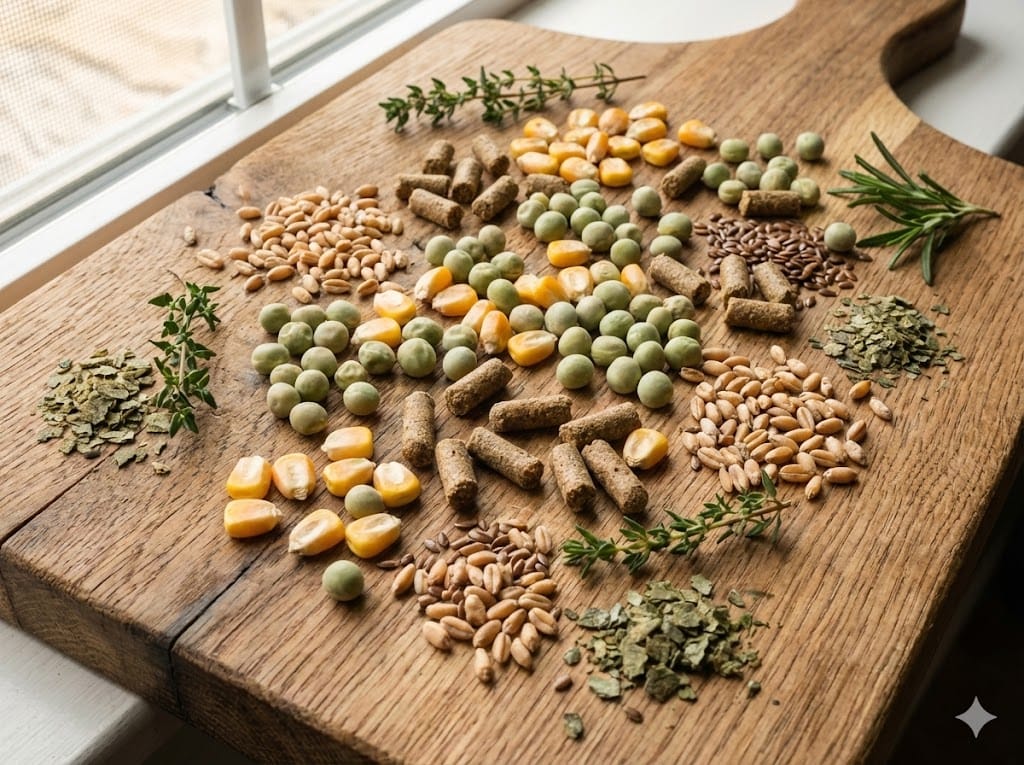
A chick’s body grows crazy fast in the first few weeks. They basically double in size overnight. To do that, they need the right fuel.
New chicken keepers often confuse complete feeds with scratch grains. Understanding the difference between feed and scratch is crucial before you buy—starter feed is a complete diet, scratch is just a treat.
Protein is King (and Queen)
Here’s the thing: for the first 8 weeks, protein is the only number you really need to stress about. To understand exactly what you are looking for, Scratch and Peck (scratchandpeck.com) provides these industry-standard protein ranges in their educational resources:
- Starter Feed (Chicks): 18–20%
- Grower Feed (Pullets): 16–18%
- Layer Feed: 16–18%
- Broiler Feed: 20–24%
According to additional guidelines from Penn State Extension, you generally want a starter feed that provides adequate protein for rapid tissue growth—typically between 19% and 22%. Premium organic brands like Mile Four specifically recommend the 20-22% range to maximize early development and rapid growth.
- Too little protein: Chicks grow slow and look a bit scraggly.
- Too much protein: Can potentially stress kidneys (though this is rare with commercial starters formulated for chicks).
Signs of Protein Deficiency
How do you know if your feed isn’t cutting it? According to Scratch and Peck (scratchandpeck.com), watch for these warning signs:
- Stunted growth in chicks: They look tiny for their age.
- Lethargy and inactivity: They just sit around and lack energy.
- Feather loss: Or a delayed molt in older birds.
- Fewer or lower-quality eggs: Once they reach laying age.
When High Protein Is Essential
While standard protein levels work for maintenance, Mile Four (milefour.com) identifies specific situations where high-protein feed is non-negotiable:
- Growth stages: The first few months of life (exactly why we recommend high-protein starter).
- Molting: When feathers are shed and regrown, the demand for protein skyrockets.
- Cold weather: Chickens burn significantly more calories just staying warm.
- Recovery: When bouncing back from illness, injury, or predator stress.
- Peak egg production: To support consistent laying.
Ingredient Sourcing & Sustainability
Premium feeds don’t just stop at “organic.” They look at where the ingredients come from.
- Fish Meal: Brands like New Country Organics use fish meal. It stinks, but it provides natural methionine, an amino acid essential for muscle development. According to the Maine Organic Farmers and Gardeners Association (MOFGA), “The most limiting amino acid is methionine.” Since poultry cannot manufacture it in their gut, high-quality sources like fish meal, sunflower meal, safflower meal, or sesame meal are critical inclusions for proper development.
- Kelp Meal: Often found in high-end feeds, kelp provides trace minerals that are often missing from depleted soils.
- USA-Grown: Brands like Mile Four emphasize sourcing grains from American family farms, ensuring lower food miles and supporting local agriculture.
The Science of Protein Sources
Not all protein is created equal. According to educational resources from Scratch and Peck (scratchandpeck.com), the source of the protein matters just as much as the total percentage.
Natural Animal-Based Protein Sources:
- Fish Meal: 60–72% protein
- Dried Mealworms: 50%+ protein
- Eggs: 13% protein
Plant-Based High Protein Ingredients:
- Sunflower Seeds: 25–30% protein
- Field Peas: 20–25% protein
Why it matters: Animal-based proteins are generally more digestible for chickens and provide complete amino acid profiles that plants sometimes lack. This explains why feeds containing fish meal (like New Country Organics) often command premium prices—they are providing a more potent, biologically appropriate fuel for growing chicks.
Micro-Nutrients & Minerals: The Fine Print
When you scan the tag, you might see some complex words. Here is what they mean and why you want them:
- Selenium Yeast & Copper Proteinate: These are premium, organic forms of essential minerals. They are much easier for a chick’s body to absorb than cheap mineral oxides.
- Hydrated Sodium Calcium Aluminosilicate: A mouthful, right? This is a binding agent (often a clay) that helps keep feed dry and can bind to toxins, preventing them from harming your birds.
- Monocalcium Phosphate: A highly digestible source of calcium and phosphorus, critical for bone formation.
- Natural Zeolite: A mineral that helps with gut health and can reduce ammonia levels in the coop.
Probiotics and Gut Health
Baby chicks have sterile guts when they hatch. They need beneficial bacteria to digest food properly. The best organic chick starter feed usually includes probiotics like Lactobacillus acidophilus. In my experience, a gut-healthy diet is key to minimizing digestive issues like “pasty butt.” Feeds with probiotics help prevent digestive issues. If you’re already dealing with problems, here’s how to treat pasty butt in chicks quickly.
Which Chicken Feed Ingredients Should You Avoid?
Not everything in the bag is good. When I’m reading labels, here is what chicken feed to stay away from:
Cheap Fillers and By-Products
As noted by poultry nutrition experts at Chewy (chewy.com), “cheap fillers and by-products may not provide the necessary nutrients and can even be harmful to your chickens’ health.” If the first ingredient is “processed grain by-products,” put the bag back. You want whole grains like organic corn or organic oats.
Starter feeds provide complete nutrition, but you may wonder whether chickens need grit or oyster shells alongside their regular feed. For a deeper dive into safe and dangerous foods beyond commercial feed, read our comprehensive guide to feeding your chickens.
Soy Concerns
Soy is cheap protein, but it’s controversial. Some folks worry about phytoestrogens; others find it triggers allergies in sensitive birds. If you want to avoid it, look for a soy-free chicken starter. Brands often swap soy for organic field peas or fish meal.
Medicated vs. Non-Medicated
This is your call. Medicated feeds contain Amprolium to help prevent Coccidiosis. Organic feeds can be medicated, but many organic keepers prefer to rely on strong genetics and clean brooders to avoid overuse of medications—a concern supported by research on antibiotic resistance in agriculture found in the National Institutes of Health (NIH) database.
Best Organic Chicken Starter Feeds: 2025 Brand Reviews
I’ve tested these feeds, looked at the tags, and read a ton of reviews to see which brands actually deliver on their promises of quality and sustainability. For those who want to dig deep into the nutritional stats, I recommend using the PoultryDVM Feed Comparison Database to fact-check specific values.
Homestead Harvest Non-GMO Soy Free Chick Starter
Best For: Maximum growth rates (Highest Protein on the market).
The “Personal” Experience: If you thought New Country Organics had high protein at 21%, Homestead Harvest just upped the ante. According to verified feed databases, this feed clocks in at a massive 22% protein.
I see this as the “bodybuilder diet” for chicks. If you have meat birds mixed in with your layers, or if you have a breed that grows exceptionally fast (like Jersey Giants), this extra protein punch is incredible. It’s soy-free, so you don’t have to worry about allergens, and the growth rates are noticeably faster than on standard 18% feeds.
What’s in the Bag:
- Protein: 22% (The highest verified protein in our review).
- Diet: Non-GMO and Soy-Free.
- Texture: Mash (requires a good feeder to prevent waste).
The Good & The Bad:
- Pros: Unmatched protein levels for rapid feathering and growth; clean soy-free ingredients.
- Cons: Harder to find in local big-box stores; likely requires online ordering.
Verdict: The heavyweight champion for protein. If you want the absolute fastest start possible, this is the fuel to buy.
New Country Organics Starter Feed
Best For: Keepers who prioritize maximum protein and animal-based amino acids (and don’t mind a fishy smell).
The “Personal” Experience: When you open a bag of New Country Organics, the first thing that hits you is the smell. It’s earthy and definitely “fishy”—thanks to the fish meal. While it might wrinkle your nose, chicks go absolutely bonkers for it. I noticed my Silkie chicks, who can be notoriously picky, dove into this stuff immediately.
One thing to watch out for: it’s a mash texture. I found that if I just dumped it in a standard trough feeder, the chicks would scratch out the tasty bits (like the kelp and peas) and leave the “dust” (fines) at the bottom. You really need a no-waste feeder for this one, or you’ll be sweeping up money.
Quick Overview & Positioning: New Country Organics is a heavyweight in the sustainable agriculture space. They are very clear about who this feed is for:
“TAILORED FOR STARTERS: Our organic chicken feed is specifically designed for growing chicks 0-4 weeks of age. Our chick starter feed is enriched with probiotics, and contains a carefully balanced blend of protein, vitamins, and minerals to promote the development of healthy bones and feathers from chick to hen.”
What’s in the Bag:
- Protein: A massive 21%—one of the highest on the market.
- Complete Ingredients: Organic Field Peas, Organic Corn, Fish Meal, Organic Wheat, Organic Oats, Organic Alfalfa Meal, Organic Flaxseed, Hydrated Sodium Calcium Aluminosilicate (binding agent), Organic Sunflower Oil, Organic Dehydrated Kelp Meal, Monocalcium Phosphate (mineral supplement).
- Certifications: Certified by SCS Organic Services, ensuring rigorous third-party auditing.
- Texture: Coarse mash (ground grains).
- Packaging: Available in 25 lb and 40 lb bags. Serious homesteaders can take advantage of their bulk discount: “Buy 50 for $39.85 each and save 5%.”
The Good & The Bad:
- Pros: Highest protein content; animal-based protein simulates a natural diet; completely soy-free; bulk discounts available.
- Cons: Expensive; the mash texture can be messy; the fish smell is strong (store it in a sealed bin!).
Verdict: If you want your chicks to grow big frames and feather out quickly, this is the premium choice. The fish meal makes a noticeable difference in vigor.
Mile Four Organic Starter Feed
Best For: Freshness obsessives, subscription lovers, and those wanting corn-free options.
The “Personal” Experience: Mile Four positions itself as the “farm-to-table” option, and honestly, the difference in freshness is palpable. The bag I received had a mill date from just the week before—compared to standard store bags that might be months old.
The packaging is also a standout. It feels boutique, but what matters is inside. My chicks ate this cleanly, though like other mashes, fermenting it was the game-changer. I saw reviews from other users saying their “chicks are made of this food,” and I tend to agree—the feather gloss on Mile Four birds is impressive.
What’s in the Bag:
- Sourcing: Milled fresh weekly from USA family farms.
- Key Ingredients: The foundation of their feed (including their Grower/Layer lines you’ll transition to) is impressive. Ingredients include Organic Peas, Organic Wheat, Organic Barley, Organic Oats, Organic Rice Protein, Yeast Extract, Organic Alfalfa Meal, and Organic Flaxmeal.
- Mineral Fortification: They use the high-quality Fertrell Poultry Nutri-Balancer to provide essential minerals like Selenium Yeast and Copper Proteinate.
- Fermentation Products: Unlike cheaper feeds, this label lists specific fermentation products like Dried Aspergillus Niger, Dried Trichoderma Longibrachiatum, and Dried Bacillus Subtillus to support gut health.
- Dietary Restrictions: Available in Corn-Free and Soy-Free options.
User Loyalty & Brand Promise: Why do people pay the premium? It’s about transparency. Mile Four explicitly positions themselves against the industry norm (milefour.com):
“Made without: Corn, soy, other low-cost fillers, GMO, foreign grains or any other shady, cheap mass produced items.”
They also call out the “greenwashing” in the industry:
“Other feeds say they’re ‘natural’ which doesn’t mean anything as they use GMO, mass produced grains which cost far less.”
Users who stick with the brand through adulthood back this up:
“This layer feed has made a noticeable difference in my hens’ performance. They are healthier and laying consistently… the eggshells are thicker, and the yolks are richer.”
The Good & The Bad:
- Pros: Incredible freshness (you can smell the difference); supports US farmers; convenient subscription that saves 15%; no “mystery ingredients.”
- Cons: It’s a premium price; shipping can be high if you don’t subscribe; you need to manage the mash texture to prevent waste.
Verdict: If you treat your chickens like family members and budget isn’t your primary constraint, this is the freshest feed you can buy.
Scratch and Peck Feeds Organic
Best For: Eco-conscious keepers who ferment their feed.
The “Personal” Experience: Opening a bag of Scratch and Peck is a sensory experience—users often describe it as smelling like a “fresh Italian bakery” or high-quality sourdough. It’s visually beautiful feed; you can see the cracked corn, the wheat, and the peas.
However, here is the brutal truth: if you feed this dry, you might hate it. It is notorious for having a high percentage of “fines” (powdery vitamins). My chicks would pick out the cracked grains and leave the powder, meaning they missed the vitamins. You must ferment this feed. When I started soaking it, the waste dropped to zero, and the chicks devoured every bit.
First-in-Class Credentials: Scratch and Peck isn’t just another brand; they are pioneers. They were the first feed manufacturer to receive certification as both Organic and Non-GMO according to Morning Ag Clips. Even more impressive, they hold the Animal Welfare Approved certification, a strong differentiator that ensures their sourcing supports humane animal treatment.
What’s in the Bag:
- Protein: A solid 20.50% (ideal for starting chicks) according to updated data bases (poultrydvm.com).
- Nutritional Breakdown: Methionine: 1.00%, Lysine: 0.40%, Crude Fat: 4.00%, Crude Fiber: 5.60%, Calcium: 0.90%.
- Certification: B Corp Certified, Animal Welfare Approved, Certified Organic, Non-GMO Project Verified.
- Texture: Loose, whole-grain mash.
The Good & The Bad:
- Pros: Incredible transparency; industry-leading certifications; pleasant smell; ideal for fermentation; soy-free.
- Cons: “80% dust” complaints if fed dry; significant waste without a no-waste feeder or fermentation; expensive.
Verdict: The best feed on the market if you are willing to put in the work to ferment it. If you want “pour and go,” this might frustrate you.
Manna Pro Organic Starter Crumble
Best For: Availability, convenience, and picky eaters.
The “Personal” Experience: Let’s be real: sometimes you run out of feed on a Sunday night and you need something now. I grabbed a bag of Manna Pro at Tractor Supply in a pinch, and honestly? It’s solid.
Unlike the boutique mashes, this is a crumble. The pellets are broken down into uniform bite-sized bits. My chicks ate 100% of it—no sorting, no waste, no dust left behind. It doesn’t have that artisanal bakery smell, but it gets the job done efficiently. It’s the “Honda Civic” of feeds—reliable, available, and works every time.
What’s in the Bag:
- Protein: 19% (Solid standard).
- Texture: Uniform crumbles.
- Ingredients: Organic corn and soybean meal.
- Options: Manna Pro offers both medicated and non-medicated versions of its starter crumble in 5 and 30 pound bags, according to their 2025 product line review (youtube.com/watch?v=h_rKJEqj6k0).
The Good & The Bad:
- Pros: Zero waste due to crumble texture; available locally at big-box stores; lower price point than boutique brands.
- Cons: Contains soy (a dealbreaker for some); generic ingredient profile compared to others; no fancy extras like fish meal.
Verdict: The practical choice. Perfect for keepers who want a certified organic feed that is easy to manage and easy to find.
Nutrena Nature Smart Chick Starter Grower
Best For: Keepers who want a reliable, major brand with solid protein specs.
The “Personal” Experience: Nutrena is another brand you’ll see on shelves right next to Manna Pro. The “Nature Smart” line is their organic offering, and it actually beats Purina and Manna Pro in the protein department, sitting at a respectable 20% (poultrydvm.com).
The texture here is a crumble, and in my experience, it’s very consistent. There are virtually no “fines” or dust in the bag. If you want the convenience of a big-box store brand but want that extra point of protein for growth insurance, this is the one to grab.
What’s in the Bag:
- Protein: 20% (Excellent for a widely available commercial brand).
- Texture: Crumble.
- Availability: Very high; found in most feed stores.
The Good & The Bad:
- Pros: Better protein (20%) than most commercial competitors; easy to find; clean crumble texture.
- Cons: Not soy-free; ingredients are standard commercial grade (corn/soy base).
Verdict: The “Upgrade Pick” for the feed store shopper. It offers better protein than the standard 18-19% options on the same shelf.
Purina Organic Starter-Grower Crumbles
Best For: Ultimate convenience and national distribution.
The “Personal” Experience: You can find Purina feed in almost every town in America. If you live in a rural area with limited options, this is likely what your local store carries.
It’s a USDA Certified Organic crumble. The chicks eat it fine, and it’s easy to handle. While the protein level is 18% (poultrydvm.com), which is lower than the 21-22% octane fuels, Purina bridges the gap with science. They call it a “Chick Strong™ Feed.” This means it is formulated with the “optimal combination of the 38 required nutrients chicks need to grow at a proper pace.” They focus on total nutrient balance rather than just pumping up the protein number.
What’s in the Bag:
- Guaranteed Analysis: Crude Protein: 18.00%, Lysine: 0.90%, Methionine: 0.34%, Crude Fat: 3.00%, Crude Fiber: 5.50%, Calcium: 0.70-1.20%, Phosphorus: 0.60%.
- Key Differentiator: Includes added marigold extract, which helps promote brightly colored beaks and shanks, as well as vibrant plumage.
- Feeding Instructions: Official guidance states to “Feed Purina® Organic Starter-Grower as the sole ration to chickens free-choice from hatch until laying age (18-20 weeks). At 18-20 weeks of age, feed Purina® Organic Layer. Be sure to gradually transition from one feed to the next.”
- Distribution: National (you can find it everywhere).
- Texture: Crumble.
The Good & The Bad:
- Pros: You can buy it anywhere; consistent quality control from a massive brand; easy crumble texture; marigold extract for aesthetics; balanced “Chick Strong” nutrient profile.
- Cons: 18% protein is the bare minimum for fast starters; contains soy.
Verdict: The “Old Faithful.” It’s not the fanciest, but it’s certified organic, available everywhere, and the marigold extract gives your birds a nice glow.
Eggland’s Best 19% Protein Starter-Grower
Best For: Brand loyalists who trust the grocery store name.
The “Personal” Experience: Yes, the company that sells the eggs at the grocery store also makes feed! Eggland’s Best offers a 19% protein starter crumble. It’s positioned as a premium commercial option.
I found the quality to be very similar to Manna Pro. It’s a clean crumble that is fortified with vitamins to support immune health. If you trust their eggs for your breakfast, you can trust their feed for your chicks.
What’s in the Bag:
- Protein: 19% (A solid middle ground).
- Texture: Crumbles.
- Focus: Pasteurized to ensure safety (a big selling point for some).
The Good & The Bad:
- Pros: 19% protein is better than the 18% options; trusted brand name; widely distributed.
- Cons: Often priced slightly higher due to the brand name; contains soy.
Verdict: A solid commercial choice that sits comfortably between the basic 18% feeds and the 20%+ powerhouses.
Kalmbach Feeds Organic Starter Grower
Best For: Keepers with large flocks, meatbirds, or those on a budget.
The “Personal” Experience: When I expanded my flock to 25 birds, buying 5lb bags became a joke. I switched to Kalmbach because I could get a 50lb bag without breaking the bank.
The interesting thing about Kalmbach is the palatability. One user noted their birds “go through the first bag awfully fast,” and I found the same. The birds love it. It’s a clean crumble that transitions easily to their layer feed later on. It doesn’t have the “story” of Mile Four or the “fish power” of New Country, but my birds grew out consistent and healthy.
Kalmbach also makes an excellent adult feed. See our detailed Kalmbach Henhouse Reserve review if you’re planning ahead for the layer stage.
What’s in the Bag:
- Versatility: As described by Morning Ag Clips, “The 20% Organic Chick and Meatbird Starter Grower is a crumble feed ideal for laying chicks and meatbirds.”
- Gut Health Tech: It is “fortified with the correct dose of vitamins and minerals, pre- and probiotics, and enzymes for optimal digestion, immunity and health.”
- Texture: Crumble.
Sustainability Creds: Don’t let the plain bag fool you. Kalmbach is serious about sustainability. They have committed themselves to initiatives like using solar panels to lower operational emissions and eliminating warehouse waste (such as removing unnecessary feed tags from packaging). It’s a big company acting responsibly.
The Good & The Bad:
- Pros: Available in bulk; dual-purpose (layers/meatbirds); affordable organic option; sustainable manufacturing.
- Cons: Chicks seem to eat a higher volume of it (maybe less nutrient dense than the 21% options?); packaging isn’t resealable like the smaller boutique bags.
Verdict: The smart buy for homesteaders with more than 10 chicks. You get organic quality, enzymes for health, and sustainable production at a price that makes sense.
Nature’s Best Organic Feeds
Best For: Keepers who want a trusted, dual-certified option available at major retailers.
The “Personal” Experience: You’ve probably seen the white bag with green lettering at Tractor Supply or your local ag store. Nature’s Best is a significant player in the organic game for a reason. It feels like the “old reliable” of the organic world. It doesn’t have the boutique feel of Mile Four, but it delivers consistent results. I’ve found the crumbles to be uniform with very little dust, meaning my chicks eat it all rather than scratching it into the bedding.
What’s in the Bag:
- Certifications: As noted by Morning Ag Clips: “Nature’s Best Organic Feeds offers plenty of fresh poultry feed certified by the U.S. Department of Agriculture (USDA), indicating that it has met federal standards for organic growing and processing. The Non-GMO Project also verifies that its products do not contain genetically modified organisms (GMOs), ensuring genetic purity.”
- Nutrition: Their Organic Chick Start/Grower Crumbles are formulated to deliver a “high-protein diet.” It provides abundant energy and all the essential nutrients and minerals needed for “optimal growth and development.”
- Texture: Crumbles (easy for chicks to eat).
The Good & The Bad:
- Pros: Widely available (easy to find locally); Dual Certification (Organic + Non-GMO); fortified for optimal growth; consistent texture.
- Cons: Typically lower protein (18%) compared to the 21% boosters; usually contains soy (check label if you have restrictions).
Verdict: A solid, widely available choice. If you want a feed that checks every federal certification box and keeps chicks growing steadily without the hassle of shipping, this is it.
Stone House Grain
Best For: Keepers who prioritize regenerative agriculture and single-origin sourcing.
The “Personal” Experience: If you care about exactly where your feed comes from, Stone House Grain is a dream. Unlike big brands that buy grain from huge pools, Stone House produces ingredients on their own 3,000-acre farm in Hudson, New York (morningagclips.com).
There is something deeply satisfying about knowing the corn and peas in the bag were grown using “long-term rotation practices to foster a regenerative ecosystem.” It feels less like industrial manufacturing and more like genuine farming. The feed smells fresh, earthy, and clean.
What’s in the Bag:
- Formula: 20% Organic Soy-Free Chick Starter.
- Ingredients: A robust blend of organic corn, organic peas, organic sunflower meal, and fish meal (for that crucial animal protein). It includes a sufficient amount of poultry mineral and calcium.
- Suitability: Perfect for baby chickens up to six weeks old.
Sustainability Creds: This brand is a heavy hitter for the eco-conscious. By purchasing this, you aren’t just feeding chicks; you are supporting a “robust local grains market” and regenerative soil practices in the Northeast.
The Good & The Bad:
- Pros: Incredible traceability (ingredients from their own farm); Regenerative farming practices; Soy-free with fish meal for high-quality protein; 20% protein level is ideal.
- Cons: Regional availability (shipping might be high if you aren’t in the Northeast); contains corn (if you are avoiding it).
Verdict: A top-tier choice for the ethical eater. It combines the high protein benefits of New Country Organics with the single-farm transparency of Mile Four.
Kruse’s Perfection
Best For: Keepers who hate dusty feed and want “super clean” grains.
The “Personal” Experience: If you’ve ever opened a bag of feed and coughed because of the dust cloud, you’ll appreciate the philosophy behind Kruse’s Perfection. As the name suggests, they are obsessive about the physical quality of the feed.
The Organic Poultry Starter Grower 18% Protein Crumble stands out because of the texture. The crumbles are specifically processed to be “small enough for easier eating” (morningagclips.com), which is a godsend if you are raising Bantam breeds or smaller chicks that choke on standard coarse crumbles.
What’s in the Bag:
- Protein: 18% (Standard starter/grower level).
- Ingredients: A classic blend of cracked corn, whole wheat, and milo.
- The “Clean” Factor: The grains undergo “extensive cleaning and screening for the cleanest food possible.” This means you aren’t paying for chaff, dirt, or grain dust—just the food your chicks need.
The Good & The Bad:
- Pros: Exceptionally clean (low dust); perfect crumble size for small beaks; simple, recognizable grain blend.
- Cons: 18% protein is on the lower end for the first 2 weeks (compared to 20-21% options); contains corn.
Verdict: A fantastic “no-nonsense” option. It’s perfect for keepers who prioritize digestibility and physical feed quality over complex herbal additives.
Prince Premium Organic Feeds 20% Starter
Best For: Keepers looking for a straightforward, high-quality organic starter.
The “Personal” Experience: Prince Premium Organic Feeds is another strong contender in the 20% protein category. While it might not have the flashy marketing of some boutique brands, it delivers exactly what it promises: a high-quality, certified organic ration. It feels like a “farmer’s choice” feed—no nonsense, just good nutrition.
What’s in the Bag:
- Protein: 20% (Perfect for that early growth spurt).
- Ingredients: Made with “only high quality certified organic ingredients.”
- Usage: Designed to be fed as the sole ration from day of hatch, ensuring a balanced diet without the need for supplementation.
The Good & The Bad:
- Pros: Solid 20% protein content; certified organic integrity; balanced formulation for complete nutrition.
- Cons: Distribution might be more regional than brands like Purina; check local availability.
Verdict: A reliable, no-frills organic option that hits the sweet spot for protein requirements.
My Pet Chicken Organic Soy-Free Starter
Best For: Small flock owners and first-timers.
The “Personal” Experience: My Pet Chicken is famous for their hatcheries, so I trusted them with the feed. I bought this for a small batch of 5 Bantams.
One user review perfectly summed up my experience: “One 25lb bag lasted exactly 5 weeks for my 5 baby chicks.” It takes the guesswork out of ordering. The feed is soy-free, which is rare for a “hatchery brand.” I did notice it was a bit dustier than Manna Pro, but the chicks didn’t seem to mind. They came running every time I filled the feeder.
What’s in the Bag:
- Diet: Soy-Free and Organic.
- Protein: 21%.
- Texture: Mash/Crumble mix.
The Good & The Bad:
- Pros: Perfect size for small flocks; soy-free formulation; high palatability; trusted brand support.
- Cons: Can be inconsistent in texture (some batches dustier than others); shipping cost if buying just one bag.
Verdict: The “safe bet” for new owners. If you are ordering chicks from them anyway, add a bag to your cart to start them off right.
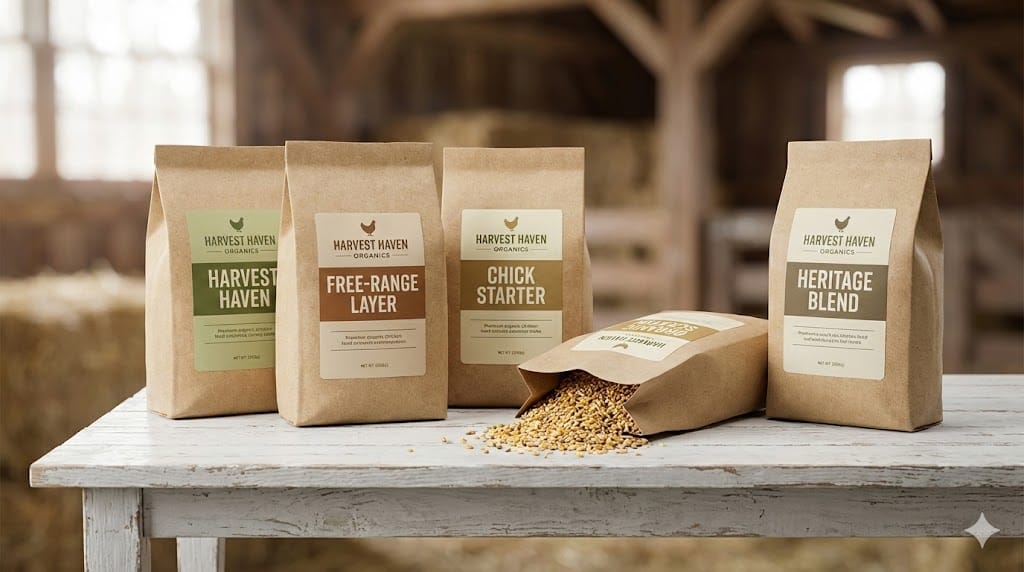
Comparison Table: Top Organic Chick Starter Feeds
| Brand | Protein % | Soy-Free | Corn-Free | Bag Sizes | Key Feature |
|---|---|---|---|---|---|
| Homestead Harvest | 22% | Yes | No | Check Site | Highest Protein (22%) |
| New Country Organics | 21% | Yes | No | 25 lb, 40 lb | High protein, fish meal |
| Mile Four | Varies | Yes | Yes | Multiple | Milled fresh weekly |
| Scratch and Peck | 20.5% | Yes | No | 10, 25, 50 lb | B Corp, Whole Grains |
| Nutrena Nature Smart | 20% | No | No | Check Store | High protein for commercial brand |
| Kalmbach | 20% | Check Label | Check Label | 50 lb | Enzymes + Pre/Probiotics |
| Stone House Grain | 20% | Yes | No | Check Site | Regenerative Farm Sourced |
| Prince Premium Organic | 20% | Check Label | Check Label | Check Site | Balanced Organic Diet |
| Eggland’s Best | 19% | No | No | Check Store | Premium Commercial Brand |
| Manna Pro | 19% | No | No | 5, 30 lb | Easy to find |
| Nature’s Best | 18% | No | No | 40 lb | Dual Certified (Organic + Non-GMO) |
| Purina Organic | 18% | No | No | Check Store | National Distribution |
| Kruse’s Perfection | 18% | Check Label | No | Check Site | Extensive cleaning process |
| My Pet Chicken | 21% | Yes | No | 25 lb | Great for small flocks |
*Note: Protein levels can vary by specific product line.
How Much Organic Starter Feed Do Chicks Need?
Don’t be like me and buy a tiny 5 lb bag for 15 chicks. You will run out in three days.
- Rule of Thumb: Plan for about 5 lbs of starter feed per chick for the first 4 weeks, a guideline supported by Mississippi State University Extension.
- When to Switch: Keep them on “starter” from 0-4 weeks (some say 8 weeks). For detailed scientific timelines on transitioning, you can consult University of Kentucky Cooperative Extension.
- Grower Ration: After that, switch to “grower.”
For those who love spreadsheets, RCR Organic Feed Store (rcrorganicfeedstore.com) provides this precise consumption breakdown to help you budget:
- Starter Phase (0-6 weeks): Aim for ~20% protein. Expect each chick to eat about 1 ounce per day.
- Grower Phase (7-16 weeks): Switch to 17-18% protein. Consumption triples to 3 ounces per day. You should budget approximately 8 pounds of grower feed per bird for this entire phase.
- Layer Phase (16+ weeks): Protein levels sit at 16-17%. An adult hen will consume roughly 1.75 pounds of feed per week.
Monitor your birds. If they are chirping their heads off and scratching at an empty feeder, fill it up! They should have food 24/7.
Want to budget accurately for the first year? Use our chicken feed calculator and cost guide to estimate your total feed expenses. Also, while chicks should have access to feed 24/7, as they grow you’ll want to establish the best feeding schedule for backyard chickens.
Starter Crumbles vs Mash vs Pellets: Which Texture Is Best?
Texture confuses everyone, but it affects how much food (and money) is wasted.
- Pellets: Too big for babies.
- Crumbles: Pellets smashed up. Great for preventing waste.
- Mash: Looks like potting soil. Natural, but prone to waste if not fermented.
My take? For starter feed, crumbles are easier for beginners. With mash (like Scratch and Peck), I’ve seen chicks eat the tasty bits and leave the healthy powder. Crumbles prevent that “sorting.”
Can You Ferment Organic Chick Starter Feed?
Yes, and you probably should! Fermented chick feed is a total game-changer for sustainable flock management.
Why do it? It creates natural probiotics (lacto-fermentation). Plus, the feed expands with water, so a bag lasts longer—stretching your investment. Want the full step-by-step process? Our complete guide to fermenting chicken feed for better health covers everything from ratios to troubleshooting.
How to do it:
- Put a day’s worth of feed in a jar.
- Cover with water (make sure it’s submerged!).
- Cover loosely with a towel.
- Stir it once a day.
- After 2-3 days, it’ll smell sweet and sour, like sourdough bread. Strain it and feed.
Note: If you live in the Southern heat like me, watch out for mold. If it smells like vomit or alcohol, toss it immediately.
Transitioning from Starter to Layer Feed
Please, do not rush to layer feed. A common mistake is switching too early, which can cause kidney issues due to excess calcium.
For a complete breakdown of timing and signs your chicks are ready, see our guide on when to switch from starter to grower feed.
According to industry-standard guides from Small Pet Select (shop.smallpetselect.com), here is the verified timeline you should follow:
- Chick Starter (0-8 weeks): Look for ~18-20% protein in small pellets or crumbles. The most important rule here is free access to feed and water—never let the feeder go empty.
- Grower Feed (8-18 weeks): Protein should drop to ~15-18%. The pellets or crumbles will be larger. This phase is designed to “support steady growth without excessive weight,” which ensures your birds don’t grow too fast for their bones.
- Layer Feed (18+ weeks or first egg): Maintain ~16-18% protein, but the critical change is increasing calcium to 3-4%. This provides the raw material for eggshell strength and bone health.
The Mile Four Transition Protocol
To avoid upsetting your chickens’ digestive systems, never switch feeds overnight. Mile Four’s 2025 guide (milefour.com) recommends this precise gradual mixing schedule:
Starter to Grower Transition:
- Weeks 0-7: Feed 100% Starter feed.
- Week 7: Start mixing 75% Starter feed + 25% Grower feed for a few days.
- Week 8: Gradually adjust the ratio (aim for 50/50).
- Week 9: You should reach 100% Grower feed.
Grower to Layer Transition:
- Weeks 9-19: Keep pullets on 100% Grower feed to support muscle growth.
- Weeks 19-20: Introduce 75% Grower feed + 25% Layer feed.
- Week 20.5: Mix 50% Grower + 50% Layer.
- Week 21: Increase the Layer feed portion until reaching 100% Layer feed.
Layer feed has a ton of calcium for eggshells. If you feed this to baby chicks, it can mess up their kidneys. Wait until you see that first egg (usually around 18-24 weeks) before switching to the best organic chicken feed for egg layers. Layer feeds contain higher calcium levels for eggshell production. Learn about calcium requirements for laying hens before making the switch.
Where to Buy & Storage Tips
- Direct: Mile Four and New Country Organics ship to your door. Great for freshness, but shipping heavy bags isn’t cheap.
- Tractor Supply: Search “organic chick feed tractor supply” and you’ll find brands like Manna Pro. Convenient if you need feed today.
- Local Feed Stores: Support local! I have a feed store down the road that carries regional brands. They are often fresher and cheaper because there’s no shipping markup.
Pro Tip: Always check the “mill date” on the bottom of the bag. Organic feed lacks strong preservatives. If the bag is older than 3-4 months, don’t buy it—the vitamins degrade over time.
The Risks of DIY Feed (Read Before You Mix)
While mixing your own feed sounds appealing, commercial starter feed provides a safety net that is hard to replicate in a kitchen. Scratch and Peck highlights specific hidden risks of DIY feed that beginners should know:
- Nutritional Imbalances: Can lead to poor egg production, stunted growth, or illness.
- Kidney Strain: Overdoing protein can strain kidneys and cause excess ammonia in the coop.
- Bone Health: Calcium and phosphorus levels are easy to get wrong, which can disastrously affect shell strength and skeletal health.
If you eventually want more control over ingredients (and are ready to handle the math), check out our homemade chicken feed recipe for beginners.
Frequently Asked Questions About Organic Chick Starter
What is the best organic chick starter feed? New Country Organics and Mile Four are top-tier for ingredients and sourcing. Manna Pro is the best if you need it right now. The “best” one is the one your chicks actually eat.
How long do chicks stay on starter feed? Usually until 8 weeks. Some people switch to “grower” at 4 weeks, but I like to keep them on starter a bit longer to ensure they get enough protein.
Is soy-free chicken feed better? It depends. Soy-free is great if you want to avoid allergens. But soy-free feeds have to use expensive stuff like fish meal to get the protein up, so expect to pay more.
What’s the difference between medicated and non-medicated starter? Medicated has Amprolium to help prevent parasites. Non-medicated doesn’t. Organic feeds can be medicated, but check the label.
How do I store organic chicken feed? Keep it cool and dry. Metal trash cans work best to keep mice out. Organic feed doesn’t have preservatives, so don’t buy a year’s supply at once or it will go bad.
Can adult chickens eat chick starter? Yes, but only for a little while. It has too much protein and not enough calcium for layers.
Disclaimer: I’ve raised a lot of chickens, but I am not a veterinarian. This guide is for informational purposes only. Always read the bag and consult a professional for the specific health needs of your flock. Still deciding on your flock? Some of the easiest chicken breeds for beginners are also the least picky eaters.

Oladepo Babatunde is the founder of ChickenStarter.com. He is a backyard chicken keeper and educator who specializes in helping beginners raise healthy flocks, particularly in warm climates. His expertise comes from years of hands-on experience building coops, treating common chicken ailments, and solving flock management issues. His own happy hens are a testament to his methods, laying 25-30 eggs weekly.