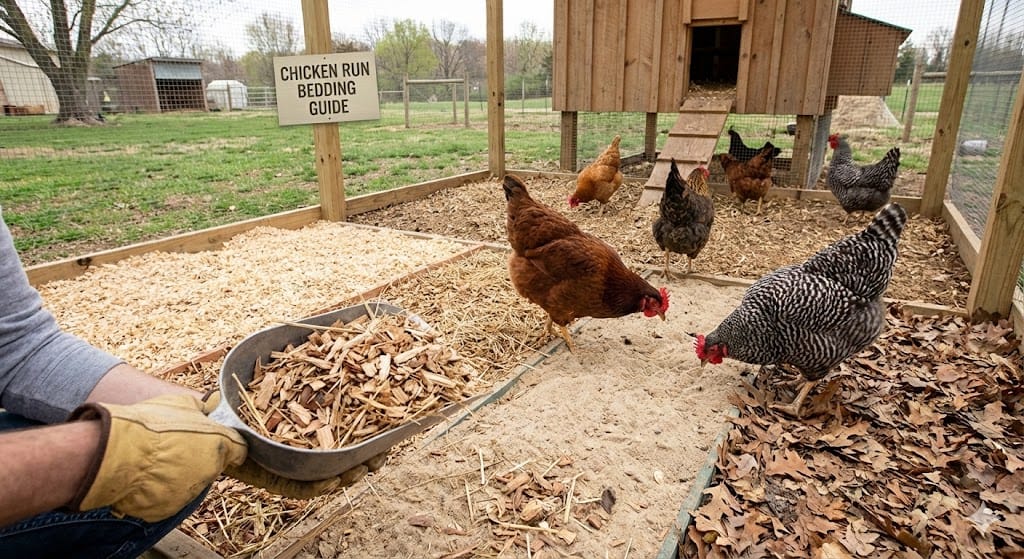
What’s the best thing to put in the bottom of a chicken run? I asked myself this question desperately during my first rainy season with chickens, watching my run transform into a foul-smelling mud pit that swallowed my boots with every step. My chickens stood on their roosts all day, refusing to touch the ground. Their feet were caked in mud, and the smell was unbearable. That miserable experience taught me that choosing the right run flooring is not optional; it is essential for your chickens’ health and your sanity.
According to Topsoil Direct UK, the most important things to remember when trying to avoid a muddy run are to ensure it is not located at the bottom of a slope, make the area as level as possible, and ensure that the flooring is free-draining. Getting these fundamentals right makes the difference between a pleasant chicken-keeping experience and a constant battle against mud and mess.
After raising chickens for over six years in a tropical climate with heavy seasonal rains, I have tried nearly every flooring material available. This guide covers the best options for different situations, what to avoid entirely, and how to fix a run that has already become a mud disaster.
What Is the Best Thing to Put on the Ground in a Chicken Run?
The best flooring material depends on your specific situation, including whether your run is covered or uncovered, your local climate, how much maintenance you want to do, and your budget.
Quick answer: For most backyard chicken keepers, hardwood chips (also called play chips or white wood chips) offer the best balance of drainage, comfort, enrichment, and ease of maintenance. They work in nearly every climate and situation.
However, the “best” choice varies by circumstances:
| Situation | Best Material | Why |
|---|---|---|
| Covered run, any climate | Wood chips or sand | Free-draining, easy to clean, chickens love scratching |
| Uncovered run, wet climate | Wood chips (thick layer) | Prevents mud, drains well, can be topped up |
| Hot, dry climate | Coarse sand | Stays cool, excellent drainage, easy to scoop-clean |
| Budget-conscious | Dried leaves, straw | Free or cheap, compostable, provides enrichment |
| Permanent, low maintenance | Pea gravel | Extremely long-lasting, minimal upkeep |
| Predator-prone area | Concrete/slabs + bedding | Most secure, prevents digging predators |
According to The Featherbrain, several different flooring materials are suitable for chicken runs and coops. Good chicken flooring is safe, predator- and rodent-proof, durable, and easy to clean. Flooring materials vary widely in quality, cost, maintenance needs, and safety.
Best Material for Chicken Run Floor: 7 Options Compared
Let me break down each option with honest assessments based on both research and my own experience.
Wood Chips for Chicken Run
Wood chips are the most popular choice among experienced chicken keepers, and for good reason.
According to Topsoil Direct UK, wood chippings are increasingly popular due to their clean, light appearance, free drainage, being almost dust-free, and most importantly, chickens love to scratch around in them. The chips are easily cleaned and not quickly trampled into the mud, which is one of the key reasons they are used in animal enclosures and hen runs.
Pros of wood chips:
- Excellent at preventing muddy feet
- Free-draining even in heavy rain
- Chickens enjoy scratching and foraging through them
- Fresh wood smell keeps the run pleasant
- Not quickly trampled into mud like straw
- Keeps floor warmer in winter
- Can be composted when replaced
- Relatively affordable
Cons of wood chips:
- Need periodic topping up (typically monthly)
- Must rake or turn occasionally to prevent mold in damp conditions
- Can harbor mites if not maintained properly
- Initial investment to get adequate depth
Critical warning: According to Topsoil Direct UK, bark chips or mulch should never be used in runs as it can go moldy and produce spores which can lead to respiratory illness in chickens. The chippings should be produced using the white wood of trees and should not be confused with bark chips.
I switched to hardwood chips after my straw run became a muddy mess during my second year of chicken keeping. The difference was immediate. Even after heavy tropical rains, my chickens had clean, dry feet within hours. The smell that had plagued my run disappeared entirely.
Where to Buy Wood Chips for Chicken Run
- Garden centers (sold as “play chips” or “play bark”)
- Landscape suppliers (often sell in bulk for better value)
- Farm stores (Tractor Supply, local agricultural suppliers)
- Tree surgeons/arborists (often free or very low cost for freshly chipped wood)
- Online suppliers (Topsoil Direct, Dandy’s in the UK)
For the best value, contact local tree surgeons. Many are happy to drop off loads of fresh wood chips for free because it saves them disposal fees. Just ensure they are not from treated wood or toxic trees.
Sand for Chicken Runs
Sand is excellent for specific situations but has limitations that make it unsuitable for everyone.
According to Dandy’s gardening advice, grit sand (coarse sand) is inexpensive, and droppings are easy to clean up by using a cat litter scoop. Many chicken owners swear by grit sand as the easiest option. Chickens kept on sand flooring have cleaner feet and shorter nails, and the sand is also great for their grit intake.
Pros of sand:
- Easy to scoop-clean like cat litter
- Excellent drainage when dry
- Natural grit source for chickens
- Keeps chickens’ nails naturally trimmed
- Stays cooler in summer than dark materials
- Provides dust bathing opportunities
- Very long-lasting material
Cons of sand:
- Can freeze solid in cold winters
- May work into mud in uncovered runs with heavy rain
- Gets tracked around on wet shoes
- Requires top layer removal every 6 months
- Heavy to transport and install
- Not suitable for wet climates without cover
Best for: Covered runs or consistently dry climates.
According to Dandy’s, sand can freeze during winter, so they advise using wood chips instead if the run is outside in cold climates. I tried sand in part of my run but found it problematic during our rainy season. For those who want to learn more about setting up a dust bath, a sand corner within a wood chip run works wonderfully.
Pea Gravel for Chicken Runs
Pea gravel is a long-lasting option that some keepers swear by.
According to Topsoil Direct UK, rounded gravel such as pea gravel can be used, but using a weed membrane underneath is not recommended. Droppings will be washed through to the bottom by rain or trampled in, which can become quite smelly. It is far better to allow water free drainage through to the soil below.
Pros of pea gravel:
- Extremely long-lasting (essentially permanent)
- Very low maintenance
- Good drainage if no membrane underneath
- Easy to hose clean
- Predator-resistant (harder to dig through)
Cons of pea gravel:
- Some chickens initially dislike walking on it
- No scratching or foraging enrichment
- Droppings can smell if drainage is blocked
- Can be hot in direct sun
- More expensive initially than organic options
- Heavy to install
Important: Do NOT use weed membrane underneath gravel. Allow water to drain freely through to the soil below. Blocking drainage creates the smell and sanitation problems that give gravel a bad reputation.
Straw and Hemp Bedding
Straw and hemp (sold as Aubiose in some regions) are popular choices, especially for covered runs.
According to Dandy’s, wood shavings and straw are great bedding materials for chicken coops. Hens love to lay their eggs in a deep bed of shavings. However, when used as flooring in an uncovered run, wood shavings and straw can become soggy and work into the ground fairly quickly, making the run difficult to clean.
Pros of straw and hemp:
- Soft and comfortable for chickens
- Chickens can scratch and forage
- Fully compostable
- Affordable
- Hemp (Aubiose) is highly absorbent
- Good insulation in cold weather
Cons of straw and hemp:
- Can become soggy in uncovered runs
- Works into ground quickly when wet
- May blow away in windy conditions
- Needs frequent replacement in wet climates
- Straw can harbor mites
Best for: Covered runs, dry climates, or as part of a deep litter system.
According to experienced keepers on the Omlet Forum, hardstanding topped with Aubiose or wood chips (the former being much more absorbent) provides an excellent combination based on decades of experience.
Rubber Mats for Chicken Runs
Rubber mats are more commonly used in coops than runs, but they have applications in both.
According to Greatmats, rubber is among the best chicken coop floor products. Rubber mats are easy to install, will not rot, are pest and rodent resistant, safe, comfortable, and durable.
Pros of rubber mats:
- Very easy to clean (remove, hose off, sun-dry)
- Will not rot like wood flooring
- Pest and rodent resistant
- Slip-resistant and safe for chickens
- Comfortable (not cold like concrete)
- Protects any subfloor underneath
- Long-lasting (many years)
Cons of rubber mats:
- Higher initial cost
- Must use bedding material on top
- Best suited for smaller areas
- Can get hot in direct sun without bedding cover
Best for: Coop floors, small covered runs, or as a base layer under other materials.
Concrete or Hardstanding Base
For permanent setups, a solid base offers significant advantages.
According to The Featherbrain, concrete is a very safe flooring choice as it keeps burrowing predators out. After the initial installation, concrete is low maintenance, does not rot like wood floors, and can take plenty of abuse without consequence. Most chicken keepers who have concrete love their concrete.
Pros of concrete/hardstanding:
- Completely predator-proof (no digging under)
- Very easy to clean
- Will never become muddy
- Extremely long-lasting
- Keeps rodents out
- Can be hosed and disinfected
Cons of concrete/hardstanding:
- Expensive to install
- Permanent structure (cannot move)
- Hard on chickens’ feet without bedding
- Cold in winter, hot in summer
- May have gaps at wall joints that need sealing
Critical requirement: You must use thick bedding (wood chips, straw, or hemp) on top of concrete to protect chickens’ feet and provide enrichment. According to The Featherbrain, concrete may cause injury to chickens’ feet and legs if used without proper bedding.
Dried Leaves (Free Option)
For budget-conscious keepers, dried leaves offer a free alternative.
According to BackYard Chickens forum discussions, the deep litter method using organic materials like dried leaves, straw, pine shavings, and wood chips works very well for many keepers.
Pros of dried leaves:
- Completely free
- Natural foraging enrichment
- Fully compostable
- Chickens love scratching through them
- Readily available in autumn
Cons of dried leaves:
- Blow away easily in wind
- Break down very quickly
- Can become soggy and moldy
- Need constant replenishment
- Seasonal availability
Best for: Supplementing other materials, covered runs, or budget setups where you can replenish frequently.
Muddy Chicken Run Flooring: How to Fix a Wet Run
A muddy run is one of the most common problems chicken keepers face, and one of the most frustrating.
Why Runs Become Muddy
- Poor drainage underneath the run
- Located at the bottom of a slope where water collects
- Uncovered and exposed to rain
- Compacted soil from constant foot traffic
- Wrong flooring material that does not drain well
- Inadequate flooring depth that wears through quickly
Solutions for Muddy Runs
| Solution | Difficulty | Cost | Effectiveness |
|---|---|---|---|
| Add thick layer of wood chips (6+ inches) | Easy | Low | High |
| Install French drain underneath | Hard | Medium | Very High |
| Cover the run with roofing | Medium | Medium-High | Very High |
| Relocate run to higher ground | Medium | Low | High |
| Install hardstanding base + bedding | Hard | High | Very High |
| Improve surrounding drainage | Medium | Low-Medium | High |
For those dealing with persistent mud problems, the guide to fixing muddy chicken runs provides detailed solutions.
My run became an absolute mud pit during my first rainy season. I tried adding straw, which just got trampled into the mud within days. The solution that finally worked was adding a full 6 inches of hardwood chips. The transformation happened within a single day. My chickens finally had dry feet again, and I could actually walk through the run without losing my boots.
Chicken Run vs. Chicken Coop: What’s the Difference in Flooring?
These are different spaces with different requirements. Understanding the distinction helps you choose the right materials for each.
| Factor | Chicken Run (Outdoor) | Chicken Coop (Indoor) |
|---|---|---|
| Primary concern | Drainage, mud prevention | Warmth, absorbency, comfort |
| Best materials | Wood chips, sand, gravel | Pine shavings, straw, rubber mats |
| Weather exposure | Full or partial | Protected |
| Predator protection | Less critical (fenced) | More critical (enclosed sleeping area) |
| Cleaning frequency | Weekly raking/topping | Daily spot-clean, weekly deep clean |
| Depth needed | 4-6 inches minimum | 2-4 inches typically |
This article focuses on run flooring. For coop interior flooring, the guide to chicken coop flooring covers indoor options in detail.
What to Put in Chicken Run for Entertainment
Beyond practical flooring, enrichment keeps chickens happy, reduces behavioral problems like feather pecking, and gives them natural outlets for their instincts.
Enrichment ideas that work with good run flooring:
- Logs and branches for perching and climbing at different heights
- Dedicated dust bathing area with sand or dry dirt in a corner
- Hanging vegetables like cabbage or lettuce from the run roof
- Scratch areas with scattered treats hidden in deep wood chip bedding
- Stumps and platforms at different heights for jumping and roosting
- Compost pile corner for supervised foraging sessions
The connection between flooring and enrichment is important. Wood chips and deep litter provide natural foraging opportunities. My chickens spend hours scratching through looking for bugs, seeds, and whatever interesting things might be hiding. This natural behavior keeps them occupied and reduces boredom-related problems.
For more enrichment ideas, the guide to encouraging natural foraging has additional suggestions.
The Deep Litter Method for Chicken Runs
The deep litter method is a popular low-maintenance approach that creates compost while keeping your run healthy.
According to BackYard Chickens forum members, the deep litter method involves putting plenty of organic material like straw, dried leaves, pine shavings, or wood chips in the run and allowing it to build up over time rather than cleaning it out frequently.
How the deep litter method works:
- Start with 4-6 inches of organic material (wood chips work best)
- Add fresh material on top as the layer compresses (typically weekly or biweekly)
- Allow droppings to mix in and begin composting
- Turn occasionally with a rake to prevent compaction and promote decomposition
- Remove entirely 1-2 times per year when the material has broken down into rich compost
Benefits of deep litter:
- Very low maintenance between full cleanouts
- Creates excellent compost for your garden
- Natural pest control as beneficial organisms develop
- Warmer in winter from composting action generating heat
- Chickens enjoy scratching through the layers
For those interested in how deep litter affects coop temperatures, the deep litter method temperature study provides data from real-world testing.
What NOT to Put in a Chicken Run
Some materials are dangerous or problematic. Avoid these:
| Material | Why to Avoid |
|---|---|
| Bark mulch/bark chips | Goes moldy, produces spores causing respiratory illness |
| Cedar chips | Aromatic oils may cause respiratory issues in enclosed spaces |
| Hay | Molds quickly when wet, different from straw |
| Treated/painted wood chips | Chemicals harmful to chickens |
| Weed membrane under gravel | Traps smells, blocks drainage, creates sanitation problems |
| Vinyl flooring | According to The Featherbrain, vinyl is toxic for chickens and may contain lead and phthalates |
| Fine sawdust | Creates respiratory problems, compacts when wet |
According to Topsoil Direct UK, it is advisable to rake or turn wood chips from time to time, especially in damp areas, to avoid the potential for mold development. This applies to any organic flooring material.
How to Choose the Right Run Flooring for Your Climate
Your local weather patterns should heavily influence your flooring choice.
| Climate | Best Options | Avoid |
|---|---|---|
| Wet/rainy (UK, Pacific Northwest) | Wood chips, hardstanding + bedding | Sand (washes into mud), thin straw layers |
| Hot/dry (Australia, Southern US) | Coarse sand, gravel, wood chips | Dark materials that absorb heat |
| Cold winters (Canada, Northern US) | Wood chips, deep litter method | Sand (freezes solid), bare concrete |
| Humid tropical | Wood chips, gravel | Straw (molds quickly), hay |
| Mixed/moderate | Wood chips, combination approach | Single thin layers of any material |
For those raising chickens in hot humid climates, flooring choice becomes even more critical because wet, warm conditions promote rapid mold and bacteria growth.
Installation Tips for Chicken Run Flooring
Proper installation makes the difference between flooring that works and flooring that fails.
How to Install Wood Chips in a Chicken Run
- Level the ground surface as much as possible to prevent water pooling
- Ensure drainage slopes away from the run, not toward it
- Add 4-6 inches of hardwood/white wood chips (deeper is better in wet climates)
- Rake level across the entire run surface
- Top up as needed (typically monthly or when thin spots appear)
- Turn occasionally with a rake to prevent mold in damp conditions
- Remove and replace entirely 1-2 times per year, composting the old material
How to Install Sand in a Chicken Run
- Ensure run is covered or you live in a consistently dry climate
- Level ground surface carefully
- Add 4-6 inches of coarse/grit sand (not fine play sand, which compacts)
- Rake smooth across the entire surface
- Scoop droppings regularly using a cat litter scoop or similar tool
- Replace top layer every 6 months or as needed
- Check for freezing in winter and switch to wood chips if problematic
Frequently Asked Questions
What Is the Best Thing to Put in the Bottom of a Chicken Run?
Wood chips (hardwood/white wood, not bark mulch) are the most practical choice for most situations. They provide excellent drainage, prevent mud, and give chickens natural foraging enrichment. For covered runs or dry climates, coarse sand is also excellent and offers easy scoop-cleaning.
What Do You Put on the Ground in a Chicken Run?
Free-draining materials like wood chips, coarse sand, or pea gravel work best. The key is ensuring good drainage underneath. Avoid materials that become soggy (hay, thin straw layers) or harbor mold (bark mulch, cedar chips).
What’s a Good Base for a Chicken Run?
For permanent runs, a hardstanding base (concrete or paving slabs) topped with wood chips provides the most predator-proof, low-maintenance solution. For temporary or budget setups, leveled ground with a thick layer of wood chips (6+ inches) works well.
Can I Use Bark Mulch in My Chicken Run?
No. According to Topsoil Direct UK, bark chips should never be used as they can go moldy and produce spores that cause respiratory illness in chickens. Use white wood/hardwood chips only.
How Deep Should Chicken Run Bedding Be?
Aim for 4-6 inches minimum for effective mud prevention and a comfortable walking surface. In wet climates, 6+ inches is better. Deeper layers also work better for the deep litter method.
How Often Should I Change Chicken Run Flooring?
With wood chips or deep litter, fully replace 1-2 times per year. Top up monthly or whenever thin spots appear. Sand requires more frequent maintenance (weekly scooping) but less frequent complete replacement.
Can I Use Straw in an Uncovered Chicken Run?
Straw can work but is not ideal for uncovered runs. According to Topsoil Direct UK, when used as flooring in an uncovered run, straw can become soggy and work into the ground fairly quickly, making the run difficult to clean. Wood chips are a better choice for exposed runs.
My Chicken Run Setup After Years of Experimentation
After considerable trial and error raising chickens in a tropical climate with distinct wet and dry seasons, here is what finally works for my run:
Base: Leveled, slightly crowned ground that drains away from the coop
Main flooring: 6-8 inches of hardwood chips covering the entire run, topped up monthly during rainy season
Dust bath corner: A dedicated area with coarse sand under a small shelter for dry dust bathing year-round
Maintenance routine: Weekly raking to turn the chips, monthly top-up of fresh chips to thin areas, complete replacement twice yearly (the old material goes straight to my compost pile)
Seasonal adjustments: During the dry season, I let the layer get a bit thinner since drainage is not critical. Before the rains begin, I add extra depth to handle the coming moisture.
What I learned from failures: Straw was a disaster in my climate. It looked beautiful for about three days, then became a sodden, smelly mat that was nearly impossible to remove. Sand worked in my covered dust bath area but turned to cement-like mud in the main uncovered run section after the first heavy rain.
The investment in a quality wood chipper (for processing fallen branches into fresh chips) paid for itself within the first year through reduced flooring costs. I also get free chips from a local tree surgeon whenever he has a job nearby.
For anyone just starting out, begin with wood chips at a generous depth. They work in almost every situation and climate. You can always adjust or add other materials once you understand how your specific run handles weather and wear. Getting flooring right from the start prevents the common mistakes first-time chicken keepers make and saves you from the frustrating experience of dealing with a mud pit while your chickens suffer.

Oladepo Babatunde is the founder of ChickenStarter.com. He is a backyard chicken keeper and educator who specializes in helping beginners raise healthy flocks, particularly in warm climates. His expertise comes from years of hands-on experience building coops, treating common chicken ailments, and solving flock management issues. His own happy hens are a testament to his methods, laying 25-30 eggs weekly.