
If you’ve ever walked outside in August and felt like you were swimming instead of walking, you know exactly what your chickens are dealing with. Raising chickens in hot humid climates isn’t like raising them in cool, dry regions. I learned this the hard way. During my first summer keeping birds on the Gulf Coast, I lost three of my favorite hens in a single week.
The thermometer only read 95°F. I was confused. But then I realized the high relative humidity was the real killer.
Since that awful week, I’ve spent seven summers figuring out how to keep a flock alive when the air feels like soup. This guide covers everything from the best chickens for hot humid summers to emergency cooling tactics. It is a breakdown of what actually worked for me (and what failed miserably) in the Deep South, from Texas to Georgia, so you don’t have to make the same mistakes first-time chicken keepers make.
Why Florida Heat and Humidity Create a Double Threat
For those of us keeping chickens in Florida heat, or anywhere in Louisiana, Mississippi, or Alabama, we face a unique challenge. In a dry climate, shade is enough. In a tropical climate, shade isn’t enough because the ambient temperature doesn’t drop much even out of the sun. The University of Florida IFAS Extension notes that high humidity prevents birds from cooling themselves effectively even in shaded areas.
I rely on a cheap $15 weather station I rigged up in my coop because the heat index (what it actually feels like) is the only number that matters. It includes a hygrometer to monitor humidity levels, which is crucial. Trust me, the standard thermometer is a liar. When the heat index hits 105°F, I stop whatever I’m doing. It’s emergency time.
How Humidity Makes Heat Stress Worse in Chickens
To understand heat stress in chickens humidity issues, you have to understand the chicken respiratory system. Chickens don’t sweat. They rely on body temperature regulation and thermoregulation through panting (evaporative cooling) and pumping blood through their combs and wattles. Basically, they turn their heads into radiators to aid heat dissipation. Recent research published in Frontiers in Veterinary Science highlights that while panting is effective, excessive panting can lead to respiratory alkalosis, making the balance of electrolytes critical during these periods.
But this system has a flaw. When the air is already saturated with moisture (high dew point), evaporative cooling fails. The moisture from a chicken’s panting has nowhere to go. It just hangs there. According to the University of Tennessee Agricultural Extension, chickens can tolerate higher temperatures reasonably well if the humidity remains at or below 70%. Once that threshold is crossed, the combination becomes lethal because the heat stays trapped inside the bird, causing their core body temperature to spike.
Simple Heat Index Risk Chart for Chickens:
| Air Temp | 50% Humidity | 70% Humidity | 85% Humidity |
|---|---|---|---|
| 85°F | Moderate Risk | Elevated Risk | High Risk |
| 95°F | High Risk | Severe Risk | Critical |
| 100°F+ | Severe Risk | Critical | Emergency |
Heat Stress Symptoms Every Southern Keeper Must Know
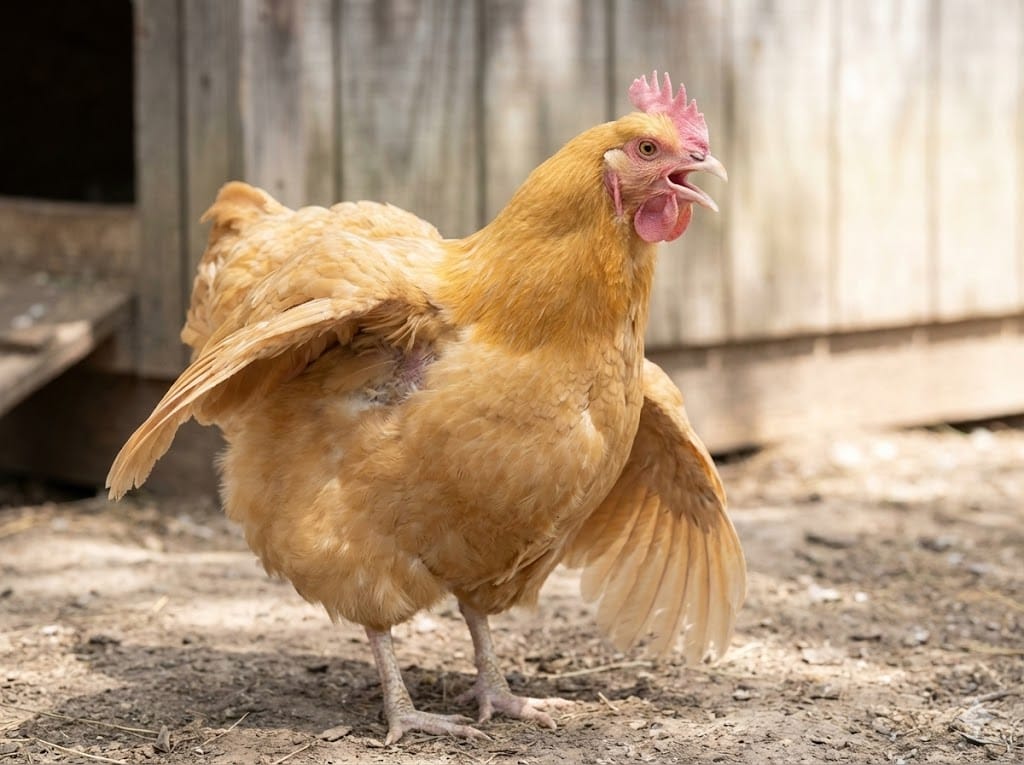
You have to spot heat stress symptoms before they become fatal. Chickens are prey animals, so they are great at hiding pain. But they can’t hide heat stroke. According to Texas A&M AgriLife Extension, recognizing early signs is the difference between life and death in summer flocks. It helps to perform a basic health check daily during summer.
Temperature Thresholds: Chickens’ bodies perform best below 75°F (24°C). Once temperatures exceed 90°F, they face real heat stress danger, and above 100°F becomes life-threatening—especially for heavy breeds.
Watch for these signs:
- Respiratory Distress: If their beak is wide open and they are panting heavily, they are struggling.
- The “Armpit” Vent: If they are holding their wings out away from their bodies, they are trying to catch a breeze.
- Lethargy: If they stop moving and appear listless. This is often a sign of why chickens become lethargic, indicating severe dehydration or overheating.
- Pale Combs: When my hens get too hot, their bright red combs turn a washed-out pink. This usually signals an impending egg production drop.
My Early Warning System: I have a big, fluffy Buff Orpington named “Big Mama.” As a Buff Orpington, she feels the heat way before anyone else. If I see Big Mama panting while the light-bodied chickens are still scratching, I know I have about 30 minutes before the rest of the flock starts suffering.
Best Heat-Tolerant Chicken Breeds for Humid Summers
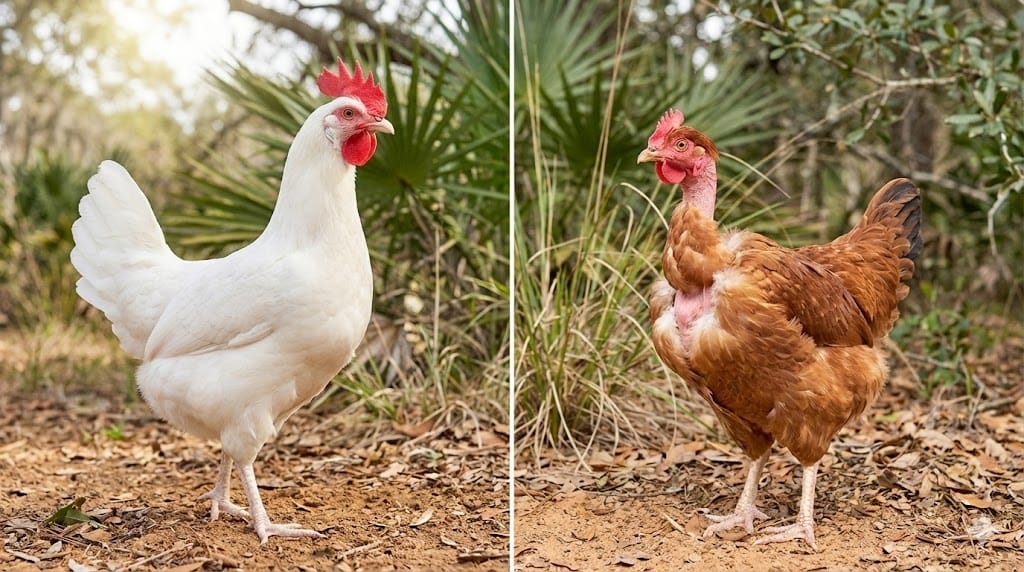
Picking the right breed is half the battle when raising chickens in hot humid climates. If you try to raise a bird built for a snowy English winter in Florida, you’re fighting a losing war. The best chickens for hot humid summers are usually Mediterranean breeds.
Top Performers
- Leghorn: These light-bodied chickens are machines. My white Leghorns barely seem to notice when it hits 98°F.
- Andalusian & Minorca: Excellent choices with large combs for heat release.
- Naked Neck (Turken): They look ridiculous, like a vulture crossed with a chicken, but having 50% fewer feathers is a superpower in July.
- Rhode Island Red: Widely considered a heat-tolerant star. These hardy dual-purpose birds adapt remarkably well to Southern climates. While high humidity is a challenge for any heavy breed, RIRs consistently outlast other brown egg layers in the heat.
- Egyptian Fayoumi: An ancient breed from Egypt, practically built for hot climates. Small, active, and incredibly heat resistant.
- Ancona: A very active forager that handles heat well.
For those just starting out, these durable breeds are often the easiest breeds for beginners in the South.
Adaptable with Care (Mixed Results)
- Black Australorp: Listed as both cold-hardy and heat-tolerant, Australorps can adapt to southern climates with proper management. However, their dark feathers absorb significant heat in direct sun—they absolutely require shaded areas and may need extra monitoring during heat waves. Successfully raised in Mississippi and Georgia with adequate shade.
Regional Recommendations (USDA Hardiness Zones)
Based on hatchery data for specific hot-climate zones:
- Florida: Blue Andalusian, White Leghorn, Assorted Polish
- Georgia: Blue Andalusian, Blue Splash Marans, Golden Buff
- Louisiana: Blue Andalusian, Light Brown Leghorn, White Marans
- Texas: Blue Copper Marans, Egyptian Fayoumis, Lavender Orpington
Breeds that Struggle
- Orpingtons & Cochins: I love them, but these feather-footed breeds (like Cochins) are basically wearing a down jacket in a sauna.
- Brahmas: Their large mass and feathered feet make cooling down very difficult. Read more about Brahmas and their cold-weather preference.
Breed Performance Table:
| Breed | Heat Tolerance | Humidity Handling | Egg Production in Summer |
|---|---|---|---|
| Leghorn | Excellent | Excellent | Maintains well |
| Egyptian Fayoumi | Excellent | Excellent | Excellent |
| Andalusian | Excellent | Excellent | Good |
| Naked Neck | Excellent | Excellent | Good |
| Rhode Island Red | Good | Good | Moderate drop |
| Black Australorp | Mixed (Shade Required) | Good | Good |
| Easter Egger | Good | Good | Moderate drop |
| Orpington | Poor | Poor | Significant drop |
Chicken Coop Design for Hot, Humid Climates
Those cute little wooden coops you see at the feed store? In the South, we call those “chicken ovens.” Avoiding common ventilation mistakes that overheat your flock is crucial. You need a proper chicken coop for hot climates.
Space Requirements: Avoid Overcrowding
Overcrowding is a death sentence in the heat. The more chickens you pack in a small space, the more concentrated the moisture they produce. In hot, humid climates, the standard “2 square feet per bird” rule is dangerous. I recommend a minimum of 4 square feet per chicken inside the coop to allow heat to dissipate and keep moisture levels manageable.
Ventilation is Non-Negotiable
Airflow is life down here. Hot air rises. If you don’t have vents at the very peak of your roof, that heat gets trapped. It radiates down on your birds all night long.
- Specific Ratio: According to Meyer Hatchery, a common baseline is one square foot of ventilation per 10 square feet of floor space, but this is a cold-weather minimum that often fails to account for factors like coop height. In hot, humid climates, standard estimates are inadequate. You need as much additional ventilation as possible—ideally converting one or more walls entirely to hardware cloth. If you’re wondering how much ventilation a coop actually needs, err on the side of “too much.”
- Summer vs. Winter Needs: Seasonal requirements differ wildly. In cold weather, you might get by with 3-4 square feet of total ventilation. In hot weather, you need as much additional ventilation as possible, including fans and fully open walls. To illustrate the difference: my winter ventilation totals about 0.24 square feet per chicken (including pop door), while summer ventilation jumps to 0.56 square feet per chicken—and I still add fans because that’s not enough when it sits in the sun.
- Pop Doors Count: When calculating your airflow, remember that the pop door absolutely counts as ventilation. It serves as an excellent intake source for cool air near the floor, complementing high vents.
- Cross-Ventilation: It’s not just about holes; it’s about flow. Ensure you have vents that differ in location vertically (like a pop door near the floor and a vent near the ceiling) or laterally (like two vents on opposite sides of your coop). This setup uses physics to pull fresh air through the coop.
- Height Factor: A generous ceiling height is your friend. The higher your ceiling, the less ventilation you strictly need per square foot, because taller coops buffer heat better. Hot air rises and pools near the ceiling, keeping it further away from your roosting birds.
- Fan Systems: If natural airflow is poor, install exhaust fans near the roof peak. Sizing Your Fan: A fan that can supply 5 CFM (cubic feet per minute) per chicken provides adequate ventilation. For a flock of 10 birds, you’d need a fan rated for at least 50 CFM. For off-grid setups, solar-powered fans are a fantastic way to keep air moving without electricity.
- Ammonia Warning: If your coop ever smells like ammonia, that’s a red flag. Ammonia is lighter than air and rises, which is why roof vents are critical—but any detectable ammonia means your ventilation has failed and your birds’ respiratory systems are at risk. To protect your flock, you must learn to keep your coop from smelling.
- Ditch the Glass: I took a hammer to the glass windows in my first coop. Replaced them all with hardware cloth versus chicken wire to ensure safety and airflow.
- Smart Vent Styles: If you are worried about tropical storms soaking the inside, consider installing louvre vents. They are angled to deflect rain while still allowing air to pass through freely.
- Go Open-Air: The best coop I ever built has three walls made entirely of wire. See some hot climate coop designs for inspiration.
Managing Moisture
Humidity levels inside the coop should ideally be maintained between 50-70% to prevent excessive moisture buildup. High humidity promotes bacterial growth and makes heat stress worse. When building, consider best coop flooring options that resist moisture, and think about where to position your coop for maximum shade.
Coop Ventilation Diagram for Maximum Airflow
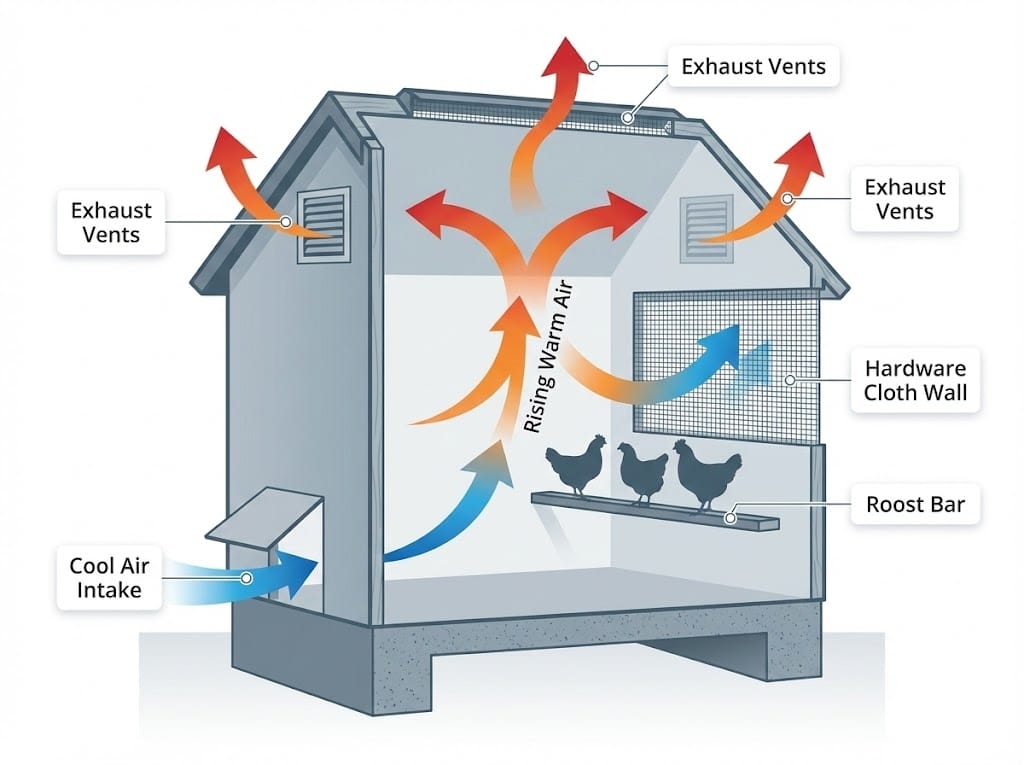
Cross-Ventilation Principle: Fresh air enters through low vents (or the pop door), warms as it absorbs heat and moisture from the chickens, rises, and exits through high vents on the opposite side. This continuous airflow removes both heat and humidity. Make sure you have vents that differ either vertically (low intake, high exhaust) or laterally (opposite walls).
Visualizing the Perfect Setup: Picture a wind tunnel creating strong cross-ventilation. You want cool air coming in low through wire walls, warming up, rising, and shooting out of a vent in the roof ridge. If air isn’t moving, humidity is building.
- Roof Vents: Placed at the highest point (apex). Large gable vents installed at the peaks of the roof are excellent for letting trapped hot air escape.
- Intake Vents: Low to the ground, covered in hardware cloth.
- Shade Cloth: Draped over the sunny side of the run to lower ambient temperature.
My Rebuild Story: After Hurricane Michael tore up my backyard, I had to start over. I built the new coop 18 inches off the ground on cinder blocks. I gave it a white metal roof with huge 24-inch overhangs to keep the sun off the walls. The difference was instant. The inside temperature dropped about 15 degrees compared to my old setup.
Cost Reality Check: DIY vs. Pre-Built
Building for heat resistance isn’t free. If you are budgeting for a new setup, here is what to expect:
- DIY Hardware Cloth Coop: If you build it yourself using pressure-treated lumber and hardware cloth, expect to spend $300–$600.
- Pre-Built Hot Climate Coops: High-quality, airy coops designed for the South (often made by Amish builders or specialty fabricators) typically run $1,200–$2,500. Avoid the cheap $200 box kits; they rarely have the ventilation needed for 100°F days.
Best Coop Fans and Cooling Equipment for Southern Summers
Sometimes, good design isn’t enough, and you need to invest in gear to keep your flock alive. Here is the equipment that is actually worth the money for a tropical climate.
Automatic Coop Doors
In the heat, timing is everything. You want your birds out at the crack of dawn to forage while it’s cool.
- Cost: $100–$200
- Why it pays off: An automatic door lets the flock out at 5:30 AM without you waking up. It maximizes their “cool time” outdoors and locks them up safely at night.
Premium Waterer Systems
Dirty water gets hot faster and grows bacteria.
- Cup vs. Nipple Systems: PVC-based systems are cleaner than open pans. While I switch to pans in emergencies, a sealed 5-gallon bucket system with horizontal nipples keeps water cleaner and cooler during standard summer days.
- Cost: DIY kits are $20, while pre-made premium founts can run $40–$70.
Monitoring Gear: Thermometer/Hygrometer Combos
You can’t manage what you don’t measure. A basic thermometer isn’t enough. You need a combo unit that measures humidity too.
- Cost: Expect to pay $15–$40 for a reliable digital unit with a remote sensor.
- Why it pays off: It tells you exactly when the heat index is hitting the danger zone so you can act before birds get sick.
Moving Air: Solar-Powered vs. Electric Fans
Stagnant air kills. If your coop doesn’t have a natural breeze, you have to create one.
- Solar-Powered Fans: These are great for coops far from the house. They run hardest when the sun is brightest—exactly when you need them. Prices typically range from $30 to $80 depending on the wattage and durability.
- Box Fans: If you have power, a standard box fan is cheap and effective, but specific agricultural fans are sealed to prevent dust fires.
Automatic Misting Systems
- Misting Kits: You can buy pre-made kits that clip onto your hose. Basic setups start around $20, while kits with timers (highly recommended so you don’t flood the run) run $50+. You can even build a DIY misting system if you are handy.
Shade Cloth Options
If you don’t have trees, you need shade cloth.
- Density: Look for 70% to 90% UV block.
- Cost: A 6×10 foot panel usually costs $20–$30. It drastically lowers the ambient temperature in the run compared to a solid tarp that traps heat. Check out the best shade cloth for your run.
Hardware Cloth vs. Chicken Wire
When upgrading your ventilation, don’t use chicken wire. It keeps chickens in, but raccoons can reach right through it.
- Investment: Hardware cloth costs about 3x more than chicken wire, but it allows for safe, wide-open windows that maximize airflow without risking predation. Note that open coops can attract predators like snakes looking for eggs or cool spots, so be sure you are snake-proofing your coop.
Electrolytes and Supplements
- Poultry Electrolyte Powders: A single bag costs $5–$10 and lasts all summer. It’s the cheapest insurance policy you can buy against heat stroke.
Essential Tips for Raising Chickens in Hot Humid Climates: Cooling Strategies
When the heat wave hits, you need a plan. Here are my essential tips for raising chickens in hot humid climates when the temperature breaks 100°F. Use these strategies for keeping chickens cool in extreme summer heat.
Water Management
Chickens are picky. They won’t drink warm water, even if they are showing dehydration signs. Successfully raising chickens in hot humid climates requires aggressive hydration tactics because they simply won’t drink enough if the water is hot.
- Placement Tip: Keep your birds’ water outside the coop. This helps prevent spills from adding moisture to the bedding, keeping internal humidity lower.
- Open Pan Waterers vs. Nipple Drinkers: In extreme heat, chickens prefer to dunk their whole beak. Nipple drinkers just don’t release water fast enough for a panting bird. I switch to open pans or buckets in August. Consider looking into waterers designed to keep water cool.
- The Ice Bottle Trick: I save old 2-liter soda bottles, fill them with water, and freeze them. Every morning at 10 AM, I drop a frozen bottle into their water bucket.
- Automatic Waterers: If you use these, ensure the lines are buried or shaded so the water doesn’t boil in the pipe.
Misting and Wetting
- Make a Mud Puddle: I take the hose and soak a 4×4 patch of dirt in the deepest shade. The chickens love to dig their bellies into the cool mud. You can also set up a proper dust bath in the shade, which cools them down and helps with mites.
- Misting System: You can put a misting system on the roof to cool the air, but don’t soak the birds directly. Wet feathers in high humidity can actually trap heat (like wearing a wet wool sweater).
Feed, Electrolytes, and Timing During Southern Heat Waves
Digesting food creates body heat. We want to avoid this during the hottest part of the day, so knowing what to feed chickens during a heatwave is essential. The USDA National Agricultural Library emphasizes that nutritional strategies—specifically timing feeds and adjusting nutrient density—are vital mitigation strategies for improving welfare in pastured poultry during heat stress.
The Schedule
I feed my flock early, around 6 AM, and then again late in the evening. I try not to give them heavy grains like corn in the middle of the day. Some keepers even try fermented feed to improve hydration and digestion.
When to Use Electrolytes for Chickens in Heat Waves
Think of electrolytes for chickens like Gatorade. It helps, but you can overdo it.
- Tip: I only use electrolytes on the absolute hottest days. If you use them every day, the water can taste salty, and the birds might stop drinking. You can also add apple cider vinegar for chickens to their water on milder days.
- Hydrating Treats: I stick to the “90/10 rule”, but in summer, I use frozen watermelon chunks. It aids hydration and keeps them cool. Focus on treats that support egg production while also hydrating. If heat causes soft shells, consider calcium supplementation.
Emergency Response: What to Do When a Chicken Is Overheating
If you walk out and see a hen lying on her side, eyes closed, panting hard… don’t panic. I’ll be honest—I still lose a bird occasionally during the worst August weeks. Perfect prevention doesn’t exist down here. But you have to move fast. I always keep a chicken first aid kit ready for these moments.
How to Keep Chickens Cool in 100 Degree Weather: Emergency Protocol
Follow these steps immediately:
- Step 1: Move Her Immediately: Get her out of the heat. I’ve brought chickens into my air-conditioned laundry room more times than I can count.
- Step 2: The Foot Bath: Fill a bucket with cool tap water (NOT ice water). Stand her in it so the water covers her feet and legs. This cools the blood circulating through the legs.
- Step 3: Rehydrate Gently: If she is conscious, dip her beak in water, but do not force it down her throat to avoid aspiration.
- Step 4: Avoid Shock: Do not dunk a hot bird in ice water. This can send them into shock and kill them faster than the heat.
Real Life Save: I found my favorite Rhode Island Red, “Penny,” unresponsive last July. She was limp. I rushed her inside and stood her in a cool sink of water for 20 minutes. Slowly, she started looking around and drinking. By evening, she was back to normal.
Key Takeaways: Heat Stroke Survival
- Act Fast: If a chicken is panting heavily and listless, you have minutes, not hours.
- Cool, Not Cold: Use cool tap water for foot baths. Ice water causes shock.
- Relocate: Bring severe cases indoors to air conditioning immediately.
- Hydrate: Offer electrolyte water gently; never force it.
Parasites and Health Problems Amplified by Southern Humidity
It’s not just the heat. The humidity brings bugs. The University of Florida Extension and the Poultry Science Association warn that damp conditions increase parasite loads.
- Mites and Lice: These guys love warm, moist weather. Learn about identifying and treating mites and lice early.
- Internal Parasites: Warm, wet soil is a breeding ground for worms. Be vigilant about treating internal parasites.
- Prevention: Use natural parasite prevention methods like herbs and frequent cleaning.
- Respiratory Issues: Ammonia and humidity can lead to respiratory infections if ventilation is poor.
- Dust Baths: Adding diatomaceous earth for mite control to their dust bath can help keep infestations down.
How to Bring Down Humidity in a Chicken Coop
Moisture is the enemy. Even if it’s humid outside, you can keep the coop drier with these tactics:
- Absorbent Bedding: Switch to hemp, straw, and sand bedding compared to materials that don’t hold moisture, like large-flake wood shavings or chopped straw. Avoid hay, which molds quickly.
- Monitor Levels: Keep a hygrometer in the coop. Your target humidity is 50-70%. If it climbs higher, you need more airflow.
- Water Placement: Keep water fonts outside the coop in the run. This stops spills from soaking the bedding and creating ammonia.
- Vent High: Ensure your highest vents are open so humid air (which rises) can escape.
- Clean Frequently: Poop is 75% water. Cleaning the coop more often in summer removes that moisture source before it evaporates into the air.
Case Study: Surviving a 10-Day Florida Heat Wave
In August 2024, we got hit with a heat dome. 10 straight days with a heat index over 110°F. It was brutal.
- Days 1-3: I set up extra tarps for shade. Everyone seemed fine, just a bit lazy.
- Day 4: The heat index hit 112°F. Egg production dropped by about 60%. During that heat wave, my Leghorns dropped from 5 eggs/day to 3, while my Orpingtons stopped laying entirely for 11 days. My Orpingtons refused to leave the mud puddle I made.
- Day 7: The flock was exhausted. I decided to stop bothering them—no picking them up, no chasing. Stress generates heat. Sadly, I lost one older hen that week. She was 6 years old, and the heat was just too much for her system.
- Day 10: The fever broke. We made it through with lots of ice bottles and zero movement.
Annual Preparation Calendar for Southern Chicken Keepers
- March: Check your fans. Plant some vines (like luffa) on the west side of the run for shade.
- April: Test the misting system. Buy electrolyte powder before the stores sell out.
- May: Start the “summer schedule.” Feed early, feed late. Start freezing those soda bottles.
- June – August: This is war. Monitor the heat index daily. Keep the mud puddles wet.
- September: Don’t let your guard down. It stays hot here until Halloween.
- October: Treat for parasites. They’ve been breeding all summer.
Frequently Asked Questions
How hot is too hot for chickens?
Chickens begin experiencing heat stress at 75°F (24°C), with serious risk above 85°F. In humid conditions above 70%, even lower temperatures become dangerous because panting (their primary cooling method) stops working effectively. Raising chickens in hot humid climates means understanding that heavy breeds will struggle sooner than skinny Leghorns.
Do chickens need air conditioning?
Generally, no. But in a severe heat wave, an A/C break can save a life. I’ve never air-conditioned a coop, but I have brought a heat-stressed bird into my kitchen to cool down.
Can chickens survive 110 degree weather?
They can, but they need help. They need deep shade, cold water, and a breeze. If it stays that hot for days, I honestly recommend bringing the heavy breeds indoors if you can.
How humid is too humid for chickens?
If it’s over 85°F and the humidity is over 70%, their natural cooling system (panting) stops working well. That’s when you have to step in with ice water and fans.

Oladepo Babatunde is the founder of ChickenStarter.com. He is a backyard chicken keeper and educator who specializes in helping beginners raise healthy flocks, particularly in warm climates. His expertise comes from years of hands-on experience building coops, treating common chicken ailments, and solving flock management issues. His own happy hens are a testament to his methods, laying 25-30 eggs weekly.