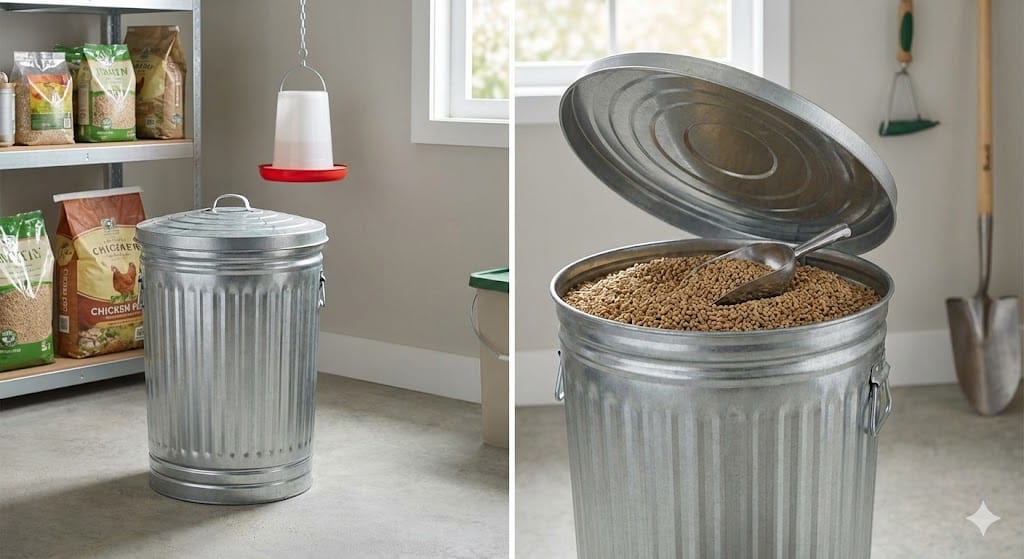
Where to store chicken feed might seem like a simple question, but getting it wrong cost me an entire 50-pound bag of layer pellets in my first year of chicken keeping. I had stored it in my laundry room for convenience, thinking the indoor location would be sufficient protection. Within three weeks, the humidity from my dryer had created visible mold throughout the bag. That $25 lesson taught me that proper feed storage is about far more than just keeping it indoors.
According to Meyer Hatchery’s poultry feed storage guidelines, if stored properly, most chicken feed can last for 3 to 6 months depending on how it was processed. However, if feed is not stored correctly, the shelf life will be much shorter or it can become contaminated by mold, insects, or rodents. Using spoiled or contaminated feed can make chickens sick or even kill them.
After raising chickens for over six years in a tropical climate, I have learned that proper storage directly impacts feed quality, your chickens’ health, and your wallet. This guide covers everything from the best storage locations and containers to handling bulk feed and avoiding the five things that destroy chicken feed fastest.
Where Should Chicken Feed Be Stored?
The ideal location for storing chicken feed must meet several specific requirements to maintain freshness and prevent contamination.
According to Bivatec’s best practices for chicken feed storage, chicken feeds should be stored in a cool, dry location and protected from wildlife. The ideal place to store feed is a cold shed away from dampness. Because certain flooring types like concrete can lead to moisture, you will want to keep your feed on a pallet or similar device that allows air between the feed and the floor.
The ideal storage location must provide:
- Shelter from direct sunlight and rain to prevent temperature swings and moisture
- Proper ventilation to prevent condensation buildup
- Cool, stable temperatures ideally between 10-20°C (50-68°F)
- Low humidity below 65%, with ideal levels between 45-55%
- Protection from rodents, insects, and wild birds
- Elevation off the ground to prevent moisture absorption
- Distance from chemicals, fertilizers, or medications
Best Storage Locations Ranked
| Location | Pros | Cons | Rating |
|---|---|---|---|
| Dedicated feed room/shed | Climate controlled, secure, separate from moisture sources | Requires dedicated space | Excellent |
| Garage (interior, dry) | Protected, convenient access | May have temperature swings, potential vehicle fumes | Very Good |
| Basement (dry, ventilated) | Cool, stable temperature | Potential moisture issues, stairs to navigate | Good |
| Enclosed porch | Convenient access | Less climate control, possible pest entry | Fair |
| Near coop (fully protected) | Very convenient for daily feeding | Higher pest attraction risk | Fair |
According to Meyer Hatchery, the best place to store chicken feed is in a well-sealed container kept in a cool location (60 degrees F or below), dry place with good ventilation and out of direct sunlight. Mold grows in warm, moist environments, and keeping feed out of sunlight helps prevent condensation and temperature swings.
After my laundry room disaster, I moved my feed storage to a ventilated corner of my garden shed, away from any heat sources. The difference was immediate. Feed now stays fresh for the full 6-8 weeks I need, with no mold or moisture issues.
Can Chicken Feed Be Kept Outside?
Yes, but only with proper precautions. Outdoor storage is possible when done correctly, though it requires more vigilance than indoor storage.
According to Bivatec, metallic containers are the best way of storing chicken feeds outside, as vermin will have a difficult time accessing them. An airtight plastic container is another option to prevent poultry feeds from spoiling, although they may be more susceptible to pests.
Outdoor storage requirements:
- Use metal containers only for areas with rodent pressure
- Position in a shaded location to prevent the greenhouse effect inside containers
- Elevate containers off the ground on bricks, pallets, or concrete blocks
- Ensure completely sealed lids to prevent rain and pest entry
- Check regularly for signs of condensation, pests, or spoilage
How to Store Chicken Feed Outside
If outdoor storage is your only option, follow these steps:
Step 1: Choose a galvanized metal container with a tight-fitting lid. Standard galvanized garbage cans work well for most backyard flocks.
Step 2: Position the container in a shaded area, ideally against a north-facing wall where it will not receive direct sunlight.
Step 3: Elevate the container on bricks, concrete blocks, or pressure-treated lumber. According to Backyard Poultry, setting any galvanized product above the ground on bricks, cinderblocks, or scraps of pressure-treated lumber will prevent rust. So long as it is not touching wet soil, it will last indefinitely.
Step 4: Keep the feed in its original bag inside the container. This provides an extra barrier against moisture and prevents any potential reaction between the feed and the container material.
Step 5: Check the container weekly for signs of condensation, pest activity, or unusual odors.
I store feed in galvanized garbage cans on bricks in my covered run area. After years of use, they show no signs of rust and have kept every grain safe from the rats that plagued my early attempts with plastic containers.
Waterproof Chicken Feed Storage
For truly waterproof outdoor storage:
- Galvanized steel with sealed lids offers the best protection
- Avoid plastic containers outdoors as UV exposure degrades them and rodents can chew through
- Consider insulated bins in climates with extreme temperature swings
- Add a hanging basket or sloped cover on top to prevent chickens from roosting and defecating on the lid
According to Backyard Poultry, chickens are non-stop pooping machines, and they love to get up on top of things like garbage cans. Adding a deterrent on top of storage containers keeps them cleaner and protects the lid seal.
How Long Can Chicken Feed Be Stored?
Understanding feed shelf life helps you buy appropriate quantities and recognize when feed should be discarded.
According to Meyer Hatchery, once milled, the quality and nutritional content of the feed will decline. Properly stored feed can last 3-6 months, but several factors affect this timeline.
| Storage Condition | Expected Shelf Life |
|---|---|
| Optimal (cool, dry, sealed, under 60°F) | 4-6 months from manufacture |
| Warm months/warm climate | 2-3 months maximum |
| Hot/humid conditions | 60 days maximum |
| Smaller sealed bags (12 lb or less) | 6-9 months |
| Frozen feed | Extended significantly |
According to the University of Wisconsin Research Animal Resources Center, compounded dry feeds including chicken mash have a storage life of 6 months from manufacture date as marked on the bag. Storage life may be increased by refrigeration or freezing.
How to Read Feed Freshness Dates
Feed bags are marked with lot codes indicating the production date rather than simple “best by” dates. The format varies by manufacturer, but understanding these codes helps you verify freshness before purchase.
According to Kent Feeds’ lot code documentation, typical lot codes work as follows:
- First 2 digits: Manufacturing plant location
- 3rd and 4th digits: Year of manufacture
- Last 3 digits: Julian date (day of year, 001-365)
Example: A lot code “0817045” indicates production on the 45th day of 2017 (February 14th) at the Logansport plant.
Some manufacturers use different formats. For instance, smaller packages may have a more straightforward “best used by” date printed on the bag. When in doubt, contact the manufacturer directly or look for a customer service number on the packaging.
💡 Tip: When shopping, check lot codes on multiple bags and choose the most recently manufactured option, especially during warm months when feed degrades faster.
How Long Can You Store Chicken Feed Once Opened?
Once you open a bag of feed, the clock starts ticking faster. Exposure to air accelerates nutrient degradation and increases contamination risk.
Best practice: Buy one bag of feed at a time and aim to use it within 4-8 weeks of opening. The vitamins, minerals, and essential nutrients in feed degrade when exposed to air, light, and humidity.
Factors that shorten shelf life:
- Moisture exposure (even just humidity in the air)
- Light exposure (even indirect)
- Heat above 70°F (21°C)
- Time since manufacturing (not purchase date)
- Oxygen exposure after opening
- Frequent opening and closing of container
For information on how much feed your flock actually consumes, calculating your usage helps you buy appropriate quantities.
Signs Your Feed Has Gone Bad
| Sign | What It Indicates | Action |
|---|---|---|
| Visible mold (clumps, white/green spots) | Moisture contamination | Discard entire batch |
| Musty or sour smell | Mold or bacterial growth | Discard immediately |
| Rancid or butter-like odor | Fat oxidation | Discard |
| Insects or weevils visible | Pest infestation | Discard, thoroughly clean container |
| Wet or clumped feed | Moisture exposure | Discard (botulism risk) |
| Rodent droppings | Contamination | Discard entire batch |
| Unusual discoloration | Various degradation | Inspect carefully, discard if in doubt |
Critical warning: According to Bivatec, never feed your birds wet or moldy feed, and do not feed it to wild birds or other animals either. Moldy feed can contain mycotoxins that cause illness and death in chickens.
Best Container for Chicken Feed
Container selection significantly impacts how long your feed stays fresh and safe.
| Container Type | Pest Proof | Moisture Proof | UV Protection | Best For |
|---|---|---|---|---|
| Galvanized metal bin | Excellent | Excellent | Excellent | Outdoor storage, rodent-prone areas |
| Heavy-duty opaque plastic | Good | Very Good | Very Good | Indoor storage, convenience |
| Food-grade bucket with gamma lid | Good | Excellent | Very Good | Small flocks, easy access |
| Original bag inside container | Excellent | Excellent | Excellent | Best overall practice |
According to Meyer Hatchery, plastic or metal trash cans with tight-fitting or locking lids work well. The feed can react with metal, so it may be best to place the whole bag inside a metal can. If you have a small flock, five-gallon buckets with secure lids also work.
Repurposed Chest Freezers for Feed Storage
For larger flocks, old chest freezers (unplugged and non-functional) make excellent rodent-proof storage containers. According to Meyer Hatchery, repurposing these appliances provides a solution that is both air and watertight, making them ideal for long-term storage.
✅ Advantages of Chest Freezer Storage:
- Airtight Seal: Completely keeps moisture and pests out.
- High Capacity: Large enough to hold multiple 50-pound bags.
- Sturdy Design: Heavy construction prevents tipping by animals.
- Eco-Friendly: Repurposes an item that might otherwise go to a landfill.
⚙️ Preparation Checklist:
- Check the Seal: Ensure the gasket is still intact and flexible.
- Sanitize: Clean and dry the interior completely.
- Declutter: Remove any shelving or baskets that might trap moisture.
- Ventilate: Prop the lid open for 24-48 hours before first use to air out.
- Placement: Position in a shaded, dry location to prevent internal condensation.
Note: This is an excellent way to repurpose a freezer that no longer works as an appliance but still has an intact seal.
Metal vs. Plastic Containers: Which Is Better?
Galvanized Metal Advantages:
- Completely rodent-proof as rats and mice cannot chew through
- Durable for outdoor use when elevated off wet ground
- Heavy and stable so wind and animals cannot knock them over
- Long-lasting with proper care (10+ years)
Galvanized Metal Disadvantages:
- Feed can react with unlined metal over time
- Heavy and harder to move when full
- May develop rust if bottom contacts wet soil
Plastic Container Advantages:
- Lightweight and easy to move
- Will not react with feed
- Easy to clean
- Less expensive initially
Plastic Container Disadvantages:
- Rodents can chew through given time and motivation
- UV exposure causes degradation outdoors
- Must be opaque (clear containers promote mold growth)
- Raccoons can often open standard plastic lids
- Standard lids may not be secure enough: According to Backyard Poultry, if you use plastic containers, you may want to double up on lid pressure by running a shock cord (bungee cord) from handle to handle over the top. However, shock cords will not stop gnawing rats, so this is only a partial solution for pest-prone areas.
According to Backyard Poultry, if you use plastic containers, you may want to double up on the pressure on the lid by running a shock cord from handle to handle over the top. However, shock cords will not stop gnawing rats. For rodent-prone areas, galvanized metal is the clear winner.
My recommendation: I use galvanized trash cans with the feed kept in its original bag inside. This gives me the pest protection of metal without any risk of chemical interaction between the feed and container. The original bag also makes it easy to check manufacturing dates and lot codes.
Rodent Proof Chicken Feed Storage
Rodents are attracted to chicken feed and can contaminate it with disease, cause significant financial losses, and attract predators to your coop area.
According to Bivatec, proper feed storage is essential; the use of poor storage facilities will lead to the deterioration of feed quality. This, in turn, will result in poor growth, malnutrition, health problems, and possibly a high mortality rate for the chickens.
Essential rodent-proofing measures:
| Method | Effectiveness | Notes |
|---|---|---|
| Galvanized metal containers | Excellent | Rats cannot chew through metal |
| Tight-fitting lids with no gaps | Excellent | Mice can squeeze through surprisingly small spaces |
| Elevated storage | Very Good | Harder for rodents to access, easier to spot activity |
| Remove feeders at night | Very Good | Eliminates nocturnal feeding opportunity |
| Store feed away from coop | Good | Reduces overall pest attraction to bird area |
| Regular inspection | Essential | Catch problems early |
Signs of rodent activity:
- Droppings in or near feed storage
- Gnaw marks on containers, bags, or nearby surfaces
- Holes chewed in bags
- Musty or ammonia smell
- Greasy rub marks along walls near storage
- Nesting materials nearby
I had a persistent rat problem until I made two changes: switching from plastic bins to galvanized metal containers and bringing feeders inside at dusk. The combination eliminated the issue within two weeks. Rats are persistent, but they will move on when food becomes inaccessible.
Bulk Chicken Feed Storage
Buying feed in bulk can save money, but only if you can store it properly. Improperly stored bulk feed loses nutritional value and can become dangerous.
According to Bivatec, bulk poultry feeds should be stored in an airtight container that keeps out all moisture and vermin. Many poultry farmers prefer to place or store their poultry feeds in metallic containers with food-safe paint or a ceramic barrier on the inside to prevent the metal from interacting with the feeds.
Best Way to Store Bulk Chicken Feed
For medium flocks (20-50 birds):
- Multiple galvanized bins allow for FIFO rotation
- Each bin holds one 50-lb bag in its original packaging
- Label each bin with purchase date
For larger operations (50+ birds):
- Poly bins or small silos with controlled discharge
- According to Dine-A-Chook, poly silos and bins are perfect for grains and feed, allowing easy loading from the top and simple discharge from the bottom
FIFO (First In, First Out) Rotation System:
According to multiple sources including Thomas Moore Feed, to make sure older feed is used before newer deliveries, implement a first-in, first-out storage system. Label bags or containers with delivery dates, and periodically inspect the feed, checking for signs of spoilage.
How to implement FIFO:
- Label each bag or container with the purchase date
- Always place new bags behind or below older stock
- Always use from the oldest supply first
- Never pour new feed on top of old feed in the same container
Bulk storage warnings:
- According to Kemin Industries, bagged feed stored for more than one month has a much greater chance of losing its quality due to mold growth and rancidity
- Buy only what your flock will consume in 4-6 weeks maximum
- Bulk buying may be more economical per pound, but not when feed loses nutrient value over time
For those calculating feed costs for larger operations, factor in potential waste from improper storage when evaluating bulk purchase savings.
Where to Store Chicken Feed for Winter
Winter storage presents unique challenges that catch many keepers off guard.
Winter storage challenges:
- Temperature fluctuations between day and night cause condensation inside containers
- Increased rodent pressure as wild food sources become scarce
- Potential for feed to freeze and thaw, creating moisture
- Reduced ventilation in enclosed spaces
Winter storage best practices:
Prevent condensation: The biggest winter threat is moisture from temperature swings. When warm daytime air meets cold container surfaces at night, water droplets form on the inside of containers and on the feed itself.
Solutions include:
- Move storage to a location with more stable temperatures (attached garage, basement)
- Use insulated storage containers in extreme climates
- Keep containers away from exterior walls that experience temperature extremes
- Check feed more frequently for moisture, clumping, or mold on top layers
Manage increased pest pressure: As natural food sources disappear in winter, rodents become more aggressive in seeking stored feed. This is when that galvanized metal container investment really pays off.
Smaller quantities, more frequent purchases: In winter, I buy smaller bags more often rather than stocking up. The risk of spoilage from condensation issues outweighs the convenience of larger purchases.
During my first winter with chickens, I stored feed in my unheated garden shed. The temperature swings created condensation that ruined the top layer of feed in my containers. Now I move feed storage into my attached garage during winter months where the temperature stays more stable. The extra steps each day are worth avoiding the spoilage problems.
For more on winterizing your chicken setup, proper feed storage is just one piece of cold-weather management.
The 5 Things That Ruin Chicken Feed
Understanding what destroys feed helps you avoid costly storage mistakes.
| Factor | How It Damages Feed | Prevention |
|---|---|---|
| Moisture | Causes mold growth, botulism toxin risk, clumping | Airtight containers, elevated storage, dry location, check regularly |
| Light and Heat | Degrades vitamins (especially A, D, E), causes fat rancidity, breaks down proteins | Opaque containers, shaded location, cool storage area |
| Chemical Reactions | Oxidation of vitamins and fats when exposed to air or reactive surfaces | Airtight seal, keep feed in original bag, avoid direct metal contact |
| Time | Gradual nutrient deterioration regardless of other factors | Use within 4-8 weeks of opening, practice FIFO rotation |
| Pests | Contamination with disease organisms, physical consumption of feed | Sealed containers, rodent-proof materials, regular inspection |
According to Meyer Hatchery, mycotoxins, which are produced by molds, are toxic to chickens. Keeping feed out of sunlight helps prevent condensation and temperature swings throughout the day and night, which cause the moisture that promotes mold growth.
How to Store Chick Feed
The same basic storage principles apply to chick starter feed, with a few additional considerations.
Specific considerations for starter feed:
Buy smaller quantities: Chicks eat much less than adult chickens, so a bag lasts longer. According to Kreamer Feed, smaller packages have extended shelf life because they contain less air exposure. A 12-pound bag may be more practical than a 50-pound bag for small batches of chicks.
Higher protein means potentially faster rancidity: Starter feeds contain 18-22% protein, higher than layer feed. The additional fats that accompany higher protein content can go rancid faster if improperly stored.
Keep starter feed separate from layer feed: This prevents accidentally feeding high-calcium layer feed to young birds, which can damage their developing kidneys.
Label containers clearly: When you have multiple feed types, clear labeling prevents dangerous mix-ups.
For those bringing chicks home for the first time, having proper feed storage set up before the chicks arrive prevents scrambling later.
Best Way to Store Feed: Quick Reference Checklist
Storage Location:
- ✅ Cool location (ideally 50-68°F / 10-20°C)
- ✅ Dry area with humidity below 65%
- ✅ Well-ventilated space
- ✅ Away from direct sunlight
- ✅ Protected from rain and weather
- ✅ Away from chemicals, fertilizers, and medications
Container Requirements:
- ✅ Airtight seal with tight-fitting lid
- ✅ Pest-proof material (galvanized metal for rodent areas)
- ✅ Opaque (not clear or translucent)
- ✅ Elevated off ground on bricks or pallets
- ✅ Feed kept in original bag inside container
Maintenance Practices:
- ✅ Practice FIFO rotation (oldest feed used first)
- ✅ Use opened feed within 4-8 weeks
- ✅ Never mix old and new feed in same container
- ✅ Check regularly for mold, pests, moisture, unusual odors
- ✅ Label containers with purchase date
- ✅ Clean containers between batches
Frequently Asked Questions
Where Should Chicken Feed Be Stored?
In a cool, dry, well-ventilated location away from direct sunlight. A dedicated shed, garage interior, or dry basement works well. Always use sealed containers and keep feed elevated off the ground on pallets or bricks.
Can Chicken Feed Be Kept Outside?
Yes, but only in proper galvanized metal containers that are completely sealed, elevated off the ground, and positioned in a shaded area. Outdoor storage requires more vigilance against moisture and pests than indoor storage.
How Long Can Chicken Feed Be Stored?
Properly stored feed lasts 3-6 months from manufacture date. Once opened, aim to use within 4-8 weeks. In hot or humid conditions, use within 60 days maximum. Always check for signs of spoilage before feeding.
What Is the Best Container for Chicken Feed?
Galvanized metal bins with tight-fitting lids offer the best protection against rodents and moisture for most situations. Keep feed in its original bag inside the container to prevent any reaction between feed and metal.
Should I Refrigerate or Freeze Chicken Feed?
Refrigeration is generally not recommended due to moisture concerns when feed is removed to warmer air. However, according to Meyer Hatchery, freezing feed can extend shelf life if you have the space. Thaw only what you need for a few days at a time to prevent condensation.
How Do I Know If My Chicken Feed Has Gone Bad?
Signs include visible mold, musty or rancid smell, insects, wet clumps, or rodent droppings. When in doubt, discard the feed. Spoiled feed can contain mycotoxins that cause serious illness or death in chickens.
Where Should I Store Chicken Feed in Winter?
Move storage to a location with stable temperatures to prevent the condensation that forms when temperatures swing between day and night. An attached garage, insulated shed, or basement typically provides more stability than an unheated outbuilding.
Can I Store Different Feed Types Together?
You can store different feeds in the same area, but keep them in separate, clearly labeled containers. Never mix different feed types (starter, grower, layer) as this can result in improper nutrition or even harm to birds receiving the wrong feed.
My Feed Storage System After Six Years
After considerable trial and error raising chickens in a tropical climate with high humidity and persistent pest pressure, here is what works for my flock:
Location: I store feed in a ventilated corner of my attached carport, which stays cooler and more stable than my garden shed. During the hottest months, I move the container to the coolest corner of my house.
Containers: I use two 30-gallon galvanized garbage cans, elevated on concrete blocks. One holds layer feed, the other holds oyster shell and grit. Both cans have the original bags inside to prevent any metal-feed interaction.
Rotation system: I write the purchase date on each bag with permanent marker. I buy a new bag when the current one is about half empty, ensuring I always have backup but never storing feed longer than 6-8 weeks.
Pest prevention: The galvanized containers completely eliminated my rat problem. I also bring feeders inside each evening to remove any overnight food source.
Winter adjustments: When temperatures drop and start swinging between warm days and cold nights, I move storage inside to my garage where temperatures stay stable. This prevents the condensation that ruined feed during my first winter.
Monthly costs impact: Proper storage has actually reduced my feed costs. Before I got storage right, I was throwing away spoiled feed regularly. Now I lose almost nothing to spoilage, and my chickens get full nutritional value from every bag.
The initial investment in quality galvanized containers and the habit of elevating them off the ground paid for itself within the first year through reduced waste. More importantly, my flock has stayed healthier since I stopped inadvertently feeding them degraded or contaminated feed.
For anyone making the common mistakes first-time chicken keepers make, improper feed storage is near the top of the list. Get this right from the start, and you will save money, protect your chickens’ health, and avoid the frustration of discovering moldy feed when you need it most.

Oladepo Babatunde is the founder of ChickenStarter.com. He is a backyard chicken keeper and educator who specializes in helping beginners raise healthy flocks, particularly in warm climates. His expertise comes from years of hands-on experience building coops, treating common chicken ailments, and solving flock management issues. His own happy hens are a testament to his methods, laying 25-30 eggs weekly.