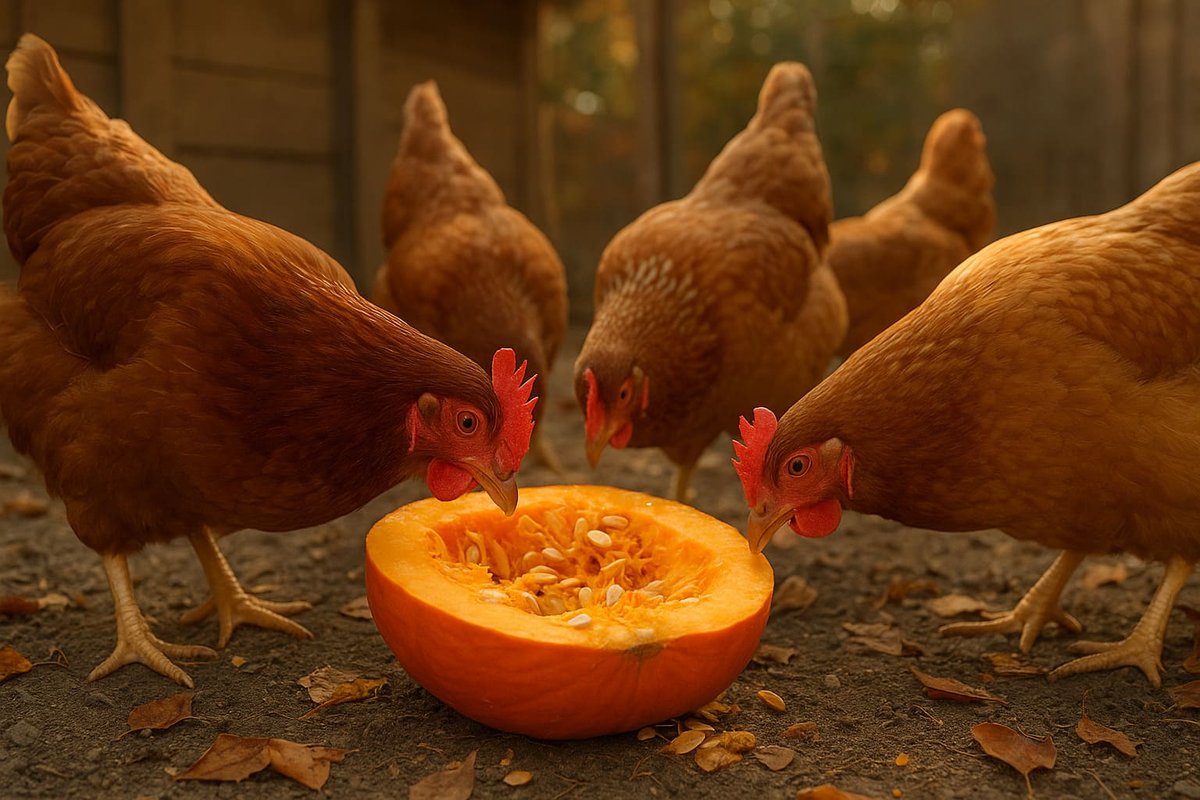
Can chickens eat pumpkins? Yes, and they absolutely love them. Chickens can safely eat all parts of a pumpkin, including the flesh, seeds, skin, stringy guts, and even the stem if it is soft enough. This fall favorite from the Cucurbita genus is packed with vitamins A, B, C, and E, plus minerals like zinc, potassium, and magnesium that support chicken health, feather quality, and egg production.
After raising backyard chickens for over six years in a tropical climate, I can tell you that few treats generate as much excitement in my coop as a freshly cut pumpkin. My Australorps literally sprint across the yard the moment I bring one out. They have learned the sound of the knife hitting the rind and know exactly what is coming. This guide combines years of hands-on experience with scientific research and practical feeding schedules tested on my own flock to help you feed this seasonal superfood safely.
Why Pumpkins Are a Nutritional Powerhouse for Chickens
According to Hobby Farms, pumpkin is one of the most nutritious treats you can ever offer your chickens. Pumpkin flesh is chock full of vitamin E, thiamine, niacin, vitamin B6, and iron. Pumpkin seeds are an excellent source of dietary fiber, zinc, protein, and healthy fats.
What makes pumpkins special is their combination of nutrients, hydration, and enrichment value. The vibrant orange color is a giveaway of the beta-carotene content, which converts to vitamin A in your chicken’s body.
Key Vitamins in Pumpkin
Vitamin A (from Beta-Carotene): According to Raising Happy Chickens, pumpkin is one of the best sources of beta-carotene, a powerful antioxidant which converts to vitamin A in the body. This vitamin is crucial for vision, growth, reproductive function, and proper mucus production. Lack of mucus can lead to dry eye and respiratory problems.
B Vitamins: Vitamin B is a key player in proper energy metabolism, affecting almost all body systems including growth, development, and egg production. According to Raising Happy Chickens, it is also crucial for proper embryo and chick development. Deficiency can lead to hatching problems and kidney or liver diseases.
Vitamin C: While chickens can produce their own vitamin C, supplementation is important during times of stress such as growth spurts, sitting hens, flock changes, or illness. Vitamin C also helps alleviate heat stress, aids calcium absorption for bone and eggshell development, improves fertility, and reduces inflammation.
Vitamin E: Found concentrated in the seeds, vitamin E is vital for the immune and neurological system. According to Raising Happy Chickens, it can help protect against (but not cure) diseases like coccidiosis, E. coli, and bronchitis. Deficiency can lead to wry neck and severe neurological problems.
Essential Minerals
Zinc: According to Raising Happy Chickens, zinc is concentrated just under the shell in a mega-thin membrane, so do not try to shell or blend the seeds for your flock. Leave them intact. Zinc is essential to chicken development, and lack of it can lead to bone deformity and stunted growth.
Potassium: According to Raising Happy Chickens, potassium is critical to chick development and also helps chickens deal with extreme heat. If you are intending to hatch chicks from your own eggs, make sure your hens have a good source of potassium.
Other minerals: Pumpkin also contains calcium, iron, magnesium, copper, folate, and manganese.
Hydration and Fiber Benefits
Pumpkin is approximately 90-95% moisture, making it a very hydrating treat. This is particularly valuable during hot weather or for encouraging water intake in reluctant drinkers.
The flesh is also high in fiber, which keeps the digestive system operating smoothly, reducing the likelihood of blockages and supporting nutrient absorption.
Nutritional Data at a Glance
| Nutrient | Benefit for Chickens | Found In |
|---|---|---|
| Vitamin A (Beta-Carotene) | Vision, immunity, mucus membranes, reproduction | Flesh |
| Vitamin B Complex | Energy metabolism, growth, egg production | Flesh |
| Vitamin C | Stress reduction, calcium absorption, heat tolerance | Flesh |
| Vitamin E | Immune system, neurological health, prevents wry neck | Seeds |
| Zinc | Bone development, feather growth | Seed membrane |
| Potassium | Embryo development, heat survival, eggshell strength | Flesh and seeds |
| Protein | Feather growth, muscle maintenance | Seeds |
| Fiber | Digestive health | Flesh and skin |
How Pumpkin Affects Egg Quality and Yolk Color
One of the most visible benefits of feeding pumpkin is the impact on egg yolk color. The beta-carotene in pumpkin flesh is responsible for the vibrant orange color, and when chickens consume it, some of that pigment transfers to their egg yolks.
According to the Bock Bock Bouquet YouTube channel, pumpkin can make egg yolks a nice vibrant orange color. Lisa Steele of Fresh Eggs Daily confirms that pumpkins are full of beta-carotene which is what makes egg yolks orange and also the chickens’ and ducks’ beaks and feet really orange.
After two weeks of regular pumpkin feeding during autumn, I noticed my egg yolks shifted from pale yellow to a noticeably deeper orange. The difference was striking enough that my family commented on it when I cracked eggs for breakfast. This visual change indicates successful nutrient transfer from the pumpkin to the eggs.
The beta-carotene does more than just add color. It acts as an antioxidant in the eggs themselves, potentially improving their nutritional profile for human consumption.
How Does Pumpkin Compare to Other Chicken Treats?
| Treat | Key Nutrients | Hydration | Best For |
|---|---|---|---|
| Pumpkin/Squash | High Vitamin A, Protein (seeds), Fiber | Very High (90-95%) | All-around nutrition, fall/winter energy, molt support |
| Watermelon | Vitamin C, Lycopene | Extremely High (92%) | Hot summer days, hydration boost |
| Cucumber | Minimal calories | Extremely High (95%) | Hydration on hottest days |
| Mealworms | High protein, fats | Low | Molting, winter energy |
While watermelon and cucumber excel at hydration, pumpkin offers a much richer nutritional profile, making it a more substantial treat, particularly in cooler weather when your flock needs extra calories.
A Special Boost During Molt
The high protein content in pumpkin seeds makes them excellent during chicken molting season. Growing new feathers is protein-intensive, and the combination of protein, zinc, and vitamin E in pumpkin seeds directly supports feather regrowth.
According to the Bock Bock Bouquet YouTube channel, there is a lot of zinc and vitamin E in pumpkin seeds which is good for preventing wry neck, and the vitamin E is also good in helping prevent neurological issues.
During my flock’s annual molt last October, I increased pumpkin feeding to every other day. The difference in feather regrowth speed compared to previous years was noticeable. My hens completed their molt about two weeks faster than when I did not supplement with pumpkin.
Can Chickens Eat All Parts of a Pumpkin?
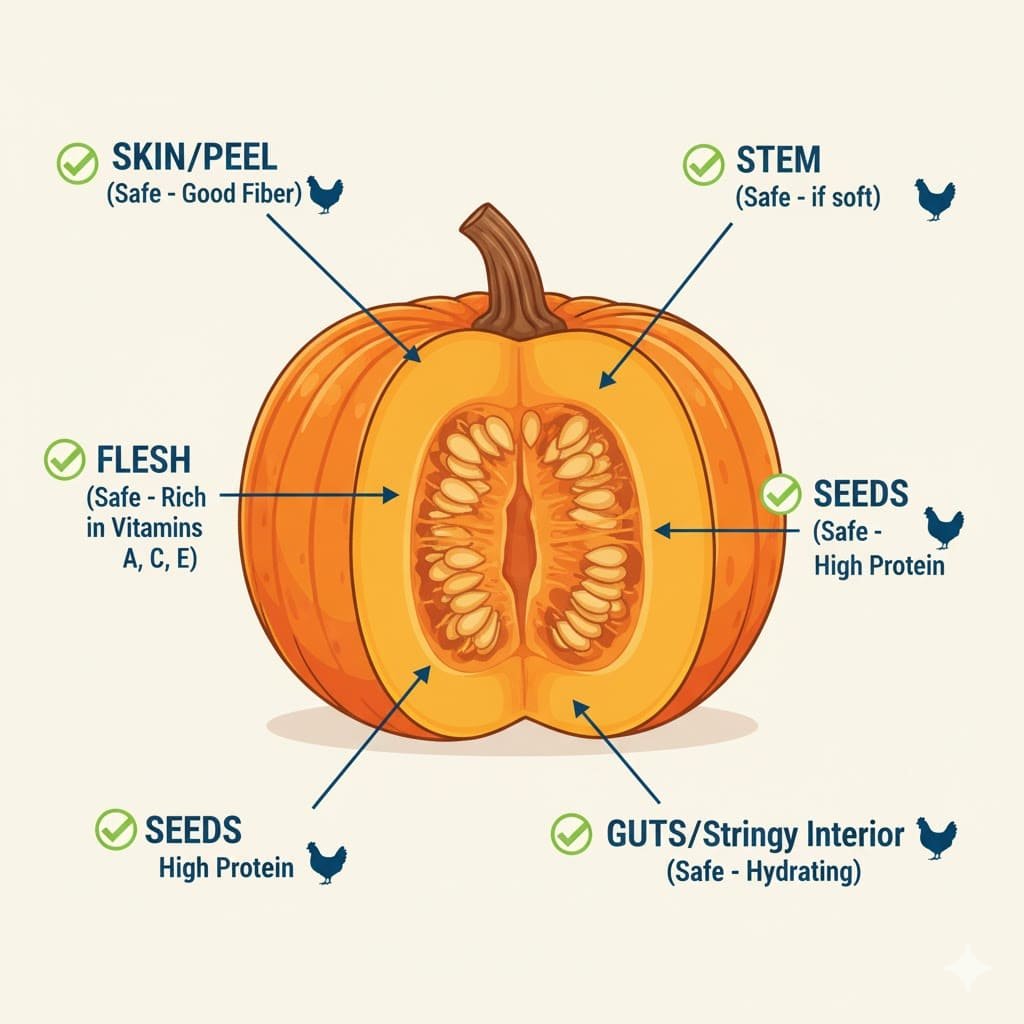
Yes, chickens can safely eat every part of a fresh pumpkin. Here is the breakdown:
Can Chickens Eat Pumpkin Seeds?
According to Chicken Coop Company, yes, and they should! Seeds are often the flock’s favorite part. They are protein-packed and support digestive health.
Can chickens eat pumpkin seeds with shells?
Yes, and they should. According to Raising Happy Chickens, the zinc is concentrated in the thin shell membrane under the outer shell. When you remove the shell, you also remove the membrane containing zinc. A chicken’s gizzard is perfectly capable of grinding up the raw shells, which add extra fiber.
According to Hobby Farms, there is no need to rinse the seeds or roast them. Fresh is perfectly fine. If you have roasted your pumpkin seeds, your chickens will still eat them. Just make sure no flavorings like salt, sugar, or spices have been added.
Can Chickens Eat Pumpkin Skin (Peel)?
Yes. According to Raising Happy Chickens, chickens will even eat the skin if it is not too thick or tough. The hard outer shell may present a challenge initially, but they will eventually consume the entire pumpkin over time.
According to Meyer Hatchery, most times chickens will kindly just leave you a thin skin of the pumpkin all cleaned off.
Can Chickens Eat Pumpkin Guts?
They love them! According to Chicken Coop Company, that stringy, slimy interior is often the first part chickens devour. It is perfectly safe and a flock favorite.
According to Hobby Farms, the next time you carve a jack-o’-lantern, have a container ready to receive the seeds and stringy pumpkin guts. Your chickens will love you for it.
Can Chickens Eat Pumpkin Plants and Stems?
The whole pumpkin plant is edible for chickens, including leaves and vines. However, ensure the plants are pesticide-free before offering them.
Pumpkin Varieties: Does the Type Matter?
Chickens are not picky, but there are slight differences between pumpkin types.
Carving Pumpkins (Jack-o’-lantern types like Howden): These have thinner, more watery flesh. They are perfectly safe and likely what you will get free after Halloween.
Pie Pumpkins (Sugar Pie, Baby Bear): Smaller, sweeter, with thicker, more nutrient-dense flesh. A superior nutritional choice if buying specifically for your flock.
Australian Varieties: If you are in Australia, varieties like Queensland Blue, Jarrahdale, Kent (Jap pumpkin), and Butternut are all safe and nutritious options for chickens.
Ornamental Varieties: Small, colorful gourds and mini pumpkins are also safe. They may have tougher skins, but your flock will work through them eventually.
While pie pumpkins are technically more nutritious, any variety of fresh pumpkin is a fantastic and healthy treat.
Can Chickens Eat Raw or Cooked Pumpkins?
Your flock can enjoy pumpkins both raw and cooked. Most keepers find raw easier and often preferred by their birds.
| Feature | Raw Pumpkin | Cooked Pumpkin |
|---|---|---|
| Nutritional Value | Maximum nutrient retention | Slight nutrient loss during cooking |
| Preparation | Very easy, just cut open | Requires steaming or roasting time |
| Texture | Firm, provides enrichment | Soft, easier for chicks or elderly hens |
| Safety | Perfectly safe | Safe ONLY if plain (no salt, sugar, oils, spices) |
| Enrichment Value | High (pecking, scratching) | Lower (consumed quickly) |
According to Chicken Coop Company, serving raw is the easiest method. Simply cut it open so chickens can peck at the flesh and seeds. Raw pieces are safe, nutritious, and a great source of enrichment.
How to Prepare Pumpkins for Chickens
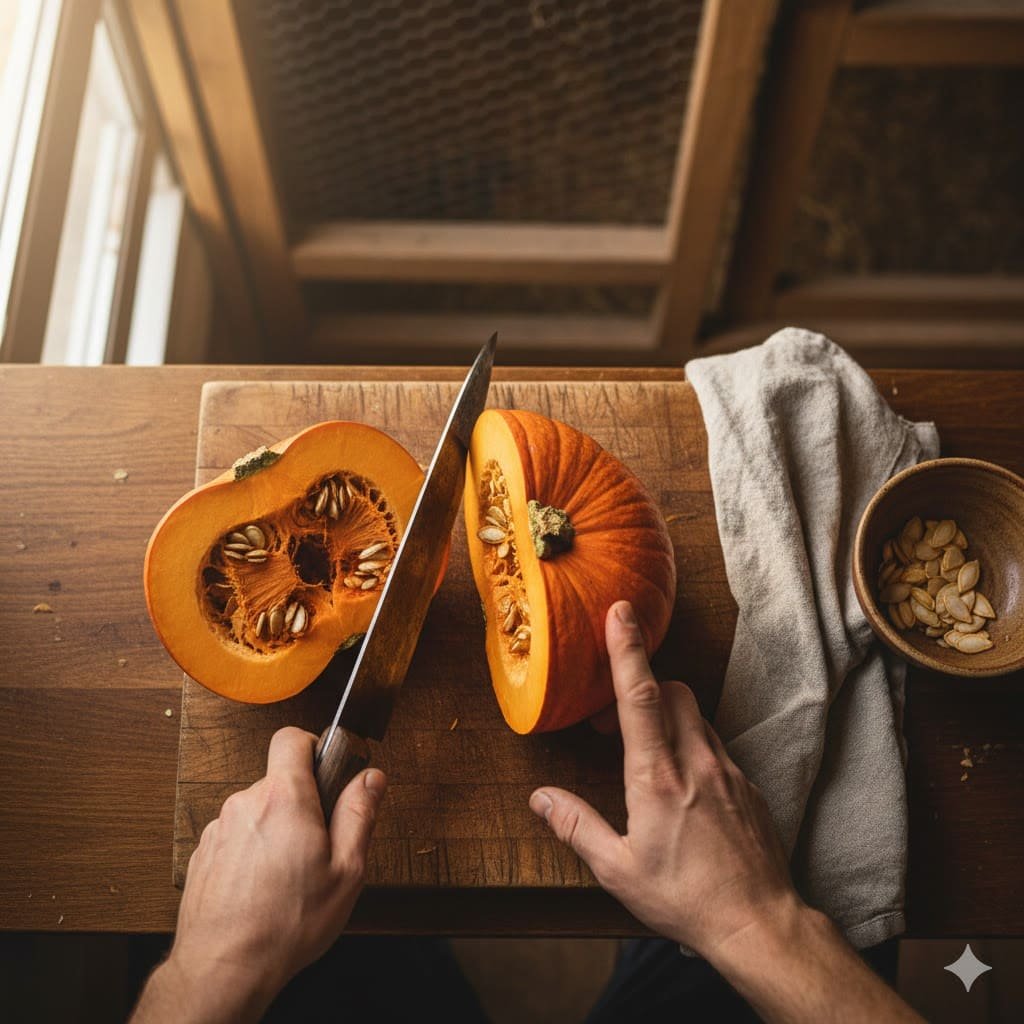
Preparing pumpkin is simple. Your goal is to make it accessible and safe.
Feeding Whole or Cut Pumpkins
Can I put a whole pumpkin in the chicken coop?
According to Hobby Farms, you can go ahead and present your pumpkin to the chickens whole. After a few moments spent eyeing the orange intruder, they will begin to peck at the shell. However, a better method would be to cut it in half or into wedges, so your birds can tear right into the good stuff.
Step-by-step preparation:
- Inspect the pumpkin for mold, soft spots, or unusual odors
- Remove any decorations including stickers, tape, googly eyes, or glitter
- Clean carved pumpkins thoroughly and scrape out all candle wax
- Cut in half or quarters to expose seeds and flesh
- Place in the run on a clean surface or in a shallow dish
- Monitor and remove leftovers after 1-2 days to prevent mold and avoid attracting rats
According to the Bock Bock Bouquet YouTube channel, if chickens have any leftovers at night, you might want to take them out of your coop and give it back to them in the morning to keep away any predators, pests, or rodents.
How to Hang a Pumpkin for Chickens
Hanging provides fantastic entertainment and keeps the treat cleaner. According to Chicken Coop Company, you can tie up a smaller gourd and let the chickens peck at it like a swinging toy.
My method:
- Cut a small to medium pumpkin in half
- Drill a hole through the top center near the stem area
- Thread strong twine or rope through and tie a secure knot
- Hang from a coop beam or sturdy branch at head height
- Watch your flock enjoy their “pumpkin piñata”
This is an excellent boredom buster that can help reduce feather pecking in confined flocks.
Creative Feeding Methods
According to Chicken Coop Company, there are several ways to serve pumpkin:
- Halves or wedges with the flesh exposed
- Raw as-is for maximum enrichment
- Cooked mash mixed with regular feed for a warm treat
- Seeds scattered in the run for foraging
- Mixed into feed for variety
Pumpkin as a Boredom Buster
According to Meyer Hatchery, fall brings the colder weather, and you might be looking for a few ways to keep your chickens preoccupied. A pumpkin split in half and given to your chickens is a great boredom buster for them.
According to Chicken Coop Company, many keepers notice their chickens become more curious and active when a pumpkin is placed in the run. It gives them something to peck, scratch, and explore, which helps reduce boredom and feather-picking behaviors that often appear during colder months.
The Bock Bock Bouquet YouTube channel explains that there is a lot less to do for chickens in the cooler months because there is less to forage, fewer bugs for them to eat, and less foliage for them to scratch on. They have an instinct to peck, so pumpkin keeps them from pecking on each other and gives them something to peck at all day.
How Much Pumpkin Can You Give Chickens?
According to Chicken Coop Company, pumpkin should be considered a treat, making up no more than 10% of a chicken’s diet. Offering it a few times per week during fall is ideal.
According to Hobby Farms, despite how healthy pumpkin is, only offer it to your flock in moderation. Give them one pumpkin every other day, not one pumpkin three times a day. Ingesting large quantities of pumpkin creates an imbalance in your flock’s diet, as the chickens will be too full to eat their feed and will thus miss out on nutrients necessary for their health and development.
Flock Size Guidelines
| Flock Size | Recommended Amount | Frequency |
|---|---|---|
| Small (4-8 chickens) | 1 small pumpkin | Every 2-3 days |
| Medium (8-15 chickens) | 1 medium pumpkin | Every other day |
| Large (15+ chickens) | 1 large pumpkin | Can be daily, but monitor feed consumption |
Can Chickens Eat Pumpkins Every Day?
According to Chicken Coop Company, their main nutrition should still come from a complete layer feed to ensure egg production and overall health. While a large flock might consume one daily, a typical backyard flock should only get pumpkin a few times per week.
I learned the hard way during my second fall with chickens that too much pumpkin means half-eaten layer pellets. Now I stick to the every-other-day schedule and have had no issues with dietary imbalance.
Do Pumpkin Seeds Deworm Chickens? The Scientific Truth
No, pumpkin seeds are not a proven natural dewormer for chickens. This is a persistent myth that needs addressing.
According to Chicken Coop Company, while pumpkin seeds will not replace veterinary care for worms, they can play a small role in natural parasite management. The seeds contain cucurbitacin, a compound believed to help naturally reduce internal parasites.
However, according to Raising Happy Chickens, this has never been proven. Research has centered mainly on people, horses, and goats. Chickens have never been the focus, and it is just not possible to assume that because seeds work on mammals, they will do the same for poultry.
According to The Chicken Whisperer (Andy Schneider) on BackYard Chickens forum, at a minimum, to prove that pumpkin seeds are an all-natural dewormer, you need to show chickens that are indeed infested, the types of worms infecting them, the variety and amount of pumpkin seeds used, how long they were administered, the method used to ensure each chicken received the same dose, and a test demonstrating the chickens are worm-free.
According to Raising Happy Chickens, worms should generally not be a problem for backyard flocks. They tend to affect chickens kept in large numbers and crowded conditions. If you notice worms in your chickens’ poop, check with a veterinarian to assess treatment options.
Bottom line: Pumpkin seeds are nutritious and may contribute to overall gut health, but for actual parasite problems, consult a veterinarian and follow proper parasite treatment protocols.
Feeding Pumpkin to Broody Hens
Broody hens present a unique feeding challenge. They often refuse to leave the nest, eating and drinking minimally while dedicated to sitting on eggs. The high moisture content of pumpkin (approximately 90-95% water) makes it a useful treat for encouraging hydration in stubborn broody hens.
Tips for feeding broody hens pumpkin:
- Place small pieces of pumpkin flesh near the nest where she can reach without leaving
- The moisture content helps maintain hydration when she refuses water
- Pumpkin seeds provide protein to help maintain body condition during the 21-day brooding period
- Remove uneaten pieces daily to prevent attracting pests to the nesting area
According to Raising Happy Chickens, potassium is critical to healthy development, which makes pumpkin an especially relevant treat for hens you hope will successfully hatch a clutch.
I have found that my broody Australorps will accept small pumpkin pieces placed at the edge of the nest box, even when they refuse to leave for regular feed. It is not a replacement for proper nutrition, but it helps bridge the gap during their most stubborn periods.
Fermented Pumpkin for Chickens
One feeding method not commonly discussed is fermented pumpkin. Just as fermenting chicken feed increases digestibility and nutrient availability, fermented pumpkin can provide additional probiotic benefits.
How to ferment pumpkin for chickens:
- Cut pumpkin into chunks (flesh and seeds)
- Place in a glass jar or food-safe container
- Cover with filtered water
- Add a splash of apple cider vinegar (optional, to start fermentation)
- Cover loosely and leave at room temperature for 24-48 hours
- Feed in small amounts as a probiotic-rich treat
This is particularly beneficial during digestive stress or when introducing new birds to the flock.
Can Baby Chicks Eat Pumpkin?
Yes, but wait until they are at least 4-6 weeks old. According to the 10% treat rule, chicks need the full nutrition from their starter feed during the critical early weeks.
When ready to introduce pumpkin:
- Offer cooked, mashed pumpkin flesh only (no seeds initially)
- Avoid skin, which may be too tough
- Start with very small amounts
- Ensure chicks have access to grit for digestion
When bringing chicks home, stick to their starter feed for the first few weeks before introducing any treats.
Seasonal Feeding: When to Offer Pumpkin
Fall Harvest (September-November in Northern Hemisphere, March-May in Australia): Peak season when pumpkins are fresh, cheap, and plentiful.
Post-Halloween Bonanza: According to Raising Happy Chickens, pumpkins are especially inexpensive in the shops and markets when Halloween has passed. Ask neighbors for their uncarved, unpainted pumpkins.
According to Chicken Coop Company, this hearty fruit stores well in cool weather, making it an easy treat to keep on hand through the winter. You can stock up when they are inexpensive in October, store them in a dry, cool spot, and bring one out every couple of weeks to surprise your chickens.
Winter Treats: Use pumpkins you have stored properly. The extra calories and nutrients are especially welcome during cold snaps.
Cost Analysis: Pumpkin vs. Commercial Chicken Treats
One of pumpkin’s biggest advantages is its cost-effectiveness compared to commercial treats.
| Treat Type | Approximate Cost | Key Nutrients | Cost Efficiency |
|---|---|---|---|
| Post-Halloween pumpkins | Free to $2 each | Vitamins A, B, C, E, zinc, protein (seeds), fiber | Excellent |
| Fresh pumpkins (in season) | $3-8 each | Same as above | Very Good |
| Dried mealworms | $15-25 per lb | High protein, fats | Moderate |
| Commercial treat blocks | $8-15 each | Varies by product | Poor to Moderate |
| Scratch grains | $15-20 per 50 lb | Carbohydrates, some protein | Good |
My Cost Comparison
Last autumn, I tracked my treat spending:
- 20 free pumpkins from neighbors post-Halloween = $0
- 5 purchased pumpkins at $2 each = $10
- Total pumpkin cost for 4 months: $10
This provided treats for my flock of 8 hens from November through February. Comparable commercial treats would have cost $40-60 over the same period.
Tips for maximizing value:
- Stock up post-Halloween when pumpkins are free or heavily discounted
- Store whole pumpkins in a cool, dry place for 2-3 months
- Save and dry seeds separately for year-round high-protein treats
- Ask grocery stores for damaged pumpkins they cannot sell
Can Chickens Eat Decorative Pumpkins and Jack-O’-Lanterns?
Yes, with important safety considerations.
According to Hobby Farms, if you plan on giving your flock a jack-o’-lantern snack, do so no later than November 2 (shortly after Halloween). Should your neighbors offer their used jack-o’-lanterns for your chickens, thank them then, like any parent on Halloween, inspect any treat before letting your feathered kids eat it.
Steps for jack-o’-lanterns:
- Remove any stickers, googly eyes, and other detachable embellishments from the outer shell
- Inspect the interior and remove any candle-wax remnants
- According to Hobby Farms, while candle wax is non-toxic, it can include artificial colors and fragrances that should not be ingested by chickens. Some candles even contain citronella.
- Thump the outside of the gourd. It should still be strong and hard, not soft and falling in on itself.
- Sniff the inside for any funkiness beyond the scent of pumpkin guts.
- If the outer shell has softened or there is any discoloration, mottling, or other visible sign or scent of decay, consign the jack-o’-lantern to the compost pile.
Safe to feed:
- Uncarved display pumpkins
- Carved jack-o’-lanterns that are fresh (1-3 days old maximum)
- Plain decorative pumpkins without any treatments
NOT safe to feed:
- Painted pumpkins
- Glittered or decorated pumpkins
- Pumpkins with candle wax residue that cannot be fully removed
- Moldy or rotting jack-o’-lanterns
- Pumpkins treated with preservatives
A Fun Seasonal Activity: Carving With Your Chickens
According to Chicken Coop Company, here is a creative way to include your flock in your fall traditions:
- Start your jack-o’-lantern by carving a simple face or outline
- Place the gourd in the run before fully cleaning it out
- Let your chickens go to work. They will happily peck at the flesh, seeds, and stringy insides, “finishing” the carving for you.
Not only does this save you cleanup, but it also doubles as entertainment and enrichment for your flock.
How to Store Pumpkins for Year-Round Feeding
Whole pumpkins: According to Raising Happy Chickens, buy as many pumpkins as possible when plentiful in autumn and feed at least some to your flock fresh. It helps them store reserves of vitamins and minerals as winter approaches. Keep whole, uncut pumpkins in a cool, dark, dry place. They can last 2-3 months.
Freezing pumpkin: According to Raising Happy Chickens, the easiest way to store pumpkin is to scoop out the flesh and seeds, either roast or make a puree, and freeze it in smaller quantities.
Storing seeds: Dry raw pumpkin seeds thoroughly and store in an airtight container. Alternatively, roast them plain (no salt or seasonings) for longer storage. These make excellent high-protein winter treats.
Can Ducks Eat Pumpkins?
Yes. According to Lisa Steele of Fresh Eggs Daily, ducks enjoy pumpkins just as much as chickens and can safely eat the flesh, seeds, and guts. The same preparation and moderation guidelines apply.
Can Chickens Eat Canned Pumpkin?
According to Raising Happy Chickens, canned pumpkin puree is also a good source, but make sure you read the label and avoid any whose ingredients include sugars or additives. The canned pumpkin you might use to make pumpkin pie should not be fed to chickens as it typically has added sugars and/or syrup.
Safe: 100% pure pumpkin puree (single ingredient: pumpkin) Not safe: Pumpkin pie filling with sugar, spices, and additives
When NOT to Feed Pumpkins to Chickens
According to Chicken Coop Company, the main risk is spoilage. Once cut open, pumpkin can mold quickly. Mold is unsafe for chickens, so remove any leftovers daily.
Never feed pumpkins with:
| Warning Sign | Why It Is Dangerous | Action |
|---|---|---|
| Visible mold (white, black, fuzzy) | Mycotoxins are highly toxic to poultry | Discard immediately |
| Soft, mushy spots | Bacterial growth | Discard affected areas or entire pumpkin |
| Sour or fermented smell | Harmful bacteria | Discard (unless intentionally fermenting) |
| Paint, glitter, or decorations | Toxic chemicals, heavy metals | Cannot be made safe, discard |
| Candle wax residue | Chemicals in scented candles | Must scrape off completely |
| Unknown pesticide exposure | Potential poisoning | When in doubt, discard |
According to Raising Happy Chickens, be sure to take any remaining pumpkin out of the run at dusk. Leaving it will attract rodents on the lookout for an easy meal. And do not leave any pumpkin in the run if it has become moldy or wet.
Pumpkin Feeding Safety Checklist
Before feeding any pumpkin to your flock:
- Is the pumpkin fresh and firm?
- Is there any visible mold?
- Has it been painted or decorated?
- If carved, has all candle wax been removed?
- Is it pesticide-free (or thoroughly washed)?
- Are you feeding in moderation (10% rule)?
- Will you remove leftovers within 1-2 days?
Frequently Asked Questions
Can chickens eat pumpkin raw?
According to Chicken Coop Company, yes. Simply cut it open so they can peck at the flesh and seeds. Raw pieces are safe, nutritious, and a great source of enrichment.
Can chickens eat pumpkin seeds?
According to Chicken Coop Company, absolutely. Pumpkin seeds are high in protein and contain compounds that may support gut health. Just avoid salted or flavored seeds.
How often can chickens eat pumpkin?
According to Chicken Coop Company, pumpkin should be considered a treat making up no more than 10% of diet. A few times per week during fall is ideal.
Are there risks to feeding chickens pumpkin?
According to Chicken Coop Company, the main risk is spoilage. Once cut open, pumpkin can mold quickly. Mold is unsafe for chickens. Also ensure pumpkins are free from pesticides, paint, or wax.
Do pumpkin seeds kill worms in chickens?
No. According to Raising Happy Chickens, while pumpkin seeds contain cucurbitacin which can paralyze worms in laboratory settings, this has never been proven in chickens. Research has centered mainly on people, horses, and goats. Use proper veterinary treatment for parasite problems.
Can chickens eat the whole pumpkin including skin?
According to Raising Happy Chickens, chickens will consume an entire pumpkin, from the flesh to the guts and seeds. They will even eat the skin if it is not too thick or tough.
Can I use leftover jack-o’-lanterns for chickens?
According to Chicken Coop Company, yes, as long as the pumpkin is fresh, free of mold, and has not been painted or treated. Make sure to remove all candle wax.
My Pumpkin Feeding System
After years of experimentation, here is what works for my flock of eight hens:
Fall season (March-May in my location): I buy multiple pumpkins when they are cheap, typically paying $1-3 each. I store whole pumpkins in a cool, dry corner of my shed.
Feeding schedule: One medium pumpkin cut in half every 2-3 days during autumn and early winter. I place half in the run in the morning and remove any uneaten portion by the following evening.
Seed saving: When I carve pumpkins for my family, I always save the seeds separately. These get dried and stored in a jar for high-protein treats during molt.
Enrichment method: Once a week, I hang a pumpkin half from the coop beam. The entertainment value alone makes it worthwhile. My hens will spend hours working on a swinging pumpkin.
Storage: Whole pumpkins last 8-10 weeks in my shed. Any showing soft spots get fed immediately (after cutting away bad sections) or composted.
Egg yolk observation: After about two weeks of regular pumpkin feeding, I notice a definite deepening of egg yolk color from pale yellow to rich orange. This is one of the most visible benefits of the beta-carotene.
The post-holiday deals are genuinely the best time to stock up. Last November, I collected over 20 free pumpkins from neighbors who were finished with their Halloween displays. That supply lasted my flock through February.
Pumpkins are one of the most nutritious, cost-effective, and entertaining treats you can offer your chickens. From the vibrant orange flesh packed with beta-carotene to the protein-rich seeds, every part provides valuable nutrients. Whether you are dealing with molt, looking for healthy treats that boost egg laying, or simply want to give your flock something fun to do, pumpkins deliver on every front.

Oladepo Babatunde is the founder of ChickenStarter.com. He is a backyard chicken keeper and educator who specializes in helping beginners raise healthy flocks, particularly in warm climates. His expertise comes from years of hands-on experience building coops, treating common chicken ailments, and solving flock management issues. His own happy hens are a testament to his methods, laying 25-30 eggs weekly.