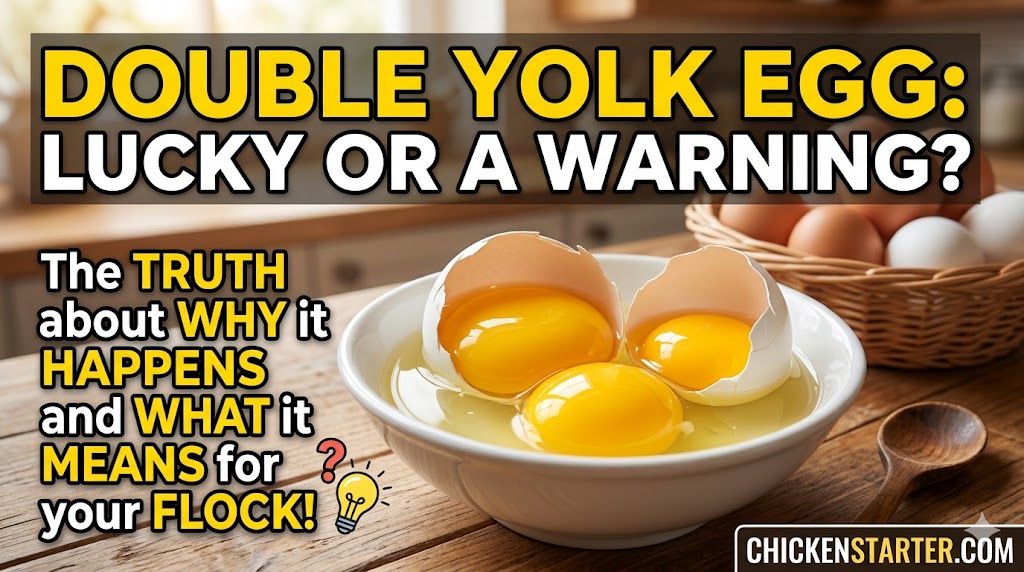
You cracked open an egg from your backyard flock and there they were. Two bright orange yolks sitting side by side in the pan. Your first thought was probably somewhere between excitement and worry. Is this a good sign? Is something wrong with my hen? Should I be concerned?
Take a breath. In most cases, a double yolk egg is completely normal and nothing to panic about. It simply means your hen’s reproductive system released two yolks at nearly the same time, and her body wrapped them both into a single shell. It happens more often than you might think, especially with young hens that are just figuring out the egg-laying process.
But there is more to the story. Understanding why double yolk eggs happen, which hens are prone to them, and when they might actually signal a problem will help you feel confident rather than confused the next time one shows up in your nesting box.
What Actually Causes a Double Yolk Egg
To understand double yolks, it helps to know the basics of how a hen makes an egg.
A hen’s ovary contains thousands of tiny follicles, each one a potential yolk. During a normal laying cycle, one mature follicle is released from the ovary roughly every 25 to 27 hours. That single yolk travels down the oviduct, a long tube where the egg white, membranes, and shell are added layer by layer. About 20 hours later, a fully formed egg is laid.
A double yolk egg happens when two yolks are released within a very short window, sometimes just hours or even minutes apart. The oviduct catches both of them and treats the pair as a single egg. Both yolks get wrapped in the same albumen (egg white) and enclosed in one shell.
The result is a noticeably larger egg, often jumbo-sized, that feels heavier than your normal eggs. When you crack it open, you find two distinct yolks inside instead of one.
This is not a disease. It is not a defect in the egg. It is simply a timing glitch in your hen’s reproductive system. Think of it like a hiccup in the assembly line.
The Simple Version
Your hen’s body accidentally sent two yolks down the tube at once instead of spacing them out properly. Her oviduct did its best to package everything up, and the result was one big egg with double the yolk inside.
Which Hens Are Most Likely to Lay Double Yolk Eggs
Not every hen will lay a double yolk egg in her lifetime, but certain factors make it much more likely. If you know what to look for, you can usually figure out which hen in your flock is responsible.
Young Pullets Just Starting to Lay
This is the number one cause of double yolk eggs in backyard flocks. When a pullet begins laying, her hormonal system is still calibrating. The signals between her brain and ovary are not perfectly synchronized yet, which means her body sometimes releases two follicles instead of one.
Most pullets start laying between 18 and 24 weeks of age, and it is extremely common to see double yolks, odd-shaped eggs, tiny “fairy eggs,” and other irregularities during those first two to three months of production. Her body is essentially learning how to lay, and mistakes happen along the way.
If you have noticed your young hen’s first eggs are unusually large, there is a very good chance they contain double yolks. This almost always resolves on its own as her system matures and settles into a predictable rhythm.
You can learn more about what to expect during this exciting stage in our guide to chicken behavior before laying their first egg.
High-Production Breeds
Certain chicken breeds have been selectively bred for maximum egg output. These high-production hens have more active reproductive systems, which makes them statistically more prone to double ovulation events.
Commercial hybrids like ISA Browns, Lohmann Browns, and Hy-Line varieties are frequent double yolk producers, especially in their first laying year. Among heritage breeds, Rhode Island Reds, Buff Orpingtons, and Leghorns occasionally produce double yolks more than lower-production breeds.
If you are raising breeds selected specifically for their egg-laying capacity, do not be surprised if double yolks show up regularly in those first few months. It is part of having a high-output flock.
Curious about which breeds produce the most eggs? Check out our comparison of chicken breeds ranked by annual egg production.
Older Hens with Hormonal Changes
While double yolks are far more common in young hens, they can occasionally appear from older hens as well. As a hen ages and her reproductive system begins winding down, hormonal fluctuations can trigger erratic ovulation patterns.
Double yolks from a hen over three years old are less common but not alarming on their own. However, if an older hen suddenly starts producing double yolks alongside other unusual symptoms like lethargy, weight loss, or a swollen abdomen, it could indicate an underlying reproductive issue worth investigating.
Genetics and Family Lines
There is evidence that the tendency to produce double yolk eggs runs in certain genetic lines. If you have purchased hens from a breeder whose flock frequently produces double yolks, your hens may carry that same predisposition.
This is not something you can reliably breed for or against, and it is not a fault. It is simply one of those genetic quirks that shows up in some lines more than others.
Is a Double Yolk Egg Safe to Eat?
Absolutely yes. A double yolk egg is completely safe to eat. There is nothing harmful, contaminated, or dangerous about it. You are simply getting extra yolk in a single package.
In terms of nutrition, a double yolk egg contains more of everything the yolk provides: more fat, more cholesterol, more protein, more vitamin A, more vitamin D, and more iron compared to a single yolk egg of the same overall size. The extra yolk makes it richer and more flavorful.
Many chicken keepers consider double yolk eggs a bonus, not a concern. They make exceptionally rich scrambled eggs, produce creamier custards, and add extra depth to sauces and baked goods.
The only consideration is for people closely monitoring dietary cholesterol intake. Two yolks means roughly double the cholesterol content of a standard egg. For most healthy adults, this is not a concern with occasional consumption, but it is worth noting.
When Double Yolk Eggs Are Actually a Concern
Most of the time, finding a double yolk egg is just one of those delightful surprises of keeping backyard chickens. But there are a few situations where paying closer attention is wise.
Egg Binding Risk from Oversized Eggs
Double yolk eggs are significantly larger than standard eggs. That extra size means more strain on your hen’s reproductive tract as the egg passes through and out of her body. In rare cases, an especially large double yolk egg can become stuck, a condition called egg binding.
Egg binding is a serious and potentially life-threatening emergency. Signs include:
- A hen straining repeatedly without producing an egg
- Sitting on the ground with a penguin-like posture
- Visible distress or lethargy
- Swollen or hard abdomen
- Walking with difficulty
If you suspect egg binding, you need to act quickly. A warm bath, a humid environment, and gentle care can sometimes help, but severe cases require veterinary intervention.
Small-bodied hens and bantam breeds are at higher risk because their smaller pelvic openings make passing oversized eggs more difficult. If you have a small hen consistently producing very large eggs, keep a closer eye on her.
For more on reproductive emergencies, our egg yolk peritonitis treatment guide covers related concerns in detail.
Frequent Double Yolks from the Same Hen
An occasional double yolk egg? Normal. A hen producing double yolks multiple times per week for months on end? That deserves attention.
Chronic double ovulation can stress the reproductive tract and may indicate a hormonal imbalance. While some hens simply have overactive ovaries and live perfectly healthy lives, others may develop oviduct problems over time from repeatedly producing oversized eggs.
Watch for these warning signs alongside frequent double yolks:
- Thin or soft shells
- Signs of discomfort while laying
- Decreased appetite or energy
- Swelling around the abdomen
- Eggs with blood smears on the shell
If you notice a combination of these signs, consider consulting a poultry-experienced veterinarian. Learn to identify early signs of illness in your flock so you can catch problems before they become serious.
Other Egg Abnormalities Appearing at the Same Time
A double yolk egg by itself is rarely a problem. But if you are also seeing shell-less eggs, extremely thin shells, rough or misshapen eggs, and frequent blood spots all from the same hen, the combination might point to a broader reproductive or nutritional issue.
Shell quality problems often trace back to calcium deficiency, while persistent abnormalities across multiple categories could suggest oviduct infection (salpingitis) or other internal issues.
One abnormality is a curiosity. Multiple different abnormalities together are a conversation worth having with your vet.
Can a Double Yolk Egg Hatch Into Twin Chicks?
This is one of the most commonly asked questions about double yolk eggs, and the answer is more interesting than a simple yes or no.
Technically, both yolks in a double yolk egg can be fertilized, and both can begin developing embryos. So yes, twin chicks from one egg are biologically possible.
Practically, however, it almost never works. The problem is space, oxygen, and positioning. Two developing embryos inside a single shell run into serious competition for resources. The interior of an egg is barely enough room for one chick to grow, position itself correctly, and pip its way out. Two chicks trying to do this simultaneously almost always results in one or both dying before hatch day.
There are documented cases of twin chicks hatching from double yolk eggs, but these cases required careful human intervention, including assisted hatching at the right moment. It is not something that happens naturally in a nesting box or even in a standard incubator setup without expert monitoring.
If you find a double yolk egg and your hens are running with a rooster, it is generally best to eat that egg rather than attempt incubation. The odds of success are extremely low, and the likelihood of embryo suffering is high.
For those interested in egg fertility in general, our guide on how to tell if an egg is fertile covers candling and identification techniques.
Double Yolk Egg Superstitions and Cultural Meanings
Long before anyone understood ovarian biology, people noticed double yolk eggs and attached meaning to them. These superstitions have persisted for centuries across many cultures, and they add a charming layer of folklore to an otherwise straightforward biological event.
Good luck and prosperity. In many cultures, finding a double yolk egg is considered a sign of good fortune coming your way. Some traditions hold that it means financial abundance or an unexpected windfall.
Pregnancy and fertility. Perhaps the most widespread superstition is that a double yolk egg predicts a pregnancy, either for the person who cracked it or someone close to them. The symbolism of “two lives in one” made this connection intuitive for our ancestors.
Weddings. In parts of Eastern Europe, double yolk eggs are associated with upcoming weddings or unions. Finding one was thought to mean someone in the household would soon be married.
Death omens. Not all double yolk superstitions are cheerful. In some Norse and old English folklore, a double yolk egg was considered a bad omen, sometimes interpreted as a warning of death in the family. This interpretation is far less common today but still exists in some regional traditions.
Twins. The most literal interpretation: a double yolk egg means twins are coming. While there is obviously no scientific basis for this, the visual connection is understandable.
Whether you put stock in these beliefs or simply enjoy them as cultural curiosities, there is something undeniably fun about cracking open an egg and finding that unexpected second yolk. It feels special, and in a way, it is.
How Rare Are Double Yolk Eggs Really?
The commonly cited statistic is that double yolk eggs occur in roughly 1 out of every 1,000 eggs produced commercially. That sounds quite rare, and in the context of mass production, it is.
But here is what that statistic does not tell you: in backyard flocks with young hens, double yolks are far more common than 1 in 1,000.
If you have a group of pullets that just started laying, you might find double yolk eggs several times a week. Some individual hens go through phases where they produce them regularly for a month or two before their systems settle down. In that context, they are not rare at all.
The 1 in 1,000 figure is also misleading because commercial egg farms sort and remove double yolk eggs from standard cartons. They are too large for standard packaging and their weight throws off grading systems. Some specialty farms actually sell double yolk eggs as a premium product because demand exists from consumers who enjoy them.
In the United States and UK, you can occasionally find cartons specifically labeled as “double yolk eggs” in certain stores or farm shops. These eggs are typically sourced from young commercial flocks during their early laying period when double yolks are most frequent.
So if you are finding double yolk eggs in your backyard flock, you are not witnessing something extraordinarily rare. You are witnessing something perfectly normal that commercial systems filter out before eggs reach consumers.
Supporting Your Hen’s Reproductive Health
Whether or not your hen is producing double yolks, keeping her reproductive system healthy should be a priority. A well-nourished hen with proper support will lay better eggs, lay for longer, and experience fewer complications.
Nutrition That Matters Most
Calcium is non-negotiable for laying hens. Eggshell production requires enormous amounts of calcium, and hens that do not have enough will pull calcium from their own bones. Provide oyster shell free choice in a separate container so each hen can take what she needs. Do not mix it directly into feed because individual calcium needs vary.
Layer feed with 16 to 18 percent protein provides the baseline nutrition every laying hen needs. Avoid diluting their diet with too many low-nutrition treats. Scratch grains, kitchen scraps, and mealworms are fine in moderation but should not exceed 10 percent of total intake.
Vitamin D3 plays a critical role in calcium absorption. Hens with outdoor access usually get enough from sunlight, but those in covered runs or during short winter days may benefit from a vitamin supplement. According to guidelines from the Poultry Science Association, vitamin D deficiency directly impacts both shell quality and reproductive function in laying hens.
Managing Young Layers Through the Adjustment Period
If your pullets are producing double yolks and other irregular eggs, patience is your best tool. Most hens sort themselves out within 4 to 8 weeks of starting to lay. During this time:
- Make sure they have access to proper layer feed (not still on grower feed)
- Provide oyster shell from the day they begin laying
- Keep nesting boxes clean and comfortable to reduce stress
- Collect eggs promptly so oversized eggs do not get damaged or create nesting problems
For detailed information on the transition from growing to laying, our guide on eggs from backyard chickens covers what to expect throughout the first year of production.
When to Involve a Veterinarian
Most double yolk situations do not require a vet visit. But schedule one if you observe:
- A hen straining to pass eggs repeatedly
- Visible prolapse (tissue protruding from the vent)
- Sudden and persistent lethargy combined with egg abnormalities
- Swollen, fluid-filled abdomen
- Complete cessation of laying after a period of frequent double yolks
- Foul-smelling discharge from the vent
These signs can indicate serious reproductive conditions like salpingitis, internal laying, or egg yolk peritonitis that require professional diagnosis and treatment.
Cooking and Baking with Double Yolk Eggs
Finding a double yolk egg is a small kitchen bonus. Here is how to make the most of it.
For Frying, Scrambling, and General Cooking
No adjustments needed. Just crack and cook. You will notice a richer flavor and deeper color from the extra yolk. Double yolk eggs make particularly impressive fried eggs and are excellent for egg-based sauces like hollandaise where yolk richness is the whole point.
For Baking
This is where you need to think for a moment. Recipes are formulated for standard-sized eggs. A double yolk egg throws off the ratio of fat (yolk) to structure (white) in your batter.
If a recipe calls for 3 eggs and one of them is a double yolk, you have essentially added an extra yolk to the recipe. For most cookies, quick breads, and casual baking, this makes things slightly richer without causing problems. For delicate recipes like angel food cake or soufflé where precise ratios matter, stick to standard eggs.
A practical approach: if you regularly get double yolk eggs, use them for recipes that benefit from extra richness (custards, ice cream bases, pasta dough, enriched breads) and save your standard eggs for precision baking.
Storage Considerations
Double yolk eggs are larger and heavier than standard eggs. They may not fit properly in standard egg cartons, and stacking them can lead to cracks under the extra weight.
If you store eggs on the counter, keep double yolks in a single layer with a bit of extra space. The same bloom and freshness rules apply to double yolk eggs as any other egg from your flock. For a complete breakdown of counter storage, check our guide on how long fresh eggs last on the counter.
Myths vs Facts About Double Yolk Eggs
Myth: Double yolk eggs mean your hen is sick. Fact: The vast majority of double yolk eggs come from perfectly healthy hens, especially young ones whose systems are still maturing.
Myth: Only old hens lay double yolk eggs. Fact: It is actually the opposite. Young pullets in their first months of laying produce the majority of double yolks.
Myth: Double yolk eggs are unsafe or contaminated. Fact: They are completely safe to eat. There is nothing harmful about having two yolks in one shell.
Myth: You can force a hen to lay double yolks with special feed or supplements. Fact: No feed or supplement will reliably cause double ovulation. It is primarily driven by genetics, age, and natural hormonal patterns.
Myth: Every double yolk egg contains twin embryos. Fact: A double yolk egg only contains fertilized embryos if the hen has mated with a rooster. And even then, both yolks developing into viable chicks is extraordinarily rare.
Myth: Double yolk eggs are a sign your hen is being overfed. Fact: Overfeeding does not cause double ovulation. The mechanism is hormonal, not nutritional.
Frequently Asked Questions
How can I tell if an egg is a double yolk before cracking it?
You cannot always tell for certain, but there are clues. Double yolk eggs are usually significantly larger and heavier than your hen’s normal eggs. If you candle the egg (shine a bright light through it in a dark room), you may be able to see two distinct yolk shadows instead of one. The egg may also feel more elongated or bulky compared to standard eggs.
My hen has laid double yolk eggs three days in a row. Is that normal?
For a young hen in her first few months of laying, yes. Her hormonal system is still syncing up, and short runs of double yolks are common. If it continues beyond several weeks with no sign of normalizing, just keep an eye on her overall health and energy levels.
Do double yolk eggs have more calories?
Yes, moderately. The extra yolk adds approximately 55 to 70 additional calories from the fat and protein it contains. The total calorie content depends on the overall egg size.
Can I incubate a double yolk egg successfully?
It is technically possible but extremely difficult and rarely successful without expert intervention. The overwhelming majority of double yolk incubation attempts result in failed hatches. If you want to hatch chicks, standard single-yolk fertile eggs give you far better odds.
Does finding a double yolk egg mean I will have twins?
This is a widespread folk belief with no scientific basis. It is a charming superstition that has been passed down through generations, but finding a double yolk egg has no predictive power regarding human pregnancy.
Should I separate a hen that keeps laying double yolks?
Not unless she is showing signs of distress or health problems. There is no reason to isolate a hen simply because her eggs have double yolks. Just monitor her for signs of egg binding or discomfort.
Are store-bought double yolk eggs the same as backyard double yolk eggs?
Nutritionally and biologically, yes. The difference is that commercial double yolk eggs come from large production flocks (usually young hens) and are sorted specifically for sale. Backyard double yolk eggs are identical in nature.
Why did I get a double yolk and a shell-less egg on the same day?
This sometimes happens in young hens whose reproductive timing is off. The two events may be related, with the system “resetting” after a double ovulation. If shell-less eggs become frequent, check your hen’s calcium intake and supplement access.
What to Do Next
Finding a double yolk egg in your nesting box is one of those small joys of chicken keeping that never quite loses its magic. Whether you see it as good luck, appreciate the extra nutrition, or just enjoy the surprise, know that in the vast majority of cases, it is nothing to worry about.
Here is your simple action plan:
If your hens are young and just started laying: Expect some double yolks. It is normal and will likely taper off within a couple of months as their systems mature.
If your hen seems healthy and happy: Enjoy the egg. Cook it, bake with it, or show it off to your family.
If you are seeing double yolks alongside other concerning symptoms: Monitor your hen closely and consult a vet if things do not improve.
If you are curious about optimizing egg quality: Focus on proper nutrition, adequate calcium, and a stress-free environment. You cannot control whether your hens produce double yolks, but you can make sure they have everything they need to lay healthy eggs regardless.
Your hens are going to surprise you regularly. That is part of what makes backyard chicken keeping so rewarding. Double yolk eggs are just one of many reminders that nature does not always follow a perfect script, and that is perfectly okay.

Oladepo Babatunde is the founder of ChickenStarter.com. He is a backyard chicken keeper and educator who specializes in helping beginners raise healthy flocks, particularly in warm climates. His expertise comes from years of hands-on experience building coops, treating common chicken ailments, and solving flock management issues. His own happy hens are a testament to his methods, laying 25-30 eggs weekly.