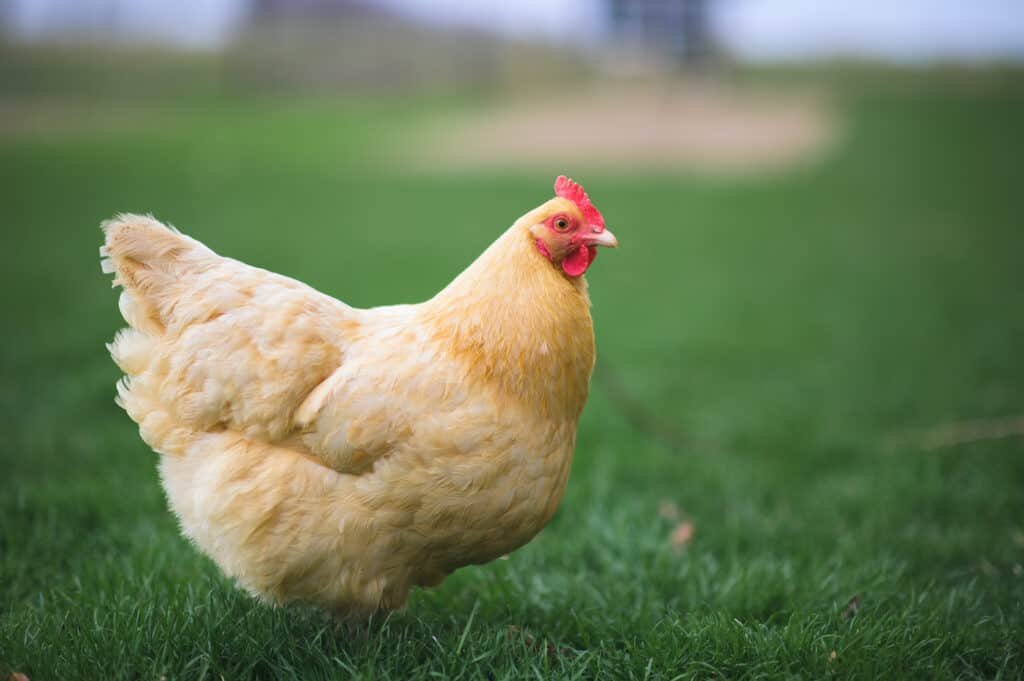
Buff Orpington chickens are large, dual-purpose heritage birds weighing 7 to 10 pounds that produce 200 to 280 large brown eggs annually. Renowned as the “Golden Retriever” of the chicken world, these golden-feathered beauties combine exceptional docility, cold hardiness, and family-friendly temperaments that make them the most beloved backyard breed worldwide.
The first time I encountered a Buff Orpington, I was completely unprepared for how charming these birds would be. A fluffy, golden hen was contentedly taking a dust bath in a patch of afternoon sun, looking more like a living throw pillow than a chicken. When she noticed me standing there, she didn’t scatter like my other birds typically did. Instead, she gave a curious little cluck and trotted over to inspect my shoelaces, pecking gently at the laces as if testing whether they might be edible.
That moment changed my entire perspective on chicken keeping. After six years of raising over 50 chickens across various breeds in tropical conditions, I can confidently say that Buff Orpingtons remain the breed I recommend most often to new keepers. In my current flock, they are always the first to greet me at the coop door and the most likely to hop into my lap hoping for a treat. One particular hen, whom my children named “Butterscotch,” will squawk indignantly and peck at my ankles if I don’t pick her up when she demands attention.
Buff Orpington: A large, dual-purpose heritage chicken breed developed in England in 1894, known for golden-buff plumage, docile lap chicken temperament, and production of 200-280 brown eggs annually. Recognized by the American Poultry Association in 1902.
Quick Facts: Buff Orpington Chickens at a Glance
| Feature | Description |
|---|---|
| Primary Use | Dual-Purpose (Eggs and Meat) |
| Temperament | Docile, Calm, Friendly, Curious |
| Size | Large/Heavy Breed |
| Average Weight | Hen: 7-8 lbs; Rooster: 10 lbs |
| Egg Production | 200-280 eggs/year (3-5 per week) |
| Egg Size | Large to Extra-Large |
| Egg Color | Light Brown to Brown |
| Eye Color | Reddish Bay |
| Leg/Beak Color | Pinkish White |
| Cold Hardy | Excellent |
| Heat Hardy | Poor, requires management |
| Broodiness | Frequent |
| Foraging Ability | Good |
| Flying Ability | Poor |
| Lifespan | 5-10 years |
| Age of Maturity | 20-22 weeks |
| Beginner Friendly | Yes |
| Show Bird Quality | Excellent |
Their gentle, friendly nature makes Buff Orpington chickens a perfect gateway breed for families, first-time chicken keepers, and anyone wanting chickens that behave more like family pets than livestock. According to a survey of over 450 Buff Orpington owners conducted by Chicken Experts, 92% of keepers said they would choose to own a Buff Orpington again, and 73% agreed these hens are calmer and more affectionate than other breeds.
Key Takeaway: Buff Orpingtons consistently rank as the most recommended breed for beginners due to their forgiving nature, reliable egg production, and exceptional temperament. If you want a chicken that acts like a pet while still earning its keep, this is your breed.
The History of the Orpington Breed: A British Classic
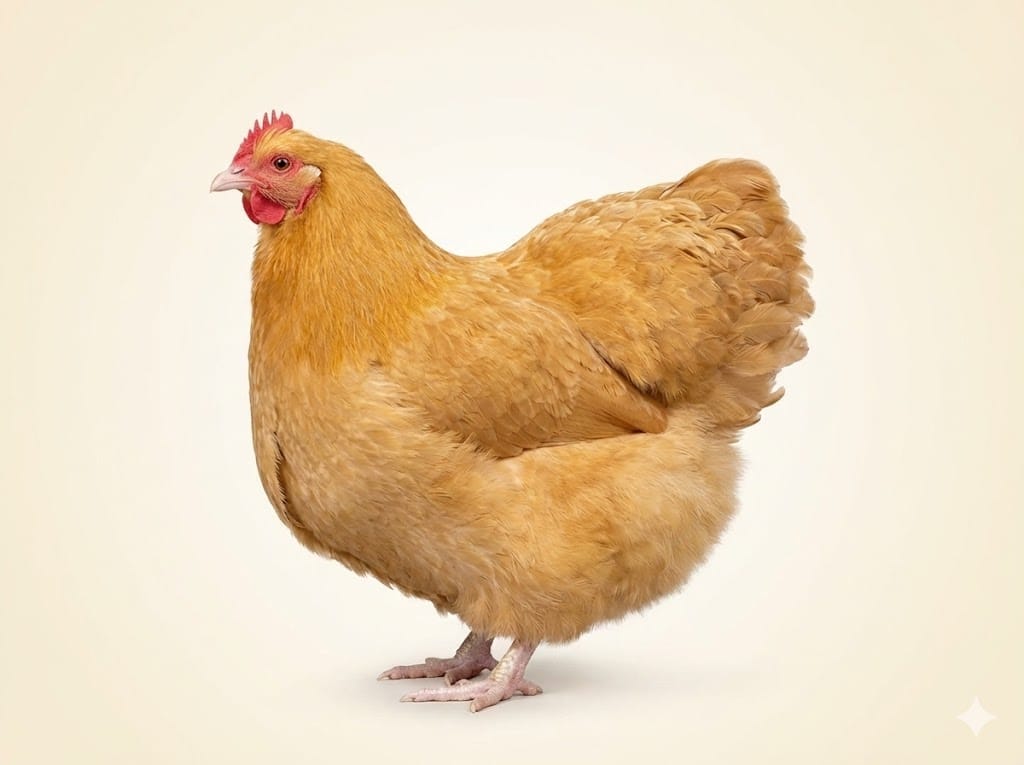
Understanding where Buff Orpington chickens come from helps explain why they possess such remarkable characteristics today.
William Cook’s Vision
To understand the Buff Orpington, we need to travel back to late 19th-century England. The breed’s creator was William Cook, a coachman living in Orpington, Kent, a town about 15 miles southeast of London. Cook identified a significant gap in the British poultry market. Most English chickens of that era were either decent egg layers with scrawny bodies or reasonable meat birds that laid poorly. He wanted both qualities in a single breed.
His original Orpington, introduced in 1886, was black. Cook achieved this by crossing Minorcas, Langshans, and Plymouth Rocks. The result was a bird that could lay well during winter months while also providing substantial meat for the table.
Cook later developed several color varieties. The Buff version, created in 1894 by crossing Gold Spangled Hamburg with Buff Cochin, then breeding offspring with Dark Dorking and crossing again with Buff Cochin, quickly became the most popular of all Orpington varieties. The breed gained such prestige that Orpingtons were exhibited at the famous Crystal Palace poultry shows, cementing their reputation as both utility birds and show birds.
American Recognition and Global Spread
The breed crossed the Atlantic and was officially recognized by the American Poultry Association in 1902. American breeders appreciated the Buff Orpington’s combination of utility and beauty, and the breed quickly established itself across farms and homesteads throughout North America, the United Kingdom, Australia, and Canada.
From those humble beginnings as a utility bird bred for practical purposes, the Buff Orpington chicken has transformed into a backyard favorite worldwide. Today, they’re prized less for commercial production and more for their wonderful temperaments and all-around versatility.
Summary: The Buff Orpington was specifically engineered to be the perfect all-around chicken. William Cook’s 1894 creation remains virtually unchanged because the original formula worked so well.
What Makes Buff Orpington Chickens Special?
When people ask me what is special about Buff Orpingtons, I always start with their unique combination of traits. No other breed quite matches their blend of friendliness, productivity, and visual appeal.
The Famous Buff Orpington Temperament: Calm and Cuddly
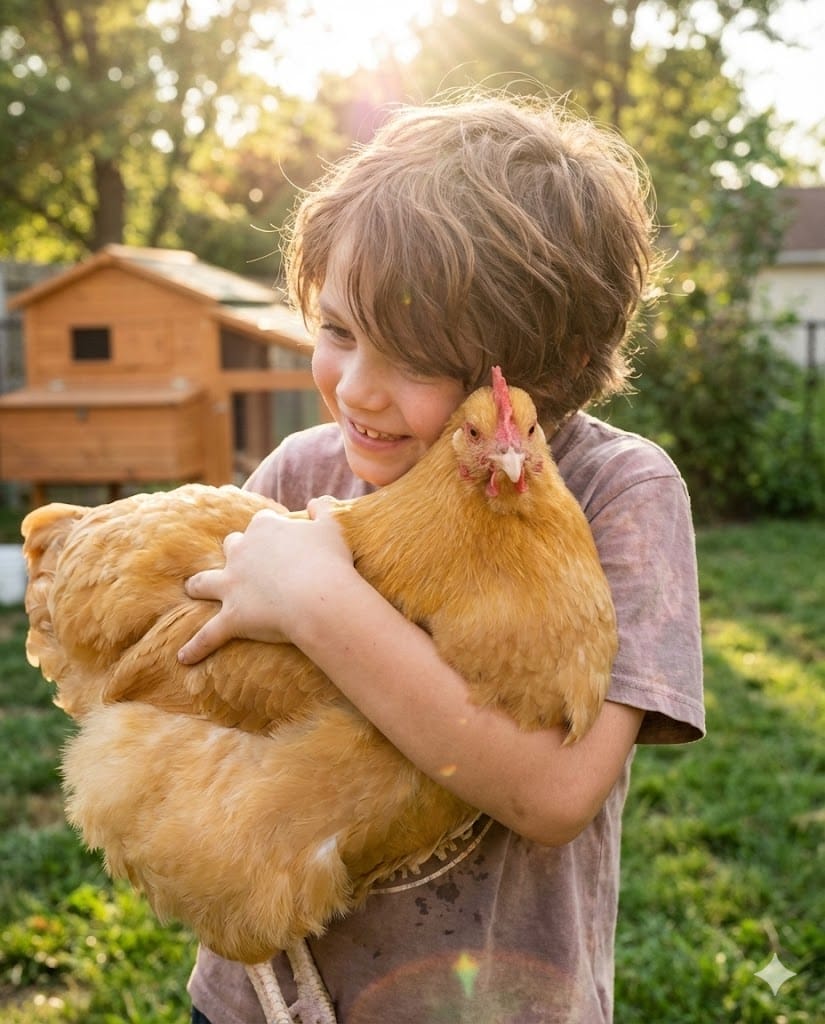
The Buff Orpington temperament is genuinely exceptional among chicken breeds. These birds are not simply “calm” in the way that a lethargic chicken might be calm. They’re actively friendly, seeking out human interaction and genuinely enjoying being handled.
I learned this firsthand when I introduced my first pair of Buff Orpingtons to an existing flock of more standoffish breeds. Within a week, the Orpingtons had completely changed the dynamic at feeding time. Instead of the usual chaos of birds scattering when I approached, my Orpingtons would waddle directly toward me, and the other birds gradually followed their lead.
This is where the “Golden Retriever” analogy truly shines. Buff Orpington chickens will follow you around the yard like dogs, always looking for attention and treats. They rarely peck aggressively, tolerate being picked up by children, and seem to genuinely enjoy human company. Many experienced keepers describe them as the ultimate lap chicken because they will curl up in your lap like a cat and purr contentedly for extended periods.
One keeper I spoke with described her Buff Orpington’s personality perfectly: “I had one Buff Orpington squawk and peck at me if I didn’t hold her when she saw me. And when I sat outside, she curled up in my lap like a cat and purred the whole time.”
Why This Temperament Matters for Families
For family households with young children, the Buff Orpington personality eliminates many concerns about keeping chickens. A child who gets pecked or scratched by an aggressive hen may develop a lasting fear of birds. With Buff Orpingtons, children can learn responsible animal care in a safe, positive environment.
My own children, aged 6 and 9, regularly collect eggs from our Orpingtons without any supervision concerns. They’ve learned to approach calmly, speak softly, and handle the birds gently, and the Orpingtons respond with patience that would be unthinkable with more nervous breeds.
For new chicken keepers who are exploring the easiest chicken breeds for beginners, this forgiving temperament provides room to make mistakes without consequences. If you handle them incorrectly or move too quickly around the coop, they don’t panic or become defensive.
Are Buff Orpingtons aggressive? No, and this applies to both hens and roosters. Buff Orpington roosters are famous for being remarkably mellow compared to roosters from other breeds. While any rooster will be protective of his hens, Orpington roosters typically express this through watchfulness and vocal warnings rather than attacking humans.
If you want chickens your children can safely handle, that will greet you like pets, and that won’t cause neighborhood complaints, Buff Orpingtons deliver on all counts.
Buff Orpington Chicken Characteristics: Appearance and Size
In profile, the Buff Orpington displays a distinctive U-shaped silhouette created by their curved back, full breast, and fluffy rear. This shape is a hallmark of the breed standard and immediately distinguishes them from leaner egg-laying breeds.
The Classic Buff Orpington Look
Buff Orpingtons are known for their rounded, substantial appearance and stunning golden-buff coloring. Their plumage is a rich, warm golden shade that stands out beautifully against green grass or the darker tones of a wooden coop. Their soft feathering and fluffy feathers make them appear even larger than their already substantial frames.
They have a single comb (the standard red comb found on most chickens), reddish bay eyes, and red wattles and earlobes. Their beak and legs are pinkish white, and they have white skin underneath those abundant feathers, which makes for an appealing presentation if used as table birds.
One unique feature is their “cushion,” a mass of fluffy feathers between their legs and under their vent that gives them their characteristic teddy bear appearance. This feature makes them look even larger than they actually are and contributes significantly to their cold hardiness.
Buff Orpington Weight Chart: Rooster Size vs Hen Size
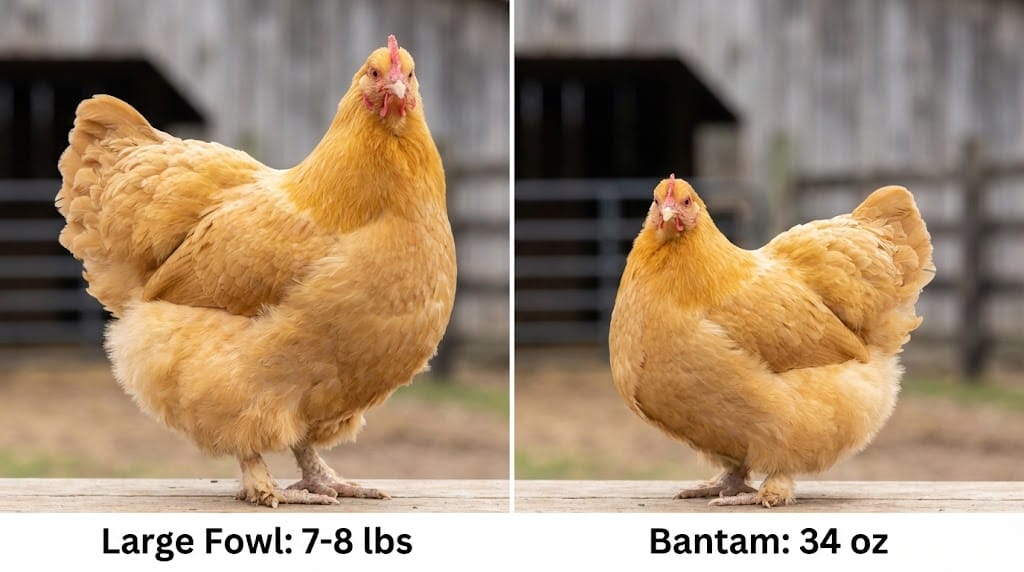
Understanding size differences helps with everything from coop planning to identifying gender in growing birds.
| Type | Weight |
|---|---|
| Large Fowl Hen (Pullet) | 7 lbs |
| Large Fowl Hen (Mature) | 8 lbs |
| Large Fowl Cockerel | 8 lbs |
| Large Fowl Rooster (Cock) | 10 lbs |
| Bantam Hen | 34 oz (2.1 lbs) |
| Bantam Rooster | 38 oz (2.4 lbs) |
Is Buff Orpington a heavy breed? Yes, absolutely. They are classified as a heavy, large-fowl breed according to American Poultry Association standards, which contributes directly to their gentle nature, poor flying ability, and excellent suitability as meat birds.
Bantam Buff Orpingtons: All the Charm in a Smaller Package
Bantam Buff Orpingtons deserve special attention because they offer everything people love about standard Orpingtons in a more compact size. Weighing approximately 34 oz for hens and 38 oz for roosters, bantam Orpingtons are considered one of the largest bantam breeds available.
These miniature versions are relatively rare, making them an exciting addition to any flock for collectors and enthusiasts. They maintain the same docile temperament, soft feathering, and friendly disposition as their full-sized counterparts but require less space and feed.
Bantam Buff Orpingtons are particularly popular for:
- Small garden setups in urban and suburban areas
- Children’s 4-H projects where smaller birds are easier to handle
- Show competitions in the bantam categories
- Ornamental flocks where variety is desired
If space limitations prevent you from keeping standard Orpingtons, bantams provide an excellent alternative without sacrificing the breed’s beloved characteristics.
Why Size Matters for Practical Keeping
Their substantial size has several practical implications that affect daily management:
Cold Hardiness Excellence: Their thick, dense soft feathering provides outstanding insulation, making Buff Orpingtons extremely well-suited to cold climates across Canada, the northern United States, and the United Kingdom. Their small combs and wattles also make them less susceptible to frostbite than breeds with larger combs.
Heat Sensitivity Challenge: Conversely, their heavy bodies and thick feathers make them prone to overheating in hot weather. I’ve had to pay particular attention to this in my tropical climate, providing extra shade, ventilation, and frozen treats during the hottest months. One experienced keeper shared a cautionary tale: “We loved our Buff Orpington. She sadly died in our second summer in an extreme heat wave. Everyone else was totally fine, but she just couldn’t handle it.”
Natural Docility: Their weight makes them less flighty and more grounded, which contributes directly to their calm temperament. A chicken that can barely lift off the ground simply doesn’t have the same startle response as a lighter, more agile breed. Because these chickens are heavy with dense feathering and short legs, they don’t fly well at all, so you don’t need tall fences to contain them. A fence that is a few feet tall will usually suffice.
Dual-Purpose Value: The substantial body size makes them an excellent choice if you plan to use chickens for both egg and meat production. For comprehensive information on their meat qualities, see our detailed guide on whether Buff Orpingtons are good for meat.
The Buff Orpington’s size is both an asset and a consideration. Their bulk makes them calm, cold-hardy, and substantial as meat birds, but it also means they need help staying cool in summer and dry in winter.
Buff Orpington Egg Production: What to Expect
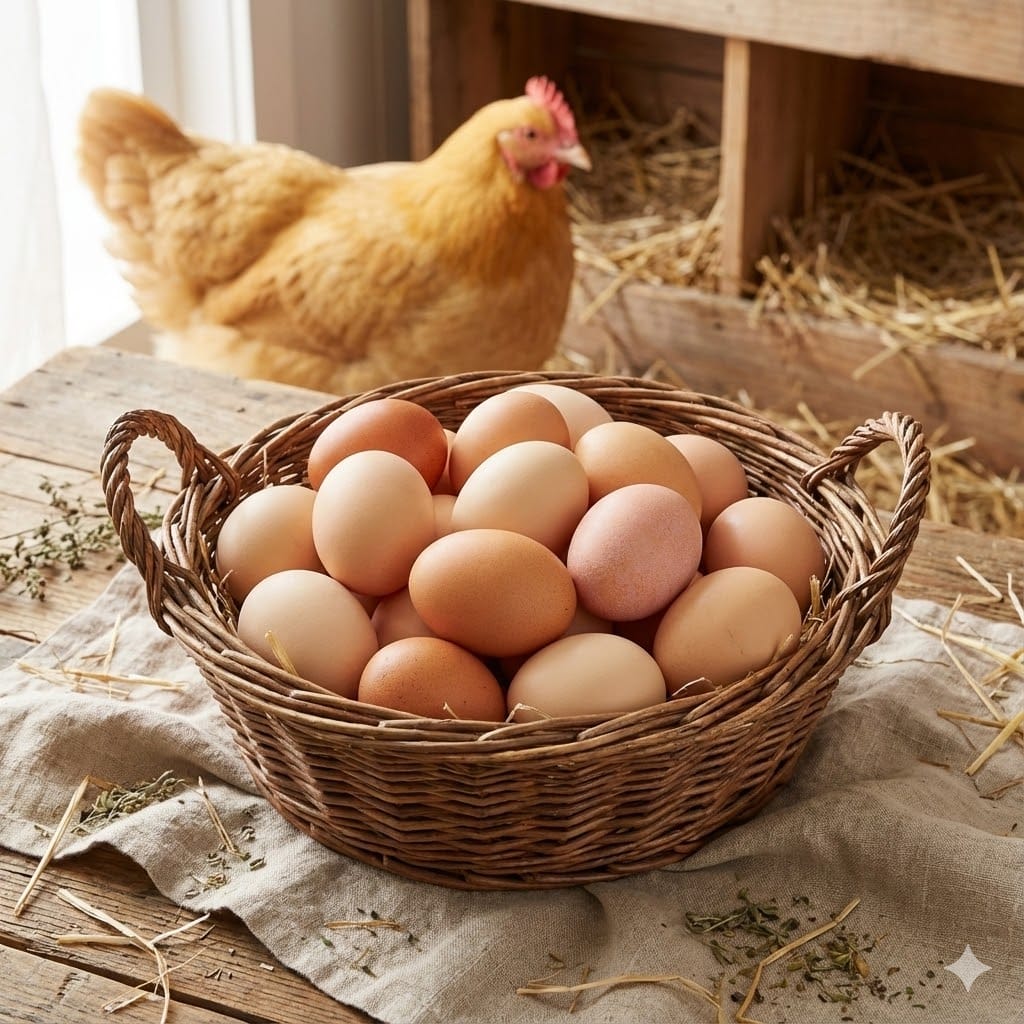
One of the most common questions I receive is “are Buff Orpingtons good layers?” The answer requires some context about what “good” means for different keepers.
How Many Eggs Do Buff Orpington Chickens Lay?
A healthy Buff Orpington hen will lay approximately 200 to 280 large brown eggs per year. According to the survey data from Chicken Experts, 35% of keepers reported receiving 5 eggs per week from their Buff Orpingtons, while 41% reported 4 eggs per week. This aligns with my own experience tracking egg production across my flock.
This doesn’t match the output of egg-laying specialists like Leghorns (which can produce over 300 eggs annually) or commercial hybrid layers. However, for a dual-purpose heritage breed, it’s an excellent production rate that many keepers find more than sufficient for family needs.
What makes Buff Orpington egg production particularly valuable is their consistency through winter. Many breeds reduce or stop laying entirely during shorter days, but Buff Orpingtons often continue providing eggs year-round when other breeds have taken a seasonal break. As one long-time keeper noted: “I have 3 of these lovely ‘golden girls’ remaining of my original flock of 17. Ten years on they still lay eggs. Their rate has dropped as they have aged into their twilight years but amazingly, these lovely ladies still lay eggs.”
For detailed production data and optimization strategies, see our comprehensive guide on Buff Orpington egg production.
Buff Orpington Egg Color and Appearance
What color eggs do Buff Orpingtons lay? Buff Orpington chickens produce beautiful large eggs that range in color from light brown to a standard medium brown.
An interesting detail that surprises many keepers: Buff Orpington eggs with a heavy bloom (the protective coating on freshly laid eggs) often appear to have a pink or apricot tint. This happens because the bloom itself can have a slight color that overlays the underlying pale brown shell, creating a beautiful appearance in your egg basket.
The Buff Orpington chicken egg size is consistently large to extra-large, making them valuable for both eating and baking. Some hens may occasionally produce medium eggs, but large is the standard you should expect from healthy, well-fed birds.
When Do Buff Orpingtons Start Laying Eggs?
Buff Orpington hens typically begin laying at around 20 to 22 weeks of age (approximately 5 to 6 months), though some may start as early as 4 months or take as long as 7 months depending on the season they were hatched and their individual development.
Pullets hatched in spring often begin laying by fall. Those hatched in late summer or fall may not start until the following spring, as decreasing daylight can delay the onset of laying.
In my experience, patience pays off. A pullet that takes longer to mature often becomes a more consistent, longer-lasting layer than one that starts producing eggs very young.
Maximizing Your Buff Orpington’s Egg Production
To get the best egg production from your Buff Orpington chickens, focus on these factors:
Nutrition: Provide high-quality layer feed with 16% protein. Ensure adequate calcium intake of at least 4-5 grams daily through oyster shell supplement offered free-choice.
Lighting: Hens require 14-16 hours of light daily to maintain peak egg production. During winter months with short days, supplemental lighting in the coop can extend the laying season.
Stress Reduction: A clean, safe, and low-stress environment is essential. Ensure adequate space, sufficient nesting boxes (one box per 3-4 hens), and comfortable roosting areas.
Health Maintenance: Regular health checks, parasite prevention, and prompt treatment of any issues keep hens in optimal laying condition.
Expect 4-5 eggs per week from each healthy Buff Orpington during peak laying years. Their winter laying consistency often compensates for slightly lower annual numbers compared to production breeds.
How Much Does a Buff Orpington Cost?
Understanding Buff Orpington prices helps you budget appropriately whether you’re starting with day-old chicks or purchasing adult birds.
Buff Orpington Pricing Guide
| Age/Type | USA Price | UK Price | Australian Price |
|---|---|---|---|
| Day-Old Chicks (Hatchery) | $4-8 each | £3-6 each | $8-15 AUD each |
| Day-Old Chicks (Breeder Quality) | $10-25 each | £8-15 each | $15-30 AUD each |
| Started Pullets (8-16 weeks) | $20-40 each | £15-25 each | $25-45 AUD each |
| Point-of-Lay Pullets (16-20 weeks) | $30-50 each | £20-35 each | $35-60 AUD each |
| Adult Laying Hens | $25-45 each | £15-30 each | $30-50 AUD each |
| Exhibition/Show Quality | $50-150+ each | £40-100+ each | $75-200+ AUD each |
Prices vary significantly based on your location, the source, and the quality of the birds. Hatchery chicks are the most economical option but come with some uncertainty about exact quality. Breeder stock costs more but typically offers better conformance to breed standards and more reliable temperaments.
For detailed pricing analysis across different purchase options, see our complete guide on how much Buff Orpingtons cost.
What Affects Buff Orpington Prices?
Source Quality: NPIP-certified hatcheries and established breeders command higher prices but offer healthier, better-quality stock. Major hatcheries like Murray McMurray, Cackle Hatchery, and Meyer Hatchery in the USA maintain consistent breeding standards.
Color Variety: Standard Buff Orpingtons are the most affordable and widely available. Rarer colors like Lavender Orpingtons or Jubilee Orpingtons cost significantly more due to limited availability.
Purpose: Birds bred for show quality and exhibition command premium prices compared to production or utility stock. Show-bred Orpingtons from championship bloodlines can exceed $100 per bird.
Season: Spring demand drives prices up as new keepers stock their flocks. Purchasing in late summer or fall often yields better deals.
Budget $4-8 per chick from major hatcheries for a beginner friendly starting flock, or $30-50 per point-of-lay pullet if you want eggs immediately. Show-quality birds require significantly higher investment.
Are Buff Orpingtons Good for Meat?
Yes, they absolutely are. William Cook’s original goal was creating a truly dual-purpose bird, and the Buff Orpington chicken excels in this role.
Buff Orpington Meat Quality
Buff Orpingtons make excellent table birds for several reasons:
Substantial Size: At 7-10 pounds live weight, they provide meaningful meat yields. Dressed weight typically runs 65-70% of live weight, giving you a 5-7 pound carcass.
Meat Quality: Orpington meat is widely regarded for its moistness and delicate flavor. The slower growth rate compared to commercial broilers results in more developed flavor and better texture. One experienced keeper noted: “They are excellent meat birds. Trouble is, you gotta get them early or they are too big for the crock pot or even stew pot! They grow fast and are meaty from early on.”
Skin Color: Their white skin is preferred by many consumers, particularly in the UK and Australia, over the yellow-skinned breeds common in American commercial production.
Body Conformation: Their broad, deep breasts, full bodies, and thick thighs provide excellent meat distribution across the carcass.
When to Butcher Buff Orpington Chickens
For meat production, Buff Orpington roosters reach optimal processing weight at approximately 22 weeks of age. At this point, they typically weigh 8-10 pounds live weight with a market weight of 7-8.5 pounds when fully grown.
Compared to commercial Cornish Cross broilers that reach processing weight in 6-8 weeks, this is considerably longer. However, the meat quality difference is substantial. Many small-scale producers and homesteaders prefer the flavor and texture of heritage breeds despite the longer timeline.
For complete information on using Buff Orpingtons as meat birds, including processing considerations and yield expectations, see our dedicated guide on Buff Orpingtons for meat production.
If you want self-sustaining meat production where you can breed your own replacement birds, Buff Orpingtons excel. They won’t match commercial broiler efficiency, but they offer superior flavor and breeding sustainability.
Buff Orpington Lifespan: How Long Do They Live?
Understanding Buff Orpington life expectancy helps you plan your flock for the long term.
Expected Lifespan
Buff Orpington chickens typically live 5 to 10 years with proper care, though some individuals exceed this range. The wide variation depends on genetics, care quality, predator protection, and climate management.
| Life Stage | Age Range | Characteristics |
|---|---|---|
| Chick | 0-8 weeks | Rapid growth, brooder phase |
| Pullet/Cockerel | 8 weeks-6 months | Adolescence, pre-laying |
| Prime Laying | 6 months-3 years | Peak egg production |
| Mature Hen | 3-6 years | Declining production, still laying |
| Senior | 6+ years | Minimal laying, retirement phase |
The remarkable story from one keeper illustrates this longevity potential: “I have 3 of these lovely ‘golden girls’ remaining of my original flock of 17. Ten years on they still lay eggs.”
Breeding plays a significant role in both lifespan and productivity. Orpingtons bred primarily for egg production will often lay extremely well for the first couple of years but may have a shorter lifespan. Standard-bred Orpingtons won’t lay as prolifically, but they will often lay well into old age and have a longer lifespan overall.
For comprehensive information on factors affecting longevity, see our guide on Buff Orpington life expectancy.
With proper care, your Buff Orpingtons can be productive members of your flock for 5-8 years and live as companions for a decade or more.
Orpington Chicken Pros and Cons: An Honest Assessment
Every breed has trade-offs. Here’s an objective evaluation of what you’re getting with Buff Orpingtons.
Advantages of Buff Orpington Chickens
Exceptional Temperament: The friendliest, most docile breed widely available. Perfect for family households, children, and keepers wanting lap chicken pets.
Dual-Purpose Utility: Meaningful egg production (200-280/year) plus substantial meat potential from a single breed.
Cold Hardiness: Outstanding winter tolerance makes them ideal for northern climates.
Beautiful Appearance: That golden plumage and fluffy feathers provide visual appeal in any flock.
Excellent Mothers: Strong broody instinct and exceptional mothering ability for those wanting to hatch naturally.
Beginner Friendly: Forgiving of mistakes and easy to handle, making them perfect for first-time chicken keepers.
Show Quality: Their beauty and breed standard conformance makes them excellent show birds for exhibition.
Disadvantages of Buff Orpington Chickens
Heat Sensitivity: Requires active management in hot climates. Not ideal for southern regions without substantial shade and cooling measures.
Lower Egg Production: Compared to production breeds, they lay fewer eggs. Not the choice if maximum eggs is your priority.
Prone to Obesity: Requires careful feeding management to prevent weight problems.
Frequent Broodiness: Can be frustrating if you simply want eggs without hatching chicks.
Vulnerable to Bullying: Their docile nature means they may be pushed around in mixed flocks with aggressive breeds.
Predator Vulnerability: Their calm demeanor makes them slower to react to threats. One keeper shared: “The hens were just an easy target while free-ranging. A hen ignored the rooster and coyote and continued foraging.”
Snow/Wet Weather Issues: Low-slung fluffy feathers soak up moisture, requiring covered runs in wet climates.
For a comprehensive analysis of breed trade-offs, see our detailed guide on Orpington chicken pros and cons.
Buff Orpingtons excel as family-friendly, dual-purpose birds with outstanding temperaments. Their main weaknesses are heat sensitivity and predator vulnerability, both of which can be managed with proper setup.
Buff Orpington Rooster: Characteristics and Management
Buff Orpington roosters deserve special attention because they differ significantly from roosters of many other breeds.
Buff Orpington Rooster Temperament
Buff Orpington roosters are famous for being remarkably mellow compared to roosters from other breeds. While any rooster will be protective of his hens, Orpington roosters typically express this through watchfulness and vocal warnings rather than attacking humans.
If you like the idea of having a rooster but have always been put off by stories of their aggression, then an Orpington rooster is ideal. Just like the hens, male Orpingtons are unusually gentle and can often be handled by older children without incident.
That said, individual variation exists. Some Orpington roosters can become territorial, especially during breeding season. The key is handling them frequently from a young age and never tolerating aggressive behavior.
How to Tell if a Buff Orpington is a Rooster
Distinguishing roosters from hens becomes straightforward as birds mature:
Size: Roosters grow noticeably larger (10 lbs) and stand more upright than hens (7-8 lbs).
Comb and Wattles: A rooster’s comb and wattles develop earlier and grow much larger and deeper red than a hen’s.
Feather Patterns: Roosters develop long, pointed “saddle” feathers on their back near the tail and “hackle” feathers around their neck. Hens’ feathers remain rounded.
Tail Feathers: Roosters develop dramatic curved sickle feathers in their tails that hens lack.
Crowing: Only roosters crow. This is the most definitive identification method.
How to Sex Buff Orpington Chicks
Sexing Buff Orpington chicks is challenging but not impossible with careful observation:
Visual Cues in Chicks: According to experienced breeders, male Buff Orpington chicks may show white coloring on their upper wings, while female chicks may have pale brown markings on their head and back. However, these signs are subtle and not always reliable.
Professional Vent Sexing: Performed at hatcheries, this achieves 85-90% accuracy but mistakes happen. If you order “pullet” chicks, expect that one in ten might actually be a cockerel.
Wait and Watch: The only certain method is patience. Wait until 8-12 weeks when secondary sex characteristics begin emerging.
Mating Ratios and Flock Management
For breeding purposes, the recommended ratio is 6-10 hens per rooster. Cackle Hatchery specifically recommends 6 females to 1 male for exhibition stock, though production flocks can go slightly higher. This ensures hens aren’t over-mated while maintaining good fertility rates of 65-80% for hatching eggs.
Buff Orpington roosters offer the protective benefits of a male bird without the aggression concerns common to other breeds. They’re an excellent choice if you want a rooster for breeding or flock protection.
Day-Old Buff Orpington Chick Care
Starting with day-old Buff Orpington chicks requires specific preparation to ensure healthy development.
Brooder Setup Requirements
Temperature: Chicks must be kept warm at 33°C (91-95°F) with a constant heat source during their first week. Reduce temperature by approximately 2-3°C each week until they are fully feathered at 6-8 weeks.
Heat Source Options:
- Heat lamps (traditional but fire risk concerns)
- Radiant heat plates (safer, mimics hen)
- Ceramic heat emitters (no light, good for sleep cycles)
Brooder Space: Provide approximately 6 square inches per chick initially, expanding as they grow.
Bedding: Use pine shavings, paper towels (first few days), or hemp bedding. Avoid cedar shavings which can cause respiratory issues.
Chick Starter Feed Requirements
Buff Orpington chicks require chick starter feed with 20-24% protein content for proper development. Keep feed and clean water available at all times.
Key supplies for day-old chicks:
- Brooder container (minimum 2 sq ft for 6 chicks)
- Heat source maintaining 33°C
- Chick starter feed (20-24% protein)
- Chick waterer with marbles or stones (prevents drowning)
- Appropriate bedding
- Thermometer for monitoring temperature
Common Chick Health Issues
Pasty Butt: One of the most common problems at this stage is dried droppings clogging the chick’s vent, which can be fatal if untreated. Check your chicks’ vents daily and gently clean with a warm, damp cloth if needed.
Splayed Leg: Sometimes occurs in chicks on slippery surfaces. Use textured bedding and address immediately with hobble treatment if noticed.
Success with day-old chicks depends on maintaining proper temperature, providing appropriate nutrition, and conducting daily health checks. The investment in proper brooder setup pays dividends in healthy, thriving birds.
Buff Orpington Show Standards and Exhibition
Buff Orpingtons have a proud history as show birds and remain popular in poultry exhibitions worldwide.
American Poultry Association Standards
The Buff Orpington was recognized by the APA in 1902 and must meet specific standards for exhibition:
Body Type: Broad, deep body with well-rounded breast. The distinctive U-shaped profile when viewed from the side is essential.
Feathering: Abundant, soft feathering that is broad and smooth. Feathers should flow nearly to the ground, creating the characteristic fluffy appearance.
Color: Rich, even golden-buff throughout, without any other color variations or spots.
Comb: Single comb with five well-defined points, bright red in color.
Legs and Feet: Clean, pinkish-white legs without feathering. Four toes on each foot.
Show Quality vs Utility Stock
Understanding the distinction matters for purchasing decisions:
Show-bred Orpingtons: Emphasize appearance and breed standard conformance. They may lay fewer eggs (closer to 170-200 annually) but command premium prices and excel in competition.
Production/Utility Orpingtons: Bred for practical characteristics like egg production and temperament. They may not perfectly match breed standards but often lay at the higher end of the 200-280 egg range.
Today, Orpingtons are so popular that you’re more likely to see them winning prizes at shows than as large-scale laying hens. As such, there is heavy emphasis on appearance rather than egg production abilities for some breeders. Keep this in mind when purchasing, and clarify whether you’re buying show or utility stock.
If you’re interested in poultry shows, Buff Orpingtons are excellent beginner friendly exhibition birds with a long competitive history. Just be clear about your goals when purchasing stock.
Understanding Orpington Color Varieties
“Orpington” is the breed name. “Buff” describes the color variety. Understanding this distinction clarifies the relationship between different Orpington types.
APA Recognized Colors
The American Poultry Association recognizes four Orpington color varieties:
Buff: The most common and popular, featuring that classic golden-buff coloring.
Black: The original Orpington color created in 1886, with solid black feathers showing green iridescence in sunlight.
Blue: A slate-gray color that can range from light silver to dark charcoal.
White: Pure white feathering throughout.
Unrecognized but Popular Varieties
Several striking colors exist but aren’t officially APA-recognized:
Lavender Orpington: A diluted gray-blue color that’s become increasingly popular. Lavender Buff Orpingtons command premium prices due to their rarity and stunning appearance.
Chocolate Orpington: Rich brown coloring. Very rare and sought after by collectors.
Jubilee Orpington: Speckled mahogany and white pattern. Originally developed for Queen Victoria’s Diamond Jubilee.
Cuckoo Orpington: Barred pattern similar to Barred Rocks. Rare in the USA.
Gold Laced Orpington: Golden feathers with black lacing. Striking appearance.
Spangled Orpington: Complex pattern with white-tipped feathers. Extremely rare.
Partridge Orpington: Complex penciled pattern. Beautiful but uncommon.
Splash Orpington: Light blue-gray with darker splashes. Often produced when breeding blue Orpingtons.
Red Orpington: Deep mahogany red coloring. Rare outside specialty breeders.
Which Orpington Color is Most Popular?
Buff Orpingtons dominate in popularity for several reasons:
- Most widely available from hatcheries and breeders
- Most affordable purchase price
- Established breeding lines with consistent temperament
- Classic, recognizable appearance
- Easiest to find quality stock
Which Orpington Color is Best?
“Best” depends entirely on your priorities:
- For availability and price: Buff
- For unique appearance: Lavender or Jubilee
- For showing: Any APA-recognized variety from quality breeding stock
- For temperament: All colors share similar personalities when from good breeding
While Buff is the most popular and accessible, exploring other Orpington colors can add variety to your flock. Just expect to pay more and search harder for rare varieties.
The Broody Buff Orpington: Asset or Challenge?
One characteristic that sets Buff Orpington chickens apart from many modern breeds is their strong tendency toward broodiness.
Are Buff Orpingtons Broody?
Yes, very frequently. Buff Orpingtons are among the broodiest of all chicken breeds. A broody hen has decided she wants to hatch eggs, whether those eggs are fertile or not.
However, the broodiness trait has been lost in some hatchery Orpingtons through selective breeding for production. If broodiness (or lack of broodiness) is important to you, check with your hatchery or breeder about their particular strain before buying.
When Broodiness Is an Asset
If you want to hatch chicks naturally without incubators, a broody Buff Orpington is invaluable. These hens are exceptional mothers that will:
- Reliably incubate eggs for the full 21-day period
- Hatch chicks from other hens or even other poultry species (including quail!)
- Protect and teach their chicks once hatched
- Brood chicks for 4-6 weeks until they’re independent
One keeper described their experience: “For those that want to raise their own chicks, the Buff Orpington is the perfect fit. They will go broody relatively often, and they make excellent mothers. They treat their young with a lot of care.”
How to Break a Broody Buff Orpington
When you need to discourage broodiness:
- Remove the hen from the nesting area
- Place her in a wire-bottomed cage elevated off the ground, allowing air circulation beneath her
- Provide food and water but no nesting material
- Keep her confined for 2-4 days until broody behavior stops
- Collect eggs frequently from the main coop to prevent re-triggering
Plan for broodiness if keeping Buff Orpingtons. Either embrace it for natural hatching or be prepared with breaking strategies if you simply want eggs.
Buff Orpington Health Concerns and Prevention
While Buff Orpingtons are generally hardy birds with no breed-specific disease susceptibilities, their physical characteristics require attention to certain health considerations.
Obesity Management
Buff Orpington chickens are naturally prone to weight gain. They love eating, tend toward laziness compared to more active breeds, and their dense fluffy feathers can hide excess body condition until it becomes severe.
The 90/10 Rule: At least 90% of your chickens’ diet should come from complete, nutritionally balanced feed. Only 10% should come from treats, scraps, or supplements.
Prevention Strategies:
- Encourage exercise through free-ranging or providing a large run
- Limit treats strictly to 10% of total diet
- Measure feed rather than free-feeding unlimited quantities
- Choose lower-calorie treats like leafy greens over high-calorie options
External Parasites
Chickens with dense soft feathering like Buff Orpingtons can harbor parasite infestations that go unnoticed longer than they would on lighter-feathered breeds.
Prevention: Provide proper dust bathing areas and conduct regular inspections, particularly around the vent area and under wings.
Heat Stress Prevention
Because of their dense feathering and heavy bodies, Buff Orpington chickens are particularly vulnerable to heat stress.
Signs of Heat Stress: Panting, holding wings away from body, lethargy, reduced egg production.
Prevention Strategies:
- Provide abundant shade throughout the day
- Ensure excellent coop ventilation
- Offer multiple fresh water sources
- Provide frozen treats during hot weather
- Consider misting systems in extremely hot climates
Predator Awareness
Their calm demeanor makes Buff Orpingtons slower to react to predators. Their light coloring can also attract aerial predator attention.
Protection Strategies:
- Provide secure covered runs
- Supervise free-ranging when possible
- Use hardware cloth (not chicken wire) for coop security
- Consider livestock guardian animals for free-range situations
Important: Consult a licensed poultry veterinarian for specific medical guidance regarding disease treatment or medication.
Buff Orpingtons are healthy birds with no breed-specific diseases, but their size, feathering, and temperament require proactive management for heat, weight, and predator protection.
Housing Requirements for Buff Orpington Chickens
Proper housing directly impacts health, productivity, and quality of life for your Buff Orpingtons.
Coop Space Requirements
| Number of Buff Orpingtons | Minimum Coop Size | Minimum Run Size |
|---|---|---|
| 4 birds | 16-20 sq ft | 40 sq ft |
| 6 birds | 24-30 sq ft | 60 sq ft |
| 8 birds | 32-40 sq ft | 80 sq ft |
| 10 birds | 40-50 sq ft | 100 sq ft |
Best Chicken Coop Features for Buff Orpingtons
Wide Roosting Bars: Use 2×4 lumber with the 4-inch side facing up, corners rounded smooth, to support their large feet.
Low Roost Height: Keep roosts between 18-24 inches off the ground. Higher roosts increase impact stress when they jump down. The recommended range is 2 to 4 feet maximum.
Accessible Pop Holes: The entrance should be large enough for their bulk. Consider shallow ramps or large steps rather than steep ladders due to their heavy bodies and short legs.
Covered Runs: Essential in wet or snowy climates to prevent underbelly feathers from getting soaked. Their low carriage means feathers can touch the ground.
Best Feed for Buff Orpington Chickens
Chick Starter (0-8 weeks): 20-24% protein Grower Feed (8-16 weeks): 16-18% protein Layer Feed (16+ weeks, laying): 16% protein plus free-choice oyster shell calcium supplement
Quality matters significantly for long-term health and production. Look for feeds from reputable manufacturers with clear nutritional labeling.
Buff Orpingtons need accommodations for their size: wider roost bars, lower heights, and covered areas to keep those beautiful fluffy feathers dry.
Buff Orpington Chickens vs Other Popular Breeds
Choosing between breeds requires understanding how they compare across key characteristics.
Buff Orpington vs Rhode Island Red
| Feature | Buff Orpington | Rhode Island Red |
|---|---|---|
| Temperament | Very calm, lap chicken | Strong personality, can be dominant |
| Eggs/Year | 200-280 | 250-300 |
| Cold Hardy | Excellent | Excellent |
| Heat Tolerance | Poor | Good |
| Broodiness | High | Low |
| Beginner Friendly | Excellent | Good |
| Best For | Families, family pets | Maximum egg production |
Rhode Island Reds outperform Buff Orpingtons in egg production and handle heat better, but they’re not as friendly or docile. For keepers prioritizing personality, Orpingtons win. For maximum eggs, Rhode Island Reds have the edge.
Buff Orpington vs Plymouth Rock
| Feature | Buff Orpington | Plymouth Rock |
|---|---|---|
| Temperament | Very calm, docile | Friendly, more active |
| Eggs/Year | 200-280 | 200-280 |
| Cold Hardy | Excellent | Excellent |
| Heat Tolerance | Poor | Moderate |
| Broodiness | High | Moderate |
| Foraging | Good | Excellent |
Plymouth Rocks are another excellent dual-purpose breed with similar egg production. They’re slightly more active and assertive than the laid-back Orpington, making them better foragers but slightly less cuddly.
Buff Orpington vs Australorp
| Feature | Buff Orpington | Australorp |
|---|---|---|
| Temperament | Very calm, docile | Friendly, active |
| Eggs/Year | 200-280 | 250-300 |
| Cold Hardy | Excellent | Good |
| Heat Tolerance | Poor | Moderate |
| Broodiness | High | Moderate |
| Best For | Families, family pets | Egg production with personality |
Australorps, which actually descended partly from Orpingtons, offer better egg production while retaining good temperaments. They’re an excellent alternative for keepers who want both personality and productivity.
Buff Orpingtons prioritize temperament over production. If you want the friendliest possible chickens that still lay well, they’re unmatched. If maximum eggs matter more, consider Australorps or Rhode Island Reds.
Buff Orpingtons as Garden Helpers
One often-overlooked benefit of Buff Orpington chickens is their value in the garden.
Natural Pest Control
With their innate ability to forage for worms, bugs, and other insects, Buff Orpingtons rid gardens of pests without chemicals. Their calm temperament means they’re less likely to destroy plants than more active, aggressive foragers.
Soil Improvement
As they till at the soil searching for worms, they aerate the soil and bring many benefits to plants. Their droppings add nitrogen-rich fertilizer directly to garden beds.
Chicken manure advantage: Due to the high concentration of nitrogen contained in chicken droppings, your girls will provide excellent fertilizer. Chicken manure is superior to cow or horse manure because the gizzard grinds everything down, preventing weed seed transmission.
Supervised Garden Access
The key is supervised or controlled access. While Buff Orpingtons are gentler on gardens than many breeds, they will still scratch, eat seedlings, and sample vegetables if given unlimited access. Use chicken tractors, temporary fencing, or supervised sessions to maximize benefits while protecting crops.
Buff Orpingtons offer triple garden value: pest control, soil aeration, and premium fertilizer. Their calm nature makes them easier to manage around plants than more hyperactive breeds.
Frequently Asked Questions About Buff Orpington Chickens
Are Buff Orpingtons good with kids?
Yes, their gentle, docile nature makes them one of the best breeds for family households with children. Their tolerance for handling and lap chicken tendencies make them popular for 4-H projects and teaching children responsible animal care.
How noisy are Buff Orpingtons?
Hens are generally quiet, making soft clucking sounds during normal activity and the typical “egg song” after laying. Roosters crow but are considered less vocal than many other breeds.
Are Buff Orpingtons good free-range chickens?
Yes, they forage very well when allowed to range. Their calm temperament and limited flying ability make them easier to manage than more active breeds. However, their docile nature makes them more vulnerable to predators, so supervision or protected ranging is recommended.
What do Buff Orpingtons eat?
They thrive on standard commercial chicken feed appropriate to their life stage. Laying hens need layer feed with 16% protein plus free-choice calcium supplement. Follow the 90/10 rule: 90% complete feed, maximum 10% treats.
How many eggs will 4 Buff Orpington chickens lay in a year?
Four Buff Orpington hens produce approximately 800 to 1,120 large brown eggs annually (200-280 per hen), which works out to roughly 65-93 dozen eggs per year.
Do Buff Orpingtons need vaccinations?
Yes, proper vaccination significantly reduces mortality. Key vaccines include Marek’s disease (day 1), Newcastle/Lasota (7-10 days), Gumboro (14-21 days), plus regular deworming every 3-6 months.
What is the least aggressive breed of chicken?
Buff Orpingtons consistently rank among the least aggressive breeds alongside Silkies, Cochins, Brahmas, and Faverolles.
Can you get a tax write-off for chickens?
In the United States, chickens kept for business purposes (selling eggs or meat) may qualify for agricultural deductions. Requirements vary by state. Consult a tax professional familiar with agricultural operations.
What happens if you don’t collect chicken eggs daily?
Eggs begin deteriorating, broodiness is encouraged, predators may be attracted, and egg-eating habits can develop. Collect at least once daily.
Do chickens get attached to humans?
Yes, chickens recognize individual humans and form preferences. Buff Orpingtons are particularly prone to human attachment, learning who feeds them and clearly preferring certain people, often becoming true lap chickens.
Your Next Steps: Getting Started with Buff Orpington Chickens
After keeping Buff Orpingtons for over six years alongside dozens of other breeds, I can say without hesitation that these golden birds deliver exactly what most backyard keepers want: friendly chickens that actually produce.
If you’re a first-time chicken keeper, start with 3 to 4 Buff Orpington pullets from a reputable hatchery. This gives you enough eggs for a small family (12 to 16 weekly during peak production) while keeping your learning curve manageable. Their forgiving temperament means your inevitable beginner mistakes won’t result in flighty, traumatized birds.
If you’re adding to an existing flock, introduce Orpingtons gradually using the side-by-side method for at least one week. Their docile nature makes them vulnerable to bullying from more assertive breeds, so monitor the integration carefully.
Your immediate action items:
- Calculate your space requirements using our guide on how much space chickens really need before purchasing birds
- Budget appropriately by reviewing our first-year cost calculator to avoid surprises
- Prepare your brooder if starting with chicks, ensuring you can maintain 33°C (91-95°F) with a reliable heat source
- Stock essential supplies including quality chick starter feed (20-24% protein), a proper waterer, and appropriate bedding
- Research your local regulations through our chicken laws by state guide before bringing birds home
The bottom line: Buff Orpingtons have earned their reputation as the “Golden Retriever” of chickens through generations of being exactly what families need. They won’t outlay production hybrids, and they require heat management in summer, but no other breed matches their combination of beginner friendly temperament, reliable 200 to 280 egg annual production, and genuine lap chicken affection.
Whether you want fresh eggs, a sustainable meat source, natural pest control for your garden, or simply feathered companions that greet you like old friends, Buff Orpington chickens deliver on every count.

Oladepo Babatunde is the founder of ChickenStarter.com. He is a backyard chicken keeper and educator who specializes in helping beginners raise healthy flocks, particularly in warm climates. His expertise comes from years of hands-on experience building coops, treating common chicken ailments, and solving flock management issues. His own happy hens are a testament to his methods, laying 25-30 eggs weekly.