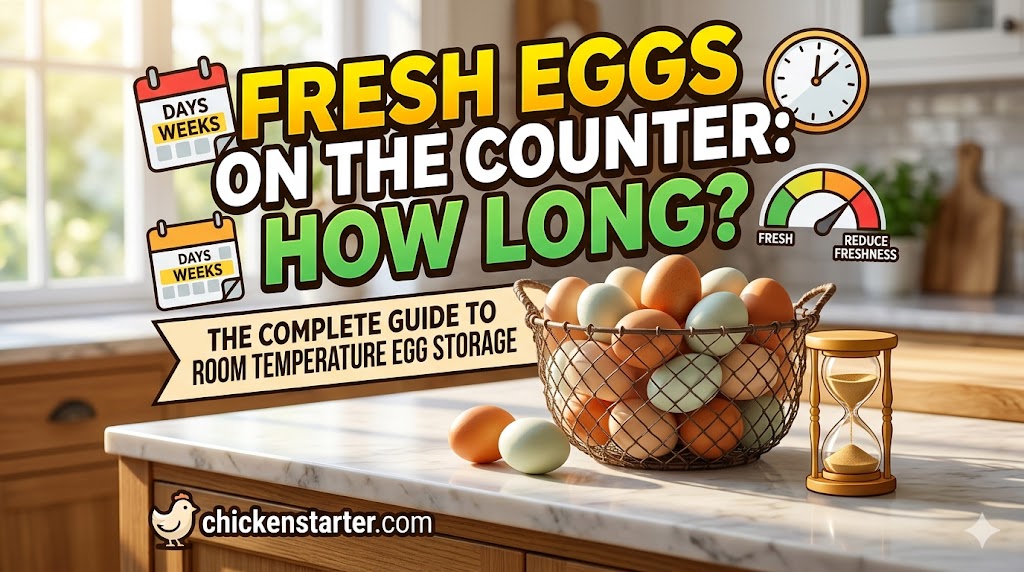
You just walked out to the coop, reached under your favorite hen, and pulled out a warm, freshly laid egg. Now you are standing in your kitchen wondering: should this go in the fridge, or is the counter perfectly fine?
It is one of the most common questions backyard chicken owners ask. And honestly, the answer is not as simple as most websites make it sound. Where you live, whether your eggs are washed, and how you plan to use them all play a role in how long those farm fresh eggs stay safe on the counter.
If you are looking for a quick answer, here it is. Unwashed fresh eggs with an intact bloom can safely sit on the counter for about two to three weeks at normal room temperature. But there is a lot more to the story, and the details matter if you want to keep your family safe and your eggs tasting their best.
Let us break it all down.
Why Fresh Eggs Last Longer Than Store Bought Eggs
When a hen lays an egg, her body deposits a thin, invisible protective coating on the outside of the shell. This natural layer is called the bloom (sometimes called the cuticle). It seals the tiny pores on the eggshell and acts as a barrier against bacteria, air, and moisture.
This bloom is the reason farm fresh eggs behave so differently from the ones you buy at the grocery store. Commercial eggs in the United States are required by USDA regulations to be washed and sanitized before they reach store shelves. That washing process removes the bloom entirely, which is why store bought eggs must be refrigerated.
Fresh eggs straight from your backyard flock still have that bloom intact. And as long as you do not wash it off, that protective layer keeps working for you.
Think of the bloom like a natural vacuum seal. Once you break that seal, the clock starts ticking much faster.
The Real Timeline: How Long Are Unwashed Eggs Safe on the Counter?
Here is a practical breakdown based on how most backyard chicken keepers handle their eggs:
Unwashed eggs with bloom intact at room temperature (65 to 75°F or 18 to 24°C): approximately 2 to 3 weeks.
Unwashed eggs in a cool pantry or cellar (below 65°F or 18°C): up to 3 to 4 weeks in some cases.
Washed eggs at room temperature: use within a few hours, or refrigerate immediately.
Any eggs refrigerated after collection: 3 to 6 months when stored properly.
These timeframes assume your eggs are clean, free of visible cracks, and stored away from direct sunlight or heat sources. If your kitchen runs warm, especially during summer months, those counter eggs will not last as long as they would during cooler seasons.
One thing experienced chicken keepers know from years of handling eggs is that temperature consistency matters more than people realize. An egg that sits at a steady 70°F will hold up much better than one that swings between 65°F and 85°F throughout the day.
What Exactly Is the Egg Bloom and Why Does It Matter So Much?
The bloom deserves its own section because understanding it changes how you handle every egg your hens produce.
The bloom is a protein-based coating applied in the final moments before the egg leaves the hen’s body. Under a microscope, an eggshell has thousands of tiny pores, roughly 7,000 to 17,000 per egg depending on shell thickness. Those pores allow gas exchange, which is critical during incubation but becomes a vulnerability once the egg is laid.
The bloom plugs those pores. Without it, bacteria like Salmonella enteritidis can penetrate the shell more easily. Moisture also evaporates faster through an unprotected shell, which is why washed eggs dry out and lose quality quicker.
Here is what damages or removes the bloom:
- Washing with water, especially warm water
- Scrubbing with abrasive pads or brushes
- Using chemical sanitizers or soap
- Excessive handling with wet or oily hands
- Condensation from temperature fluctuations
If your eggs come out of the nesting box clean and dry, the best thing you can do is leave them alone. A quick dry brush with a soft cloth or fine sandpaper is fine for small bits of debris, but keep water away from eggs you plan to store on the counter.
If you are struggling with dirty eggs regularly, the real fix is improving your nesting box setup and changing bedding more frequently rather than washing every egg after collection.
The US, UK, and Australia Handle Eggs Completely Differently
This is where things get interesting, and it is something most articles gloss over.
In the United States, the USDA requires commercial egg producers to wash and sanitize eggs. This removes the bloom, which is why every carton at the grocery store sits in the refrigerated section. Once the bloom is gone, refrigeration becomes essential. American consumers have been trained to think all eggs need refrigeration, but that rule applies specifically to commercially processed eggs.
In the United Kingdom and most of Europe, eggs are sold unwashed and unrefrigerated. You will find them sitting on regular shelves at room temperature in every grocery store. The reasoning is different. European food safety authorities, following guidelines from the European Food Safety Authority, prioritize keeping the bloom intact and instead focus on vaccination programs to reduce Salmonella in flocks.
In Australia, the approach falls somewhere in between. Commercially sold eggs are often washed but not always refrigerated at the retail level, depending on the state and brand. Backyard chicken keepers across Australia commonly store unwashed eggs on the counter, especially in cooler months.
For backyard chicken owners in any of these countries, the practical takeaway is the same. Your fresh, unwashed eggs with the bloom intact do not need refrigeration for short-term storage. But once you wash them or once they have been sitting out for more than two to three weeks, get them into the fridge.
How Room Temperature Affects Freshness
Temperature is the single biggest factor in how long your counter eggs stay fresh, and it is the one most people underestimate.
Below 68°F (20°C): Eggs hold up very well. This is the sweet spot for counter storage. A cool kitchen, pantry, or mudroom during fall and winter is ideal.
68 to 75°F (20 to 24°C): Standard room temperature in most homes. Eggs are fine for two to three weeks but quality starts declining a bit faster.
Above 77°F (25°C): Freshness drops noticeably. In warmer climates or during summer, counter storage time shrinks. If your kitchen regularly hits 80°F or higher, consider refrigerating eggs even if they are unwashed.
Above 90°F (32°C): Do not leave eggs on the counter. Period. Bacterial growth accelerates significantly at these temperatures. If you are raising chickens in a hot climate, this is especially important to keep in mind during summer heat management.
One common mistake is storing counter eggs near the stove, on top of the refrigerator, or in a sunny windowsill. These spots experience temperature spikes that speed up deterioration even if the rest of your kitchen stays cool.
The Float Test: A Simple Way to Check Freshness
You have probably heard of this one, but let us make sure you are doing it correctly.
Fill a bowl or glass with cool water, deep enough to fully submerge an egg. Gently place the egg in the water and watch what happens.
Sinks and lies flat on its side: Very fresh. This egg was likely laid within the past week.
Sinks but stands upright on one end: Still good, but aging. The air cell inside is growing. Use this egg soon.
Floats to the surface: Old egg. The air cell has expanded significantly. Discard it or crack it open away from your other food to check before deciding.
The science behind this is straightforward. Over time, moisture escapes through the shell pores and is replaced by air. The air cell at the wide end of the egg grows larger, making the egg more buoyant. A floating egg is not automatically rotten, but it has lost enough moisture that quality and safety are questionable.
The float test is a helpful guide, not a guarantee. A sunken egg can still be bad if bacteria entered through a hairline crack you cannot see. Always crack questionable eggs into a separate bowl and check for off smells or unusual discoloration before using them.
Washed vs Unwashed: The Critical Difference
This point cannot be stressed enough because it is where most egg storage mistakes happen.
Unwashed eggs are the only eggs that should sit on your counter for extended periods. The intact bloom is doing the heavy lifting in keeping bacteria out and freshness in.
Washed eggs have lost that protection. Once you wash an egg, you need to treat it like a store bought egg and refrigerate it promptly. According to information from the USDA Food Safety and Inspection Service, washed eggs held at room temperature can develop bacterial contamination much faster than their unwashed counterparts.
Here is a practical approach that works well for most backyard flocks:
- Collect eggs daily from your nesting boxes.
- If they are clean, place them directly in a countertop egg holder or basket, pointy end down.
- If they are visibly dirty, gently dry brush off loose debris. If they need actual washing, wash them with warm water (slightly warmer than the egg to prevent bacteria being pulled inward through the pores), dry them completely, and put them straight in the refrigerator.
- Use counter eggs within two to three weeks, rotating so you use the oldest eggs first.
This system keeps things simple and safe without overthinking it.
Common Myths About Counter Egg Storage
There is a surprising amount of misinformation floating around about storing eggs at room temperature. Let us clear up the biggest ones.
Myth: Farm fresh eggs last months on the counter. Fact: While eggs stored in cool root cellars historically lasted longer, a typical modern kitchen is warmer and less consistent in temperature. Two to three weeks is a realistic and safe guideline for counter storage.
Myth: If an egg smells fine, it is always safe to eat. Fact: Some bacteria do not produce noticeable odors in the early stages of contamination. The smell test is useful but should not be your only method of assessing safety.
Myth: You should wash all eggs immediately after collecting them. Fact: Washing removes the bloom, which actually shortens shelf life unless you refrigerate immediately after. Only wash eggs that are visibly soiled.
Myth: Brown eggs last longer than white eggs. Fact: Shell color has absolutely nothing to do with shelf life. It is determined by the chicken breed and has no impact on egg quality or storage duration. Whether you raise Rhode Island Reds or Leghorns, the storage rules are the same.
Myth: Refrigerating eggs and then leaving them out is fine. Fact: This is actually one of the worst things you can do. When a cold egg is brought into a warm environment, condensation forms on the shell. That moisture can carry bacteria straight through the pores and into the egg. Once an egg has been refrigerated, keep it refrigerated.
How to Store Counter Eggs Properly
If you are going to keep eggs on the counter, do it right. Small details make a real difference.
Store eggs pointy end down. The air cell sits at the wide, rounded end of the egg. Keeping that end up helps the yolk stay centered and reduces the chance of the air cell detaching and causing premature spoilage.
Use a dedicated egg holder or basket. Countertop egg skelters (those spiral wire holders) work beautifully because they naturally rotate your eggs so you always use the oldest ones first. A simple bowl works too, but you will need to pay attention to rotation yourself.
Keep eggs away from strong odors. Eggshells are porous, even with the bloom intact. Eggs stored near onions, garlic, fish, or strong cleaning products can absorb those flavors over time.
Avoid direct sunlight. UV exposure and heat from sunlight accelerate quality loss. A shaded spot on the counter or inside a pantry is much better.
Do not stack eggs more than two layers deep unless they are in a proper egg tray. Pressure cracks from stacking are easy to miss and create entry points for bacteria.
Label or track dates. A simple pencil mark with the collection date on each egg makes rotation effortless. Some chicken keepers use a small chalkboard near their egg basket to note when the oldest eggs were collected.
When Counter Storage Is Not a Good Idea
There are situations where refrigeration is clearly the better choice, even for fresh unwashed eggs.
Summer heat. If your home does not have air conditioning or your kitchen regularly exceeds 77°F, the counter is not a safe spot for long-term storage. This is especially relevant for chicken keepers in the southern US, inland Australia, and other warm regions.
You do not use eggs quickly. If your flock produces more eggs than your family eats in two weeks, you will need a plan for the surplus. Refrigeration extends shelf life dramatically. You might also want to explore ways to preserve eggs for long-term storage.
Cracked or damaged eggs. Even a hairline crack compromises the shell barrier completely. These eggs should be used immediately or discarded. Never store cracked eggs on the counter.
Eggs from unknown sources. If you buy eggs from a farmers market or neighbor and you are not sure whether they have been washed, play it safe and refrigerate them. You cannot always tell by looking whether the bloom is still intact.
You have immunocompromised family members. For households with pregnant women, young children, elderly family members, or anyone with a weakened immune system, refrigeration adds an extra margin of safety that is worth the trade-off.
Why Your Hens’ Health Matters for Egg Safety
This is something rarely discussed in articles about egg storage, but it is genuinely important.
A healthy hen produces eggs with stronger shells, better bloom quality, and lower risk of internal contamination. Hens that are stressed, malnourished, or fighting illness lay eggs with thinner shells, weaker blooms, and occasionally with bacteria already present inside the egg before it is even laid.
Keeping your flock healthy is the first line of defense for egg safety. This means:
- Providing a balanced layer feed with adequate calcium supplementation
- Maintaining clean, dry nesting boxes with fresh bedding
- Managing parasites proactively
- Watching for signs of illness and addressing problems early
- Ensuring consistent access to clean water
If you notice soft-shelled eggs, shell-less eggs, or eggs with unusual textures, those issues often point to nutritional deficiencies or health problems in your flock that need attention. Those eggs should not be stored on the counter regardless of whether the bloom appears intact.
What About Fertile Eggs on the Counter?
If you keep a rooster with your hens, your eggs are likely fertilized. This raises a reasonable concern: can a fertile egg start developing on the counter?
The short answer is no, not under normal kitchen conditions. Embryo development requires sustained temperatures of about 99 to 100°F (37 to 38°C) with proper humidity. Your kitchen counter, even on a warm day, is not going to reach or maintain those temperatures.
Fertile eggs and infertile eggs store exactly the same way and last the same amount of time on the counter. You will not notice any difference in taste, appearance, or shelf life.
The only situation where this changes is if a broody hen has been sitting on eggs for any period before you collect them. Even a few hours of incubation-level warmth can start early cell division. If you suspect a hen has been sitting on eggs before you found them, refrigerate those eggs promptly or use them right away.
The Refrigerator Option: What You Gain and What You Lose
Many backyard chicken keepers prefer counter storage because there is something satisfying about a basket of colorful eggs sitting out in the kitchen. But refrigeration has clear advantages that are worth understanding.
Refrigerated fresh eggs (unwashed) can last 3 to 6 months. That is a dramatic increase over the 2 to 3 week counter window. If your hens are producing more than you can eat, refrigeration lets you build up a stockpile without worrying about waste.
Quality stays higher for longer. The yolk stays firm and centered. The whites hold together better when cracked. Older counter eggs tend to have runnier whites and flatter yolks, which is noticeable if you fry or poach them.
The trade-off? Cold eggs do not perform as well in some recipes. Baking with room temperature eggs gives better rise and texture in cakes and pastries. Cold eggs are also harder to separate cleanly. The simple fix is to pull refrigerated eggs out 30 to 60 minutes before you need them.
If you decide to refrigerate your eggs, store them in a carton rather than in the fridge door. The door experiences the most temperature fluctuation every time you open the fridge. A spot toward the back of a middle shelf stays the most consistent.
A Quick Freshness Guide by the Numbers
Here is a reference table you can bookmark or print out for your kitchen:
Fresh unwashed eggs on the counter (under 75°F): 2 to 3 weeks
Fresh unwashed eggs in the fridge: 3 to 6 months
Washed eggs on the counter: Use within 2 hours or refrigerate
Washed eggs in the fridge: 3 to 5 weeks
Hard-boiled eggs in the fridge: 1 week
Peeled hard-boiled eggs in the fridge: Use within 2 days
Eggs of unknown age or handling: Refrigerate and use within 2 weeks
When in doubt, do the float test, crack the egg into a separate bowl, and trust your nose. If anything seems off, it is not worth the risk.
What Happens if You Eat a Bad Egg?
Nobody wants to think about this, but it is practical information every chicken keeper should have.
A spoiled egg usually makes itself obvious. The smell of hydrogen sulfide, that unmistakable rotten egg odor, is your body’s built-in warning system. The appearance may also change, with discolored whites, unusual spots, or a greenish tint to the yolk.
If a bad egg is consumed, symptoms of foodborne illness can include nausea, vomiting, stomach cramps, diarrhea, and fever. These symptoms typically appear within 6 to 72 hours and resolve on their own in most healthy adults. However, for young children, elderly individuals, and those with compromised immune systems, the risk of serious complications is higher.
If you ever crack an egg that looks or smells abnormal, discard it immediately. Do not taste-test questionable eggs. The potential consequences are not worth saving one egg.
Seasonal Tips for Counter Egg Storage
Your approach to counter storage should shift with the seasons, especially if you live in a region with significant temperature swings.
Spring and fall are the ideal seasons for counter storage. Most homes stay in that comfortable 65 to 75°F range without much effort. These are also peak egg production seasons for many breeds, so you will likely have plenty of eggs to work with.
Summer requires caution. If you do not have air conditioning or your kitchen heats up during the day, switch to refrigerator storage or use counter eggs within one week instead of two to three. This is particularly relevant in Australia, the southern United States, and other warm regions where indoor temperatures can climb quickly.
Winter is actually excellent for counter storage in many homes, especially if you keep a cooler pantry or mudroom. Just be aware that if you heat your home aggressively, the area near a heating vent or wood stove can get surprisingly warm. For winter-specific flock management tips, you might find the winterizing your coop guide helpful.
Collecting Eggs the Right Way
Good counter storage starts before the egg ever reaches your kitchen. How and when you collect eggs makes a real difference.
Collect eggs at least once daily. Twice daily is even better, especially in hot weather or if you have hens that tend to go broody. The longer eggs sit in the nesting box, the more they are exposed to temperature fluctuations, moisture, and potential contamination from droppings.
Handle eggs gently. Microcracks that are invisible to the naked eye can compromise the shell’s protective barrier. Do not toss eggs into a basket or stack them carelessly.
Keep nesting boxes clean. The cleaner the egg is when you collect it, the less tempted you will be to wash it. Fresh bedding in your nesting boxes, changed weekly or as needed, reduces the chance of eggs getting coated in mud or droppings. Many chicken keepers find that the right nesting box setup dramatically reduces dirty egg problems.
Do not collect eggs with wet hands. Moisture on the shell surface can break down the bloom locally and create a pathway for bacteria.
Frequently Asked Questions
Can I leave fresh eggs on the counter overnight after collecting them?
Absolutely. If the eggs are unwashed and the bloom is intact, leaving them on the counter overnight is perfectly fine. Most backyard chicken keepers collect eggs in the evening and sort them the next morning without any issues.
How can I tell if the bloom is still on my egg?
Fresh eggs with an intact bloom feel slightly chalky or matte when you run your finger across the shell. A washed egg feels smoother and sometimes slightly shiny. It is a subtle difference, but you will learn to recognize it with practice.
Do eggs from different chicken breeds last longer on the counter?
No. Shell color and breed do not affect storage life in any meaningful way. What matters is shell thickness, bloom quality, and storage conditions. Hens with good nutrition produce stronger shells regardless of breed.
Is it safe to eat eggs with a small blood spot?
Yes. Blood spots are caused by a small blood vessel rupturing during egg formation. They are cosmetically unappealing but completely harmless. You can remove the spot with the tip of a knife if it bothers you.
Can I put counter eggs back in the fridge after a few days?
Yes, you can move unwashed counter eggs into the refrigerator at any point to extend their storage life. Just do not take refrigerated eggs back out to the counter, because the condensation issue makes that transition risky.
What happens if I accidentally washed an egg I wanted to keep on the counter?
Refrigerate it right away. Once the bloom is gone, the egg needs the cold temperature to stay safe. Washed eggs are still perfectly good; they just need different storage conditions.
Should I oil or coat eggs to replace the bloom?
Some people use food-grade mineral oil to create an artificial barrier on washed eggs. This technique, sometimes called “oiling” eggs, can extend shelf life. However, it adds an extra step and is not necessary if you simply avoid washing eggs destined for counter storage.
The Bottom Line
Fresh eggs from backyard chickens are one of the most rewarding parts of keeping a flock. And one of the small but satisfying perks is being able to keep a beautiful basket of eggs right on your kitchen counter without worrying about the fridge.
The key rules are simple. Do not wash eggs you plan to store at room temperature. Keep your kitchen reasonably cool. Use counter eggs within two to three weeks. And when in doubt, refrigerate.
Your hens are doing most of the work for you by putting that protective bloom on every single egg they lay. All you have to do is avoid undoing their efforts.
If you are just getting started with your flock and want to make sure you are set up for success from day one, check out the guide on what to expect when your hens start laying. And if you are producing more eggs than your family can handle, learning how to legally sell your backyard eggs can turn your surplus into a small side income.
Your fresh eggs are a gift from your flock. Store them well, use them confidently, and enjoy every single one.

Oladepo Babatunde is the founder of ChickenStarter.com. He is a backyard chicken keeper and educator who specializes in helping beginners raise healthy flocks, particularly in warm climates. His expertise comes from years of hands-on experience building coops, treating common chicken ailments, and solving flock management issues. His own happy hens are a testament to his methods, laying 25-30 eggs weekly.