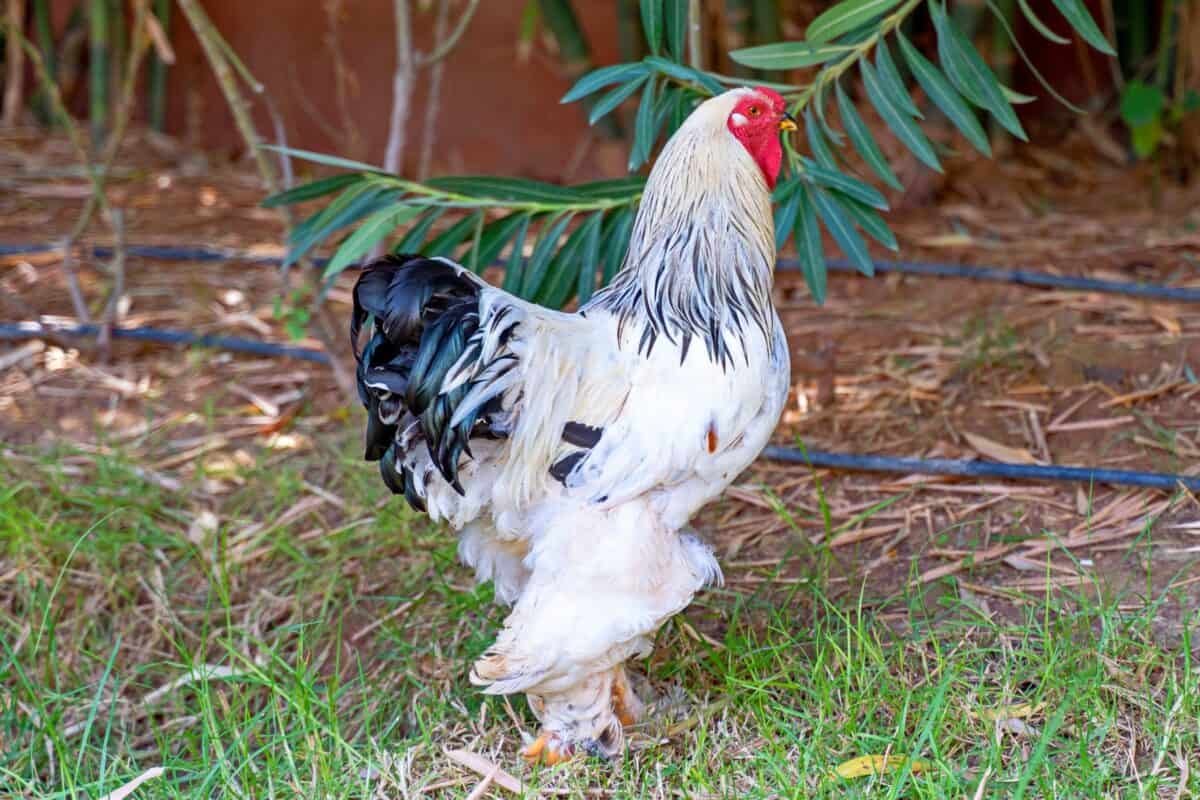
Growing up, I always considered our chickens a bit of a motley crew, but nothing prepared me for the awe inspiring presence of the Brahma chicken. The first time I saw one, I was struck by its sheer Brahma chicken size, those heavily feathered feet, and that remarkably calm demeanor. It was less like a chicken and more like a feathered dinosaur strutting across my yard. Since then, I have had the pleasure of raising Brahma chickens myself and learning exactly why they are nicknamed the “King of Chickens.”
Brahma Chicken Quick Facts
| Statistic | Details |
|---|---|
| Type | Heritage, Dual Purpose (Asiatic Class) |
| Egg Color | Medium to large brown eggs with a creamy tint |
| Egg Size | Approximately 55 to 60 grams per egg |
| Brahma Chicken Egg Production | 3 to 4 eggs per week (150 to 200 per year) |
| Temperament | Gentle, calm, friendly, and docile |
| Adult Weight (Rooster) | 10 to 12 lbs (4.5 to 5.5 kg), exceptional birds up to 18 lbs |
| Adult Weight (Hen) | 8 to 10 lbs (3.6 to 4.5 kg) |
| Lifespan | 5 to 8 years, some live up to 10 years |
| Standard Varieties | Light, Dark, Buff |
| Skin Color | Yellow |
| Comb Type | Pea comb (frostbite resistant) |
| Distinguishing Features | Heavily feathered feet and legs, beetle brow |
| Cold Hardiness | Excellent |
| Heat Tolerance | Poor to moderate |
| Confinement Tolerance | Excellent |
| Foraging Ability | Good foragers when free ranging |
In this comprehensive Brahma chicken care guide, we will dive deep into everything you need to know about raising Brahma chickens. You will learn about their unique history, distinctive physical traits, and how to properly care for them through every season. We will also cover Brahma chicken egg production, detailed growth stages, vaccination schedules, and even the cost of adding these magnificent birds to your flock.
By the end, you will understand why the Brahma chicken is not just a bird but a heritage breed with a captivating Brahma chicken temperament that is perfect for any backyard enthusiast looking for a docile and productive hen.
As an experienced poultry keeper with over a decade of experience, I have worked with many breeds, but the Brahmas hold a special place in my heart. I have personally seen how their gentle nature and surprising hardiness make them an excellent choice for family farms and homesteads across the USA, UK, Canada, and Australia.
Brahma Chicken History and Origin
The story of the Brahma chicken is a fascinating journey that crosses continents and centuries. To truly appreciate how big Brahma chickens get and why they became so popular, you have to understand their deep historical roots.
Early Origins and the Shanghai Connection
The origins of the Brahma remain debated among poultry historians. The most widely accepted theory, as documented by the Livestock Conservancy, traces them back to large fowl imported to America in the 1840s from the Chinese port of Shanghai. These original birds were known simply as “Shanghai” chickens due to their port of origin.
The distinctive head shape and pea comb that define the Brahma likely resulted from crossbreeding with Gray Chittagong birds of Malay type, imported from Chittagong in eastern Bengal, which is now Bangladesh. This Malay influence is what distinguishes the Brahma from the Cochin chicken, which also derives from Shanghai birds but lacks the characteristic beetle brow weather protection and pea comb frostbite resistance.
The breed takes its name from the Brahmaputra River in India, reflecting its mixed geographical heritage. At first, there were many different strains and at least a dozen different names for the breed. At a meeting of poultry judges in Boston in 1852, breeders reached agreement to name it “Brahmapootra,” which was later shortened to simply “Brahma.”
The Hen Fever Era
These giant birds were first brought to America by sea captains, sparking what became known as the “hen fever” of the 1850s. This was a period of intense obsession with breeding and showing exotic poultry in both America and Britain.
One of the most notable figures in this development was George Burnham, an influential poultry breeder from Massachusetts. In December 1852, Burnham sent nine “Gray Shanghaes” to Queen Victoria as a gift. This gesture further cemented the breed’s reputation on an international scale and sparked enormous interest in Britain.
The Dark Brahma variety was actually developed by English breeders from this original stock and was later re exported back to the United States. Both the Light and Dark Brahma were included in the first Standard of Excellence published by the original Poultry Club of Great Britain in 1865.
American Recognition and Standardization
According to records from the American Poultry Association, the breed was officially recognized in the first Standard of Perfection in 1874, which included both the Light and Dark varieties. The Buff Brahma was added later in 1924.
At the peak of their popularity, some roosters were recorded to have reached an extraordinary weight of up to 18 pounds. Historical records from that era often cited weights between 17 and 18 pounds. The Brahma was the principal meat breed in the United States from the 1850s until about 1930.
Heritage Status Today
The Livestock Conservancy recognizes the Brahma as a heritage breed due to its historical significance and ongoing conservation efforts. While they are no longer as commercially popular as they once were, their place in poultry history is secure.
Bantam Brahmas
The American Bantam Association also recognizes the Brahma bantam, a miniature version of the breed that has developed its own dedicated following. The Light Brahma bantam was admitted to the ABA Standard of Perfection in 1898, with the Darks being admitted in 1895, and Buff in 1945.
In addition to the standard three varieties, the ABA also recognizes Black and White Brahma bantams, though these are not seen very often.
| Bantam Brahma Size | Weight |
|---|---|
| Rooster | 38 ounces (1077 g) |
| Hen | 34 ounces (964 g) |
Brahma bantams are one of the most popular breeds of bantam chickens and are frequent winners in the feather legged class at poultry shows. They make a popular choice for urban keepers or those with limited space who still want that distinctive Brahma chicken temperament.
Physical Characteristics: How Big Do Brahma Chickens Get
There is no mistaking a Brahma for another breed. When people ask me about Brahma chicken size, I tell them these birds are truly massive. They are a large, stately breed with a broad body, full chest, and a proud, upright posture that gives them the look of the King of Chickens.
Brahma Chicken Size and Weight Standards
Based on American Poultry Association standards, Brahmas reach the following weights:
| Category | Weight |
|---|---|
| Cock | 12 lbs (5.5 kg) |
| Hen | 9.5 lbs (4.3 kg) |
| Cockerel | 10 lbs (4.5 kg) |
| Pullet | 8 lbs (3.6 kg) |
From my experience, roosters typically weigh between 10 and 12 pounds, with some exceptional birds reaching up to 18 pounds. Hens are slightly smaller, weighing in at 8 to 10 pounds.
Their impressive size is matched by a well proportioned, powerful frame. They are one of the tallest chicken breeds, with some roosters reaching over 26 inches tall. Research documented by poultry organizations shows that in 2013, the world record for the tallest chicken was given to a Light Brahma rooster named “Little John,” with a height of 26 inches.
Distinctive Head Features
The head of a Brahma is relatively small for their body, featuring a distinctive pea comb. This is a small, low comb with three rows of rounded bumps. The pea comb likely came from the Malay genetics in their ancestry.
This unique pea comb frostbite resistance is an adaptation that makes them highly suited to cold climates. You can learn more about protecting your flock from cold weather in our guide on preventing and treating frostbite on chicken combs.
Their prominent beetle brow weather protection, a slight projection of the skull over the eyes, gives them a distinctive look. It helps shield their eyes from rain and snow. The small comb, dense feathering around their face, and small wattles with a dewlap between them provide excellent protection from harsh weather.
Light Brahma vs Dark Brahma: Standard Color Varieties
The American Poultry Association recognizes three main color varieties, each with a unique and beautiful feather pattern.
Light Brahma
This is arguably the most common and classic variety. They have a brilliant white body with a striking black and white feathered Columbian pattern on their necks, known as the hackle, and tails. This beautiful contrast is a hallmark of the breed’s classic look.
The hackle feathers are sharply defined with black striping, adding to their elegant appearance. The saddle feathers of the cock are also striped with black.
Dark Brahma
The Dark Brahma has the most notable difference between cock and hen, featuring an intricate triple penciled pattern. This is my personal favorite variety because of the stunning complexity.
The hen has a beautiful, intricate gray and black penciled coloration with a black hackle with slight penciling of gray and laced with white. The back, breast, body, and wings are a medium shade of gray intricately penciled with black.
The roosters have a dramatically different appearance with black and white hackles and saddle feathers striped with black, a black base and tail, and white shouldered wings with primary feathers edged in white. The males often have a beautiful metallic green sheen to their black feathers.
Buff Brahma
This variety has the same feather patterns as the Light Brahma, but the white is replaced with a rich, golden buff color. Their hackle and tail are a glossy black, creating a warm and elegant look.
The buff color makes them look like living statues of gold. A valuable trait for breeders is that Buff Brahmas display autosexing characteristics, with males typically having lighter coloring than females at hatching.
Non Standard Color Varieties
While the APA recognizes only Light, Dark, and Buff varieties, other colors exist. The Australian Poultry Association has accepted black, blue, partridge, crele, and barred varieties of Brahma in addition to the standard three.
Breeders have also developed Blue Partridge and Silver Penciled varieties that are popular among enthusiasts for their unique and beautiful feather patterns.
Feathered Feet
One of the most recognizable features of the Brahma is their heavily feathered legs and toe feathers. The feathers are soft and silky, providing insulation during colder months. This feathering covers their legs and outer and middle toes.
This heavy feathering makes Brahmas best suited to dry, well drained conditions. If mud and moisture accumulates on the leg feathering, this can lead to Brahma chicken mud balls forming on their toes, making them prone to frostbite and infection.
When I first got my Light Brahmas, I was amazed by how the delicate patterns on their feathers seemed to get more intricate as they matured.
Brahma Chicken Egg Production
For a breed of its size, the Brahma chicken is a surprisingly good layer. They are a dual purpose breed, which means they are raised for both meat and egg production.
Laying Habits and Egg Characteristics
A healthy Brahma hen will typically lay between 150 to 200 medium to large brown eggs per year. Some sources report a production rate of 3 to 6 eggs per week under optimal conditions.
The eggs weigh approximately 55 to 60 grams each. The shells are quite sturdy, which helps with handling and storage. Many keepers notice the Brahma chicken eggs have a creamy tint to them.
While this production may not match commercial egg laying breeds, Brahmas have a secret advantage: they are excellent winter layers. Their dense feathering and large bodies help them stay warm, so they continue to lay eggs even when other breeds have stopped for the season.
Peak production occurs from October to May, making them exceptional winter layers. For tips on keeping your flock productive through the cold months, check out our guide on what to feed chickens in winter.
When Do Brahmas Start Laying
Brahmas are a slower maturing breed and typically begin laying between 6 to 9 months of age, with most starting around 7 months. Due to their larger size, Brahmas can be slow to mature and usually begin laying between 20 to 24 weeks old.
This is normal and is just a part of their slower, larger growth cycle. The tendency to grow slowly is usually most evident if brooded with faster growing breeds. A Brahma may seem to have growth issues because they are sometimes smaller as a chick and adolescent, but with time they soon surpass their brooder mates in size.
For guidance on feeding during this growth period, see our article on when to switch from starter to grower feed.
Broodiness and Mothering Instincts
Brahma chicken hens are known for making exceptional mothers due to their calm and protective nature. They do tend to go broody and make excellent mothers. Their large size allows them to cover a large clutch of eggs, and their gentle disposition makes them a joy to have in the brooder.
If you are looking to hatch chicks naturally, a Brahma hen is an excellent choice. The natural mothering, good egg production, and roosters being sizable table birds make Brahmas ideal for a self sufficient homestead.
However, they are not quite as prone to broodiness as some other breeds like the Cochin. If you are not interested in hatching, you will need to break her of her broodiness. Our guide on how to break a broody hen covers effective methods.
Due to their large size, be sure to monitor broody hens carefully as they may accidentally trample newly hatched chicks.
Egg Laying Lifespan
While a Brahma hen can live for 5 to 8 years, her egg production will naturally decline after about her third or fourth year. Her peak laying years are typically the first two years of her life.
After that, her production will slow down, but she can continue to lay eggs sporadically for many more years. For more on why production declines, see our article on why chickens stop laying eggs.
Brahma Chicken Growth and Development Timeline
Brahmas are a slow growing breed, which is something you must factor in if you are raising Brahma chickens for meat or eggs. When people ask, “How long does a Brahma take to grow?”, I tell them to be patient.
They can take anywhere from 10 to 18 months to reach their full adult size. The relatively slow rate of growth and long time required to reach maturity have caused Brahmas to be passed by as a commercial fowl. However, this slower growth is part of what makes them a fantastic dual purpose heritage chicken.
Detailed Brahma Chicken Feeding Guide
Providing the right nutrition is crucial for the healthy development of a Brahma. Their large size means they have different feeding needs than smaller breeds. Since they are such large chickens, they need additional feed available compared to standard breeds.
| Growth Stage | Age | Protein Content | Notes |
|---|---|---|---|
| Chicks | 0 to 8 weeks | 18 to 21% (20 to 21% recommended for large breeds) | Use a high quality chick starter feed. Higher protein supports their larger frame development. Provide fresh, clean water at all times with vitamin supplements. |
| Growers | 8 to 20 weeks | 16 to 18% | Transition to a grower feed. This supports their rapid feather and bone development. |
| Pullets and Roosters | 20+ weeks | 15 to 17% (Layer feed) | Hens need a layer feed with added calcium. Provide oyster shell grit as a calcium supplement for strong eggshells. |
Apple Cider Vinegar and Vitamins for Gut Health
Many experienced Brahma keepers recommend adding apple cider vinegar to your chicks’ water. This promotes gut health and helps establish beneficial bacteria in their digestive system. Use approximately one tablespoon per gallon of water, and only use plastic or glass waterers as the vinegar can corrode metal containers.
You can alternate between apple cider vinegar and commercial vitamin supplements in the water, as both serve the same gut health purpose. Some keepers use ACV one week and vitamins the next. I personally find that my Brahmas do well with ACV three days a week and vitamin supplements twice a week, with plain fresh water on the remaining days.
Free Feeding Brahmas
I have found that free feeding Brahmas works well given their size. They tend to self regulate and do not overeat like some breeds. However, always ensure fresh, clean water is available at all times alongside their feed.
For detailed nutrition guidance, check out our best organic chicken starter feed reviews and our comprehensive feeding guide.
Brahma Chicken Feed Requirements and Daily Consumption
One thing that surprised me when I first got Brahmas was how much they actually eat. These birds consume approximately 1/3 to 1/2 pound of feed per day per adult bird, which is roughly double what standard breeds require. Plan your feed budget accordingly.
Because they are such large chickens, they need additional feed available beyond what smaller breeds would consume. I keep feeders topped up and monitor consumption weekly to ensure everyone is getting enough.
Meat Production Timeline
While Brahmas can technically be processed around 8 to 10 weeks, it takes a full year for them to reach their maximum size and meat potential. The Brahma was traditionally raised for meat production and is classified as a heavy breed in the Asiatic class.
Historically, the Brahma was an important meat breed in the United States from the 1850s until about 1930. Some birds were very large, with weights of about 18 pounds for cocks and 13 pounds for hens recorded during that era.
Brahma Chicken Vaccination Schedule
Keeping your Brahmas healthy requires a proper vaccination program. Based on veterinary guidelines from sources like the Merck Veterinary Manual and poultry health organizations, here is the recommended vaccination schedule for Brahma chickens.
Core Vaccination Schedule
| Age | Vaccine | Method | Notes |
|---|---|---|---|
| Day 1 | Marek’s Disease | Subcutaneous injection | Usually done at hatchery |
| Days 5 to 7 | Newcastle Disease + Infectious Bronchitis | Eye drop or drinking water | Protects respiratory system |
| Day 14 | Infectious Bursal Disease (Gumboro) | Drinking water | Protects immune organs |
| Day 21 | Newcastle Disease booster | Eye drop or drinking water | Reinforces protection |
| Week 5 to 6 | Fowl Pox | Wing web stab | Important for layers |
| Week 8 to 10 | Fowl Typhoid | Intramuscular injection | For endemic areas |
Ongoing Health Maintenance
| Treatment | Frequency | Purpose |
|---|---|---|
| Deworming | Every 8 weeks | Prevents internal parasites |
| Newcastle booster | Every 2 to 3 months | Maintains immunity in high risk areas |
| Vitamin supplements | Weekly | Supports overall health |
Poultry health experts recommend consulting with your local veterinarian to customize vaccination plans according to regional disease threats and your flock’s history. Newcastle Disease and Infectious Bursal Disease vaccinations are considered essential, along with regular deworming every eight weeks to ensure optimal health for your Brahma chicken.
Comparison with Other Breeds
When considering a Brahma chicken, it helps to understand how they stack up against other popular breeds.
| Feature | Brahma | Jersey Giant | Leghorn | Orpington |
|---|---|---|---|---|
| Size | Giant (10 to 12 lbs rooster) | Largest (13 to 15 lbs rooster) | Small (6 lbs rooster) | Large (10 lbs rooster) |
| Temperament | Very docile, friendly | Gentle, calm | Flighty, active | Docile, friendly |
| Egg Production | 150 to 200 eggs per year | 150 to 180 eggs per year | 250 to 300 eggs per year | 150 to 180 eggs per year |
| Laying Start | 6 to 7 months | 8 to 9 months | 4 to 5 months | 6 to 7 months |
| Cold Hardiness | Excellent | Good | Poor | Good |
| Heat Tolerance | Poor | Moderate | Good | Moderate |
| Confinement Tolerance | Excellent | Good | Poor | Good |
| Foraging Ability | Good foragers | Moderate | Excellent | Moderate |
For detailed guides on other breeds, check out our Buff Orpington guide and Cochin chicken guide.
What Is the Biggest Chicken Breed
While the Brahma is often called the King of Chickens for its imposing size, the Jersey Giant is actually the biggest chicken breed by standard weight. A Jersey Giant rooster can weigh up to 15 pounds, slightly larger than the Brahma’s standard 12 pounds.
However, the Brahma’s dense feathering and impressive posture give it a majestic presence that is second to none. Historical Brahmas were recorded at weights up to 18 pounds, which would rival or exceed modern Jersey Giants.
Which Chicken Starts Laying Eggs the Fastest
If your priority is early egg production, the Brahma is not the fastest laying chicken. Breeds like the Leghorn and Rhode Island Red are known for maturing quickly and beginning to lay as early as 4 to 5 months of age. Brahmas, being a slower maturing heritage breed, require more patience before they begin to produce eggs.
Brahma Chicken Care and Daily Management
Proper care is essential for a happy and healthy Brahma flock. My favorite part of raising Brahma chickens is how easy they are to care for once you get the basics right.
Brahma Chicken Coop Size and Housing Requirements
Due to their size, Brahmas require more space than the average chicken. For detailed space calculations, see our guide on how much space chickens really need.
| Space Type | Minimum Requirement |
|---|---|
| Coop Space | 5 to 6 square feet per bird |
| Run Space | 10 to 15 square feet per bird |
| Roost Width | 10 to 12 inches per bird |
| Nesting Box | 14 x 14 inches minimum |
Brahmas handle confinement well and will thrive in enclosed spaces as they are too large to clear any fencing. They are generally very docile and less active than other breeds, which makes them easy to contain.
Coop Structural Requirements
Here is something many guides overlook: if the coop is not on solid ground, it needs to have enough support for the weight of the Brahma. The same applies to the roosts. I learned this the hard way when a flimsy roost collapsed under my first Brahma rooster. Make sure all structural elements can handle birds weighing 10 to 12 pounds or more.
Roost Height
Due to their weight, Brahmas need lower roosting bars, no more than 2 to 3 feet off the ground, to prevent leg injuries when they jump down. The roosting bars should also be wider than average to accommodate their large feet. For more details, see our guide on how high roosting bars should be.
Nesting Boxes
They need larger nesting boxes to comfortably lay their medium to large eggs. A box measuring at least 14 by 14 inches at the opening and 20 inches (50 cm) deep minimum is essential. The extra depth accommodates their larger bodies and prevents eggs from rolling out when these big hens shift position. Our ultimate guide to chicken nesting boxes covers everything you need to know.
Ventilation
Good ventilation is crucial to prevent respiratory issues, especially in larger, enclosed coops. For coop sizing guidance, check out our article on how big a chicken coop should be.
Caring for Feathered Feet and Preventing Mud Balls
The most unique care requirement for feathered feet chickens is regular maintenance. Their foot feathering can easily get caked with mud or droppings, forming Brahma chicken mud balls that can lead to bacterial infections, plantar pododermatitis (bumblefoot), mites, and even frostbite in cold, wet conditions.
Keep the Run Dry: The best preventative measure is to ensure their coop and run are kept as clean and dry as possible. If the run of your coop is grass, sand, or gravel you likely will not have any problems. Use well draining bedding like sand in the run or pine shavings in the coop. For bedding comparisons, see our guide on hemp vs straw vs sand chicken bedding.
Regular Cleaning: A simple, weekly foot check is all that is needed. If you find mud caked on, soak their feet in a bowl of warm water with Epsom salts or a mild, non irritating disinfectant solution. Gently scrub the toe feathers with a soft brush and pat them dry with a towel.
Trim Feathers: In some cases, you may need to trim the feathers around their feet with scissors to prevent a buildup of mud or droppings.
Dust Bathing for Brahma Chickens
Dust bathing is essential for Brahma health and something I consider non negotiable. Provide your Brahmas with dust baths filled with sand, Diatomaceous Earth, and wood ash. This combination is a natural repellent for mites and lice that works exceptionally well for their dense plumage.
I keep a dedicated dust bath area in my run that measures about 2 by 3 feet. This gives even my largest Brahmas enough room to roll and fluff properly. The Diatomaceous Earth dust bath helps control parasites naturally without chemicals.
Enrichment activities like dust baths and roosts are not just nice to have, they are essential for your Brahmas’ physical and mental wellbeing.
Run Surface Recommendations
The type of ground in your run makes a big difference for feathered foot breeds. Grass, sand, or gravel all work well and allow proper drainage. Avoid muddy or clay based runs that will cake onto their leg feathers.
Climate Specific Guidance for Raising Brahma Chickens
Brahmas are incredibly cold hardy, but their dense feathers also make them susceptible to heat related issues. Here is how to care for them in different regions.
Winter Care for Cold Climates
Brahmas are very cold hardy and less susceptible to cold and exposure than many other breeds. Their pea comb frostbite resistance and large body type make them ideal to withstand the conditions of colder climates. They surpass the Cochin in cold hardiness because of their pea comb.
Frostbite Prevention: Their pea comb and small wattles are resistant to frostbite, but their feathered feet can be vulnerable in wet, freezing conditions. Use a thick layer of dry bedding in the coop to prevent ice buildup on their feet. See our winterizing chicken coop guide for more tips.
Water: Ensure their water does not freeze. Consider a heated waterer to provide constant access to drinking water. Our guide on keeping chicken water from freezing without electricity offers practical solutions.
Drafts: Seal any drafts in the coop while maintaining good ventilation.
For extended cold snaps, monitor coop temperatures carefully. While Brahmas handle cold remarkably well, I recommend providing supplemental heat if temperatures remain below negative 10°F (negative 23°C) for more than 24 hours continuously. A safe radiant heater or heated perch can prevent stress without creating fire hazards. The goal is not to make the coop warm, just to take the edge off extreme cold.
For comprehensive cold weather guidance, see our article on raising chickens in cold climates.
Summer Care and Preventing Brahma Chicken Heat Stroke
Brahmas are slightly less affected by heat than the Cochin because of their shorter plumage, though the differences are not great. However, their large size and dense feathering make them prone to Brahma chicken heat stroke in hot weather.
Shade: Provide plenty of shade in their run. This is especially important in humid, southern climates. Our guide on raising chickens in hot humid climates covers essential strategies.
Cool Water: Keep fresh, cool water available at all times. Place ice cubes in their water to help them cool down.
Ventilation: Ensure maximum airflow in the coop to prevent overheating. Avoid overcrowding.
Frozen Treats: Chickens love frozen treats like frozen corn on the cob or chunks of watermelon.
Warning Signs: Watch for panting, holding wings away from body, and lethargy. These indicate heat stress requiring immediate intervention.
If you live in a hot climate and want chickens better suited to the heat, consider reviewing our best heat tolerant chicken breeds guide.
Free Range Limitations
While Brahmas are good foragers when given the opportunity, they are not ideal for 100% free ranging. There are two main reasons for this.
First, since they are such large chickens, they need additional feed available beyond what they can forage. Their size means they simply cannot sustain themselves on foraged food alone.
Second, they cannot fly well to escape from predators. Their massive size keeps them grounded, making them vulnerable when free ranging without protection. A secure run with supervised free range time works best for this breed.
Common Brahma Chicken Health Issues
Disclaimer: This article is for informational purposes only and is not a substitute for professional veterinary advice.
While Brahmas are a hardy breed, they are susceptible to a few specific health issues due to their physical traits.
Bumblefoot (Plantar Pododermatitis)
This is a bacterial infection of the foot pad, often caused by cuts or scrapes that get infected. Their feathered feet can trap dirt and moisture, increasing the risk. Our guide on how to spot and treat bumblefoot in chickens provides detailed treatment steps.
Scaly Leg Mites
The mites burrow under the scales of the legs, causing them to lift and become crusty. Their feathered feet make it harder to spot this issue early. For treatment options, see our article on mites and lice on chickens.
Feather Lice and Mites
Their dense plumage can provide a perfect home for these parasites. Regular dust bathing with Diatomaceous Earth and preventative measures are essential. Learn how to set up a dust bath for natural mite prevention and read about using diatomaceous earth for chickens.
Inspection Protocol: Inspect their feathers often, parting them so that you can see the skin. Keep an eye out for any traces of lice eggs, lice, or mites on the skin or feather bases. Weekly inspections catch problems early.
Dull Plumage
If your Brahma’s feathers are looking lackluster, experienced keepers suggest adding cod liver oil to their feed. This provides essential fatty acids that support feather health and brings back that beautiful sheen to their plumage.
Prevention and Treatment
Cleanliness: The single best preventative measure is keeping their coop and run clean and dry. Our guide on natural ways to keep parasites out of your coop covers effective strategies.
Regular Checks: Do a weekly check of their feet and legs for any signs of injury or mites.
Treatment: For scaly leg mites, a leg soak followed by a topical treatment like petroleum jelly can suffocate the mites.
Bleeding Feather Emergency
Blood feathers (new, growing feathers with blood supply) can break and bleed significantly. If this happens, apply pressure to the broken feather and put styptic powder on it to stop the bleeding. Styptic powder is a natural coagulant that every chicken keeper should have on hand.
Isolation Protocol
If a bird is badly injured, remove it from the rest of the flock and isolate it until it is fully healed. Other chickens may peck at wounds, making them worse. A quiet, clean isolation area helps injured birds recover faster.
Weekly Brahma Care Checklist
This checklist keeps my Brahmas in top condition and catches problems before they become serious.
| Task | Frequency | Purpose |
|---|---|---|
| Foot feather inspection | Weekly | Prevent mud balls and frostbite |
| Skin and feather check for parasites | Weekly | Early mite and lice detection |
| Water container cleaning | Daily | Prevent bacterial growth |
| Dust bath maintenance | Weekly | Ensure Diatomaceous Earth and wood ash available |
| Roost and nesting box inspection | Monthly | Check structural integrity for weight |
| Coop bedding refresh | Weekly | Maintain dry conditions |
| Oyster shell grit refill | Weekly | Ensure calcium supplement available |
| Overall health observation | Daily | Watch for lethargy, appetite changes |
Brahma Chicken Emergency Kit
Keep these supplies on hand for common Brahma health issues:
- Styptic powder for bleeding feathers and minor cuts
- Epsom salts for foot soaks and bumblefoot treatment
- Diatomaceous Earth for parasite control and dust baths
- Antiseptic solution for wound cleaning and bumblefoot
- Soft brush for foot feather cleaning
- Petroleum jelly for scaly leg mite treatment
- Cod liver oil for dull plumage support
- Electrolytes for heat stress recovery
- Isolation cage or carrier for injured birds
Brahma Chicken Temperament and Behavior
The Gentle Giants nickname is not just for show. It is a perfect description of the Brahma chicken temperament. They are an extremely docile and friendly breed, rarely displaying aggression toward humans or other chickens.
Brahma chicken roosters are particularly gentle and are not typically aggressive, making them a great choice for a mixed gender flock. My hen, Beatrice, is so calm that she will happily eat out of my hand and does not mind being picked up.
Brahma Chicken Rooster Temperament
One reason I recommend Brahmas for families is the exceptional temperament of Brahma chicken roosters. Unlike many breeds where roosters can become aggressive, Brahma roosters are known for their calm and gentle nature.
Brahma Chicken Hen vs Rooster Behavior Differences
| Trait | Brahma Hen | Brahma Rooster |
|---|---|---|
| Aggression level | Very low | Low to very low |
| Noise level | Soft clucking | Moderate crowing, less frequent than other breeds |
| Protectiveness | Moderate | High, but non-aggressive |
| Human interaction | Friendly, tolerant | Friendly, often follows keepers around |
| Flock role | Calm presence | Gentle guardian |
My Brahma rooster, Chester, has never shown aggression toward me, my family, or visitors. He keeps watch over the hens and alerts them to potential dangers with soft calls rather than aggressive posturing. This gentle guardian behavior makes Brahma roosters ideal for mixed flocks and family farms.
Are Brahma Chickens Noisy
One question I get frequently is whether Brahmas are loud birds. The answer is no. Brahmas are relatively quiet compared to many other breeds. The hens have a soft, conversational clucking, and even the roosters tend to crow less frequently than more excitable breeds. This makes them excellent choices for suburban settings where noise might be a concern.
Interaction with Humans
They are great with children and make for an excellent family pet. Their calm nature makes them a joy to have in the backyard, as they are not flighty or high strung. They are slow moving and predictable, which is reassuring for new chicken keepers.
Brahmas are known for their tolerance and patience, making them well suited for multi breed flocks. One keeper noted that their Buff Brahma Bantam follows them around the yard until they pick her up, describing her as incredibly affectionate and sweet.
Can Brahma Chickens Live Alone
While Brahmas can technically survive alone, I do not recommend it. Chickens are social animals and thrive in groups. A lonely Brahma may become depressed, stop laying, or develop behavioral issues. If you want Brahmas, plan for at least two or three birds minimum.
Flock Dynamics
Brahmas are low on the pecking order and do not typically pick fights with other birds. They tend to avoid conflicts and can act as a calming presence in the flock. However, they can be bullied by more aggressive breeds, so it is important to house them with other calm breeds like the Orpington or Cochin.
Their large size and imposing presence can act as a natural deterrent to small predators. If you are experiencing bullying issues, our guide on pecking order problems and stopping bully hens can help.
Can Brahma Chickens Fly
Due to their large size and weight, Brahmas are not great flyers. They can only get a few feet off the ground, which makes them easy to contain. Brahmas are too large to clear any fencing, even a standard 4 foot fence. You do not have to worry about them escaping over barriers.
Breeding Brahma Chickens
Breeding Brahmas can be a rewarding experience for those interested in preserving this heritage breed.
Hatching and Incubation
Hatching Time: Brahma chicken eggs typically hatch in 21 days, just like other chicken breeds.
Incubation: Due to their large size, the eggs may require a bit more attention in the incubator. Make sure to rotate them regularly and maintain proper humidity. For equipment recommendations, see our best chicken egg incubators for beginners guide.
Genetics and Color Breeding
The color patterns of the Brahmas present an interesting genetic challenge. Light Brahmas have the Columbian pattern gene, which is a dominant genetic trait. Dark Brahmas have a different genetic makeup that produces their intricate triple penciled pattern.
The difficulty of breeding the Dark Brahma pattern historically limited its popularity, yet the triple penciled pattern can be more easily obtained on large birds with broad feathers. Breeding for these specific patterns requires a good understanding of poultry genetics to ensure you are getting the desired outcome.
How to Sex Brahma Chicks
One of the most common questions I get from new Brahma owners is how to tell males from females early on. This is especially important for backyard keepers in areas where roosters are not permitted.
Wing Feather Sexing Method
You can sex Brahma chicks as early as a few days old by examining their wing feathers:
- Female chicks display an alternating pattern of long and short feather sprouts on their wings
- Male chicks show a neat, uniform “all one length” feather pattern
This method works best between days 3 and 7 after hatching. After that, the feathers grow in more uniformly and the distinction becomes harder to see.
Other Early Indicators
By 4 to 6 weeks, you may notice:
- Males developing thicker legs and larger feet
- Males showing slightly larger combs that may begin to redden earlier
- Buff Brahma males typically display lighter coloring than females due to their autosexing characteristics
Keep in mind that Brahmas mature slowly, so definitive sexing by comb and wattle development may not be reliable until 12 to 16 weeks of age.
Quarantine Procedures for New Birds
When adding new Brahmas to your flock, always quarantine them for at least two weeks before introduction. This prevents the spread of disease and allows you to observe the new birds for any health issues. Keep quarantine housing at least 30 feet from your existing flock if possible.
Pros and Cons of Brahma Chickens
| Pros | Cons |
|---|---|
| Docile and friendly temperament | Slower maturity (6 to 9 months to lay) |
| Excellent cold weather layers | Higher feed costs due to size |
| Good dual purpose breed | Larger space requirements |
| Relatively quiet | Feathered feet maintenance |
| Natural predator deterrent | Prone to heat stress |
| Good mothers when broody | Can be bullied by aggressive breeds |
| Beautiful, striking appearance | Not ideal for wet or muddy conditions |
| Handle confinement well | Slower growth for meat production |
| Good foragers | Need structural coop reinforcement |
Brahma Chicken Price and Cost Analysis
Brahma Chicken Price
The cost of a Brahma chicken varies based on location, breeder reputation, and variety. The main reason for their higher price is their slow maturity, which requires more time and feed investment from breeders.
| Purchase Type | Brahma Chicken Price |
|---|---|
| Day old chicks | $5 to $15 each |
| Started pullets (6 to 8 weeks) | $20 to $40 each |
| Adult birds | $30 to $75 each |
| Show quality birds | $75 to $150+ each |
| Breeding pairs | $100 to $200+ |
Brahma Chicken for Sale: Where to Buy
When looking for Brahma chicken for sale, consider these options:
- Local hatcheries with heritage breed programs
- Poultry shows and swap meets
- Reputable online hatcheries
- Local breeders through poultry associations
Annual Cost Breakdown
| Cost Type | Amount | Notes |
|---|---|---|
| Initial Costs | ||
| Day old chicks | $5 to $15 each | Varies by location and variety |
| Coop modifications | $50 to $100 | For larger roosts and reinforced flooring |
| Annual Costs (per bird) | ||
| Feed | $60 to $80 per year | Eat 20% more than average breeds |
| Bedding | $20 to $30 per year | Extra for foot care |
| Healthcare and vaccines | $15 to $25 per year | Preventive care |
| Calcium supplements | $10 to $15 per year | Oyster shell grit |
| Total Annual Cost | $105 to $150 per bird | Higher than average breeds |
To see how the cost of Brahmas compares to other breeds, check out our guide on whether raising backyard chickens is cheaper than buying eggs and our breakdown of the real cost of 6 chickens.
Buying Guide for Brahma Chickens
Not sure if you should start with chicks or adult birds? Our guide on chicks vs adult hens can help you decide.
When you are ready to buy, always seek out a reputable breeder. Look for healthy, active chickens with bright eyes and a clean bill of health. A good breeder will be knowledgeable and happy to answer all your questions about the breed.
Reputable Breeder Checklist
- Ask questions: A good breeder will be happy to answer questions about their flock’s health, lineage, and temperament
- Check the flock: Ask to see the parent flock if possible to check for good conformation and temperament
- Verify variety: Ensure you are getting an APA recognized variety if that matters to you
- Health records: Ask about vaccinations and any health issues in the flock
- Hatchery vaccinations: Always ask what type of vaccinations were administered to newly acquired chicks so you know what other vaccines to give
- Quarantine: Always quarantine new birds for at least two weeks before introducing them to your existing flock
Once you have your birds, make sure you are prepared. Our guide on bringing chicks home with 15 must haves covers everything you need.
Brahma Chicken Lifespan and Long Term Considerations
The lifespan of a Brahma chicken is typically 5 to 8 years, though some birds can live up to 10 years with excellent care. Their egg laying ability will start to decline after their third or fourth year, but they will still be a productive part of your flock for many years to come.
For more information on chicken lifespans across breeds, see our guide on how long chickens live.
How Cold Can Brahma Chickens Tolerate
Brahmas are exceptionally cold hardy. They can tolerate temperatures well below freezing, even down to 0°F (-18°C) or colder, provided they have a dry, draft free coop with proper ventilation. Their pea comb, beetle brow, and dense feathering make them one of the most cold tolerant breeds available.
The biggest cold weather concern is not temperature but moisture. Wet feathered feet in freezing conditions can lead to frostbite, so keeping bedding dry is essential.
Senior Chicken Care
As your Brahmas age, you may need to provide special care:
- Diet: Consider a high quality feed formulated for senior hens with lower protein and added joint support
- Roost access: Ensure a low roost for easy access, as older birds may struggle with jumping
- Health checks: More frequent health checks help catch issues early
- Parasite prevention: Due to their dense feathers, older Brahmas may be more susceptible to parasites
Frequently Asked Questions
How many eggs do Brahmas lay a year?
A healthy Brahma hen will typically lay between 150 to 200 eggs per year. This averages out to about 3 to 4 eggs per week, making them a consistent layer for a dual purpose chicken.
What color eggs do Brahma chickens lay?
You can expect to get medium to large brown eggs from your Brahma chickens. The eggs may have a creamy tint to them, and the shells are quite sturdy.
What is the lifespan of a Brahma chicken?
The lifespan of a Brahma chicken is typically 5 to 8 years, though some birds can live up to 10 years with excellent care.
Why are Brahma chickens expensive?
The main reason is their slow maturity. It takes longer for a breeder to raise them to a sellable age, requiring more feed investment. This, combined with their popularity as a heritage breed, drives up their initial cost.
What is a Brahma chicken’s temperament like?
Brahma chickens are known for their calm and gentle temperament. They are a docile and friendly breed, rarely displaying aggression toward humans or other chickens.
Is the Brahma chicken the biggest chicken breed?
No, while the Brahma is considered a giant breed, the Jersey Giant is officially the largest chicken breed by standard weight. However, historical Brahmas were recorded at weights up to 18 pounds.
How big do Brahma chickens get?
Standard Brahma roosters weigh 10 to 12 pounds, with exceptional birds reaching up to 18 pounds. Hens typically weigh 8 to 10 pounds. Some roosters can stand over 26 inches tall.
Are Brahma chickens noisy?
Brahmas are relatively quiet compared to many other breeds. The hens have soft, conversational clucking, and even the roosters tend to crow less frequently than more excitable breeds.
Can Brahma chickens live alone?
While Brahmas can survive alone, it is not recommended. Chickens are social animals and thrive in groups. A lonely Brahma may become depressed or stop laying.
How cold can Brahma chickens tolerate?
Brahmas can tolerate temperatures well below freezing, even down to 0°F or colder, provided they have a dry, draft free coop with proper ventilation.
What time of day do chickens lay eggs?
Most hens, including Brahmas, lay their eggs in the morning, typically within a few hours after sunrise.
Can you eat Brahma chicken eggs?
Yes, you can absolutely eat Brahma chicken eggs. They are medium to large brown eggs with a rich taste.
What is the difference between Light Brahma vs Dark Brahma?
Light Brahmas have a white body with black Columbian patterning on the neck and tail. Dark Brahmas have intricate triple penciled gray and black patterns on hens, while roosters show dramatic black and white coloring with metallic green sheens.
How much space do Brahma chickens need?
Provide at least 5 to 6 square feet of coop space and 10 to 15 square feet of run space per bird. Their large size requires more room than average chickens.
Are Brahma chickens good for meat?
Yes, Brahmas are considered a fantastic dual purpose breed. Their slow, steady growth cycle results in rich, flavorful, and tender meat.
Are Brahma chickens cold hardy?
Yes, Brahmas are exceptionally cold hardy and are considered one of the best breeds for cold climates. Their pea comb resists frostbite, their beetle brow protects their eyes from snow and rain, and their dense feathering provides excellent insulation. They can tolerate temperatures well below freezing, even down to negative 10°F (negative 23°C) or colder with proper shelter. The main concern in cold weather is keeping their feathered feet dry to prevent frostbite on their toes.
How much do Brahma chickens eat per day?
Adult Brahmas consume approximately 1/3 to 1/2 pound of feed per day, which is roughly double what standard sized breeds eat. Their large body mass requires more calories to maintain, so plan your feed budget accordingly. Free feeding works well for Brahmas as they tend to self regulate and do not typically overeat.
Can you tell male and female Brahma chicks apart?
Yes, you can sex Brahma chicks using the wing feather method between days 3 and 7 after hatching. Female chicks display an alternating pattern of long and short feather sprouts, while male chicks show a uniform “all one length” pattern. Buff Brahmas also show autosexing characteristics, with males typically appearing lighter in color than females.
Do Brahma chickens need special care for their feathered feet?
Yes, their heavily feathered feet require extra care to prevent mud balls, droppings, and ice from caking on. Regular checks and a clean, dry coop and run are essential.
Are Brahmas good with kids?
Brahmas are a top choice for families with children. Their calm, docile temperament and slow moving nature make them easy to handle.
Do Brahmas get along with other chickens?
Yes, Brahmas are known for being peaceful and are low on the pecking order. It is best to house them with other calm breeds to prevent bullying.
What colors do Brahma chickens come in?
The American Poultry Association recognizes three standard varieties: Light Brahma, Dark Brahma, and Buff Brahma. The Australian Poultry Association also recognizes black, blue, partridge, crele, and barred varieties.
Do I need a rooster to get eggs?
No, a rooster is only needed for fertilization. Hens will lay eggs regardless of whether a rooster is present. For more details, see our guide on whether you need a rooster to get eggs.
Do Brahmas molt?
Yes, like all chickens, Brahmas go through a molting season where they shed old feathers to grow new ones. This usually happens once a year in the fall and can temporarily affect egg production. You can learn more in our guide on the chicken molting season.
How tall can Brahma chickens get?
Brahmas are one of the tallest chicken breeds. The world record for the tallest chicken was a Light Brahma rooster named “Little John” with a height of 26 inches.
Are Brahmas good winter layers?
Yes, Brahmas are exceptional winter layers. Their dense feathering and pea comb make them cold hardy, and they continue producing eggs when many other breeds stop. Peak production occurs from October to May.
What vaccinations do Brahma chickens need?
Essential vaccinations include Newcastle Disease and Infectious Bursal Disease, along with deworming every eight weeks. Consult your veterinarian for a schedule appropriate to your region.
Editorial Note: This guide is based on personal experience and research, with no commercial affiliations. We maintain complete editorial independence to provide unbiased information about Brahma chickens.

Oladepo Babatunde is the founder of ChickenStarter.com. He is a backyard chicken keeper and educator who specializes in helping beginners raise healthy flocks, particularly in warm climates. His expertise comes from years of hands-on experience building coops, treating common chicken ailments, and solving flock management issues. His own happy hens are a testament to his methods, laying 25-30 eggs weekly.