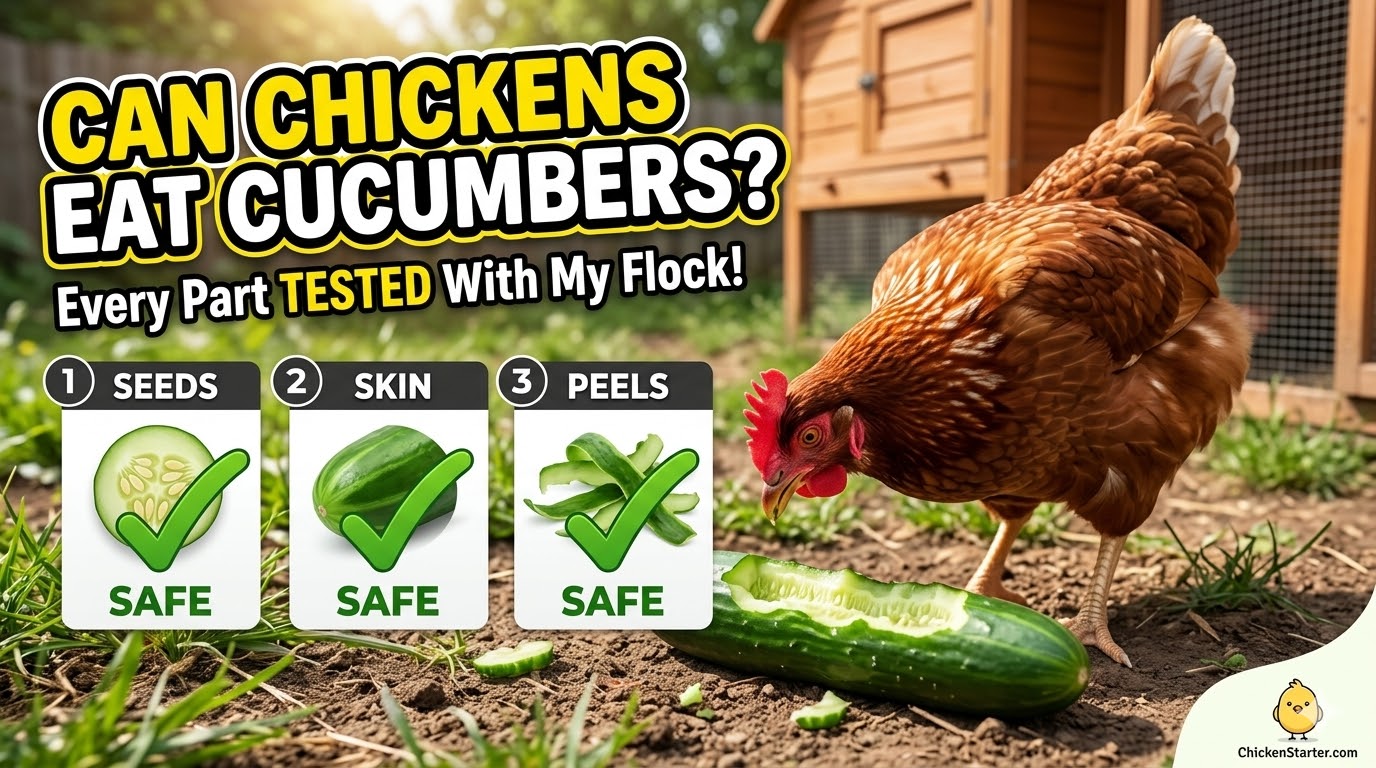
My garden produced an absurd amount of cucumbers last July. More than my family could ever eat, even if we had salad with every meal for a month. My 12 hens were lounging in the shade of the coop, panting in 95°F heat, barely touching the water in their drinker. I sliced a cucumber in half, tossed it into the run, and watched them go from lethargic to laser-focused in under 3 seconds. That was the moment I realized cucumbers weren’t just a treat for my flock. They were a heat-wave survival tool.
After feeding cucumbers to my flock across two full summers, I’ve tested every part (skin, seeds, peels, leaves, even frozen slices), tracked their droppings, and investigated the controversial “cucumbers deworm chickens” claim that you see all over chicken forums. Here’s everything I found, the good and the genuinely surprising.
Can Chickens Eat Cucumbers? The Straight Answer
Yes, chickens can safely eat cucumbers, and most absolutely love them. Cucumbers are hydrating and packed with nutrients, making them one of the best summer treats you can offer your flock. They’re non-toxic, incredibly low in calories, and safe in all their parts.
Quick Answer: Yes, chickens can safely eat all parts of a cucumber: flesh, seeds, skin, and peels. Cucumbers are non-toxic, 96% water, and contain vitamin C, vitamin K, potassium, and magnesium. They are the most hydrating common treat you can offer your flock. Cucumber seeds also contain cucurbitacin, a compound that may help with natural parasite control. Limit total treats to 10% of their diet. Baby chicks should be at least 4 weeks old before trying cucumber (finely chopped). Always wash store-bought cucumbers to remove pesticide residue.
Cucumbers don’t contain many carbs or proteins, so they can’t replace regular food. But they are an excellent, healthy treat for chickens, especially during hot weather. The potential risks aren’t from the cucumber itself but from how it’s fed. Treats, including vegetables, should be fed in moderation, making up no more than 10% of your chicken’s daily diet. The rest should come from a high-quality, balanced layer feed.
The moment I split a cold cucumber in half and placed it cut-side-up in the run, I learned two things. First, cucumbers are apparently chicken crack. Second, my dominant Buff Orpington will body-check an Easter Egger twice her speed to get first access. From that day on, I’ve been slicing and scattering to keep things fair.
Why Cucumbers Are One of the Best Treats for Chickens: The Nutritional Science
Cucumbers deserve more respect than most chicken sites give them. They’re not just “watery and low calorie.” They’re a functional hydration tool, especially during heat stress, and they contain a wider range of micronutrients than most people realize.
Based on data from the USDA FoodData Central database, here’s how cucumbers compare to what your laying hens actually need:
| Nutrient | Cucumber (100g, with peel) | Layer Feed (100g) | What Hens Need |
|---|---|---|---|
| Calories | 15 kcal | ~280 kcal | Energy for egg production |
| Protein | 0.7g | 16 to 18g | 16 to 18% of diet |
| Carbohydrates | 3.6g | ~55 to 60g | Energy source |
| Water content | 96% | ~10 to 12% | Hydration |
| Vitamin C | 2.8mg | Minimal | Immune support |
| Vitamin K | 7.2µg (6% DV) | Variable | Blood clotting, bone health |
| Potassium | 136 to 153mg | ~600mg | Electrolyte balance |
| Magnesium | 12mg | ~200mg | Nerve and muscle function |
| Sugar | ~1.7g | Minimal | Very low, safe |
The standout feature is that 96% water content. That makes cucumbers the single most hydrating common treat you can feed your chickens, even more than watermelon (92%) or strawberries (91%).
Cucumbers also provide your chickens with potassium, vitamin C, and fiber. They are a good source of vitamin K, manganese, vitamin A, and magnesium. To strengthen their immune systems, your chickens need these nutrients. Additionally, these nutrients keep their bodies running efficiently and support their reproductive health.
Cucumbers also contain unique antioxidants including beta-carotene, alpha-carotene, zeaxanthin, and lutein. To maximize their nutrient content, cucumbers should be eaten unpeeled. Peeling them reduces the amount of fiber, as well as certain vitamins and minerals.
During a week-long heat wave last August, with daily temps above 98°F, my egg production dropped to about 5 eggs from 12 hens. I started offering chilled cucumber halves twice daily alongside their normal waterer. Production climbed back to 8 or 9 eggs within four days. Was it the hydration, the cooling effect, the electrolytes? Likely all three working together. For more summer strategies, check out my guides on what to feed chickens during a heatwave and keeping chickens cool in Australian summers.
Can Chickens Eat Every Part of a Cucumber? Skin, Seeds, Peels, Leaves, and Flowers
Let’s go through every part of the cucumber plant individually.
| Part | Safe? | Notes |
|---|---|---|
| Flesh (inside) | ✅ Best part | Soft, hydrating, universally loved by chickens |
| Seeds | ✅ Yes, plus a bonus | Safe and nutritious. Contain the amino acid cucurbitine, which has vermifuge (anti-worm) properties. |
| Skin / Peel | ✅ Yes (wash first) | Contains extra fiber, beta-carotene, and vitamin K. Some chickens leave the skin behind. |
| Leaves | ⚠️ Moderation | Edible but tough. Wash thoroughly and ensure they’re free from pesticides. Chickens may leave them on the ground. |
| Flowers | ✅ Yes | All parts of the cucumber plant, including the flowers, are edible for chickens. |
| Vines | ⚠️ Tough | Hard to eat and digest. Chickens typically ignore them. |
The Skin and Peel Question
Both the skin and seeds are safe for chickens. The skin provides extra fiber, while the seeds contain beneficial nutrients. However, the skin of cucumbers can be tough, and some birds simply don’t like it. Whether or not to peel cucumbers before feeding is a personal call, and a lot depends on where the cucumbers came from.
If they’re homegrown, leave the peel on. The skin is where much of the nutrition lives. If they’re store-bought conventional, I recommend either washing very thoroughly under running water with a vegetable brush, or peeling them if you’re concerned about pesticide residue (more on that below).
My flock’s behavior with cucumber parts is fascinating. When I toss in a whole, uncut cucumber, they ignore it completely. They can’t get through the skin easily with their beaks. But the moment I slice it in half lengthwise, they devour the flesh and seeds within minutes. The skin usually gets left behind, picked clean on the inside like a little green canoe. My Easter Eggers are the exception. They’ll peck right through the skin to get to the flesh without any help from me.
Do Cucumbers Deworm Chickens? What the Science Actually Says
This is the section that sets this article apart from everything else you’ll find online about feeding cucumbers to chickens. Most websites either say “yes, cucumbers deworm chickens!” without any nuance, or they ignore the topic entirely. The truth is more complicated, and more interesting.
The Case For Cucurbitacin as a Natural Dewormer
Cucumber seeds contain a compound called cucurbitacin, which is found in all members of the Cucurbitaceae plant family. According to Lisa Steele of Fresh Eggs Daily, pumpkins, gourds, squash, cucumbers, cantaloupes, and watermelons all belong to this gourd family, and their seeds have been used for hundreds of years as a natural dewormer for livestock as well as humans.
Pumpkin seeds contain cucurbitacin, a compound that paralyzes worms and helps your chickens expel them.1 The pumpkin seeds, as well as the seeds of other members of the cucurbitaceae family such as winter, summer, zucchini and crookneck squash, gourds, cucumbers, cantaloupe and watermelon, are coated with a substance called cucurbitacin that paralyzes the worms.2
Call it folklore or call it traditional knowledge, but this practice has deep roots in agricultural history across many cultures.
The Case For Caution
Here’s where honest reporting matters. Despite being frequently recommended for worm prevention, no evidence exists that proves efficacy of the seeds from these plants as a natural dewormer in chickens.3 One reason: there has been no driving economic reason to fund such studies specifically in poultry.
The larger fruits and vegetables contain higher levels of cucurbitacin, while the smaller vegetables like cucumber contains far less.2 Since cucumbers are considerably smaller than pumpkins, their seeds naturally contain lower concentrations of cucurbitacin. This means that even if pumpkin seeds provide a meaningful dose, cucumber seeds are unlikely to deliver the same potency.
Research cited by Fermented Farm examined studies on pumpkin seed efficacy and found that ground pumpkin seed flour administered to lambs and goat kids “exhibited no effects on the parasite infection.” If concentrated pumpkin seed extracts showed mixed results, whole cucumber seeds with even less cucurbitacin are unlikely to serve as a standalone treatment.
These holistic remedies are best used as preventives to PREVENT an overload and aren’t necessarily strong enough to TREAT an infestation.2
My Balanced Recommendation
Cucumbers may contribute to a natural parasite management routine alongside pumpkin seeds, garlic, and herbs. But they should not be relied upon as a sole deworming solution. If your flock has confirmed worms (via fecal float test from your vet), you need proper veterinary treatment. Fenbendazole is FDA-approved to control roundworms and cecal worms in chickens.4
That said, there’s no downside to feeding cucumber seeds as part of a broader preventive approach. They’re nutritious regardless of their deworming properties. Planting a garden full of cucurbitaceae family plants can only be a win, even if they don’t work as standalone wormers. Your chickens will love them and benefit from the nutrition.
I feed my flock cucumbers regularly in summer, and pumpkin seeds twice a year (spring and fall). I’ve never had a confirmed worm issue in 3 years. Is that the cucurbitacin? The apple cider vinegar I add to their water? The general health and cleanliness of my flock? I honestly can’t separate the variables. What I can say is that there’s no downside to this approach. For more on parasite prevention, read my guides on treating internal parasites in chickens and natural ways to keep parasites out of your coop.
Can Chickens Eat Cucumbers Every Day?
This is where I learned a hard lesson. Technically, cucumbers are so low in calories and sugar that it’s nearly impossible to harm a chicken with them. But “nearly” is the key word.
While it’s hard to put a strict limit on cucumbers because they’re such a healthy food source, real-world experience shows there is a ceiling. When I gave cucumbers daily during one particularly productive garden week, within five days the droppings were noticeably wetter and my egg count dropped by 2 to 3 per day. The culprit was obvious: they were filling up on 96% water cucumbers and skipping their calcium-rich layer feed. Excessive amounts of watery foods can upset the nutritional balance, even though cucumbers are healthy snacks.
My recommendation: 3 to 5 times per week is safe for adult chickens during summer. Daily feeding can lead to reduced layer feed consumption, which means lower egg production, watery droppings, and nutritional gaps over time.
While there isn’t an exact number of “too much” cucumber, chicken feed is specially formulated to provide all of the vitamins and minerals that they need. Treats and snacks should only account for 10% or less of a chicken’s diet. If they get too full on cucumbers, they might miss out on the necessary nutrients in their regular feed.
Now I cap it at every other day during peak cucumber season, and egg production stays consistent. For more on structuring treat frequency, check out my best feeding schedule for backyard chickens.
How to Cut and Serve Cucumbers to Chickens: Step by Step
Step 1: Wash thoroughly. According to the U.S. Food and Drug Administration, firm produce such as carrots, cucumbers, melons and potatoes can be scrubbed with a clean vegetable brush under running water.5 This is especially important for store-bought cucumbers.
Step 2: Choose your serving method. There are several ways to offer cucumbers, and the best one depends on your flock size and goals:
| Method | How to Do It | Best For |
|---|---|---|
| Halved lengthwise | Cut in half, place cut-side-up on the ground | Small to medium flocks (4 to 8 hens) |
| Quartered | Cut in half lengthwise, then again | Large flocks, ensures everyone gets some |
| Diced or chopped | Cut into small bite-sized pieces | Baby or young chickens, mixing with other treats |
| Hung on a string | Thread whole or halved cucumbers on a string, hang in the run | Enrichment and boredom prevention |
| Frozen slices | Slice into rounds and freeze overnight | Summer heat relief, keeps them busy longer |
| Mashed | Mash the flesh and seeds together | Baby chicks, very elderly hens with beak issues |
Step 3: Serve after layer feed. Always make sure they’ve had access to their complete feed first. My girls get their layer pellets at first light, and cucumber treats come around mid-morning.
Step 4: Provide fresh water. Even though cucumbers are hydrating, fresh water should always be available alongside any treat.
Step 5: Clean up leftovers. You should clean out any cucumbers left behind in the coop as soon as possible. This prevents the decomposing fruit from attracting pests and rodents, resulting in healthier and happier chickens.
My go-to method: I slice cucumbers lengthwise into quarters and scatter them cut-side-up across 3 to 4 spots in the run. This prevents my dominant hen from guarding the treat and ensures even my shyest Australorp gets a piece. In extreme heat, I freeze cucumber rounds the night before and toss them in as afternoon popsicles. They last longer, keep the birds cool, and provide excellent enrichment.
The Pesticide Question: Should You Wash Cucumbers Before Feeding Your Flock?
Cucumbers occupy a middle ground when it comes to pesticide contamination. According to the Environmental Working Group’s 2025 Shopper’s Guide, cucumbers are not on the Dirty Dozen list, but they’re also not on the Clean Fifteen. They fall somewhere in between.
Spinach topped the list, with more pesticide residue by weight than any other produce tested, followed by strawberries, kale (along with mustard greens and collards), grapes, peaches, cherries, nectarines, pears, apples, blackberries, blueberries and potatoes.5 Pineapple was the least contaminated produce tested, followed by sweet corn (fresh and frozen), avocados, papaya, onions, frozen sweet peas, asparagus, cabbage, watermelon, cauliflower, bananas, mangos, carrots, mushrooms and kiwi.5
Cucumbers don’t appear in either list, which means they carry a moderate level of residue. That’s actually good news compared to strawberries (Dirty Dozen #2). Cucumbers have a thicker, firmer skin that can be effectively scrubbed, unlike strawberries with their soft, porous surface.
My Recommendations
- Best option: Homegrown cucumbers from your pesticide-free garden. They’re one of the easiest crops to grow.
- Good option: Organic store-bought cucumbers.
- Acceptable option: Conventional cucumbers, thoroughly scrubbed under running water with a vegetable brush (per FDA guidance).
- If concerned: Peel conventional cucumbers before feeding. You lose some nutrients but remove most surface residue.
I grow my own cucumbers for the flock. They’re one of the easiest garden crops, practically growing themselves in summer. But when my garden isn’t producing, I buy conventional cucumbers and scrub them well under running water with a brush. The key difference from strawberries is that cucumbers have a much thicker, firmer skin that you can actually scrub effectively.
What Age Can Chickens Eat Cucumbers?
There’s some debate among poultry keepers about when to introduce cucumbers to young birds. The high water content is both a pro (hydration) and a con (potential for loose droppings in immature digestive systems).
| Age | Can They Eat Cucumber? | How to Serve | Important Notes |
|---|---|---|---|
| 0 to 2 weeks | ❌ No | N/A | Starter feed only (18 to 22% protein) |
| 2 to 4 weeks | ⚠️ Very tiny amounts only | Mashed flesh only, no skin | Must have chick grit available; may cause loose droppings |
| 4 to 8 weeks | ✅ Small amounts | Finely diced flesh, no skin | Great enrichment value; high water content helps hydration |
| 8 to 16 weeks | ✅ Moderate | Chopped or small slices | Grower feed should still be 90%+ of diet |
| 16+ weeks (adult) | ✅ Full treat amounts | Halved, quartered, frozen, hung | Layer feed equals 90% of diet |
My balanced recommendation: wait until at least 4 weeks old. Start with mashed flesh only (no skin), and introduce slowly while watching for loose droppings. Always provide chick-sized grit when introducing any treat. For a complete breakdown of feed transitions, read my guide on when to switch from starter to grower feed.
I waited until 6 weeks to introduce cucumbers to my last batch of chicks. I mashed a small amount of the inner flesh and put it on a plate in the brooder. Half the chicks were fascinated and pecked at it; the other half had no idea what it was. By 8 weeks, they were fighting over cucumber slices.
Can Chickens Eat Cucumbers and Tomatoes Together?
Yes, with one important caveat about tomatoes. Cucumbers are completely safe, but tomatoes require care. Only ripe, red tomatoes should be fed. Green tomatoes, tomato leaves, and tomato stems contain solanine, which is toxic to chickens. The ripe red fruit itself is perfectly safe.
The combination of cucumbers plus ripe tomatoes is actually a great summer mix: hydrating, vitamin-rich, and something most flocks love. Just be sure to remove any green parts of the tomato before serving. For the full details, check out my can chickens eat tomatoes guide.
Can Chickens Eat Cucumbers and Zucchini or Squash Together?
Yes, and this is actually one of the best combinations you can offer, especially if natural parasite management is on your mind. Pumpkins, gourds, squash, cucumbers, cantaloupes, and watermelons all belong to the Cucurbitaceae plant family, commonly known as the gourd family. Seeds from all of these plants contain varying levels of cucurbitacin.
Mixing cucumbers, zucchini, and squash maximizes cucurbitacin exposure from multiple sources. It also provides variety and enrichment. Because chickens are so entertained when eating them, many chicken keepers feed whole squash, pumpkins, cucumbers, and melons throughout the year.
Nutritionally, cucumber and zucchini complement each other nicely. Zucchini contains more fiber (about 2 grams per 100 grams vs. cucumber’s 0.5 grams) and slightly more calories (17 vs. 15). While both are hydrating, zucchini is richer in vitamin C and potassium, making it the more nutrient-dense option.
During garden season, my flock’s favorite treat is what I call the “cucurbit medley”: a mix of halved cucumbers, sliced zucchini, and quartered pumpkin. They get this 2 to 3 times a week, and I’ve never needed a chemical dewormer in three years of keeping chickens.
Can Chickens Eat Cucumbers in Winter?
Yes, but the benefit profile shifts. In summer, the primary value of cucumbers is hydration and cooling. In winter, hydration is still important (many chickens drink less in cold weather), but other treats may be more strategically valuable for generating body heat.
Scratch grains, warm oatmeal, and pumpkin provide more caloric energy and longer-lasting metabolic warmth than cucumbers do. That said, cucumbers are safe year-round and can still help maintain hydration when heated waterers encourage less natural drinking behavior.
I don’t buy cucumbers in winter because they’re expensive and out of season. But I do freeze excess summer cucumbers (sliced into rounds and stored in freezer bags) and offer them thawed through the fall. By December, I switch to warm oatmeal and pumpkin, which generate more metabolic heat. For full winter care, read my winter feeding guide and winterizing your coop guide.
Can Chickens Eat Pickles?
This one surprises people. Yes, chickens can technically eat pickles in very small amounts. All of the individual elements (cucumber, dill, vinegar, salt) are not toxic to chickens. However, the sodium content is the problem.
A typical dill pickle contains roughly 1,208mg of sodium per 100g, which is 53% of the human daily value. Chickens are far more sensitive to salt than humans. Excessive sodium can cause sodium toxicosis, leading to increased thirst, diarrhea, kidney damage, and in extreme cases, death.
| Pickle Type | Safe? | Notes |
|---|---|---|
| Fresh cucumber | ✅ Always the best option | No sodium, no processing |
| Homemade low-salt pickle | ⚠️ Occasionally | Only if you control the salt content |
| Dill pickle (store-bought) | ⚠️ Very sparingly | High sodium |
| Kosher dill pickle | ❌ Avoid | Very high sodium plus garlic |
| Sweet or bread and butter pickles | ❌ Avoid | High sugar plus high sodium |
Fresh cucumber is always better than a pickle. If I’m making homemade pickles and have trimmings, I give my flock the raw cucumber ends and scraps, never the finished pickle.
Cucumbers vs. Other Summer Treats: How They Compare
After two years of testing different summer treats with my flock, here’s how the most common options stack up:
| Treat | Water Content | Calories per 100g | Key Benefit | Deworming? | Best Season |
|---|---|---|---|---|---|
| Cucumbers | 96% | 15 | Highest hydration of any common treat | Seeds: mild cucurbitacin | Summer |
| Watermelon | 92% | 30 | Hydration plus vitamin A | No | Summer |
| Strawberries | 91% | 32 | Highest vitamin C (59mg) | No | Summer |
| Zucchini | 95% | 17 | More fiber and vitamin C than cucumber | Seeds: mild cucurbitacin | Summer |
| Pumpkin | 92% | 26 | Vitamin A, seeds are best natural dewormer | Seeds: highest cucurbitacin | Fall |
| Lettuce | 95% | 15 | Similar hydration, more vitamins | No | Year-round |
| Blueberries | 84% | 57 | Highest antioxidants | No | Summer |
For detailed guides on each of these, check out my articles on pumpkins, watermelon, strawberries, lettuce, grapes, and bananas. For a complete overview, visit what chickens can eat from your kitchen or browse the best chicken treats that boost egg laying.
Vegetables Chickens Should NEVER Eat
While cucumbers are perfectly safe, not all vegetables are. Here are the ones that should never reach your flock:
- ❌ Green or unripe tomatoes, tomato leaves and vines. Contain solanine, which is toxic to chickens. Only ripe, red tomato fruit is safe.
- ❌ Raw or green potatoes and potato peels. Also contain solanine, particularly concentrated in green spots and eyes.
- ❌ Raw or dried beans. Contain phytohaemagglutinin, which can be fatal to poultry. Always cook beans thoroughly before feeding.
- ❌ Avocado pits and skin. Contain persin, which is toxic to chickens.
- ❌ Rhubarb leaves. Contain oxalic acid, which can be harmful or fatal to chickens. That applies to both raw and cooked rhubarb.
- ❌ Onions in large amounts. Contain sulfoxides, which can destroy red blood cells.
- ❌ Acorns, oak leaves, buds, and twigs. Young leaves and freshly fallen acorns have the most tannins and are therefore the most toxic. Tannins (tannic acid) can cause damage to a chicken’s gastrointestinal tract and kidneys.
- ❌ Chocolate. Contains theobromine, which is toxic to chickens.
- ❌ Moldy food of any kind. Mycotoxins can cause liver damage and are potentially fatal.
For the comprehensive list, read my complete feeding guide and the full overview of what chickens eat.
Frequently Asked Questions About Chickens and Cucumbers
Can chickens eat raw cucumbers?
Yes, raw is the best way to feed cucumbers to your chickens. Raw cucumbers retain all their nutrients and their full 96% water content. Never add salt, seasoning, or dressing.
Can chickens eat cucumber peels?
Yes. Both the skin and seeds are safe for chickens. The skin provides extra fiber, beta-carotene, and vitamin K. However, the skin of cucumbers can be tough, and some birds might not eat it. Some keepers choose to peel conventional store-bought cucumbers to reduce pesticide residue. Wash thoroughly either way.
Do cucumber seeds deworm chickens?
Cucumber seeds contain cucurbitacin, a compound found in all Cucurbitaceae family plants that has been traditionally used to control intestinal parasites. However, there is limited scientific evidence confirming cucumbers alone provide a therapeutic dose in poultry. They may help as part of a broader natural parasite prevention strategy alongside pumpkin seeds, garlic, and herbs, but should not replace veterinary treatment for confirmed worm infestations.
Can chickens have too many cucumbers?
Yes. While cucumbers are one of the safest treats, their extremely high water content (96%) can lead to watery droppings and reduced feed consumption if overfed. Some keepers, myself included, have noticed decreased egg production when feeding cucumbers daily. Limit to every other day or 3 to 5 times per week during summer.
Can Silkie chickens eat cucumbers?
Yes, Silkies can eat cucumbers in the same moderation as other breeds. Because Silkies are smaller birds with smaller crops, chop cucumbers into smaller pieces than you would for larger breeds. Their feathered feet can also get sticky from wet cucumber flesh, so serve on a clean plate rather than in muddy ground.
Should I peel cucumbers for my chickens?
Not necessary for homegrown or organic cucumbers. For store-bought conventional cucumbers, either scrub thoroughly under running water with a vegetable brush (per FDA guidance) or peel them if you’re concerned about residue. Leaving the peel on provides more fiber and nutrients.
Can chickens eat bitter cucumbers?
Yes. Bitter cucumbers contain higher levels of cucurbitacin (the same compound linked to deworming properties). While the bitter taste deters humans, chickens are less sensitive to it. However, extremely bitter cucumbers may indicate the plant was stressed, so feed in moderation.
Can cucumbers be used for shipping live chickens?
Some breeders place cucumber halves in shipping boxes to provide hydration during transport. This works because cucumbers don’t leak like water containers but provide enough moisture for a short journey. It’s a clever practical application of that 96% water content.
Final Thoughts From My Garden to Yours
After two full summers of testing, here are the four things I want you to remember about feeding cucumbers to chickens:
First, cucumbers are one of the safest, most hydrating treats you can offer. At 96% water, low calorie, and non-toxic, they’re practically tailor-made for summer chicken keeping.
Second, all parts are safe: flesh, seeds, skin, peels, flowers, and even the leaves in moderation. The flesh and seeds are the favorites; the skin often gets left behind.
Third, the deworming claim is partially supported by tradition and the presence of cucurbitacin in the seeds, but cucumbers alone are not a proven standalone treatment. Use them as part of a broader preventive strategy, not as a replacement for veterinary care.
Fourth, feed 3 to 5 times per week in summer, less in winter. Always prioritize their complete layer feed. Treats should never exceed 10% of their diet.
Want to grow your own cucumbers for your flock? Check out my guide to safe plants to grow around your coop, or explore our complete guide to what your chickens can eat from your kitchen.
Happy feeding, and enjoy cucumber season with your flock.

Oladepo Babatunde is the founder of ChickenStarter.com. He is a backyard chicken keeper and educator who specializes in helping beginners raise healthy flocks, particularly in warm climates. His expertise comes from years of hands-on experience building coops, treating common chicken ailments, and solving flock management issues. His own happy hens are a testament to his methods, laying 25-30 eggs weekly.