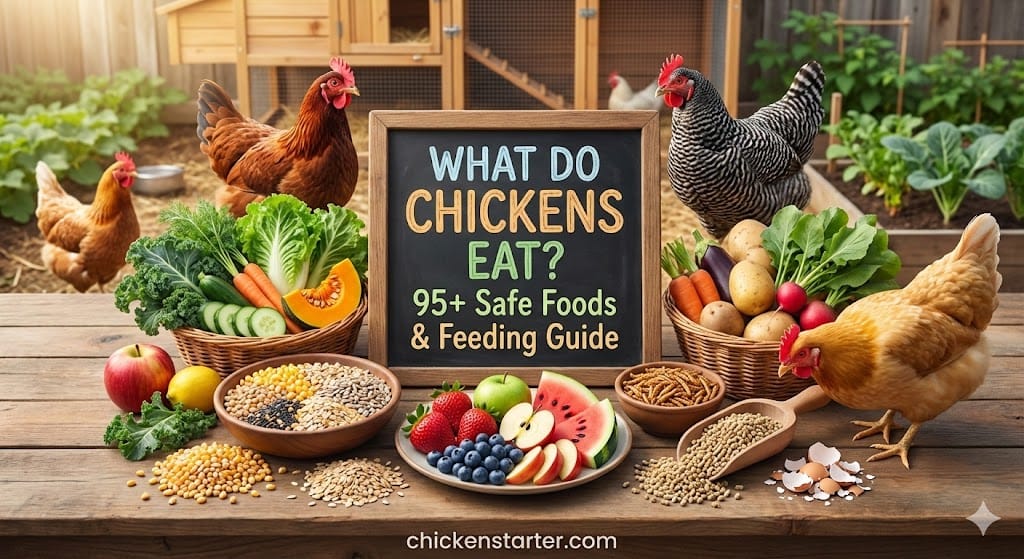
When I first started keeping chickens six years ago in a tropical climate, I made nearly every feeding mistake possible. I gave my flock too much scratch grain, not enough calcium, and had no idea that some common kitchen scraps could actually harm them. Here’s what would have saved my first two hens: understanding exactly what chickens need at each life stage before bringing them home.
The short answer to “what do chickens eat” is surprisingly simple. Chickens are omnivores that will eat almost anything, from commercial feed and kitchen vegetables to insects, seeds, and even small lizards. But keeping them healthy requires understanding the difference between what they can eat and what they should eat.
I’m covering everything from the 95+ safe foods your flock will love to the toxic foods that nearly cost me two hens, plus the feeding schedules and nutritional science that took me years to learn. Whether you are raising chickens in Australia’s summer heat, through a Canadian winter, or anywhere in between, these principles apply universally.
Important disclaimer: This article provides general information and should not replace veterinary advice for specific health concerns.
What Do Chickens Naturally Eat?
Before discussing commercial feeds and treats, understanding what chickens eat in the wild helps explain their nutritional needs. Chickens are descended from jungle fowl, and their natural diet consists of insects and invertebrates such as beetles, grubs, worms, and spiders. They also consume seeds and grains from grasses and plants, green vegetation including leaves, shoots, and weeds, small animals like lizards, frogs, and even mice when they can catch them, plus fruits and berries that fall within reach.
I remember watching my Australorps during their first free-range session. Within minutes, they were scratching through leaf litter, chasing grasshoppers, and pecking at dandelion greens. This foraging instinct is hardwired into their behavior and tells us exactly what their bodies are designed to process.
According to the RSPCA, chickens need feed suitable for their age and breed to maintain a balanced diet, but this natural foraging behavior remains important for their physical and mental health. When chickens cannot forage, we need to replicate this dietary diversity through commercial feed supplemented with appropriate treats.
The key insight here is that chickens are not vegetarians. They need protein from animal sources, which is why insects, mealworms, and even cooked meat scraps are beneficial additions to their diet.
Why Foraging Matters for Chicken Health
Even with perfectly balanced commercial feed, chickens that forage consistently outperform those that do not. The difference shows in egg quality, feather condition, and overall vitality.
Foraging satisfies deep instinctual needs. Chickens are designed to spend their days scratching through leaf litter, chasing insects, and sampling plants. According to veterinary research on backyard poultry, these practices contribute to both physical and mental health, ensuring a higher quality of life. Foraging encourages natural behaviors like dust bathing, scratching, and pecking that keep chickens mentally engaged and physically active.
The nutritional benefits are significant. Foraging chickens consume insects (protein), seeds (energy), and green vegetation (vitamins and minerals) that complement commercial feed. This dietary diversity produces eggs with deeper orange yolks, stronger shells, and better nutritional profiles.
I can always tell when a chicken has not had access to fresh forage. Their yolks are paler, almost yellow instead of the deep orange I expect from my free-ranging birds. Their energy levels drop noticeably, and they seem less alert and engaged. Even 30 minutes of supervised free-ranging daily makes a visible difference in egg color and bird alertness within a week.
Practical foraging options when free-ranging is not possible:
- Toss handfuls of leaves, grass clippings, or weeds into the run
- Create a “grazing frame” (hardware cloth over planted grass) that chickens can peck through without destroying
- Scatter mealworms or black soldier fly larvae to encourage natural foraging behavior
- Hang vegetables like cabbage or lettuce to simulate foraging challenges
- Rotate portable runs across fresh ground when possible
For Australian keepers dealing with predator pressure from snakes and goannas, supervised foraging sessions during cooler morning hours provide benefits while minimizing risk. I let my flock out for about 45 minutes each morning while I complete other garden tasks, then secure them before temperatures rise and I head indoors.
What Do Chickens Eat for Beginners: The Basics
If you are new to raising chickens, the feeding basics are straightforward once you understand the core principles.
What Does a Chicken Eat Daily?
A healthy adult chicken consumes approximately 120 to 150 grams (4 to 5 ounces) of complete feed daily. According to research from VCA Animal Hospitals, food should always be available because chickens graze throughout the entire day rather than eating distinct meals.
Your daily feeding should include complete commercial feed as the foundation. This provides balanced nutrition including protein, vitamins, minerals, and energy. For laying hens, choose a layer feed with 16 to 18 percent protein, at least 2.75 percent calcium, and no more than 10 percent fibre.
Fresh, clean water is non-negotiable. Chickens drink approximately twice as much water as they eat in feed. In hot climates like Australia or the southern United States, water consumption increases dramatically. I check my waterers twice daily during summer and add ice blocks when temperatures exceed 35°C. This simple habit has prevented heat stress deaths in my flock during three consecutive Australian summers.
Insoluble grit helps chickens grind food in their gizzard since they have no teeth. Free-ranging chickens often find enough grit naturally, but confined birds need it provided separately.
Calcium supplement such as crushed oyster shell should be available free-choice for laying hens. This supports strong eggshells and prevents calcium deficiency.
What Do Chickens Eat on Farm vs. Backyard Settings?
The fundamental nutritional requirements are identical, but scale and economics create practical differences.
The feeding approach differs dramatically between commercial farm operations and backyard flocks, and understanding this helps you make better decisions for your own birds.
| Aspect | Backyard Flock | Commercial Farm |
|---|---|---|
| Primary feed | Layer pellets or crumbles | Specialized formulated mash |
| Treats and scraps | Common supplement | Rarely used |
| Foraging access | Often available | Limited or none |
| Feed customization | Possible | Standardized |
| Cost per bird | Higher | Lower (bulk pricing) |
Commercial farm chickens receive precisely formulated mash or pellets delivered through automated feeding systems. According to research comparing commercial and homemade feeds, commercial operations achieve approximately 15 percent higher growth rates and 20 percent higher egg production through standardized nutrition. These operations prioritize feed conversion ratios and cost efficiency, with feeds scientifically formulated to provide all necessary nutrients in exact proportions.
Commercial feeds assume climate-controlled barns with uniform flocks of the same age, sex, and breed. Temperature, lighting, and humidity are carefully managed, allowing precise nutritional calculations. The feed is designed for chickens that live in predictable, controlled environments.
Backyard flocks operate under completely different conditions. Your birds experience real weather, actively forage, include multiple ages and breeds, and often live alongside roosters. This means the assumptions built into commercial feed formulations do not perfectly match your flock’s actual needs.
The advantage for backyard keepers is flexibility. You can supplement commercial feed with kitchen scraps, garden forage, and diverse treats that commercial operations cannot practically provide. Research from veterinary sources confirms that backyard chickens benefit from a combination of organic poultry feed, kitchen scraps, and foraged items like insects, weeds, and greens. This varied diet allows chickens to enjoy a broader range of nutrients, often producing richer egg yolks and more engaged, healthier birds.
I noticed this difference firsthand when comparing eggs from my free-ranging Australorps to store-bought eggs from commercial operations. The yolk color was dramatically deeper orange, and the whites held their shape better when cracked into a pan.
What Do Chickens Normally Eat Daily?
A typical day for my flock of eight hens includes approximately 130 grams of complete layer feed per bird, unlimited fresh water refreshed twice daily, free-choice oyster shell and grit, and occasional treats comprising no more than 10 percent of their total intake.
Since switching from crumbles to pellets three years ago, I have noticed my flock wastes nearly 15 percent less feed. Pellets are harder to scatter and easier for chickens to pick up efficiently.
For guidance on calculating feed costs based on your flock size, the math becomes important when budgeting for your first year.
How Much Water Do Chickens Need?
Water is the most critical and often overlooked nutrient for chickens. According to Dine-A-Chook, adult chickens drink approximately 500ml (about 1 pint) of water per bird daily under normal conditions. Young chicks around 30 days old drink approximately 150ml daily.
Here is where it gets important: this amount doubles or even triples in hot weather. Research from poultry nutrition experts shows that the water-to-feed consumption ratio is normally 2:1 at 21°C but increases dramatically to 8:1 at 38°C. This means during extreme heat, chickens drink eight times more water than they eat in feed.
| Condition | Daily Water per Bird | Water-to-Feed Ratio |
|---|---|---|
| Normal (21°C) | 500ml | 2:1 |
| Hot (30°C) | 750-1000ml | 4:1 |
| Extreme heat (38°C+) | 1000ml+ | 8:1 |
Water temperature matters significantly. Chickens drink more when water is cool in summer and warm in winter. According to research from Cackle Hatchery, water temperature directly affects intake, and chickens will reduce consumption if water becomes warm during hot days. Cool water below 25°C encourages drinking and helps reduce core body temperature.
Signs of dehydration include heavy panting, pale combs and wattles, lethargy, and reduced appetite. Dehydrated hens lay fewer eggs or produce eggs with weak shells because water is essential for egg formation.
In my Australian summers, I learned the hard way that chickens simply stop drinking warm water. After losing production during a February heatwave three years ago, I now maintain multiple shaded waterers and add ice blocks when temperatures exceed 30°C. I also flush the water lines twice daily to keep water fresh and cool. Peak drinking times are morning when chickens wake and evening before roosting, so I ensure waterers are full and cool at these critical periods.
Understanding Feed Types by Life Stage
One of the biggest mistakes beginners make is feeding the wrong type of feed for their chickens’ age. The protein and calcium requirements change significantly as chickens mature.
Chick Starter Feed (0 to 8 Weeks)
Baby chicks require high protein to support rapid growth of muscles and feathers. Starter feed should contain 18 to 22 percent protein with calcium limited to approximately 1 percent.
The high protein content is critical because feathers are made almost entirely of protein. Chicks growing their first set of feathers need this building block in abundance. Essential amino acids like lysine, methionine, and cystine are particularly important during this growth phase.
Critical warning: Never feed layer feed to chicks. The high calcium content designed for eggshell production can damage developing kidneys and cause permanent harm. If you run out of starter feed, ground oats or cornmeal is safer than layer feed even for a single day.
When selecting starter feed, look for reputable brands like Purina, Nutrena, or Kalmbach that conduct feeding trials. These manufacturers formulate feeds with complete vitamin and mineral profiles including trace minerals that generic feeds may lack.
Grower Feed (8 to 20 Weeks)
Once chicks reach eight weeks, their protein needs decrease slightly. Grower feed typically contains 14 to 18 percent protein while maintaining low calcium around 1 percent.
This transitional feed supports continued growth without the excess protein that could strain the liver. Most chickens remain on grower feed until they approach laying age, though some breeds like Australorps and Golden Comets may begin laying earlier than 20 weeks.
Knowing when to switch from starter to grower feed prevents both underfeeding and overfeeding protein during this critical development period.
Layer Feed (20+ Weeks)
Adult laying hens need 16 to 18 percent protein with significantly increased calcium at 2.5 to 4 percent. This calcium supports daily eggshell production, which requires substantial mineral resources.
Layer feed comes in three textures. Pellets reduce waste and are easiest to measure. Crumbles are smaller pieces that some chickens prefer. Mash is finely ground and often used for mixing with water.
| Feed Type | Age Range | Protein | Calcium | Purpose |
|---|---|---|---|---|
| Starter | 0-8 weeks | 18-22% | ~1% | Rapid growth, feather development |
| Grower | 8-20 weeks | 14-18% | ~1% | Continued growth, body development |
| Layer | 20+ weeks | 16-18% | 2.5-4% | Egg production, maintenance |
| All-Flock | Any age | 16-18% | Low | Mixed flocks with roosters |
| Breeder | Breeding birds | 18-20% | 3-4% | Fertility and hatch rates |
For those exploring homemade feed options, understanding these ratios is essential before attempting to formulate your own rations.
Breed-Specific Feeding Amounts
Different breeds have different nutritional needs based on their size, activity level, and laying patterns. Heritage breed chickens that lay over a longer period may benefit from higher protein diets or vitamin supplements compared to commercial hybrids.
| Breed | Daily Feed Amount | Special Considerations |
|---|---|---|
| ISA Brown | 120-130g | Standard layer feed, high producers |
| Australorp | 130-150g | Heritage supplements beneficial |
| Leghorn | 110-120g | Active foragers, may need less commercial feed |
| Orpington | 140-160g | Larger breed, monitor for obesity |
| Rhode Island Red | 125-140g | Hardy, standard requirements |
| Brahma | 150-170g | Giant breed, higher intake needed |
My Australorps consistently eat more than my neighbors’ Leghorns, but their egg production stays strong through winter when lighter breeds often slow down. This past December, my four Australorp hens averaged 3.2 eggs daily even with only 10 hours of daylight.
Complete List: 75+ Foods Chickens Can Eat
Beyond commercial feed, chickens enjoy and benefit from a variety of supplemental foods. Here is a comprehensive breakdown organized by category.
Safe Vegetables (30+)
| Vegetable | Safe? | Preparation | Notes |
|---|---|---|---|
| Kale | ✅ Yes | Raw or cooked | High in vitamins A, C, K |
| Spinach | ✅ Limited | Raw | Weekly only, oxalates affect calcium |
| Lettuce | ✅ Yes | Raw | Low nutrition but hydrating |
| Swiss chard | ✅ Yes | Raw or cooked | Good vitamin source |
| Cabbage | ✅ Yes | Raw, hang whole | Entertainment and nutrition |
| Broccoli | ✅ Yes | Raw or cooked | Florets and stems safe |
| Cauliflower | ✅ Yes | Raw or cooked | Including leaves |
| Carrots | ✅ Yes | Grated raw or cooked | Tops also safe |
| Beets | ✅ Yes | Cooked preferred | May color droppings |
| Radishes | ✅ Yes | Chopped | Tops are excellent |
| Pumpkin | ✅ Yes | Raw, all parts | Seeds may help with parasites |
| Butternut squash | ✅ Yes | Raw or cooked | High in vitamin A |
| Zucchini | ✅ Yes | Raw | Excellent summer treat |
| Cucumber | ✅ Yes | Raw | Hydrating in heat |
| Tomatoes (ripe) | ✅ Yes | Raw, red only | Avoid green parts |
| Peas | ✅ Yes | Raw or cooked | Shelled or in pod |
| Green beans | ✅ Cooked | Must be cooked | Raw contains lectins |
| Corn | ✅ Yes | On cob or kernels | Limit in summer (generates heat) |
| Sweet potato | ✅ Yes | Cooked | Not related to nightshades |
| Bell peppers | ✅ Yes | Raw | Seeds safe, avoid plant |
| Asparagus | ✅ Yes | Raw or cooked | May affect egg flavor |
| Celery | ✅ Yes | Chopped | String can cause crop issues |
| Parsley | ✅ Yes | Raw | Good vitamin C source |
| Cilantro | ✅ Yes | Raw | Most chickens enjoy |
| Basil | ✅ Yes | Raw | Aromatic, healthy |
| Dandelion greens | ✅ Yes | Raw | Free forage favorite |
| Clover | ✅ Yes | Raw | Common forage plant |
| Turnips | ✅ Yes | Chopped | Greens especially nutritious |
| Kohlrabi | ✅ Yes | Raw or cooked | Leaves included |
| Bok choy | ✅ Yes | Raw | Excellent calcium source |
Safe Fruits (20+)
| Fruit | Safe? | Preparation | Notes |
|---|---|---|---|
| Watermelon | ✅ Yes | All parts | Ultimate summer treat |
| Cantaloupe | ✅ Yes | Flesh and rind | Seeds safe |
| Honeydew | ✅ Yes | All parts | Hydrating |
| Strawberries | ✅ Yes | Whole | Antioxidant rich |
| Blueberries | ✅ Yes | Whole | Superfood for chickens |
| Raspberries | ✅ Yes | Whole | High in fiber |
| Blackberries | ✅ Yes | Whole | Brambles too if available |
| Apples | ✅ Yes | Remove seeds | Seeds contain cyanide compounds |
| Pears | ✅ Yes | Remove seeds | Soft when ripe |
| Grapes | ✅ Yes | Whole or halved | Some cut to prevent choking |
| Bananas | ✅ Yes | Peel included | High in potassium |
| Kiwi | ✅ Yes | Flesh | Skin less popular |
| Mango | ✅ Yes | Flesh only | Remove pit |
| Papaya | ✅ Yes | Seeds included | Natural dewormer claims |
| Peaches | ✅ Yes | Remove pit | Pit contains cyanide |
| Plums | ✅ Yes | Remove pit | Same caution as peaches |
| Cherries | ✅ Yes | Remove pits | Pits toxic |
| Cranberries | ✅ Yes | Raw or dried | Urinary tract benefits |
| Oranges | ✅ Limited | Segments | Some chickens dislike citrus |
| Pomegranate | ✅ Yes | Seeds | Messy but nutritious |
Safe Proteins (15+)
| Protein Source | Safe? | Preparation | Notes |
|---|---|---|---|
| Mealworms | ✅ Yes | Live or dried | Protein powerhouse, molting essential |
| Black soldier fly larvae | ✅ Yes | Live or dried | Sustainable, calcium-rich |
| Earthworms | ✅ Yes | Live | Natural forage |
| Crickets | ✅ Yes | Live or dried | Entertainment value |
| Scrambled eggs | ✅ Yes | Cooked only | Prevent raw egg eating habit |
| Hard-boiled eggs | ✅ Yes | Mashed | Shell included for calcium |
| Cooked chicken | ✅ Yes | Plain, unseasoned | Yes, chickens eat chicken |
| Cooked beef | ✅ Yes | Plain, unseasoned | Small amounts |
| Cooked fish | ✅ Limited | Plain | May affect egg flavor |
| Cottage cheese | ✅ Limited | Plain | Probiotics beneficial |
| Plain yogurt | ✅ Limited | Greek preferred | Limit dairy overall |
| Cooked shrimp | ✅ Yes | Shell removed | Treat only |
| Tuna (canned) | ✅ Limited | Water-packed | Mercury concerns with excess |
| Liver | ✅ Yes | Cooked | Vitamin A rich |
| Bone broth | ✅ Yes | Unsalted | Winter warming treat |
Safe Grains and Seeds (15+)
| Grain/Seed | Safe? | Preparation | Notes |
|---|---|---|---|
| Wheat | ✅ Yes | Whole or cracked | Staple grain |
| Oats | ✅ Yes | Raw or cooked | Excellent for gut health |
| Barley | ✅ Yes | Whole | Good fiber source |
| Millet | ✅ Yes | Whole | Easy to digest |
| Corn | ✅ Yes | Cracked or whole | Energy dense, limit summer |
| Rice | ✅ Yes | Cooked or raw | Both safe |
| Quinoa | ✅ Yes | Cooked | Complete protein |
| Sunflower seeds | ✅ Yes | Black oil type | Essential for molting |
| Pumpkin seeds | ✅ Yes | Raw | Possible deworming benefits |
| Flax seeds | ✅ Yes | Ground preferred | Omega-3 for egg quality |
| Sesame seeds | ✅ Yes | Raw | Calcium source |
| Chia seeds | ✅ Yes | Dry or soaked | Nutrient dense |
| Hemp seeds | ✅ Yes | Raw | Emerging sustainable option |
| Amaranth | ✅ Yes | Cooked | Ancient grain, high protein |
| Buckwheat | ✅ Yes | Raw or sprouted | Not actually wheat |
What Are Chickens’ Favorite Foods?
After years of observing my flock, certain foods consistently cause excitement that borders on chaos.
What Food Makes Chickens Happy?
My top 10 chicken favorites based on six years of daily observation:
Mealworms cause absolute chaos in my flock. My oldest hen, a six-year-old Buff Orpington I have had since my second year of keeping chickens, will knock other birds aside to get them first. During last fall’s molt, I increased mealworm portions to a handful per bird daily, and their feathers regrew noticeably faster than previous years.
Watermelon on hot days disappears within minutes, rind and all. I freeze chunks for my Australian summer flock and watch them work at it for extended entertainment.
Cooked pasta (plain) creates a comical scene of chickens running around with noodles hanging from their beaks.
Scrambled eggs are rich, protein-packed, and universally loved.
Corn on the cob provides entertainment as chickens work to strip every kernel.
Sunflower seeds get gobbled up quickly, especially during molting season.
Grapes (halved) are sweet treats that chickens find irresistible.
Cooked rice is easy to eat and popular with my flock.
Pumpkin and squash seeds are picked out first before they work on the flesh.
Yogurt creates messy but happy chickens.
These treats that boost egg laying combine popularity with nutritional benefits, making them worth incorporating into your feeding routine.
What Do Chickens Like to Eat Most?
Based on my experience, protein-rich treats consistently generate the strongest response. Mealworms, black soldier fly larvae, and scrambled eggs create excitement that vegetables simply cannot match. This makes biological sense since protein is often the limiting nutrient in a foraging chicken’s diet.
However, preferences vary by individual bird and season. In summer, my flock goes crazy for frozen watermelon but ignores the warm oatmeal they devour in winter. Learning your specific flock’s preferences takes observation but makes treats more effective as training tools or enrichment.
What Do Roosters Eat?
Roosters have the same basic dietary needs as hens with one important exception: they do not need the extra calcium found in layer feed.
Excess calcium over time can cause kidney damage in roosters. If you keep a mixed flock, consider all-flock feed with lower calcium, supplementing laying hens with free-choice oyster shell. You can also try separate feeding stations if practical, or accept some compromise since most roosters tolerate layer feed in moderation.
Roosters may need slightly higher protein during molting as they replace their often-impressive plumage. My Australorp rooster’s tail feathers require significant protein to regrow each year.
What Do Ducks Eat vs. Chickens?
If you keep mixed poultry flocks, understanding dietary differences matters for the health of both species.
| Factor | Chickens | Ducks |
|---|---|---|
| Niacin (B3) needs | Standard levels | Much higher (supplement needed) |
| Water for eating | Drinking only | Need water to swallow food |
| Grit requirement | Essential | Essential |
| Foraging style | Scratching ground | Dabbling in water and mud |
| Feed texture | Pellets or crumbles | Pellets preferred (less choking) |
| Calcium needs (layers) | 2.5-4% | 2.5-3% |
The biggest difference is niacin. Ducks require significantly more vitamin B3 than chickens, and deficiency causes leg problems in ducklings. If raising ducks alongside chickens, either use waterfowl-specific feed or supplement with brewer’s yeast.
According to poultry nutrition guidelines, mixing chickens and ducks successfully requires understanding these feeding differences for a healthy flock.
What Things Can You Not Feed Chickens? Toxic Food List
Knowing toxic foods is just as important as knowing safe ones. Some common foods can sicken or kill chickens.
Toxic Foods Reference
| Food | Toxicity Level | Toxic Compound | Effects |
|---|---|---|---|
| Avocado | ⚠️ High | Persin | Heart failure, respiratory distress |
| Chocolate | ⚠️ High | Theobromine | Heart problems, seizures |
| Raw/dried beans | ⚠️ Severe | Phytohaemagglutinin | Fatal within hours |
| Coffee/grounds | ⚠️ High | Caffeine, methylxanthines | Heart and lung damage |
| Green potatoes | ⚠️ Moderate | Solanine | Neurological issues |
| Onions (large amounts) | ⚠️ Moderate | Thiosulfate | Hemolytic anemia |
| Garlic (large amounts) | ⚠️ Low-Moderate | Thiosulfate | Blood cell damage |
| Rhubarb leaves | ⚠️ Severe | Oxalic acid | Kidney failure |
| Moldy food | ⚠️ High | Mycotoxins | Various organ damage |
| Apple/cherry/peach pits | ⚠️ Moderate | Cyanogenic compounds | Cyanide poisoning |
| Nightshade leaves/stems | ⚠️ High | Solanine | Neurological, death |
| Raw eggs | ⚠️ Behavioral | N/A | Creates egg-eating habit |
| Alcohol | ⚠️ High | Ethanol | Organ damage |
| Acorns | ⚠️ Moderate | Tannins | Kidney damage |
| Salty foods | ⚠️ Moderate | Sodium | Dehydration, death |
Avocado contains persin, which is toxic to chickens. The flesh is less dangerous than the pit and skin, but I avoid avocado entirely to eliminate risk.
Chocolate contains theobromine, which chickens cannot metabolize. Even small amounts can cause heart problems.
Raw or dried beans contain phytohaemagglutinin (also called lectin), a compound that can be fatal. This toxin breaks down during cooking, making properly cooked beans safe. Never feed raw kidney beans, black beans, or any dried bean that has not been thoroughly cooked.
Coffee grounds and tea contain caffeine and methylxanthines that are toxic. Coffee prevents calcium absorption and damages the immune system, heart, and lungs.
Moldy or spoiled food can contain mycotoxins that cause serious illness. If you would not eat it, do not feed it to your chickens.
Green potato skins, sprouts, and eyes contain solanine, a toxin in the nightshade family. Cooked potato flesh is fine, but avoid any green parts.
Why Can’t Chickens Have Carrots?
This is a myth that needs correcting. Chickens absolutely can eat carrots. This misconception may have spread through internet forums, but there is no scientific basis for avoiding carrots.
The only consideration is preparation. Raw carrots should be grated, chopped, or cooked because whole raw carrots are too hard for chickens to peck apart effectively. Carrot tops (the green leaves) are also safe and nutritious. Cooked carrots are soft and easy for chickens to eat.
I feed carrot peelings to my flock regularly with no ill effects. They have become a staple scrap item alongside vegetable trimmings.
Why Is It Illegal to Feed Chickens Kitchen Scraps?
This question is particularly relevant for Australian readers, though regulations vary by country.
Australian Biosecurity Regulations
In Australia, feeding certain food scraps to poultry is restricted or prohibited under biosecurity laws. These regulations exist to prevent the spread of serious diseases like foot-and-mouth disease, African swine fever, and avian influenza.
The restrictions primarily target meat and meat products of any kind, foods that have been in contact with meat (such as sandwiches), imported food products, and food from commercial kitchens or restaurants.
Vegetable scraps from your own kitchen are generally permitted for backyard flocks, but regulations vary by state. I recommend checking with your state agriculture department for specific requirements.
Understanding backyard chicken laws in Australia helps ensure you remain compliant while still providing healthy treats.
United States and United Kingdom Regulations
In the US, federal regulations primarily target commercial operations. Backyard chicken keepers generally have more flexibility, though some states have restrictions, particularly regarding feeding meat or dairy products to poultry.
The UK implemented strict swill-feeding bans following foot-and-mouth disease outbreaks. Kitchen scraps containing or having contact with meat or dairy generally cannot be fed to chickens, even backyard flocks.
What Is the Number One Cause of Death in Chickens?
While not directly related to feeding, understanding mortality causes helps contextualize the importance of proper nutrition.
Predator attacks remain the leading cause of backyard chicken deaths globally. Foxes, dogs, hawks, raccoons, snakes, and other predators kill more chickens than disease or nutritional issues.
Disease ranks second. Common killers include Marek’s disease (viral, often fatal), coccidiosis (parasitic, preventable), respiratory infections, and egg yolk peritonitis in laying hens.
Heat stress is a significant killer in hot climates. Chickens cannot sweat and rely on panting to cool themselves. Temperatures above 35°C become dangerous without shade and water access.
Nutritional deficiencies cause deaths but are entirely preventable with proper feeding. Calcium deficiency leads to weak bones and egg binding. Protein deficiency during molt can weaken birds. Vitamin D deficiency affects calcium absorption even when calcium intake is adequate.
Proper nutrition builds resilience against disease and helps chickens recover from stress. A well-fed chicken has reserves to draw on during illness.
What Do the Amish Feed Their Chickens?
Amish and traditional farming communities often follow feeding practices that predate commercial feed industry standardization.
Traditional Amish chicken feeding typically includes grain mixtures of corn, wheat, oats, and barley grown on the farm. Kitchen scraps from household food preparation supplement this along with garden waste and vegetable peelings. Dairy byproducts like whey from cheese-making provide protein, and free-range foraging supplies insects, seeds, and plants.
This approach works because Amish farms typically provide extensive foraging opportunities, and chickens can balance their own diets when given diverse food sources.
However, chickens fed only homemade rations without commercial feed may experience deficiencies in specific amino acids like methionine and lysine, or vitamins that are difficult to source naturally. The modern commercial feed industry exists partly because formulating a complete diet from raw ingredients is complex.
For those interested in making homemade chicken feed, understanding nutrient balance is essential before attempting to replace commercial rations entirely.
What Can Hens Eat During Molting?
Molting is the annual process where chickens shed and regrow feathers. This is nutritionally demanding since feathers are approximately 85 percent protein.
Increase protein intake to 18 to 20 percent during heavy molt. Options include switching to a higher-protein feed temporarily, supplementing with protein-rich treats like mealworms, adding cooked eggs or meat scraps, and offering sunflower seeds for oils that support feather quality.
Continue calcium supplementation even though egg production typically pauses during molt. Hens need calcium reserves for when laying resumes.
Reduce treats that are low in protein. Scratch grains, bread, and fruit should be limited during molt.
During my flock’s fall molt last year, I increased mealworm portions significantly and added black oil sunflower seeds to their daily routine. My hens completed their molt in about six weeks compared to the eight weeks it took when I did not adjust their diet. Their egg production resumed nearly two weeks earlier than previous years.
Understanding chicken molting season helps you anticipate and prepare for this annual nutritional demand.
Chicken Feed Trends in 2026
The poultry feed industry continues evolving with sustainability and nutrition innovations worth knowing about.
Insect Protein Revolution
Black soldier fly larvae and mealworm-based feeds are gaining mainstream popularity. Research indicates approximately 70 percent of poultry production costs come from feed, making sustainable protein alternatives increasingly attractive to both commercial and backyard operations.
These insect proteins offer complete amino acid profiles including the lysine, methionine, and cystine that chickens need. They also have a significantly lower environmental footprint than traditional protein sources like soybean meal.
I have been supplementing with black soldier fly larvae for two years now, and my hens’ feather quality improved noticeably. The larvae are also high in calcium, providing dual benefits.
Sustainable Feed Alternatives
Hemp and amaranth are emerging as sustainable protein sources. Hemp seeds provide complete protein with beneficial omega-3 fatty acids that transfer to egg yolks. Amaranth offers similar benefits and grows well in diverse climates.
Non-GMO and organic feed options continue expanding as backyard keepers increasingly prioritize ingredient quality. While more expensive, these feeds often use higher-quality protein sources.
Smart Feeding Technology
Treadle feeders and automated systems reduce waste by preventing pest access. These mechanical feeders require chickens to step on a platform to access food, keeping out wild birds, mice, and rats.
Premium treadle feeders like the Grandpa’s Feeder or RentACoop models offer 5 to 10 year lifespans compared to 1 to 3 years for budget feeders. The upfront investment often pays for itself through reduced feed waste and pest prevention.
Automatic coop doors paired with scheduled feeding help maintain consistent routines that chickens thrive on.
The Best Feeding Schedule for Backyard Chickens
How you feed matters almost as much as what you feed.
Daily Feeding Approach
Free-choice feeding works best for most backyard flocks. Keep feed available at all times and allow chickens to eat as needed throughout the day. Chickens naturally graze rather than eating large meals.
Feed amounts average 120 to 150 grams per adult chicken daily, though this varies by breed (larger breeds eat more), season (less in summer heat, more in winter), production status (laying hens eat more than non-layers), and foraging access (free-range birds eat less commercial feed).
Water access must be constant. Chickens dehydrate quickly, especially in heat. A chicken deprived of water for even a few hours may stop laying for days.
Seasonal Adjustments
Summer feeding should include increased water access with multiple stations, frozen treats for cooling, reduced scratch and corn (which generate body heat), and morning feeding to encourage eating during cooler hours.
Winter feeding should include slightly increased feed amounts for warmth, evening scratch or corn to generate heat overnight, warm oatmeal or appropriate winter foods, and unfrozen water maintained throughout the day.
For detailed scheduling guidance, the best feeding schedule for backyard chickens breaks down timing and portions by season.
Do Chickens Need Grit or Oyster Shells?
This common question deserves a direct answer: yes, but they serve different purposes.
Insoluble Grit
Chickens have no teeth and cannot chew. Instead, they swallow small stones and grit that collect in their gizzard, a muscular organ that grinds food.
Free-ranging chickens typically find enough grit naturally. Confined chickens need grit provided separately in a small dish. Coarse sand or commercial poultry grit works well.
Oyster Shell (Soluble Grit)
Oyster shell dissolves and provides calcium for eggshell formation. This is different from insoluble grit that remains in the gizzard for grinding.
Laying hens should have oyster shell available free-choice at all times. They self-regulate calcium intake based on their needs. Non-laying birds and roosters will largely ignore it.
For a deeper explanation, the guide on whether chickens need grit or oyster shells covers the science behind both supplements.
How to Choose Quality Layer Feed
When selecting commercial feed, look for protein content clearly labeled at 16 to 18 percent for layers. Calcium percentage should be 2.5 to 4 percent. The feed should have a complete vitamin and mineral profile including vitamin D, which is essential for calcium absorption.
Choose reputable manufacturers that conduct feeding trials. Brands commonly available in North America include Purina, Nutrena, and Kalmbach. Australian options include Barastoc, Laucke, and Country Heritage. UK keepers often use Marriage’s, Smallholder Range, or Allen & Page.
Avoid feeds with excessive filler ingredients like wheat middlings or rice bran listed as the first ingredients. Quality feeds list whole grains and protein sources prominently.
Frequently Asked Questions About What Do Chickens Eat
Can Chickens Eat Bread?
Yes, but sparingly. Bread has minimal nutritional value for chickens and can cause crop impaction in large amounts. Treat bread as “junk food” and offer only small pieces occasionally. Never feed moldy bread.
How Long Can Chickens Go Without Food?
Healthy adult chickens can survive 4 to 5 days without food, though this is harmful and should never happen intentionally. Chickens should have constant feed access. Even 24 hours without food stresses chickens and disrupts laying patterns.
What Do Wild Chickens Eat?
Wild and feral chickens eat insects, seeds, vegetation, small animals, and fallen fruits. They spend most of daylight hours foraging and scratch the ground constantly to uncover food. Domestic chickens retain these instincts even when provided complete feed.
Is Oatmeal Safe for Chickens?
Yes, oatmeal is safe and beneficial, particularly in cold weather. Serve plain without added sugar or salt. Warm oatmeal on cold mornings is one of my flock’s favorite winter treats.
Can Chickens Eat Pumpkins?
Absolutely. Chickens can eat all parts of pumpkins including flesh, seeds, and skin. Pumpkin seeds are often credited with natural deworming properties, though scientific evidence is limited. Fall pumpkins make excellent treats after Halloween.
Why Did My Chicken Lay an Egg Without a Shell?
Soft-shelled or shell-less eggs typically indicate calcium deficiency, though stress, disease, or simply being a new layer can also cause them. Ensure oyster shell is available free-choice and consider evaluating your feed’s calcium content. Persistent shell problems warrant veterinary consultation.
Equipment That Reduces Waste and Improves Feeding
Investing in quality feeding equipment pays for itself through reduced waste and healthier chickens.
Treadle feeders keep pests out and prevent feed contamination. Chickens learn to step on the platform within a few days. Premium options cost more upfront but last years longer than plastic alternatives.
Hanging feeders reduce scratching and billing that wastes feed when feeders sit on the ground. Position the rim at your chickens’ back height.
Multiple water stations ensure all birds can drink without competition. In hot climates, I maintain three waterers for eight hens.
Nipple waterers keep water clean and reduce maintenance but require training chickens to use them. They work excellently once birds learn the system.
I started with budget plastic feeders and replaced them twice in my first year. Upgrading to a metal treadle feeder in year two eliminated rodent problems and cut my feed costs by roughly 20 percent. The feeder is still going strong four years later.
For comprehensive guidance on starting your flock, bringing chicks home covers all the essential equipment and supplies you will need from day one.

Oladepo Babatunde is the founder of ChickenStarter.com. He is a backyard chicken keeper and educator who specializes in helping beginners raise healthy flocks, particularly in warm climates. His expertise comes from years of hands-on experience building coops, treating common chicken ailments, and solving flock management issues. His own happy hens are a testament to his methods, laying 25-30 eggs weekly.