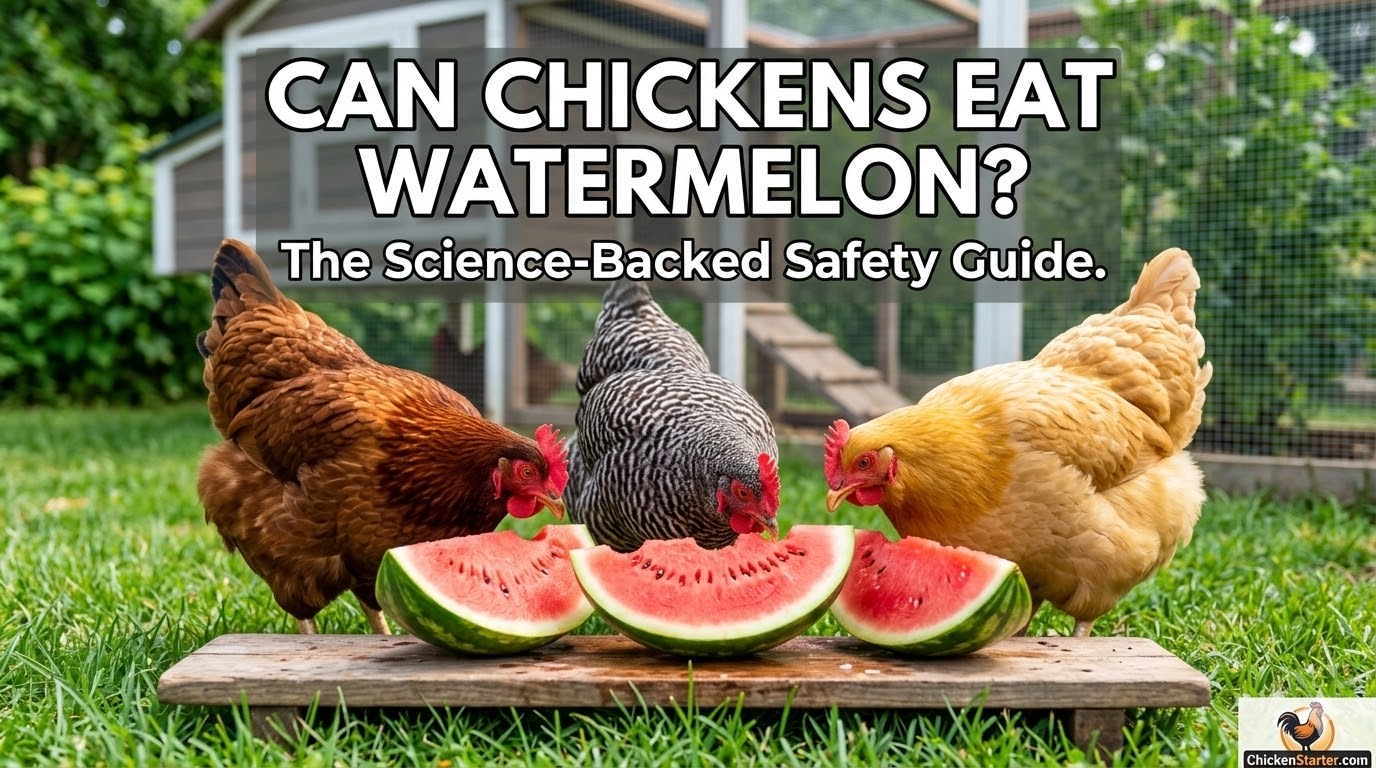
Yes, chickens can eat watermelon safely, and it is one of the best treats you can offer your flock. The flesh, seeds, rind, and even the leaves and vines of the watermelon plant (Citrullus lanatus) are all safe for chickens to consume. Watermelon is approximately 92% water, making it one of the most hydrating treats available. What most articles miss is that the rind is actually the most nutritious part because it contains higher concentrations of L-citrulline, an amino acid that peer-reviewed research has shown can reduce body temperature in heat-stressed chickens. Feed watermelon as an occasional treat, no more than once or twice per week, keeping all treats to a maximum of 10% of your flock’s daily diet.
The first time I halved a watermelon and dropped it into the run on a 98 degree afternoon in July, I genuinely thought my chickens had lost their minds. Every single hen sprinted toward that melon like it was the last food on earth. Within 20 minutes, they had pecked it down to a thin, translucent shell. The excitement was unreal. But that moment also got me wondering: is watermelon actually good for them, or is it just a sugary snack? I spent weeks researching peer-reviewed poultry science journals, USDA nutritional data, and veterinary sources to find out. What I discovered surprised me, and the science behind watermelon rind in particular changed the way I use this fruit entirely. Whether you keep chickens in Texas, Queensland, Ontario, or anywhere else in the world, this guide covers everything you need to know about feeding watermelon safely.
Disclaimer: This article is for educational purposes only and does not replace professional veterinary advice. Always consult a licensed veterinarian before making significant changes to your flock’s diet or if your birds show signs of illness.
Is Watermelon Safe for Chickens?
Yes, all parts of the watermelon are safe for chickens to eat. According to Purina Animal Nutrition, watermelon is listed among the healthy snacks suitable for chickens when fed in moderation. There is no toxicity concern with any part of the fruit.
Here is what your chickens can safely consume:
- Flesh (red/pink): The sweet, juicy part your chickens will devour first. Rich in lycopene, vitamins, and water.
- Seeds: Safe and not toxic. Chickens often eat the seeds before anything else.
- Rind (white part): Safe and actually the most nutritious part of the watermelon, containing higher concentrations of L-citrulline than the flesh.
- Green outer skin: Technically edible, though very tough. Most chickens will not eat it unless cut into small pieces.
- Leaves and vines: The entire watermelon plant is edible for chickens.
The primary concern with watermelon is not safety. It is the natural sugar content. As Purina Animal Nutrition advises, treats should not exceed 10% of a chicken’s daily diet, with the remaining 90% coming from a quality complete feed. For a deeper look at diet fundamentals, see our feeding guide for chickens.
Is Watermelon Good for Chickens? Nutritional Benefits Explained
Hydration: 92% Water Content
According to USDA data and NC State University’s Cooperative Extension, watermelon is almost 92% water, making it one of the single best hydrating treats you can offer your flock. This is particularly valuable during summer heat in Australia, the southern United States, and other warm climates around the world.
Chickens are most comfortable between 45 and 65 degrees Fahrenheit. Above that range, they begin experiencing heat stress. As Chowdhury (2023) explains in Animal Science Journal, chickens are especially prone to heat stress because they do not have sweat glands, their bodies are covered in feathers, and they have a high metabolic rate. Since chickens cannot sweat, they expel heat through their skin and especially through their comb. Mediterranean breeds have large combs specifically for this reason.
A watermelon’s extraordinary water content provides direct hydration, supplementing your flock’s drinking water during the hottest months. For additional summer cooling strategies, see our guide on what to feed chickens during a heatwave.
Vitamins and Minerals
According to USDA FoodData Central, 100 grams of fresh watermelon provides the following nutritional profile:
| Nutrient | Amount per 100g | Benefit for Chickens |
|---|---|---|
| Calories | 30 kcal | Very low-calorie treat |
| Water | Approximately 92% | Exceptional hydration |
| Vitamin A | 569 IU (19% DV) | Eye health, immunity, reproduction |
| Vitamin C | 8.1 mg | Immune system support |
| Potassium | 112 mg | Electrolyte, heart, muscle function |
| Vitamin B6 | 0.045 mg | Energy metabolism |
| Magnesium | 10 mg | Bone health, nutrient uptake |
| Lycopene | Approximately 4,500 mcg (12.7 mg per 2 cups) | Most powerful antioxidant in any fresh fruit |
| L-citrulline | Present (highest in rind) | Body temperature regulation, heat tolerance |
| Natural sugars | Approximately 6% | Reason for strict moderation |
Vitamin A at 569 IU per 100g supports eye health, immunity, and reproduction in poultry. Potassium at 112 mg per 100g serves as an important electrolyte for heart and muscle function, replacing what is lost when chickens pant during hot weather. Vitamin C at 8.1 mg per 100g provides immune support during stressful periods including heat waves, molting, and disease exposure.
Lycopene: More Than Any Other Fruit or Vegetable
This is where watermelon truly stands out. According to the National Watermelon Promotion Board, watermelon contains higher levels of lycopene than any other fresh fruit or vegetable, providing 12.7 mg per 2-cup serving. The Board specifically designates watermelon as a “Lycopene Leader.”
As confirmed by the Mayo Clinic Health System, watermelon has more lycopene than any other fresh fruit or vegetable, and lycopene is an antioxidant linked to decreased risk of cancer, heart disease, and age-related eye disorders in humans. While poultry-specific lycopene research is limited, antioxidants broadly support immune function and cellular protection in chickens as well.
A fully ripe red watermelon contains the highest lycopene levels. As Healthline notes, citing USDA data, watermelon is considered the “best known fresh source of lycopene.”
L-Citrulline: The Hidden Benefit Most Articles Miss
This section is the reason watermelon is not just another treat. It is potentially one of the most functional treats you can offer your flock during summer, and here is the peer-reviewed science to back it up.
L-citrulline (L-Cit) is a non-protein amino acid first isolated from watermelon. As reported in the Journal of Poultry Science by Nguyen et al. (2019), watermelon rind, an agricultural waste product, contains more L-citrulline than the flesh of the fruit. This means the part most people throw away is actually the most valuable part for your chickens.
Why does this matter? Because multiple peer-reviewed studies have demonstrated that L-citrulline can lower body temperature in chickens:
- Chowdhury et al. (2017), published in the Journal of Thermal Biology, found that oral administration of L-citrulline can lower the body temperature of chicks and impart them with thermotolerance.
- Nguyen et al. (2019), published in the Journal of Poultry Science, demonstrated that a dried watermelon rind mash diet significantly increased plasma L-citrulline in chicks, suggesting that watermelon rind could be used as a natural source of L-citrulline to help manage heat stress.
- Chowdhury (2023), in a review published in Animal Science Journal, confirmed that L-citrulline can reduce body temperature in chickens and that orally administered L-citrulline solution provides heat tolerance.
The practical takeaway is simple: do not throw the rind away. The white rind between the green skin and the pink flesh is the richest part of the watermelon in L-citrulline. During hot summer months, offering rind pieces to your flock provides a natural source of an amino acid that real science has shown helps chickens cope with heat.
Mental Stimulation and Flock Enrichment
Beyond nutrition, a halved watermelon in the run provides hours of entertainment and mental stimulation. Chickens are intelligent, curious birds that benefit from varied enrichment activities, and watermelon encourages natural pecking and foraging behavior.
Drop half a watermelon into the run and watch your flock gather around it, pecking collaboratively and competing for the sweetest bites. This reduces boredom in confined flocks and can help minimize behavioral problems like feather picking. Watermelon is also an excellent hand-taming treat for shy birds because of its irresistible sweetness. For more enrichment ideas, see our guide on how to encourage natural foraging in chickens.
Can Chickens Eat Watermelon Rind? (The Most Nutritious Part)
Yes, and you should actively encourage your flock to eat it. As confirmed by the peer-reviewed research from Nguyen et al. (2019), watermelon rind contains more L-citrulline than the flesh. This makes the rind the most functionally beneficial part of the watermelon for poultry, particularly during heat stress seasons.
Most chickens naturally prefer the sweet, juicy flesh. Some will peck the rind clean on their own, while others will ignore it entirely once the pink flesh is gone. To help your chickens eat more rind:
- Cut the rind into small, manageable pieces rather than leaving it as a large bowl shape
- Blend rind pieces into a “watermelon soup” with the flesh for easier consumption
- Scrape remaining flesh onto the rind surface to make it more appealing
Always wash the rind thoroughly before serving, especially with store-bought watermelons. Pesticide residue concentrates on the outer surface. Organic watermelons are preferred when feeding rind and skin to your flock.
Can Chickens Eat Watermelon Skin (Green Outer Layer)?
The green outer skin is technically edible. The entire watermelon plant is safe for chickens. However, the green skin is very tough and most chickens will not eat it unless cut into very small pieces. If you do offer the green skin, wash it thoroughly since this is where the highest concentration of pesticide residue sits.
Can Chickens Eat Watermelon Seeds?
Yes, watermelon seeds are safe for chickens and most birds love them. Seeds contain protein and vitamins, and chickens frequently eat the seeds before they finish the flesh. The seeds pass through the chicken’s gizzard, where they are ground up for digestion, just as nature intended for this omnivorous bird.
For very small breeds like Silkies, Polish, and bantam varieties, seedless watermelon is a safer option. Large seeds can pose a mild choking concern for small birds, though standard-sized breeds handle them without any issues.
Important myth-bust: You may read online that watermelon seeds act as a “natural dewormer” for chickens. There is no scientific evidence supporting this claim. Watermelon seeds do not contain any known anti-parasitic compounds. If your flock needs deworming, use proven methods recommended by your veterinarian. For evidence-based deworming guidance, see our guide on treating internal parasites and worms in chickens.
Can Chickens Eat Watermelon Leaves and Vines?
Yes, the entire watermelon plant is edible for chickens. After harvest, you can let your flock into the garden to eat the remaining stalks, leaves, and vine material. This is a great way to clear your watermelon patch while giving your birds additional foraging material.
Two rules apply here. First, ensure no pesticides, herbicides, or chemical treatments have been applied to the plants. Second, if you are still growing watermelons, protect the plants from your flock. Chickens will eat the vines and leaves before the fruit has a chance to develop, destroying your harvest.
How Much Watermelon Can Chickens Eat?
The 90/10 Rule
According to Purina Animal Nutrition, 90% of a laying hen’s diet should come from a complete commercial feed, with the remaining 10% available for treats including watermelon. Purina specifically states that laying hens eat approximately 0.25 pounds of complete feed daily and that treats should not exceed about 2 tablespoons per bird per day.
Watermelon is a supplement. It does not replace balanced layer feed containing 16% to 18% protein. Quality commercial rations are specifically formulated with the protein, calcium, and other nutrients your hens need for strong eggshells, healthy feathering, and sustained production. For more on feeding schedules, see our best feeding schedule for backyard chickens.
Serving Size by Flock
| Bird Type | Preparation | Amount | Frequency |
|---|---|---|---|
| Standard breed adults | Halved watermelon or chunks | 2 to 3 tablespoons per bird | 1 to 2 times per week |
| Small breeds (Silkie, Polish) | Smaller pieces, seedless preferred | 1 to 2 tablespoons per bird | 1 to 2 times per week |
| Bantam breeds | Small pieces, seedless | 1 tablespoon per bird | 1 time per week |
| Baby chicks (3 to 6 weeks) | Very small soft flesh pieces only | A few tiny pieces | Occasionally |
| Baby chicks (under 3 weeks) | Do not feed | N/A | N/A |
| Flock of 5 hens | Halved small watermelon | Approximately 1 cup every few days | 2 to 3 times per week max |
How Often: Can Chickens Eat Watermelon Every Day?
No, watermelon should not be a daily treat. The natural sugars, while not dangerous in moderation, can cause digestive issues and nutritional imbalances when fed too frequently. Once or twice per week is ideal. Rotate watermelon with other healthy treats to provide variety and a broader range of nutrients.
Signs of Too Much Watermelon
Watch for these warning signs if you suspect overfeeding:
- Diarrhea or loose, watery droppings (the most common sign, caused by the high water content)
- Decreased appetite for regular feed
- Weight gain over time from excess sugar
- Potential sour crop from excess sugar and moisture fermenting in the crop
If digestive symptoms persist beyond 24 hours, reduce or eliminate watermelon temporarily and consult your veterinarian. For digestive health guidance, see our article on chicken diarrhea and health problems.
Can Baby Chicks Eat Watermelon?
In small amounts, watermelon is safe for baby chicks once they are eating well and have established good appetite for their starter feed. Research cited in poultry literature found no negative effects when chicks up to six weeks old were fed watermelon flesh and seeds in appropriate amounts.
Guidelines for feeding watermelon to baby chicks:
- Chicks under 3 weeks old should not be given watermelon or any treats. Starter feed should be their only food.
- After 3 to 6 weeks, you can introduce very small, soft pieces of ripe flesh only.
- Start with just 1 to 2 tiny pieces and monitor their droppings for any changes.
- Chick grit must be available whenever chicks are eating anything other than commercial feed, since grit is necessary for proper food grinding in the gizzard.
- Do not feed rind to baby chicks. It is too tough for their developing digestive systems to process.
- Chick starter feed must remain the primary food source. Watermelon is only a supplemental treat.
For more on caring for young birds, see our guide on bringing chicks home: 15 must-haves.
Watermelon Varieties: Red vs Yellow vs Seedless
Red Watermelon
Red watermelon is the most common variety and the best overall choice for chickens due to its high lycopene content. As confirmed by the National Watermelon Promotion Board, red-fleshed watermelon delivers 12.7 mg of lycopene per 2-cup serving, more than any other fresh fruit or vegetable.
Yellow Watermelon
Yellow watermelon varieties are safe for chickens and offer a different nutritional advantage. Yellow-fleshed watermelons contain higher levels of beta-carotene than red varieties. When chickens eat yellow watermelon, the beta-carotene converts to Vitamin A in their bodies, supporting eye health, growth, and reproduction. If you grow yellow varieties in your garden, feel confident offering them to your flock.
Seedless Watermelon
Seedless watermelons are the safest option for small breeds and baby chicks since there is no seed-related choking concern. They are slightly less nutritious than seeded varieties (missing the seed protein), but the difference is minimal and not a practical concern.
Cantaloupe and Other Melons
All melons are safe for chickens, including cantaloupe and honeydew. They belong to the same cucurbit family as watermelon and provide similar hydrating benefits. The same moderation rules apply to all melon varieties.
Why Watermelon Is the Best Summer Treat for Chickens
Heat Stress in Chickens: A Serious Concern
Heat stress kills more backyard chickens than most keepers realize. As Chowdhury (2023) explains in Animal Science Journal, chickens are very sensitive to high ambient temperatures because they lack sweat glands, their feathered bodies trap heat, and they have naturally high metabolic rates.
Signs of heat stress in chickens include: panting with an open beak, lethargy and reduced activity, pale or discolored combs, wings held away from the body, and decreased egg production. For breed-specific heat management, see our guide on best heat-tolerant chicken breeds.
How Watermelon Helps Fight Heat Stress
Watermelon combats heat stress through multiple mechanisms simultaneously:
- 92% water content provides direct hydration
- L-citrulline in the rind has been scientifically demonstrated to lower body temperature in poultry (Chowdhury et al., 2017; Nguyen et al., 2019)
- Cold or frozen watermelon delivers a physical cooling effect
- Potassium (112 mg per 100g) replaces electrolytes lost through panting
No other single treat addresses heat stress from as many angles as watermelon does.
Frozen Watermelon Treats (Cooling Ideas)
Take watermelon’s cooling power even further with these preparation methods:
Frozen watermelon cubes: Cut flesh into cubes, freeze on a sheet tray, and scatter in the run during peak heat. Chickens will peck at the icy chunks as they thaw.
Watermelon ice blocks: Blend watermelon flesh (including some rind for extra L-citrulline), pour into a container, and freeze solid. Set the block in the run for hours of cooling entertainment.
Watermelon and mint soup: Blend watermelon flesh with ice and a handful of fresh mint leaves. Serve in a watermelon rind bowl. Mint has natural cooling properties and most chickens enjoy it.
Enrichment bowls: Fill a hollowed watermelon rind with frozen fruit pieces and a few mealworms. Your flock will work to get the frozen treats out, combining hydration, nutrition, and mental stimulation.
For Australian flock owners dealing with extreme heat, see our dedicated guide on keeping chickens cool in summer in Australia.
How to Safely Feed Watermelon to Chickens
Step 1: Wash Thoroughly
Wash the entire watermelon under running water before cutting, paying attention to the rind surface. Store-bought watermelons can carry pesticide residue, and this residue concentrates on the outer skin. Organic watermelon is preferred when you plan to feed the rind, though thorough washing of conventional watermelon is acceptable.
Step 2: Cut or Serve Whole
The simplest method: halve the watermelon and set it flesh-side up in the run. Your chickens will peck out the flesh and seeds themselves. For smaller flocks, cut the melon into manageable chunks. For baby chicks, offer only very small, soft pieces of ripe flesh.
Step 3: Serve Separately From Feed
Do not mix watermelon into commercial feed. The moisture from watermelon will cause dry feed to spoil and develop mold rapidly. Always serve watermelon in a separate area of the run, away from feeders and waterers.
Step 4: Clean Up Leftovers
Remove uneaten watermelon within a few hours, especially in warm weather. Watermelon spoils quickly in heat, and leftover pieces will attract flies, ants, rats, raccoons, and other pests. Fermented watermelon can make chickens sick, and mold produces mycotoxins that are genuinely toxic to poultry. For pest management, see our guide on how to keep rats out of the chicken coop.
What NOT to Feed
- No salted watermelon: Salt is harmful to chickens in excess
- No pickled watermelon rind: Contains salt, vinegar, and spices that are inappropriate for poultry
- No moldy or rotten watermelon: Mold produces mycotoxins that are toxic to chickens
- No fermented watermelon: Alcohol content poses a real risk
- No store-bought watermelon juice: Concentrated sugar with zero added benefit over fresh fruit
Does Watermelon Affect Egg Production?
Watermelon alone will not directly reduce egg production. The vitamins, antioxidants, and hydration in watermelon actually support overall hen health, which in turn supports consistent laying. Keeping hens hydrated during summer heat directly helps maintain egg production since dehydration is one of the fastest ways to cause a laying slowdown.
However, the indirect risk is real. If treat feeding becomes excessive and replaces protein-rich layer feed in your hens’ diet, egg production will decline. Protein is the primary driver of egg production, and layer feed provides 16% to 18% protein specifically designed to support daily laying. When chickens fill up on sugary, low-protein treats, they eat less of their nutrient-dense feed.
The solution is simple: stick to the 90/10 rule. If watermelon and other treats remain at 10% or less of total diet, your egg numbers will stay on track. The bigger threat to summer egg production is actually heat stress itself, not watermelon. For more on egg production, see our guide on best chicken treats that boost egg laying.
Other Safe Summer Treats for Chickens
| Treat | Hydration | Nutrition | Cooling Effect | Overall Summer Score |
|---|---|---|---|---|
| Watermelon | Excellent | Very Good | Excellent | Best summer treat |
| Cucumber | Excellent | Moderate | Very Good | Excellent |
| Frozen berries | Good | Very Good | Very Good | Very Good |
| Cantaloupe | Very Good | Good | Very Good | Very Good |
| Ice water | Excellent | Minimal | Excellent | Essential baseline |
Other safe fruits and vegetables to rotate with watermelon include cucumbers (hydrating, low calorie), blueberries (antioxidant-rich), strawberries (vitamin C), and bananas (potassium). For more details, see our guides on can chickens eat tomatoes, can chickens eat bananas and peels, and can chickens eat pumpkins. You can also explore the full list in our guide on what can chickens eat from your kitchen.
Foods Chickens Should NEVER Eat
While chickens are hardy omnivores that eat almost anything, certain foods are genuinely dangerous:
| Treat | Safe? | Notes |
|---|---|---|
| Watermelon | Yes, in moderation | Best summer treat |
| Cucumber | Yes | Hydrating, low calorie |
| Blueberries | Yes | Antioxidant-rich |
| Strawberries | Yes | Vitamin C |
| Grapes | Yes, in moderation | Cut for small breeds |
| Cantaloupe | Yes | All melons safe |
| Tomatoes (ripe only) | Yes | NOT leaves or stems |
| Pumpkin | Yes | Vitamins, fiber |
| Avocado skin/pit | No | Persin toxin, toxic to chickens |
| Rhubarb | No | Oxalic acid, toxic |
| Green potato/potato eyes | No | Solanine, toxic |
| Raw dried beans | No | Phytohemagglutinin |
| Chocolate/candy | No | Theobromine and caffeine |
| Citrus (excess) | Small amounts only | Can cause digestive upset |
| Moldy anything | Never | Mycotoxins |
According to Purina Animal Nutrition, avocado pits and skins are toxic to chickens as they contain a toxin called persin. The same source notes that undercooked or dried beans can be harmful because they contain hemagglutinin, which can inhibit digestion. For the full overview, see our guide on what do chickens eat and our article on lettuce for chickens.
Frequently Asked Questions
Can chickens eat watermelon every day?
No, watermelon should not be a daily treat. The natural sugar content makes daily feeding inappropriate, and the high water content can cause loose droppings when overfed. Limit watermelon to once or twice per week as part of the 10% treat allowance in your flock’s diet.
Is watermelon rind safe for chickens?
Yes, and the rind is actually the most nutritious part. According to Nguyen et al. (2019) in the Journal of Poultry Science, watermelon rind contains more L-citrulline than the flesh. L-citrulline has been shown in peer-reviewed research to reduce body temperature in heat-stressed chickens.
Can chickens eat watermelon seeds?
Yes, watermelon seeds are safe and most chickens love them. Seeds contain protein and vitamins. For very small breeds like Silkies and bantams, seedless watermelon is a safer choice. Large seeds can pose a mild choking concern for tiny birds.
Can baby chicks eat watermelon?
Baby chicks can eat very small, soft pieces of watermelon flesh after 3 to 6 weeks of age, once they are eating starter feed well. Do not give watermelon to chicks under 3 weeks old. Always ensure chick grit is available when feeding any treats, and never feed rind to baby chicks.
Does watermelon give chickens diarrhea?
Watermelon can cause loose droppings if overfed, due to its 92% water content. This is the most common side effect of giving too much watermelon at once. Reduce portions or frequency if you notice persistently watery droppings.
Can chickens eat the whole watermelon plant?
Yes, the entire watermelon plant is edible for chickens, including leaves, vines, stalks, and fruit. Ensure no pesticides or herbicides have been applied to the plants before allowing your flock access.
Are watermelon seeds a natural dewormer for chickens?
No. There is no scientific evidence that watermelon seeds act as a natural dewormer. Watermelon seeds do not contain any known anti-parasitic compounds. Use proven, veterinary-recommended deworming methods for your flock.
Is yellow watermelon safe for chickens?
Yes, yellow watermelon is safe and offers higher levels of beta-carotene than red varieties. Beta-carotene converts to Vitamin A in chickens’ bodies, supporting eye health, growth, and reproduction.
How do I keep my chickens cool in summer?
Watermelon is one of the best summer cooling treats. Freeze cubes for extra cooling effect, ensure constant access to fresh water, provide shade in the run, use misters or fans, and consider frozen treat blocks. For full summer management, see our guide on keeping chickens cool in hot, humid climates.
Does watermelon affect egg production?
Watermelon fed in moderation within the 90/10 rule will not impact egg production. The vitamins and hydration actually support laying health. However, if treats replace too much protein-rich feed, egg numbers may decline. Keep treats at 10% or less and your eggs will keep coming.
Next time you cut into a watermelon this summer, save every part of it for your flock. The flesh for hydration and lycopene, the rind for L-citrulline and heat stress support, the seeds for protein. Not many treats come backed by peer-reviewed science published in the Journal of Poultry Science and the Journal of Thermal Biology. Watermelon does. Your chickens will thank you with enthusiastic chaos, and on the hottest days, that juicy red fruit might just be the best thing you can offer them.

Oladepo Babatunde is the founder of ChickenStarter.com. He is a backyard chicken keeper and educator who specializes in helping beginners raise healthy flocks, particularly in warm climates. His expertise comes from years of hands-on experience building coops, treating common chicken ailments, and solving flock management issues. His own happy hens are a testament to his methods, laying 25-30 eggs weekly.