What to Do When Your Hen Abandons Her Eggs Midway: Saving the Clutch and Understanding Why It Happened

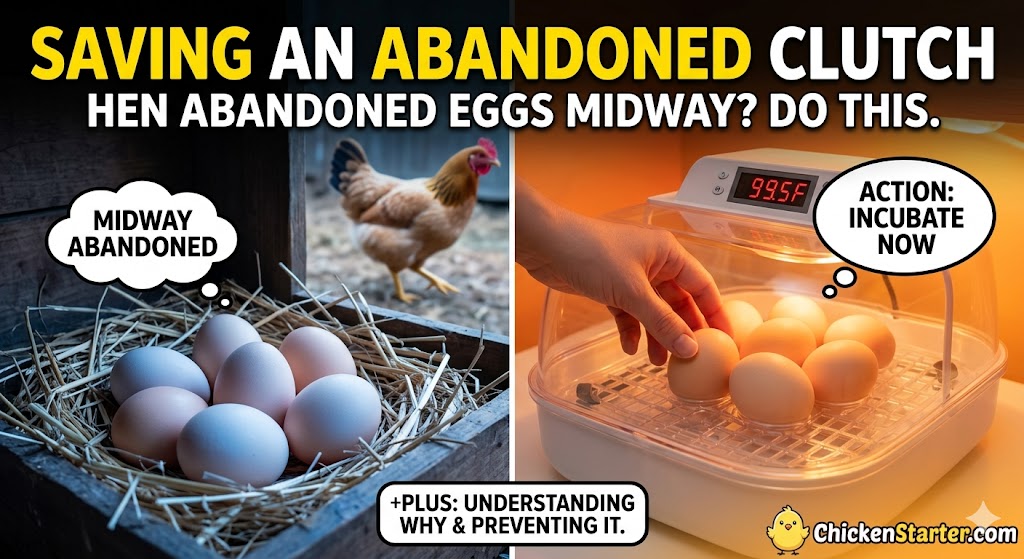
What to Do When Your Hen Abandons Her Eggs Midway: Saving the Clutch and Understanding Why It Happened

When a hen abandons her eggs midway through incubation, your first move matters enormously. The eggs need to get back up to temperature as quickly as possible, ideally within two hours of abandonment. Your options are an incubator, a second broody hen who can take over the clutch, or in some cases a careful assessment that … Read more

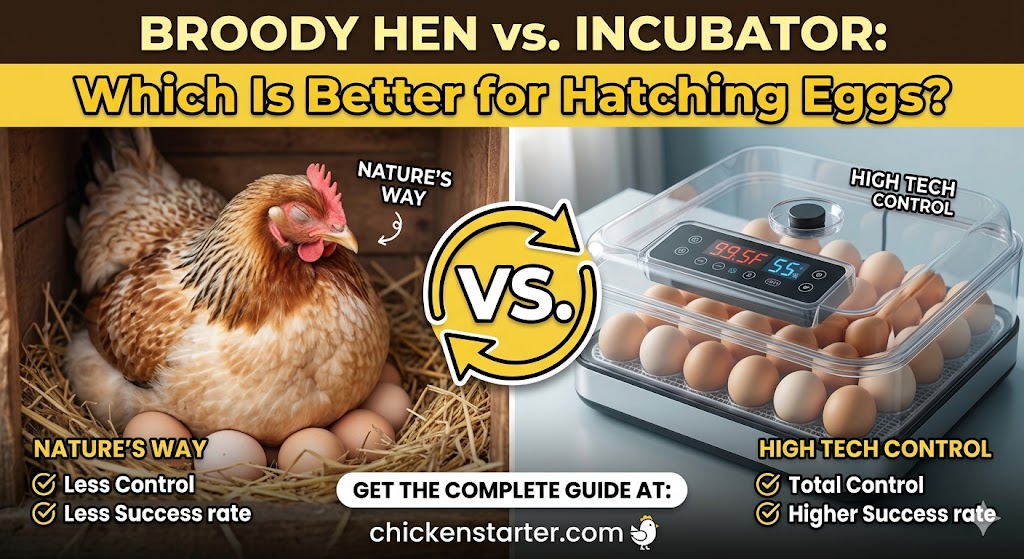
Broody Hen vs. Incubator: Which Is Better for Hatching Eggs?

Broody Hen vs. Incubator: Which Is Better for Hatching Eggs?

When it comes to broody hen vs. incubator hatching, the honest answer is that neither is universally better. A broody hen handles temperature, humidity, and egg turning automatically while also raising the chicks herself, eliminating the need for a brooder entirely. An incubator gives you complete control, works year-round regardless of whether any hen feels like … Read more

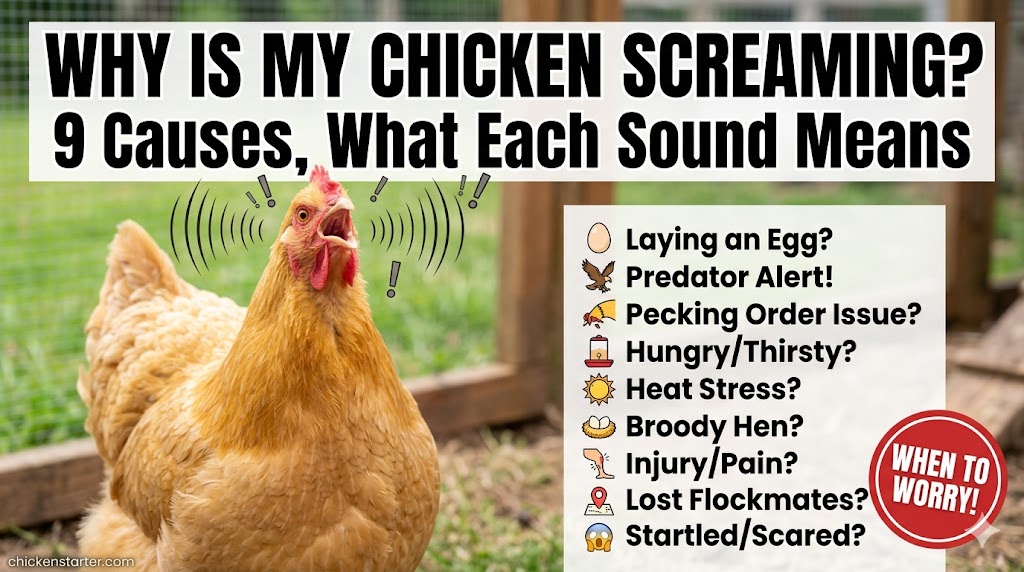
Why Is My Chicken Screaming? 9 Causes, What Each Sound Means and When to Worry

Why Is My Chicken Screaming? 9 Causes, What Each Sound Means and When to Worry

If your chicken is screaming, it is trying to tell you something specific. Chickens do not scream randomly. According to research published in the journal Animal Behaviour, chickens produce over 30 distinct vocalizations, each serving a specific communication purpose. A sudden, loud, high-pitched scream almost always falls into one of nine categories: the egg song, a predator alarm call, pain or … Read more

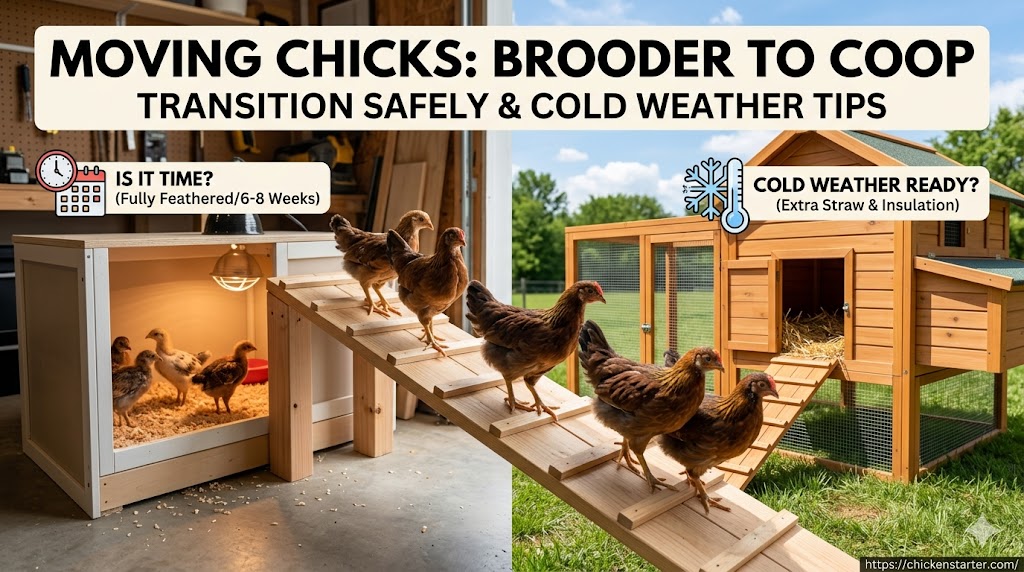
Moving Chicks from Brooder to Coop: When They Are Ready, How to Transition Safely and What to Do in Cold Weather

Moving Chicks from Brooder to Coop: When They Are Ready, How to Transition Safely and What to Do in Cold Weather

Moving chicks from brooder to coop is one of the most nerve-wracking milestones for any chicken keeper, but here is the honest truth: if your chicks are fully feathered and outdoor overnight temperatures are consistently above 50°F, they are ready. That typically happens at 6 to 8 weeks of age for most breeds. The actual feathering matters more than any number … Read more

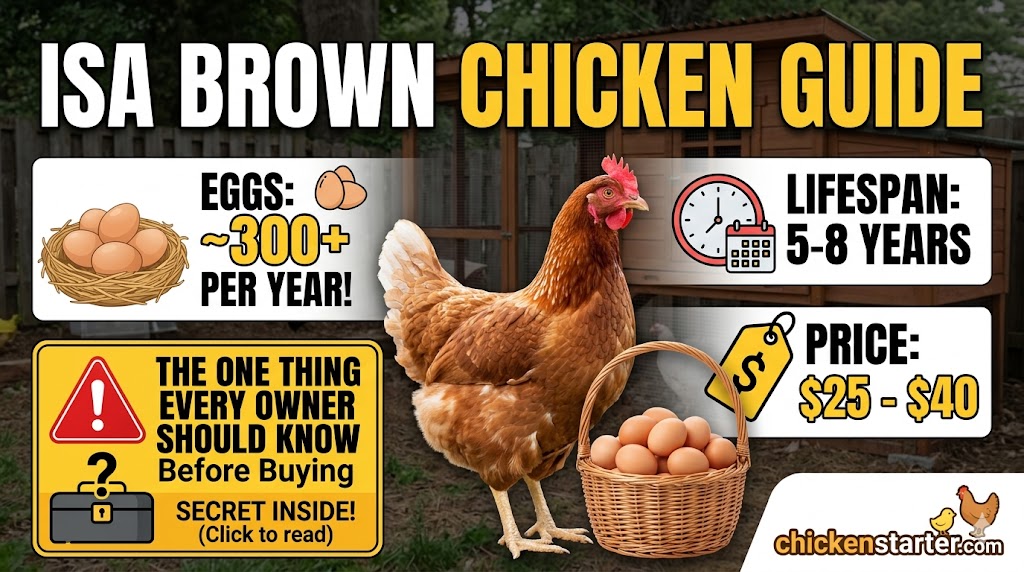
ISA Brown Chicken Guide: Eggs, Lifespan, Price and the One Thing Every Owner Should Know Before Buying

ISA Brown Chicken Guide: Eggs, Lifespan, Price and the One Thing Every Owner Should Know Before Buying

The ISA Brown chicken is the most prolific brown egg layer on the planet. Developed in France in 1978 by the Institut de Sélection Animale (that is what ISA stands for), this hybrid hen produces 300 to 350 large brown eggs per year in her first laying cycle, starts laying as early as 16 to 20 weeks of age, and has a … Read more

How to Set Up a Brooder for New Chicks: Complete Guide With Size Calculator, Temperature Chart and 10 Deadly Mistakes to Avoid

How to Set Up a Brooder for New Chicks: Complete Guide With Size Calculator, Temperature Chart and 10 Deadly Mistakes to Avoid

Setting up a brooder for new chicks requires seven things done right: a draft-free enclosure, a safe heat source starting at 95°F, absorbent bedding like pine shavings (never newspaper), a chick waterer with drowning prevention, starter feed with 18 to 20 percent protein, a thermometer at chick level, and a secure lid. Get any one of … Read more

Rhode Island Red vs Buff Orpington: Eggs, Temperament, Size & Which One Wins (Honest Head-to-Head Comparison)

Rhode Island Red vs Buff Orpington: Eggs, Temperament, Size & Which One Wins (Honest Head-to-Head Comparison)

The Rhode Island Red vs Buff Orpington comparison comes down to what you actually need from your flock. Rhode Island Reds lay more eggs, with production strains reaching 250 to 300 per year, and they are more independent, better foragers, and more heat tolerant. Buff Orpingtons are friendlier, better with children, heavier for meat at 8 to 10 lbs, and more cold … Read more