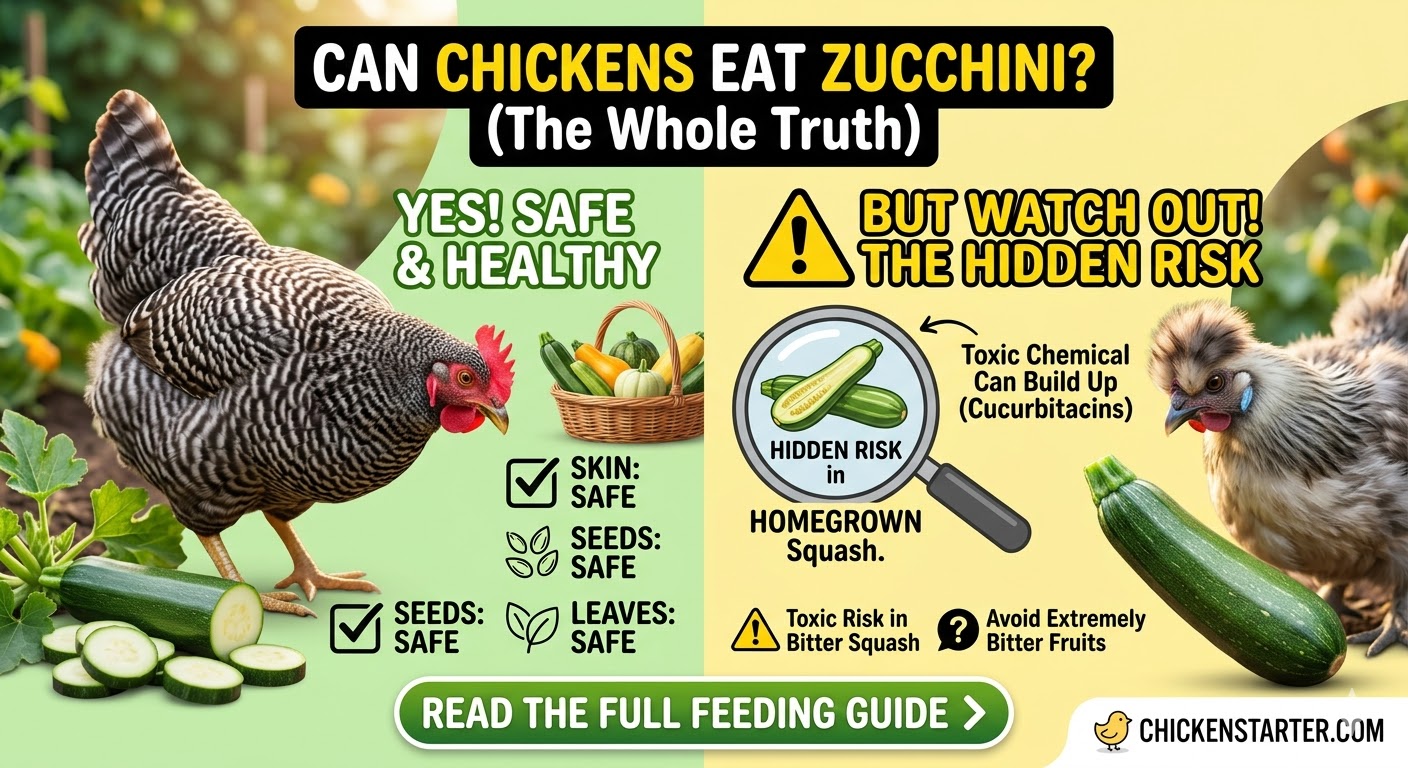
Yes, chickens can safely eat zucchini, including the flesh, seeds, skin, and flowers. With its 95% water content and just 17 calories per 100 grams, zucchini is one of the best summer treats you can offer your flock.
Every summer my garden produces more zucchini than my family could ever eat. Splitting the oversized ones in half and tossing them in the run has become a flock tradition. My Buff Orpingtons will demolish a 12-inch zucchini in under 20 minutes, scooping out the seeds first like it is some kind of chicken delicacy.
But there is one hidden danger with homegrown zucchini that most chicken blogs never mention. And if you grow your own or save seeds, this is something you absolutely need to know before feeding it to your birds.
Quick Answer: Chickens can safely eat all parts of zucchini: flesh, seeds, skin, and flowers, raw or cooked. Zucchini is 95% water, extremely low in calories (17 per 100g), and rich in vitamins A, C, and K plus potassium. Feed raw, sliced in half lengthwise, two to three times per week. One caution: Homegrown zucchini can occasionally contain toxic cucurbitacins from cross-pollination or plant stress. Always taste-test homegrown zucchini before feeding. If it tastes bitter, throw it away immediately. Store-bought zucchini is virtually always safe.
Why Zucchini Is One of the Best Summer Treats for Chickens
Most chicken blogs say zucchini is “nutritious” and leave it at that. Here are the actual numbers from USDA FoodData Central.
Per 100 grams of raw zucchini with skin: approximately 17 calories, 3.11g carbohydrate, 1.21g protein, 0.32g fat, and 1.0g dietary fiber. It provides about 200 IU of vitamin A, 17.9mg of vitamin C, 261mg of potassium, 24 micrograms of folate, and 0.177mg of manganese.
But the standout nutrients for chickens are the antioxidant carotenoids. According to Healthline, zucchini is rich in the antioxidants lutein and zeaxanthin, as well as beta-carotene. As noted by WebMD, the skin of zucchini contains most of these nutrients, particularly vitamins C and B6. Golden and yellow zucchini varieties tend to contain slightly higher levels of these beneficial compounds than light green ones.
Why This Matters for Your Flock
Hydration champion. At 94 to 95% water, zucchini is essentially an edible water source. During heat waves when chickens reduce their water intake, chilled zucchini halves provide critical fluid. The biggest benefit I have noticed from feeding zucchini is hydration. During a July heat wave when temps hit 98°F, my hens’ voluntary water consumption dropped but they went crazy for cold zucchini halves. I noticed fewer signs of heat stress compared to previous summers.
Ultra-low calorie. At just 17 calories per 100 grams, zucchini is in the top 2% of lowest-calorie foods. Your chickens can eat relatively generous portions without any weight gain risk, making it one of the most guilt-free treats available.
Egg yolk color boost. The lutein and zeaxanthin content in zucchini, and especially in the flowers, contributes to richer, more vibrant yolk pigmentation. The yellow color in zucchini blossoms helps deepen the golden orange of your egg yolks naturally.
Vitamin C under heat stress. Chickens normally synthesize their own vitamin C internally. However, under heat stress, their production decreases. The 17.9mg of vitamin C per 100 grams of zucchini provides a helpful supplemental boost during hot summer months.
For more treat ideas that support production, see our guide to treats that boost egg laying.
Can Chickens Eat Zucchini Raw?
Yes, and raw is actually the best way to serve zucchini to chickens. Unlike mushrooms or sweet potatoes where cooking is recommended, zucchini is one of the few vegetables where raw genuinely wins.
Why Raw Is Best for Chickens
Zucchini is already naturally soft, moist, and easy for chickens to peck apart. There is simply no need to cook it. Raw zucchini maintains the best nutritional profile, retaining full vitamin C and antioxidant content that cooking would deplete.
The 95% water content makes it naturally hydrating straight from the garden or fridge. My flock prefers raw zucchini every single time. I slice it lengthwise and set the halves in the run, cut-side up. Within minutes, they have pecked out every seed and most of the flesh, leaving just the shell of the skin like little green canoes.
When Cooking Makes Sense
Cooked zucchini is still entirely safe. Cooking changes the taste, usually for the better, which can convince picky birds to start eating it. It also softens the skin of overgrown or older zucchini with tough rinds.
If you do cook zucchini for your chickens, boil or steam it plain. No oil, no butter, no salt, no seasoning of any kind.
What Never to Feed
Never feed your flock zucchini that has been prepared with harmful ingredients. No fried zucchini. No zucchini bread (processed, full of sugar and flour). No seasoned or sautéed zucchini from your dinner leftovers. And never give chickens fried zucchini flowers, even though frying the blossoms is popular in Italian and other cuisines. The oil and batter are not appropriate for poultry.
How to Prepare and Cut Zucchini for Chickens
Here are five serving methods, ranked from easiest to most creative.
Method 1: The Split in Half (Recommended)
The best and simplest approach: cut the zucchini in half lengthwise and place it cut-side up in the run. The exposed flesh and seeds give your chickens easy access, and they will go straight for the seed cavity first. This works perfectly for medium to large zucchini.
Method 2: The Hanging Enrichment
Thread a string or zip tie through a whole zucchini and hang it at chest height in the run. This provides both nutrition and enrichment. It combats boredom, reduces pecking-order aggression by giving everyone something to focus on, and keeps the birds active. Best for oversized zucchini with tougher skin. For more enrichment ideas, check our DIY chicken treat dispenser guide.
Method 3: Dice and Scatter
Cut into half-inch cubes and scatter across the run for foraging enrichment. Best for baby or young zucchini that are soft throughout. You can also mix diced zucchini with other safe treats or their regular feed.
Method 4: Grated or Shredded
Grate on a box grater and mix directly into feed. Best for baby chicks (eight weeks and older) and bantam breeds like Silkies that benefit from smaller, softer pieces.
Method 5: Frozen Zucchini Pops (Summer Heat Hack)
Slice zucchini into thick rounds, freeze overnight, and scatter in the run during heat waves. The frozen rounds act as edible cooling toys. They take much longer to eat and provide cold hydration. During last July’s heat wave, I froze zucchini rounds and my hens spent 45 minutes pecking at them. That is much better than the five minutes it normally takes them to demolish fresh halves.
Can Chickens Eat Zucchini Seeds?
Yes, zucchini seeds are completely safe and are typically your chickens’ favorite part. There is nothing harmful in zucchini seeds. They provide protein, healthy fats, and minerals, making them a genuinely nutritious component of the treat. My hens will happily spend their time scooping seeds out of the center before touching the flesh.
One practical note: keep an eye on very small or young birds to make sure they do not choke on large seeds from overgrown zucchini. For standard-sized birds, this is not a concern.
Is Zucchini a Natural Dewormer for Chickens? What the Science Actually Says
This claim circulates endlessly across chicken-keeping blogs and Facebook groups. Some sites state confidently that zucchini seeds “deworm your chickens” because they contain cucurbitacin, which they describe as “an amino acid that is toxic to intestinal worms.” This statement contains multiple errors.
First, cucurbitacin is not an amino acid. It is a triterpene toxin, as described by researchers and documented on Wikipedia’s cucurbitacin page. The compound actually believed to have antiparasitic properties is cucurbitin, a completely different substance. It is an unusual amino acid found in cucurbit seeds. Many articles confuse the two.
Second, the evidence does not support the claim for chickens specifically. As The Chicken Chick, one of the most respected voices in backyard poultry, states plainly: there is no evidence that pumpkin or pumpkin seeds act as a general dewormer in chickens.
Research from Dr. Ruediger Hauck at Auburn University, published in Chicken Whisperer Magazine, directly tested powdered pumpkin seed in laying hen diets and found no significant deworming effect. A 2023 study published on PubMed Central that tested pumpkin seeds at 10 grams per bird per day in Ascaridia galli infected laying hens found that pumpkin improved feed conversion but revealed no evidence of anthelmintic effects on worm counts or fecal egg output.
As the Australian poultry resource Dine-A-Chook summarizes after reviewing all available research: chickens would have to eat an enormous amount of whole seeds to consume a concentration of compounds comparable to what is used in laboratory extracts. And most studies that show pumpkin seed killing worms were done in petri dishes, which is an entirely different environment from a chicken’s digestive tract.
My honest take: Zucchini seeds may offer some mild, unproven benefit. But the scientific evidence is not strong enough to rely on them as a dewormer. Enjoy them as a healthy, safe treat your chickens love. If you suspect worms, get a fecal float test from your vet and use a proven dewormer like fenbendazole. Do not gamble your flock’s health on an unproven folk remedy. For proper parasite management, see our guide to treating internal parasites in chickens.
Can Chickens Eat Zucchini Skin?
Yes, zucchini skin is non-toxic and actually contains the highest concentration of antioxidants, vitamins C and B6, and beneficial compounds in the entire fruit. According to information from Healthline, research indicates that the skin harbors the highest levels of antioxidants in the plant.
That said, most chickens are not particularly interested in the skin. In my experience, the skin is a non-issue. My chickens eat right past it. They scoop out the flesh and seeds and leave the skin behind like a hollowed-out boat. I just pick up the empty shells and compost them.
Young, store-bought zucchini (six to eight inches long) has thin, soft skin that chickens can easily peck through. Overgrown garden zucchini (12 inches or longer) develops a woody, tough rind that chickens will simply ignore. Think of it as a natural bowl that holds the good stuff inside.
One practical caution: if you peel zucchini for your family and want to give the peels to your flock, avoid long, thin strips. Like grass, long thin strips can get tangled and stuck in a chicken’s crop. Dice the peels into small pieces instead.
Can Chickens Eat Zucchini Leaves and Stems? The Biggest Debate in Chicken Feeding
This is where online sources directly contradict each other. Some say all parts of the zucchini plant are edible. Others warn that the green parts of cucurbit plants contain toxic compounds. Both statements contain truth, which is why this topic requires careful, nuanced treatment.
The Cucurbitacin Factor
Zucchini leaves, stems, and other green parts of the plant contain cucurbitacins, a class of biochemical compounds that function as a natural defense against herbivores. As documented by the Pacific Northwest Pest Management Handbooks, these compounds occur in a subset of species in the cucurbit plant family and are usually found at highest concentrations in the roots and vegetative parts.
The concern for chickens specifically is this: chickens have approximately 350 taste buds compared to a human’s roughly 10,000. Humans can detect the bitter taste of cucurbitacins and stop eating. Chickens may not detect that bitterness and could continue eating beyond a safe amount.
The Balanced Recommendation
Zucchini leaves in small amounts from healthy, well-maintained garden plants are unlikely to cause harm. If your chickens free-range near your zucchini patch and nibble the occasional leaf, there is no reason to panic.
However, deliberately feeding large quantities of zucchini leaves or stems is not recommended. The nutritional benefit is minimal compared to the fruit itself, and the cucurbitacin risk, however small, is unnecessary when the flesh, seeds, and flowers are available.
Stems are tougher and more fibrous than leaves. Avoid feeding stems, as they can contribute to crop impaction without providing meaningful nutrition.
If any part of the zucchini plant tastes bitter to you, do not feed any of it to your chickens. Bitterness is the hallmark signal of elevated cucurbitacin.
Zucchini Flowers Are Safe and Nutritious
Zucchini blossoms are not only safe for chickens but are genuinely nutritious. They are packed with vitamin C and antioxidants, low in calories, and high in fiber. The yellow pigments in the flowers contain xanthophyll carotenoids that help deepen the golden color of your egg yolks.
Flowers are the safest non-fruit part of the plant, with lower cucurbitacin content than leaves or stems. If you want to feed something beyond the fruit itself, flowers are the way to go.
Bitter Zucchini Can Poison Your Chickens: The Cucurbitacin Risk Every Gardener Must Know
This is the section that almost no other chicken-keeping article covers. And it is the section that could save your flock.
What Are Cucurbitacins?
Cucurbitacins are a diverse family of toxic triterpene compounds produced by plants in the Cucurbitaceae family, which includes zucchini, squash, pumpkins, cucumbers, and gourds. As described by the Pacific Northwest Pest Management Handbooks, modern cultivated varieties of zucchini should generally be free of cucurbitacin in fruit, because humans have bred them to eliminate these extremely bitter compounds over thousands of years of domestication.
But under certain conditions, dangerous levels can return.
When Homegrown Zucchini Becomes Toxic
According to Oregon State University Extension, mild bitterness in zucchini can be caused by environmental stress like high temperatures, drought, wide swings in temperatures, or uneven watering. The stress triggers the plant to produce cucurbitacins as a survival defense.
Cross-pollination is the most significant risk factor. Summer squash, pumpkins, ornamental gourds, and some winter squash all belong to the same species, Cucurbita pepo, and can cross-pollinate freely. If your food-grade zucchini is pollinated by an ornamental gourd or wild cucurbit growing nearby, the resulting seeds can produce plants with dangerously high cucurbitacin levels.
According to the Pacific Northwest Pest Management Handbooks, the occurrence of cucurbitacins was detected in canned zucchini and other squashes, meaning that cooking does not eliminate the danger. Some forms of cucurbitacin are heat-stable.
How Dangerous Is This Really?
A case study reported by Food Safety News described an elderly couple who both ate a maximum of two bites of a dish containing zucchini grown from their home garden. The woman recovered. Her husband died from exhaustion and dehydration less than 24 hours after eating the zucchini. Analysis of the leftover casserole confirmed the presence of cucurbitacin-E, cucurbitacin-E-glucoside, and cucurbitacin-I-glucoside.
A French poison center study documented over 353 cases of toxic squash poisoning between 2012 and 2016. According to information from MedicineNet, about 56% of cases involved store-bought squash, not just homegrown.
As reported by Medical Toxicology, signs of poisoning can appear within 5 to 30 minutes and include severe vomiting and bloody diarrhea.
If this is dangerous for adult humans, imagine the impact on a chicken weighing four to eight pounds.
How to Protect Your Flock
The taste test is your single best defense.
Store-bought zucchini from reputable grocery stores is virtually always safe. Commercial varieties are bred to be cucurbitacin-free, and quality control exists throughout the supply chain.
Homegrown zucchini requires a simple precaution: cut a thin slice and taste a small piece of the raw flesh before feeding it to your chickens. If it tastes normal, it is safe. If it tastes bitter at all, spit it out and throw the entire zucchini away immediately. Do not feed it to your flock. Do not compost it where chickens can access it.
Gardener prevention tips: Obtain seeds from reputable sources. Do not save seeds from plants that may have been cross-pollinated with ornamental gourds. Do not plant ornamental gourds near food-grade zucchini. Water consistently to avoid drought stress. Provide adequate nitrogen but avoid over-application.
Two summers ago, I grew zucchini next to some ornamental gourds. One of the zucchini tasted incredibly bitter when I tried a raw slice. That entire plant’s harvest went straight to the trash. Had I not tasted it first and tossed it to my chickens, the consequences could have been severe.
Can Chickens Eat Yellow Squash and Other Summer Squash?
Yes. All summer squash varieties share the same safety profile as zucchini, and the same cucurbitacin caution applies.
Yellow crookneck squash is safe and follows the same rules. Patty pan squash is safe and its fun shape makes a great enrichment toy for chickens to peck at. Courgette is simply the British, Australian, and New Zealand term for zucchini; they are the same thing. Marrow is an overgrown zucchini with a tough skin; split it open so chickens can access the flesh. Butternut squash (winter squash) is safe but the flesh is harder, so cook it first. Pumpkin is another great safe treat from the same family.
Avoid ornamental gourds. They are not bred for consumption and typically contain high cucurbitacin levels. According to Medical Toxicology, wild cucurbits and ornamental gourds usually contain very high levels of cucurbitacins and are not intended for consumption.
Squash skin is safe if it is soft, as on young fruit. On older or winter squash, the skin becomes too tough for chickens to eat. Squash leaves and stems carry the same cucurbitacin caution as zucchini. Occasional nibbling during free-ranging is unlikely to cause harm, but do not feed large quantities.
Can Chickens Eat Zucchini and Carrots?
Yes, both are perfectly safe and make an excellent combination treat. Zucchini provides hydration plus vitamins A and C. Carrots provide beta-carotene plus fiber. Together they create a colorful, nutrient-diverse snack.
Carrots should be grated, finely chopped, or cooked, since raw whole carrots are too hard for chickens. Zucchini can be served raw.
My flock’s favorite summer treat mix: half a diced raw zucchini, one grated carrot, and a handful of chopped leafy greens, scattered in the run. Total prep time: three minutes. They go absolutely wild for it.
Can Baby Chickens Eat Zucchini?
Not until at least six to eight weeks old. Young chicks need specialized starter feed with precise protein ratios of 18 to 20% for proper growth. Introducing treats too early disrupts the nutritional balance they need during this critical development phase.
Under six weeks: no zucchini. Starter feed only. Six to eight weeks: tiny amounts of grated or mashed zucchini flesh only, no seeds, no skin. Eight weeks and older: small dice of raw zucchini including soft seeds as an occasional treat.
Always provide grit when introducing any food beyond starter feed. And use only store-bought zucchini for chicks. Never use homegrown zucchini for young birds unless you have personally taste-tested it. Baby chicks are far more vulnerable to cucurbitacin toxicity than adult hens due to their tiny body weight.
For everything you need for new chicks, see our 15 must-haves for bringing chicks home.
Can Ducks and Chickens Eat Zucchini Together?
Yes, the same rules apply. Ducks love zucchini and benefit especially from the high water content. One practical difference: ducks have flat bills and handle diced pieces better than pecking at halves. If you keep a mixed flock, offer zucchini both halved (for chickens to peck) and diced (for ducks to scoop).
The same cucurbitacin caution applies to ducks. Taste-test homegrown zucchini before serving to any poultry.
How Much Zucchini Should You Feed Chickens?
Two to three times per week is ideal for most flocks. Because zucchini is 95% water and ultra-low calorie, you can be slightly more generous than with other treats. However, your chickens still need to eat their complete layer feed first for proper protein, calcium, and essential amino acids. Zucchini cannot replace regular feed because it does not contain enough proteins or carbohydrates to sustain a laying hen.
Practical guideline: One medium zucchini (about 200 grams), split in half, comfortably feeds four to six hens as a treat. For a flock of six, half a medium zucchini per session is plenty.
Summer garden surplus: When your garden is overflowing with zucchini, feeding small amounts daily is acceptable given the extremely low calorie content. Just make sure your hens still consume their complete layer feed first.
Seasonal note: I tend to reserve summer squash for the summer months when my garden is producing. During cold winter months, my chickens get winter squash and pumpkin instead. For more on building a complete feeding plan, check out our best feeding schedule for backyard chickens.
Which Vegetables Are Not Good for Chickens?
While zucchini is safe, many common foods are not. Here is a quick reference.
Never feed: Raw or green white potatoes (contain toxic solanine). Avocado flesh, pit, or skin (contains persin, which can cause heart failure). Raw or dried beans (contain phytohemagglutinin). Onions in large amounts (contain thiosulphate, which destroys red blood cells). Chocolate, especially dark varieties (contains theobromine). Rhubarb leaves (contain oxalic acid, which impairs calcium absorption and can cause kidney failure). Apple seeds (contain amygdalin, which converts to cyanide).
Use caution with: Citrus in large quantities (may interfere with calcium absorption). Tomato leaves, stems, and unripe green tomatoes (solanine; see our guide on chickens and tomatoes).
Always avoid: Rotten, damaged, or moldy zucchini. Only give your chickens produce you would eat yourself. Mold is harmful to chickens, affects their digestive system, and can cause fungal infections.
Safe and enjoyed: Strawberries, blueberries, watermelon, cucumbers, grapes (halved), apples (no seeds), carrots, cabbage, corn, rice (cooked), lettuce, pumpkin, bread (sparingly), celery, cheese (small amounts), and bananas.
For the complete breakdown, see our guide to what chickens can eat from your kitchen and our full guide on what chickens eat.
Frequently Asked Questions About Feeding Zucchini to Chickens
Can chickens eat zucchini raw?
Yes, and raw is the best way to serve it. Raw zucchini maintains the full nutritional profile, is naturally soft and easy to eat, and provides maximum hydration from its 95% water content. Simply slice in half lengthwise and let your flock have at it.
Can chickens eat zucchini skin?
Yes, zucchini skin is non-toxic and contains vitamins, fiber, and the highest antioxidant concentration in the fruit. However, most chickens prefer the flesh and seeds, eating around the skin. Older, overgrown zucchini has tougher skin that chickens may leave behind entirely.
Can chickens eat zucchini seeds?
Yes, absolutely. Zucchini seeds are safe, nutritious, and typically the part chickens love most. They contain protein, fats, and minerals. Seeds from store-bought zucchini pose no risk. Seeds from homegrown zucchini are also safe unless the fruit tastes bitter.
Is zucchini a natural dewormer for chickens?
This is a popular claim but not scientifically proven in chickens. Cucurbit seeds contain cucurbitin, which has shown some antiparasitic effects in laboratory studies on other animals. However, no peer-reviewed study has confirmed that eating zucchini seeds effectively deworms chickens. Do not rely on zucchini for parasite control. Consult a vet for proven dewormers.
Can chickens eat zucchini leaves and stems?
This is debated. Zucchini leaves contain cucurbitacins, bitter, potentially toxic compounds. While chickens free-ranging near zucchini plants and nibbling occasionally are unlikely to be harmed, deliberately feeding large amounts of leaves or stems is not recommended. The fruit, seeds, and flowers are the safest and most nutritious parts.
Can chickens eat zucchini and carrots together?
Yes, both are safe and make a nutritious combination. Serve zucchini raw (sliced or diced) and carrots grated or finely chopped. Together they provide hydration, beta-carotene, vitamins A and C, and fiber.
Can baby chickens eat zucchini?
Not until at least six to eight weeks old. Chicks need starter feed with precise protein ratios for proper growth. After six weeks, introduce tiny amounts of grated zucchini flesh only. Use only store-bought zucchini for chicks, as they are more vulnerable to cucurbitacin toxicity.
Can ducks eat zucchini?
Yes, the same rules apply. Ducks love zucchini and benefit especially from its high water content. Dice it into smaller pieces for ducks, as their flat bills handle diced food better than pecking at halves.
Can chickens eat yellow squash?
Yes. Yellow squash (crookneck, straightneck) is in the same family as zucchini and follows identical safety rules. Safe raw or cooked, all parts edible, same cucurbitacin caution for homegrown varieties.
How often can I feed chickens zucchini?
Two to three times per week as a treat is ideal. Because zucchini is 95% water and extremely low in calories, you can be slightly more generous than with other treats. During summer garden surplus, daily small portions are acceptable as long as chickens still consume their complete layer feed.
The Bottom Line
Zucchini is one of the safest, most hydrating, and most eagerly devoured treats you can offer your flock. The flesh, seeds, skin, and flowers are all safe. Raw is best. The seeds are a favorite, not a dewormer.
But the cucurbitacin risk in homegrown zucchini is real, documented, and potentially fatal. The fix is simple: taste before you toss. One small bite of raw zucchini tells you everything you need to know. Normal taste means safe. Bitter taste means trash. No exceptions.
Growing your own garden to feed your flock? Check out our guide on how to encourage natural foraging in chickens for more ways to enrich your flock’s diet safely.
This article is for educational purposes only and does not replace professional veterinary advice. If you suspect cucurbitacin poisoning or a worm infestation in your flock, consult a licensed avian veterinarian.

Oladepo Babatunde is the founder of ChickenStarter.com. He is a backyard chicken keeper and educator who specializes in helping beginners raise healthy flocks, particularly in warm climates. His expertise comes from years of hands-on experience building coops, treating common chicken ailments, and solving flock management issues. His own happy hens are a testament to his methods, laying 25-30 eggs weekly.