Every fall, our apple tree produces more fruit than we can possibly eat, bake, or give away. Half of them end up as windfalls in the yard, going soft and brown in the grass. The first time I tossed one to my flock, they attacked it like they had never eaten before. Beaks were flying, feathers were ruffling, and within 20 minutes the apple was nothing but a thin, hollowed-out shell. Then a neighbor told me: “You are going to kill your chickens. Apple seeds have cyanide in them.” That sent me down a research rabbit hole that lasted days. After three years of feeding apples to my flock, calculating the actual amygdalin math, and discovering a peer-reviewed study showing apple peels genuinely improve cholesterol markers in heat-stressed chickens, I can tell you the seed fear is overblown. But there IS a real risk most sites completely ignore, and it has nothing to do with seeds. This guide covers the actual science, the actual numbers, and the practical feeding protocol I use every week.
Can Chickens Eat Apples? Yes, and Here Is Exactly What Makes Them a Great Treat
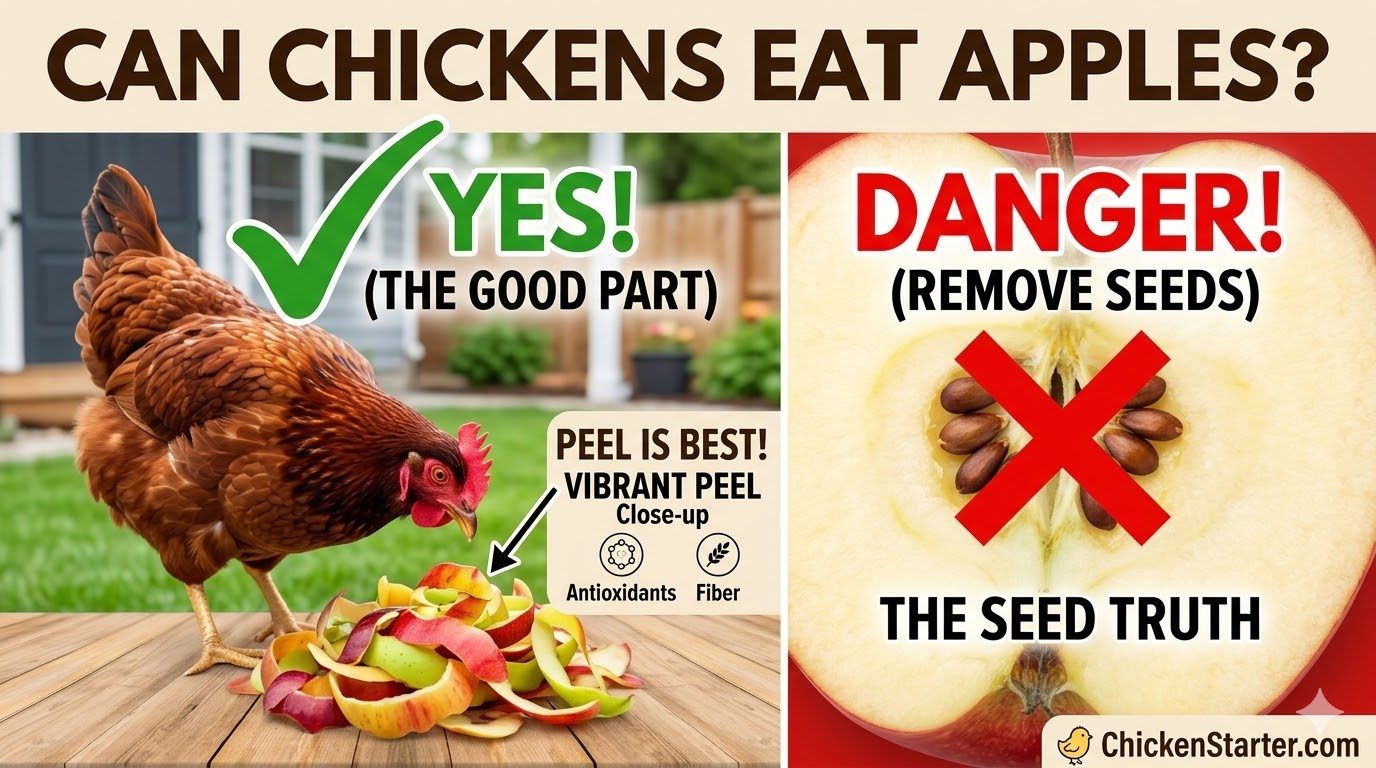
Yes, chickens can safely eat apples. The flesh, the skin, the core (with seeds removed), and even those soft brown spots your hens seem to love more than the fresh parts. Apples are non-toxic to poultry, widely available year-round, and one of the most affordable fruit treats you can offer.
Quick Answer: Chickens can eat apples raw, cooked, or frozen. According to USDA FoodData Central, a 100-gram serving of raw apple with skin provides 52 calories, 13.8g carbohydrates, 10.4g sugar, 2.4g fiber, 0.26g protein, 4.6mg vitamin C, 107mg potassium, and 85.6% water. The peel is the most nutritious part, proven in peer-reviewed poultry research to boost antioxidant capacity in chickens. Always remove the seeds and core before feeding. Apple seeds contain amygdalin, which releases hydrogen cyanide when crushed. However, a chicken would need to consume 66 to 264 crushed seeds in one sitting to reach a toxic dose. Treats should never exceed 10% of total diet. Apples rank #9 on the 2025 EWG Dirty Dozen. Wash thoroughly or buy organic. Baby chicks should wait until at least 8 weeks old.
My flock goes absolutely wild for apples. They are one of the few treats that keep every single hen occupied for more than a few minutes, because the flesh is firm enough to require actual pecking and tearing. That built-in enrichment factor is something softer treats like watermelon or bananas simply cannot match. According to nutritionists at Purina Mills, a chicken’s diet should consist of 90% high-quality, balanced commercial feed and only 10% healthy treats, and apples fit perfectly within that window.
What Will Apple Seeds Do to Chickens? The Amygdalin Deep-Dive
This is the question that drives more anxiety than any other in the “can chickens eat apples” conversation. Most sites either scream “DEADLY POISON!” or shrug it off with “no big deal.” Neither response is helpful. The truth, as usual, lives in the actual numbers.
What Is Amygdalin and How Does It Become Cyanide?
Apple seeds contain a compound called amygdalin, a cyanogenic glycoside found in the seeds of many Rosaceae family fruits, including apples, apricots, cherries, peaches, and plums. According to the National Cancer Institute, amygdalin is a chemical compound that, when metabolized in the digestive system, reacts with enzymes to produce a toxin known as hydrogen cyanide.
Here is the critical detail: if the seed is swallowed whole and left intact, it is completely harmless. The amygdalin is locked inside the seed coat and passes through the body without releasing cyanide. The danger only arises when the seed is crushed, chewed, or broken, allowing the amygdalin to contact digestive enzymes.
The Actual Math (This Is Your Key Takeaway)
A 2015 study published in Food Chemistry (Bolarinwa et al.) and indexed on PubMed found that amygdalin contents of seeds from fifteen varieties of apples ranged from 1 mg to 4 mg per gram of seed. Each apple seed weighs approximately 0.7 grams. For every 1 mg of amygdalin, approximately 0.06 mg of hydrogen cyanide can be produced.
The lethal dose of cyanide is estimated to be around 0.5 to 3.5 mg per kilogram of body weight. For a standard laying hen weighing 7 pounds (3.2 kg), the lethal dose would require approximately 1.6 to 11.2 mg of cyanide.
Working backward through the chemistry:
- At the low end of amygdalin content (1 mg/g), a seed produces roughly 0.042 mg of cyanide
- At the high end (4 mg/g), a seed produces roughly 0.168 mg of cyanide
- To reach the minimum lethal threshold of 1.6 mg cyanide, a chicken would need to consume roughly 10 to 38 crushed seeds
- To reach the upper lethal range, that number climbs to 66 to 264 crushed seeds
A medium apple contains approximately 5 to 8 seeds. That means a chicken would need to eat the crushed seeds from roughly 8 to 52 entire apples in a single sitting to reach cyanide toxicity. That is simply not going to happen during normal treat feeding.
The Gizzard Factor: Why Chickens Are Different from Humans
Here is the nuance that competitors either miss or get wrong. When a human accidentally swallows an apple seed, it typically passes through the digestive tract whole and unbroken, meaning no amygdalin is released and no cyanide is produced. Chickens are different. They do not chew their food. Everything they swallow goes to the crop for softening and then to the gizzard, a powerful muscular organ that actively grinds food with the help of grit and small stones. Apple seeds that enter the gizzard will likely be crushed, which means amygdalin is released.
This does not change the math in any meaningful way for accidental exposure. A chicken pecking at an apple in the run might encounter 5 to 8 seeds total, and it will probably ignore most of them in favor of the flesh. But it does mean the gizzard creates a different risk profile than human digestion, which is why intentionally removing seeds before feeding apples as a treat is the sensible approach.
My Balanced Recommendation
Do not panic about accidental seed exposure. The math clearly shows it is extremely unlikely to cause harm. I have apple trees growing inside my free-range area, and my chickens have pecked at windfalls for three full years without a single issue. They overwhelmingly prefer the flesh and leave the core behind.
But when you are deliberately preparing apples as a treat, take the five seconds to core them and remove the seeds. It eliminates any risk entirely and costs you almost nothing in effort. Think of it the same way you think about wearing a seatbelt. The odds of a crash on any given drive are tiny, but the prevention is so easy that there is no reason not to do it.
Cyanide Poisoning Symptoms (Know What to Watch For)
In the extremely unlikely event of significant cyanide ingestion, symptoms appear rapidly, typically within 15 to 30 minutes. They include rapid or labored breathing, a blue or purple discoloration of the comb and wattles, loss of motor control and coordination, convulsions, and sudden collapse. If you ever observe these symptoms in any context, not just apple-related, seek veterinary help immediately. See our guide on when to call the vet for a backyard chicken and how to tell if a chicken is sick.
Apple Parts Safety Chart
| Apple Part | Safe? | Notes |
|---|---|---|
| Flesh | ✅ Best part | Sweet, hydrating, high in fiber and pectin |
| Peel/Skin | ✅ Most nutritious | Proven antioxidant benefits in peer-reviewed poultry research (see below) |
| Core (seeds removed) | ✅ Fine | Fibrous and tough; some chickens will eat it, many will ignore it |
| Seeds | ❌ Remove deliberately | Contain amygdalin that releases hydrogen cyanide when crushed in the gizzard |
| Stem | ❌ Remove | Contains trace amounts of amygdalin |
| Leaves | ❌ Avoid | Apple leaves contain trace amounts of cyanide compounds that may be harmful |
| Bruised or brown spots | ✅ Fine | Chickens actually seem to prefer the soft brown spots. If you have past-their-prime apples, your flock will love them |
| Wormy apples | ✅ Fine | The worms are bonus protein. Chickens are natural insect eaters |
| Moldy apples | ❌ Never | Mycotoxins from mold can cause severe illness or death |
Why Apple Peels Are the Best Part for Chickens: Peer-Reviewed Poultry Science
This is where every other “can chickens eat apples” article falls short. They say “the peel is fine to eat” in one line and move on. But there is published, peer-reviewed research demonstrating that apple peels are not just “fine.” They are the most nutritionally valuable part of the apple for your flock.
The Heidarisafar 2016 Study
A study published in Tropical Animal Health and Production (Heidarisafar et al., 2016) and indexed on PubMed specifically evaluated apple peel waste as a natural antioxidant for heat-stressed broiler chickens. A total of 360 unsexed, 28-day-old broilers were assigned to 6 dietary treatments. The experiment used a factorial arrangement with three levels of apple peel waste (0, 50, or 100 g/kg of diet).
The results were significant. Feeding 50 and 100 g of apple peel waste per kg of diet increased high-density lipoprotein (HDL) cholesterol (the “good” cholesterol) and decreased low-density lipoprotein (LDL) cholesterol and malondialdehyde (a marker of oxidative stress) in blood serum at 49 days of age. The study concluded that feeding apple peel waste up to 50 g/kg had no adverse effect on broiler performance while delivering measurable antioxidant benefits.
In simpler terms: apple peels actively improved the chickens’ cholesterol profile and reduced oxidative damage, particularly under heat stress conditions. If you raise chickens in hot climates, whether that is the American South, inland Australia, or tropical regions, this finding is especially relevant. See our guides on keeping chickens cool in summer in Australia and feeding chickens during a heatwave for more heat management strategies.
Why the Peel Specifically?
The skin of apples is especially rich in fiber, antioxidants, and beneficial phytochemicals including quercetin, catechin, and chlorogenic acid. According to information from the Harvard T.H. Chan School of Public Health, most of the apple’s fiber and a significant portion of its antioxidant content are concentrated in and just beneath the skin. When you peel an apple, you are throwing away the best part.
My practical rule: However you feed apples to your chickens, leave the peel on. Remove the seeds and core, but keep the skin intact. It is the most nutritious part, it adds a different texture for enrichment, and your hens will happily peck it clean.
Apple Pectin: The Prebiotic Benefit Most Chicken Sites Miss
One unique benefit of apples that gets almost zero attention in the chicken-keeping world is their natural pectin fiber content. As noted in research reviewed by Healthline, apple pectin is considered a prebiotic because it stimulates the growth and activity of helpful bacteria while potentially inhibiting the growth of harmful bacteria such as Clostridium. Roughly 15 to 20% of the pulp of an apple is made of pectin.
How Pectin Works in a Chicken’s Digestive System
Pectin acts as a prebiotic in the chicken’s digestive system, helping promote the growth of healthy gut bacteria. When pectin reaches the lower digestive tract, it is fermented by beneficial microorganisms, producing short-chain fatty acids (SCFAs), particularly butyrate. According to research published in Experimental and Molecular Medicine (Beukema et al., 2020), pectins can strengthen mucous membranes and epithelial tissue, and activate or inhibit immune cells such as macrophages. These SCFAs are critical for maintaining the integrity of the intestinal lining, supporting nutrient absorption, and keeping pathogenic bacteria in check.
A medium apple provides approximately 4 grams of fiber, a substantial amount relative to a chicken’s small body size. Chickens, like all birds, host a diverse gut microbiome that thrives on consistent fiber intake. The prebiotic pectin in apples feeds the beneficial bacteria that keep this system functioning properly.
Why This Matters for Backyard Flocks
If you supplement your flock’s diet with fermented feed or apple cider vinegar, you are already supporting gut health through different pathways. Adding occasional apple treats provides yet another prebiotic pathway, complementing those other strategies rather than duplicating them. For more gut-supporting treats, see our guide to treats that boost egg laying.
The Pesticide Warning: Apples Are #9 on the 2025 Dirty Dozen
This is the real danger that almost no chicken-care website covers, and it matters far more to your flock’s long-term health than the seed debate.
The Numbers Are Concerning
According to the Environmental Working Group’s 2025 Shopper’s Guide to Pesticides in Produce, apples rank #9 on the Dirty Dozen list. The data, drawn from USDA Pesticide Data Program testing of 334 raw non-organic apple samples collected in 2023, reveals:
- 97 percent of samples contained at least one pesticide residue
- 90 percent of samples contained two or more different residues
- Apples contained residues from more than four different pesticides on average
- A total of 44 different residues were detected across all 334 non-organic samples
The Specific Chemicals Found on Apples
Diphenylamine is a chemical used to prevent the skin of apples in cold storage from developing brown or black patches. It is applied to most non-organic, conventionally grown apples. According to the EWG, diphenylamine was found on 60 percent of the 334 raw non-organic apple samples tested. Since diphenylamine is sprayed on fruit after it is harvested, USDA tests find it more often and at greater concentrations than most other pesticide residues on apples. European officials have enacted restrictions on imported apples treated with the chemical due to concerns about the possible formation of nitrosamines, which cause cancer in laboratory animals.
Pyrimethanil and fludioxonil are fungicides found on 66 and 48 percent of apples, respectively. Research suggests that pyrimethanil may block androgen receptors and lead to thyroid disruptions, while fludioxonil has been linked to estrogenic activity.
The Peel Dilemma
Here is the tension: the peel is the most nutritious part of the apple for your chickens (proven by the Heidarisafar 2016 study), but it is also where pesticide residue concentrates. As the EWG notes, peeling apples can further reduce pesticide levels, but it could also reduce the levels of fiber, some vitamins and other nutrients.
My Recommendations
- Best option: Homegrown apples from your own pesticide-free trees. This is why I am so grateful for our apple tree inside the chicken run.
- Great option: Certified organic apples, fresh or frozen
- Good option: Conventional apples, scrubbed thoroughly under running water for at least 30 seconds. A brief soak in a 1:3 vinegar-to-water solution followed by thorough rinsing can further reduce surface residues.
- If concerned about pesticides on conventional apples: Peel them. You lose some nutrition but remove the most concentrated residue.
- Never peel organic or homegrown apples. You would be throwing away the best part.
If you are already following the pesticide discussion across our other treat guides, note the progression: strawberries rank #2 on the 2025 Dirty Dozen, apples rank #9, and blueberries rank #11. Organic matters for all three.
Can Chickens Eat Apple Skins and Peels?
Yes, absolutely. Apple peels are not only safe but, as the research above demonstrates, are the most nutritious part of the apple for your chickens. They are packed with fiber, antioxidants, and phytochemicals that the flesh alone does not provide in the same concentrations.
That said, not every chicken loves the peel. Some hens will methodically eat the flesh and leave a thin, translucent peel behind. This is perfectly normal and nothing to worry about. My Buff Orpingtons eat everything, peel and all, while my Easter Eggers are pickier and sometimes leave the skin. The important thing is to always wash peels thoroughly before feeding, especially if they are store-bought, and remove any stickers or wax residue.
Can Chickens Eat Applesauce?
Yes, with important caveats. Homemade, unsweetened applesauce is perfectly safe and actually makes an excellent treat for baby chicks, elderly hens, or birds recovering from illness who need soft, palatable nutrition.
Store-bought applesauce requires label-reading. Many commercial brands contain added sugar, which is unnecessary and unhelpful for chickens. Look for products listing only “apples” and possibly “water” or “ascorbic acid” in the ingredients. One encouraging note from the EWG data: diphenylamine was found in only 5 percent of 540 non-organic applesauce samples (also collected in 2023), compared to 60 percent of raw apples. The processing involved in making applesauce significantly reduces pesticide residue.
| Apple Product | Safe? | Notes |
|---|---|---|
| Fresh raw apple (cored, deseeded) | ✅ Best option | Maximum nutrition, fiber, and enrichment value |
| Apple peel | ✅ Most nutritious | Wash thoroughly if store-bought; never peel organic |
| Apple core (seeds removed) | ✅ OK | Fibrous but safe; many chickens will ignore it |
| Unsweetened applesauce | ✅ Good | Great for chicks, elderly hens, or recovering birds |
| Sweetened applesauce | ⚠️ Very sparingly | Added sugar is unnecessary; choose unsweetened instead |
| Cooked/baked apple (no sugar) | ✅ Good | Softer and easier to eat; great winter warming treat |
| Apple cider vinegar | ✅ Beneficial | See our full ACV guide |
| Dried apple chips (unsweetened) | ⚠️ Sparingly | Concentrated sugar, easy to overeat |
| Apple pie or cobbler | ❌ Never | Sugar, butter, flour, spices are all harmful |
| Apple juice (store-bought) | ❌ Never | Very high sugar with zero fiber |
| Moldy or fermented apples | ❌ Never | Mycotoxins plus alcohol are potentially fatal |
Can Chickens Eat Apples Every Day?
No. Daily apple feeding is not recommended. Apples are a treat, and no treat should make up more than 10% of your flock’s diet. A good rule of thumb is to offer no more than three or four apple portions per week for a flock of six chickens, and always after they have eaten their regular feed.
Here is why daily feeding causes problems:
Low protein content. Apples contain only 0.26g of protein per 100g, essentially negligible. Laying hens need 16 to 18% protein in their diet for consistent egg production. A protein-deficient diet leads to reduced egg laying, poor feather quality, and reduced hatchability.
High sugar content. At 10.4g of sugar per 100g, apples deliver a meaningful sugar load. Daily consumption contributes to obesity and fatty liver hemorrhagic syndrome over time, the same risks associated with overfeeding blueberries, grapes, or any sugary treat.
Nutritional displacement. Every bite of apple is a bite of layer feed not eaten. Layer feed is precisely formulated with the protein, calcium, and micronutrient ratios your hens need. Displacement, even with a “healthy” treat, directly impacts production.
The ideal frequency: Feed apples 2 to 3 times per week. I give roughly one quarter of a medium apple per hen per session. For more on structuring treat timing within a complete diet, see our best feeding schedule for backyard chickens and our comprehensive feeding guide.
What Age Can Chickens Eat Apples?
Apple bits should generally be avoided until chicks are at least 8 to 10 weeks old. Younger chicks need every calorie and nutrient from their balanced starter feed (18 to 22% protein) to support the rapid growth, feather development, and immune system maturation happening in those early weeks. Introducing treats too early can discourage them from eating their feed, preventing them from getting the nutrition they need.
| Age | Can They Eat Apples? | How to Serve | Notes |
|---|---|---|---|
| 0 to 4 weeks | ❌ No | Not applicable | Starter feed only. See our must-haves for new chicks |
| 4 to 8 weeks | ⚠️ Very tiny amounts | Mashed flesh only, no peel or seeds | Must have chick grit available; monitor for loose droppings |
| 8 to 12 weeks | ✅ Small amounts | Finely diced, peel optional | Grower feed = 90%+ of diet. See when to switch from starter to grower feed |
| 12 to 16 weeks | ✅ Moderate | Chopped or sliced | Gradually increase treat amounts |
| 16+ weeks (adult) | ✅ Full treat amounts | Sliced, halved, hung, or whole (cored) | Layer feed = 90% of diet; treats = 10% maximum |
For very young chicks (4 to 8 weeks), unsweetened applesauce or very finely mashed apple flesh is the safest introduction, as it eliminates any choking risk from firm pieces. Always ensure chick grit is available when introducing any treats.
How to Safely Prepare and Serve Apples to Your Chickens (Step by Step)
Step 1: Wash thoroughly. Scrub under running water for at least 30 seconds, especially for store-bought apples (remember, Dirty Dozen #9). If you want extra reassurance, soak briefly in a 1:3 vinegar-to-water solution, then rinse well.
Step 2: Remove seeds and core. This takes five seconds with an apple corer or knife. Cut the apple in half, pop out the core, and discard it. Do not overthink this step, but do not skip it either.
Step 3: Leave the peel on. Unless you are using conventional apples and are concerned about pesticide residue, always keep the peel intact. It is the most nutritious part.
Step 4: Cut into appropriate pieces. For full-size adults, quarters or thick slices work well. For bantam breeds like Silkies, cut into smaller chunks. For chicks, mash or dice very finely.
Step 5: Serve after layer feed. Always ensure your flock has eaten their complete feed before offering treats. This prevents nutritional displacement.
Step 6: Provide fresh water. The sugar in apples increases thirst. Make sure clean water is readily available.
Step 7: Clean up leftovers. Clear uneaten apple pieces before roosting time to avoid attracting pests. Our guide to keeping rats out of the chicken coop covers this in detail.
Creative Serving Ideas
Hung apple on twine. Core an apple and thread sturdy kitchen twine through the center. Hang it at beak height in the run. It swings when pecked, turning snack time into a puzzle toy that combats boredom. This is especially useful for flocks that cannot free-range. See our DIY treat dispenser guide for more enrichment ideas.
Frozen apple slices in summer. Freeze apple slices and scatter them in the run on hot days. They thaw slowly and keep hens cool and occupied.
Warm baked apple mash in winter. Bake a few cored apples (no sugar added) until soft, then mash and stir into plain dry oatmeal. Serve warm. This is my flock’s absolute favorite cold-weather treat, and the warmth gives them a genuine comfort boost on frigid mornings.
Stuffed apple treat. Core an apple and fill the cavity with a mixture of plain oats and a small amount of coconut oil. Your hens will work at it for ages.
Can Chickens Eat Apples in Winter?
Yes, and winter is when the warm apple mash method truly shines. Apples store exceptionally well through winter in a cool, dark place, making them one of the most practical year-round treats. While many other fruits are seasonal or expensive in winter, apples remain affordable and available in every grocery store from October through March.
Winter-specific serving ideas:
Warm baked apple mash combined with oats provides gentle warmth and comfort during cold snaps. I bake a few cored apples until soft, mash them lightly, and fold in some dry oats. The warmth is not medically necessary for healthy adult chickens, but it does encourage them to eat and stay active on days when they might otherwise huddle in the coop. See our guides on what to feed chickens in winter and winterizing your chicken coop for complete cold-weather strategies.
Apple cider vinegar in the waterer is a popular year-round supplement that many keepers, including myself, use throughout the cold months. Our full guide to apple cider vinegar for chickens covers dosages, benefits, and common mistakes.
Apple Varieties: Does the Type of Apple Matter?
Not every apple is created equal when it comes to feeding your flock. Here is how common varieties compare:
| Variety | Sugar Content | Texture | Best For |
|---|---|---|---|
| Granny Smith | Lower (~9g/100g) | Hard, crunchy | Best low-sugar option for frequent feeding |
| Gala | Moderate (~10g/100g) | Medium-firm | Good all-rounder; widely available |
| Fuji | Higher (~11g/100g) | Hard, crunchy | Great for enrichment (takes longer to peck apart) |
| Red Delicious | Moderate (~10g/100g) | Softer | Easy eating for older hens or smaller breeds |
| Honeycrisp | Higher (~11g/100g) | Very crisp | Chickens love the crunch and snap |
| Bruised/windfall | Varies | Soft | Chickens actually prefer these. The brown, soft spots are the first parts they go for |
If you are specifically concerned about sugar, Granny Smith apples are consistently the lowest-sugar widely available variety and make an excellent regular treat. For enrichment purposes, harder varieties like Fuji keep hens busy longer because they require more effort to break apart.
Can Chickens Eat Apples with Other Fruits?
Combining apples with other safe fruits is a great way to provide a broader spectrum of nutrients. Here is what works well and what requires caution:
| Combination | Safe? | Notes |
|---|---|---|
| Apples + Pears | ✅ Excellent | Same family (Rosaceae); remove seeds from both |
| Apples + Strawberries | ✅ Great | Strawberries add massive vitamin C; apples add pectin fiber |
| Apples + Blueberries | ✅ Great | Blueberries add anthocyanins that apples lack |
| Apples + Grapes | ⚠️ Moderate sugar | Both are high sugar. Reduce quantities when combining |
| Apples + Bananas | ⚠️ Moderate sugar | Banana is the highest-sugar common fruit (12g/100g). Keep total volume small |
| Apples + Oranges | ⚠️ Small amounts of citrus | Excessive citrus can cause digestive irritation and may interfere with calcium absorption |
| Apples + Berries (mixed) | ✅ Best approach | Variety provides the broadest nutritional coverage |
The critical rule remains the same: count ALL fruit treats together toward the 10% treat limit. A few apple slices plus a handful of berries plus some cucumber quickly adds up.
Fruits Chickens Should NEVER Eat
While apples (properly prepared) are perfectly safe, several common fruits contain compounds that are genuinely toxic to poultry:
| Dangerous Fruit or Part | Why It Is Toxic |
|---|---|
| Apple seeds | Amygdalin releases hydrogen cyanide when crushed. Remove before feeding |
| Apple leaves | Contain trace amounts of cyanide compounds |
| Avocado (all parts) | Contains persin, which is toxic to most birds and can cause respiratory distress and death |
| Cherry, peach, plum, apricot pits | Same cyanogenic glycosides as apple seeds. Flesh is safe; pits are not |
| Green tomatoes | Contain solanine, a glycoalkaloid that is toxic. Only ripe, red tomatoes are safe |
| Rhubarb leaves | Oxalic acid at levels toxic to chickens |
| Citrus (large quantities) | Can cause digestive upset and may interfere with calcium absorption |
| Moldy fruit of any kind | Mycotoxins from mold can cause severe illness or death |
For a complete breakdown, see our comprehensive feeding guide and our full list of what chickens eat.
Frequently Asked Questions
Can chickens eat apples raw?
Yes, raw apples are the best way to serve them. There is no need to cook them first. Raw apples retain maximum nutrition, full fiber content, and provide the firm texture that makes them such an excellent enrichment treat. Just wash, core, deseed, and serve.
What will apple seeds do to chickens?
Apple seeds contain amygdalin, which releases hydrogen cyanide when crushed in the gizzard. However, based on the amygdalin concentrations documented in peer-reviewed research, a standard laying hen would need to consume roughly 66 to 264 crushed seeds in a single sitting to reach a lethal dose. That equates to the seeds from 8 to 52 entire apples. A few accidental seeds are extremely unlikely to cause harm, but always remove them when preparing apples as a treat.
Can chickens eat apple cores?
Yes, the fibrous core is safe once you have removed the seeds. Some chickens will peck at it; many will ignore it in favor of the softer flesh. Either way, it poses no harm with the seeds removed.
What are the benefits of apples for chickens?
Apples provide fiber (2.4g per 100g), pectin (a prebiotic that supports gut health), vitamin C (4.6mg per 100g), potassium (107mg per 100g), and antioxidants. The peel specifically has been shown in peer-reviewed research to increase HDL cholesterol and decrease LDL cholesterol in poultry, while also providing antioxidant protection against heat stress.
Can Silkie chickens eat apples?
Yes, Silkies can eat apples safely. Because Silkies are a bantam breed with smaller beaks and bodies, cut apple pieces into smaller chunks than you would for standard breeds. Remove seeds as with all breeds. Unsweetened applesauce is also a great option for smaller birds.
Can chickens eat wormy apples?
Yes. The worms (typically codling moth larvae) are not only harmless but are bonus protein that your chickens will enthusiastically eat. Chickens are natural insect eaters. Wormy is fine. Moldy, however, is never fine. Mold produces mycotoxins that can be fatal. If an apple is wormy but not moldy, your flock will love it.
How many apples can I give my chickens?
A good rule of thumb is to limit apple treats to roughly one quarter of a medium apple per bird, offered 2 to 3 times per week. For a flock of six chickens, three or four apple portions per week is plenty. All treats combined should stay within the 10% of daily diet guideline.
What is the healthiest fruit for chickens?
No single fruit is “the healthiest” because each offers different nutritional strengths. Blueberries have the highest antioxidant (anthocyanin) content. Strawberries provide the most vitamin C (59mg per 100g vs. 4.6mg in apples). Cucumbers offer the best hydration with the lowest sugar. Apples provide the best prebiotic pectin fiber for gut health. A rotation of multiple fruits gives the broadest nutritional benefit.
Can chickens eat applesauce?
Yes. Homemade, unsweetened applesauce is safe and especially useful for baby chicks (mashed to a smooth consistency), elderly hens with beak issues, or recovering birds. Store-bought applesauce is also acceptable if you choose an unsweetened variety with no added ingredients. One encouraging data point: pesticide residue levels in applesauce are dramatically lower than in raw apples.
The Bottom Line on Apples for Chickens
After three years of feeding apples to my flock, here are the four things I want you to take away:
First, the peel is the most nutritious part. Published research in Tropical Animal Health and Production demonstrates that apple peel waste increased HDL cholesterol and decreased LDL cholesterol in heat-stressed broiler chickens. Leave the peel on, always, unless you are dealing with unwashed conventional apples and pesticide exposure concerns you.
Second, the seed fear is mathematically overblown. Based on amygdalin content data published in Food Chemistry, a chicken would need to consume the crushed seeds from 8 to 52 entire apples in one sitting to reach cyanide toxicity. Still, remove the seeds when preparing treats. It takes five seconds and eliminates all risk.
Third, apples rank #9 on the 2025 EWG Dirty Dozen. This is the bigger concern. 97% of conventional apple samples contained pesticide residue, with 44 different chemicals detected across 334 samples. Wash thoroughly, buy organic when you can, or grow your own.
Fourth, feed as a treat: one quarter apple per hen, 2 to 3 times per week, never daily, never as a meal replacement.
Want to combine apples with other treats for your flock? Check out our guides to strawberries, blueberries, cucumbers, or our complete guide to what chickens can eat from your kitchen.

Oladepo Babatunde is the founder of ChickenStarter.com. He is a backyard chicken keeper and educator who specializes in helping beginners raise healthy flocks, particularly in warm climates. His expertise comes from years of hands-on experience building coops, treating common chicken ailments, and solving flock management issues. His own happy hens are a testament to his methods, laying 25-30 eggs weekly.