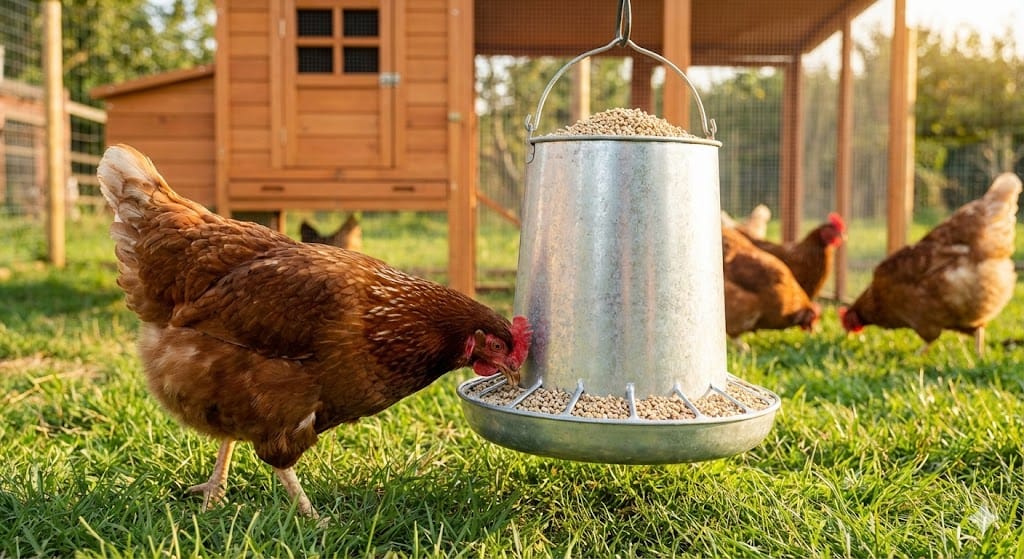
Should chickens have feed all the time? This was the question I asked myself after noticing two of my lower-ranking hens were losing weight while the dominant birds in my flock seemed perfectly healthy. I had been feeding twice daily, convinced I was doing things correctly. The answer changed how I approach feeding entirely.
The short answer is yes. For most backyard flocks, chickens should have free-choice access to feed throughout daylight hours. According to poultry nutrition guidelines from Penn State Extension, chickens have a unique digestive system that can only accommodate small amounts of food at a time in their crops, making free-feeding the most natural and healthy approach for laying hens.
After raising chickens for over six years in a tropical climate, I have experimented with nearly every feeding schedule imaginable. This guide covers everything from optimal feeding times and daily amounts (in both cups and kilograms) to age-specific requirements and common mistakes that hurt egg production. Whether you are managing a small backyard flock or scaling up operations, understanding when and how much to feed makes all the difference.
Should Chickens Have Access to Food 24/7?
For adult laying hens during daylight hours, yes. Free-choice feeding (also called free-feeding) means keeping feed available so chickens can eat whenever they want throughout the day. This method works because chickens naturally eat many small meals rather than one or two large ones.
According to Dine-A-Chook’s comprehensive feeding guide, giving chickens unlimited access to their feed during the daytime is the best way to feed them. This allows them to manage their own digestive process in a healthy way and ensures that all birds, even lower-ranked ones in the pecking order, have access to feeders.
Here is why free-choice feeding works:
Crop capacity is limited. A chicken’s crop (the pouch where food is stored before digestion) can only hold so much at once. Chickens naturally fill their crop, let it empty over a few hours, then eat again. Restricting access forces them to overeat when food is available, which can cause a distended or pendulous crop.
Pecking order affects access. In any flock, dominant birds eat first. When feeding is restricted to specific times, lower-ranking hens get pushed away from feeders. With free-choice access throughout the day, subordinate birds can eat when the bullies are not around.
Egg production requires consistent nutrition. Laying hens work hard. A hen’s reproductive cycle is most active at night, requiring nutrients from food consumed throughout the day. According to multiple sources, chickens need to go to roost with a full crop to support overnight egg formation.
I switched from twice-daily feeding to free-choice after noticing my lower-ranking hens were underweight and producing fewer eggs. Within three weeks, the entire flock evened out in body condition and egg production increased from an average of 5 eggs to 7 eggs daily from the same 8 hens. That is a 40% improvement just from changing the feeding method.
The exception to this rule is meat birds (broilers), which may need restricted feeding to prevent health problems associated with overly rapid growth. But for backyard laying hens, free-choice feeding is the standard recommendation.
Do Chickens Stop Eating When Full?
Yes, chickens self-regulate when fed proper complete feed. Unlike humans who might eat an entire bag of chips while watching television, chickens eating balanced layer feed will stop when they have had enough.
According to BackYard Chickens community guidelines, chickens have a very short digestive tract, so they eat frequently, but they will not overeat to the point of harm when given proper feed. This self-regulation is why free-choice feeding works without causing obesity in laying hens.
However, there is an important distinction: chickens will overeat treats.
Just like a child who claims to be full but suddenly has room for dessert, chickens will gorge on treats like mealworms, scratch grains, and kitchen scraps even when they have already eaten sufficient feed. This is why treats should be limited to no more than 10% of total diet.
According to Exotic Nutrition’s backyard chicken diet guide, fruits and vegetables offer vitamins and minerals beneficial to chickens, but they should comprise only up to 10% of the diet, as too much can be unhealthy. This is especially true of fruit because of the high sugar content.
I learned this lesson the hard way during my second year of chicken keeping. My flock loved mealworms so much that I started giving them handfuls every day. Egg production dropped, and one of my Buff Orpingtons became noticeably overweight. Cutting treats back to occasional small portions fixed both problems within a month.
For guidance on what makes a balanced diet beyond commercial feed, the comprehensive guide to feeding chickens covers safe foods in detail.
Do Chickens Need to Be Fed Every Day?
Absolutely yes. Chickens require daily nutrition for egg production, body maintenance, temperature regulation, and overall health. Skipping feedings, even occasionally, impacts their wellbeing and productivity.
A laying hen’s body is essentially a small egg factory running continuous production. According to Alabama Cooperative Extension System’s laying hen management guide, if feeding a complete layer feed, you should provide feed for your hens at all times. A full-grown chicken consumes about 1/4 pound (113g) of feed each day.
Is It Okay to Skip a Day Feeding Chickens?
No. While chickens can technically survive a day without food, it is never recommended and causes measurable harm.
When chickens miss a feeding:
- Egg production drops, sometimes for several days after
- Stress hormones increase, weakening immune function
- Body condition suffers as reserves are depleted
- Behavioral problems like feather pecking may increase
Even a single day of inadequate nutrition starts this cascade of problems.
Can Chickens Go a Day Without Feed?
In an emergency, adult chickens with access to water can survive 24 to 48 hours without feed, though this should never happen intentionally. Free-range birds with good foraging opportunities fare better than confined birds because they can find insects, seeds, and vegetation.
However, survival is not the same as thriving. A chicken that misses meals will reduce or stop egg production as the body redirects resources to basic survival functions. This is your chicken’s way of saying, “I cannot afford to make eggs right now.”
If you are going away and cannot arrange daily feeding, consider investing in a quality automatic feeder that holds several days’ worth of feed and prevents pest access.
How Many Times a Day to Feed Chickens
The answer depends on your chosen feeding method and your specific situation.
| Feeding Method | Frequency | Best For | Considerations |
|---|---|---|---|
| Free-choice | Feed available all day | Most backyard flocks | May attract rodents if not managed |
| Twice daily | Morning and evening | Keepers wanting to control pests | Requires consistent timing |
| Multiple small meals | 3-4 times daily | Show birds, managed operations | Time-intensive |
According to Exotic Nutrition, chickens prefer to be fed smaller quantities several times a day rather than once a day. If your schedule does not allow for this, however, it is completely fine to feed them twice a day, once in the morning and once in the evening.
If you choose scheduled feeding over free-choice, consistency matters enormously. Feeding chickens at roughly the same time every day allows you to more closely monitor their feeding habits and nutritional intake, and you will notice discrepancies in feeding behavior more quickly should they arise.
What Time to Feed Chickens
If you are not offering free-choice access, the two most important feeding times are:
Morning (at sunrise or when you let them out): Chickens wake up hungry. Their crop has emptied overnight, and they naturally want to eat first thing. This morning meal provides energy for the day’s activities and early egg-laying.
Evening (1-2 hours before roosting): Chickens need a full crop before settling down for the night. The reproductive cycle is often more intense at night and requires nutrients from food consumed before roosting. A well-fed hen going to roost produces better eggs than a hungry one.
Optimal Feeding Times by Season
For keepers using scheduled feeding rather than free-choice, here are specific timing recommendations:
| Season | Morning Feeding | Evening Feeding | Notes |
|---|---|---|---|
| Summer | 6:00-7:00 AM | 6:00-7:00 PM | Feed during cooler hours to encourage eating |
| Winter | 7:00-8:00 AM (at first light) | 4:00-5:00 PM (before early roosting) | Ensure full crop before long, cold nights |
| Spring/Fall | 6:30-7:30 AM | 5:30-6:30 PM | Adjust as daylight changes |
In my tropical climate where temperatures regularly exceed 35°C, I have found that my hens eat almost nothing between 11 AM and 3 PM regardless of whether feed is available. Offering wet mash or fermented feed during morning feeding adds moisture and improves digestion during hot weather.
For a detailed breakdown of timing and seasonal adjustments, the best feeding schedule for backyard chickens provides specific guidance.
Should Chickens Have Access to Food at Night?
No, adult chickens do not need food at night. Chickens roost when it gets dark and do not eat during nighttime hours. They cannot see well in darkness and instinctively stop feeding activity at dusk.
In fact, removing feeders at night is often recommended. According to Dine-A-Chook, feed should always be placed in a feeder and never left on the ground, and removing the feeder overnight can help control rodents if they are a problem in your coop.
I bring my feeders inside every evening after my flock has roosted. This simple habit has dramatically reduced rodent problems around my coop. Rats and mice are primarily nocturnal, so eliminating their overnight food source makes your coop far less attractive to them.
The exception is baby chicks. Chicks under 8 weeks old need 24/7 access to feed, including overnight. Their rapid growth rate and small body size mean they cannot go long periods without eating.
How Much to Feed Chickens Per Day
Getting the quantity right prevents both underfeeding (reduced production, poor health) and overfeeding (wasted feed, pest attraction).
The baseline for adult laying hens is approximately 1/4 pound (4 ounces or 113 grams) per bird per day, which equals about 1.5 to 1.75 pounds (680-800g) per week. However, this varies by breed size, age, activity level, and whether birds are laying.
According to various feeding guides, adult chickens typically consume around 120-150 grams per day depending on size and activity level.
How Much to Feed Chickens Per Day in Cups
| Bird Type | Daily Amount (cups) | Notes |
|---|---|---|
| Adult layer (standard) | ½ cup (4 oz) | Rhode Island Reds, Australorps |
| Large breed | ½ to ¾ cup | Orpingtons, Brahmas, Jersey Giants |
| Bantam | ¼ to ⅓ cup | Smaller body, proportionally less |
| Growing pullet | Varies by age | See age chart below |
One cup of layer pellets weighs approximately 8 ounces (225g), so half a cup equals about 4 ounces (113g) per bird.
How Much to Feed Chickens Per Day in KG
For readers using metric measurements:
| Bird Type | Daily Amount (grams) | Weekly Amount (kg) |
|---|---|---|
| Adult layer (standard) | 113-125g | 0.79-0.88 kg |
| Large breed | 125-150g | 0.88-1.05 kg |
| Bantam | 60-85g | 0.42-0.60 kg |
| Molting hen | 130-150g | 0.91-1.05 kg |
These amounts assume complete commercial feed as the primary food source. Free-range chickens with excellent foraging may eat slightly less commercial feed, but forage alone does not provide complete nutrition.
How Long Will a 50 lb Bag of Feed Last?
According to Cackle Hatchery’s feeding calculations, here is approximately how long one 50-pound bag of feed will last for 4 chickens:
| Chicken Type | Duration for 4 Birds |
|---|---|
| Bantam | About 25 weeks |
| Light breed (Leghorns) | 6-8 weeks |
| Dual purpose | 4-5 weeks |
| Heavy breed (Orpingtons, Brahmas) | 3-3½ weeks |
To calculate for your specific flock, divide these numbers by the number of chickens you have.
Feed Consumption Chart by Age
Here is how consumption changes as chicks grow:
| Age | Feed Type | Protein % | Weekly Amount Per Bird |
|---|---|---|---|
| Weeks 1-6 | Starter | 20-22% | 7 oz (200g) |
| Weeks 7-14 | Grower | 16-18% | 20 oz (570g) |
| Weeks 15+ | Layer | 16-18% | 28 oz (800g) |
Notice how dramatically consumption increases as birds grow. A 12-week-old pullet eats nearly three times what a 4-week-old chick consumes. Planning for this increase is essential when calculating feed costs for your flock.
Should Chicks Have Food All the Time?
Yes, absolutely. Unlike adult chickens, chicks should have access to feed and clean water 24 hours a day, 7 days a week until they are at least 8 weeks old.
Growing chicks do not get fat when fed proper food because their bodies use every available nutrient for growth.
Here is why constant access matters for chicks:
Rapid growth rate: Chicks grow at an astonishing pace. Their bodies need continuous fuel for bone development, feather growth, and organ maturation. Restricting food during this period stunts growth permanently.
Small body size: A chick’s tiny body has minimal reserves. Unlike an adult chicken that can tolerate a missed meal, a young chick can become dangerously weak within hours without food.
Developing digestive system: Young digestive systems work best with frequent small meals. Chicks naturally eat, rest, eat, rest throughout the day and night.
If you are bringing chicks home, ensure your brooder setup allows constant access to both starter feed and clean water from day one.
Feeds Given to Chicks Are Referred to As
Chicken feed is categorized by the age and purpose of the birds:
Starter feed (also called starter crumbles): Fed from hatch to 6-8 weeks. Contains 18-22% protein to support rapid early growth. According to Backyard Chicken Coops Australia, if you are raising chickens for egg production, you will need to provide your chicks with a quality starter feed with a minimum protein content of 22%.
Grower feed: Fed from 8 weeks until point of lay (16-20 weeks). Contains 16-18% protein. Supports continued growth without the excess protein that could strain developing organs.
Layer feed: Fed from point of lay (16-20 weeks) onward. Contains 16% protein plus added calcium (typically 3-4%) for strong eggshells.
According to The Mill Stores, chicks should be fed a starter feed through about 16 weeks of age and then be transitioned to a layer feed. Chickens typically start laying around 18-20 weeks of age.
Critical warning: Layer feed should not be fed to chickens younger than 18 weeks unless they have begun egg-laying because the calcium can permanently damage kidneys, reduce lifetime egg production, and shorten a bird’s lifespan.
What Age Is Chicken Mash Given?
Mash refers to feed texture, not formulation. It is finely ground feed that can be given at any age, though each life stage has preferred textures:
| Age | Preferred Texture | Why |
|---|---|---|
| Chicks (0-8 weeks) | Crumbles or fine mash | Easier for small beaks to eat |
| Growing birds (8-18 weeks) | Crumbles or pellets | Any texture works at this stage |
| Adults (18+ weeks) | Pellets | Reduces waste, but mash works if preferred |
According to Alabama Extension, adult chickens eating crumbles tend to waste more feed and can have more powdery “fines” left in the feeder that birds prefer not to eat. Whether you choose to feed layer crumbles or pellets is your decision, but pelleting has advantages including improved digestion and consistent intake of all nutrients.
Some keepers mix mash with water to create “wet mash” that is easier to digest. This is particularly beneficial for sick birds, during hot weather when hydration is critical, or for older hens with reduced appetite.
I switched to wet mash during a particularly brutal summer heat wave two years ago. My hens that had stopped eating dry pellets immediately started consuming the wet mixture. It saved at least two birds from heat-related decline.
What Do You Feed Chickens to Grow Faster?
For healthy growth, focus on:
Higher protein starter feed (20-22%): Starter feed contains the highest percentage of protein a layer will ever consume due to the astronomical growth rate in the first few months of life.
Consistent 24/7 access to feed: Never restrict growing birds.
Avoiding treats that dilute nutrition: Every mealworm or kitchen scrap a chick eats is nutrition not coming from their balanced starter feed.
Clean, fresh water always available: A chicken cannot digest feed without plenty of water. Without enough water, birds will eat more and grow less while you invest money in feed they cannot properly utilize.
For information on when to switch from starter to grower feed, timing matters for optimal growth.
What Are the Most Important Things in Feeds for Feeding Chickens?
Understanding what makes feed “complete” helps you evaluate quality and recognize deficiency symptoms.
According to Alabama Extension’s recommended layer diet composition:
| Nutrient | Amount Required | Why It Matters |
|---|---|---|
| Protein | 16% or more | Growth, feathers, egg production |
| Calcium | 3% to 4% | Eggshell formation, bone health |
| Phosphorus | 0.4% to 0.5% | Works with calcium for bones and shells |
Additional essential nutrients include:
| Nutrient | Signs of Deficiency |
|---|---|
| Amino acids (lysine, methionine) | Poor growth even with adequate protein |
| Vitamins A, D, E | Susceptibility to illness, weakness |
| Omega-3s | Less important but improves egg quality |
According to The Mill Stores, complete feeds have all the necessary nutrients to meet the average needs of most chickens. Sometimes, these feeds can lack the necessary calcium and protein levels depending on the time of year and your birds’ life stage (such as molt and early heavy egg production).
Important warning about treats: Treats and snacks dilute the complete nutrition in balanced feed. Even healthy choices like vegetables and mealworms should be limited. The general recommendation is that treats should make up no more than 10% of total intake, and ideally less.
I follow a simple rule: treats should be small enough that my entire flock finishes them within 15-20 minutes. If there are leftovers, I gave too much.
What to Feed Chickens to Make Them Lay Eggs
Egg production requires specific nutritional support:
Layer feed with 16% protein and added calcium: This is the foundation. Complete layer feed is formulated specifically for the demands of egg production.
Free-choice calcium supplement: Even with calcium in layer feed, many hens benefit from additional free-choice calcium. Crushed oyster shell is the most common supplement. Place it in a separate container so each hen can eat as much as she needs.
According to The Mill Stores, if there is a calcium deficiency, you may start to see your chickens pecking and eating the eggshells. If this is happening, the best practice would be to offer oyster shell as it is a great source of calcium.
Consistent access to feed: Laying hens need to eat like it is their full-time job because it essentially is. A hen cannot produce eggs consistently if her nutritional intake is inconsistent.
Clean water always available: Water consumption directly affects egg production. A dehydrated hen will reduce or stop laying.
For hens that have stopped laying or produce thin-shelled eggs, the guide to calcium for chickens covers supplementation in detail.
What to Feed Chickens Naturally
Even with commercial feed as the foundation, natural food sources add variety, enrichment, and supplemental nutrition.
Safe foraged foods include:
- Insects (grubs, beetles, earthworms, crickets)
- Seeds from grasses and weeds
- Leafy greens (dandelions, clover, chickweed)
- Garden produce (leafy vegetables, squash, berries)
According to Backyard Chicken Coops Australia, along with giving your hens access to the right chicken feed, you will also need to provide them access to some fresh greens. Your chickens will love vegetables as well as fresh pasture. Natural feed supplements are excellent for the health and well-being of your chickens, but can also help to reduce feed costs.
Natural supplements some keepers use:
According to Exotic Nutrition, herbs are great as a supplement because they support the health of chickens and can be used medicinally. Oregano, sage, calendula, mint, lavender, chamomile, parsley, and thyme are all great to offer. Herbs like lavender and mint can promote laying by having a calming effect, and herbs like oregano and calendula keep diseases at bay.
For ideas on encouraging natural foraging, there are many ways to let chickens express their natural behaviors while still meeting nutritional needs.
How to Feed Chickens Without Buying Feed
This is a common question, but I want to be honest: completely replacing commercial feed is extremely difficult and risky for casual flock keepers.
According to Storey’s Guide to Raising Chickens, mixing homemade rations is the most complex aspect of poultry management. It requires availability of appropriate feedstuffs, analysis of feedstuff composition, knowledge of nutritional needs, and ability to mix in quantity the flock will use within four weeks before the feed goes stale.
Realistic options for reducing feed costs include:
Fermenting feed: Soaking feed in water for 24-72 hours increases digestibility, meaning chickens extract more nutrition from less feed. This can reduce consumption by 10-15%.
Maximizing forage access: Free-range chickens with excellent pasture may eat 15-25% less commercial feed. However, forage alone is never nutritionally complete.
Growing fodder: Sprouting grains like barley or wheat provides fresh greens year-round. This supplements but does not replace complete feed.
Kitchen scraps within limits: Vegetable trimmings, fruit scraps, and leftover grains can reduce feed costs slightly when kept under 10% of total diet.
For those interested in making their own feed, the homemade chicken feed recipe guide explains the complexities involved.
How Long Does Chicken Feed Stay Fresh?
Feed freshness directly affects nutritional value. Stale or improperly stored feed loses vitamins and can develop mold that harms your flock.
According to Cackle Hatchery’s feed storage guidelines, the shelf life of poultry feed is up to 2 months in warm weather and 4 months in cold weather. Prepared feed is at peak nutrition for about four weeks after being milled.
According to the University of Wisconsin Research Animal Resources Center, compounded dry feeds including chicken mash have a storage life of 6 months from manufacture date, though this may be increased by refrigeration or freezing.
| Storage Condition | Maximum Storage Time |
|---|---|
| Unopened bag (cool, dry) | 3-6 months from mill date |
| Opened bag (airtight container) | 4-8 weeks maximum |
| Hot or humid conditions | 2 months maximum |
| Pellet feed (thermal processed) | Up to 6 months |
According to Meyer Hatchery, if stored properly, most chicken feed can last for 3 to 6 months, depending on how it was processed. Once milled, the quality and nutritional content of the feed will decline.
Storage best practices:
According to multiple sources including Dine-A-Chook and Cackle Hatchery:
- Use airtight containers: The best type of container is a clean, galvanized metal trash can with a tight-fitting lid. A thick plastic container rated as raccoon-proof or bear-proof also works.
- Store in a cool, dry place: The optimal storage temperature is 10-20°C (50-68°F). Avoid storing feed near heat sources or in direct sunlight.
- Keep off the ground: Elevate containers on blocks or pallets to avoid moisture accumulation.
- Avoid mixing old and new feed: If you have leftover feed from a previous batch, do not mix it with fresh feed.
- Follow first-in, first-out rule: When restocking, place new bags behind older ones to ensure older stock is used first.
According to Dine-A-Chook, do not use transparent or translucent containers as light promotes mold growth and causes rancidity. Feed containers should always be opaque.
Signs of spoiled feed:
- Musty, sour, or rancid smell
- Visible mold or clumping
- Color changes (darkening)
- Insect infestation
I learned this lesson after losing a hen to suspected mycotoxin poisoning from feed I had stored too long in humid conditions. Now I buy smaller quantities more frequently and keep everything in sealed metal bins.
Choosing the Right Feeder for Your Feeding Method
The feeder you choose affects waste, pest control, and whether all birds get adequate access.
According to Alabama Extension, feeder space is dictated mainly by bird size. As a rule of thumb, feeder space should be adequate to allow every bird in the flock to eat at the same time. Keep feeders at the proper height for your hen size, with the bottom of the feeder at about bird back height.
| Feeder Type | Best For | Capacity | Pros | Cons |
|---|---|---|---|---|
| Gravity/tube feeders | Free-choice feeding | 3-7 day supply | Low maintenance, always full | May attract pests if left overnight |
| Treadle feeders | Pest prevention | 1-3 day supply | Rodents and wild birds cannot access | Higher cost, training required |
| Hanging feeders | Waste reduction | 1-2 day supply | Adjustable height reduces scratching out | Requires daily refilling |
| Trough feeders | Large flocks | Varies | Multiple birds eat simultaneously | Higher waste, harder to clean |
According to Alabama Extension, chickens will notoriously attempt to roost on feeders at night. This should be discouraged to avoid feed contamination. Some feeders are equipped with anti-roost guards.
For free-choice feeding, I use a combination: a large gravity feeder during the day that I bring inside each evening, plus a treadle feeder that stays in the run for birds that want to eat before I let them out in the morning.
Feeding Schedule by Chicken Age
| Age | Feed Type | Protein % | Access | Key Notes |
|---|---|---|---|---|
| 0-6 weeks | Starter | 20-22% | 24/7 | Never restrict, include overnight |
| 6-8 weeks | Starter | 18-20% | 24/7 | Transition period |
| 8-16 weeks | Grower | 16-18% | Free-choice day | Can begin scheduled feeding |
| 16-20 weeks | Grower/Layer | 16% | Free-choice day | Transition when laying begins |
| 20+ weeks | Layer | 16% + calcium | Free-choice day | Add free-choice oyster shell |
| Molting | High protein | 18-20% | Free-choice | Support feather regrowth |
According to BackYard Chickens forum guidance, when changing the diet, do it gradually over 5-7 days, increasing by 25% each time. Making a drastic change to the diet all at once can easily disrupt the chicken’s gut flora and lead to diarrhea.
Free-Feeding vs. Restricted Feeding: Which Is Better?
| Factor | Free-Feeding | Restricted (Scheduled) Feeding |
|---|---|---|
| Convenience | High (fill once daily) | Lower (requires twice-daily attention) |
| Ensures all birds eat | Yes (subordinate birds can eat when bullies are away) | Pecking order issues possible |
| Digestive health | Better (small meals throughout day) | Can cause binge eating, crop problems |
| Pest control | May attract rodents overnight | Better control if feeders removed |
| Feed waste | Potential for some waste | Generally less waste |
| Best for | Most backyard flocks | Operations needing precise control |
According to Dine-A-Chook, feeding chickens once or twice a day causes them to overeat when food is available. This is not as good for their digestion and can cause crop damage and other health issues.
The consensus from multiple sources is clear: for most backyard flocks, free-choice feeding during daylight hours with feeders removed at night offers the best balance of chicken health and practical management.
Water Requirements: The Often-Forgotten Essential
Water is arguably more critical than feed. A chicken can survive longer without food than without water, and even mild dehydration immediately impacts egg production.
| Condition | Daily Water Per Adult Chicken |
|---|---|
| Cool weather | 0.5-0.75 pints (250-350ml) |
| Warm weather | 0.75-1 pint (350-500ml) |
| Hot weather | 1-2 pints (500-1000ml) |
A chicken cannot digest feed without plenty of water. Without enough water, birds will eat more and grow less while you invest money in feed that your birds cannot properly utilize.
According to Alabama Extension, make sure to provide birds with plenty of clean drinking water at all times. Rarely can extra consumption of nutrients negatively affect chickens, but proper hydration is always essential.
Water is the cheapest and most important “feed additive” you can provide. Ensure waterers are cleaned regularly, refilled daily, and positioned where all birds can access them without competition.
Common Feeding Mistakes to Avoid
| Mistake | Why It Is a Problem | Solution |
|---|---|---|
| Too many treats | Dilutes balanced nutrition, causes obesity | Limit to 10% or less of diet |
| Layer feed to young birds | Calcium damages developing kidneys | Use age-appropriate feed |
| Inconsistent schedule | Causes stress, reduces egg production | Establish and maintain routine |
| Dirty or stale feed | Health risks, reduced palatability | Fresh feed, clean feeders weekly |
| No grit available | Digestive problems | Provide separately in small dish |
| Restricting growing chicks | Permanently stunted growth | 24/7 access until 8 weeks minimum |
| Ignoring water needs | Dehydration, reduced production | Check water twice daily |
| Storing feed too long | Nutrient loss, mold risk | Use within 2-4 months |
According to The Mill Stores, grit is an essential ingredient in the diet of your chickens to aid in the digestion process. Chickens have a digestive system with a gizzard that contains little pebbles and hard objects to help grind feed into smaller particles.
Many of these mistakes are among the common errors first-time chicken keepers make and can significantly impact flock health and productivity.
Frequently Asked Questions
Should Chickens Have Unlimited Feed?
Yes, for most backyard flocks. Free-choice feeding is recommended because laying hens self-regulate with complete feed and need to eat small amounts throughout the day for optimal digestion and egg production.
How Often Should Chickens Be Fed?
Either provide free-choice access throughout daylight hours, or feed 2-4 times daily at consistent intervals. The key is ensuring all birds get adequate nutrition regardless of pecking order.
Do Chickens Need Feeding Every Day?
Yes. Chickens require daily nutrition for egg production, body maintenance, and health. Skipping feedings causes stress, reduced production, and potential health problems.
Should Chickens Always Have Food Available?
For adult chickens during daylight hours, yes. Feed can be removed at night since chickens roost and do not eat in darkness. Removing feeders overnight helps control rodents.
What Happens If I Do Not Feed My Chickens for a Day?
Egg production will drop, birds will experience stress, and health can be compromised. While adult chickens can survive a day without feed in emergencies, this should never be intentional.
Can Free-Range Chickens Feed Themselves?
Not completely. Even with excellent foraging opportunities, chickens need supplemental complete feed to meet all nutritional requirements. Forage provides variety and enrichment but not complete nutrition.
What Is the Best Way to Feed Chickens?
According to multiple sources, the best way to feed chickens is to give them free access to complete layer feed from dawn to dusk. Feed should always be placed in a feeder, never on the ground, and supplemental treats should be limited to small amounts.
How Long Does a 50 lb Bag of Feed Last?
For 4 standard laying hens, a 50 lb bag typically lasts 4-5 weeks. For bantams, it can last up to 25 weeks. Heavy breeds like Brahmas may go through it in 3-3½ weeks.
My Feeding System After Six Years
After considerable experimentation raising chickens in a tropical climate, here is what works for my flock of eight hens:
Morning (6:30 AM): I refill the gravity feeder with layer pellets and check that oyster shell and grit containers have adequate supply. The feeder holds enough for 2-3 days, but I check daily to monitor consumption patterns. During hot weather, I also prepare wet mash as an alternative.
Midday (occasional): If I have kitchen scraps like vegetable trimmings or overripe fruit, I offer them in a small dish. The flock finishes these within 15 minutes. This happens 2-3 times per week, not daily. I follow the 90/10 rule strictly: approximately 90% of a hen’s diet should consist of complete feed, with only 10% from treats and supplements.
Evening (5:30 PM, before roosting): I bring the feeder inside the house to prevent rodent access overnight. This simple habit eliminated my rat problem within weeks.
Water: I check waterers twice daily, adding ice blocks during hot weather to encourage drinking.
Monthly costs: Using this system, my feed costs average approximately $15-18 USD per month for eight hens (about $2 per hen monthly), which is actually 10-15% less than when I used scheduled twice-daily feeding. The reduction comes from less waste and better feed conversion when hens can eat at their natural pace.
Feed storage: I store feed in a galvanized metal bin with a tight-fitting lid, kept in the coolest corner of my shed. I buy only what my flock will consume in 6-8 weeks, following the first-in, first-out principle.
This free-choice approach with nightly feeder removal balances optimal chicken nutrition with practical pest management. My hens produce consistently, maintain good body condition, and I rarely deal with the health issues that plagued my flock when I tried more restrictive feeding methods.
For anyone just starting out, begin with free-choice feeding and quality complete feed appropriate for your birds’ age. You can always adjust based on your specific situation, but starting with the recommended approach prevents most feeding-related problems before they begin.

Oladepo Babatunde is the founder of ChickenStarter.com. He is a backyard chicken keeper and educator who specializes in helping beginners raise healthy flocks, particularly in warm climates. His expertise comes from years of hands-on experience building coops, treating common chicken ailments, and solving flock management issues. His own happy hens are a testament to his methods, laying 25-30 eggs weekly.