![The Real Cost of 6 Chickens: My Complete 1-Year Expense Report [2025 Data]](https://chickenstarter.com/wp-content/uploads/2025/12/The-Real-Cost-of-6-Chickens-My-Complete-1-Year-Expense-Report-2025-Data.jpg)
When egg prices hit $8 a dozen at my local grocery store, I did what a lot of people do—I started Googling “is it cheaper to raise your own chickens?” The answer I found online was frustrating: “it depends.”
So I decided to find out for myself.
For the past 12 months, I tracked every single penny I spent on my 6 backyard chickens. Every bag of feed. Every bale of pine shavings. The surprise vet visit when one of my Barred Rocks got bumblefoot. The hardware cloth I bought after a raccoon tested my coop’s defenses. I also learned about several mistakes every first-time chicken keeper makes the hard way.
This is the real cost of 6 chickens: my complete 1-year expense report with actual receipts, monthly breakdowns, and the math on whether it’s actually worth it.
Here’s the short answer: I spent $1,211.00 on my 6 chickens this year. That breaks down to roughly $101 per month or $202 per chicken annually. My cost per egg? About $1.68 each—which is actually more than the premium organic eggs I used to buy.
According to research from the UT Institute of Agriculture, “backyard chickens will NOT save you money” and “raising backyard chickens will not be cheaper than buying eggs at the store, despite the current high price of eggs.” My numbers confirm this—but there’s more to the story than just dollars.
What you’ll find in this expense report:
- My complete 12-month cost breakdown.
- How much I spent on feed, bedding, and the “hidden” costs nobody warned me about.
- The real math on owning chickens vs buying eggs.
- My honest verdict on whether 6 chickens is worth it.
Let’s dig into the numbers.
My Chicken Keeping Setup (Context for the Numbers)
Before we look at the receipts, you need to know what kind of setup I’m running. Costs vary wildly depending on whether you free-range (let them roam) or keep them in a run.
- Location: Suburban backyard (Zone 6).
- Flock Size: 6 Hens.
- Breeds: 3 Rhode Island Reds and 3 Leghorns (easiest chicken breeds for beginners chosen specifically for egg production).
- Coop Style: Pre-built wooden coop with an attached 10×10 enclosed run (see my thoughts on chicken run vs free range).
- Feed: Standard 16% layer pellets, supplemented with kitchen scraps and oyster shells.
I started this journey with day-old chicks, which means I had about 5 months of feeding them before I saw a single egg. That heavily impacts the first-year math.
The Real Cost of 6 Chickens: Complete 1-Year Breakdown
The average first-year costs to raise 6 backyard chickens are approximately $1,100-$1,250, including coop, chicks, feed, and supplies. Following the budgeting framework recommended by the Oklahoma State University Extension, I categorized my expenses into two main buckets: One-Time Startup Costs (capital investment) and Recurring Costs (operating expenses).
One-Time Startup Costs (First-Year Only)
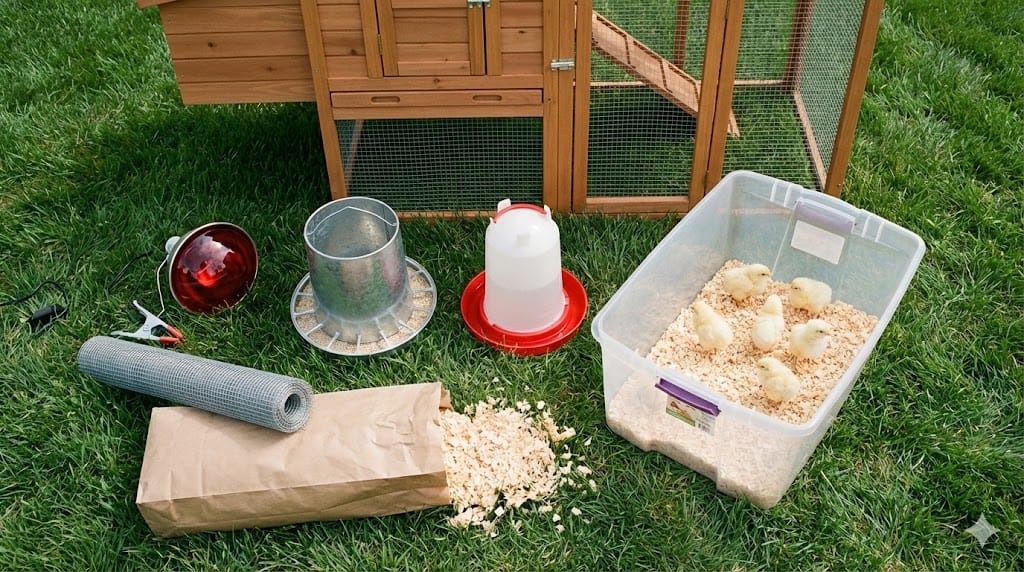
This is the “sticker shock” part of the chicken keeping budget. You can definitely do this cheaper if you build a chicken coop for under $200 using pallets, but I needed something that looked nice for the neighbors and was secure against predators. Also, consider how big should a chicken coop be before buying; my kit was tight for 6 birds.
| Item | Description | Cost |
|---|---|---|
| The Coop & Run | Mid-range kit purchased from Tractor Supply + extra weatherproofing paint | $650.00 |
| The Chicks | 6 day-old chicks (sexed) at $5.00 each | $30.00 |
| Brooder Supplies | Bringing chicks home essentials (Heat lamp, red bulb, plastic tote, puppy pads) | $45.00 |
| Feeder & Waterer | 3-gallon font waterer and 10lb hanging feeder | $42.00 |
| Predator Proofing | 1/2 inch Hardware Cloth (DO NOT use chicken wire) | $35.00 |
| First Aid Kit | Chicken first aid kit (Blue-Kote, electrolytes, VetRx) | $28.00 |
| TOTAL STARTUP | **$830.00** |
*Note: According to home service experts at HomeAdvisor, most people spend around $650 on a chicken coop, matching my experience. Data from HomeGuide confirms that pre-fab coop kits generally range from *$300 to $800* for a flock of 6-8 chickens, while custom builds detailed by Easy Coops can easily soar over $4,000 depending on materials.*
How Much Does It Cost to Feed 6 Chickens a Year?
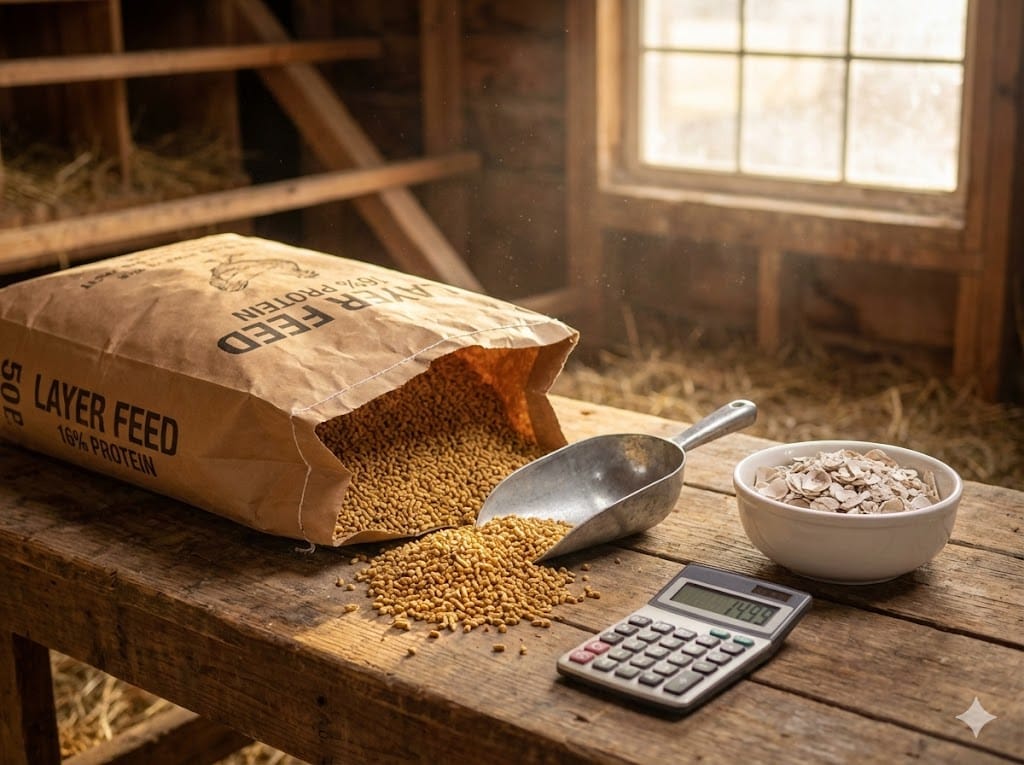
Feed is your biggest ongoing expense. I use a standard 50 lb bag of layer pellets.
I quickly learned that 6 chickens go through feed faster than you think. In the winter, they eat more to stay warm. In the summer, they eat a little less if they are finding bugs.
- Average consumption: My 6 hens eat roughly one 50 lb bag every 4 to 5 weeks.
- Cost per bag: A 50 lb bag of layer feed costs $16-$24 and lasts approximately one month for 6 chickens. I buy Purina Layena layer pellets for $18.50 per bag (you can check your own numbers with this chicken feed calculator). I specifically look for feed with 16-18% protein content, as recommended by From Scratch Farmstead for active layers. Backyard Poultry Magazine calculates layer feed costs at approximately $0.28/lb, which aligns with my spending.
- Treats: Mealworms are like chicken candy. I treat them occasionally (check out the best chicken treats for layers), though I rely mostly on kitchen scraps to keep costs down.
- Supplements: They need Calcium and Grit. A 50 lb bag of oyster shells costs about $18 and lasts roughly a year for a small flock.
Annual Feed & Treat Total: $222.00
This aligns with data from the Mississippi Family Homestead, which notes a 50 lb bag costs around $18. For context, if you scale up to 10 chickens, expect monthly feed costs to rise to the **$30–$45** range.
Bedding and Coop Maintenance Costs
You have to put something on the floor of the coop to absorb poop. I use pine shavings.
I use the “Deep Litter Method.” This means I don’t clean the coop out completely every week. Instead, I add a fresh layer of shavings on top. It composes down and creates heat in the winter.
- Pine Shavings: $6.50 per bale (Tractor Supply).
- Usage: About 1 bale per month.
- Annual Cost: $84.00
Bedding Alternatives Comparison: While I stick to pine shavings, here is how other bedding options compared in price:
- Pine Shavings: ~$8 per 8 cubic feet (Most common).
- Wood Pellets: ~$7 per 40 lb bag (Highly absorbent).
- Hay/Straw: ~$12 per bale (Can mold if wet).
- Sand: ~$35 per 50 lb (Expensive startup, but easy to scoop like cat litter).
The Hidden Costs Nobody Warns You About
This is where my budget broke. Nobody tells you about the random stuff.
- The Mystery Illness: One hen stopped walking (see why is my chicken lethargic). I bought specific vitamins ($15). She recovered.
- The Rat Incident: I found a tunnel near the coop. I had to buy extra hardware cloth and cement pavers to block the digging (learn how to keep rats out of chicken coop).
- Egg Cartons: I thought I’d save used ones, but I ran out. I bought reusable plastic cartons ($15).
Total “Hidden” Expenses: $75.00
How Much Do Chickens Cost Per Month? My Actual Numbers
If we look strictly at maintenance (ignoring the coop build), here is what the monthly cash flow looks like.
Monthly operating costs for 6 laying hens average $25-$40, primarily for feed and bedding.
| Month | Feed | Bedding | Misc/Medical | Total | Notes |
|---|---|---|---|---|---|
| January | $18.50 | $6.50 | $0 | $25.00 | Winter, high feed intake. |
| February | $18.50 | $6.50 | $0 | $25.00 | |
| March | $18.50 | $6.50 | $0 | $25.00 | |
| April | $18.50 | $6.50 | $45.00 | $70.00 | Rat proofing expenses. |
| May | $37.00 | $6.50 | $0 | $43.50 | Bought 2 bags of feed. |
| June | $0.00 | $6.50 | $15.00 | $21.50 | Had leftover feed. |
| July | $18.50 | $6.50 | $0 | $25.00 | |
| August | $18.50 | $6.50 | $0 | $25.00 | |
| September | $18.50 | $6.50 | $15.00 | $40.00 | Vitamins for sick hen. |
| October | $37.00 | $6.50 | $0 | $43.50 | Stocking up for winter. |
| November | $0.00 | $13.00 | $0 | $13.00 | Extra bedding for cold. |
| December | $18.50 | $6.50 | $0 | $25.00 | |
| TOTAL | **$222.00** | $84.00 | $75.00 | $381.00 | (Operating Costs Only) |
Average Monthly Cost: Roughly $31.75 just to keep them alive and happy.
Per-Bird Analysis: This works out to approximately $5.29 per chicken per month. For comparison, From Scratch Farmstead reports spending only $4.00 per chicken per month for their flock of 50 hens. This difference highlights the “economy of scale”—larger flocks are cheaper per bird because you can buy feed in bulk, whereas small backyard flocks like mine pay premium retail prices.
How Much Does It Cost to Raise a Chicken for 1 Year?
Let’s break this down per bird. This is useful if you are trying to decide between getting 4 chickens or 12.
Total First Year Spend: $1,211.00
Note: My total ran slightly above the average first-year cost of $1,115 reported by Az Chickens. This increase was primarily due to the unexpected rat-proofing and medical expenses I encountered, which validates the “hidden costs” narrative—budgeting for the unexpected is mandatory.
Flock Size: 6 Chickens Cost Per Chicken (Year 1): $201.83
However, looking at just the ongoing costs (excluding the coop build), the numbers look much better for Year 2.
Projected Year 2 Cost (Operating Only): ~$381.00
Cost Per Chicken (Year 2): $63.50
Data from Backyard Chickens Hub confirms that scaling helps. Raising 8 chickens costs about $175 per bird, whereas 4 chickens cost $201 per bird. The more birds you have, the more the cost of the coop and equipment is spread out.
Cost of Owning Chickens vs Buying Eggs: The Real Math
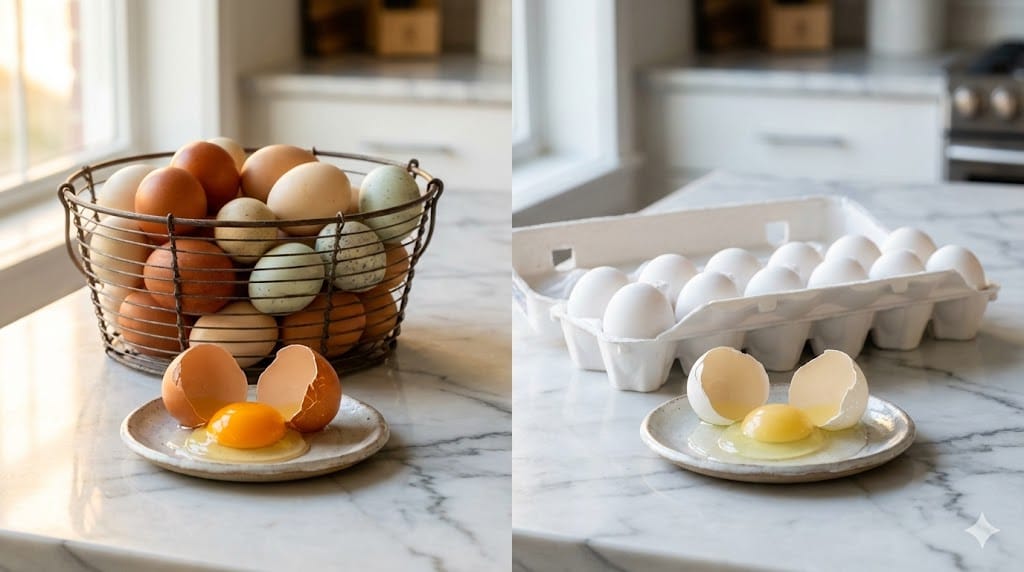
This is the section that hurts a little bit. Is it cheaper? No.
How to Calculate Your Cost Per Egg (With Formula)
To find your true cost per egg, use this formula: (Total Annual Expenses) ÷ (Total Eggs Collected) = Cost Per Egg
- Total Expenses: $1,211.00
- Total Eggs: My 6 hens laid roughly 720 eggs this year. (Remember, they didn’t lay for the first 5-6 months because they were babies!). This is actually a strong production rate—averaging about 20 eggs per hen per month once they started. Since standard breeds average 180-220 eggs per year at peak, hitting 720 in just a half-year of laying is excellent.
$1,211.00 ÷ 720 eggs = $1.68 per egg.
That is $20.16 per dozen.
*Note: You might notice my cost ($1.68) is actually slightly better than the industry average of *$1.98 per egg* reported by Az Chickens over a five-year period. This is because my calculation is based on Year 1 data when hens are at peak production. According to Az Chickens, standard breeds lay roughly 180-220 eggs per hen per year in peak seasons, with production naturally tapering off after year two.*
Obviously, this is thrown off because of the coop cost. If we only look at “operating costs” (feed/bedding) vs eggs:
$381.00 ÷ 720 eggs = $0.53 per egg ($6.36 per dozen).
Even ignoring the coop cost, my backyard eggs cost about $6.36 a dozen to produce. I can buy eggs at Aldi for less than that right now.
Break-Even Analysis: When Do Backyard Eggs Pay Off?
According to Az Chickens, a five-year backyard chicken investment totals approximately $7,140, with an average cost of $1.98 per egg.
I spent $650 on my coop. To earn that money back in eggs, my chickens need to lay for 3 to 4 years (see how long do chickens live). That assumes I have no big vet bills. It also assumes store prices stay high.
Is It Financially Worth It to Own Chickens?
If you are strictly looking at your bank account: No, it is not financially worth it.
The USDA Economic Research Service tracks egg price fluctuations, which have been volatile in recent years. But even with high store prices, mass-produced eggs are cheaper because big farms buy feed by the ton, not by the 50 lb bag.
My first year involved buying a coop, feeders, and raising chicks that didn’t lay eggs for half the year. That is a terrible business model if you want quick cash!
However, there are financial benefits that are harder to track:
- Fertilizer: I compost the chicken manure. My vegetable garden produced twice as many tomatoes this year. That saved me money on produce.
- Waste Reduction: My chickens eat almost all our kitchen scraps (see what can chickens eat from your kitchen). We waste zero food.
- Pest Control: I haven’t seen a tick or a spider in my yard in months. They eat them all.
Is It Worth It to Have Six Chickens? My Honest Assessment
Despite the high price tag, is it worth it? Yes.
Here is why I will keep doing it, even though it costs me money:
- The Taste: Store-bought eggs (even the “free range” ones) are often weeks old. My eggs are minutes old. The yolks are bright orange and stand up tall. The taste difference is real.
- The Experience: There is something incredibly peaceful about watching “chicken TV” in the backyard. They have funny personalities.
- Food Security: During the last supply chain shortage, the egg shelves at the store were empty. I still had breakfast in my backyard.
Future Upgrades I’m Considering (Smart Coop Tech)
While I’ve kept things simple so far, I am budgeting for some “quality of life” upgrades next year. Specifically, I’m looking at an automatic coop door (to let them out at sunrise without me waking up) and a heated poultry waterer for the freezing winter months. These smart home-style additions won’t lower my cost per egg, but they will save me time.
Final Verdict: If you want cheap eggs, go to Costco. If you want the best eggs you’ve ever tasted, a connection to your food, and a fun hobby that converts bugs into breakfast, get chickens.
Frequently Asked Questions
How much does a 50 lb bag of chicken feed cost?
In 2025, a 50 lb bag of standard layer pellets typically costs between $16 and $24. Organic feed is more expensive, often ranging from $30 to $45 for the same size bag. Check our post on how much does a 50lb bag of chicken cost for comprehensive understanding.
How much does a real chicken cost?
The cost of live chickens varies significantly by age. Baby chicks usually cost between $3 and $5 at local feed stores like Tractor Supply. Rare breeds or ordering online can cost $11 to $25 per chick due to shipping. Started pullets (hens ready to lay) cost significantly more, usually $20 to $50 each.
How much does a rooster cost?
Roosters often cost the same as hens as chicks ($3-$5). However, many people give roosters away for free because they are not allowed in many suburban areas (check chicken laws by state) and don’t lay eggs.
Is it cheaper to raise your own chickens for meat?
Generally, no. Raising “meat birds” (Cornish Cross) takes about 8 weeks. After factoring in the cost of the chick, the high-protein feed, and processing fees (or equipment), a home-raised whole chicken often costs $15 to $25 to produce. You can buy a rotisserie chicken at the store for $5. You do it for the quality, not the savings. For a detailed breakdown, see my guide on raising backyard chickens for meat.
Want to track your own flock expenses? I created a spreadsheet based on the tables above. While I can’t attach files here, I recommend creating a simple Google Sheet with columns for “Date,” “Item,” “Category,” and “Cost” to keep your budget honest!

Oladepo Babatunde is the founder of ChickenStarter.com. He is a backyard chicken keeper and educator who specializes in helping beginners raise healthy flocks, particularly in warm climates. His expertise comes from years of hands-on experience building coops, treating common chicken ailments, and solving flock management issues. His own happy hens are a testament to his methods, laying 25-30 eggs weekly.