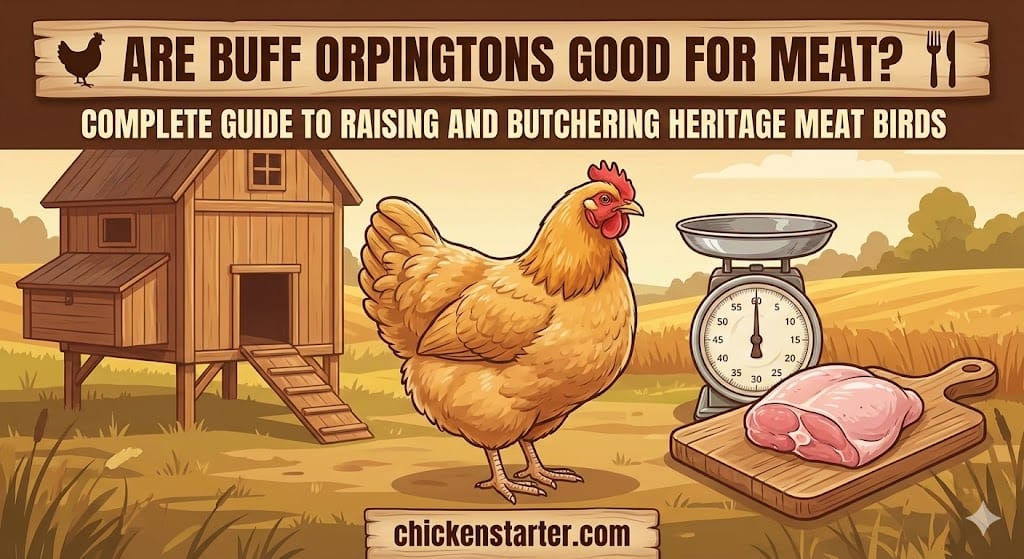
The question of whether Buff Orpingtons are good for meat comes up constantly in backyard chicken communities, and for good reason. These golden birds sit at an interesting crossroads between egg production and table fare, making them appealing to homesteaders who want versatility from their flock. But the reality of raising Buff Orpingtons for meat is more nuanced than most breed guides suggest.
I have processed Buff Orpingtons for meat multiple times over my six years of raising chickens, and the experience taught me lessons that no hatchery catalog could convey. The first time I butchered a Buff Orpington rooster, I was genuinely surprised by the results. The bird looked massive when alive, all those fluffy golden feathers creating an impressive silhouette in the yard. Once plucked and cleaned, he was considerably smaller than I expected, though the meat quality exceeded anything I had purchased from a grocery store.
According to Oklahoma State University’s breed database, the Orpington is considered a dual-purpose bird developed for both eggs and table meat. Standard roosters should weigh around 10 pounds, with hens reaching 8 pounds. These weights make them genuinely viable for meat production, though understanding the tradeoffs compared to dedicated meat breeds is essential before you commit to raising Buff Orpingtons specifically for the table.
This guide will walk you through everything you need to know about using Buff Orpingtons as meat birds, from realistic expectations about yield and timeline to the practical details of when and how to butcher them.
Understanding Buff Orpingtons as a Dual-Purpose Breed
Before diving into meat-specific considerations, you need to understand what dual-purpose actually means and why it matters for your decision.
Dual-purpose chickens were developed to serve two functions reasonably well rather than excelling at one. Buff Orpingtons emerged from this philosophy in late 1800s England, when William Cook created them by crossing Plymouth Rocks, Langshans, and Minorcas. His goal was a bird that could provide eggs throughout the year while also putting respectable meat on the table when needed.
This heritage makes Buff Orpingtons fundamentally different from modern commercial meat birds like Cornish Cross, which were engineered specifically for rapid growth and maximum breast meat. The comparison matters because your expectations need to align with what these heritage birds can actually deliver.
What dual-purpose means in practice:
- Slower growth rates than dedicated meat breeds
- Lower feed conversion efficiency
- Smaller breast portions relative to body size
- Superior flavor and texture according to many keepers
- Ability to reproduce naturally and sustain a flock
- Hens remain productive egg layers for years
The practical implication is that raising Buff Orpingtons for meat works best when you view meat production as one benefit among several rather than your primary goal. If maximum meat yield in minimum time is what you need, commercial broilers serve that purpose better. If you want birds that provide eggs, hatch their own replacements, and eventually contribute quality meat, Buff Orpingtons make excellent sense.
Buff Orpington Meat Production: Realistic Yield Expectations
Let me give you the honest numbers because understanding yield prevents disappointment later.
Live Weight vs. Dressed Weight
Buff Orpingtons appear larger than they actually are due to their profuse, fluffy feathering. This characteristic, while making them cold-hardy and visually impressive, creates a significant gap between what you see walking around your yard and what ends up on your cutting board.
| Category | Buff Orpington Rooster | Buff Orpington Hen |
|---|---|---|
| Live weight | 8-11 lbs (typically 10 lbs) | 7-8 lbs |
| At 18 weeks | 5-6 lbs dressed | 4-5 lbs dressed |
| At 22 weeks | 6-7 lbs dressed | 5-5.5 lbs dressed |
| Dressed weight (approximate) | 6-7 lbs | 4.5-5.5 lbs |
| Edible meat yield | 4-5 lbs | 3-4 lbs |
These numbers assume birds raised to full maturity at around 22 weeks. The dressed weight represents roughly 60-65% of live weight after removing feathers, head, feet, and internal organs. Edible meat yield drops further once you account for bones.
According to Grubbly Farms, Orpingtons raised for meat can be butchered at around 22 weeks of age for “a good source of quality, white-skinned meat.” This timeline is significantly longer than the 6-8 weeks typical for commercial Cornish Cross broilers.
Comparing Buff Orpington Meat Yield to Other Breeds
Understanding how Buff Orpingtons stack up against alternatives helps you make an informed decision.
| Breed | Time to Butcher | Typical Dressed Weight | Feed Efficiency |
|---|---|---|---|
| Cornish Cross | 6-8 weeks | 5-7 lbs | High |
| Buff Orpington | 20-24 weeks | 5-7 lbs (roosters) | Moderate |
| Freedom Rangers | 10-12 weeks | 5-6 lbs | Moderate-High |
| Plymouth Rock | 18-22 weeks | 5-6 lbs | Moderate |
The data reveals an important truth: Buff Orpingtons can match the dressed weight of Cornish Cross birds, but they require three to four times longer to reach that weight. This extended timeline means significantly more feed costs and management time.
However, many homesteaders accept this tradeoff because heritage birds like Buff Orpingtons can reproduce naturally, forage effectively to supplement their diet, and provide eggs while growing. Cornish Cross birds grow so fast they often cannot walk properly by slaughter age and cannot reproduce naturally.
When to Butcher Buff Orpington: Optimal Timing for Best Results
Timing your butchering correctly makes a substantial difference in meat quality and yield. The question of when to butcher Buff Orpington chickens has no single right answer because it depends on your priorities.
The 22-Week Standard
According to Murray McMurray Hatchery, one of America’s oldest poultry hatcheries, they suggest butchering Buff Orpingtons around 16-20 weeks of age. Other sources extend this to 22 weeks for maximum size. The sweet spot for most keepers falls between 18-22 weeks, balancing size with meat tenderness. At this age, roosters typically reach 8-10 pounds live weight, and the meat remains reasonably tender despite the bird’s maturity.
According to poultry science research, chicken meat toughness increases with age as connective tissue develops. Heritage breeds like Buff Orpingtons develop more slowly than commercial birds, which means their meat remains palatable at older ages than you might expect. However, waiting too long still results in tougher meat requiring longer cooking times.
Age-Based Guidelines
16-18 weeks: This is the earlier end of the recommended processing window according to Murray McMurray Hatchery. Birds provide tender meat with dressed weights around 4-5 pounds for roosters.
18-20 weeks: Many experienced keepers on forums like BackYard Chickens report processing at 18 weeks, achieving 5-6 pounds dressed weight with excellent tenderness.
20-22 weeks: The upper range for optimal results. Birds reach maximum size while meat retains good texture.
20-24 weeks: The sweet spot for most purposes. Birds have reached substantial size while meat retains good texture. Dressed weights of 5-7 pounds for roosters are typical.
6-12 months: Birds are fully mature with maximum size. Meat becomes firmer and more flavorful but requires slow cooking methods like braising or stewing. These older birds make excellent soup and stock.
12+ months: Older birds, particularly spent laying hens, should be used exclusively for slow-cooked dishes, stocks, and soups. The meat is too tough for roasting but contributes exceptional flavor to broths.
I processed my first Buff Orpington rooster at 24 weeks after he started becoming aggressive toward my hens. The meat was excellent, though noticeably firmer than grocery store chicken. We roasted him at a lower temperature for a longer time, and the flavor was remarkably rich, almost like a mild game bird.
Seasonal Considerations
If you are raising Buff Orpingtons for meat in a planned way, consider timing your hatch so birds reach butchering age in fall. This approach offers several advantages:
- Birds grow through mild spring and summer temperatures
- Fall processing avoids flies and heat stress
- Meat can be frozen for winter consumption
- Cleared birds reduce winter feeding costs
Our guide on the best feeding schedule for backyard chickens covers nutrition strategies that optimize growth while managing costs.
Buff Orpington Male vs Female: Which is Better for Meat?
The Buff Orpington male vs female comparison for meat purposes is straightforward: males produce more meat, but both sexes are viable table birds under different circumstances.
Roosters for Meat Production
Buff Orpington roosters are the obvious choice if meat production is your primary goal. They grow larger, reaching 10-11 pounds compared to hens at 7-8 pounds. The size difference translates to roughly 30% more meat per bird.
Additionally, most small flocks produce surplus roosters. Unless you are breeding, you only need one rooster per 8-12 hens for flock management. The extras either need rehoming or processing, making meat production a practical solution to the rooster surplus problem.
Advantages of roosters for meat:
- Larger final size
- Broader breasts
- Natural byproduct of hatching (50% of chicks are male)
- Do not interrupt egg production by culling
Disadvantages of roosters:
- May become aggressive as they mature
- Can be noisy, creating neighbor issues
- Need separation if multiple males present
Hens for Meat Production
While smaller, Buff Orpington hens still provide respectable meat. Most keepers process hens only when their productive laying years end, typically around age 3-5 years.
Older hens produce meat that is tougher but more flavorful than young roosters. This meat is ideal for:
- Chicken stock and bone broth
- Slow-cooked stews
- Shredded chicken for tacos, salads, and sandwiches
- Pressure cooker meals
Our comprehensive Buff Orpington chicken guide covers the full productive lifespan of hens and when culling makes sense from an economic perspective.
The Practical Approach
Most homesteaders follow this pattern:
- Hatch or purchase straight-run chicks (unsexed)
- Keep desired hens for eggs
- Process extra roosters at 20-24 weeks
- Process spent hens when laying declines significantly
This approach maximizes utility from every bird without requiring separate meat-only batches.
Raising Buff Orpingtons for Meat: Feeding and Management
Successfully raising Buff Orpingtons for meat requires attention to nutrition and management practices that promote healthy growth without the health problems common in fast-growing commercial breeds.
Feeding Program for Meat Production
Unlike Cornish Cross birds that require carefully restricted feeding to prevent health problems, Buff Orpingtons can be fed more liberally without developing leg issues or heart failure.
Recommended feeding program:
| Age | Feed Type | Protein Level | Notes |
|---|---|---|---|
| 0-8 weeks | Starter feed | 20-22% | Free choice feeding |
| 8-16 weeks | Grower feed | 18-20% | Transition gradually |
| 16+ weeks | Finisher or grower | 16-18% | Continue until processing |
Some keepers switch to a higher-protein finisher feed during the final 2-3 weeks before processing to maximize muscle development. This practice is borrowed from commercial poultry production and can increase final weight slightly.
Our guide on when to switch from starter to grower feed provides detailed timing recommendations for different management goals.
Encouraging Healthy Growth
Buff Orpingtons, unlike commercial broilers, benefit from exercise and foraging. Allow them outdoor access when possible, as active birds develop better muscle tone and flavor.
However, balance activity against weight gain if maximum meat production is your goal. Birds that forage extensively burn calories that could otherwise contribute to growth. A compromise approach provides limited outdoor time rather than full free-range access.
Management tips for meat-focused raising:
- Provide adequate space to prevent stress (4 square feet per bird minimum in housing)
- Ensure clean water is always available
- Supplement with grit for birds eating anything beyond commercial feed
- Monitor for parasites, which divert nutrients away from growth
- Keep stress low, as stressed birds grow poorly
Cost Considerations
The economics of raising Buff Orpingtons for meat differ significantly from commercial broilers. Let me break down realistic costs:
Feed costs for one Buff Orpington rooster (22 weeks):
- Starter feed (8 weeks): approximately 4-5 lbs at $0.50/lb = $2.00-2.50
- Grower feed (14 weeks): approximately 15-18 lbs at $0.40/lb = $6.00-7.20
- Total feed cost per bird: approximately $8.00-10.00
Resulting meat cost:
- 5-6 lbs dressed weight
- Cost per pound: $1.33-2.00
This cost compares favorably to commercial organic chicken ($5-8/lb) and pastured chicken ($6-10/lb) while providing significantly better flavor according to most keepers. However, it exceeds conventional grocery store chicken ($2-4/lb).
Our chicken feed calculator and cost guide helps you estimate expenses for your specific situation.
Meat Quality: What Makes Buff Orpington Meat Special
Beyond yield numbers, the actual eating quality of Buff Orpington meat deserves attention because it differs noticeably from commercial chicken.
Flavor Profile
Heritage breed meat, including Buff Orpingtons, is consistently described as more flavorful than commercial chicken. This difference results from several factors:
Age at slaughter: Heritage birds live longer, developing more complex flavor compounds in their muscles. Commercial broilers are slaughtered so young (6-8 weeks) that they barely develop any distinct flavor.
Activity level: Birds that move around, forage, and live more naturally develop muscle fibers differently than sedentary commercial birds. This activity contributes to flavor and texture.
Diet variety: Buff Orpingtons that forage consume insects, greens, and seeds that contribute subtle flavor notes absent in birds eating only commercial feed.
One BackYard Chickens forum member captured the experience well, noting their Buff Orpingtons were “obviously nothing like the Cornish Cross (the chicken you buy from the grocery store) but they were fairly meaty and had lots of flavor.”
Texture Differences
Buff Orpington meat has a firmer texture than commercial chicken. This quality is neither better nor worse, just different. The meat requires adjustment in cooking approach:
- Lower temperatures prevent toughening
- Longer cooking times allow connective tissue to break down
- Braising and stewing work exceptionally well
- Brining before roasting improves moisture retention
White Skin Consideration
Buff Orpingtons have white skin, which some consumers prefer over the yellow skin common in other breeds. The white skin crisps nicely when roasted and presents cleanly in dishes where skin visibility matters.
Processing Buff Orpingtons: Practical Considerations
The actual butchering process for Buff Orpingtons follows standard poultry processing techniques, but their unique characteristics warrant some specific advice.
Feather Considerations
Those beautiful, fluffy Buff Orpington feathers become a challenge during processing. The dense, loose feathering that makes these birds cold-hardy also makes them more tedious to pluck than tight-feathered breeds.
Tips for easier plucking:
- Water temperature between 145-150°F works well for most birds
- Scald time of 60-90 seconds allows feathers to release
- Work methodically to avoid tearing skin
- Consider a mechanical plucker if processing multiple birds
- Pin feathers (small immature feathers) may require extra attention
Size Advantage
The larger size of Buff Orpingtons compared to commercial broilers makes hand processing somewhat easier. There is more “room to work” when eviscerating, and the bird is easier to handle during all stages of processing.
Cooling and Storage
After processing, cool carcasses promptly to prevent bacterial growth. Ice water baths work well. Once cooled to 40°F or below, birds can be refrigerated for 1-2 days before cooking or frozen for long-term storage.
Many experienced processors recommend resting the carcass in refrigeration for 24-48 hours before cooking or freezing. This rest period allows rigor mortis to pass, resulting in more tender meat.
Comparing Buff Orpingtons to Other Heritage Meat Breeds
If you are considering Buff Orpingtons specifically for meat, comparing them to other heritage options helps clarify whether they are your best choice.
| Breed | Mature Weight | Growth Rate | Temperament | Special Considerations |
|---|---|---|---|---|
| Buff Orpington | 8-10 lbs | Moderate | Docile | Heat intolerant, excellent mothers |
| Australorp | 8-10 lbs | Moderate | Calm | Better heat tolerance, excellent layers |
| Plymouth Rock | 7.5-9.5 lbs | Moderate | Docile | Good all-around heritage bird |
| Brahma | 10-12 lbs | Slow | Very calm | Largest heritage breed |
| Sussex | 7-9 lbs | Moderate | Active | Good foragers |
For keepers prioritizing meat production within the heritage breed category, Brahmas offer larger size but slower growth. Australorps provide similar size with better heat tolerance, which matters significantly in warmer climates. Our Australorp chicken complete guide compares these breeds in detail.
Buff Orpingtons make the most sense for meat when you also value their exceptional temperament, brooding ability, and cold hardiness. They are particularly well-suited to keepers who want birds that can reproduce naturally and raise their own replacements.
My Personal Experience Processing Buff Orpingtons
Let me share what I learned processing Buff Orpingtons over several years, because the real-world experience differs from what breed guides suggest.
My first Buff Orpington rooster, a bird named Teddy who became increasingly aggressive toward my hens, was processed at about 26 weeks old. He looked enormous, easily the largest bird in my mixed flock. When I weighed him before processing, he came in at 9.5 pounds live weight.
After processing, the dressed carcass weighed 5.8 pounds. That gap between live and dressed weight genuinely surprised me because his fluffy feathers had created such an impressive visual impression. Still, nearly 6 pounds of chicken is substantial, far more than most birds I had processed previously.
The meat was noticeably different from store-bought chicken. The leg and thigh meat, in particular, had a richness I had never experienced in commercial chicken. We roasted him low and slow (325°F for nearly 2 hours), and the result was memorable. The breast meat was slightly drier than I expected, which taught me to brine or butter-inject Buff Orpington breasts in future processing.
Over subsequent years, I processed perhaps a dozen Buff Orpington roosters and a few spent hens. The roosters consistently provided good table fare when processed between 20-28 weeks. Older birds, including a 2-year-old rooster that broke the peace in my flock, required pressure cooking or braising but contributed amazing flavor to stews and stocks.
The spent hens, processed after their laying declined around age 4, were too tough for anything except slow cooking. But the stock made from those old hens was the richest, most flavorful chicken stock I have ever produced. Now I specifically save older hens for stock-making rather than viewing their meat as a disappointment.
One thing I wish I had known earlier: Buff Orpingtons process more easily in cooler weather. I made the mistake of processing in summer heat once, and the experience was miserable for both me and the birds. Fall processing, when temperatures drop but before hard freezes make outdoor work unpleasant, produces the best results.
Heat Tolerance Warning for Meat Production
I must address this because it directly affects anyone raising Buff Orpingtons in warm climates, and most chicken-keeping advice ignores it.
Buff Orpingtons struggle significantly in heat. Their dense feathering that makes them cold-hardy becomes a dangerous liability when temperatures climb. Birds stressed by heat grow poorly, and severe heat can be fatal.
If you live somewhere with hot summers and want to raise Buff Orpingtons for meat, plan your timing carefully. Hatch chicks in late fall or early winter so they reach butchering weight before summer heat arrives. Alternatively, accept that your birds will grow more slowly during hot months and adjust expectations accordingly.
I raise chickens in a tropical climate, and my Buff Orpingtons require significantly more management than heat-tolerant breeds. During our hottest months, growth essentially stalls as birds focus on surviving rather than growing. Keepers in the southern United States, inland Australia, or other hot regions face similar challenges.
Our guide on raising chickens in hot humid climates covers management strategies for heat-sensitive breeds like Buff Orpingtons.
Critical for hot climate keepers: Mile Four rates Buff Orpingtons as “Not particularly” heat hardy. Their dense feathers that provide excellent winter insulation become a serious liability in summer. If you live in a hot climate and want to raise Buff Orpingtons for meat, time your hatches so birds reach butchering weight before summer heat arrives. Birds stressed by heat grow poorly and convert feed inefficiently.
Frequently Asked Questions About Buff Orpingtons for Meat
Are Buff Orpingtons good for meat?
Yes, Buff Orpingtons are good meat birds for homesteaders seeking dual-purpose utility. Roosters reach 10-11 pounds live weight and provide 5-7 pounds dressed weight when processed at 22 weeks. The meat has excellent flavor, though birds require longer growing periods than commercial broilers. They work best when meat production complements egg laying rather than serving as the sole purpose.
When should I butcher my Buff Orpington?
The optimal age to butcher Buff Orpingtons is 20-24 weeks for the best balance of size and tenderness. At this age, roosters typically weigh 8-10 pounds live weight. Younger birds (16-18 weeks) provide smaller but more tender carcasses. Older birds (6-12 months) require slow cooking methods but contribute excellent flavor to stews and stocks.
How much meat does a Buff Orpington yield?
A Buff Orpington rooster yields approximately 5-7 pounds dressed weight from a 10-pound live bird. Hens yield approximately 4.5-5.5 pounds dressed weight from 7-8 pounds live weight. The fluffy feathering makes these birds appear larger than their actual meat yield, so expect dressed weight to be roughly 60-65% of live weight.
Is Buff Orpington meat better than store-bought chicken?
Most keepers report that Buff Orpington meat has superior flavor compared to commercial chicken. The longer growth period, varied diet, and active lifestyle contribute to more complex, richer-tasting meat. However, the texture is firmer than commercial chicken and may require adjusted cooking techniques like brining, lower temperatures, or longer cooking times.
Can Buff Orpington hens be used for meat?
Yes, Buff Orpington hens provide good meat, particularly when processed after their laying years decline. Younger hens (under 1 year) can be roasted, though they are smaller than roosters. Older spent hens (2+ years) have tougher meat that is best suited for slow cooking, pressure cooking, or making stock and broth.
How do Buff Orpingtons compare to Cornish Cross for meat?
Buff Orpingtons take 3-4 times longer to reach similar dressed weights as Cornish Cross broilers. Cornish Cross reach 5-7 pounds dressed weight in 6-8 weeks, while Buff Orpingtons require 20-24 weeks. However, Buff Orpingtons can reproduce naturally, forage effectively, and provide eggs, capabilities that Cornish Cross lack. The heritage breed also has superior flavor according to most keepers.
Are Buff Orpington roosters aggressive?
Buff Orpington roosters are generally among the least aggressive rooster breeds, sharing the calm, docile temperament of the hens. However, individual variation exists, and some roosters do become aggressive as they mature. Aggressive roosters often become candidates for processing, turning a behavioral problem into a productive solution.
What do Buff Orpingtons taste like?
Buff Orpington meat has a richer, more pronounced chicken flavor than commercial broilers. The dark meat (legs and thighs) is particularly flavorful and moist. The breast meat is leaner and can dry out without proper cooking technique. Overall, the flavor is often described as similar to mild game bird, with depth and complexity absent in fast-grown commercial chicken.
Making Your Decision: Is Buff Orpington Meat Right for You?
After covering the details, let me help you determine whether raising Buff Orpingtons for meat makes sense for your situation.
Choose Buff Orpingtons for Meat If:
You want birds that serve multiple purposes beyond meat production. The combination of eggs, brooding ability, and eventual meat makes them efficient for small homesteads.
You prioritize flavor and quality over maximum yield and speed. Heritage meat from Buff Orpingtons genuinely tastes better than commercial chicken.
You can accept the 20-24 week timeline and associated feed costs. The economics work well for those valuing self-sufficiency over pure cost minimization.
You live in a climate with cold winters and mild summers. Their heat intolerance matters less where summers stay moderate.
You want birds that can reproduce naturally and sustain your flock without buying new chicks regularly.
Consider Alternatives If:
Maximum meat production efficiency is your primary goal. Cornish Cross or Freedom Rangers produce more meat faster.
You live in a hot climate without capacity for intensive heat management. Heat-tolerant breeds will perform better.
You need meat quickly for a specific timeline or event. The extended growth period of heritage birds may not meet your schedule.
Budget constraints make the extended feeding period prohibitive.
For those wanting both eggs and eventual meat, Buff Orpingtons remain an excellent choice. Our guide on how many chickens do you need for a family of 4 helps you calculate flock size for combined egg and meat goals.
Getting Started with Buff Orpingtons for Meat
If you have decided Buff Orpingtons suit your needs, here are practical next steps:
Source quality birds. Purchase from reputable hatcheries or breeders. Be aware that heavily commercial hatchery strains may have been selected more for egg production than meat characteristics. Breeder-quality birds often have better body conformation for meat purposes.
Plan your timing. Calculate backwards from your desired processing date to determine when to acquire chicks. Add 22-24 weeks to your chick arrival date for the expected processing window.
Set up proper housing. Birds destined for meat still need adequate shelter and protection. Our guide on how big should a chicken coop be covers space requirements.
Prepare for processing. Decide whether you will process birds yourself or use a local processor. If processing yourself, ensure you have proper equipment and knowledge before processing day arrives.
Keep records. Track feed consumption, growth rates, and final yields. This data helps you refine your approach over time and accurately assess costs.
Buff Orpingtons have provided quality meat for homesteaders for over a century. With realistic expectations and proper management, they can do the same for you.

Oladepo Babatunde is the founder of ChickenStarter.com. He is a backyard chicken keeper and educator who specializes in helping beginners raise healthy flocks, particularly in warm climates. His expertise comes from years of hands-on experience building coops, treating common chicken ailments, and solving flock management issues. His own happy hens are a testament to his methods, laying 25-30 eggs weekly.