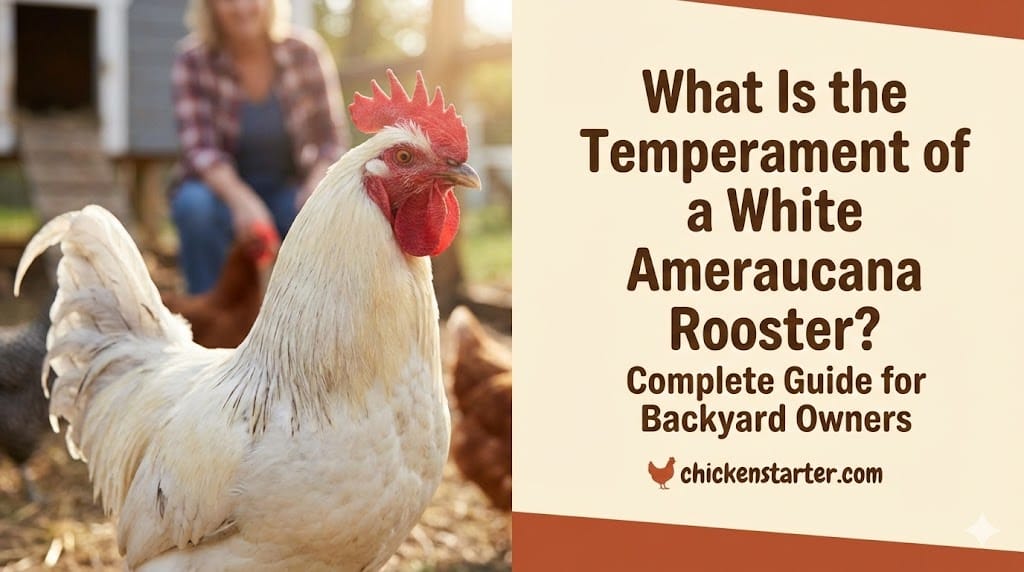
After keeping Ameraucanas for several years in my flock, I can tell you that the white Ameraucana rooster temperament is generally calm, curious, and relatively gentle compared to many other breeds. According to the Ameraucana Alliance, this breed was “created in the 1970s and 1980s in the North Central region of the United States” and has since earned a reputation as a practical, well-balanced fowl. These birds carry themselves with a quiet confidence that makes them a favorite among backyard chicken keepers who want a rooster without the aggressive drama that comes with some other breeds.
But here is the honest truth that took me years to learn: temperament in Ameraucana roosters, including the white variety, varies significantly from bird to bird. Some will follow you around the yard like a loyal dog, while others will bolt at the first sign of movement. Understanding what shapes these differences, and how to encourage the best behavior, is what this guide is all about.
Whether you are raising chickens in the humid heat of Australia, the variable climate of the UK, the cold Canadian winters, or anywhere across the United States, this comprehensive guide will help you understand exactly what to expect from a white Ameraucana rooster and how to raise one that fits well with your family and flock.
Understanding Ameraucana Rooster Temperament: The Basics
Ameraucana roosters, regardless of color variety, share certain breed characteristics that set them apart from other chicken breeds. According to The Featherbrain, Ameraucanas are “an alert and active breed, which makes them effective at evading predators.” This docile foundation combined with their formidable constitution is what makes Ameraucanas such a popular choice for backyard flocks.
However, I want to be clear about something that took me two failed rooster integrations to understand: “docile” does not mean “pushover,” and it certainly does not mean every Ameraucana rooster will behave identically.
My first failed integration happened in early 2022 when I introduced an Ameraucana rooster to a flock dominated by larger, more aggressive hens. He spent three weeks hiding in corners before I realized the problem. My second failure came when I tried keeping two roosters together with insufficient hens. The constant tension made both birds nervous wrecks. These experiences taught me that even gentle breeds need proper management.
The temperament you see in your white Ameraucana rooster will depend on several factors:
| Factor | Impact on Temperament | My Take |
|---|---|---|
| Genetics | Base personality inherited from parent stock | This matters more than most people realize |
| Early handling | Frequent, gentle handling from chick stage produces calmer adults | The single biggest factor you can control |
| Flock dynamics | Position in pecking order affects confidence and behavior | Get this wrong and even gentle roosters become stressed |
| Environment | Adequate space reduces stress and aggression | Cramped birds are cranky birds |
| Breeding season | Hormones can temporarily increase protective behavior | Expect some seasonal attitude changes |
| Socialization | Exposure to humans and varied situations builds confidence | Introduce them to everything early |
In my experience raising multiple Ameraucana roosters, the birds that came from breeders who handled their stock regularly were noticeably calmer than those from hands-off operations. This is not a criticism of any particular source, just an observation that early socialization matters enormously.
What Is the Temperament of a White Ameraucana Rooster Male?
Let me address the specific question many keepers ask: does the white coloration affect temperament?
The short answer is no. Color variety in Ameraucanas, whether white, blue, black, wheaten, or any of the other recognized colors, does not significantly impact temperament. The genes that determine feather color operate independently from those influencing behavior and personality. The blue egg gene that Ameraucanas carry has no connection to their behavioral traits.
Honestly, my white Ameraucana Frost behaves identically to blue and black Ameraucanas I have kept. The color is just packaging. What you get inside is the same curious, moderately protective bird.
That said, white Ameraucana roosters do share all the breed-typical characteristics that make Ameraucanas such appealing flock guardians:
Curiosity and Intelligence
White Ameraucana roosters are remarkably curious birds. I have watched mine investigate everything from new waterers to garden tools left near the coop. This intelligence serves them well as flock protectors because they notice changes in their environment quickly and alert hens to potential dangers. They display what is called tidbitting behavior, finding food and making specific calls to bring hens over to share the discovery.
Calm Alertness
Unlike some rooster breeds that seem perpetually on edge, white Ameraucanas tend to display calm alertness. They watch their surroundings carefully without the nervous energy that characterizes flightier breeds. This makes them effective guardians without being skittish nuisances. Their distinctive reddish-brown eyes scan the environment constantly.
One thing worth knowing: their characteristic muffs can sometimes block peripheral vision. I learned to consider this when positioning feeders and entry points in my coop, making sure my rooster could see potential threats approaching from multiple angles.
Moderate Protectiveness
A well-socialized white Ameraucana rooster will protect his hens without directing aggression toward humans. Mine have always positioned themselves between the flock and perceived threats, whether that is a hawk shadow overhead or my neighbor’s curious cat, but they have never charged at family members or guests.
One keeper I spoke with in Queensland described her white Ameraucana rooster as “the most sensible bird in my flock,” which captures the breed’s practical approach to flock management perfectly.
Ameraucana Rooster vs Hen: Temperament Differences Explained
Understanding the difference between rooster and hen temperament helps you set realistic expectations, especially if you are transitioning from an all-hen flock to one that includes a rooster.
| Trait | Ameraucana Rooster | Ameraucana Hen | What Surprised Me |
|---|---|---|---|
| Noise level | Crowing at dawn and when alerting flock | Egg song, conversational clucking | The hens are often louder overall |
| Protective behavior | Active guardian, may challenge perceived threats | Generally passive, relies on rooster for alerts | Roosters take this role seriously |
| Human interaction | Can be friendly if handled young, may be aloof | Often more approachable and curious | Hens tolerate handling better |
| Flock role | Guards, finds food for hens, maintains order | Social dynamics, egg laying | Watching tidbitting behavior never gets old |
| Space needs | Benefits from territory to patrol | Adapts well to various space arrangements | Give roosters room to roam |
| Handling tolerance | Variable, many dislike being picked up | More likely to tolerate handling | Do not expect a lap chicken |
Here is something important that the breed guides often gloss over: Ameraucana roosters, including white ones, typically do not enjoy being cuddled or held for extended periods. Even the most socialized Ameraucana does not want to be picked up and handled extensively. They are friendly birds that appreciate human company, but most prefer to interact on their own terms rather than being scooped up and petted.
My white Ameraucana rooster tolerates handling for health checks, but he makes it clear through body language that he would rather be set back down. This is normal breed behavior, not a sign of poor temperament. What surprised me initially was how different this was from my Buff Orpingtons, who will practically fall asleep in your arms.
The egg song that hens sing before, during, or after laying is actually louder and more frequent than most rooster crowing in this breed. If you have ever worried about rooster noise disturbing neighbors, understanding that your hens are probably making more regular noise puts things in perspective.
For more detailed information on whether adding a rooster makes sense for your flock, our guide on do I need a rooster to get eggs covers the practical considerations.
White Ameraucana Rooster vs Hen: Specific Differences
When comparing white Ameraucana roosters vs hens specifically, the color variety does not change the fundamental behavioral differences between sexes. However, the striking white plumage does make certain characteristics more visible.
White roosters show their hackle and saddle feathers more prominently against the pure white background, making sexing easier at younger ages. The contrast between the sleek body feathers and the longer, pointed hackle feathers becomes apparent earlier than in darker varieties where the feather structure differences can be harder to spot.
Both white roosters and hens share the characteristic slate-colored legs and small pea combs that define the breed. The roosters typically develop slightly larger combs and wattles, though both remain relatively small compared to breeds with single combs.
Blue Ameraucana Rooster Personality Traits
Since many keepers compare white and blue Ameraucana rooster options when selecting their flock, understanding blue variety personality helps put the white birds in context.
Blue Ameraucanas display the same foundational temperament as their white counterparts. The blue coloration, which appears as a soft slate gray with darker lacing on some feathers, is purely cosmetic and does not influence behavior.
Both varieties share:
- Curious, investigative nature that keeps them exploring their environment
- Moderate activity levels with good foraging instincts
- Calm disposition when properly socialized from chick stage
- Effective predator awareness without excessive nervousness
- Generally non-aggressive behavior toward humans and family members
The one observation I have heard from multiple keepers, though this is anecdotal rather than scientific, is that blue Ameraucanas sometimes seem slightly more reserved initially but warm up to their keepers over time. Whether this reflects genuine color-linked personality differences or simply individual variation is impossible to say with certainty.
For those interested in the blue egg laying genetics that Ameraucanas are famous for, our complete Ameraucana chicken breed guide covers everything from egg production to breeding considerations.
Black Ameraucana Rooster Behavior Characteristics
Black Ameraucana roosters round out the most popular color varieties and share the same breed-standard temperament. Their striking appearance, with solid black plumage and the characteristic muffs and beard, makes them visually impressive flock guardians.
Behaviorally, black Ameraucanas demonstrate:
- The same docile, curious nature as other color varieties
- Strong foraging instincts that keep them active throughout the day
- Alert but not anxious personalities
- Good integration with mixed-breed flocks when introduced properly
One interesting note about black Ameraucana roosters specifically: their dark coloration can make them appear more intimidating than they actually are. The combination of black plumage, reddish-brown eyes, and the hawk-like appearance that Ameraucanas naturally possess creates an impressive visual presence.
Some keepers believe this appearance may actually deter aerial predators, though this remains unproven. What I can say from experience is that my darker-colored roosters did seem to command more respect from the hens, though whether this was appearance-related or individual personality is hard to determine.
Are Ameraucana Roosters Loud? Honest Noise Assessment
This question comes up constantly, especially from keepers in suburban areas or those with noise-sensitive neighbors. Let me give you the honest assessment based on my experience and conversations with dozens of other Ameraucana keepers.
The straightforward answer: Ameraucana roosters crow, but they are often described as quieter than many other breeds.
Here is what you can realistically expect:
Crowing Frequency
Most Ameraucana roosters crow primarily at dawn and when they spot potential threats. Unlike some breeds that seem to crow constantly throughout the day, Ameraucanas tend to be more purposeful with their vocalizations.
My white Ameraucana rooster crows when the sun comes up, occasionally when he spots hawks or other aerial threats, and sometimes when he finds a particularly good treat to share with the hens through tidbitting behavior. That is significantly less noise than my previous Rhode Island Red rooster, who seemed to crow at everything including his own reflection.
In my years of keeping various breeds, Ameraucana roosters have never given me the heart-pounding moments my neighbor’s game rooster did. They are protective without being terrifying.
Volume Comparison
While no rooster is truly quiet, Ameraucanas fall on the moderate end of the volume spectrum:
| Breed Category | Relative Volume | Example Breeds | My Experience |
|---|---|---|---|
| Quieter | Moderate | Ameraucana, Buff Orpington, Australorp | Best for suburban keepers |
| Average | Standard | Plymouth Rock, Wyandotte | Noticeable but manageable |
| Louder | High | Leghorn, Rhode Island Red, some game breeds | Neighbor complaint territory |
Neighbor Considerations
If you are keeping chickens in an area with noise ordinances or close neighbors, an Ameraucana rooster is a more sensible choice than many alternatives. However, I always recommend talking with neighbors before adding any rooster to your flock. A dozen eggs delivered monthly builds goodwill that makes occasional crowing much more tolerable.
For keepers specifically concerned about noise, our guide on quietest chicken breeds for backyards provides additional options to consider.
Breeding Season Behavior Changes
One topic that deserves dedicated attention is how Ameraucana rooster temperament changes during breeding season. This is something many guides gloss over, but it significantly affects what you can expect throughout the year.
During peak breeding season, typically spring in most climates, you may notice your normally docile Ameraucana rooster becoming:
- More protective of his hens, positioning himself more frequently between the flock and perceived threats
- More vocal, with increased crowing to establish territory
- More attentive to the hens, showing increased tidbitting behavior
- Slightly more assertive with other birds and sometimes with humans
I noticed this shift most dramatically in my white Ameraucana during his second spring. A rooster that had been almost indifferent to my presence started watching me more carefully when I approached the hens. He never became aggressive, but his body language shifted from relaxed to alert whenever I entered the run during those months.
The good news is that even during breeding season, properly socialized Ameraucana roosters rarely become dangerous. They become more protective, not aggressive. Understanding this distinction helped me avoid overreacting to normal seasonal behavior changes.
By late summer, as breeding hormone levels decrease, most roosters return to their baseline temperament. If your rooster remains aggressive after breeding season ends, that likely indicates a deeper behavioral issue requiring intervention.
A note on broodiness: Many Ameraucana hens do go broody, and they make very attentive mothers. If you have a broody hen, expect your rooster to become extra vigilant during this period, as he takes his protective duties seriously when there are eggs or chicks involved.
Do Ameraucanas Make Good Roosters? Honest Pros and Cons
After years of keeping Ameraucanas alongside other breeds, I have formed a clear picture of where these roosters excel and where they fall short. Here is my honest assessment, ranked by what mattered most in my experience:
Advantages of Ameraucana Roosters
| Advantage | My Experience Rating | Notes |
|---|---|---|
| Generally calm disposition | ★★★★★ | Most Ameraucana roosters can be trusted around children and visitors when properly socialized |
| Formidable constitution | ★★★★★ | Hardy birds that handle various conditions well |
| Effective flock guardians | ★★★★☆ | They take their protective role seriously without excessive aggression |
| Cold hardiness | ★★★★★ | Their pea combs reduce frostbite risk significantly |
| Moderate noise levels | ★★★★☆ | Quieter than many popular breeds |
| Good with mixed flocks | ★★★★☆ | Generally integrate well with other chicken breeds |
| Intelligence | ★★★★★ | Quick learners who adapt to routines and recognize their keepers |
| Beautiful appearance | ★★★★★ | The muffs, beard, and varied color options make them visually striking |
Potential Challenges
| Challenge | My Experience Rating | What Caught Me Off Guard |
|---|---|---|
| Temperament variability | ★★★☆☆ | Individual personalities range from friendly to flighty, more than I expected |
| May be picked on | ★★★☆☆ | Their non-confrontational nature means aggressive breeds may bully them |
| Peripheral vision limitation | ★★★☆☆ | Their muffs can block side vision, affecting predator awareness |
| Cross beak susceptibility | ★★★☆☆ | More prone to this health issue than many breeds |
| Still crow | ★★★★☆ | Quieter does not mean silent |
| Not lap chickens | ★★★★☆ | Most prefer companionship over cuddling |
| Availability | ★★★☆☆ | Quality breeding stock can be harder to find than common breeds |
For keepers considering other docile rooster options, our Buff Orpington chicken guide covers another breed known for gentle temperament that pairs well with Ameraucanas in mixed flocks.
Ameraucana Health Considerations: Cross Beak and Other Issues
One health consideration specific to Ameraucanas that directly affects how you manage your flock: they are more susceptible to cross beak than most other breeds. Cross beak, also called scissor beak, is a condition where the upper and lower beak are misaligned due to skull deformation.
According to experienced breeders in the Ameraucana Breeders Club, cross beak chicks typically do not improve over time, and the condition often worsens as the bird ages. While this does not affect temperament directly, it is worth knowing if you plan to breed your Ameraucanas or if you notice beak misalignment in chicks.
Managing Cross Beak If It Occurs
If you end up with a cross beak chicken, here is what I have learned works:
- Use deep dishes or bowls for feeding since shallow feeders are difficult for cross beak chickens to access
- Consider layer mash or crumbles rather than pellets, as smaller pieces are easier to scoop
- Wet or fermented feed sticks together better and can be scooped up more easily
- Some keepers trim the overgrown portion of the beak carefully using nail clippers
- Watch for bullying, as cross beak chickens may struggle in the pecking order
Cross beak can result from genetics, improper incubation conditions, or injury. If you are hatching your own eggs, ensure proper incubation temperatures (99.5 to 102°F depending on airflow) and source eggs from breeders who do not perpetuate cross beak genetics.
Wet Muffs and Beards
Another Ameraucana-specific concern: if you are watering your birds from open bowls, their beards and muffs can get wet. This is not ideal in cold months because wet facial feathers can lead to frostbite. Consider using poultry nipple waterers to prevent this issue, especially during winter.
For more information on chicken health monitoring, our chicken health check guide covers what to look for during regular flock inspections.
General Ameraucana Chicken Temperament Overview
Understanding the overall breed temperament helps contextualize what to expect from both roosters and hens. Ameraucanas as a breed share certain characteristics that have made them popular worldwide.
Curiosity as a Defining Trait
Every Ameraucana keeper I have spoken with mentions curiosity as a primary characteristic. These chickens want to know what you are doing, what that new object in the yard is, and why you are carrying that bucket. This inquisitiveness makes them entertaining to watch but also means they need environmental enrichment to stay mentally satisfied.
One Ameraucana owner described birds that had “figured out how to use the cat door to get into the house,” which perfectly illustrates their problem-solving intelligence.
Adaptability
Ameraucanas handle various living situations reasonably well. They can tolerate confinement if necessary, though they absolutely thrive with space to explore and forage. For hot climate keepers like myself in Nigeria, their adaptability to different temperatures is valuable, though they do not handle extreme heat as well as Mediterranean breeds like Leghorns, Anconas, or Blue Andalusians.
Social Dynamics
Within mixed flocks, Ameraucanas typically occupy the middle of the pecking order. They are neither the bullies nor the bullied in most situations. This makes them excellent addition birds for established flocks, as they integrate without causing major disruptions. When adding new birds, mix them in with breeds that are a similar size to minimize any fighting.
Flock Ratio Recommendations
Most sources recommend keeping approximately 9 hens per rooster for optimal flock dynamics, though anywhere from 8 to 12 hens works well. Too few hens and they become over-mated and stressed. Too many and your rooster cannot effectively protect and manage the flock.
Clean-Faced Ameraucanas
Some Ameraucanas are born without the characteristic muffs and beards. These birds are called clean-faced Ameraucanas. This occurs because muffs and beards are autosomal dominant traits, meaning some chickens may be born without them due to recessive genetics. Clean-faced birds have the same temperament as their muffed counterparts and are still true Ameraucanas, even though they would not qualify for shows.
Our detailed guide on bringing chicks home with 15 must-haves covers establishing good handling routines from day one that help develop the best temperament in your birds.
How to Tell If Your Ameraucana Is a Rooster
One of the most common questions from new Ameraucana keepers involves sexing their birds. Straight-run chicks, in particular, leave owners wondering for weeks whether they have pullets or cockerels.
Here is my field-tested guide to identifying Ameraucana roosters at various ages, including the things that fooled me early on:
4 to 6 Weeks Old
At this early stage, differences are subtle but present:
| Feature | Cockerel Signs | Pullet Signs | What Fooled Me |
|---|---|---|---|
| Comb | Wider at base, slightly larger | Narrower, smaller | Fast-developing pullets can have larger combs |
| Leg thickness | Noticeably thicker | Finer, more delicate | Nutrition affects leg development |
| Overall size | May be slightly larger | Typically smaller | Some hens are just big birds |
| Behavior | More assertive, chest puffing | Generally more reserved | Personality varies widely |
8 to 12 Weeks Old
This is when differences become more apparent:
- Hackle feathers: Cockerels develop pointed hackle feathers around the neck, while pullets have rounded ones
- Stance: Cockerels begin standing more upright with a confident posture
- Early crowing attempts: Some cockerels attempt their first crows, which sound more like squeaky doors than proper crows
- Leg color: Both should show slate-colored legs, but rooster legs tend to be thicker
12 to 16 Weeks Old
By this age, identification becomes straightforward:
- Saddle feathers: Cockerels develop long, pointed feathers draping over the back near the tail
- Comb and wattles: Noticeably larger and redder in cockerels
- Regular crowing: Most cockerels are crowing regularly by this point
- Behavioral changes: Increased interest in the hens, tidbitting behavior
16 Weeks and Beyond
Adult characteristics are fully apparent:
- Full hackle and saddle feathers in roosters
- Pullets may begin laying their distinctive blue eggs
- Size difference becomes pronounced (roosters average 6.5 lbs, hens 5.5 lbs according to the American Poultry Association standard)
- Reddish-brown eyes are visible in both sexes
For keepers who prefer certainty earlier, our guide on best chicken egg incubators for beginners discusses options for those who want to hatch their own chicks with more control over the process.
Ameraucana Temperament Compared to Similar Breeds
If you are deciding between Ameraucanas and similar breeds, understanding temperament differences helps inform your choice.
| Breed | Temperament | Noise Level | Family Friendly | Heat Tolerance | Cold Tolerance | My Experience |
|---|---|---|---|---|---|---|
| Ameraucana | Calm, curious | Moderate | Yes | Moderate | Excellent | Most reliable for balanced temperament |
| Araucana | Active, can be flighty | Moderate | Variable | Moderate | Good | More nervous than Ameraucanas |
| Easter Egger | Highly variable | Variable | Usually yes | Variable | Variable | True gamble on personality |
| Buff Orpington | Very calm, docile | Low | Excellent | Moderate | Excellent | Calmer but less alert as guardians |
| Australorp | Calm, friendly | Low | Excellent | Moderate | Excellent | Similar to Orpingtons |
Ameraucana vs Araucana: Key Differences
This comparison is essential because these breeds are often confused. According to the American Poultry Association, Araucanas must be rumpless (no tail) and have ear tufts, which are clumps of feathers growing from small tabs of skin near the ear openings. This ear tuft trait is nearly always lethal to unhatched chicks when inherited from both parents, meaning tufted Araucanas do not breed true and will always produce a percentage of clean-faced offspring.
Ameraucanas, on the other hand, have tails and sport muffs and beards in the facial area. These characteristics are true-breeding. This genetic stability is one reason Ameraucanas have become more popular than their parent breed for backyard keepers.
Temperamentally, Araucanas tend to be more active and sometimes flightier than Ameraucanas. The Ameraucana was specifically developed to retain the blue egg gene while improving on temperament and eliminating those problematic lethal gene combinations.
Ameraucana vs Easter Egger
This comparison deserves special attention because Easter Eggers are often sold as Ameraucanas. True Ameraucanas are a standardized breed recognized by the American Poultry Association, while Easter Eggers are mixed-breed chickens bred for colored eggs.
Easter Egger temperament is genuinely unpredictable because their genetics vary widely. You might get a calm, friendly bird, or you might get a nervous, flighty one. Ameraucanas, while still variable individually, have more consistent breed characteristics because of standardized breeding programs through organizations like the Ameraucana Breeders Club and Ameraucana Alliance.
Our detailed comparison in Ameraucana vs Easter Egger breaks down all the differences between these commonly confused birds.
For those interested in the original breed, our Araucana chicken breed guide covers their unique characteristics and care requirements.
Tips for Raising a Friendly White Ameraucana Rooster
Based on my years of experience and countless conversations with other keepers, here are practical strategies for encouraging the best temperament in your Ameraucana rooster:
Start Handling Early
Begin gentle, consistent handling from the first week. Chicks that associate human hands with warmth, food, and safety grow into adults who view humans as non-threatening. Even five minutes of daily handling makes a significant difference.
Use Food as a Bonding Tool
Hand-feeding treats creates positive associations. My roosters learned quickly that my presence often meant mealworms or scratch grains. This does not make them pushovers, but it does establish trust that carries through to adulthood.
Never Play Aggressive Games
This is crucial: never encourage your rooster to “fight” your hand, chase your feet, or engage in any behavior that mimics aggression. What seems cute in a chick becomes dangerous in a full-grown rooster. Always discourage any pecking or challenging behavior immediately by calmly picking up the bird and holding it until it relaxes.
Maintain Consistent Behavior
Roosters thrive on routine and predictability. Erratic behavior from humans, including sudden movements, chasing chickens for fun, or inconsistent responses to rooster behavior, creates anxiety that can manifest as aggression.
Provide Adequate Space and Resources
Overcrowding stresses chickens and increases aggression. Ensure your rooster has enough space to patrol, adequate hens (generally 9 hens per rooster is ideal, though 8 to 12 works), and sufficient feeders and waterers to prevent resource competition.
Know When to Intervene
If your rooster shows genuine aggression toward humans, address it immediately. Some keepers use the “rooster timeout” method, carrying the aggressive bird under their arm for 15 to 20 minutes whenever he acts up. This establishes dominance without violence.
Recognize Individual Limits
Some roosters, despite your best efforts, will have difficult temperaments. This is not your fault. If a rooster poses genuine danger to family members, especially children, rehoming to an appropriate situation is the responsible choice.
For additional guidance on managing rooster behavior within your flock, our article on pecking order problems and stopping bully hens fast covers flock dynamics that apply to roosters as well.
Bantam vs Standard Ameraucana Temperament
While this article focuses primarily on standard-sized Ameraucanas, bantam varieties deserve mention since they are increasingly popular.
According to the American Poultry Association standard, bantam Ameraucana roosters weigh approximately 30 ounces (1.875 lbs), while bantam hens are slightly smaller at 26 ounces (1.625 lbs). This compares to the 6.5 pounds of standard roosters.
Despite their smaller size, bantam Ameraucanas display the same breed-typical temperament: curious, relatively calm, and moderately protective.
Some keepers report that bantam roosters can be slightly more assertive than their larger counterparts, possibly compensating for their smaller stature. However, their reduced size means any aggression is easier to manage physically.
Bantams may be better suited for smaller spaces and urban environments where a full-sized rooster would be overwhelming. Their crowing is also somewhat quieter due to their smaller body size, though the frequency remains similar.
Climate Considerations for Ameraucana Roosters
Since I started ChickenStarter specifically to address the lack of hot-climate chicken keeping advice, I want to address how Ameraucana roosters perform in various conditions.
Cold Climate Performance
Ameraucana roosters excel in cold climates. Their small pea combs and minimal wattles dramatically reduce frostbite risk compared to breeds with large single combs. Keepers in Canada, northern United States, and the UK report excellent winter hardiness with basic coop protection.
The main cold-weather consideration involves their muffs and beards. If these facial feathers get wet from dipping in water bowls, they can freeze and cause discomfort or frostbite. Using nipple waterers or heated water bases eliminates this concern. I learned this the hard way one January morning when I found my Ameraucana with icicles hanging from his beard.
Hot Climate Performance
Here is where I need to be honest: Ameraucanas handle heat adequately but not exceptionally. In my experience keeping them in tropical Nigeria, they require:
- Constant access to shade
- Fresh, cool water available at all times
- Good coop ventilation
- Reduced activity expectations during peak heat
They do not tolerate extreme heat as well as Mediterranean breeds like Leghorns, Anconas, or Blue Andalusians. If you are keeping chickens in consistently hot climates, ensure you have adequate cooling strategies in place.
Our guides on keeping chickens cool in summer in Australia and raising chickens in hot humid climates provide detailed strategies for hot-weather chicken keeping.
My Personal Experience with White Ameraucana Roosters
I want to share a specific experience that shaped my understanding of Ameraucana temperament, because I think it illustrates what makes these birds special while also acknowledging their limitations.
In March 2023, I added a white Ameraucana rooster named Frost to my flock. He came from a breeder who handled her birds daily, and the difference was apparent from the start. Unlike previous roosters I had raised from hatchery chicks with minimal handling, Frost showed no fear when I entered the coop. He would watch me, sometimes follow me, but never displayed the nervous energy I had come to expect.
What impressed me most was how he handled a genuine threat. When a neighborhood dog broke through my fence one afternoon, Frost positioned himself between the hens and the dog, puffed up to appear larger, and made alarm calls that sent every hen running for cover. He held his ground until I arrived, never attacking the dog but making it absolutely clear he was not backing down.
That balance, protective without being recklessly aggressive, is what I now look for in any rooster. Frost demonstrated the Ameraucana temperament at its best: calm confidence paired with genuine courage when it mattered.
However, I have also had Ameraucana roosters that were flightier, more nervous, and less suited to family interaction. One bird I acquired in 2021, who would get upset if you even looked at her direction and made noises I had never heard a chicken make, never warmed up despite months of patient handling. These birds were not aggressive, just skittish in ways that made them less enjoyable to keep. This variability is real and worth acknowledging.
The lesson I took from these experiences: source your birds carefully, handle them consistently from an early age, and be prepared to work with whatever personality your specific bird develops. The foundation is there for a wonderful rooster experience, but the outcome depends partly on the effort you invest.
Frequently Asked Questions About Ameraucana Rooster Temperament
What is the personality of an Ameraucana chicken?
In my experience and based on what I have seen across dozens of flocks, Ameraucana chickens are genuinely curious birds that want to know everything happening in their environment. They tend to be friendly toward humans without demanding constant attention, and they integrate well into mixed-breed flocks. Their personalities range from boldly interactive to somewhat reserved, but aggressive behavior is uncommon in the breed. Mine have always been the first to investigate anything new in the yard, sometimes to the point where I have to shoo them away from my tools.
Do Ameraucanas make good roosters?
Yes, and honestly, they are one of the best starter rooster breeds I can recommend. Ameraucanas typically provide effective flock protection without the extreme aggression common in some breeds. Their moderate noise levels, cold hardiness, and generally calm disposition make them suitable for family settings when properly socialized. The main caveat is that individual birds vary, so do not assume every Ameraucana rooster will be perfect just because the breed has a good reputation.
What is the temperament of a white Ameraucana rooster?
Honestly, my white Ameraucana Frost behaves identically to blue and black Ameraucanas I have kept over the years. Color does not affect personality in this breed. What you get is the same curious, moderately protective, generally docile bird regardless of feather color. Individual temperament depends more on genetics, early handling, and environment than on whether your rooster is white, blue, or black.
Are Ameraucana roosters aggressive?
Ameraucana roosters are generally not aggressive, especially compared to breeds with reputations for rooster aggression like some game breeds. However, any rooster can develop aggressive tendencies if poorly socialized or threatened. Proper handling from an early age significantly reduces aggression risk. During breeding season, expect increased protectiveness, but this should not translate to attacks on humans. If it does, you either got an unusually aggressive individual or something in your management needs to change.
How loud are Ameraucana roosters?
Ameraucana roosters crow at moderate volume and frequency, typically at dawn and when alerting the flock to perceived threats. They are often described as quieter than many popular breeds, making them more suitable for suburban settings. However, no rooster is truly silent. Interestingly, the hens’ egg song is often more frequent than rooster crowing in this breed, something I wish someone had told me before I worried so much about rooster noise.
What color Ameraucana has the best temperament?
No color variety has demonstrably better temperament than another. White, blue, black, wheaten, and other recognized colors share the same breed-standard personality traits. Choose your color based on aesthetic preference rather than temperament expectations. I have owned all three major colors and cannot detect any consistent personality differences.
Can Ameraucana roosters be kept together?
Keeping multiple roosters together is challenging with any breed. If you must keep multiple Ameraucana roosters, provide ample space, adequate hens for each rooster (approximately 9 hens per rooster minimum), and be prepared to separate birds if fighting occurs. Some keepers successfully maintain bachelor groups without hens, but this requires careful management and is not something I would recommend for beginners.
Are Ameraucanas prone to any health issues?
One breed-specific concern is that Ameraucanas are more susceptible to cross beak than most other breeds. Cross beak is a condition where the upper and lower beak are misaligned due to skull deformation. While this does not affect temperament, chickens with cross beak require special feeding accommodations. If you plan to breed Ameraucanas, avoid using birds from lines that produce cross beak offspring.
I’m Oladepo Babatunde, founder of ChickenStarter. With over 6 years raising chickens across multiple breeds in tropical Nigeria, I built this site because most chicken-keeping advice targets temperate areas with mild summers and winters. The Frost story happened in my own backyard, and the lessons from my failed rooster integrations shaped how I approach adding new birds to this day. If you have ever felt overwhelmed by conflicting advice that does not fit your reality, you are in the right place.

Oladepo Babatunde is the founder of ChickenStarter.com. He is a backyard chicken keeper and educator who specializes in helping beginners raise healthy flocks, particularly in warm climates. His expertise comes from years of hands-on experience building coops, treating common chicken ailments, and solving flock management issues. His own happy hens are a testament to his methods, laying 25-30 eggs weekly.