Understanding Buff Orpington egg production is essential for anyone considering these beautiful golden chickens for their backyard flock. Whether you want a steady supply of fresh eggs for your family or you are calculating how many hens you need to meet specific goals, knowing exactly what to expect from these popular dual-purpose birds helps you plan effectively.
I have raised Buff Orpingtons alongside Australorps and various heat-hardy breeds over the past six years. What I discovered is that these fluffy golden hens deliver consistent, reliable egg production that falls somewhere between the extremes. They are not the production powerhouses that commercial hybrids are, but they outperform many heritage breeds while offering something those high-production birds cannot: personality, beauty, and years of companionship.
According to Cackle Hatchery, one of the oldest hatcheries in America that has been breeding Buff Orpingtons since 1979, these hens produce approximately 200 to 280 eggs per year. Real-world data from keeper surveys confirms these numbers, with most owners reporting 3 to 5 eggs weekly from each hen.
This guide will cover everything you need to know about Buff Orpington egg production, from when they start laying to year-round production patterns, and practical strategies to maximize your hens’ output.
How Many Eggs Do Buff Orpingtons Lay? Production Numbers Explained
Let me be direct about the numbers, because I have seen wildly different claims across various sources. After cross-referencing multiple hatcheries, research institutions, and experienced keepers, here is the realistic picture of Buff Orpington egg production per year:
| Source | Annual Eggs | Weekly Eggs |
|---|---|---|
| Cackle Hatchery | 200-280 | 3-5 |
| Lafeber Company | 180-220 | 3-4 |
| Poultry Hub Australia | 200-220 | 4 |
| The Chicken Coop Company | 200-280 | 3-5 |
| Hobby Farms | 150-250 | 3-6 |
| BackYard Chickens Forum | 160-180 | 3-4 |
Realistic expectation: 180 to 260 eggs per year, or 3 to 5 eggs per week from each hen.
According to a survey of over 450 Buff Orpington owners conducted by Chicken Experts, 41% reported receiving 4 eggs per week and 35% reported 5 eggs per week from their hens. This real-world data aligns with hatchery estimates and confirms that most keepers can expect 3 to 5 eggs weekly from each hen during productive months.
The same survey revealed that 92% of owners said they would choose to own a Buff Orpington again, which speaks to the satisfaction keepers experience beyond just egg numbers.
Buff Orpington Egg Production Per Day: What to Expect
Understanding Buff Orpington egg production per day helps with daily planning and identifying potential problems.
A healthy Buff Orpington hen in her prime lays approximately one egg every 25 to 27 hours. This means she will not lay at the same time each day. If she lays at 8 AM Monday, she might lay at 9 AM Tuesday, 10 AM Wednesday, and so on until eventually she skips a day and resets the cycle.
Daily production expectations by flock size:
| Flock Size | Daily Eggs (Average) | Daily Eggs (Peak Season) |
|---|---|---|
| 3 hens | 2 eggs | 3 eggs |
| 6 hens | 4 eggs | 5-6 eggs |
| 12 hens | 7-8 eggs | 10-11 eggs |
| 24 hens | 15-16 eggs | 18-20 eggs |
I track my egg production daily in a simple notebook. My four Buff Orpingtons averaged 2.8 eggs per day during their peak months (March through September) and dropped to about 1.5 eggs per day during winter. These numbers match what most experienced keepers report.
For guidance on planning your flock size based on egg needs, our guide on how many chickens do you need for a family of 4 provides detailed calculations.
Buff Orpington Egg Laying Age: When Do They Start?
One of the most common questions new chicken keepers ask is how long does it take for Buff Orpington to lay eggs. The answer requires patience.
Buff Orpingtons typically begin laying between 20 and 26 weeks of age, with most hens starting around 22 to 24 weeks (approximately 5 to 6 months). According to the Chicken Experts survey data, the age of maturity for this breed falls between 20 to 22 weeks, though individual variation exists.
According to Hobby Farms, “Orpington hens typically start laying between 6 and 8 months old,” which represents the later end of the range. Customer reviews from major hatcheries consistently report first eggs arriving around the 22 to 24 week mark for most birds.
I remember the anticipation waiting for my first Buff Orpington eggs. My girls started laying at exactly 23 weeks. I had been checking the nesting boxes daily from week 18, growing increasingly impatient. The first egg was smaller than I expected, barely larger than a golf ball, but within a month they were laying beautifully sized eggs.
Signs your Buff Orpington is about to lay:
- Comb and wattles turn bright red
- She squats when you approach
- She inspects nesting boxes frequently
- Increased vocalizations
- Pelvic bones spread apart (you can feel this)
Our detailed guide on chicken behavior before laying first egg covers all the signs to watch for.
Buff Orpington Egg Size and Color: What Your Hens Produce
Understanding Buff Orpington egg color and size helps you know what to expect and identify potential issues.
Egg color: Brown, ranging from light tan to medium brown. According to Lafeber Company, Buff Orpington eggs range from “light brown to dark brown.” The exact shade varies between individual birds and can change slightly with diet and season.
Egg size: Large. According to The Chicken Coop Company, despite the breed’s larger body size, “the eggs produced by these hens are not necessarily larger” than other breeds. Most sources classify Buff Orpington eggs as large, with some mature hens producing extra-large eggs.
Buff Orpington egg specifications:
| Characteristic | Details |
|---|---|
| Shell color | Light to medium brown |
| Size classification | Large (medium per some sources) |
| Average weight | 55-65 grams |
| Shell quality | Good, moderately thick |
| Yolk color | Deep yellow to orange (diet dependent) |
Pullet eggs: The first eggs your young hen lays will be smaller, sometimes called “pullet eggs.” These gradually increase in size over the first few months of laying. By the time your hen is 8 to 10 months old, she should be producing her full-sized eggs consistently.
For information about egg quality issues you might encounter, our guide on why did my chicken lay an egg without a shell addresses common shell problems.
Buff Orpington Egg Production Chart: Year-Round Patterns
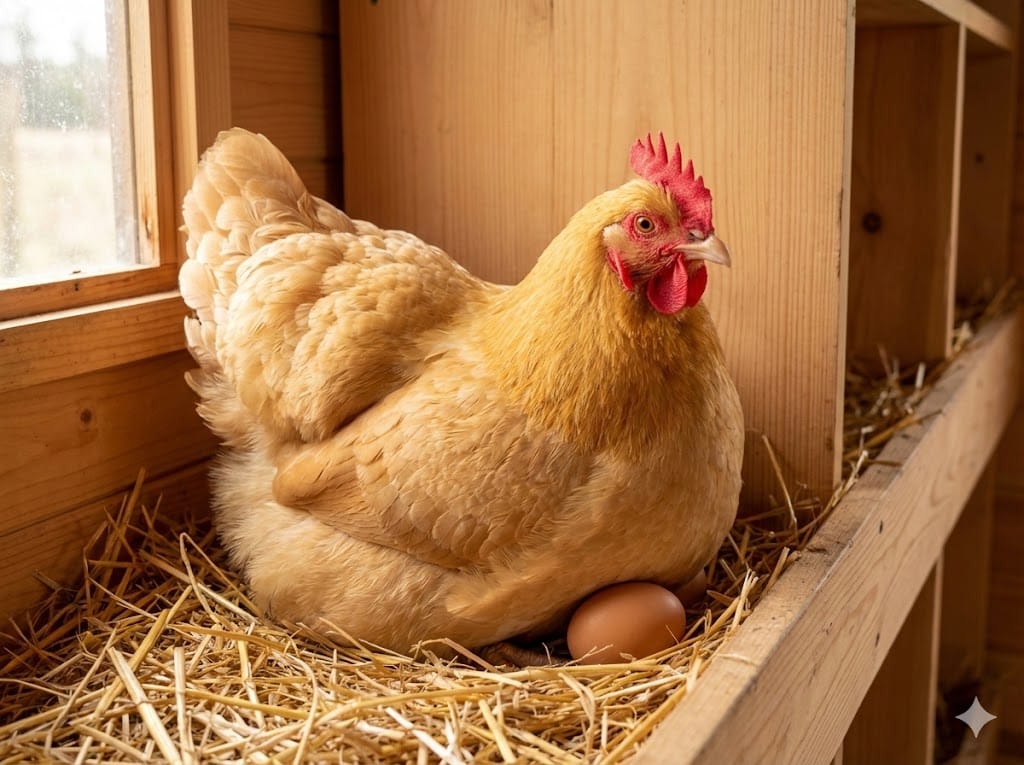
Understanding seasonal patterns helps you plan for fluctuations in your egg supply. Here is a realistic Buff Orpington egg production chart based on typical backyard conditions:
| Month | Weekly Eggs (per hen) | Notes |
|---|---|---|
| January | 2-3 | Reduced daylight affects production |
| February | 2-3 | Still reduced, may improve late month |
| March | 3-4 | Production increasing |
| April | 4-5 | Spring peak beginning |
| May | 4-5 | Peak production season |
| June | 4-5 | Peak production continues |
| July | 4-5 | May slow slightly in extreme heat |
| August | 3-4 | Heat stress may reduce output |
| September | 3-4 | Molting may begin |
| October | 2-3 | Molting season, significant drop |
| November | 2-3 | Post-molt recovery |
| December | 2-3 | Shortest days, lowest production |
Peak productivity age: According to The Chicken Coop Company, peak productivity generally occurs between ages two and three, although some hens may continue laying eggs until they are five years old or more.
Important note: Individual variation is significant. Some hens are consistent year-round layers while others show dramatic seasonal swings. The chart represents averages across multiple birds.
Do Buff Orpingtons Lay Eggs in Winter?
This is a critical question for many keepers, and the answer is yes, Buff Orpingtons do lay eggs in winter, though at reduced rates.
According to The Chicken Coop Company, Buff Orpingtons are “reliable year-round layers, even in the winter months. While egg production may slow down slightly in colder weather, they generally continue to lay throughout the year with proper care.”
One Cackle Hatchery customer reported that their Buff Orpingtons “made it through their first winter without a break,” which is impressive for any heritage breed.
Factors affecting winter laying:
Daylight hours: Chickens need approximately 14 to 16 hours of light daily for optimal laying. Winter’s shorter days naturally reduce production. Some keepers add supplemental lighting, though this is controversial as it may shorten the hen’s overall productive life.
Cold hardiness: Buff Orpingtons excel in cold weather. According to multiple sources, they are “well-suited to colder environments due to their dense plumage, which provides insulation.” As long as they have draft-free housing with good ventilation, cold temperatures alone will not stop them from laying.
Nutrition: Hens need extra calories in winter to maintain body heat. Quality layer feed with adequate protein (16%) and calcium supports continued production.
For comprehensive cold-weather management, our guide on what to feed chickens in winter covers nutritional strategies.
What Impacts Buff Orpington Egg Laying? Key Factors
Multiple factors influence Buff Orpington egg production. Understanding these helps you optimize your hens’ output.
Nutrition
Diet is the foundation of egg production. A hen cannot produce eggs without adequate protein, calcium, and other nutrients.
Essential nutritional requirements:
- 16% protein layer feed as the primary diet
- Free-choice calcium (oyster shell) for shell formation
- Fresh, clean water at all times
- Limited treats (no more than 10% of diet)
Buff Orpingtons are notorious for loving food. According to The Chicken Coop Company, they require monitoring because they can become overweight. Hobby Farms recommends restricting “feeding times to twenty to thirty minutes twice daily to prevent Orpingtons from becoming obese.”
Our guide on calcium for chickens explains why this mineral is critical for laying hens.
Age and Peak Productivity
Egg production follows a predictable age-related pattern:
Year 1 (5-12 months): Production ramps up after laying begins. Eggs start small and increase in size. By 9-10 months, hens reach near-peak production.
Years 2-3 (Peak production): This is when your Buff Orpingtons will lay their most eggs. According to The Chicken Coop Company, “peak productivity generally occurs between the ages of two and three.”
Year 4 and beyond: Gradual decline. Production drops approximately 10-20% each year. However, egg size often increases as hens age, and some hens “may continue laying eggs until they are five years old or more.”
Dual-purpose timing strategy: According to The Chicken Coop Company, “For those aiming to optimize chicken rearing, a practical approach is to utilize 2-year-old Buff Orpingtons for stewing, while retaining 1-year-old hens for egg production. This strategy ensures an efficient feed-to-output ratio.”
Broodiness
Buff Orpingtons are known for going broody, meaning they want to sit on eggs and hatch chicks. While wonderful if you want baby chicks, broodiness completely stops egg production.
According to The Chicken Coop Company, Buff Orpingtons are “one of the broodiest standard breeds” and “excel as broody mothers, making them perfect for raising baby chicks.” Hobby Farms notes that “these hens can go broody, so egg production will also vary due to this trait.”
If broodiness affects your egg supply, our guide on how to break a broody hen provides effective techniques.
Heat Stress
This is particularly relevant to my experience raising chickens in tropical climates. Buff Orpingtons struggle in heat, and heat stress dramatically reduces egg production.
According to The Chicken Coop Company, “in hot climates, they may require extra care to prevent heat stress, such as access to shade and fresh water.” Hobby Farms lists “heatstroke” as a common health concern for this heavyweight breed.
Signs of heat stress affecting laying:
- Panting with beak open
- Wings held away from body
- Reduced feed consumption
- Pale comb
- Sudden drop in egg production
Our guide on what to feed chickens during a heatwave provides specific strategies for hot weather management.
Molting
All chickens go through an annual molt, typically in fall, where they shed and regrow feathers. During this 6 to 12 week period, egg production drops significantly or stops entirely as the hen’s body redirects protein to feather production.
For more about this natural process, see our guide on chicken molting season.
Stress and Predator Concerns
Any stress reduces egg production. Common stressors include predator threats, new flock members, moving to a new coop, handling or disturbance, and illness or parasites.
According to Hobby Farms, “Orpingtons can not fly or even run very fast and are prime targets for a predator attack.” Their docile nature, while wonderful for handling, means they need extra protection.
Buff Orpingtons’ calm temperament makes them less susceptible to stress than flighty breeds, which contributes to their consistent laying when properly protected.
How Many Chickens Do I Need for 2 Dozen Eggs a Week?
This practical question requires specific calculations based on Buff Orpington egg production rates.
Target: 24 eggs per week (2 dozen)
Buff Orpington average: 4 eggs per week per hen during peak season, 3 eggs per week annually averaged
Calculation:
- Peak season: 24 eggs ÷ 4 eggs/hen = 6 hens minimum
- Year-round average: 24 eggs ÷ 3 eggs/hen = 8 hens
- With buffer for broodiness, molting, illness: 10 hens recommended
My recommendation: Keep 8 to 10 Buff Orpington hens if you want a reliable 2 dozen eggs weekly throughout the year. During peak months, you will have surplus eggs to share or sell. During winter and molting season, you will still meet your needs.
If consistent egg supply is critical, consider mixing Buff Orpingtons with higher-production breeds. Our Australorp chicken complete guide covers a breed that lays more eggs while sharing the Orpington’s friendly temperament. According to Poultry Hub Australia, the Orpington is “one of the main ancestors of the world commercial egg-laying record holder, the Australorp.”
Which Orpington Lays the Most Eggs?
If you are specifically interested in Buff Orpington egg production compared to other Orpington varieties, here is what the data shows:
All Orpington color varieties (Buff, Black, Blue, White) share the same genetics for egg production. The color of the feathers does not affect laying ability.
Orpington variety egg production comparison:
| Variety | Annual Eggs | APA Recognized |
|---|---|---|
| Buff Orpington | 180-260 | 1902 |
| Black Orpington | 180-260 | 1905 |
| Blue Orpington | 180-260 | 1923 |
| White Orpington | 180-260 | 1905 |
| Lavender Orpington | 150-200 | Not recognized |
According to Hobby Farms, additional unrecognized varieties include “lavender (self-blue), silver laced, gold laced, partridge, and Isabel.”
The Buff variety is most popular and therefore has the most documented production data. Any differences between colors likely reflect individual variation or specific breeder selection rather than inherent color-linked traits.
Buff Orpington Eggs vs. Other Breeds: Production Comparison
How does Buff Orpington egg production compare to other popular backyard breeds?
| Breed | Annual Eggs | Weekly Eggs | Egg Color |
|---|---|---|---|
| Buff Orpington | 180-260 | 3-5 | Brown |
| Rhode Island Red | 250-300 | 5-6 | Brown |
| Australorp | 250-300 | 5-6 | Brown |
| Leghorn | 280-320 | 5-6 | White |
| Plymouth Rock | 200-280 | 4-5 | Brown |
| Sussex | 200-250 | 4-5 | Cream/tinted |
| Easter Egger | 200-280 | 4-5 | Blue/green |
According to Lafeber Company, Orpington egg production is “Good (about 180 to 220 eggs per year),” which places them in the middle tier of backyard breeds.
Buff Orpingtons fall in the middle of the pack for egg production. They are not the most prolific layers, but they offer other valuable traits: exceptional temperament, dual-purpose meat quality, cold hardiness, and broody tendencies for natural flock reproduction.
Maximizing Buff Orpington Egg Production: Practical Strategies
Based on my experience and research, here are proven strategies to optimize your hens’ laying:
Provide Consistent Quality Feed
Layer feed should be available at all times. Buff Orpingtons will overeat treats given the opportunity, so limit extras to 10% of their diet. Quality commercial layer feed with 16% protein provides everything they need.
Our guide on the best feeding schedule for backyard chickens covers optimal feeding practices.
Ensure Adequate Calcium
Free-choice oyster shell allows each hen to consume the calcium she needs for strong eggshells. This is separate from their layer feed, which already contains some calcium.
Manage Lighting Carefully
In winter, some keepers add supplemental lighting to maintain 14-16 hours of light daily. This increases winter production but may shorten the hen’s overall laying career. I personally let my hens follow natural light cycles, accepting reduced winter production.
Prevent Stress and Protect from Predators
Create a calm, predator-safe environment. According to Hobby Farms, protecting Orpingtons requires “A concrete coop floor, predator skirts, strong half-inch hardware cloth over the sides and roof of an enclosed run, and no gaps larger than half-inch anywhere in the coop or run.”
Control Broodiness Promptly
If a hen goes broody and you do not want chicks, break her broodiness quickly. Each day she sits on a nest is a day without eggs, and broodiness can last 3 weeks or longer if not interrupted.
Monitor Health and Weight
According to Hobby Farms, common health concerns in Buff Orpingtons include “egg laying disorders common in brown egg layers including egg binding, egg yolk peritonitis, ovarian cancer/tumors, and oviduct prolapse” as well as “bumblefoot, external parasites, heatstroke, and obesity.”
Regular health checks catch problems early. Our chicken health check guide walks through what to monitor.
Buff Orpington Fertile Eggs: Information for Breeders
If you are interested in breeding Buff Orpingtons or hatching your own chicks, understanding fertility rates helps with planning.
Buff Orpington fertility specifications:
| Factor | Details |
|---|---|
| Fertility percentage | 65-80% |
| Mating ratio | 6-9 hens per rooster |
| Incubation period | 21 days |
| Broody tendency | High (excellent natural mothers) |
According to The Chicken Coop Company, Buff Orpingtons have a fertility percentage of 65 to 80% with a recommended mating ratio of 9 females to 1 male.
Their strong broody instincts make them excellent for natural hatching. As Hobby Farms notes, they are “especially well-known for their superb quality” as mothers and will often hatch and raise chicks from other breeds as well.
For those interested in incubation, our guide on best chicken egg incubators for beginners covers equipment selection.
Egg Collection and Handling: Best Practices
Proper handling of Buff Orpington eggs ensures quality and safety.
Can You Eat Eggs Right After They Are Laid?
Yes, absolutely. Fresh eggs are safe to eat immediately. In fact, many people prefer fresh eggs for their superior taste and texture. The egg emerges from the hen with a natural protective coating called the “bloom” that seals the porous shell against bacteria.
In the United States, commercial eggs are washed (removing the bloom) and must be refrigerated. Unwashed backyard eggs can be stored at room temperature for several weeks, though refrigeration extends their freshness longer.
What Happens If You Do Not Collect Chicken Eggs Every Day?
Uncollected eggs create several problems:
Broodiness triggers: Accumulated eggs signal to hens that it is time to sit and hatch, triggering broodiness even in less broody breeds. With Buff Orpingtons already prone to broodiness, this is especially important.
Egg eating: Hens that accidentally break an egg may develop a taste for them, leading to intentional egg eating. This habit is difficult to break once established. Our guide on chickens eating their own eggs addresses this issue.
Quality decline: Eggs left in warm nesting boxes begin to decline in quality. Fertility decreases if you plan to hatch them.
Attract pests: Eggs attract rodents, snakes, and other predators to your coop.
Best practice: Collect eggs at least once daily, preferably twice in hot weather.
My Personal Experience with Buff Orpington Egg Production
I want to share my actual results with Buff Orpingtons to give you realistic expectations from someone who has raised these birds extensively.
My first Buff Orpingtons were three pullets purchased from a local breeder in 2021. They started laying at 23 weeks, which felt like an eternity of waiting. The first eggs were small, maybe 45 grams each, but by week 30 they were laying beautiful 60-gram eggs consistently.
During their first full production year, I tracked every egg meticulously. The three hens produced a combined 612 eggs, averaging 204 per bird. This fell right in the middle of the expected range and closely matches the survey data showing 41% of keepers getting 4 eggs per week.
What surprised me was the consistency. Unlike some breeds that seem to take random days off, my Buff Orpingtons were remarkably predictable. I could reliably expect 2 eggs from 3 hens most days during peak season.
The challenges came during our hot season. I live in a tropical climate, and July through September tested these fluffy birds. Production dropped noticeably, and I had to provide extra shade, frozen treats, and electrolytes in their water. One particularly brutal week with temperatures above 35°C (95°F), they stopped laying entirely for three days.
The lesson I learned: Buff Orpingtons are excellent layers for most climates, but if you live somewhere hot, plan for summer production drops and take heat management seriously. They simply were not bred for tropical conditions.
For more breed-specific information, our Buff Orpington chicken guide covers this breed comprehensively.
Frequently Asked Questions About Buff Orpington Egg Production
How many eggs a year does a Buff Orpington lay?
Buff Orpingtons lay approximately 180 to 260 eggs per year under typical backyard conditions. According to Lafeber Company, production averages “about 180 to 220 eggs per year,” while other sources report up to 280 eggs with excellent management. According to a survey of over 450 owners, most keepers receive 4 to 5 eggs per week from each hen.
How many eggs do Buff Orpingtons lay per week?
Buff Orpingtons typically lay 3 to 5 eggs per week during their productive months. Survey data from Chicken Experts shows 41% of owners get 4 eggs weekly and 35% get 5 eggs weekly. Peak laying season (spring through early summer) sees the higher end of this range.
How long does it take for Buff Orpington to lay eggs?
Buff Orpingtons begin laying between 20 and 26 weeks of age, with most hens starting around 22 to 24 weeks (approximately 5 to 6 months). According to Chicken Experts, the typical age of maturity is 20 to 22 weeks.
Do Buff Orpingtons lay eggs in winter?
Yes, Buff Orpingtons continue laying through winter, though at reduced rates. According to The Chicken Coop Company, they are “reliable year-round layers, even in the winter months.” Their excellent cold hardiness makes them better winter layers than many breeds.
What color are Buff Orpington eggs?
Buff Orpingtons lay light to medium brown eggs. According to Lafeber Company, egg color ranges from “light brown to dark brown.” The exact shade varies between individual hens.
What size are Buff Orpington eggs?
Buff Orpington eggs are classified as large, though The Chicken Coop Company notes they are sometimes classified as medium. Initial eggs from young pullets are smaller, but mature hens consistently produce large eggs weighing 55 to 65 grams.
Do Buff Orpington eggs taste different from store-bought eggs?
Backyard Buff Orpington eggs typically have richer, more flavorful yolks than commercial eggs due to varied diet including insects, greens, and quality feed. The deep yellow to orange yolk color reflects better nutrition. Many keepers report their eggs taste noticeably better for cooking and baking.
What is the fertility rate for Buff Orpington eggs?
Buff Orpington eggs have a fertility rate of 65 to 80% according to The Chicken Coop Company, when hens are kept with a rooster at the recommended ratio of 6 to 9 hens per male. For best hatching results, collect eggs daily and incubate within 7 days of laying.
Why did my Buff Orpington stop laying?
Common reasons include: molting (annual feather replacement), broodiness (wanting to hatch eggs), heat stress, inadequate nutrition, illness, age-related decline, reduced daylight hours, or stress from predators or flock changes. For comprehensive troubleshooting, see our guide on why do chickens stop laying eggs.
Are Buff Orpingtons good egg layers compared to other breeds?
Buff Orpingtons are moderate to good layers compared to other heritage breeds, producing 180 to 260 eggs annually. Commercial hybrids and breeds like Rhode Island Reds or Leghorns lay more (250 to 320+ eggs), but Buff Orpingtons offer superior temperament, dual-purpose meat quality, and exceptional broody mothering abilities.
How many Buff Orpingtons do I need for a family of 4?
For a family consuming eggs regularly, 4 to 6 Buff Orpington hens typically provide sufficient eggs. This gives you approximately 12 to 25 eggs weekly during peak season, enough for daily breakfast eggs with some surplus for baking.
Do Buff Orpingtons go broody often?
Yes, Buff Orpingtons are known for strong broody tendencies. According to The Chicken Coop Company, they are “one of the broodiest standard breeds” and “excel as broody mothers.” This can interrupt egg production for 3+ weeks at a time if not managed.
Getting the Most from Your Buff Orpington Flock
Buff Orpington egg production may not win any records, but these golden hens deliver something more valuable for many keepers: a perfect balance of productivity, personality, and practicality.
Their 180 to 260 eggs annually, combined with their exceptional temperament and dual-purpose utility, makes them ideal for families and hobbyist keepers who want more from their chickens than maximum egg output. According to the Chicken Experts survey, 92% of owners said they would choose to own a Buff Orpington again, and 73% agreed they are calm and affectionate compared to other breeds.
They follow you around the yard looking for treats, tolerate handling from children, and provide years of reliable production and companionship. As Hobby Farms aptly describes them, Buff Orpingtons are “the Golden Retriever of the chicken world.”
If pure egg numbers are your only goal, consider higher-production breeds. But if you want chickens that are a joy to keep while still filling your egg basket consistently, Buff Orpingtons deliver exactly that.
For those ready to add Buff Orpingtons to their flock, our guide on how much does a Buff Orpington cost covers current pricing from major hatcheries, while bringing chicks home: 15 must-haves prepares you for their arrival. And for comprehensive breed information including lifespan and health considerations, see our Buff Orpington life expectancy guide.

Oladepo Babatunde is the founder of ChickenStarter.com. He is a backyard chicken keeper and educator who specializes in helping beginners raise healthy flocks, particularly in warm climates. His expertise comes from years of hands-on experience building coops, treating common chicken ailments, and solving flock management issues. His own happy hens are a testament to his methods, laying 25-30 eggs weekly.