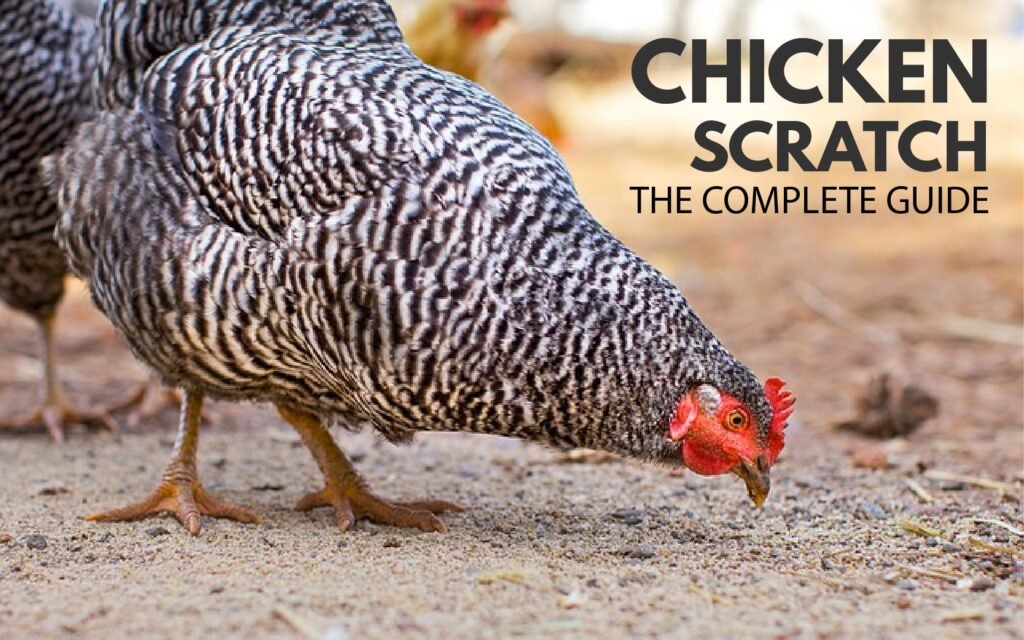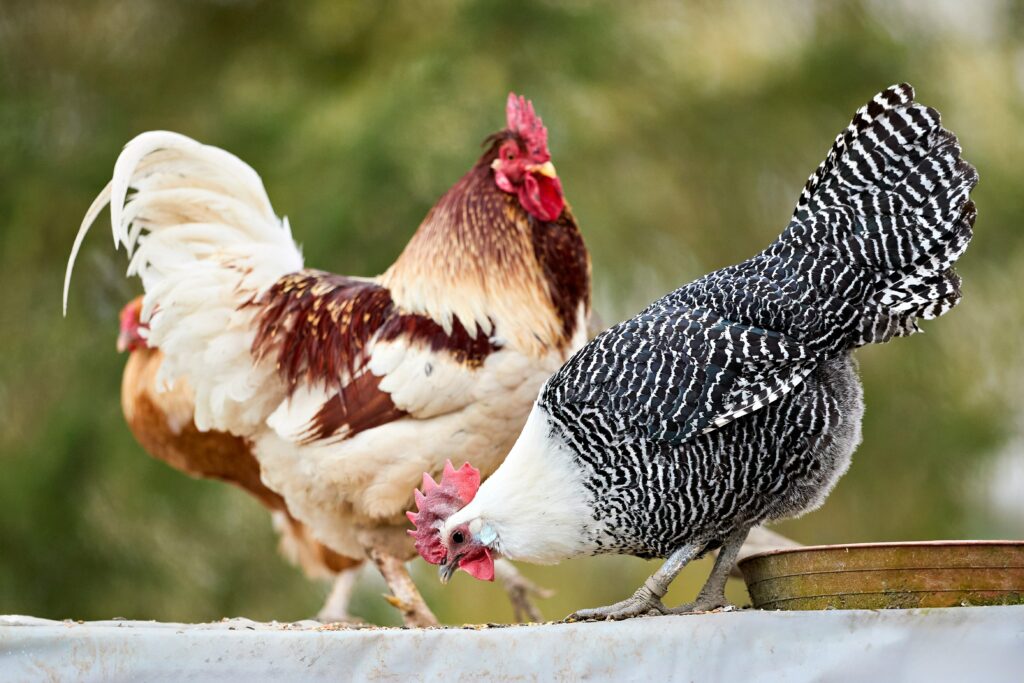
If you are wondering how to stop dominant chickens from blocking feeders, start by watching what happens during ordinary feeding times. Do the same hens rush forward while quieter birds hang back? You may see one dominant chicken stand beside the feeder, peck at approaching flockmates, or repeatedly push them away. An occasional peck or brief displacement can be part of normal flock behavior. The concern is a repeated pattern in which the same chickens cannot reach food, leave before eating, or avoid the feeding area altogether.
The solution is not automatically to remove the dominant hen. First find out whether the problem comes from limited feeder space, poor placement, a difficult feeder design, a change in the flock, or a bird that is unwell. Then make sure every chicken has reliable access to feed and water, and observe whether the changes work.
Key Takeaways
- Watch more than one feeding period and identify which chickens are repeatedly displaced.
- Measure usable feeding space, not the amount of feed the hopper can store.
- Put additional feeders in genuinely separate locations with clear approach and exit routes.
- Check feeder height, openings and stability, especially in mixed-size flocks.
- Keep complete, age-appropriate feed and clean water reliably accessible.
- Investigate illness or injury if a chicken remains thin, weak or reluctant to eat after access improves.
Why Do Dominant Chickens Block Feeders?
Chickens establish social relationships that influence how they use resources such as food, water, perches and preferred resting places. A higher-ranking bird may displace another chicken from a feeding position. That does not mean every peck is bullying or that every chicken must eat at exactly the same moment. What matters is whether a bird can return to the feeder and obtain enough food without persistent interference.
Not enough accessible feeder space
A feeder can hold plenty of feed and still offer too few places for chickens to eat. A narrow trough, small tray or feeder with only a few usable ports can create a bottleneck. Larger birds also need more room to stand comfortably than smaller birds. Alabama Cooperative Extension identifies inadequate feeder space as a possible contributor to unnecessary fighting and feather pecking, and advises providing enough room for birds to eat comfortably.
Its backyard and small-flock feeding guidance is particularly useful for owners of laying hens because it discusses feeder space, feeder height, complete feed and water access together.
Feeders are positioned too close together
Two feeders placed side by side may function as one feeding station. A bird that guards the immediate area can still discourage other chickens from approaching either feeder. Separate stations around the coop or run give birds another place to eat, provided each station has enough room and a clear route in and out.
A narrow approach or escape route
A feeder pushed into a corner, against a wall or behind an obstacle may leave a chicken with only one practical way in and out. If another bird blocks that route, the less assertive chicken may abandon the feeder. Inspect the floor space around the feeder as carefully as the feeder itself.
A change in the flock
Introducing new chickens can change social relationships and feeding routines. New arrivals may not know where the feeding stations are, may be smaller than established hens, or may avoid approaching confident birds. If the behavior started after an introduction, review the integration process and make sure newcomers can reach food and water. Our guide to introducing new chickens to an existing flock safely covers gradual introductions and the need to monitor access to shared resources.
The chicken being pushed away may be unwell
A sick, injured or weak chicken may be less willing to compete for a feeding position. Do not assume that every bird eating less is being bullied. Look for changes in activity, appetite, droppings, posture and body condition. Persistent weight loss or weakness needs a poultry-health assessment, even if you also find competition at the feeder.
How to Tell Normal Pecking-Order Behavior From Food Exclusion
Brief displacement is not the same as being prevented from eating. A chicken may peck once, move another bird aside and then return to feeding. A more serious access problem is suggested when the same bird is repeatedly driven away, waits until the feeder is empty of other chickens, or avoids the feeding area even when feed is available.
Observe the flock during several ordinary feeding periods. Record which bird approaches, which bird is displaced, whether the displaced bird returns, and whether it eventually eats. Check more than one time of day; a single short observation can give a misleading picture. For broader behavior problems, see our guide to pecking-order problems and bully hens.
| What you observe | What it may mean | What to check |
|---|---|---|
| A hen is pecked once, then returns to eat | Brief social displacement | Whether she can feed normally afterward |
| The same hen is chased away at several meals | Possible repeated exclusion | Additional feeding locations and usable space |
| A smaller bird waits until the others leave | Feeder may not suit its size or confidence | Opening size, height and a separate station |
| Several birds crowd one end of a trough | Part of the feeder may be inaccessible | Obstructions and usable feeding edge |
| A chicken avoids food even when the area is quiet | Possible illness, injury or unfamiliarity | General health and whether it recognizes the feeder |
| Feed is present but birds cannot reach it | Equipment or placement problem | Blocked ports, feed bridging or an awkward lip |
How to Stop Dominant Chickens From Blocking Feeders
1. Observe the flock before changing the setup
Watch several normal feeding periods and identify the birds involved. Note whether the same chicken is always displaced, whether the behavior happens at one feeder or all of them, and whether the bird eventually eats. Also check that the feeder is not empty, jammed, unstable or difficult to use.
Look for a repeated pattern rather than judging the flock from one brief interaction. A chicken that walks away once may have finished eating. A bird that consistently waits until others leave or stops approaching the feeder needs closer attention.
2. Add another feeder in a separate location
When one feeding point is crowded or guarded, add another feeder where chickens can use it independently. Place it far enough away that a bird standing at the original feeder cannot easily control both locations. If possible, use different parts of the coop or run while keeping both stations sheltered, clean and easy to inspect.
Do not put the second feeder in another narrow corner or behind an obstacle. Each station should have a clear approach and enough surrounding room for a chicken to move away. After adding it, watch the birds that were previously displaced. The change is useful only if they actually use the new station.
3. Measure usable feeder space, not hopper capacity
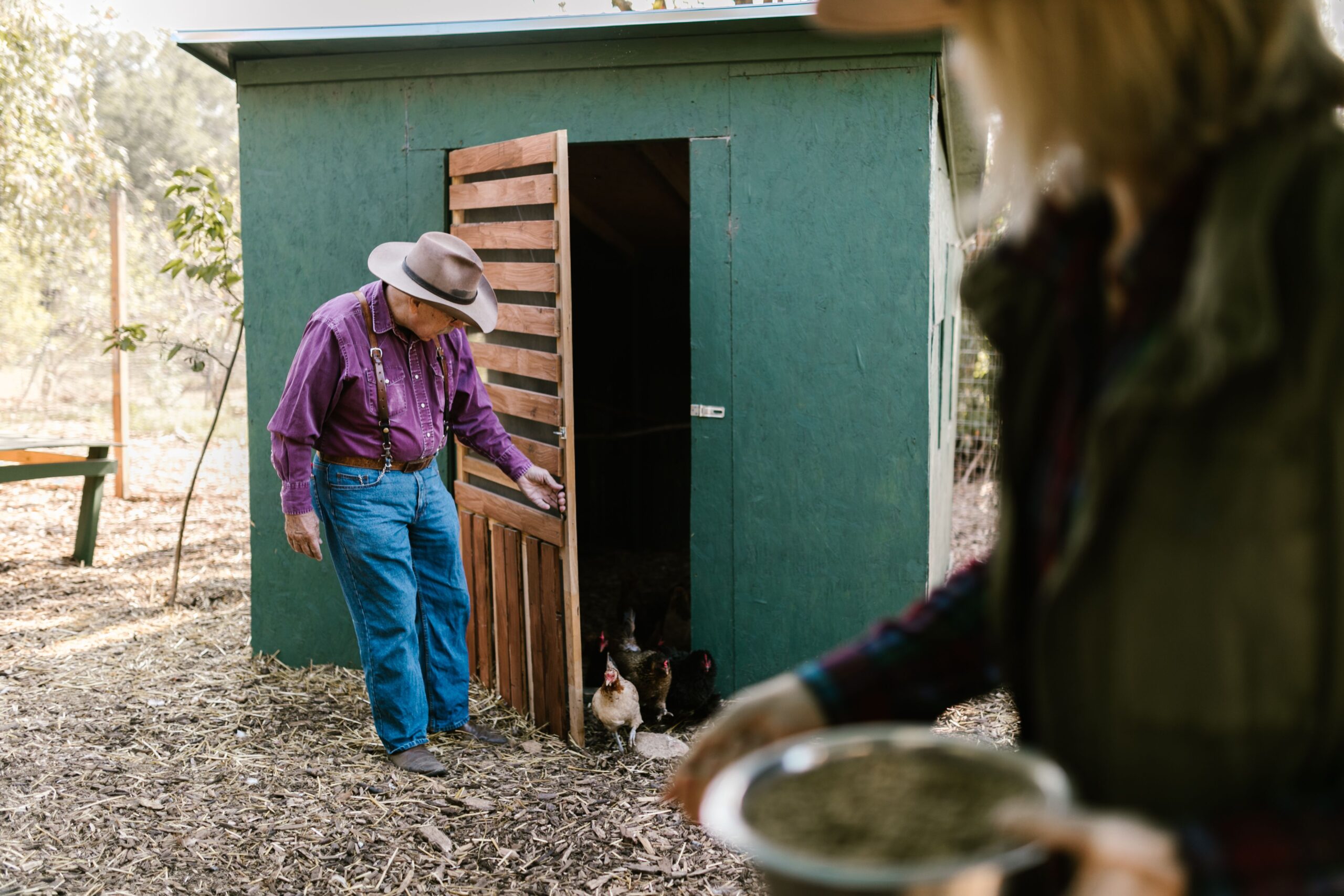
The amount of feed a hopper stores is different from the space available for chickens to eat. A large container with four feeding ports may store a lot of feed but still allow only a few birds to feed comfortably at once. Count the accessible feeding edge or openings, not the container’s volume or advertised feed capacity alone.
For a straight trough, measure the length birds can actually reach. Count both long sides only if chickens can safely stand and eat along both sides. If one side is against a wall, blocked by a support or otherwise inaccessible, count only the usable side. For circular or port-style feeders, follow the manufacturer’s bird-capacity guidance and check whether the birds can use the openings without crowding.
There is no single feeder-space measurement that fits every backyard flock. The usable space depends on the feeder design, the size and age of the birds, and whether chickens can reach one or both sides. Alabama Cooperative Extension recommends enough room for the flock to eat comfortably, with birds able to stand beside one another without being crowded. For a trough, count only the feeding edge birds can actually reach; count both sides only when both remain unobstructed. For a pan or port feeder, use the manufacturer’s capacity as a starting point and then watch whether smaller or less assertive birds can feed without being displaced. Extension also advises setting the feeder so its lower edge is approximately level with the birds’ backs, adjusting as the flock grows. These are practical checks, not a substitute for observing how your own flock uses the equipment.
Research supports avoiding very restricted feeder access, but it does not establish one ideal measurement for every flock. In a 2019 study of 60 laying hens in enriched colony housing, researchers compared feeder allowances of 6.5, 8.5, 9.5 and 12 centimeters per hen. They found no significant differences in several feeding measures between the 8.5, 9.5 and 12 cm treatments. The 6.5 cm treatment was associated with lower values for some measures of feeder use, including average simultaneous feeding compared with the larger allowances. The researchers noted that low feeder space may contribute to aggression or frustration, but those outcomes were not measured in that experiment. Because the study involved a commercial housing system and a small group of hens, use it as evidence that severely limited access can matter—not as a universal backyard-feeder formula. The full peer-reviewed study is available through PubMed: Impact of feeder space on laying hen feeding behavior and production performance.
For a practical starting point, extension recommendations are not identical. Penn State Extension recommends 3 inches of feeder space per bird, while Oregon State University Extension recommends at least 4 linear inches for adult birds. For 10 adult hens, those figures work out to roughly 30 to 40 inches of usable feeding edge. Count only the sides birds can actually reach; if both sides of a trough are accessible, both may contribute. These are starting guidelines, not a guarantee that a dominant bird cannot exclude another hen. Feeder type, bird size, layout and observed behavior still matter.
Nor must every hen eat at precisely the same moment. The National Farm Animal Care Council’s layer-hen code, including its 2025 feeder-space amendment, explains that feeding is not fully synchronized: scientific evidence indicates that at most about 70% of hens or pullets feed at once, particularly in larger groups. The code recommends responding when competition or aggression is observed by changing management or increasing feed space, for example by adding feeders. The useful test for a backyard flock is whether each bird can return to feed reliably—not whether all birds crowd around one feeder together.
4. Check feeder height, openings and stability
In a mixed-size flock, check whether the smallest chickens can reach the feed openings and stand comfortably at the tray. A feeder designed for large adult hens may not suit young pullets or bantams. Set the height according to the birds using it and the manufacturer’s instructions; do not raise it so high that smaller birds have to stretch or jump to feed.
Make sure the feeder is stable and feed flows freely. A blocked port, damaged guard, sharp edge or awkward lip can make access difficult even when the feeder appears full. Recheck the arrangement as chicks grow or the flock changes. Our guide to stopping chickens from wasting feed covers feeder height, fill level and equipment adjustments that can also help keep feeding access practical.
5. Keep the feeding area open and easy to leave
Give chickens room to approach from more than one direction where practical. Avoid placing feeders in dead ends, narrow passages or spaces where a subordinate bird can be cornered. Remove clutter that blocks access, and make sure another chicken cannot stand in the only exit route.
6. Check water access as well as food access
A chicken that is pushed away from the waterer may face a similar resource-access problem. Check whether the same birds are being displaced from both food and water, whether drinkers are working, and whether every bird can approach them safely. Keep water clean and available. If you are unsure whether feed should remain available between meals, read our guide on whether chickens should have feed all the time. If a chicken is eating less because it is also struggling to drink, adding another feed station alone will not solve the whole problem.
7. Avoid creating competition with treats
Scratch grains and treats offered in one small pile can attract the whole flock to the same spot and create another contest. Keep treats limited and do not let them replace a complete, age-appropriate ration. Alabama Extension explains why complete feed should remain the main source of nutrients for laying hens and why treats and scraps should be used sparingly.
8. Recheck the birds that were being pushed away
After changing the setup, watch the previously displaced chickens again. Confirm that they approach, eat and leave without repeated chasing. Check their general condition over time rather than assuming the problem is solved because the flock looks calmer for a few minutes.
If a chicken remains thin, weak, unusually quiet or reluctant to eat even when feed is accessible, consider illness, injury or another health problem. Arrange a poultry veterinary assessment instead of assuming every feeding issue is caused by the pecking order.
A Simple Feeder-Competition Troubleshooting Routine
Use this routine to check whether your changes are actually helping. It is more reliable than adding equipment and assuming the problem has disappeared.
- Before changing anything: Observe more than one feeding period. Identify the chickens being displaced and note which feeder is involved.
- Inspect the equipment: Check feed level, blocked openings, feeder height, stability and the amount of accessible feeding space.
- Inspect the layout: Look for corners, narrow routes, obstacles or a single feeding station that can be guarded.
- Make one practical change: Add a separate feeding point, reposition a feeder or correct an equipment problem.
- Observe again: Check whether the same birds can approach, eat and leave. If they still cannot, reassess the number and arrangement of stations.
- Check the affected birds: Watch appetite, activity and body condition. Seek veterinary advice if a bird remains unwell or loses condition.
Should You Separate the Dominant Chicken?
Not as the first response to ordinary feeder competition. Start by improving access to food and water, then observe whether the behavior changes. Separating a bird without addressing limited feeder space or poor placement may leave the underlying problem in place.
Separation may be necessary when persistent attacks cause injuries or prevent another chicken from accessing essential resources. Protect an injured bird and seek veterinary advice for wounds or signs of illness. If birds are separated, plan any reintroduction carefully and monitor their interactions; do not assume the flock will immediately return to its previous social arrangement.
Common Mistakes When Fixing Feeder Competition
- Putting two feeders together: A dominant bird may still guard the whole feeding area.
- Counting hopper capacity as feeder capacity: A large container can have too few usable feeding ports.
- Counting an inaccessible trough side: A side against a wall does not provide usable feeding space.
- Ignoring smaller birds: Feeder height and opening design may suit large hens but not pullets or bantams.
- Ignoring water access: A bird may be struggling to reach more than one essential resource.
- Using treats to distract the flock: Treats do not replace reliable access to balanced feed.
- Assuming every quiet bird is being bullied: Observe repeated behavior and consider health issues too.
- Removing the dominant bird without changing the setup: The same access problem may continue with another chicken.
Frequently Asked Questions
Why does one chicken keep blocking the feeder?
A higher-ranking chicken may displace flockmates, but limited feeder space, crowded placement or a narrow approach can make the problem worse. Watch whether the same birds are repeatedly prevented from eating, rather than treating every brief peck as bullying.
Will adding another feeder stop chickens from blocking each other?
It can help when the extra feeder is placed far enough away to function as a separate feeding station, with a clear approach and exit. Two feeders placed side by side may still be guarded as one location, and extra equipment will not resolve every kind of flock aggression.
How much feeder space does each hen need?
Extension guidance varies. Penn State Extension recommends 3 inches per bird, while Oregon State University Extension recommends at least 4 linear inches for adult birds. Treat these as starting guidelines, count only accessible feeding edges, and check whether every hen can actually use the feeder without repeated displacement.
How far apart should chicken feeders be?
There is no universal distance for every coop or run. Position them far enough apart that one bird cannot easily guard both from the same spot. Leave each station an open approach and exit, then observe whether less assertive birds use both.
How do I make sure smaller chickens get enough food?
Check that smaller birds can reach the openings and stand comfortably at the feeder. Use equipment suited to their size, provide a separate feeding location if needed, and watch whether they can eat without being repeatedly displaced.
Should I remove an aggressive hen from the flock?
Not automatically for occasional feeder disputes. First improve access to feed and water and observe the result. Separate a bird when persistent attacks, injuries or serious exclusion make it necessary to protect the affected chickens. Seek veterinary advice for injuries or signs of illness.
Can a chicken lose weight because other hens block the feeder?
Repeated exclusion can reduce a chicken’s opportunity to eat, but weight loss can also indicate illness, injury or another health problem. Check feeder access and the bird’s general condition. If weight loss, weakness or reduced appetite continues, arrange a poultry veterinary assessment.
Do all chickens need to eat at the same time?
No. When complete feed is reliably available and every bird can return to a feeding station, hens do not all need to eat simultaneously. The concern is persistent queuing or exclusion. If you provide feed at set times, make sure enough usable feeder space is available for the flock.
Conclusion
If dominant chickens keep blocking the feeder, start by checking whether every bird has enough accessible space to eat. Observe the flock, spread feeding stations apart, make sure smaller birds can reach the feed, and review the layout for narrow approaches or blocked exits. Then watch the same birds again to confirm the changes are working.
Occasional pecking-order behavior is normal, but repeated exclusion from food should not be ignored. A well-planned feeding area, reliable water access and regular observation make it easier for the whole flock to eat without constant competition.

Oladepo Babatunde is the founder of ChickenStarter, a website sharing practical, research-informed information for people raising chickens.
ChickenStarter covers poultry feeding, housing, flock care, and common chicken-keeping questions. Its guides aim to explain the available evidence clearly and help readers make informed decisions for their flocks.