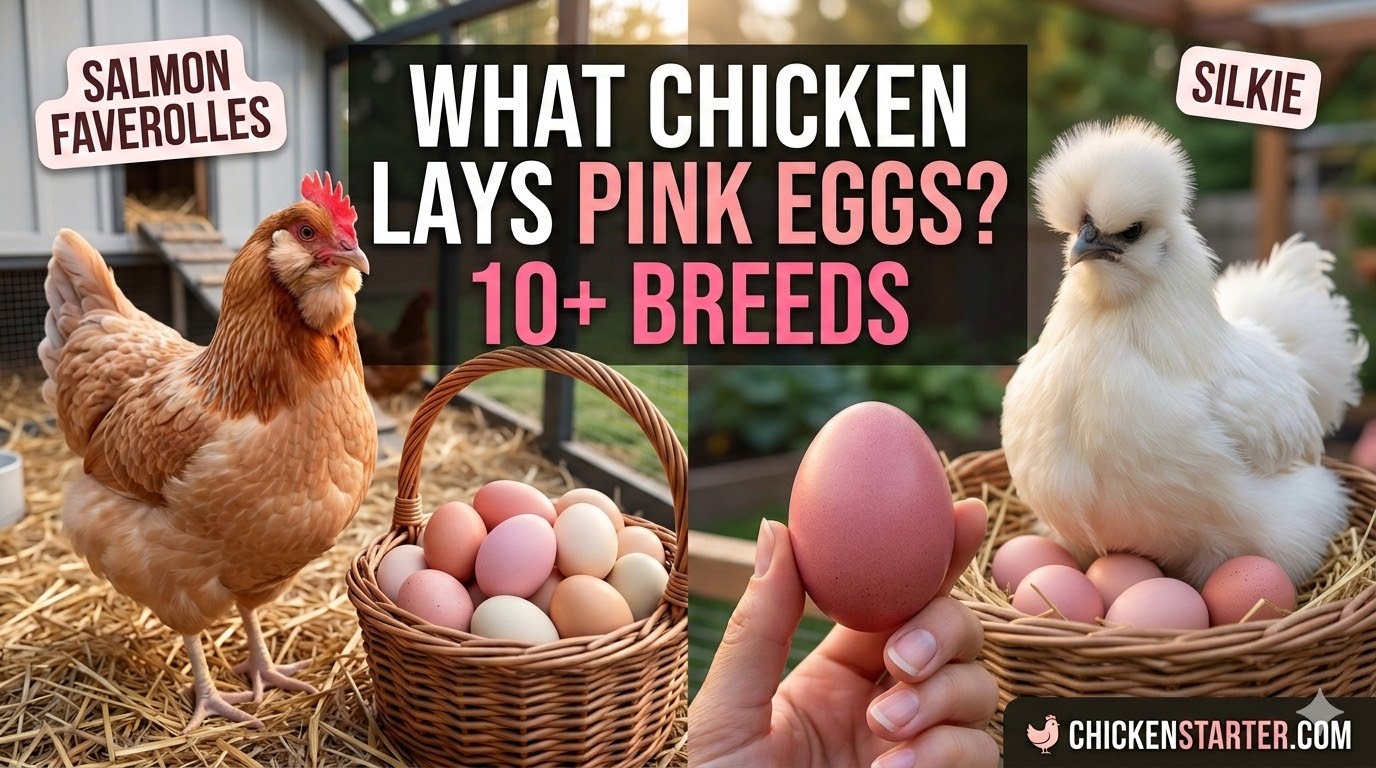
Quick Answer: The chickens most likely to lay pink eggs include Silkies, Salmon Faverolles, Light Sussex, and Buff Orpingtons. However, it is important to understand upfront that no chicken lays a truly bright pink egg. What you are seeing is a cream or light brown egg coated with a natural protective bloom that creates a soft, rosy pink appearance. The effect is real and genuinely beautiful, but it is not a separate genetic egg color the way blue eggs are.
The first time I found what I thought was a pink egg in my nesting box, I honestly stood there for a full minute just staring at it. I picked it up, turned it in the light, and genuinely wondered if one of my hens had found a way to do something extraordinary. Then I washed it under the tap and watched the pink blush rinse right off, leaving behind a perfectly ordinary cream-colored shell underneath. That moment taught me more about egg color science than any textbook could have.
If you are a backyard keeper in the United States, Canada, Australia, or anywhere else in the world searching for what kind of chicken lays pink eggs, you are in the right place. In this guide, I will walk you through the science behind pink egg coloration, the breeds most likely to produce them, what factors affect how pink those eggs actually look, and exactly how to find these birds for your own flock. I have kept several of these breeds personally, and I will share what the experience is actually like beyond the pretty Instagram photos.
Why Are Some Chicken Eggs Pink? (The Science Explained)
Before we get to the breed list, understanding why eggs look pink makes everything else make more sense. This is the part most articles skip, and it is genuinely fascinating once you understand it.
Every Egg Starts White
Here is the foundational fact: every single chicken egg starts as white calcium carbonate. That is the base material of every shell regardless of breed. The shell gland (also called the uterus) in a hen’s reproductive tract deposits calcium carbonate over a fertilized or unfertilized yolk over roughly 20 hours, building the shell layer by layer.
White-egg breeds like Leghorns simply stop there. The egg comes out pure white with no additional pigmentation added.
How Brown and Pink Eggs Get Their Color
Brown egg color comes from a pigment called protoporphyrin-IX, which belongs to a broader family of compounds called porphyrins. This pigment is deposited during the final stages of shell formation inside the shell gland. The intensity and depth of that deposition determines whether you get a deep chocolate brown like a Marans egg or a very light tan that almost disappears into cream.
Pink eggs sit at the lightest end of the brown egg spectrum. When a hen deposits very little protoporphyrin-IX onto an already-white shell, the result is an extremely pale tint that reads as pink to the human eye, especially in morning light.
The Bloom Changes Everything
Here is the detail that most people miss entirely, and it is the key to understanding pink eggs. The bloom (also called the cuticle) is a thin, moist protein coating that every hen deposits on her egg in the very final moments before laying. This coating serves a biological purpose: it seals the thousands of microscopic pores in the shell, protecting the contents from bacteria.
On eggs with even the faintest cream or pinkish-brown shell tint, the fresh bloom amplifies the rosy pink appearance dramatically. An egg that looks unmistakably pink when freshly laid can look closer to cream or light tan just hours later as the bloom dries, and even more so after washing. This is why backyard eggs often look more colorful than store-bought eggs, which are commercially washed and have their bloom removed entirely.
Research from Texas A&M’s Poultry Science department confirms that bloom composition varies between individual hens and even between laying cycles in the same hen, which explains why the same bird might produce eggs that look noticeably different in color from week to week.
Pink Is Not a Genetic Egg Color
This point matters enough to state clearly: pink is not a genetically distinct egg color the way blue is. Blue eggs exist because of a specific dominant gene called the O gene (derived from an ancient retrovirus insertion), which triggers the production of biliverdin pigment that penetrates the shell completely. Blue eggs are blue all the way through, inside and out.
Pink eggs are simply very pale brown eggs with good bloom. There is no “pink egg gene.” This is why you cannot guarantee that any specific hen will consistently lay pink eggs, even within breeds known for producing them.
What Breed of Chicken Lays Pink Eggs? (Complete List)
These are the breeds most consistently associated with pink-tinted egg coloration. I have organized them by likelihood of actually producing pink eggs, based on both breed characteristics and my own experience keeping several of these birds.
Silkie — Best Bet for Pink Eggs
If you are asking what chicken lays small pink eggs with the most consistency, the answer is almost certainly the Silkie. These birds from China are famous for their fluffy, hair-like feathers, feathered feet, black skin, and five toes, but their egg color is what brings them onto this list.
Silkies lay cream to pale pink eggs that frequently look quite convincingly pink when freshly laid and the bloom is still moist. The eggs are small, which is expected since Silkies are a bantam breed, but the color is genuinely lovely. My first Silkie hen, named Cotton, laid eggs that my daughter immediately photographed and sent to her school friends because they looked so unusual.
Production: Silkies are not prolific layers by any measure. Expect roughly 100 to 150 eggs per year, which works out to about 2 to 3 eggs per week. They are well known for going broody frequently, which further reduces laying time, but their willingness to sit on and hatch eggs makes them invaluable as natural incubators.
Temperament: Exceptionally docile, gentle, and calm. They are genuinely one of the easiest chicken breeds for beginners and are ideal for families with children.
Best for: Families, pet chicken keepers, anyone who wants a broody hen for hatching eggs, and anyone who prioritizes egg color over volume.
For a deep dive into their egg-laying specifics, our Silkie chickens egg guide covers everything you need to know including color variation between individual birds.
Salmon Faverolles — Consistent Pink-Tinted Eggs
Salmon Faverolles are one of the most underrated breeds in the backyard chicken world, and they produce some of the most reliably pink-tinted eggs of any breed on this list. Originating in France near the village of Faverolles in the 1850s, these birds were developed as a dual-purpose meat and egg breed.
The eggs from a Salmon Faverolles hen look like someone dipped them briefly in very diluted strawberry milk. That is honestly the best way I can describe the color. They are not cream, not tan, not light brown. They have a distinctly rosy warmth that photographs beautifully.
Production: Salmon Faverolles lay around 150 to 200 eggs per year, roughly 3 to 4 medium-sized eggs per week. They are moderate layers but reasonably consistent through winter, which many breeds are not.
Unique Features: Five toes (like Silkies), feathered feet, a full beard and muff of feathers around their face, and salmon-colored breast feathering in hens that is quite striking. Roosters are dramatically different in color with black, white, and reddish-brown patterning.
Temperament: One of the gentlest breeds in existence. Salmon Faverolles are almost comically sweet-natured and tend to rank low in the pecking order because they simply do not fight back. If you mix them with aggressive breeds, they can get bullied. They do best with similarly gentle flockmates.
Best for: Beginners, families, cold climates (they handle Canadian and northern US winters well), and anyone wanting consistent pink egg production.
Light Sussex — What White Chicken Lays Pink Eggs?
If you are specifically searching for what white chicken lays pink eggs, the Light Sussex is your answer. This English heritage breed has been around since Roman times in various forms and was formally standardized in England in the late 1800s. The breed has a striking appearance: pure white feathers with a black-laced neck and black tail feathers.
Light Sussex eggs are large, creamy pink to light brown, and fresh eggs from a well-kept Light Sussex hen can appear noticeably pink in good light. The bloom on Light Sussex eggs tends to be quite pronounced, which enhances the rosy appearance considerably.
Production: Light Sussex are genuinely good layers, producing around 240 large eggs per year — roughly 4 to 5 per week. They continue laying reasonably well through winter, making them a practical choice as well as an attractive one.
Cold Hardiness: Excellent. The breed handles cold climates well, which makes them popular in Canada and northern US states like Minnesota and Vermont. Their single comb is a small consideration in extreme cold, but they are generally robust.
Temperament: Calm, curious, and reasonably friendly. They are not quite as lap-chicken gentle as a Silkie or Buff Orpington, but they are manageable and enjoyable to keep.
Best for: Keepers who want production AND pink eggs, cold climate flocks, UK and Canadian backyard keepers (the breed is very popular in Britain), and anyone wanting large pink eggs rather than small ones.
Buff Orpington Pink Eggs
The Buff Orpington is genuinely one of my favorite breeds, and I call them the golden retrievers of the chicken world without a trace of irony. Developed in Orpington, England in the late 1800s by William Cook, these birds have soft, fluffy golden feathers, a round plump shape, and a temperament so gentle it is almost hard to believe they are chickens.
Buff Orpington eggs are light brown to pinkish-brown, and freshly laid eggs frequently show a distinct rosy blush. The bloom on Buff Orpington eggs is usually quite good, adding to the pink effect. Do not expect every egg to look pink, but probably a third to half of them will have a noticeable pink tint depending on the individual hen.
Production: Buff Orpingtons lay 200 to 280 large eggs per year in their prime years. That is a solid production rate that drops a bit as they age, but they are productive hens overall. If you want details on what affects their laying schedule, our Buff Orpington egg production guide covers the full picture.
Temperament: Exceptionally docile, friendly, and calm. They tolerate handling extremely well and are wonderful with children. They do go broody fairly often, which is either a benefit or a drawback depending on your goals.
Best for: Beginners, families, cold climates, dual-purpose flocks (they are also a good meat bird), and anyone wanting a reliably friendly hen that happens to often lay pink eggs.
Lavender Orpington Pink Eggs
The Lavender Orpington is essentially a Buff Orpington wearing a stunning pale grey-purple coat. They share the same body type, temperament, and general egg production profile, but their lavender-blue plumage is absolutely eye-catching in a backyard flock.
Their eggs follow the same pattern as Buff Orpingtons: light brown to pinkish-brown, with fresh bloom creating a noticeably rosy appearance on the most pink examples. There is solid documentation from keepers across the US, UK, and Australia sharing photos of unmistakably pink eggs from Lavender Orpington hens.
Production: Roughly 200 to 280 eggs per year, same range as their Buff cousins.
Availability: Lavender Orpingtons are less common than Buff Orpingtons and will cost more from hatcheries or breeders. They are available in the US from specialty hatcheries and from individual breeders who focus on Orpington color varieties.
Best for: Anyone who wants the friendly Orpington temperament with a more unusual color and the same occasional pink egg production.
Black Australorp Pink Eggs
Now here is one that surprises people. What black chicken lays pink eggs? The Black Australorp is not known primarily as a pink egg layer, and most of their eggs are solidly light to medium brown. But occasionally, under the right conditions, a Black Australorp hen will lay an egg with a distinctly rosy tint that has caused more than one keeper to do a double-take.
The Australorp was developed in Australia (hence the name) from Black Orpington stock imported from England. The Australian Poultry Society recognized the breed in the 1920s after Australorp hens set a world egg-laying record of 364 eggs in 365 days by one hen, a record that still stands as a remarkable benchmark.
Production: Black Australorps are serious layers: 220 to 240 large eggs per year is the standard expectation, and many individual hens exceed that figure. If egg production is a priority alongside the possibility of pink eggs, Australorps are worth serious consideration.
Temperament: Initially somewhat shy and reserved with strangers, but they warm up genuinely with regular handling and become quite affectionate over time. Our complete Australorp guide covers their personality development in more detail.
Best for: Keepers who need production first and consider occasional pink eggs a bonus rather than the primary goal.
Barred Plymouth Rock Pink Eggs
The Barred Plymouth Rock is one of America’s oldest and most beloved heritage breeds, developed in the United States in the mid-1800s. Their distinctive black and white striped barring pattern is iconic, and they are tough, reliable, all-weather birds.
Barred Rocks lay light brown eggs that frequently have enough of a cream tone to show a pinkish blush when fresh bloom is present. It is not as pronounced as the top pink egg breeds, but it is real and noticeable. Some individual Barred Rock hens are notably more consistent pink egg layers than others.
Production: Solid: 200 to 250 large eggs per year. They are dependable layers that handle both heat and cold reasonably well, making them popular across the US, Canada, and Australia.
Temperament: Generally friendly, curious, and assertive without being aggressive. They are not lap chickens the way Orpingtons are, but they are manageable and enjoyable birds.
Best for: All-purpose flocks, keepers who want American heritage breeds, cold and temperate climate flocks.
Speckled Sussex — What Chicken Lays Pink Speckled Eggs?
The Speckled Sussex deserves special mention here because their eggs can appear pink and speckled, which is a genuinely unique combination that not many breeds produce. If you are searching for what chicken lays pink speckled eggs, this is your answer.
Speckled Sussex hens have stunning mahogany plumage with white-tipped feathers and black speckles throughout. They are an old English breed with records going back to before the Roman conquest of Britain. Their eggs are light brown to pinkish-brown, and the eggs sometimes show faint natural speckles or variations in shell texture that create a speckled effect, particularly when the bloom is freshly applied.
Production: Roughly 150 eggs per year, which is on the lower side for a dual-purpose breed. They are better suited for keepers who value character and appearance alongside production rather than pure output.
Temperament: Curious, active, and friendly. Speckled Sussex are known for being particularly interested in their keepers and will often follow you around the yard. Our Speckled Sussex guide goes deeper into their personality and care requirements.
Best for: Keepers who want a beautiful, characterful hen with interesting egg color variation.
Easter Egger Pink Eggs
Easter Eggers are not a true breed but a classification used for chickens that carry the blue egg gene (the O gene) from Araucana or Ameraucana ancestors mixed with other breeds. They are famous for laying eggs across a rainbow of colors including blue, green, olive, and occasionally pink.
Yes, Easter Eggers can lay pink eggs, but this is not guaranteed or even common. It depends entirely on the genetic combination in that individual bird. An Easter Egger with minimal blue egg gene expression and light brown egg genetics can produce eggs that range from very light tan to genuinely pink.
Production: Easter Eggers are good layers: 250 to 280 large eggs per year on average, which makes them one of the most productive breeds on this list.
The unpredictability factor: You genuinely do not know what color eggs an Easter Egger will lay until she starts laying. This is part of their charm and part of their frustration. If you specifically want pink eggs, Easter Eggers are a gamble. If you want a colorful egg basket with the possibility of pink, they are excellent.
Best for: Keepers who want egg color variety and are happy with whatever color they get, including the possibility of pink.
Croad Langshan — Chickens That Lay Pink and Purple Eggs
The Croad Langshan is a tall, elegant Chinese breed brought to England by Major A.C. Croad in 1872. They are striking birds: very tall and upright with feathered feet, a gentle curved back, and a glossy black or blue plumage that shimmers green in sunlight.
Their eggs are genuinely unusual. Croad Langshan eggs are a plum-brown color with a purple-pink bloom that can make them look almost violet when freshly laid. This is the breed most often cited when people ask about chickens that lay pink and purple eggs, and it is an accurate claim. The purple-pink bloom is distinctive and unlike any other breed.
Production: Around 200 large eggs per year, which is reasonable for a dual-purpose heritage breed.
Rarity: Croad Langshans are a rare breed listed by the Livestock Conservancy as a breed of concern. Finding quality stock requires seeking out dedicated breeders rather than large hatcheries.
Best for: Heritage breed enthusiasts, keepers interested in rare breeds, and anyone wanting truly unique egg coloration.
Java Chickens
The Java is one of the oldest American chicken breeds, developed in the United States from Asian stock in the early 1800s. They come in black, mottled, and white varieties.
Java eggs are variable in color, ranging from cream to light brown to occasionally pinkish-tinted. They are not as consistently pink as Silkies or Salmon Faverolles, but their pink egg potential is real.
Production: Roughly 100 to 150 eggs per year, which reflects their heritage as a dual-purpose breed valued more for meat historically than egg production.
Conservation Status: Black Javas are listed as critical by the Livestock Conservancy, meaning fewer than 500 breeding birds remain in the United States. Keeping Javas is a meaningful conservation effort alongside the pleasure of their interesting egg colors.
Best for: Heritage breed conservationists and keepers interested in American breed history.
What Chickens Lay Purple Eggs?
This question comes up alongside pink eggs regularly, and the honest answer is that no chicken lays a truly purple egg. Purple is not a genetically possible chicken egg color. However, two breeds produce eggs that can appear purple under certain conditions:
Croad Langshan eggs, described above, have a plum-toned bloom that can look distinctly purple when freshly laid, especially in lower light or in photographs.
Black Copper Marans lay very dark chocolate-brown eggs that, when freshly laid with heavy bloom, can appear to have a purple or burgundy tint in certain lighting conditions.
The key word in both cases is appear. The purple effect comes from the interaction of dark brown shell pigmentation with bloom and light. It is real to the eye but not a genetically distinct egg color.
If you want eggs that look purple, Croad Langshans are your best bet. If you want genuinely chocolate-dark eggs with a potential purple bloom, Black Copper Marans are the answer.
What Chicken Lays Light Pink Eggs?
For the palest, most delicately pink eggs, certain breeds consistently outperform others.
The Lightest Pink Egg Layers
Silkies produce the lightest pink eggs of any breed on this list. Their small cream eggs with pronounced bloom frequently look almost pastel pink, which photographs strikingly well against dark backgrounds.
Light Sussex come second, with large pale cream-pink eggs that are significantly lighter than the pinkish-brown eggs of Buff Orpingtons.
Salmon Faverolles produce eggs that land somewhere between these two, with a rosy warmth that is distinctly pink without being as pale as a Silkie egg.
What Affects How Pink the Eggs Look?
Several factors influence the intensity of pink egg coloration, and understanding them helps you get the most color from your flock.
Age of the hen: Young pullets laying their first eggs typically show the most intense shell pigmentation. As hens age past their second or third laying season, shell color tends to fade and become paler. This applies to all egg colors, not just pink.
Stress levels: Hens under stress from crowding, predator pressure, temperature extremes, or nutritional deficiency deposit less pigment during shell formation. Stressed hens lay paler, washed-out eggs. A well-managed, low-stress flock will consistently produce more colorful eggs than a crowded or anxious one.
Point in laying cycle: Hens that have been laying intensively for months produce paler eggs than hens coming back into lay after a break or molting period. The first eggs after a molt are often the most richly colored of that hen’s year.
Diet: While egg shell color is primarily genetic rather than dietary, overall nutritional status affects shell quality, bloom quality, and indirectly the apparent color intensity. Hens on quality feed with adequate calcium and vitamin D produce better shells with more consistent bloom.
Collection timing: Collect eggs frequently and you will see them at their pinkest. Leave eggs in the nest box for hours and the bloom dries, the pink fades. In Australian summer heat, this happens even faster.
Are Pink Chicken Eggs Rare?
The honest answer is: it depends on what you mean by rare.
Pink eggs are not genetically rare in the way that truly dark chocolate eggs or pure white eggs from historically brown egg breeds are rare. Several common, readily available breeds produce pinkish eggs with reasonable frequency.
Pink eggs are inconsistent, which makes them feel rare even from breeds known for them. The same hen might lay a clearly pink egg on Monday and a plain cream egg on Friday. That variation is normal and expected.
Perfectly pink eggs are uncommon in the sense that only freshly laid eggs with good bloom and light shell pigmentation achieve the full pink appearance. Once bloom fades or eggs are washed, the pink largely disappears.
What Is the Rarest Color of Chicken Egg?
This question deserves a clear answer within the context of backyard poultry.
Truly dark chocolate eggs from Black Copper Marans are genuinely difficult to find from quality lines. Most hatchery Marans do not produce the deep chocolate color that show-quality breeding lines achieve.
Olive eggs from Olive Egger chickens require specific breeding combinations and cannot be replicated without both dark brown and blue egg genetics crossing correctly.
Pink eggs that reliably look pink are rarer than the breeds that produce them suggest, because the combination of light shell pigmentation plus strong bloom at the right moment is not guaranteed.
Blue eggs from Araucana chickens are genetically consistent but Araucanas themselves are a rare breed with significant breeding challenges.
| Egg Color | Rarity Level | Breed Example |
|---|---|---|
| True dark chocolate | Very rare (quality lines) | Black Copper Marans |
| Olive green | Rare (requires cross-breeding) | Olive Egger |
| Consistent pink | Uncommon | Silkie, Salmon Faverolles |
| Blue | Uncommon but predictable | Araucana, Ameraucana |
| Green/turquoise | Common | Easter Egger |
| Cream/pale pink | Common | Many breeds |
| White | Common | Leghorn |
| Brown | Very common | Most production breeds |
Do Pink Eggs Mean Chickens Are Healthier?
This is one of the most persistent myths in the backyard chicken world, and it is worth busting clearly. No, pink eggs are not healthier than white, brown, or any other colored eggs.
Shell color is determined by genetics and the pigmentation process in the shell gland. It has no relationship whatsoever to the nutritional content of the egg inside. A pink-shelled egg from a Salmon Faverolles hen eating mediocre food is nutritionally inferior to a white-shelled egg from a Leghorn hen on an excellent diet with access to fresh pasture.
What does affect egg nutrition:
Pasture access: Hens with access to fresh grass, insects, and natural foraging produce eggs with significantly higher omega-3 fatty acids and vitamin D than confined hens. Studies have consistently shown this across egg colors.
Diet quality: Feed protein percentage, omega-3 supplementation, and overall diet diversity affect yolk color and nutritional density regardless of shell color.
Shell thickness and consistency are better indicators of a hen’s calcium status and overall health than shell color. Thin, soft, or rough shells indicate nutritional deficiency or health issues worth investigating.
What does not affect nutrition: shell color, shell pigmentation, or bloom presence.
Pink Egg Comparison Chart
| Breed | Egg Color | Pink Likelihood | Eggs/Year | Egg Size | Temperament | Best Climate | Best For |
|---|---|---|---|---|---|---|---|
| Silkie | Cream/pink | ⭐⭐⭐⭐⭐ | 100-150 | Small | Very docile | Moderate | Families, pets |
| Salmon Faverolles | Pink/tan | ⭐⭐⭐⭐ | 150-200 | Medium | Gentle | Cold | Beginners |
| Light Sussex | Pink/cream | ⭐⭐⭐⭐ | 200-240 | Large | Calm | Cold/All | Cold climates |
| Buff Orpington | Pink/brown | ⭐⭐⭐ | 200-280 | Large | Friendly | All | Beginners |
| Lavender Orpington | Pink/brown | ⭐⭐⭐ | 200-280 | Large | Friendly | All | Rare breed fans |
| Speckled Sussex | Pink/brown speckled | ⭐⭐⭐ | 150 | Medium | Curious | All | Appearance |
| Croad Langshan | Plum/pink-purple | ⭐⭐⭐ | 200 | Large | Active | All | Heritage enthusiasts |
| Black Australorp | Brown/occasional pink | ⭐⭐ | 220-240 | Large | Shy/warm | All | Production |
| Barred Plymouth Rock | Brown/occasional pink | ⭐⭐ | 200-250 | Large | Hardy | All | All-purpose |
| Easter Egger | Variable/possible pink | ⭐ | 250-280 | Large | Friendly | All | Color variety |
| Java | Variable/occasional pink | ⭐⭐ | 100-150 | Medium | Calm | All | Conservation |
Where to Buy Chickens That Lay Pink Eggs
Finding quality chickens that lay pink eggs for sale in the United States, Canada, and Australia requires knowing where to look.
Reputable US Hatcheries
Cackle Hatchery (Lebanon, Missouri) is one of the most established hatcheries in the US and carries most of the breeds on this list including Salmon Faverolles, Light Sussex, Buff Orpingtons, and Silkies. They ship day-old chicks nationwide.
Murray McMurray Hatchery (Webster City, Iowa) is another excellent option with a wide breed selection. They offer Salmon Faverolles, Barred Plymouth Rocks, Buff Orpingtons, and Light Sussex, among many others.
Meyer Hatchery (Polk, Ohio) carries an impressive selection including Lavender Orpingtons and some heritage breeds. They are known for good bird quality.
For rarer breeds like Croad Langshans and Javas, seek out dedicated breeders listed through the Livestock Conservancy’s breed directory rather than commercial hatcheries.
Finding Chickens in Canada and Australia
Canadian keepers should check provincial agricultural extension services for local breeder lists. Salmon Faverolles and Light Sussex are well established in Canada, and provincial poultry clubs often maintain breeder directories. Check where to buy chickens in Australia if you are sourcing birds down under, where several of these breeds are popular among heritage breed enthusiasts.
Australian keepers will find Buff Orpingtons and Black Australorps most readily available through local breeders and agricultural shows. Salmon Faverolles are less common but not impossible to find. The backyard chicken laws in Australia vary by state and council, so check your local regulations before purchasing.
What to Ask When Buying
When purchasing birds specifically for pink egg potential, ask these questions:
Have you seen pink eggs from this specific breeding line? This is the most direct question and a reputable breeder should be able to give you a clear honest answer.
What is the parent stock egg color? If the parent hens lay clearly cream or pale pinkish-brown eggs, offspring are more likely to as well.
Are these birds from show lines or production lines? For Buff Orpingtons especially, show lines tend to be larger and often lay paler eggs with more pronounced bloom than hatchery production lines.
Tips for Getting More Pink Eggs from Your Flock
You cannot change your hen’s egg color genetics, but you can optimize conditions to maximize how pink those eggs actually look.
Choose Breeds With Heavy Bloom
The single most impactful thing you can do is choose breeds known for producing heavy, pronounced bloom. Silkies, Salmon Faverolles, and Light Sussex consistently produce better bloom than breeds where pink is an occasional occurrence. Bloom quality is partly genetic, so selecting from these breeds stacks the odds in your favor.
Reduce Flock Stress
A calm, low-stress flock produces better eggs across every measurable quality, including shell color intensity. Overcrowding is the most common source of flock stress in backyard settings. Follow appropriate space guidelines (at least 4 square feet per bird inside the coop and 10 square feet per bird in the run as minimums) and your hens will reward you with better eggs.
Other stress sources include predator pressure, inconsistent lighting schedules, abrupt diet changes, and social disruption from introducing new birds too quickly. Our guide on mistakes every first-time chicken keeper makes covers several of these in detail and is worth reading before you set up your flock.
Collect Eggs Promptly
Collect eggs at least once daily, twice if possible. The bloom on a freshly laid egg is at its most vivid and pink-enhancing in the first two to four hours. Eggs left in the nest box all day lose much of their bloom before you even see them. In hot Australian summers, this process happens even faster.
Do Not Wash Your Eggs Immediately
This is genuinely hard for people who are used to store-bought eggs. Unwashed eggs retain their bloom, and that bloom is what creates the pink appearance. Eggs can be safely stored unwashed at room temperature for up to two weeks, or in the refrigerator (unwashed) for considerably longer. Only wash eggs just before using them.
If you want to display the prettiest pink eggs in your kitchen, keep them in a bowl on the counter and admire them before you crack them open.
Feed for Shell Quality, Not Color
A quality layer feed with 16 to 18 percent protein and supplemental calcium (oyster shell offered free-choice separately from the main feed) produces the best shell quality and bloom. You cannot feed your way to pinker eggs, but you can feed your way to better shells with better bloom, which maximizes the pink appearance from whatever genetics your hens have.
Our guide on eggs from backyard chickens covers nutritional management for optimal shell quality in detail.
Frequently Asked Questions
What breed of chicken lays pink eggs?
The breeds most likely to lay pink eggs are Silkies, Salmon Faverolles, Light Sussex, Buff Orpingtons, and Lavender Orpingtons. Croad Langshans produce eggs with a pink-purple bloom. No breed lays bright pink eggs; the pink appearance comes from pale brown shell pigmentation combined with a fresh natural bloom coating.
Are pink eggs safe to eat?
Absolutely yes. Pink eggs are completely safe to eat and are nutritionally identical to eggs of any other shell color. The pink appearance is caused by natural pigmentation and bloom and has no effect on the contents of the egg.
Why do my chicken’s eggs change color over time?
Several factors cause egg color variation in the same hen. Young pullets in their first laying season typically produce the most richly colored eggs. As a hen ages through successive laying seasons, her shell pigmentation gradually fades. Within a single laying season, eggs become paler the longer the hen has been laying continuously. The first eggs after a molt or a rest period are usually the most colorful.
Can I breed chickens specifically for pink eggs?
You can selectively breed by choosing hens whose eggs show the most pronounced pink tint and pairing them with roosters from the same tendency. However, since pink is not a distinct genetic egg color but rather the result of light brown pigmentation plus bloom, consistent results are difficult to guarantee. Sticking to breeds known for pink eggs (especially Silkies and Salmon Faverolles) is more reliable than selective breeding programs for backyard keepers.
Do pink eggs taste different from white or brown eggs?
No. Shell color has absolutely no effect on egg flavor. Flavor is influenced by diet, pasture access, and freshness, not by shell pigmentation.
What chicken lays the most consistent pink eggs?
For the most consistent pink eggs, Silkies are the top recommendation. Their cream eggs with heavy bloom reliably look pink when freshly laid. Salmon Faverolles come in as a close second with more eggs per year but a similar rosy pink appearance. If you want large pink eggs rather than small ones, Light Sussex is the most consistent option.
Why is my Easter Egger laying pink eggs?
Easter Eggers carry variable genetics from multiple breeds. If your Easter Egger is laying pink eggs, it means this particular bird has very minimal blue egg gene expression combined with light brown egg genetics, resulting in a pale pink or peachy egg color. This is entirely normal and simply reflects that individual bird’s unique genetic makeup.
Before You Add Pink Egg Layers to Your Flock
Getting your setup right is as important as choosing the right breed. If you are just starting out, make sure your coop is properly sized before adding any new birds. Our backyard chicken nesting box guide covers the specific requirements that encourage hens to use their nesting boxes consistently, which directly affects how easily you can collect fresh eggs while the bloom is still at its most pink.
Also check your local regulations. Chicken laws vary by state in the US, by province in Canada, and by local council in Australia. Many suburban areas allow hens but restrict roosters, which matters since none of the breeds on this list require a rooster for egg production. Our chicken laws by state guide is a useful starting point for US readers.
Pink eggs are genuinely one of the small joys of keeping a backyard flock. There is something completely disproportionate about how happy a pink egg in the nesting box makes you feel, and I say that having found hundreds of them over six years. That moment of spotting one glowing rosy pink against the straw never quite gets old. Whichever breed you choose, I hope your nesting boxes surprise you every morning.
Oladepo Babatunde is a poultry expert and founder of ChickenStarter.com with over six years of hands-on experience raising more than 50 chickens across diverse climates. His practical approach combines traditional Nigerian poultry techniques with modern backyard keeping methods adapted for conditions across the United States, United Kingdom, Canada, and Australia.

Oladepo Babatunde is the founder of ChickenStarter.com. He is a backyard chicken keeper and educator who specializes in helping beginners raise healthy flocks, particularly in warm climates. His expertise comes from years of hands-on experience building coops, treating common chicken ailments, and solving flock management issues. His own happy hens are a testament to his methods, laying 25-30 eggs weekly.