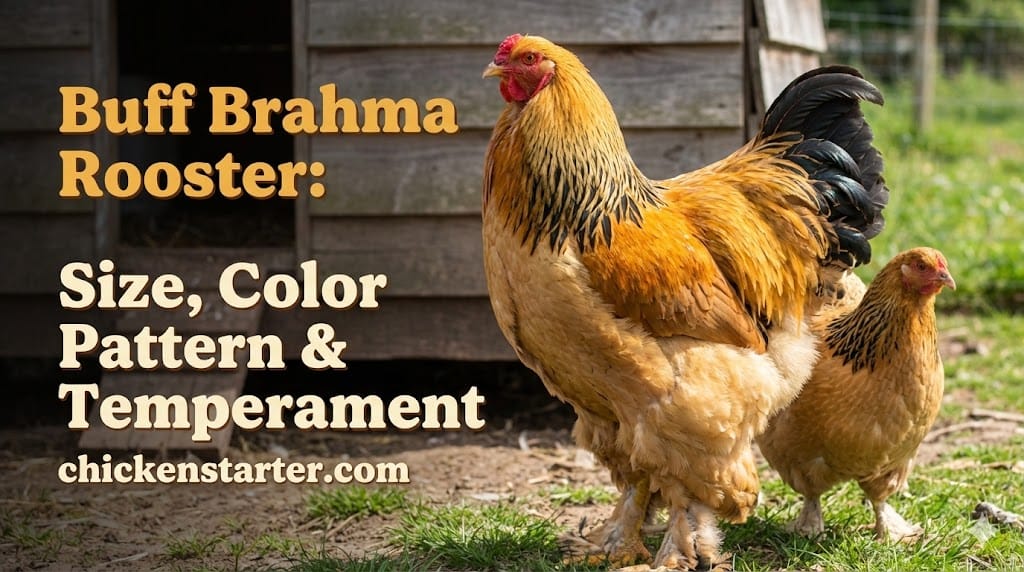
The Buff Brahma rooster is arguably one of the most visually stunning birds you can add to a backyard flock. With warm golden plumage that seems to glow in afternoon sunlight and an imposing size that commands attention, these roosters have earned their reputation as the “Gentle Giants” of the poultry world. Unlike many large breeds where size comes with aggression, the Buff Brahma rooster combines impressive stature with a remarkably calm disposition.
I still remember my first encounter with a Buff Brahma rooster at a poultry exhibition in Brisbane back in 2020. The caramel-colored feathers, the black lacing around his neck, and those magnificent feathered feet made him stand out from every other bird at the show. I spent nearly twenty minutes just watching him move around his pen, completely mesmerized by how the light caught his golden plumage. That single encounter sparked my interest in this variety, and after raising several Buff Brahmas alongside my heat-hardy breeds in tropical Queensland, I have developed a deep appreciation for what makes these roosters special.
This guide covers everything you need to know about the Buff Brahma rooster, from the distinctive color patterns that set them apart from Light and Dark varieties to their size specifications, temperament characteristics, and practical care requirements. Whether you are considering adding a Buff Brahma rooster to your existing flock or simply want to learn more about this beautiful variety, you will find detailed, accurate information based on breed standards and real-world experience.
Understanding Buff Brahma Color Patterns
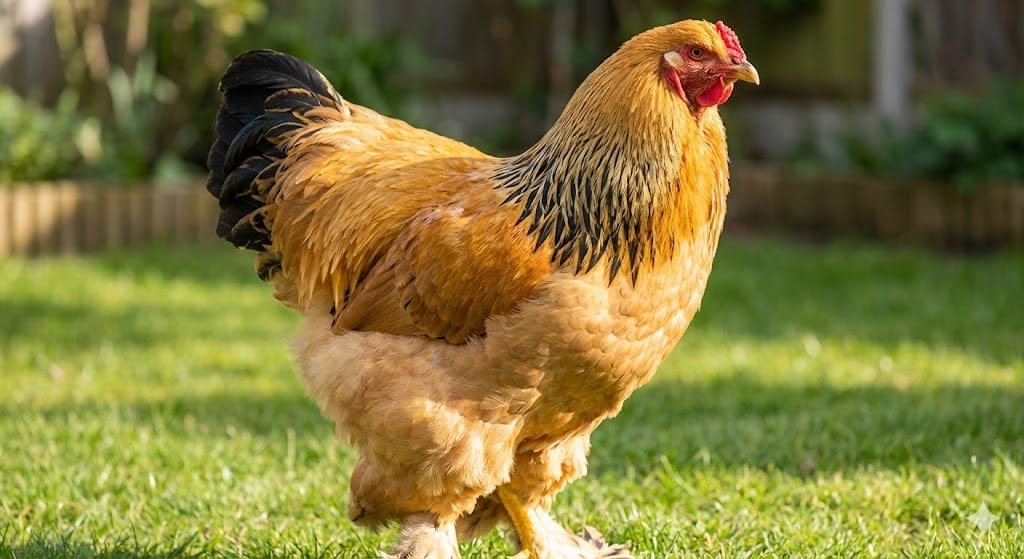
The Buff Brahma represents one of three color varieties recognized by the American Poultry Association, alongside Light and Dark Brahmas. The Buff variety was admitted to the APA Standard of Perfection in 1924, joining the Light and Dark varieties that had been recognized since 1874. What makes the Buff variety particularly appealing is how it essentially mirrors the Light Brahma pattern but replaces the white base color with that distinctive golden buff shade.
Buff Brahmas belong to the Asiatic class of chickens, which includes Cochins and Langshans. Breeds in this class share traits like feathered shanks, substantial size, and calm temperaments that make them popular with backyard keepers worldwide.
According to Backyard Chicken Coops Australia, “these gorgeous chickens sport stunning layers of caramel-colored plumage featuring black detailing in the form of a neck scarf, mostly concentrated on the back of the neck, and at the tip of the tail. They are an absolute delight on the eyes with their warm coloring, making them a firm favorite strutting around the backyard.”
The Livestock Conservancy currently lists Buff Brahmas as “Recovering Status,” recognizing them as a sustainable heritage chicken breed worthy of preservation efforts.
Buff Brahma Rooster Feather Details
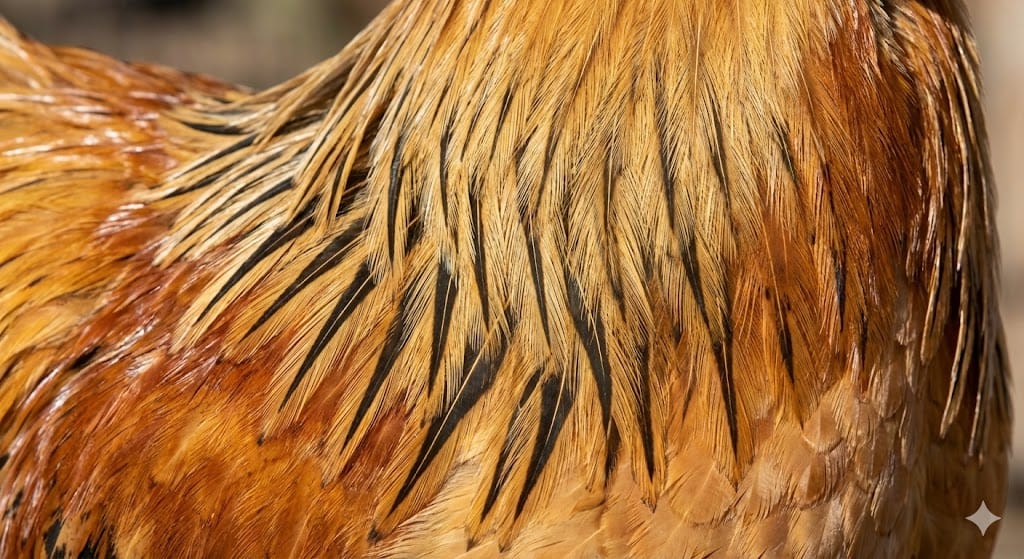
The Buff Brahma rooster displays several distinctive feather characteristics that make identification straightforward once you know what to look for.
Hackle feathers (neck): The hackle feathers on a Buff Brahma rooster are dense and lengthy, featuring black lacing or striping against the golden buff base. The marking is more pronounced from the top and spreads across the shoulders, creating what breeders often describe as a “neck scarf” effect. Male hackle feathers are pointed at the tips, distinguishing them from the rounded hackle feathers on hens.
Saddle feathers (lower back): The saddle area displays the characteristic buff coloring with less prominent black marking compared to the hackles. These feathers are long and flowing on roosters, draping down over the sides and creating that distinctive Brahma silhouette.
Body plumage: The main body feathers maintain the warm buff coloring, ranging from pale gold to rich honey tones depending on the individual bird and breeding. Quality Buff Brahma roosters show consistent coloring throughout the body without excessive patchiness.
Tail feathers: The tail displays a black base with primary feathers that are lined-edged with buff coloring. Roosters develop the characteristic sickle feathers that curve over the main tail, adding to their impressive appearance.
Wing feathers: The wings show the buff base color with black detailing, particularly on the flight feathers. When folded, the wings present a neat appearance that complements the overall color pattern.
Leg feathering: Like all Brahmas, the Buff variety features impressive feathering extending down the shanks and covering the outer toes. This leg feathering is buff colored and adds to the overall visual impact of the bird.
Buff Brahma Rooster vs Hen: How to Tell Them Apart
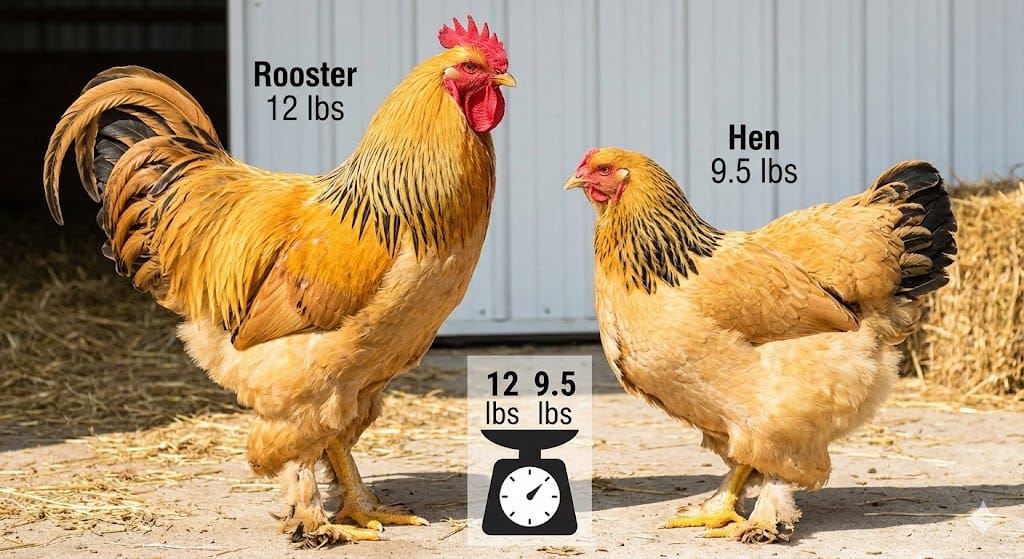
While Buff Brahma roosters and hens share the same basic color pattern, several features distinguish males from females. The characteristic “beetle brow,” a broad head with prominent forehead projecting over the eyes, gives Buff Brahma roosters their distinctive, almost thoughtful expression.
| Feature | Buff Brahma Rooster | Buff Brahma Hen |
|---|---|---|
| Height | Up to 30 inches (76 cm) | Up to 18 inches (45 cm) |
| Weight | 10 to 12 lbs (4.5 to 5.4 kg) | 8 to 9.5 lbs (3.6 to 4.3 kg) |
| Feather sheen | Shining, more vibrant | Duller, more matte |
| Hackle feathers | Dense, lengthy, pointed tips | Shorter, rounded tips |
| Saddle feathers | Long, flowing, pointed | Shorter, rounded |
| Comb size | Larger, more prominent | Smaller, less noticeable |
| Wattles | More developed, brighter red | Less noticeable, with dewlap between |
| Tail | Longer with sickle feathers | Shorter, no sickles |
| Stance | More upright carriage | More horizontal carriage |
Hens display a distinctive dewlap (a fold of skin) between the wattles, which roosters lack. This feature becomes visible as birds mature and provides another identification point.
The Buff Brahma rooster looks very similar to the hen but is larger in size with a longer tail and a more upright stance. This size difference becomes apparent as birds mature, with roosters typically showing noticeably larger frames by 4 to 5 months of age.
For comprehensive information about all Brahma varieties, our complete guide to Brahma chickens covers history, care requirements, and detailed breed characteristics.
Buff Brahma Rooster Size and Weight
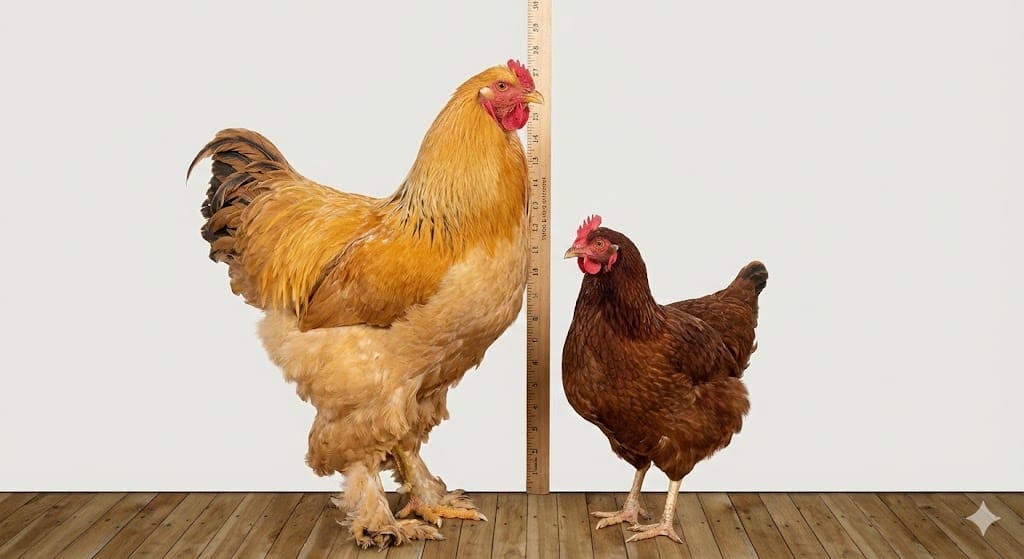
Brahmas are renowned as the second largest chicken breed in the world, and Buff Brahma roosters certainly live up to this reputation.
Standard Size Specifications
According to Cackle Hatchery and breed standards documented by the Heritage Poultry Conservancy, the official weights for Buff Brahmas are:
| Classification | Weight |
|---|---|
| Rooster (mature male) | 12 lbs (5.4 kg) |
| Cockerel (young male) | 10 lbs (4.5 kg) |
| Hen (mature female) | 9.5 lbs (4.3 kg) |
| Pullet (young female) | 8 lbs (3.6 kg) |
In terms of height, a fully grown Buff Brahma rooster can stand up to 30 inches (76 cm) tall, though 18 inches (45 cm) is more typical for average birds. The exceptionally tall roosters reaching 30 inches are rare and typically come from breeders who specifically select for size.
Historical records indicate that nineteenth-century Brahmas were even larger, with roosters reaching 18 to 19 pounds and hens weighing 13 pounds. Modern Brahmas are somewhat smaller but remain impressively large compared to standard breeds.
Growth Timeline
Buff Brahma roosters develop more slowly than many other breeds, which is important to understand if you are raising them from chicks. I made the mistake with my first Brahma cockerels of expecting them to look impressive at the same age as my Australorps. They looked scrawny and awkward at 4 months while my Australorps were already showing their mature shapes. A breeder at the Caboolture poultry show told me, “Brahmas take their sweet time, but they’re worth the wait.” He was absolutely right.
Weeks 0 to 4: Chicks appear as fluffy puffballs with buff coloring and some darker brown feathers. Size differences between males and females are not yet apparent.
Weeks 5 to 8: Feathered legs and chest plumage begin developing. Birds enter what many keepers call the “ugly-cute” stage where proportions look awkward.
Weeks 12 to 16: The “teenage chicken” stage where legs look long, wings seem too small, and everything appears slightly out of proportion. This is normal development for Brahmas.
Months 5 to 6: Roosters begin showing more masculine characteristics but still look lanky. They may start attempting to crow but are not yet fully mature.
Months 7 to 9: This is when Buff Brahma roosters really begin filling out. Chests become massive, feathers fluff out, and the full size becomes apparent. Roosters can top 12 pounds or more during this period.
12+ Months: Full “gentle giant” mode achieved. Roosters reach their mature size and full feathering development.
Buff Brahma Autosexing: How to Sex Chicks at Hatch
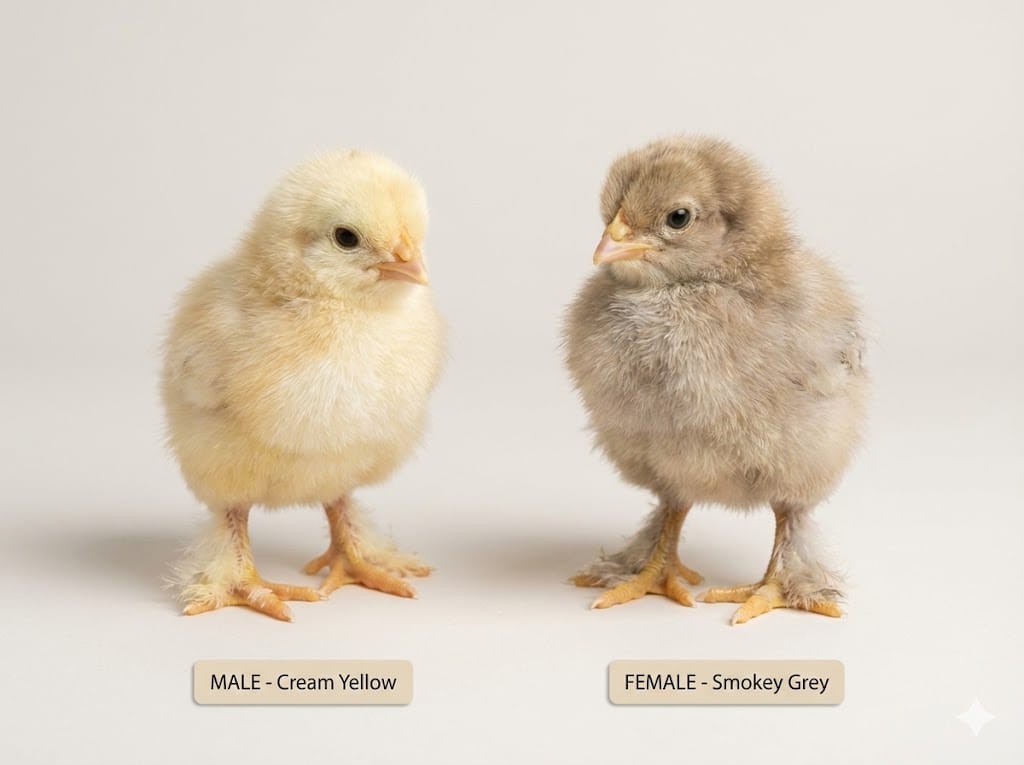
One significant advantage of Buff Brahmas is that they are an autosexing breed, making them considerably easier to sex at hatch compared to Light or Dark Brahmas.
According to Backyard Chicken Coops Australia, “the Buff Brahma is an autosexing breed. It is possible to tell a Buff Brahma rooster chick apart from a hen because the rooster will have a much lighter coloring down than the hen. Males are predominantly cream-yellow in color and the girls are smokey-grey, even at a day-old.”
I started with four Buff Brahma chicks from a local breeder. Even as day-old chicks, I could tell which were likely males based on their lighter cream-yellow coloring compared to the smokier grey of the females. That autosexing feature was immediately valuable since I specifically wanted hens. One of the “pullets” turned out to be a cockerel after all (approximately 85 percent hatchery sexing accuracy holds true even with autosexing breeds, apparently).
Sexing Older Chicks and Juveniles
As Buff Brahma chicks grow, additional indicators emerge:
4 to 6 weeks: Comb and wattle development begins showing differences. Cockerels develop larger, redder combs and more prominent wattles earlier than pullets.
8 to 12 weeks: Hackle feather shape becomes visible. Male hackle feathers grow longer and develop pointed tips, while female hackles remain shorter with rounded tips.
12 to 16 weeks: Saddle feathers on males begin showing the longer, pointed shape characteristic of roosters. Pullets maintain shorter, rounded feathers throughout this region.
5 to 7 months: Gender is typically obvious to most observers. Roosters show full masculine characteristics including larger size, upright carriage, and developing sickle tail feathers.
For detailed sexing guidance for other Brahma varieties, see our guides on Light Brahma chicken rooster sexing and Dark Brahma roosters.
Buff Brahma Rooster Temperament
One of the most appealing characteristics of the Buff Brahma rooster is the docile, gentle temperament that the breed is known for.
Typical Behavior Characteristics
Buff Brahma roosters consistently display:
Calm disposition: These roosters are not aggressive and handle stress well. They rarely panic or become flighty, even when introduced to new situations or people.
People-friendly nature: Buff Brahma roosters tolerate handling well and can become quite tame with regular interaction. Many keepers report their Brahma roosters will eat from their hands and allow themselves to be picked up.
Non-aggressive toward other birds: Even the roosters are not typically aggressive toward other chickens. Multiple keepers have reported that their Buff Brahma roosters get along fine with other roosters in the flock and do not excessively harass hens.
Poor flying ability: Due to their substantial weight, Buff Brahma roosters are not good fliers. This makes them well-suited to smaller backyards where flight over fences might otherwise be a concern.
Relatively quiet: While roosters do crow, Brahmas are generally considered quieter than many other breeds. Their vocalizations tend to be less frequent and slightly softer.
Rather than rehome the unexpected cockerel immediately, I decided to keep him temporarily to observe Brahma rooster behavior firsthand. My young nephew named him “Butterscotch,” and what impressed me most was his temperament. My previous experience with roosters had included some genuinely aggressive birds that required careful handling. Butterscotch was utterly different. He would approach me calmly when I entered the coop, accept treats from my hand, and never showed any aggression even when I needed to handle his hens for health checks.
One customer review from Cackle Hatchery confirms this experience: “The rooster is well mannered with people and was neither aggressive or harassed when there were additional roosters in the flock. He shows a strong preference for hens that look like him.”
For guidance on whether you need a rooster at all, our article on do I need a rooster to get eggs clarifies common misconceptions about rooster requirements.
Housing Requirements for Buff Brahma Roosters
The substantial size of Buff Brahma roosters creates specific housing needs that differ from standard breeds.
Coop Space Requirements
Brahmas need more room than typical chickens due to their large frames. Plan for a minimum of 5 to 6 square feet per bird in the coop, compared to the standard 4 square feet recommended for average-sized breeds. Crowding large birds like Brahmas leads to stress, feather picking, and health issues.
Roost Specifications
Height: Roosts should be positioned 2 to 4 feet above the ground. Because Brahmas are heavy birds, their roosts should not be too far from the ground. When jumping down, their weight could cause injury to their feet, particularly bumblefoot.
Width: Use sturdy 2 x 4 boards placed flat-side up to provide adequate foot support. Narrow or flimsy roosts will not accommodate these large birds safely.
Strength: Ensure roosts can support the weight of multiple heavy birds. A single Buff Brahma rooster at 12 pounds, combined with several hens, creates significant load on roosting structures.
Nesting Box Size
If keeping hens with your rooster, nesting boxes should be at least 14 x 14 inches (35 x 35 cm) minimum, larger than standard nest boxes. Brahma hens are large birds that need adequate space for comfortable laying.
Pop Door and Access Points
Standard pop doors may be too small for Buff Brahma roosters. Ensure all doorways and access points are large enough that birds do not scrape their backs or damage their feathers when entering and exiting.
For detailed coop sizing guidance, our article on how big your chicken coop should be provides calculations for various flock sizes.
Preventing Feather Pecking in Buff Brahma Flocks
The distinctive golden plumage on Buff Brahma roosters can attract unwanted attention from flock mates, particularly during stress periods or in confined spaces. Understanding and preventing feather pecking is essential for maintaining flock health.
Risk Factors Specific to Buff Brahmas
According to Penn State Extension, stress, no matter how slight, is usually the main factor behind cannibalism outbreaks. Buff Brahmas face several specific risks:
- Warm buff coloring may attract curious pecking from other birds
- Dense plumage can hide early damage until it becomes severe
- Large size means injuries from pecking can be significant
- Adolescent cockerels grouped together during sexing may develop pecking behaviors
- Slow feathering during development leaves immature feathers exposed longer
Prevention Strategies
Space management: Provide minimum 5 to 6 square feet per bird in the coop, doubling this requirement for bachelor cockerel groups. According to the University of Nebraska Extension, adequate feeder space for all birds to eat simultaneously helps prevent underweight birds that are frequently victims of cannibalism.
Lighting control: Use dim lighting (15 to 25 watt bulbs) for birds 12 weeks or older. Never use white light bulbs larger than 40 watts, and if larger bulbs are required for heat, use red or infrared bulbs instead. Do not light birds more than 16 hours per day.
Enrichment: Add foraging opportunities such as straw, green leafy vegetables, grass clippings, or small grains in deep litter. A mash diet rather than pelleted feed may help prevent outbreaks because chickens sift through the ground particles and take longer to consume their feed.
Nesting provisions: Provide dark, safe nesting areas with at least 1 nest for every 5 hens. Avoid bright lights near nesting areas, as the exposed cloaca during egg laying attracts pecking.
Nutritional balance: Ensure feed contains adequate protein, methionine, sodium, and phosphorus. Deficiencies in these nutrients have been linked to increased pecking behavior.
If Pecking Occurs
- Isolate injured birds for healing immediately
- Apply Blue Kote, pine tar, or anti-peck ointment to wounds (blood attracts further pecking)
- Darken the facilities by using red bulbs
- Lower temperature if birds appear overheated
- Remove any badly injured or overly aggressive birds
- Add enrichments, especially foraging-related devices
- Increase feed and water space
For comprehensive intervention strategies, see our guide on pecking order problems and stopping bully hens.
Foot Care for Buff Brahma Roosters
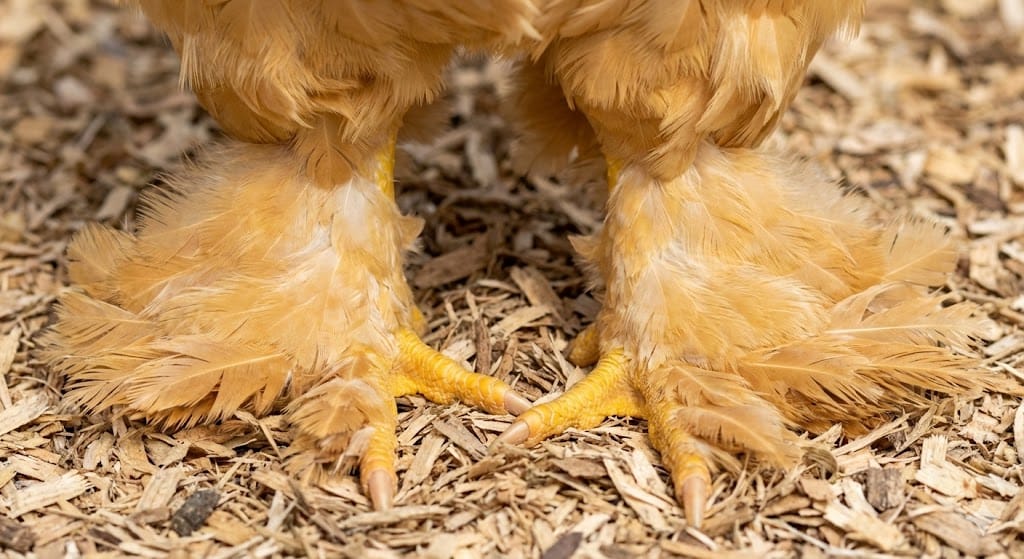
The heavily feathered legs that make Brahmas so distinctive also create unique care requirements that keepers must address.
Mud Ball Prevention
Feathered feet collect mud easily, especially during wet conditions. According to Backyard Chicken Coops Australia, “wet and muddy conditions can cause caking on their foot feathers which are called mud balls. You should inspect their leg feathers for accumulation of dirt and mud regularly and gently wash it off should there be dirt or debris caught in the plumage.”
The biggest challenge I faced with Butterscotch was managing his feathered feet during our wet season. After three days of heavy rain, I found dried mud caked into his leg feathers. The mud had hardened and was pulling at the feather follicles. I had to soak his feet in warm water for 20 minutes before I could safely remove the debris. After that experience, I added covered areas to the run and started doing daily foot checks during rainy periods.
Pin Feather Injuries
Due to the robust quality of Brahma foot feathering, the pin feathers (the thicker ones) can get caught on things as birds walk by. Sometimes these break and cause bleeding. Inspect legs immediately if you spot blood on your Brahma’s foot to determine the source and provide treatment.
Frostbite Risk
In cold climates, wet leg feathers can freeze and cause frostbite on toes. Wet conditions during winter can allow ice and cold water to accumulate on the foot feathers. This can be difficult to see because of their dense feathers and may result in discovering the damage too late.
For coop flooring that helps prevent foot issues, see our guide on best chicken coop flooring for mud.
Climate Considerations for Buff Brahma Roosters
Buff Brahmas have specific climate tolerances that keepers should understand.
Cold Weather Performance
Brahmas excel in cold climates due to their thick layer of down, dense feathering, and pea comb that protects them from frostbite. The feathered feet provide additional insulation, and the large body mass helps retain heat.
The pea comb is particularly important for cold hardiness. Unlike large single combs that are prone to frostbite, the small pea comb sits close to the head and rarely freezes even in harsh winters.
For cold climate management, our winterizing chicken coop guide covers protection strategies.
Hot Weather Considerations
Despite their heavy feathering, Brahmas adapt better to heat than many keepers expect. I keep Buff Brahmas in tropical Queensland alongside my heat-hardy Australorps. The Brahmas do require more attention during our hot, humid summers, but they have managed well with proper shade and water access. They are not the first breed I would recommend for extreme heat, but they are more adaptable than their appearance suggests.
Provide ample shade: Brahmas need escape from direct sunlight during hot weather.
Ensure cool, fresh water: Large birds drink more water, and keeping it cool helps prevent heat stress.
Monitor for heat stress signs: Watch for panting and wings held away from the body.
Consider afternoon confinement: During extreme heat, keeping birds in shaded areas during the hottest part of the day helps prevent overheating.
For hot climate management, our guide on raising chickens in hot humid climates provides practical strategies.
Parasite Prevention in Buff Brahma Roosters
The dense plumage that makes Buff Brahmas so beautiful also creates hiding places for external parasites.
According to Backyard Chicken Coops Australia, Brahmas’ “dense feathering also makes the Brahma quite susceptible to mites and lice which can be difficult to spot due to their plumage.”
Prevention Strategies
Regular inspections: Part the feathers regularly to examine the skin, paying particular attention to the vent area and under wings where parasites concentrate. Our chicken health check guide provides a systematic approach to examining your birds.
Dust bathing: Provide accessible dust bathing areas with sand, diatomaceous earth, and wood ash. Brahmas need extra access to dust baths because their leg feathering can make dust bathing slightly more challenging.
Coop hygiene: Keep bedding clean and dry. Sprinkle diatomaceous earth in bedding regularly as a preventive measure.
Prompt treatment: Address any infestations immediately before they spread. The dense feathering means parasites can build to high numbers before becoming visible.
Our article on mites and lice on chickens provides comprehensive treatment protocols.
Buff Brahma Rooster Breeding Considerations
If you plan to breed Buff Brahmas, several factors affect rooster selection and breeding success.
Selecting Quality Roosters
Color consistency: Look for roosters with even buff coloring throughout the body without excessive patchiness or color variation.
Clear black lacing: The black detailing on hackles and tail should be well-defined and consistent.
Proper size: Select roosters that meet breed standards for weight and height.
Correct comb type: Ensure the pea comb is properly formed with three rows of small bumps.
Good leg feathering: Feathering should extend fully down the shanks and cover the outer toes.
Docile temperament: Aggression should be selected against in breeding programs.
Mating Considerations
Large Brahma roosters may struggle with mating due to their size. The substantial weight can make mounting difficult and may cause back feather damage to hens. According to Cackle Hatchery, a mating ratio of 6 females to 1 male is recommended, and some breeders trim the feathers around the vent area to improve fertility.
Customer reviews note that Buff Brahma roosters often show a strong preference for hens that look like them, favoring Buff Orpingtons and similar golden-colored hens over breeds with contrasting coloring. This preference is worth considering if maintaining a mixed flock.
For those interested in hatching, our guide on best chicken egg incubators for beginners covers equipment selection.
Buff Brahma Rooster Compared to Other Brahma Varieties
Understanding how Buff Brahma roosters compare to Light and Dark varieties helps with breed selection.
| Feature | Buff Brahma Rooster | Light Brahma Rooster | Dark Brahma Rooster |
|---|---|---|---|
| Base color | Golden buff/caramel | White with gray undertone | Silver hackles, black body |
| Hackle pattern | Black lacing on buff | Black lacing on white | Black striping on silver |
| Sexing difficulty | Easiest (autosexing at hatch) | Hardest (similar to hens) | Easy (different from hens) |
| APA Recognition | 1924 | 1874 | 1874 |
| Popularity | Very popular | Most common | Less common |
| Visual impact | Warm, golden appearance | Classic monochrome | High contrast silver/black |
The Buff Brahma essentially follows the Light Brahma pattern but replaces white with buff coloring. This substitution creates a warmer, more golden appearance that many keepers find particularly attractive. Keepers who appreciate the golden coloring of Buff Orpingtons often gravitate toward Buff Brahmas for similar aesthetic appeal combined with larger size.
Frequently Asked Questions About Buff Brahma Roosters
How big do Buff Brahma roosters get?
Mature Buff Brahma roosters typically weigh 10 to 12 pounds (4.5 to 5.4 kg) and can reach heights of up to 30 inches (76 cm), though 18 inches (45 cm) is more common for average birds. They are the second largest chicken breed in the world.
Are Buff Brahma roosters aggressive?
No. Buff Brahma roosters are known for their calm, docile temperament. They are typically gentle with humans, tolerant of handling, and non-aggressive toward other chickens. Even multiple roosters often coexist peacefully in Brahma flocks.
How can you tell a Buff Brahma rooster from a hen?
Buff Brahmas are autosexing, meaning males and females can be distinguished at hatch. Male chicks are predominantly cream-yellow while females are smokey-grey. As adults, roosters are larger (up to 30 inches vs 18 inches), have more prominent combs and wattles, longer pointed hackle and saddle feathers, and a more upright stance. Hens display a dewlap between the wattles that roosters lack.
What color eggs do Buff Brahma hens lay?
Buff Brahma hens lay brown eggs, typically medium to large in size. They produce approximately 150 to 200 eggs per year and are known as excellent winter layers, continuing to produce when other breeds have stopped.
Are Buff Brahma roosters good for beginners?
Yes. Their docile temperament, calm nature, and tolerance for handling make Buff Brahma roosters an excellent choice for beginners. They are also relatively quiet compared to other breeds and do not fly well, making them suitable for smaller backyards.
How long do Buff Brahma roosters live?
With proper care, Buff Brahma roosters can live 5 to 8 years, with some individuals reaching 10 to 15 years. Their calm temperament often contributes to longevity, as stress-related health issues are less common in docile birds.
Do Buff Brahma roosters crow loudly?
Brahmas are generally quieter than many other breeds. While roosters do crow, their vocalizations tend to be less frequent and slightly softer than breeds known for loud crowing.
What is the mating ratio for Buff Brahma roosters?
A ratio of 6 females to 1 male is recommended according to Cackle Hatchery. Due to their large size, Brahma roosters may have lower fertility rates (65 to 80 percent), and some breeders trim vent feathers to improve mating success.
Where to Find Buff Brahma Roosters
Buff Brahmas are available through multiple sources:
Hatcheries: Major hatcheries stock Buff Brahmas, though availability varies seasonally. The autosexing characteristic means you can specifically request roosters if that is your goal, with reasonable accuracy.
Breeders: Specialty Brahma breeders often produce higher quality birds with better color consistency than hatchery stock. Look for breeders who show their birds or maintain breeding programs focused on standard qualities.
Poultry swaps and shows: These events offer opportunities to see birds in person before purchasing and speak directly with experienced keepers.
Local agricultural groups: Many areas have poultry clubs or online groups where keepers sell or rehome birds.
Butterscotch eventually went to a breeder friend who wanted to improve his Buff Brahma breeding stock. But that experience convinced me that Brahmas can thrive even in challenging climates with proper management, and that Buff Brahma roosters deserve their reputation as gentle giants.
For guidance on evaluating chick quality, our article on identifying and avoiding poor quality day-old chicks provides practical assessment tips.
Final Thoughts on Buff Brahma Roosters
The Buff Brahma rooster combines impressive size, stunning golden plumage, and a remarkably gentle temperament in one package. Their warm caramel coloring with black accents makes them visually striking, while their calm disposition makes them practical additions to backyard flocks.
The autosexing characteristic at hatch makes Buff Brahmas easier to sex than Light or Dark varieties. Their slow maturation requires patience, but the result is worth the wait. With proper attention to their feathered feet, climate management, and cannibalism prevention, these gentle giants can thrive in a wide range of conditions.
If you have ever felt overwhelmed by conflicting chicken advice that does not fit your reality, Buff Brahmas might surprise you with their adaptability. The extra maintenance for their feathered legs was worthwhile for the pleasure of keeping such beautiful, gentle birds.
For comprehensive information about all aspects of this breed, our main Brahma chicken rooster guide provides detailed coverage of care requirements, feeding, and health management across all varieties.
Whether you choose Buff Brahmas for their beauty, their temperament, or their excellent winter laying capabilities, these impressive birds reward patient keepers with years of gentle companionship and visual enjoyment.

Oladepo Babatunde is the founder of ChickenStarter.com. He is a backyard chicken keeper and educator who specializes in helping beginners raise healthy flocks, particularly in warm climates. His expertise comes from years of hands-on experience building coops, treating common chicken ailments, and solving flock management issues. His own happy hens are a testament to his methods, laying 25-30 eggs weekly.