I was cleaning out the pantry last fall and found two bags of brown rice that had been sitting there for months, pushed behind the cereal boxes and forgotten. My twelve hens were scratching around the run in that bored, restless way they get when the weather turns cold and there’s nothing interesting left to forage. My first instinct was to toss the rice out to them. Then I stopped. Somewhere in the back of my mind, I remembered the old wedding warning: don’t throw rice, it’ll make the birds explode.
So I did what I always do before feeding my flock something new. I researched it. And I fell down a rabbit hole of myths, half-truths, and surprisingly bad information on the first page of results. After a 30-day experiment feeding different types of rice to my flock of Buff Orpingtons, Easter Eggers, and Rhode Island Reds, tracking their droppings, egg production, and behavior the whole time, here’s what I actually found about feeding rice to chickens. Spoiler: the myth is nonsense, but there are real rules you need to follow.
Can Chickens Eat Rice? The Straight Answer
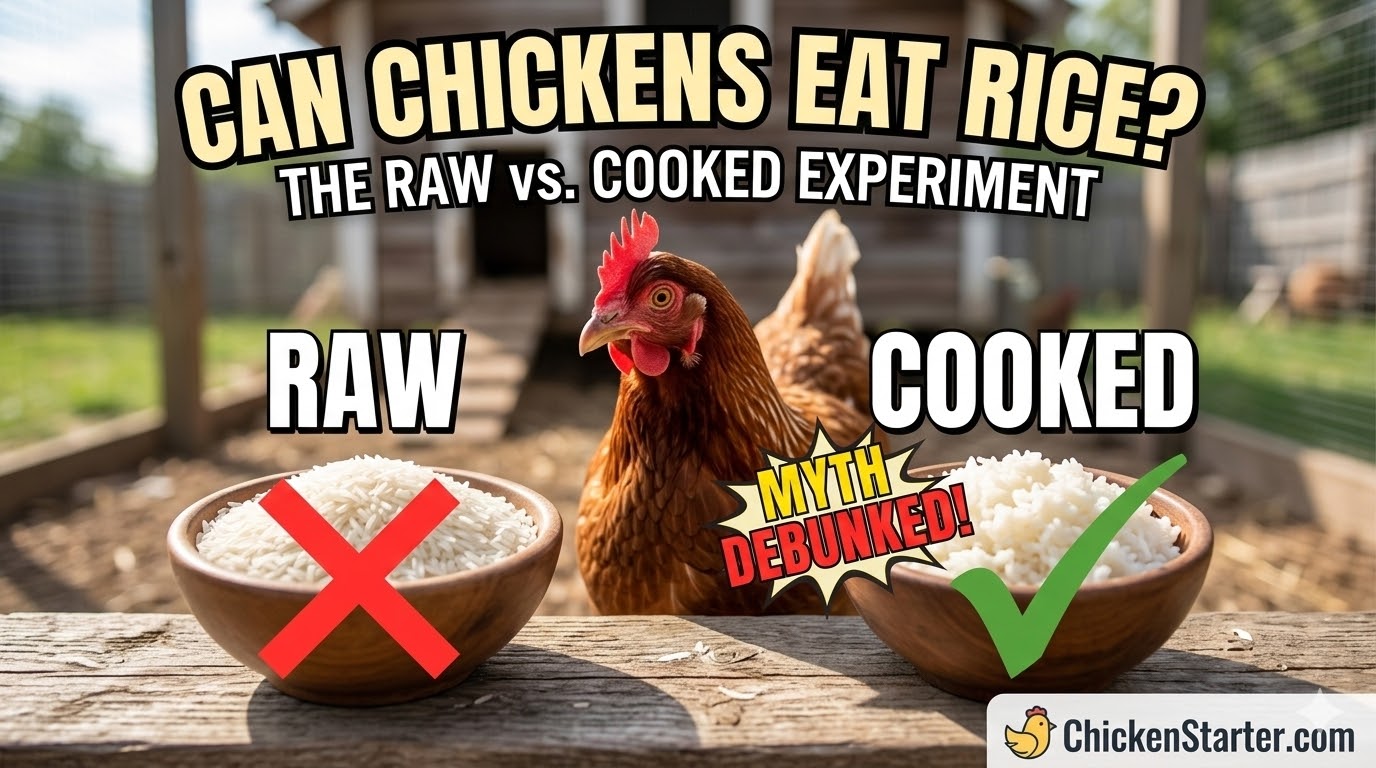
Yes, chickens can safely eat rice, and it’s actually a decent treat when given in moderation. Whether it’s cooked or uncooked, rice is packed with carbohydrates that provide your chickens with a good energy boost. It is not toxic. It will not make your chickens explode. That myth has been thoroughly debunked by actual scientists, and we’ll get into exactly how in a moment.
Rice is primarily a source of carbohydrates, which provide chickens with the energy they need for daily activities such as foraging, laying eggs, and staying warm in colder weather. This makes rice a useful supplement to their diet, especially when they need a quick energy boost. However, it’s important to remember that rice lacks certain essential nutrients, such as proteins, vitamins, and minerals, that chickens require for overall health and egg production.
Quick Answer: Yes, chickens can safely eat both cooked and uncooked rice. The myth that rice makes birds explode is completely false, debunked by the Cornell Laboratory of Ornithology and a published experiment in The American Biology Teacher. Brown rice and wild rice are the most nutritious options. Rice should be plain (no seasoning, oil, or salt) and limited to no more than 10% of their diet. Never feed fried rice, seasoned rice mixes, or sugary rice cereals. Baby chicks under 6 weeks should not be given rice.
My hens went absolutely wild for warm cooked brown rice. They actually preferred it over scratch grain, which surprised me. But I also noticed that on the days I gave them rice, they were noticeably slower to finish their layer feed that evening. That told me immediately: rice is a treat, not a replacement for their complete feed.
The “Exploding Bird” Myth: Debunked by Actual Science
This is the part of the article that matters most, because this myth has been circulating for over 40 years and most websites still brush it off with a single sentence. Let me give you the full story, because the science behind it is fascinating and conclusive.
We’ve all heard the warning: don’t throw rice at weddings because the birds will eat it and their stomachs will swell up and explode. It sounds dramatic. It sounds plausible if you’ve ever watched rice expand in a pot of boiling water. But it is completely, definitively, scientifically false. Rice, cooked or uncooked, will not harm birds in any meaningful way.
Where the Myth Came From
The myth gained serious traction in 1985, when a Connecticut state legislator introduced a bill amusingly titled “An Act Prohibiting the Use of Uncooked Rice at Nuptial Affairs.”1 The legislator claimed the Audubon Society supported the idea, but interviews with local Audubon Society members revealed that they differed from the legislator’s reasoning.2
The rumor then got a massive boost from advice columnist Ann Landers, who repeated the claim in her nationally syndicated column in 1988. When the myth was repeated by advice columnist Ann Landers, Steven C. Sibley of the Cornell Laboratory of Ornithology wrote to correct the misconception, stating that rice is no threat to birds and that it must be boiled before it will expand.3 He went on to point out that all the food birds swallow is ground up by powerful muscles and grit in their gizzards, and that many birds love rice, as any frustrated rice farmer will tell you.
Landers printed a retraction a few months later. But the damage was done. Couples started throwing birdseed instead of rice at weddings. Churches banned rice throwing. And the myth just… stuck.
The University of Kentucky Put It to the Test
Since no one had actually tested the myth with a controlled experiment, it lingered for over a decade. Then, in 2002, University of Kentucky biology professor James Krupa decided to use it as a teaching opportunity.
He asked his 600 undergraduate biology students whether they believed that rice expanded in the stomachs of birds before exploding. About half did, with one student claiming they had seen it personally.
Krupa had his students design a series of experiments. They found that soaked white rice expanded in volume by 33%, which might sound like a lot, but not so much when compared to ordinary bird seed, which they found increased in size by an even greater percentage of 40%. If rice was going to make birds explode, then the birdseed people were throwing instead of rice should have been even more devastating. Other grains birds eat every single day expanded even more: field corn by about 53%, red wheat by about 65%.
But here’s the part no other chicken website tells you. Krupa’s students wanted to test it on actual, living birds. Having established safety through their expansion experiments, Krupa agreed to use his own pet pigeons and doves.
Sixty birds ate 1,500 milliliters of instant white rice. They ate the instant rice vigorously then drank during the first 20 minutes. No birds choked to death, exploded, or otherwise died. No birds regurgitated rice or water. No birds showed any sign of distress. The flock continued to feed on the rice for the rest of the day without problem.
The study was published in the April 2005 edition of The American Biology Teacher. The myth was, and remains, definitively busted.
Why Rice Doesn’t Expand Inside a Chicken
Understanding why rice is safe requires a quick look at how your chicken’s digestive system works. Birds maintain a higher body temperature, typically between 104°F and 108°F (40°C to 42°C), but this is far below the boiling point of water at 212°F (100°C). When we cook rice, it swells to many times its original size. It is the heating process that enables this to happen. The heat softens the starch in the rice which allows it to absorb water quickly and swell.
A chicken’s body simply cannot create those conditions. When your hen pecks up a grain of uncooked rice, it first goes into the crop, where it’s stored and softened. Then it moves to the proventriculus (the glandular stomach), where digestive acids begin breaking it down. Finally, any remaining material is ground to paste by the powerful muscles and grit in the gizzard. Long before uncooked rice could absorb enough moisture to expand meaningfully, the chicken’s digestive system has already crushed it.
I’ll admit, the first time I tossed a handful of uncooked rice to my flock, I stood there watching for a solid 20 minutes, half expecting… I don’t know what. Nothing happened. They pecked at it, drank water, went about their day. After 30 days of regular rice treats, every hen was perfectly healthy. Zero issues.
Can Chickens Eat Uncooked (Raw) Rice?
Yes. Raw rice will not harm chickens in any meaningful way. It doesn’t swell up in their stomach, it doesn’t make their intestines explode, and it doesn’t plug up their crop. While humans have a hard time eating uncooked rice, this is not the case with birds. Their unique digestive system, with that incredibly powerful gizzard, allows them to break down raw rice with little issue.
That said, there are some practical differences between feeding raw versus cooked rice. Cooked rice is often preferred over uncooked rice because it is softer and easier for chickens to digest. The cooking process breaks down some of the starch, making it more palatable and less likely to cause any digestive slowdown.
I also found that chickens have strong preferences. In my testing, I offered both raw and cooked brown rice side by side in separate dishes. Eight out of my twelve hens went straight for the cooked rice. The remaining four pecked at the raw rice for a few minutes and then mostly lost interest. Cooked rice is the clear favorite in my flock, and I suspect yours will feel the same way.
If you do choose to feed raw rice, just scatter it loosely across the run so your hens can peck at it naturally. This mimics how wild birds encounter rice in fields and paddies, and encourages the natural foraging behavior that keeps your flock active and mentally stimulated.
Can Chickens Eat Cooked Rice?
Absolutely. Cooked rice is safe for chickens, and it’s the easiest form to serve. Soft, fluffy, and easy to digest. You can feed them plain white or brown rice as long as it’s not seasoned or oily.
A few practical tips I’ve learned from serving cooked rice to my flock over the past two years:
Make sure the rice is fully cooked until soft, and let it cool to room temperature before feeding. It’s important to ensure that the cooked rice is not too hot when feeding it to your chickens, as this can cause burns in their mouth or crop. I learned this the hard way the first time I got impatient and served rice that was still steaming. Warm rice also clumps together in big sticky masses, and my dominant hen, Goldie, tried to swallow a clump the size of a golf ball. Now I always spread cooked rice out on a plate and let it cool completely before I bring it outside. I also fluff it with a fork to break up the clumps.
Cooked rice should be free of added salt, oils, butter, soy sauce, or spices of any kind. Plain water and rice. Nothing else.
Brown Rice vs. White Rice vs. Wild Rice: Which Is Best for Chickens?
Not all rice is created equal. If you’re going to give your flock rice as a treat, you might as well give them the most nutritious option. Here’s how the main types compare, based on nutritional data from the USDA FoodData Central database:
| Rice Type (per 100g cooked) | Safe? | Calories | Protein | Carbs | Key Nutrients | Verdict |
|---|---|---|---|---|---|---|
| Brown rice | ✅ Best option | 112 | 2.3g | 23.5g | B vitamins, magnesium (10% DV), manganese (48% DV), phosphorus, fiber | Most nutritious choice |
| Wild rice | ✅ Excellent | 101 | 4.0g | 21.3g | Highest protein of all rice types, zinc, folate | Best if available |
| White rice | ✅ OK | 130 | 2.7g | 28g | Some B vitamins, low fiber | Least nutritious but safe |
| Basmati rice | ✅ OK | ~121 | ~3.5g | ~25g | Lower glycemic index | Safe, aromatic |
| Jasmine rice | ✅ OK | ~129 | ~2.7g | ~28g | Similar to white rice | Safe, aromatic |
| Instant rice | ⚠️ Caution | Varies | Lowest | Processed | Heavily processed, fewest nutrients | Avoid if possible |
Brown rice is the clear winner for backyard flocks. It retains its bran layer (the outer coating that gets removed to make white rice), which means it has more fiber, B vitamins, magnesium, and phosphorus than white rice. Wild rice is even more nutritious, packing nearly double the protein of brown rice, but it’s also significantly more expensive.
White rice is the most common type in most kitchens, but it isn’t the best option for your chickens. The healthier part of the rice has been removed during processing, stripping away most of the vitamins and minerals along with the brown coloration. It’s safe, but it’s basically empty carbohydrates.
I buy brown rice in bulk for my family, so that’s what my chickens get too. At roughly $0.08 per serving, it’s one of the cheapest treats I can offer. Wild rice would be ideal nutritionally, but at 3 to 4 times the price, my hens don’t seem to care about the difference.
Can Chickens Eat Rice Every Day?
They can, but they absolutely shouldn’t. Use rice as a treat two or three times a week at most, not as their main diet. Chickens should live on a diet consisting primarily of chicken feed, with about 90% of their calories coming from their complete layer or grower ration. That rule applies to rice just like it applies to bread, oatmeal, or any other treat.
You don’t want to end up feeding your chickens so much rice that you start prompting weight gain. Rice doesn’t have all the essential minerals and vitamins chickens need, and it can lead to deficiencies if fed too often. If your flock eats excessive rice, they’ll fill up on carbs and ignore their layer feed. Over time, you’ll notice softer shells, fewer eggs, and less activity. The goal is balance.
The biggest risk that rice poses to any chicken is making them gain weight. And weight gain in chickens, particularly laying hens, can lead to a very real and very dangerous condition called Fatty Liver Hemorrhagic Syndrome (FLHS).
According to the Merck Veterinary Manual, fatty liver hemorrhagic syndrome is a metabolic disorder of chickens typically causing sudden death of birds fed high-energy diets with limited exercise. FLHS is an economically important disease in the poultry industry, and it is a leading noninfectious cause of death in backyard chickens.
When carbohydrates (starch) are used instead of fat for synthesis of fatty acids and yolk components, there is an increased metabolic stress in the liver.7 Rice is almost pure starch. Feed it daily, and you’re loading your hens with exactly the kind of excess energy that contributes to this syndrome.
During my first winter with chickens, I made the mistake of giving warm rice almost daily because it seemed like a nice warm treat. Within three weeks, I noticed my heaviest Buff Orpington was visibly wider and her egg production dipped from five eggs a week to three. I cut rice back to twice a week, and things normalized within 10 days. Lesson learned the hard way.
For guidance on how to structure your flock’s daily feeding routine, take a look at my guides on the best feeding schedule for backyard chickens and whether chickens should have feed available all the time.
Can Chickens Eat Rice in the Morning?
The timing matters less than what else they eat alongside the rice. Best practice is to offer layer feed first thing in the morning when your chickens are hungriest. This ensures they get their complete nutrition before filling up on treats.
Rice works best as a mid-morning or afternoon treat after they’ve already had a solid session on their regular feed. Rice is dense in carbohydrates, and this can help your birds cope with stress and also help them keep warm when the temperatures plunge. In fact, rice is commonly given in the winter as a warming feed to help keep chickens’ metabolisms running high.
My routine: layer feed goes in the feeder at first light. Rice treats come around 10 or 11 AM, scattered in the run. By then they’ve had a solid two hours on their complete feed, and the rice is just a bonus.
For more on cold-weather feeding, check out my winter feeding guide and my detailed article on raising chickens in cold climates.
Can Chickens Eat Fried Rice?
No. Avoid fried rice entirely. It’s best not to feed chickens fried rice. The oil, salt, and seasonings used in fried rice can cause digestive upset, and the sodium levels alone make it genuinely dangerous.
A typical serving of fried rice from a restaurant or takeout container contains 800 to 1,000+ mg of sodium. Chickens are extremely sensitive to salt and can develop sodium toxicosis (also called salt poisoning) at relatively low levels compared to humans. Symptoms include increased thirst, diarrhea, lethargy, and in severe cases, seizures and death.
Beyond sodium, fried rice almost always contains soy sauce (roughly 900mg of sodium per tablespoon), garlic, and onion, all of which are harmful to chickens in significant amounts. Garlic and onion can damage red blood cells, leading to a condition called hemolytic anemia.
One evening my husband tried to give the hens some leftover Chinese takeout fried rice. I stopped him. The soy sauce alone in a typical serving has more sodium than a chicken should safely consume in an entire day. That rice went in the compost bin.
Seasoned rice, especially those containing high salt and sugar, can be risky for chickens. Stick to plain, home-cooked rice with nothing but water. No exceptions.
Can Chickens Eat Rice Krispies and Rice Cakes?
Plain Rice Krispies (the original, unsweetened variety) are okay as a very occasional treat. They’re formulated with some added B vitamins and iron, and the puffed rice is easy for chickens to eat. However, you should only feed your chickens plain Rice Krispies. The chocolate and frosted varieties have excess sugar and sodium, which are not suitable for your flock.
More importantly, you should never feed Rice Krispie Treats (the bars made with marshmallow). The sticky marshmallow binding agent can be extremely difficult for chickens to digest correctly and creates a real risk of crop impaction.
Here’s my quick reference chart:
| Rice Product | Safe? | Notes |
|---|---|---|
| Plain Rice Krispies cereal | ✅ Occasionally | Plain only, no chocolate or frosted versions |
| Rice Krispie Treats / bars | ❌ No | Sticky marshmallow, very high sugar |
| Cocoa Krispies | ❌ No | Chocolate plus sugar |
| Frosted Krispies | ❌ No | Excess sugar and additives |
| Plain rice cakes | ⚠️ Rarely | Empty calories, almost no nutrition |
| Flavored rice cakes | ❌ No | Seasonings, salt, artificial flavors |
Rice cakes are technically safe, but I honestly can’t think of a reason to feed them. They have almost zero nutritional value and don’t contain many calories. They’re an “empty” food. Your chickens are better off eating something else.
Can Chickens Eat Rice Noodles?
Plain, cooked rice noodles are technically safe in very small amounts, but they’re not something I’d recommend going out of your way to offer. Rice noodles are essentially processed rice with even less nutritional value than plain cooked rice.
The bigger practical issue is that rice noodles are slippery and tend to clump together. If a chicken tries to swallow a large clump of noodles, you’re looking at a potential crop impaction risk. If you do offer them, cut or break the noodles into very short pieces (1 to 2 inches) before serving.
Never give rice noodles from a prepared dish like stir fry, pad thai, or pho. The sodium content in a typical serving of these dishes ranges from 800 to 1,100mg or more, which is dangerous territory for chickens.
I’ve never purposely fed rice noodles to my flock, and honestly, there’s no good reason to. Plain cooked rice is cheaper, safer, and more nutritious.
Can Chickens Eat Rice and Beans?
This is actually one of the best treat combinations you can offer your flock, and it’s one I use regularly. Cooked rice mixed with cooked beans creates a much more balanced nutritional profile than either food alone. The rice provides carbohydrates for energy, and the beans add the protein that rice lacks.
There is one absolutely critical rule here: raw or dried beans are toxic to chickens. They contain a compound called phytohaemagglutinin (a type of lectin) that can be fatal to poultry. Illness can occur after eating as few as three or four raw beans, and it progresses very rapidly. Beans must be thoroughly cooked before feeding, no exceptions.
Safe cooked beans for chickens include black beans, kidney beans (only when fully cooked), pinto beans, chickpeas, and lentils. I typically use whatever leftover beans I have from dinner.
When I have leftover plain rice and beans from taco night (no seasoning added), I mix them together for the flock. It’s one of the most balanced treats I can offer. But I always make sure the beans are fully cooked. Raw kidney beans in particular can kill a chicken. For a complete list of safe and dangerous foods, check out my comprehensive feeding guide.
Can Chickens Eat Rice and Oats?
Yes, and this is my personal favorite combination for cold weather mornings. Rice and oats together make an excellent winter treat that my flock goes crazy for.
Plain rolled oats (not the instant flavored packets with added sugar) add protein and fiber that rice alone lacks. Mixed with warm cooked rice, you get a treat that provides quick energy, promotes body heat through digestion, and keeps your hens active on freezing mornings.
My go-to winter morning rice mash recipe:
- One cup of cooked brown rice (cooled to warm, not hot)
- A small handful of plain rolled oats
- A splash of warm water to loosen the mixture
- A tablespoon of crushed eggshell for extra calcium
My flock of 12 hens will demolish a bowl of this in under 5 minutes on mornings below 20°F. It’s not a substitute for their layer feed, but it gets them moving and generates body heat quickly. For more ideas like this, check out my guide to oatmeal for chickens and my winter feeding guide.
Can Chickens Eat Rice Bran?
This section is for the more serious poultry keepers, especially those who manage larger flocks or are looking for cost-effective feed supplements.
Rice bran is the nutritious outer layer of brown rice that gets removed during milling to make white rice. Rice bran is of great interest for poultry feeding due to its considerable nutrient content.8 It is rich in protein (12 to 16%), fat (14 to 18%), B-complex vitamins, vitamin E, and essential minerals like zinc, selenium, and magnesium.
For commercial broiler operations, research published in journals like Poultry Science suggests that rice bran can be included in broiler diets at around 10% to 20%, depending on the geographical origin of the rice and whether supplemental enzymes are added to the diet. However, several factors limit rice bran utilization in poultry nutrition, including its low protein relative to soy, high fiber and fat content, and the presence of antinutritional agents such as phytic acid.
For backyard flock owners, rice bran can be purchased from feed stores or online and mixed into regular feed at 5% to 10% of total volume. It’s a cost-effective supplement, especially in rice-producing regions of the United States, Australia, and Southeast Asia. Start with a small amount and monitor your flock’s droppings. The high fiber content may cause slightly looser droppings at first as their digestive systems adjust.
If you’re interested in optimizing your feed costs, my chicken feed calculator and cost guide can help you crunch the numbers for your specific flock size.
Can Baby Chickens Eat Rice?
No. Tiny chicks that are under 6 weeks old should not be fed rice or similar treats. This is one area where I’m firm, and the reasoning is straightforward.
Baby chicks have particular nutritional requirements during their first weeks of life. They need a starter feed with 18% to 22% protein and approximately 1% calcium to support their rapid early growth. Rice, with its roughly 2 to 4 grams of protein per 100 grams of cooked serving, doesn’t come anywhere close to meeting those requirements.
Rice is nominally not toxic to baby chicks, but the problem is that rice is not nutritionally complete and is also highly filling at a time when the rapidly growing babies need maximum nutrition from every bite. Chicks are also notoriously delicate eaters, and their immature digestive systems can struggle with grains like rice. My suggestion: wait until your chicks are well into adolescence before introducing rice treats.
| Chick Age | Can They Eat Rice? | What to Feed Instead |
|---|---|---|
| 0 to 6 weeks | ❌ No | Starter feed (18 to 22% protein), chick grit |
| 6 to 10 weeks | ⚠️ Tiny amount, cooked only | Grower feed (16 to 18% protein) |
| 10 to 16 weeks | ⚠️ Small amounts, cooked preferred | Grower feed + occasional small treats |
| 16 to 20 weeks | ✅ Moderate amounts OK | Transition to layer feed |
| 20+ weeks (adult) | ✅ Yes, as an occasional treat | Layer feed (16% protein, 3.5 to 4% calcium) + treats ≤ 10% |
For a complete breakdown of feed transitions, read my guide on when to switch from starter to grower feed.
Rice Types to NEVER Feed Your Chickens
Not all rice dishes are safe. Here’s my definitive “never” list:
| Dangerous Rice Type | Why It’s Harmful |
|---|---|
| Fried rice | High in oil, sodium (800 to 1,000+ mg), soy sauce, garlic, onion |
| Seasoned rice mixes (boxed Spanish rice, pilaf mixes, flavored packets) | Loaded with sodium, MSG, artificial flavors, garlic and onion powder |
| Rice with soy sauce | Soy sauce contains roughly 900mg sodium per tablespoon, which is dangerous for chickens |
| Rice cooked with onion or garlic | Both are harmful to chickens in significant amounts |
| Rice Krispie Treats / bars | Marshmallow, extremely high sugar, sticky binding agents |
| Chocolate or frosted rice cereals | Chocolate is toxic to chickens; excess sugar causes weight gain |
| Moldy rice | Mycotoxins are potentially fatal, just like with moldy bread |
| Rice with butter, cream, or cheese | Dairy can cause digestive issues; excess fat promotes obesity |
| Restaurant “plain” rice | Almost always cooked with salt or oil, even when it looks plain |
Flavored rice mixes, whether raw or cooked, are not safe for birds. Things that you and I eat without thinking can cause serious digestive upset in chickens, or potentially fatal health issues. Steer clear of flavored rice for your flock, no exceptions.
How to Safely Feed Rice to Your Chickens: Step by Step
If you’re going to give your flock rice, doing it correctly makes the difference between a harmless treat and a digestive problem. Here’s my exact method:
Step 1: Choose the right rice. Brown or wild rice is best. Plain white is acceptable. Avoid instant, flavored, or seasoned varieties.
Step 2: Cook it plain. Water only. No salt, no butter, no oil, no seasonings of any kind. This is the single most important rule.
Step 3: Cool it completely. Spread it on a plate and let it reach room temperature. Hot rice can burn the inside of your chicken’s mouth and crop. I usually cook a batch in the evening and set it out for the flock the next morning.
Step 4: Practice portion control. About one small handful per adult hen is enough for a single treat session. Total treats (including rice) should not exceed 10% of their daily diet.
Step 5: Mix with healthy additions (optional). You can mix cooked rice with other healthy foods, such as chopped vegetables, cooked beans, or crushed eggshell, to provide your chickens with a more well-balanced and nutritious treat. This is what I do almost every time.
Step 6: Scatter, don’t pile. Scatter the rice across the run rather than putting it in one place. Chickens love to scratch and forage, so this method encourages natural behaviors and helps avoid overeating or bullying by dominant hens.
Step 7: Provide fresh water. Always ensure fresh water is available, as rice can be dry and chickens need plenty of water to digest their food properly.
Step 8: Remove uneaten rice. Rice spoils quickly, especially in warm weather. Clean up leftovers within 2 hours to prevent mold growth and to avoid attracting rats and other pests.
Step 9: Limit frequency. Two to three times per week maximum. Not daily.
Step 10: Monitor droppings. When introducing rice, keep an eye on your flock’s droppings for any signs of looseness or changes. Reduce portions if you notice anything unusual. My guide on chicken diarrhea and health problems covers what to look for.
Better Treats Than Rice: Higher Nutrition Alternatives
Rice is a decent treat, but it’s far from the best one available. After two years of tracking what my flock eats and how it affects their egg production, feather quality, and energy levels, here are the treats that consistently outperform rice:
| Treat | Protein | Key Nutrients | Cost | Better Than Rice? |
|---|---|---|---|---|
| Mealworms | Very high (~53%) | Protein, fat, B vitamins | $$ | ✅ Best protein treat overall |
| Black soldier fly larvae | Very high | Protein, calcium, fat | $$ | ✅ Excellent all-round |
| Pumpkin and squash | Low | Vitamin A, C, fiber, seeds act as natural dewormer | $ | ✅ More nutrients and health benefits |
| Leafy greens (kale, romaine) | Low | Vitamins A, K, C, calcium | $ | ✅ Better daily supplement |
| Sunflower seeds (BOSS) | High (~26%) | Vitamin E, selenium, healthy fats | $ | ✅ More balanced |
| Scrambled eggs | Very high | Complete protein, B12, calcium (with shell) | Free | ✅ Most balanced treat of all |
| Cooked oats | Moderate (~13%) | B vitamins, fiber, manganese | $ | Roughly similar, slightly better |
| Watermelon | Very low | Hydration, vitamins A and C | $ | ✅ Better summer treat |
| Cooked brown rice | Low to moderate | B vitamins, magnesium, carbs for energy | $ | Baseline comparison |
The difference in my flock’s energy and egg consistency when I added mealworms twice a week was noticeable within days. Rice fills them up; mealworms actually fuel them.
For detailed guides on individual treats, check out my articles on chickens eating pumpkins, lettuce, bananas and peels, grapes, watermelon, and tomatoes. For a full overview, visit my guide on what chickens can eat from your kitchen, or browse the best chicken treats that boost egg laying.
Frequently Asked Questions About Chickens and Rice
Will uncooked rice make chickens explode?
Absolutely not. This myth has been debunked by the Cornell Laboratory of Ornithology and a published experiment at the University of Kentucky. Rice needs to be boiled to expand significantly, and a chicken’s body temperature is nowhere near boiling. Wild birds eat uncooked rice from fields every single day without harm.
Can birds eat leftover cooked rice?
Yes, leftover cooked rice is safe for chickens and other birds as long as it’s plain, with no salt, butter, oil, soy sauce, or seasonings. Let it cool to room temperature before offering, and remove any uneaten rice within 2 hours to prevent spoilage.
How much rice can I give my chickens?
About one small handful per adult hen, two to three times per week maximum. Rice, along with all other treats, should make up no more than 10% of their total diet. Their layer feed should account for the other 90% of calories.
Is brown rice better than white rice for chickens?
Yes. Brown rice retains its bran layer, which contains more fiber, B vitamins, magnesium, and phosphorus than white rice. Wild rice is even more nutritious. White rice is safe but provides mainly empty carbohydrates.
Can I mix rice into their regular feed?
Yes, you can mix a small amount of cooked rice into their regular feed. Just ensure the rice doesn’t exceed 10 to 15% of the total feed amount. Cooked, dry rice mixes in most easily without creating clumps.
How do I prepare rice for chickens?
Cook plain rice in water only (no salt, oil, or seasoning). Cool completely to room temperature. Fluff apart any clumps with a fork. Scatter across the run to encourage foraging behavior, or mix with chopped vegetables for a nutrition boost.
Can I feed leftover rice from a restaurant?
No. Restaurant rice is almost always cooked with salt, oil, butter, or seasonings, even when it looks plain. Even basic steamed white rice from most restaurants contains added salt or oil in the cooking water. Only feed rice you’ve cooked yourself with nothing but water.
Is rice good for chickens in winter?
Rice can provide quick carbohydrate energy that helps generate body heat during cold weather. Warm (not hot) cooked rice mixed with oats makes a good winter morning treat. However, scratch grains like cracked corn are traditionally preferred for winter energy because they take longer to digest, generating heat over a longer period. I break down the differences in my feed vs. scratch grains guide.
Final Thoughts From My Coop to Yours
After 30 days of testing and two years of regular feeding, here are the three things I want you to remember about feeding rice to chickens:
First, the exploding bird myth is completely, scientifically false. Both raw and cooked rice are safe for adult chickens. Don’t let a debunked urban legend keep you from using a perfectly good kitchen leftover as a treat.
Second, cooked brown rice or wild rice is the best option. Always plain, always cooled, always served after their regular feed.
Third, treats are treats. Rice, like everything else that isn’t their complete feed, should make up no more than 10% of their daily diet, offered two to three times a week at most. Their layer feed does the heavy lifting. Rice is just the bonus round.
Want to know what else your chickens can safely eat from your kitchen? Check out my complete guide on safe kitchen scraps for chickens, or explore the full breakdown of what chickens eat for a comprehensive look at building the ideal diet for your flock.
Stay safe out there, and keep those feeders full of the good stuff.

Oladepo Babatunde is the founder of ChickenStarter.com. He is a backyard chicken keeper and educator who specializes in helping beginners raise healthy flocks, particularly in warm climates. His expertise comes from years of hands-on experience building coops, treating common chicken ailments, and solving flock management issues. His own happy hens are a testament to his methods, laying 25-30 eggs weekly.