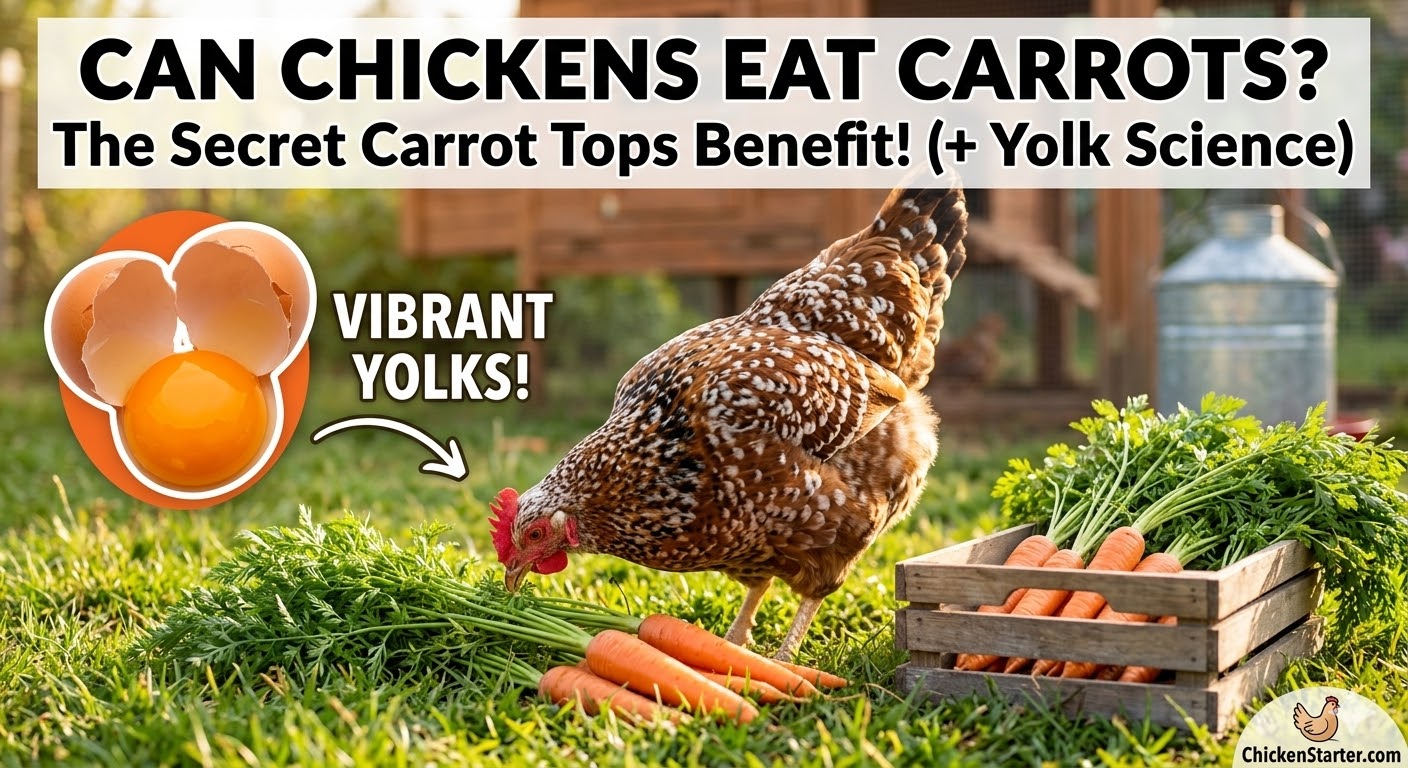
I was prepping a batch of carrots for Sunday dinner when I caught myself about to toss the green tops in the trash. Then I read something that stopped me cold: carrot tops contain six times more vitamin C than the root itself. My 12 hens were about to get the most nutritious part of the vegetable, the part I had been throwing away for years. After researching the actual peer-reviewed science on carrots and poultry, I found three things that changed how I feed my flock. First, a published study showing colored carrots increased egg yolk beta-carotene by over 100-fold. Second, research confirming that cooked carrots release dramatically more bioavailable beta-carotene than raw. And third, something that made me genuinely relieved: unlike strawberries, blueberries, and apples, which all sit on the Dirty Dozen, carrots are on the 2025 Clean Fifteen for pesticides. This is one of the safest conventional treats you can buy.
Can Chickens Eat Carrots? Yes, Every Single Part Is Safe
Yes, chickens can safely eat all parts of a carrot, including the root, the peels, and the green tops. Carrots are non-toxic, contain no harmful compounds for poultry, and are one of the most nutritionally beneficial vegetable treats you can offer your flock.
Quick Answer: Chickens can eat carrots raw, cooked (steamed or boiled), or frozen. According to USDA FoodData Central, a 100-gram serving of raw carrot provides approximately 41 calories, 9.6g carbohydrates, 4.7g sugar, 2.8g fiber, 0.93g protein, 835µg of vitamin A (as beta-carotene, 93% DV), 5.9mg vitamin C, 320mg potassium, 13.2µg vitamin K, and 88% water. The green carrot tops contain six times more vitamin C than the root and are packed with calcium, potassium, and protein. The beta-carotene in carrots enriches egg yolk color and supports immune function in poultry (peer-reviewed research). Feed carrots 2 to 3 times per week, about half an average carrot per bird. All treats combined should not exceed 10% of total diet. Carrots rank on the 2025 EWG Clean Fifteen, meaning conventional store-bought carrots have among the lowest pesticide residues of all produce tested. Baby chicks can start with finely grated cooked carrot at 4 to 6 weeks old.
My flock genuinely enjoys carrots, though I learned early on that how you prepare them matters enormously. Large raw carrot chunks? Ignored completely, just sitting in the run getting dusty. Grated raw carrot? Gone in minutes. Lightly steamed? Absolute pandemonium. For a full overview of everything chickens eat, see our complete diet guide.
Why Carrot Tops Are the Most Nutritious Part (The Secret Most Keepers Miss)
This is the counterintuitive insight that most chicken-keeping websites completely overlook. Most people chop off the green tops and throw them straight in the bin. That is a genuine waste of the most vitamin-dense part of the vegetable.
According to the Food Gardening Network, carrot greens actually contain six times more vitamin C than the root, along with substantial amounts of vitamin K, potassium, and calcium. Information from Green Matters confirms that carrot tops contain significant amounts of vitamin A, vitamin C, vitamin K, calcium, and iron, and are also rich in dietary fiber and carotenoids. A review published by Organic Facts notes that carrot greens also contain lutein and zeaxanthin, compounds associated with eye health, alongside other phytonutrients that help combat inflammation and oxidative stress.
Are Carrot Tops Poisonous? No, That Is a Myth
There is an old rumor that carrot tops are toxic. This is completely false. According to information from Organic Facts, humans tend to associate bitterness with toxicity, but carrot greens are edible and do not pose a threat to health. The confusion likely stems from their slightly bitter flavor, which some people mistake as a sign of danger. For chickens, the bitterness is irrelevant. My hens devour carrot tops faster than the actual carrot root.
Why Vitamin C Matters for Chickens
Chickens, unlike humans, can synthesize their own vitamin C. However, during periods of heat stress, illness, molting, or transportation, their bodies’ production cannot keep up with demand. Supplemental vitamin C during these periods has been shown to support immune function and improve growth performance. The carrot tops’ high vitamin C content makes them an especially valuable treat during molting season or summer heat waves. See our guide on feeding chickens during a heatwave for more strategies.
The first time I tossed carrot tops to my hens, they devoured them faster than the actual carrot pieces. Now I never throw them away. If you buy carrots with tops still attached from the farmers’ market, the greens are actually the biggest nutritional gift for your flock. Chop them roughly to make pecking easier, and scatter them across the run.
How Carrots Improve Egg Yolk Color and Quality: Peer-Reviewed Science
If you have ever noticed your hens’ egg yolks looking pale or washed out, carrots can help. The beta-carotene that gives carrots their deep orange color is a carotenoid pigment that hens deposit directly into their egg yolks. The more beta-carotene a hen consumes, the richer and deeper the yellow-orange color of her yolks.
The Colored Carrot Study
A study published in the Journal of the Science of Food and Agriculture (Hammershøj et al., 2010) and indexed on PubMed examined the short-term effects of feeding three colored carrot varieties (orange, yellow, and purple) to egg-laying hens at 70g per day per hen. The results were striking. Purple carrot treatment increased the yolk content of lutein by more than 1.5-fold and beta-carotene by over 100-fold compared with the control group. Yolk redness increased significantly in the order control, then yellow, then orange, then purple. The study concluded that supplementing the feed of egg-laying hens with colored carrots efficiently increased yolk color parameters and carotenoid contents.
What the Meta-Analysis Shows
A 2023 meta-analysis published in Food Science of Animal Resources (Korean Society for Food Science of Animal Resources) reviewed 47 studies on carotenoid supplementation in laying hens. The overall results showed that carotenoid supplementation improved egg production by 0.38%, egg weight by 0.29g, and yolk color by 2.11 points on the DSM color fan scale. The study concluded that carotenoid supplementation can elevate productivity, enhance egg quality, and improve immunity.
An Important Caveat About Transfer Rates
Most of the beta-carotene your hen consumes is converted to vitamin A in the liver before it ever reaches the egg yolk. Research from a 2023 PMC review on carotenoid enrichment in eggs confirms that most of the beta-carotene is converted to vitamin A, which significantly reduces the deposition in the yolk. This means you will not see dramatic egg yolk changes from a few carrot slices. But consistent feeding over 2 to 3 weeks will produce noticeably warmer, deeper yolk colors, particularly when combined with other carotenoid-rich treats like corn (which provides xanthophylls) or pumpkin. See our guide on treats that boost egg laying for a complete strategy.
Carrots Improve Calcium Absorption for Stronger Eggshells
Beyond yolk color, published poultry research indicates that carrots offer real nutritional benefits for laying hens, particularly by improving calcium absorption, which supports stronger eggshells and bone health. The mechanism works through beta-carotene’s conversion to vitamin A, which plays a direct role in calcium metabolism pathways.
This does not replace oyster shell supplementation or a proper calcium program. But it supports the overall efficiency of calcium utilization, which is especially important for high-production layers who are constantly drawing on calcium reserves. If you are dealing with thin-shelled or shell-less eggs, adding carrots to your treat rotation alongside proper calcium supplementation can help.
Raw vs. Cooked Carrots: Which Is Better for Chickens?
Unlike most treats where raw versus cooked is straightforward, carrots present a genuine nutritional trade-off that is worth understanding. Both forms have legitimate advantages, and the science supports both sides.
| Factor | Raw Carrots | Cooked Carrots (Steamed/Boiled) | Winner |
|---|---|---|---|
| Vitamin C retention | Higher. Heat destroys vitamin C | Lower. Some loss during cooking | Raw |
| Beta-carotene bioavailability | ~11% absorption rate | ~65 to 75% absorption rate | Cooked |
| Antioxidant release | Lower. Locked in rigid cell walls | Higher. Cooking breaks cell walls | Cooked |
| Texture | Hard, crunchy. Takes longer to eat | Soft, easy to peck apart | Depends |
| Enrichment value | Higher. Chickens work harder | Lower. Eaten quickly | Raw |
| Choking risk | Higher with large chunks | Lower. Softened by heat | Cooked |
| Glycemic Index | Lower | Higher (more starch/sugar released) | Raw |
The Science Behind the Trade-Off
According to WebMD, boiling may lower some of the antioxidant activity in carrots and nutrients like vitamin C, but it makes it easier for the body to absorb the carotene in them. Research published in the British Journal of Nutrition (Tyssandier et al., 2011) and indexed on PubMed found that the bioavailability of beta-carotene from stir-fried carrots was approximately 75%, compared to only 11% from raw carrots. A separate study published in The Journal of Nutrition (Rock et al., 1998) found that women who consumed processed carrots absorbed three times as much beta-carotene as women who consumed the same amount from raw carrots.
As Healthline notes, beta-carotene is a fat-soluble compound, which is why eating this nutrient with a fat improves its absorption. For chickens, this means the small amount of fat in their layer feed helps with absorption, but you can boost it further by mixing grated carrot into a small amount of plain oatmeal.
My Practical Recommendation
Both forms are excellent. Raw grated carrot for maximum vitamin C and enrichment value. Lightly steamed carrot for maximum beta-carotene absorption and antioxidant release. Alternate between both methods for the broadest nutritional benefit.
In my experience, my hens consistently ignore large raw carrot chunks. They just sit in the run untouched. But the moment I shred or grate them, they disappear in minutes. Lightly steamed carrots are universally loved by my flock. My rule: grated raw in summer, lightly steamed in winter.
Can Chickens Eat Every Part of a Carrot? Root, Peels, Tops, and Seeds
| Part | Safe? | Nutritional Value | Notes |
|---|---|---|---|
| Root (orange carrot) | ✅ Best part | Very high beta-carotene, vitamin A, fiber | Shred, grate, or steam for best results |
| Peels | ✅ Safe | Similar nutrients to root, slightly more fiber | Perfectly safe if not treated with pesticides or herbicides. Wash first |
| Green tops | ✅ Most vitamin C | 6x more vitamin C than root, plus calcium, potassium, protein, lutein, zeaxanthin | Chop first for easier eating. Chickens usually eat these first |
| Seeds | ✅ Safe | Minimal nutrition | Tiny and harmless |
| Baby carrots | ✅ Safe | Same nutrition as regular carrots | Chop or grate for smaller breeds |
| Purple carrots | ✅ Excellent | Anthocyanins + beta-carotene. Increased yolk beta-carotene by 100-fold in research | Outstanding for egg yolk color |
| Yellow/red carrots | ✅ Excellent | Different antioxidant profiles (lycopene in red) | Variety provides the broadest benefit |
| Moldy or rotten carrots | ❌ Never | Not applicable | Mycotoxins are potentially fatal |
The Pesticide Good News: Carrots Are on the 2025 Clean Fifteen
Here is something refreshing after covering the Dirty Dozen warnings in my strawberry, blueberry, and apple articles: carrots have a genuinely good pesticide story.
According to the Environmental Working Group’s 2025 Shopper’s Guide to Pesticides in Produce, carrots are on the Clean Fifteen list. As reported by CNN, pineapple was the least contaminated produce tested, followed by sweet corn, avocados, papaya, onions, frozen sweet peas, asparagus, cabbage, watermelon, cauliflower, bananas, mangos, carrots, mushrooms, and kiwi. According to the EWG, almost 60 percent of samples on the Clean Fifteen had no detectable pesticide residues. One reason carrots fare well: as noted by The Nutra Planet, carrots develop underground where they are naturally protected from many pests.
This means conventional store-bought carrots are relatively safe for your flock without needing to buy organic. Still wash and scrub them under running water, but the pesticide concern is significantly lower than with other treats.
How Carrots Compare to Other Treats in Your Library
| Treat | 2025 EWG Pesticide Ranking | Recommendation |
|---|---|---|
| Strawberries | #2 Dirty Dozen (worst) | Buy organic or homegrown |
| Apples | #9 Dirty Dozen | Buy organic or wash/peel |
| Blueberries | #11 Dirty Dozen | Buy organic or frozen organic |
| Carrots | Clean Fifteen ✅ | Conventional is fine. Just wash and scrub |
| Cucumbers | Middle (not DD, not CF) | Wash and scrub thoroughly |
Can Chickens Eat Carrots Every Day?
No, daily carrot feeding is not recommended. Along with other vegetables and fruits, carrots should make up a maximum of 10 to 20% of caloric intake from treats, and all treats combined should stay within the 10% rule established by Purina Mills. Feeding your flock about half an average-sized carrot per bird, 2 to 3 times per week, is more than sufficient.
Too many carrots mean less layer feed consumed, which leads to protein deficiency, reduced egg production, and thin eggshells. Carrots contain only 0.93g of protein per 100g, negligible compared to the 16 to 18% protein laying hens need. For more on balancing treats with feed, see our best feeding schedule for backyard chickens.
What Age Can Chickens Eat Carrots?
Carrots are generally safe for chickens, but for baby chicks, they should be offered in tiny, well-cooked portions due to digestive sensitivity. I do not feed carrots until chicks are several weeks old, and then I grate or finely chop them. They simply cannot manage the hard texture otherwise.
| Age | Can They Eat Carrots? | How to Serve | Notes |
|---|---|---|---|
| 0 to 4 weeks | ❌ No | Not applicable | Starter feed only. See must-haves for new chicks |
| 4 to 6 weeks | ⚠️ Very tiny amounts | Cooked, mashed, or very finely grated | Must have chick grit available |
| 6 to 12 weeks | ✅ Small amounts | Grated or steamed small pieces | Grower feed = 90%+ of diet. See when to switch from starter to grower |
| 12+ weeks | ✅ Moderate | Shredded, steamed, or hung whole | Gradually increase treat amounts |
| 16+ weeks (adult) | ✅ Full treat amounts | Any method: raw grated, steamed, hung whole, frozen | Layer feed = 90% of diet; treats = 10% maximum |
How to Prepare and Serve Carrots to Chickens (Step by Step)
Step 1: Wash and scrub. Even though carrots are on the Clean Fifteen, firm produce like carrots should be scrubbed with a clean vegetable brush under running water to remove dirt and any surface residues.
Step 2: Choose raw or cooked. Raw for vitamin C and enrichment value. Cooked (steamed, boiled, or roasted without seasoning) for maximum beta-carotene absorption. Both are excellent choices.
Step 3: Shred, grate, or slice thin. Large carrot pieces are difficult for chickens to peck at. Cut them into small chunks or grate them to make them accessible. This is the single biggest factor in whether your flock will actually eat them.
Step 4: Keep the tops on. Do not discard the greens. Chop them roughly and scatter them for the flock. They will usually be consumed first, since they are tastier and easier to eat than the hard root.
Step 5: Serve after layer feed. Always ensure your flock has eaten their complete balanced feed before offering treats.
Step 6: Clean up leftovers. Carrot peels and pieces rot quickly, especially in warm weather. Remove any uneaten pieces after a few hours to maintain hygiene and avoid attracting rodents or flies.
Creative Serving Ideas
Hung whole carrot. Thread twine through a whole carrot and hang it at beak height in the run. It swings when pecked, creating an engaging puzzle toy. Great for combating boredom in confined flocks. See our DIY treat dispenser guide for more ideas.
Grated carrot scatter. Scatter grated raw carrot across the run for a foraging activity that keeps every hen busy.
Frozen carrot ice treats. During summer, freeze cooked carrot pieces in ice cube trays filled with water. Pop out the cubes and scatter them in the run. They melt slowly, releasing treats while keeping hens cool.
Warm winter carrot mash. Mix small bits of steamed carrot into a warm oatmeal mash. This is my flock’s favorite cold-weather treat and provides both comfort and nutrition. See our winter feeding guide for more seasonal strategies.
Carrot top + oat blend. Finely chop carrot tops and mix with dry oats and a small drizzle of water. The oats absorb the green juices and create a nutrient-dense morning treat.
Can Chickens Eat Carrots and Potatoes? A Critical Safety Warning
This combination keyword matters because many keepers toss kitchen scraps that include both vegetables. Carrots are always safe, raw or cooked. Potatoes require extreme caution.
Green or sprouting potatoes contain solanine, a glycoalkaloid that is toxic to chickens and can cause digestive upset, neurological problems, and in severe cases, death. Raw potato skins also contain higher concentrations of solanine, particularly if the potato has been exposed to light and turned green.
The rule is simple: Carrots = always safe (raw or cooked). Potatoes = only fully cooked, white flesh, never green parts, never raw skins, never sprouts. See our complete feeding guide for a full breakdown of safe and unsafe foods.
Carrot Products: What Is Safe and What Is Not
| Product | Safe? | Notes |
|---|---|---|
| Fresh raw carrot (shredded) | ✅ Best option | Maximum vitamin C and enrichment |
| Steamed/boiled carrot (plain) | ✅ Great | Maximum beta-carotene absorption |
| Carrot peels | ✅ Safe | Wash first; same nutrition as root |
| Carrot tops (greens) | ✅ Most nutritious | 6x vitamin C of root |
| Baby carrots | ✅ Safe | Chop for smaller breeds |
| Frozen carrot pieces | ✅ Good summer treat | Retains most nutrients |
| Purple/yellow/red carrots | ✅ Excellent | Different antioxidant profiles |
| Canned carrots | ❌ Avoid | High sodium content creates a danger of dehydration. The salt content is problematic |
| Carrots cooked with butter/salt | ❌ Never | Seasoning, salt, and highly caloric foods like butter can be harmful |
| Carrot juice | ⚠️ Very sparingly | Concentrated sugar, no fiber |
| Carrot cake | ❌ Never | Sugar, cream cheese, flour |
| Moldy carrots | ❌ Never | Mycotoxins are potentially fatal |
Carrots vs. Other Vegetables: How They Compare
| Vegetable | Beta-Carotene | Vitamin C | Water Content | 2025 EWG Pesticide Risk | Key Benefit for Chickens |
|---|---|---|---|---|---|
| Carrots | Very High (835µg/100g) | Low (5.9mg) | 88% | Clean Fifteen ✅ | 🏆 Best for egg yolk color + vitamin A |
| Cucumbers | Very Low | Low (2.8mg) | 96% | Middle | Best hydration treat |
| Pumpkin | High | Low (9mg) | 92% | Not applicable | Seeds support natural parasite control |
| Lettuce | Variable | Variable | ~95% | Variable | Good daily leafy green supplement |
| Tomatoes (ripe) | Moderate | Moderate (14mg) | 95% | Middle | Lycopene antioxidant |
Vegetables Chickens Should NEVER Eat
| Dangerous Vegetable | Why It Is Toxic |
|---|---|
| Green/raw potatoes and skins | Contain solanine, a toxic glycoalkaloid |
| Raw or dried beans | Contain phytohaemagglutinin, which can be lethal to chickens even in small amounts |
| Rhubarb leaves | Oxalic acid at levels toxic to poultry |
| Onions (large amounts) | Contain thiosulphates, which can damage red blood cells and lead to hemolytic anemia |
| Green tomatoes, tomato leaves and vines | Contain solanine. Only ripe red tomatoes are safe |
| Avocado pits and skin | Persin is toxic to most birds |
| Moldy vegetables of any kind | Mycotoxins can cause severe illness or death |
For a full breakdown, see our comprehensive feeding guide.
Frequently Asked Questions
Can you feed raw carrots to chickens?
Yes, carrots are non-toxic and completely safe for chickens to eat raw. However, they should be shredded or grated rather than served in large chunks. Whole raw carrots are too hard for most chickens to peck apart effectively. Raw carrots retain more vitamin C than cooked, making them nutritionally valuable. But cooked carrots provide significantly more bioavailable beta-carotene, so alternating between both forms gives the broadest benefit.
Are carrot tops safe for chickens?
Yes, and they are the most nutritious part. Carrot greens contain six times more vitamin C than the root, along with vitamin K, calcium, potassium, iron, and protein. The old myth that carrot tops are poisonous is completely false. My hens eat the tops faster than the carrot itself every single time.
Can Silkie chickens eat carrots?
Yes, Silkies can eat carrots safely. Because Silkies are a bantam breed with smaller beaks, finely grate or steam the carrots to make them easier to eat. Reduce portion sizes to 3 to 5 small pieces per bird rather than the standard amount for full-size breeds.
Do carrots change egg yolk color?
Yes. According to research indexed on PubMed, feeding colored carrots to laying hens increased yolk beta-carotene by over 100-fold and significantly increased yolk redness and color parameters. Consistent feeding over 2 to 3 weeks produces noticeably warmer, deeper yolk colors. Combine with corn for even richer results.
Should I peel carrots before feeding them to chickens?
No. The peel is safe and nutritious. Just wash thoroughly under running water. Carrots are on the Clean Fifteen for pesticides, so conventional peels are relatively low-risk. Never peel homegrown or organic carrots; you would be throwing away beneficial fiber and nutrients.
How much carrot can I give my chickens?
About half an average carrot per bird, offered 2 to 3 times per week. All treats combined should not exceed 10% of daily diet. Carrots contain only 0.93g protein per 100g, so they cannot replace any meaningful portion of balanced layer feed.
What is better for chickens, carrots or pumpkin?
Both are excellent, but they serve different purposes. Carrots are best for beta-carotene (egg yolk color, immune function, calcium absorption). Pumpkin is best for cucurbitacin in the seeds (natural parasite support). Alternate both in your treat rotation for the broadest benefit.
Can I use carrots as a natural dewormer?
Carrots are not a replacement for proper deworming treatment. However, the fiber in carrots supports gut health, and chicken keepers often include them in natural mash recipes alongside pumpkin seeds (which contain cucurbitacin, a compound with some evidence of anti-parasitic activity).
The Bottom Line on Carrots for Chickens
After incorporating carrots into my flock’s treat rotation for over two years, here are the four things I want you to remember:
First, do not throw away the tops. Carrot greens contain six times more vitamin C than the root, along with calcium, potassium, iron, and protein. They are the single most nutritious part of the vegetable, and your chickens will love them.
Second, beta-carotene enriches egg yolk color and supports immune function. Published research on PubMed shows that colored carrot supplementation increased yolk beta-carotene by over 100-fold. Consistent feeding over 2 to 3 weeks produces noticeably deeper, warmer yolk colors.
Third, both raw and cooked carrots are valuable, but for different reasons. Raw retains more vitamin C. Cooked releases dramatically more bioavailable beta-carotene (75% vs. 11% absorption). Alternate both for the broadest nutritional benefit.
Fourth, carrots are on the 2025 EWG Clean Fifteen. Unlike strawberries, apples, and blueberries (all Dirty Dozen), conventional carrots have among the lowest pesticide residues of all produce tested. This makes them one of the safest and most affordable treats you can buy.
Want to know more about treats that improve egg quality? Check out our guides to corn for xanthophyll egg yolk science, pumpkins for natural parasite support, or explore what your chickens can eat from your kitchen.

Oladepo Babatunde is the founder of ChickenStarter.com. He is a backyard chicken keeper and educator who specializes in helping beginners raise healthy flocks, particularly in warm climates. His expertise comes from years of hands-on experience building coops, treating common chicken ailments, and solving flock management issues. His own happy hens are a testament to his methods, laying 25-30 eggs weekly.